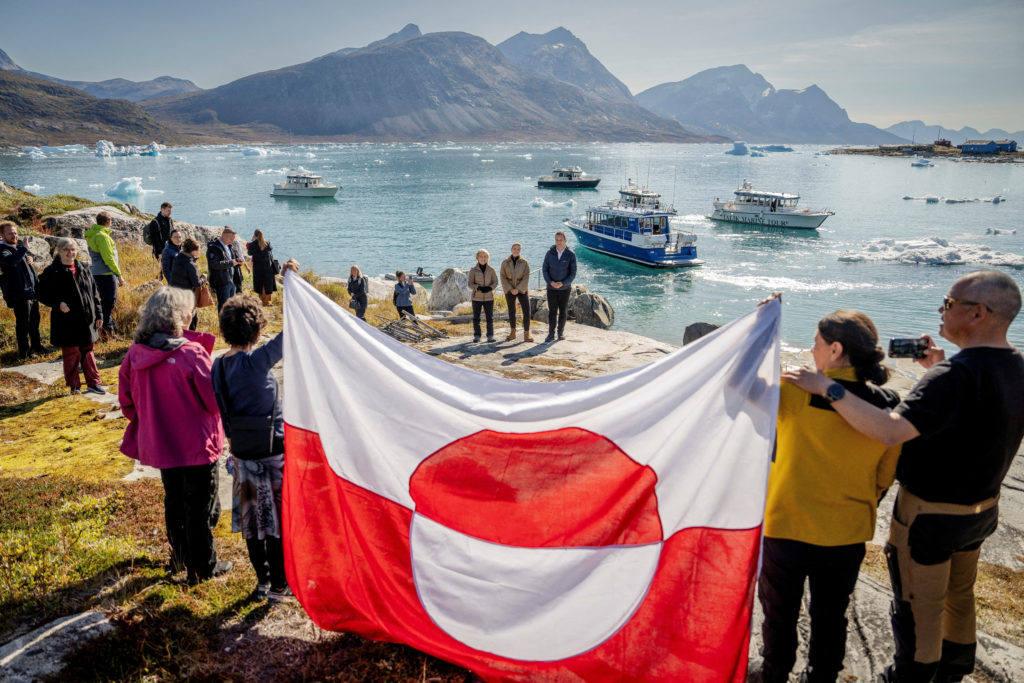
The US, Denmark, and Greenland have signed a new defense agreement allowing the US to build two new military bases in Greenland. The deal supports Greenland's self-rule and Danish control while enhancing NATO's and North America's security in the Arctic.
Key Facts
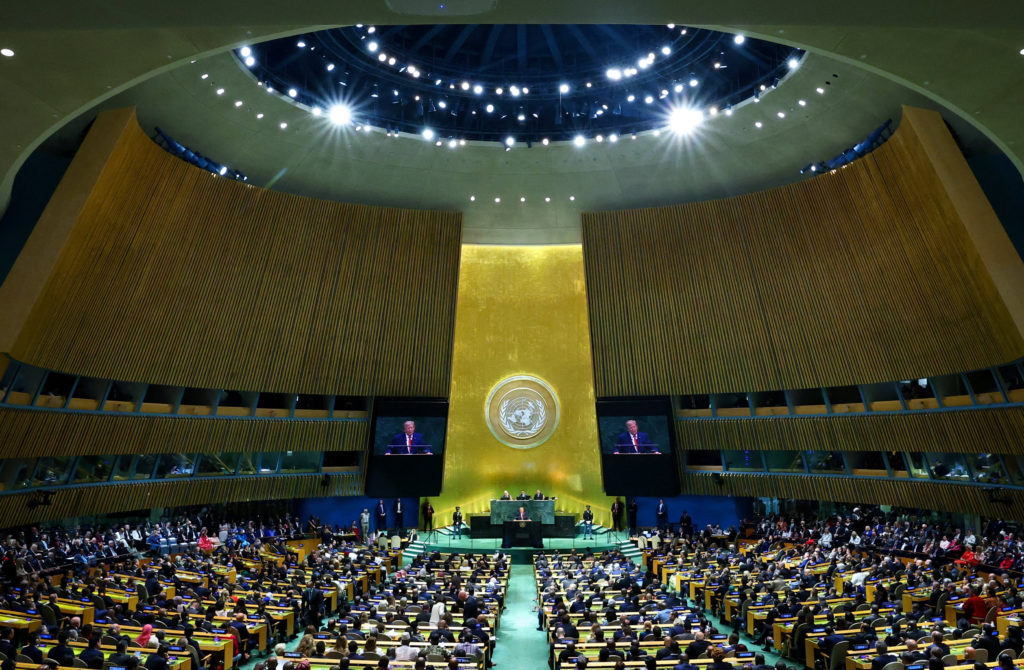
The new defense deal was signed by President Donald Trump, Danish Prime Minister Mette Frederiksen, and Greenland’s Prime Minister Jens-Frederik Nielsen at the UN General Assembly.
The US will build two new military bases at Narsarsuaq and Mestersvig in Greenland.
Narsarsuaq has deep-water access and a large runway, while Mestersvig is a remote outpost used by Danish forces.
The agreement updates a 1951 defense agreement between Denmark and the US.
The US can also modernize and expand its current Pituffik Space Base in northwest Greenland.
The deal confirms Greenland will remain in NATO if it becomes independent from Denmark.
The agreement prevents any non-NATO country from establishing military bases or a persistent military presence in Greenland.
President Trump had said the US would start building a large military presence immediately to address security concerns in the Arctic.
Read the Original
Want the full story? Tap a source to open the original
article.
Qatar’s leader Sheikh Tamim bin Hamad Al Thani urged for the Strait of Hormuz to be reopened. He said that the conflict between the US, Israel, and Iran has caused higher prices for food and medicine, hurting people who are not involved in the fighting.
Key Facts
Sheikh Tamim bin Hamad Al Thani is the leader of Qatar.
He spoke about the Strait of Hormuz at the United Nations.
He called for the reopening of the Strait of Hormuz, a key waterway for global trade.
The current conflict involves the US and Israel against Iran.
This conflict has increased global prices of food and medicine.
Higher prices are hurting everyday people who are not part of the conflict.
The statement rejects using the Strait of Hormuz as a bargaining tool during the conflict.
Read the Original
Want the full story? Tap a source to open the original
article.
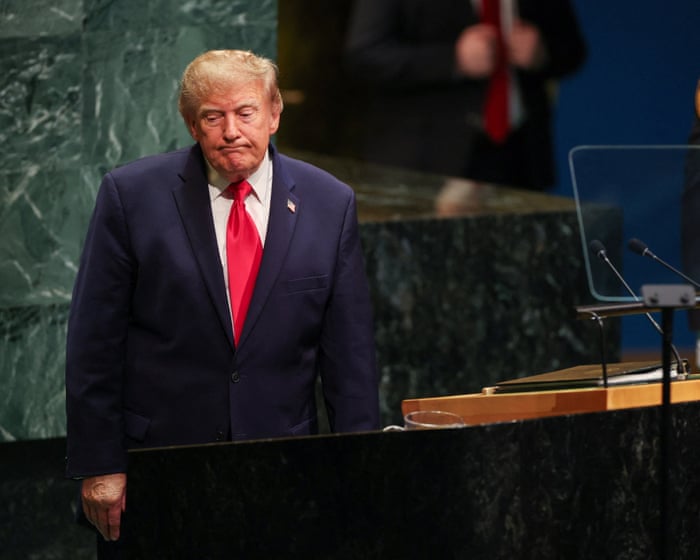
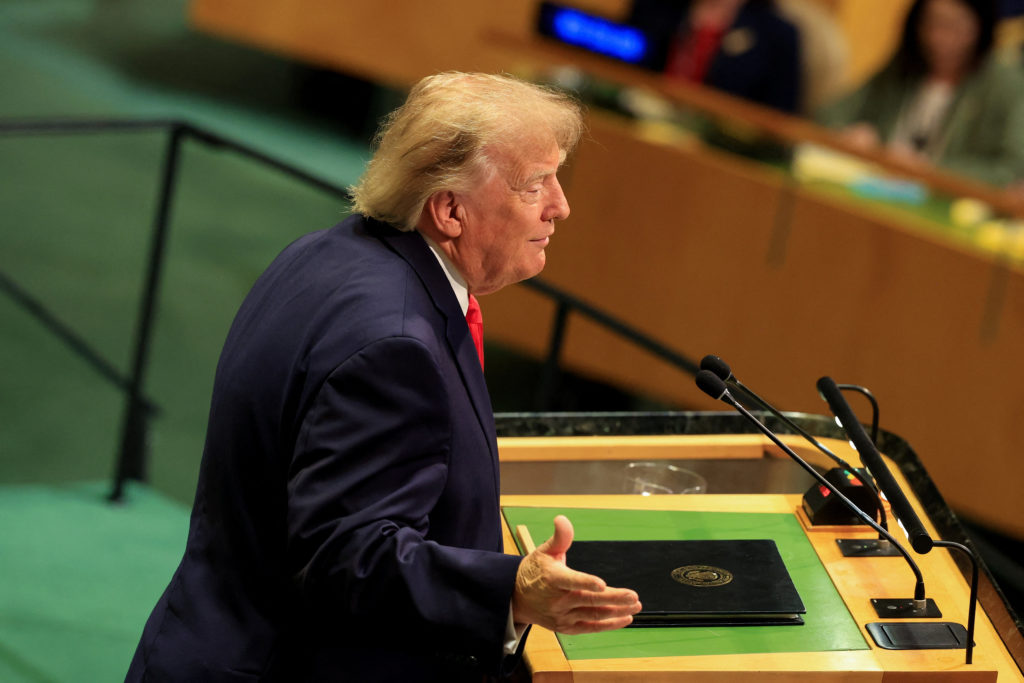
President Donald Trump gave a strong speech at the United Nations General Assembly, focusing on Iran and threatening severe actions against the country. He also spoke about the situations in Cuba and Venezuela, warning of consequences if U.S. interests are threatened.
Key Facts
Trump said he had a big decision to make about Iran, mentioning the possibility of destroying the country quickly to stop it from harming others.
He called on allies to fully isolate Iran economically.
Trump incorrectly stated that Iran’s current regime has been in power for 51 years, when it has been 47 years since 1979.
He claimed that over 72,000 Iranians were killed in protests earlier in the year, but no definite death toll exists, and lower estimates have been given.
The speech included threats toward Cuba, predicting the collapse of its communist government amid a crisis worsened by U.S. embargoes.
Trump referenced U.S. actions in Venezuela, including the detention of President Nicolás Maduro on drug charges.
Trump stated the U.S. will use military power if necessary to protect its interests in the Western Hemisphere.
The speech was unusually aggressive for a U.N. address, given the assembly’s goal to promote peace and avoid conflict.
Read the Original
Want the full story? Tap a source to open the original
article.
President Donald Trump spoke at the United Nations General Assembly, addressing ongoing global conflicts and energy problems. He blamed a shortage of diesel fuel partly on Ukraine’s attacks on Russian targets, met with Ukraine’s president, and noted China’s absence from the UN meeting while its leader went to Washington.
Key Facts
President Trump gave a speech at the UN General Assembly focusing on US foreign policy and global tensions.
He linked the global diesel shortage to Ukraine’s drone strikes on Russian infrastructure.
Russia supplies only about 6% of the world’s diesel exports.
Trump held a bilateral meeting with Ukraine’s President Volodymyr Zelensky.
Conflicts continue in the Middle East and Ukraine with no clear resolution.
China’s leader, Xi Jinping, did not attend the UN meeting and instead went to Washington for talks on AI.
The ongoing energy crisis affects people in many countries worldwide.
The article references recent events including discussions on US aid, global hostilities, and diplomatic meetings.
Read the Original
Want the full story? Tap a source to open the original
article.
President Donald Trump said that U.S. officials had a productive meeting lasting about three hours with an Iranian delegation during the United Nations General Assembly in New York. He also mentioned that another meeting is planned soon.
Key Facts
The meeting took place on the sidelines of the UN General Assembly in New York.
U.S. officials and the Iranian delegation met for about three hours.
President Trump described the meeting as “very good” and “productive.”
Another meeting between the two groups is scheduled to happen soon.
The discussion involved representatives from the United States and Iran.
The announcement came directly from President Trump to reporters at the UN.
No specific details about the topics discussed were given in this report.
Read the Original
Want the full story? Tap a source to open the original
article.
A six-year-old girl from China named Lian Yunzhi has set a new world record for solving the Rubik’s Cube among women. She completed the puzzle in an average time of just over four seconds during official competitions in Wuhan and Guangzhou.
Key Facts
Lian Yunzhi is six years old and from Chengdu, China.
She set new women’s world records for solving the 3x3 Rubik’s Cube twice this month.
Her average solving times were 4.52 seconds and then 4.27 seconds at official contests.
She is the first female speedcuber to average under 4.5 seconds.
Lian has learned over 1,300 solving methods called algorithms.
She practices solving the Rubik’s Cube for two to three hours every day.
Her mother said solving the cube helps develop skills like focus, memory, and logical thinking.
Lian was introduced to the Rubik’s Cube through a class offered alongside other activities like dance and music.
Read the Original
Want the full story? Tap a source to open the original
article.
Fat Bear Week is an online contest in Alaska where people vote for the fattest brown bear from Katmai National Park. The bears gain weight by eating lots of salmon in the summer to prepare for winter hibernation. The winner is decided by public votes and announced on September 29.
Key Facts
Fat Bear Week started in 2014 to educate people about brown bears.
The contest features 16 bears competing in a bracket-style tournament.
Bears eat up to 30 salmon a day to gain weight for hibernation.
Adult male bears usually weigh 600-900 pounds in midsummer but can grow over 1,000 pounds after fishing season.
Female bears are about one-third smaller than males.
Bears are not actually weighed; their weight is estimated from photos.
Last year’s winner was Chunk, a bear weighing about 1,200 pounds.
Voting is done online at www.fatbearweek.org, and viewers can watch live bear cams before voting.
Read the Original
Want the full story? Tap a source to open the original
article.
President Donald Trump signed an agreement with Denmark and Greenland to improve security in the Arctic and North Atlantic regions. The deal allows the U.S. to expand its military presence in Greenland while keeping the island under Danish control, even if Greenland becomes independent in the future.
Key Facts
The agreement was signed during the U.N. General Assembly in New York.
It aims to strengthen Arctic and North Atlantic security involving the U.S., Denmark, and Greenland.
Greenland remains under Danish control, but the U.S. military can increase operations there.
The deal will stay in place even if Greenland gains independence.
The U.S. will modernize and expand its base at Pituffik Space Base in northwest Greenland.
New U.S. defense areas may be established at Narsarsuaq in the south and Mestersvig in the east of Greenland.
The U.S. has had a military presence in Greenland for decades but currently has about 200 soldiers there.
Trump previously talked about acquiring Greenland but is now focusing on military and security cooperation.
Read the Original
Want the full story? Tap a source to open the original
article.
Brazilian President Luiz Inacio Lula da Silva spoke at the United Nations, warning against outside interference in Brazil’s upcoming election. He emphasized Brazil’s right to govern itself and criticized global powers for trying to control other countries and weaken international institutions like the UN.
Key Facts
Lula warned that Brazil will not allow foreign or domestic forces to interfere in the October 4 presidential election.
He stated that Brazil’s democracy belongs to Brazilians and the country will remain sovereign.
Lula criticized the United States for imposing tariffs on Brazilian goods and accused the US government of trying to influence the election.
He called the idea of dividing the world into spheres of influence outdated.
Lula criticized the United Nations, especially the Security Council’s veto power, for failing to prevent wars and deal with global conflicts.
He highlighted the need for cooperation to combat organized crime and stop weapons and illegal money from spreading in Latin America.
Lula contrasted Brazil’s defense needs with reliance on military power, saying Brazil wants cooperation, not aircraft carriers watching its waters.
The speech came before President Donald Trump’s UN address, where Trump planned to highlight US military strength in the region.
Read the Original
Want the full story? Tap a source to open the original
article.
Police in Manchester have stopped a planned attack targeting the Jewish community during their holy month. Two men were arrested after a months-long investigation, and police believe there is no current threat to the public.
Key Facts
Police arrested two men in Manchester suspected of planning an attack on the Jewish community.
The arrests happened just before the Jewish holiday Yom Kippur began.
Investigation lasted several months and was led by UK Counter Terrorism Policing (CTP).
The men are being questioned in London under the Terrorism Act.
The police have completed searches in Liverpool and Salford related to the suspects.
Officials have not confirmed the suspects' motives but are considering Islamist extremism among possibilities.
The UK’s terrorism threat level is at the second highest level, called "severe."
The Community Security Trust urged the Jewish community to stay calm but alert and report anything suspicious.
Read the Original
Want the full story? Tap a source to open the original
article.
Sudan is facing a severe food crisis caused by ongoing war between the Sudanese army and paramilitary forces. This crisis echoes past famines in the country, but unlike earlier drought-driven famines, the current hunger problem is mainly caused by conflict disrupting farming, food deliveries, and aid.
Key Facts
War between the Sudanese army and Rapid Support Forces began in April 2023 and has worsened through 2024.
The conflict has damaged farms, markets, bakeries, and infrastructure essential to food production and distribution.
Millions of people have been forced to leave their homes due to the food crisis and fighting.
Historically, Sudan suffered famines caused mostly by drought and locusts, with one major famine between 1888-1889 killing over one million people.
The 1984 famine caused by drought led to mass displacement in western Sudan.
Current famine affects major cities and farming areas across Sudan, unlike past famines that were more regionally limited.
Humanitarian aid is limited by war-related restrictions and damaged transport routes.
The crisis includes both food shortages and breakdowns in services like banking and communications.
Read the Original
Want the full story? Tap a source to open the original
article.
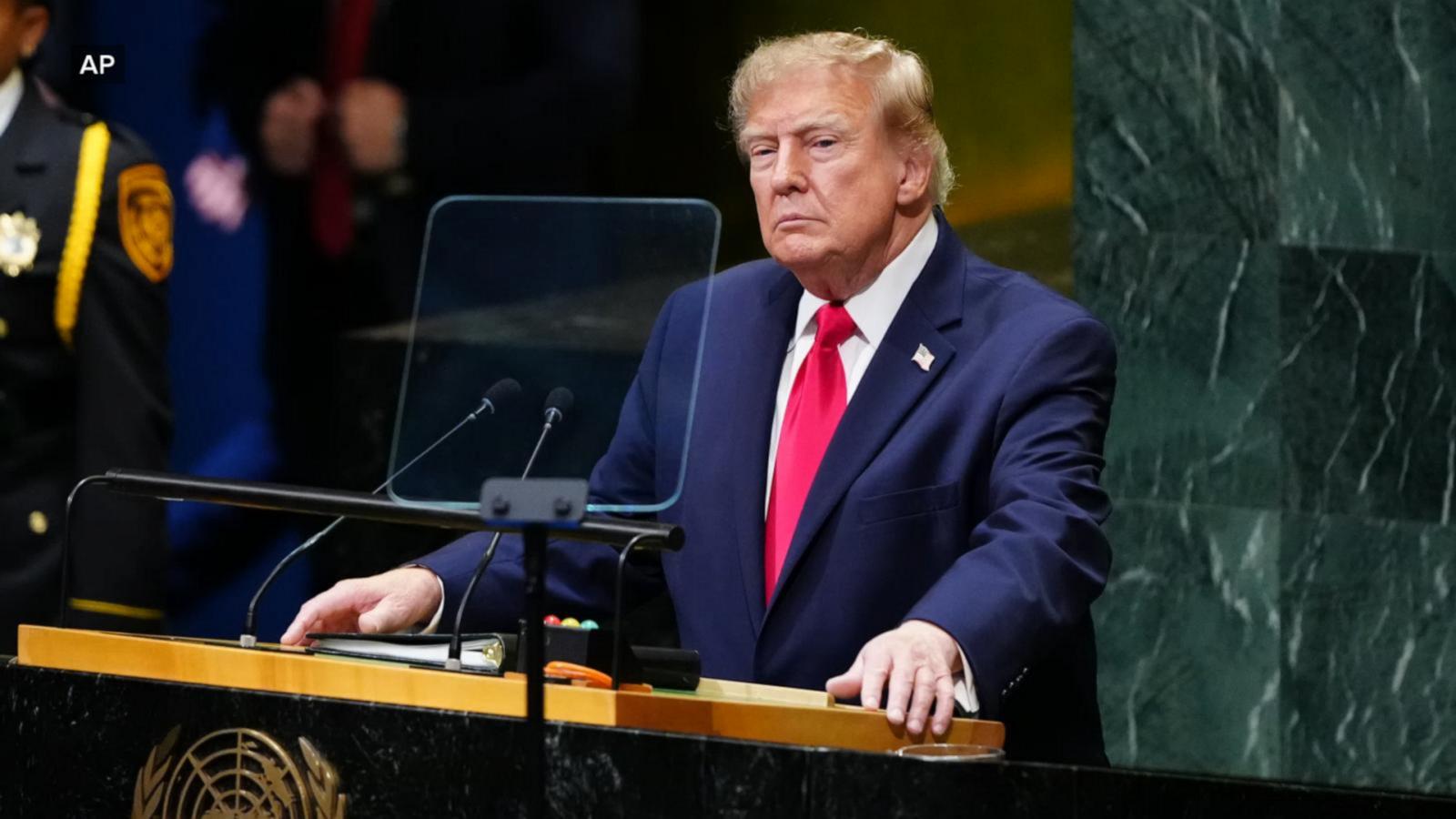
President Donald Trump gave a speech at the United Nations where he defended his decision to start the war with Iran. His speech was part of the debates at the UN General Assembly involving world leaders.
Key Facts
President Trump spoke at the United Nations General Assembly.
He defended launching the war with Iran during his speech.
Richard Gowan, director at the International Crisis Group, commented on Trump’s speech.
The speech took place on September 22, 2026.
The UN General Assembly is a meeting where leaders from many countries discuss global issues.
Trump’s speech was part of broader discussions involving various world leaders.
Read the Original
Want the full story? Tap a source to open the original
article.
On the biggest stories we show what the outlets agree on and where they differ. Readers keep that going, and get the daily digest by email every morning. Most choose $3.99/month.
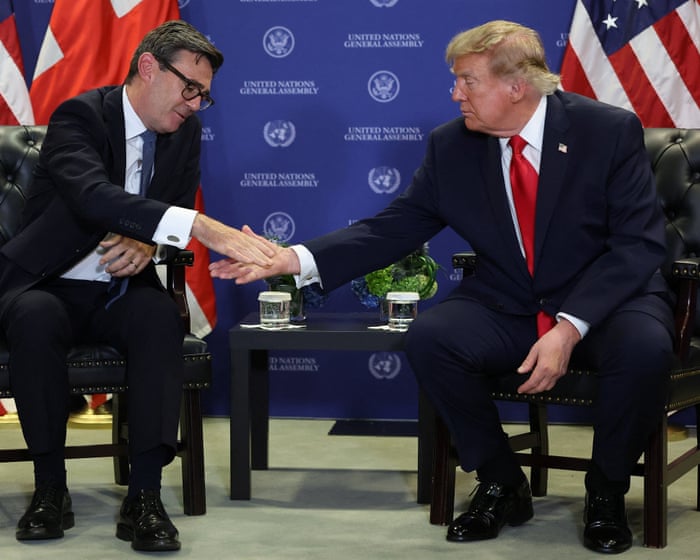
President Donald Trump met Andy Burnham, praising him as a natural businessman and saying their relationship is better than with the previous UK prime minister. Trump criticized the UK’s decision to give up the Chagos Islands to Mauritius, calling the deal terrible and stressing the islands’ military importance.
Key Facts
President Trump called Andy Burnham a “natural businessman” and said he could be a great prime minister.
They discussed topics including Rolls-Royce, energy, and immigration during their meeting at the United Nations.
Trump said the relationship with the UK is stronger now than it was under the last prime minister.
Trump criticized the UK’s deal handing sovereignty of the Chagos Islands to Mauritius and leasing Diego Garcia military base.
He said the islands are very important for strategy and military operations like B-2 bomber flights.
Andy Burnham said they established a good connection during their talks.
Trump said that once the war in Iran ends, prices will go down.
Trump defended banning some journalists from the White House, saying he has a right to remove “fake news.”
Read the Original
Want the full story? Tap a source to open the original
article.
President Donald Trump told Iran at the United Nations General Assembly that they must reach an agreement with the U.S. to rebuild their country or face rapid destruction. He suggested that a deal with Iran is likely after the U.S. elections.
Key Facts
President Trump spoke at the United Nations General Assembly.
He gave Iran two options: make a deal with the U.S. or face quick destruction.
Trump used strong language, saying Iran could be “annihilated” if no agreement is reached.
He predicted a deal with Iran might happen after the U.S. elections.
This approach shows Trump’s use of tough diplomacy—combining threats with openness to negotiations.
The situation involves U.S.-Iran relations and Middle East diplomacy.
The speech reflects ongoing tensions and talks between the U.S. and Iran.
The message was part of Trump’s broader strategy on foreign policy and security.
Read the Original
Want the full story? Tap a source to open the original
article.
The European Court of Human Rights is hearing a case about 10 Ukrainian children who went missing after Russia took control of Crimea in 2014. These children were reportedly taken from Ukrainian institutions, given Russian identities, and adopted by Russian families, causing concerns about forced deportation and enforced disappearance.
Key Facts
The International Criminal Court issued an arrest warrant in 2017 for Russian President Vladimir Putin over alleged war crimes and forced transfer of children from Ukraine.
Ten Ukrainian children taken from Crimea after Russia's 2014 annexation are the subject of the current ECHR case.
These children were reportedly given Russian nationality and adopted by Russian families.
Ukrainian authorities have not been able to track the children’s whereabouts since 2014 despite repeated inquiries.
Human rights groups accuse Russia of violating the Convention on the Rights of the Child by deporting children and illegally changing their identities.
The Russian government denies the accusations, saying children are being rescued from war zones for humanitarian reasons.
Ukraine claims the case shows a wider pattern of Russia’s policies regarding abducting children from occupied areas.
Programs like the "Train of Hope Crimea" aired profiles of children to promote Russian adoption efforts.
Read the Original
Want the full story? Tap a source to open the original
article.
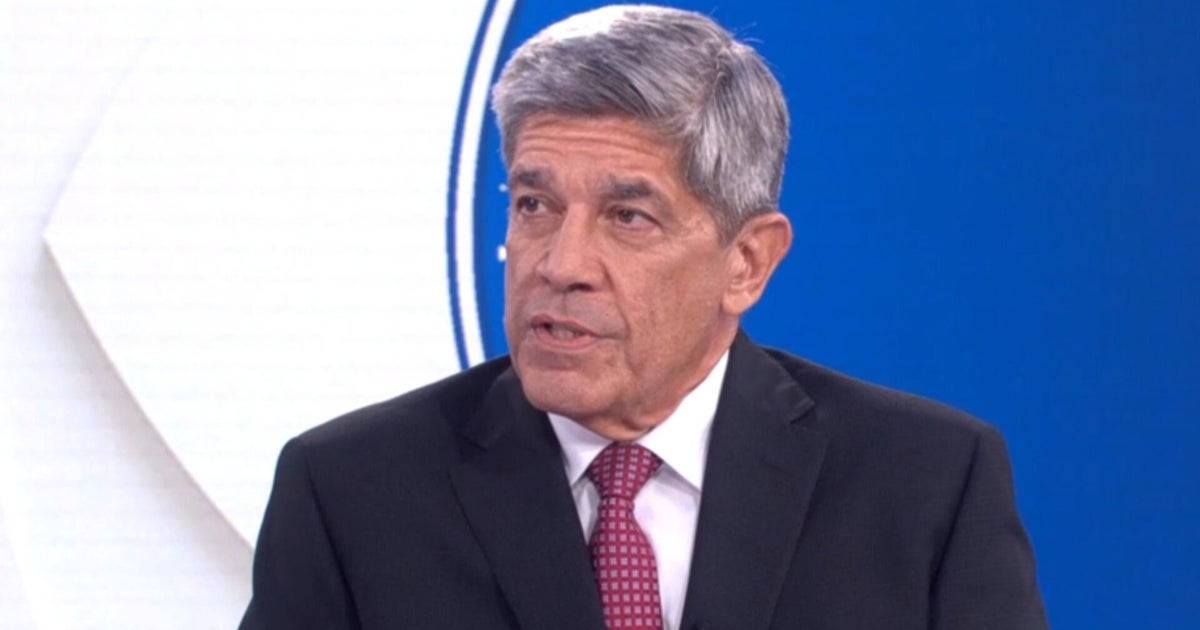
Cuban Deputy Foreign Minister Carlos Fernández de Cossio criticized the United States for its oil blockade against Cuba, calling the actions criminal. He made these remarks during an interview before the United Nations General Assembly meeting.
Key Facts
Carlos Fernández de Cossio is the Cuban Deputy Foreign Minister.
He spoke to CBS News before the United Nations General Assembly session.
He described the U.S. oil blockade against Cuba as harmful and illegal.
The blockade restricts Cuba’s access to oil and energy resources.
Cuba accuses the U.S. of worsening their economic situation through this blockade.
The issue is part of ongoing tensions between the U.S. and Cuba.
The United Nations General Assembly is a global meeting where countries discuss international issues.
The U.S. maintains economic sanctions aimed at pressuring the Cuban government.
Read the Original
Want the full story? Tap a source to open the original
article.
Senator Marco Rubio said that Ukrainian forces have attacked ships and infrastructure connected to the United States several times in recent months. He mentioned concerns that these attacks on U.S.-linked oil supplies and ships may not have been intentional.
Key Facts
Senator Marco Rubio made the statement on a Tuesday.
He said Ukrainian military targeted ships connected to the U.S. multiple times recently.
Infrastructure linked to the U.S., including oil supplies, was also targeted.
Rubio believes these attacks were probably accidental, not on purpose.
The information focuses on incidents involving Ukraine’s military actions.
The context involves U.S. connections to ships and infrastructure in the conflict zone.
Read the Original
Want the full story? Tap a source to open the original
article.
World leaders are meeting at the United Nations amid many global problems, including ongoing wars, economic changes, and climate disasters. The situation is more unstable than last year, with challenges such as military conflicts, health outbreaks, and the effects of climate change pressing the international community.
Key Facts
Two major wars continue: one in Europe (Russia-Ukraine) and one in the Middle East involving Iran.
A recent U.S. military operation removed Venezuelan leader Nicolás Maduro from power.
The joint U.S. and Israel attack on Tehran escalated tensions and closed a key waterway.
The Russia-Ukraine conflict has lasted over four years, with no peace in sight and increased fighting.
An Ebola outbreak affected the Democratic Republic of the Congo and Uganda, raising concerns about pandemic preparedness.
Natural disasters—earthquakes in Venezuela and Colombia and floods in Nepal and Tibet—show the growing impact of climate change.
Diplomats feel the UN is facing a critical moment but struggles to find agreed solutions on security and climate issues.
International efforts to solve these crises by peaceful talks have largely failed so far.
Read the Original
Want the full story? Tap a source to open the original
article.
That's the point of this site, and readers keep it that way. Support for any amount and the daily digest lands in your inbox every morning at 7am Eastern.
President Donald Trump spoke at the United Nations and said he wants to change the term "artificial intelligence" to "super intelligence" because he believes it is a better description. He downplayed concerns about AI risks and said the U.S. will encourage AI development rather than try to control it.
Key Facts
President Trump made these remarks during his speech at the United Nations General Assembly.
He proposed renaming "artificial intelligence" as "super intelligence."
Trump compared AI warnings to past warnings about global warming, which he has called a hoax.
He acknowledged the need to be careful with AI but does not support strict limits.
Trump described AI as potentially bigger than the industrial revolution.
Prominent tech leaders have called for stronger government rules to manage AI risks.
The speech was covered by PBS News, which highlighted issues about media access to the event.
Read the Original
Want the full story? Tap a source to open the original
article.
President Donald Trump spoke at the United Nations General Assembly, defending the U.S.-Israel conflict with Iran and saying a deal with Tehran might happen after upcoming U.S. midterm elections. He also rejected global controls on artificial intelligence, predicted Cuba's government would collapse, and urged members of the International Criminal Court to resign.
Key Facts
President Trump gave a 37-minute speech at the UN General Assembly on September 22, 2026.
He defended the ongoing U.S.-Israeli war against Iran, stating the conflict aims to stop Iran from getting nuclear weapons.
Trump said he might either make a deal with Iran or "annihilate" the country quickly to prevent further attacks.
Trump expects a deal with Iran after the U.S. midterm elections in November 2026, where his party could lose control of Congress.
A recent UN report said U.S. forces likely committed war crimes in strikes on Iran, including one that killed many children.
Trump claimed the U.S. is the most powerful country and threatened to use military strength to maintain interests in Latin America.
He predicted the Cuban government would fall soon, following U.S. fuel blockades that caused blackouts there.
Trump urged countries in the International Criminal Court to resign from the organization.
Read the Original
Want the full story? Tap a source to open the original
article.