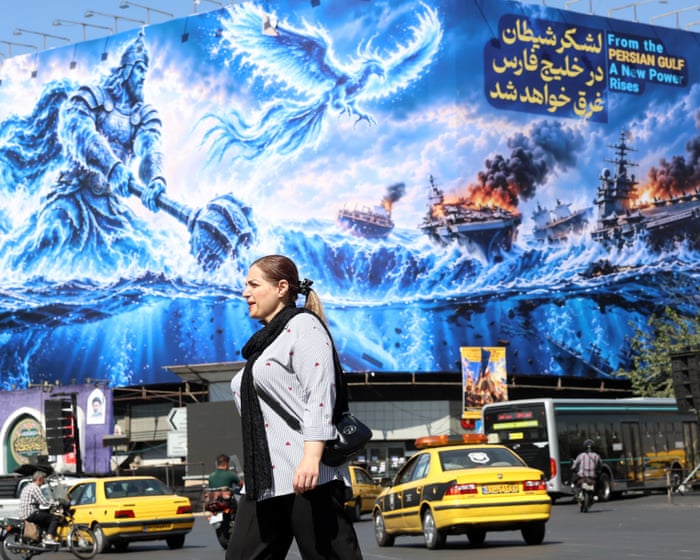
Iran’s President Masoud Pezeshkian met with Pakistan’s Interior Minister Mohsin Naqvi in Tehran to discuss stronger ties amid rising tensions with the United States. Qatar is working with Pakistan to mediate talks between Iran and the U.S., while Iran’s officials continue diplomatic efforts at the United Nations General Assembly.
Key Facts
Iranian President Pezeshkian and Pakistani Interior Minister Naqvi met in Tehran to strengthen relations.
Naqvi’s visit to Iran was his sixth since the war between the U.S. and Israel against Iran began in February.
Iran says it received intelligence that the U.S. plans new attacks on the country.
Qatar is trying to help Iran and the U.S. start dialogue, coordinating with Pakistan.
Iran’s Foreign Minister Abbas Araghchi traveled to New York for the UN General Assembly and stopped in Qatar for talks.
The U.S. gave visas to Iranian officials Pezeshkian and Araghchi but restricted travel and purchases for others in the delegation.
President Donald Trump said he is considering various options for dealing with Iran, including economic pressure or talks.
Iran’s security chief said Iran sent new conditions to the U.S. for restarting negotiations after a previous 60-day agreement failed.
Two tankers were attacked in the Strait of Hormuz, a key shipping route, which Iran controls and monitors.
Read the Original
Want the full story? Tap a source to open the original
article.
Many families in Gaza are using communal ovens to bake bread for free because fuel and food are very expensive and scarce due to ongoing conflict. Women like Azza Ashour and Randa Adwan are managing households and working at these ovens to feed their children and earn a small income.
Key Facts
Azza Ashour, a mother of five, uses a communal oven in a school shelter to bake bread for her children.
Azza’s husband has been detained by the Israeli army since May 2024 without trial.
Food aid from the World Food Programme is irregular, arriving only once every one or two months.
Cooking fuel and firewood have become too expensive for many displaced families.
The communal ovens are supported by the International Committee of the Red Cross (ICRC) and allow free baking.
Randa Adwan, a mother of seven with a college degree, bakes bread at the communal oven to earn about $23 a day.
Jobs in Gaza are very limited, so baking at the oven is assigned by a lottery system.
Due to war and displacement, women like Azza and Randa have taken on full responsibility for their families’ care and income.
Read the Original
Want the full story? Tap a source to open the original
article.
The UN General Assembly (UNGA) has seen many notable moments over the years. These include strong speeches, controversial comments, and dramatic actions by world leaders.
Key Facts
The UN General Assembly is a yearly meeting where leaders from almost all countries discuss global issues.
Memorable moments at UNGA include powerful speeches that have drawn worldwide attention.
Some meetings have involved controversial or heated remarks by leaders.
There have been instances when leaders walked out or made dramatic gestures during sessions.
These events often highlight important global conflicts, diplomatic disputes, or international cooperation efforts.
The article looks back at these moments as highlights of the UNGA’s history.
Read the Original
Want the full story? Tap a source to open the original
article.
Iran’s Revolutionary Guard Corps (IRGC) warned it would change the areas of conflict if the US increases attacks against Iran. This warning followed President Donald Trump’s statement about possible actions against Iran, including economic pressure, military strikes, or making a deal.
Key Facts
President Trump said big events involving Iran could happen soon, with options like economic sanctions, military action, or negotiation.
IRGC spokesperson Hossein Mohebbi warned that new US attacks would lead Iran to use different weapons and fight in new locations.
Iran claims it has targets that have not been attacked before.
The warning came after attacks on Riyadh, Saudi Arabia, by Yemen’s Houthi rebels, who are supported by Iran but act independently.
Houthis control areas near the Bab al-Mandab Strait, a key shipping route between Asia and Europe.
Iran benefits from the Houthis fighting Saudi Arabia because it could reduce US pressure on Iran.
The Strait of Hormuz remains closed to shipping until Iran’s conditions are met, disrupting global trade.
The US is maintaining a naval blockade of Iranian ports and increasing economic sanctions.
Read the Original
Want the full story? Tap a source to open the original
article.
An auction in Paris sold nearly €1 million worth of personal items belonging to French actress and animal rights activist Brigitte Bardot. The money raised will support her animal welfare foundation and her only child, despite some family disagreement about the sale.
Key Facts
The auction raised almost €1 million, about 20 times higher than the original estimate.
285 items were sold, including hats, sunglasses, furniture, dog collars, guitars, and personal belongings.
Brigitte Bardot, who died in December at age 91, was a famous actress turned animal rights campaigner.
Proceeds will go to the Brigitte Bardot Foundation, which helps animals through shelters and partner groups in France and other countries.
About 3,000 buyers from France and abroad registered for the auction.
Bardot’s last husband criticized the sale, calling it disrespectful and saying Bardot would not have approved.
The foundation stated the auction was approved by its board and is part of continuing Bardot’s animal rights work.
Bernard d’Ormale, Bardot’s widower, was removed recently as head of the foundation after disagreements about the auction.
Read the Original
Want the full story? Tap a source to open the original
article.
The Roj camp in northeast Syria holds over 2,300 women and children linked to ISIL, many detained without a legal process. Recently, reports say camp conditions have worsened, with night raids, violence, and extortion by security forces. Control of the camp shifted from the Kurdish-led Syrian Democratic Forces to the Syrian government, but tensions and violence continue inside.
Key Facts
Roj camp holds more than 2,300 detained women and children, many linked to ISIL.
Detainees have been held for nearly ten years without individual legal cases.
Reports describe escalating violence, including night raids, stone-throwing, and injuries.
The Kurdish-led Syrian Democratic Forces controlled Roj until August 2024, then turned control over to the Syrian government.
The security staff at the camp are divided between those integrated into the government and those who refused.
United Nations experts say conditions in the camp may qualify as torture under international law.
Around 52,000 people are detained in camps like Roj and al-Hol, including about 12,000 foreigners.
The UN calls Roj the world’s largest site of mass arbitrary detention of women and children on security grounds.
Read the Original
Want the full story? Tap a source to open the original
article.
President Donald Trump is preparing to speak at the United Nations General Assembly amid a busy period of social media posts on topics like a military facility plan and artificial intelligence. His past speeches at the UN have been controversial, and his recent tweets suggest he might continue his strong and unusual style during this year's address.
Key Facts
The UN General Assembly is a yearly event where world leaders speak on global issues.
Many US presidents have used this platform to share positive messages about the country and the world.
President Trump has previously made controversial remarks at the UN, including criticizing other countries and the UN itself.
Recently, Trump tweeted about turning a planned arch in Washington DC into a military storage site, claiming the military requested it without proof.
Trump also announced plans for an “AI force” to promote artificial intelligence, calling it a major future economic driver.
His social media posts include warnings against fears of AI and criticism of political opponents.
Trump’s upcoming UN speech comes during ongoing conflict involving Iran, which he predicted would end quickly but still continues.
He released a “Top 25 Trump Achievements” list just days before his UN speech.
Read the Original
Want the full story? Tap a source to open the original
article.
More than 500 children in Nepal are living in temporary shelters after losing their parents in deadly floods. These children, many separated from their families, face uncertain futures as the government and organizations try to reunite them with relatives or provide care.
Key Facts
Floods in Nepal killed over 1,400 people and left at least 5,000 missing.
More than 500 children today live in temporary shelters without their parents.
Nepali law requires a person to be missing for 12 years before they can be declared dead, but there is a special exemption during disasters if approved by a court.
Many children like 9-year-old Ram Thakur were separated from their parents during the floods and are waiting to be reunited.
Over 32,000 children were displaced by the floods across Nepal.
Only 18 children have been reunited with their families so far.
Local nonprofits provide bedding, toys, and food in shelters to support the children.
Authorities and organizations are working to find the children’s families or arrange longer-term care.
Read the Original
Want the full story? Tap a source to open the original
article.
A large concrete ring on the Suffolk coast, built during the Cold War, has been identified as part of a radar system designed to detect nuclear explosions and rocket launches. Researchers confirmed the ring was part of the U.S. Air Force’s R-System radar, used in the 1960s and later replaced by satellites.
Key Facts
The concrete ring is 50 meters (164 feet) wide and is located at Orford Ness, Suffolk.
It was built by the U.S. Air Force in the early 1960s.
The ring supported a steerable helical transmitter to detect nuclear explosions and rocket launches from thousands of miles away.
The radar system is called the R-System and was part of Cold War intelligence gathering.
Only about eight similar concrete rings were made worldwide.
Researchers Steve Clifton and Olaf Kirchner met Ed Lyon, the creator of the R-System, who confirmed the ring’s purpose.
The R-System was eventually replaced by satellite technology by the end of the 1960s.
Orford Ness was a secret military testing site used during both World Wars and the nuclear age, now managed by the National Trust.
Read the Original
Want the full story? Tap a source to open the original
article.
European intelligence officials warn that Russia may soon try to test NATO’s strength with an attack on European soil, possibly using drones or missiles. These warnings come amid ongoing conflicts in Ukraine and concerns about Russia’s hybrid tactics to disrupt support for Ukraine without sparking full military war.
Key Facts
The UN General Assembly is focusing on conflicts in Iran, Ukraine, and the Gulf.
European countries have seen sabotage acts believed to be from Russia, aiming to disrupt support for Ukraine.
Russia’s recent elections tightened Vladimir Putin’s control, and far-right parties like Germany’s AfD gained ground.
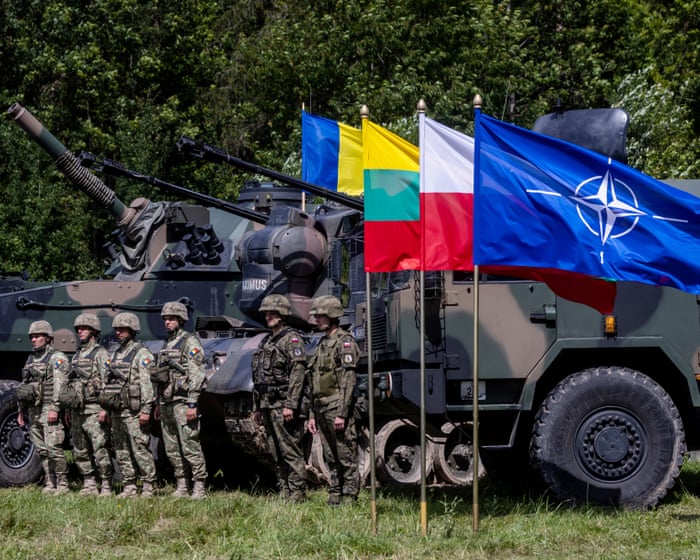
Intelligence sources from the Czech Republic, Latvia, and Sweden say a Russian attack on NATO territory could happen soon.
Polish Prime Minister Donald Tusk mentioned intelligence pointing to possible missile or drone attacks from Russia.
French President Emmanuel Macron is holding emergency talks due to these warnings.
Experts note uncertainty about how concrete the intelligence is, compared to clear evidence before Russia’s 2022 invasion of Ukraine.
The situation is described as a “shadow war” or “hybrid war,” with actions just below the level that would normally trigger military retaliation.
Read the Original
Want the full story? Tap a source to open the original
article.
The foreign ministers of the G7 countries have condemned recent attacks by Yemen’s Houthi group against Saudi Arabia. They called for the Houthis to stop all military actions and urged Iran to end its support for the group.
Key Facts
The G7 includes the UK, Canada, France, Germany, Italy, Japan, and the United States.
The ministers condemned continued strikes by the Houthis on Saudi Arabia as unacceptable.
They called on the Houthis to stop attacks on civilians and shipping and to return to peaceful talks.
The statement accused Iran of arming and supporting the Houthis, breaking UN rules.
The support from Iran was described as escalating the conflict and threatening global trade and stability.
This escalation follows a period of calm after a ceasefire agreed in 2022.
The conflict involves the Houthis, who are aligned with Iran, and the Saudi-backed Yemeni government.
The meeting took place informally during the United Nations General Assembly in New York.
Read the Original
Want the full story? Tap a source to open the original
article.
The 81st United Nations General Assembly (UNGA) will hold its main debate from September 22 to 28, 2026, in New York. Nearly 130 world leaders, including President Donald Trump, will speak on global issues such as climate change, wars, and nuclear weapons.
Key Facts
The UNGA session began on September 8, with Khalilur Rahman of Bangladesh as president.
The main debate starts on September 22 and runs until September 26, then resumes on September 28.
Brazil traditionally speaks first, followed by the host country, the United States. President Donald Trump will speak second.
The UN Secretary-General Antonio Guterres will open the debate with his final report.
The UN headquarters in New York, an international territory, hosts the event.
Palestinian leader Mahmoud Abbas will give his speech via prerecorded video due to US visa denial.
The 2026 theme is “Restoring trust, managing transformation: a United Nations that delivers for all.”
Topics include climate action, pandemic preparedness, nuclear disarmament, racism, and conflicts in the Middle East and Ukraine.
Read the Original
Want the full story? Tap a source to open the original
article.
Each summary links back to the original reporting, so you can check the work. Support that, and get the daily digest every morning. Most choose $3.99/month.
The United States plans to sell $2.8 billion in weapons to Israel, including 40,000 bombs. Experts are discussing if this large arms deal matches the threat Israel faces or if it might increase harm to civilians in Gaza.
Key Facts
The US is planning a $2.8 billion arms deal with Israel.
The deal includes 40,000 bombs.
Experts like David Hale and Daryl Kimball have commented on the deal.
There is concern about whether the deal is balanced with Israel’s security needs.
Some worry this weapons supply could increase civilian casualties in Gaza.
The discussion focuses on the impact of such a large arms deal in the ongoing Israel-Gaza conflict.
The deal highlights the US support for Israel’s defense capabilities.
Read the Original
Want the full story? Tap a source to open the original
article.
A video from Bihar, India, shows a teenage girl being sexually assaulted and her friend beaten by a group of men. Three minors have been arrested, and police are investigating further. The incident has caused public anger and raised concerns about the safety of women in Bihar.
Key Facts
The incident happened on 19 September in Jamui district, Bihar, involving two school students.
The girl was sexually assaulted, and the boy was beaten; both teenagers are minors.
Three accused, also minors, have been arrested; police are looking for others.
The video went viral online, prompting public outrage and debate on women’s safety.
The case is being handled under India’s Protection of Children from Sexual Offences Act (POCSO).
Police are also acting against social media accounts spreading the video with the victims’ identities.
Bihar officials described the incident as a "sporadic" or "isolated" event but promised strict action.
Opposition leaders criticized the state government’s record on women's safety following the incident.
Read the Original
Want the full story? Tap a source to open the original
article.
Russia has started using new jet-powered drones to attack Ukraine, making their attacks more powerful and harder to stop. Ukraine is trying to develop cheaper ways to defend against these drones because using missiles and fighter jets is too costly.
Key Facts
Russia launched almost 3,000 jet-powered drones in August alone.
These drones are faster and more difficult to shoot down than previous types.
Ukraine has been using missiles and fighter jets to fight the drones.
Defending with missiles and jets is expensive for Ukraine.
Ukraine is working on building low-cost weapons to stop the drones.
Ukrainian air defense units are actively engaged in countering this new drone threat.
The new drones are causing more damage in Russian attacks on Ukraine.
This development is part of the ongoing conflict between Russia and Ukraine.
Read the Original
Want the full story? Tap a source to open the original
article.
Nearly 4 million records of enslaved people from 20 former British colonies are now searchable online. These records were digitized by Ancestry and University College London to help descendants learn about their family histories.
Key Facts
The collection covers records from 1813 to 1840 in places like Jamaica, Barbados, the Bahamas, Trinidad, Mauritius, and South Africa.
It contains about 300,000 pages of detailed information including names, ages, family relationships, and physical descriptions of enslaved people.
The registers were originally created by the British government to monitor enslaved populations after the slave trade was abolished in 1807.
Some records note whether individuals were born in Africa or in the Caribbean.
The digitized archive allows descendants to easily search for ancestors without visiting physical archives.
The project was done by Ancestry and UCL’s Centre for the Study of the Legacies of British Slavery.
The records help restore personal histories that were once reduced to property lists.
This release follows research showing over 10,000 people were involved in the British slave trade over nearly 250 years.
Read the Original
Want the full story? Tap a source to open the original
article.
A project in Scotland is monitoring wildcats bred in captivity to prepare them for release into the Cairngorms. Using 72 cameras, scientists watch the cats’ health and natural behaviors to help the species survive and expand to new areas.
Key Facts
The Saving Wildcats group uses 72 cameras to observe wildcats in captivity without disturbing them.
They check if the cats can do natural activities like climbing, pouncing, and being active at regular times.
The project successfully released 46 wildcats into the Cairngorms, with at least 20 litters born in the wild since 2024.
Plans exist to release wildcats in more locations across Scotland to expand their population.
Experts want to keep human contact low to prevent cats from getting used to people.
Climate change and natural disasters, like storms and forest fires, threaten wildcat survival and make wider distribution important.
Conservation efforts include microchipping, neutering, and vaccinating pet and feral cats to prevent interbreeding with wildcats.
Scientists consider wildcats critically endangered and continue to closely monitor their numbers and health.
Read the Original
Want the full story? Tap a source to open the original
article.
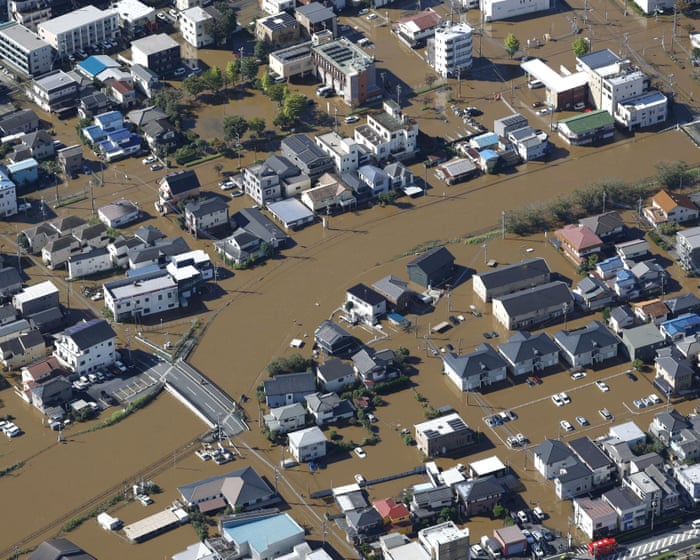
Typhoon Dujuan caused at least two deaths in Japan and knocked out power for tens of thousands of homes near Tokyo. The storm brought strong winds and record-breaking rain, triggering landslides and forcing flight cancellations and event closures.
Key Facts
Typhoon Dujuan hit Japan with winds reaching 144 km/h (89 mph).
Two people died due to landslides caused by heavy rain: one in Yokosuka and another in Chiba.
About 50,000 households were without electricity near Tokyo after the storm.
More than 1.6 million people around Tokyo were asked to evacuate, though it was not mandatory.
The storm caused flight cancellations for Japan Airlines (135 flights) and All Nippon Airways (140 flights).
Oshima Island recorded 832 mm of rain in 48 hours, over twice its normal monthly average.
Tokyo’s Edogawa ward had a record 282.5 mm of rain in 24 hours.
Experts say climate change is increasing the chance of severe storms by making the atmosphere hold more water.
Read the Original
Want the full story? Tap a source to open the original
article.
There are no ads, so there is no reason to bait you. Readers who chip in keep it that way. Most choose $3.99/month, and get the daily digest every morning.
Fighting continues in Yemen between Houthi rebels and Saudi-backed government forces over strategic mountains near the Red Sea. The conflict has caused hundreds of deaths and displaced over 158,000 people, while the United States reportedly prepared airstrikes against the Houthis but then canceled them.
Key Facts
The Houthis and Yemeni government forces are fighting for control of the Kahboub Mountains near the Red Sea.
Controlling these mountains would allow the Houthis to cut off government-held southern coastal areas.
More than 674 people have been killed and over 158,000 have fled their homes due to the renewed fighting.
The Houthis seized Yemen’s Red Sea coast, including the port of Mocha, recently.
Yemeni government forces claimed to have struck Houthi fighters and downed a drone near Taiz.
Saudi Arabia has carried out over 157 air attacks against the Houthis, including attacks that killed civilians.
Saudi Crown Prince Mohammed bin Salman has asked the US to join the fight, but Washington has so far declined.
The New York Times reported that President Donald Trump ordered airstrikes on the Houthis but canceled them at the last minute.
Read the Original
Want the full story? Tap a source to open the original
article.
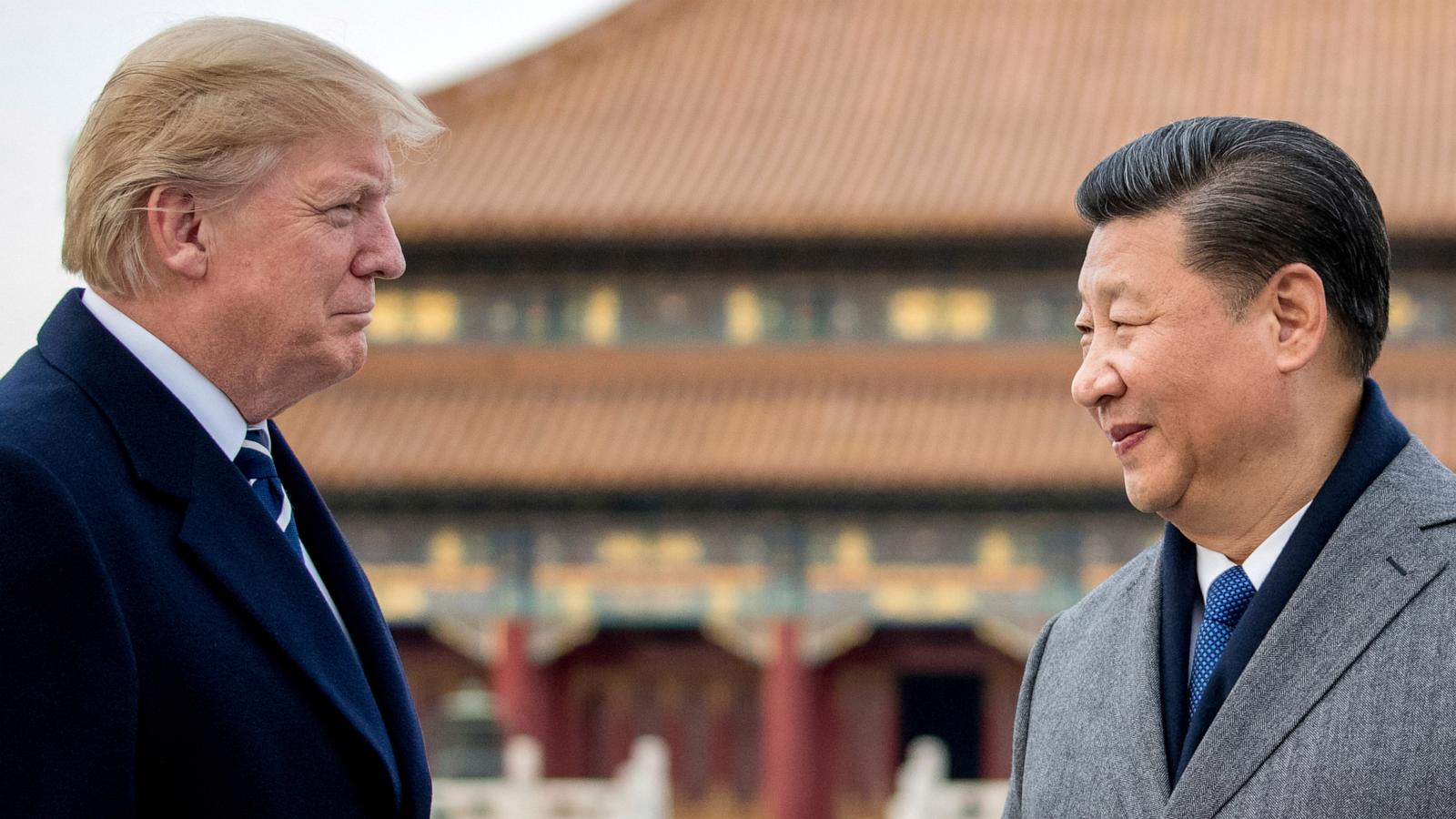
President Donald Trump is hosting Chinese leader Xi Jinping in Washington amid rising tensions over trade, artificial intelligence (AI), and Iran. Both leaders are seeking to maintain stability despite strong competition in technology and economics between the two countries.
Key Facts
This is Xi Jinping’s first visit to Washington in 10 years and his third meeting with President Trump since Trump’s return to office.
The U.S. and China are in a tough race to develop AI technology, which both see as crucial for future power and security.
They recently eased a trade war that involved high tariffs and restrictions on critical minerals needed for technology and defense.
The U.S. restricts exports of advanced AI chips to China and accuses China of using American AI technology without permission.
China warns that losing the AI race could threaten the Communist Party's control.
Both countries blacklist each other's companies and limit the flow of high-tech products but aim for "overall stability."
Experts see the relationship as competitive yet cautious, with dialogue viewed as important even if major deals are unlikely.
Issues like Iran and Taiwan remain points of tension alongside economic and technological rivalry.
Read the Original
Want the full story? Tap a source to open the original
article.