Neutral summaries of your favorite news sources — just the facts.
Your favorite news sources, one neutral feed — we distill their reporting into fact-first
summaries and always link to the original story. How it works
World News
Comprehensive coverage of international news and global events
A traditionalist Catholic group called the Society of St. Pius X (SSPX) plans to consecrate four new bishops without the approval of Pope Leo XIV. This act risks automatic excommunication and a break from the Catholic Church, but the SSPX believes it is preserving church tradition.
Key Facts
The SSPX will hold a large ceremony in Econe, Switzerland, to consecrate four bishops against the pope’s wishes.
Pope Leo XIV warned that the consecrations are a serious sin and urged the group to stop.
Church law says consecrating bishops without papal approval leads to automatic excommunication.
The SSPX was founded in opposition to the Catholic Church’s modern reforms from the Second Vatican Council.
The group prefers the older Latin Mass over the modern services used by most Catholics.
SSPX members are treating the event like a celebration, with souvenirs and special wine for participants.
SSPX leaders say they accept the penalties and believe preserving tradition is more important.
The ceremony marks 38 years since a similar act by the SSPX led to excommunications.
Read the Original
Want the full story? Tap a source to open the original
article.
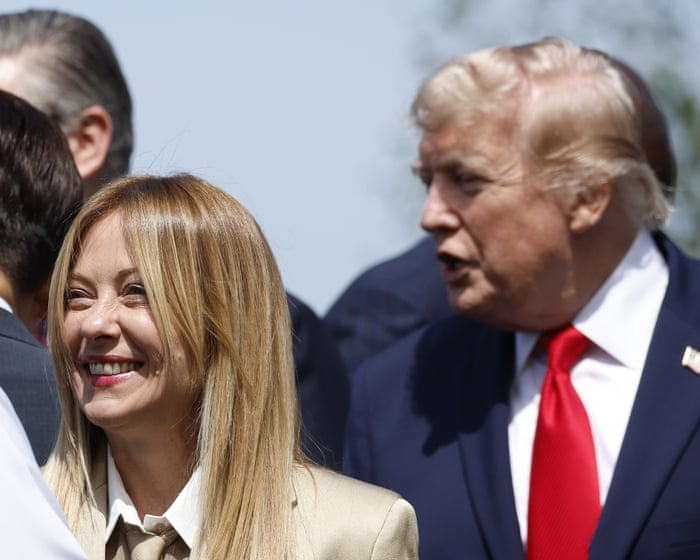
Italian Prime Minister Giorgia Meloni and U.S. President Donald Trump have publicly disagreed after Trump claimed Meloni asked him for a photo at a recent G7 meeting, a claim she denied. The dispute reflects political tensions between the two leaders and has affected their personal and diplomatic relationship.
Key Facts
President Trump said Meloni begged him for a photo at the G7 meeting in France, claiming she wanted to improve her low approval ratings.
Meloni denied Trump's claim in a social media video, saying the photo story was false and expressed surprise at how Trump treats allies.
Meloni also said her popularity issues are unrelated to the U.S., though she noted being friends with Trump has not helped her politically.
Italy’s Foreign Minister Antonio Tajani canceled plans to attend a U.S.-Italian business event in Miami amid the tensions.
The dispute seems partly political, as Trump criticized Meloni for not fully supporting the U.S. regarding Iran.
Meloni’s popularity has declined after a failed judicial reform referendum and opposition alliance building ahead of elections.
Public disagreements with Trump may help Meloni politically by distancing her from Trump’s unpopularity in Italy.
Despite the dispute, Italy's government is trying to improve relations with the U.S., including events to celebrate American independence.
Read the Original
Want the full story? Tap a source to open the original
article.
Two strong earthquakes, called a "doublet," hit Venezuela’s northern coast on June 24, 2026, causing over 180 deaths and widespread damage. The quakes, measuring 7.2 and 7.5 in magnitude, struck within 39 seconds of each other and mainly affected the coastal areas near Caracas, especially La Guaira.
Key Facts
A doublet earthquake occurs when two similar-sized quakes happen close together in time and place.
The first quake had a magnitude of 7.2, followed by a 7.5 magnitude quake 39 seconds later.
These earthquakes caused buildings to collapse in Caracas and other areas, with at least 180 people killed and about 1,500 injured.
Thousands were reported missing after the disaster.
The affected area includes La Guaira, a coastal region just north of Caracas that suffered heavy damage.
The quakes happened along the Bocono fault, a major fault running about 300 miles through the Venezuelan Andes.
The earthquakes occurred where the Caribbean and South American tectonic plates meet and move past each other.
The fault movement was a shallow strike-slip, where rock blocks slide horizontally past each other.
Read the Original
Want the full story? Tap a source to open the original
article.
Venezuela recently experienced rare and deadly earthquakes that caused many deaths and injuries. The article lists several of the deadliest earthquakes in Latin America over the last 100 years, showing the history of such natural disasters in the region.
Key Facts
Venezuela was hit by back-to-back deadly earthquakes in June 2026, causing hundreds of deaths and injuries.
In September 2017, Mexico suffered two strong earthquakes (8.1 and 7.1 magnitude) killing nearly 500 people.
A major earthquake in Ecuador in April 2016, measuring 7.8, killed more than 650 people.
Chile experienced an 8.8 magnitude earthquake in February 2010, which also caused a tsunami and killed 523 people.
El Salvador faced two big earthquakes in early 2001 that resulted in over 1,200 deaths due to shaking and landslides.
The largest recorded earthquake in history was in Chile in May 1960, at magnitude 9.5, killing more than 1,655 people and leaving millions homeless.
Other deadly earthquakes hit countries such as Peru, Colombia, Guatemala, Nicaragua, Costa Rica, and Ecuador throughout the 20th century.
Read the Original
Want the full story? Tap a source to open the original
article.
Two strong earthquakes hit northern Venezuela on June 24, 2026, causing many injuries and over 1,450 deaths. The government declared a state of emergency and planned to create a $200 million fund to rebuild damaged hospitals and homes, while international aid arrived to help.
Key Facts
Two earthquakes struck close together, measuring 7.2 and 7.5 in magnitude.
The quakes occurred about 170 kilometers west of Caracas, the capital city.
Over 1,450 people died and thousands were injured.
The first 72 hours after an earthquake are critical for rescue efforts.
Venezuela has experienced nearly 60 earthquakes of magnitude 6.0 or higher since 1900.
Half of the strongest recent quakes in the region happened in the last eight years.
The government declared a state of emergency and is setting up a $200 million recovery fund.
Countries from around the world are sending aid to Venezuela.
Read the Original
Want the full story? Tap a source to open the original
article.
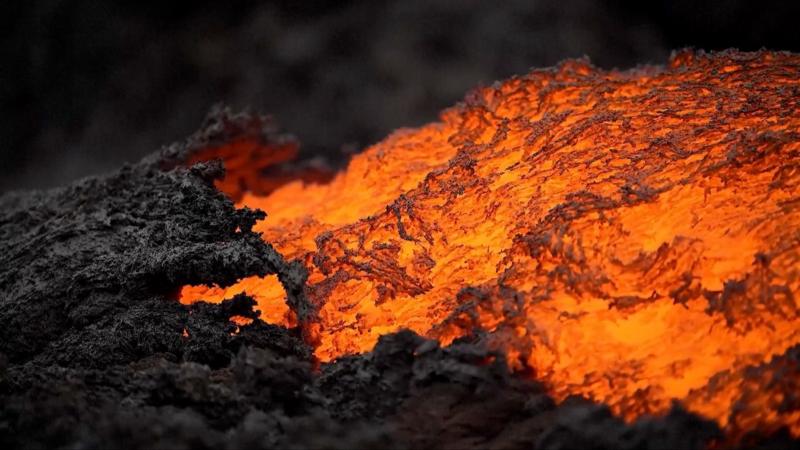
Mount Etna, Europe's largest active volcano, erupted last Friday on the Italian island of Sicily. Bright orange lava flowed down from about 3,000 meters high, covering a distance of at least 300 meters.
Key Facts
The eruption happened last Friday at Mount Etna in Sicily, Italy.
Lava flowed down about 300 meters (1,000 feet) from the eruption site.
The eruption started at an altitude of around 3,000 meters (about 9,840 feet).
The bright orange lava created a visible trail along the volcano’s slope.
Mount Etna is the largest active volcano in Europe.
The information comes from the Etna Observatory of the Italian Institute of Geophysics and Volcanology.
Footage of the lava flow shows the glowing orange lava moving down the volcano.
This volcanic activity was recently recorded and shared through news and video.
Read the Original
Want the full story? Tap a source to open the original
article.
Lily Allen is on tour performing her new album West End Girl from start to finish in shows lasting about 55 minutes. Some fans are unhappy with the short length and lack of interaction during the shows, especially given high ticket prices. Allen says the format is a deliberate artistic choice meant to feel like a theater show.
Key Facts
Lily Allen’s West End Girl tour features the full album performed live, lasting around 55 minutes.
The shows have no band or dancers and little speaking or interaction with the audience.
Tickets cost about £100 in London and up to $400 for VIP in Australia.
Some fans feel the shows are too short and not worth the ticket price.
The first half of the show is performed by a string trio playing Allen’s older songs for audience karaoke.
Allen says the show is designed like a one-woman theatrical performance and was clearly advertised this way.
Critics and fans are divided on the show’s format and ticket value.
Allen responded to criticism by saying the tour team is working hard and she is proud of the show.
Read the Original
Want the full story? Tap a source to open the original
article.
The world’s oceans reached their hottest June ever in 2026, according to European scientists. The arrival of the El Niño weather pattern, combined with human-caused climate change, could cause even higher sea and air temperatures in the near future.
Key Facts
Global average sea surface temperature in June 2026 was 20.98°C, the highest on record.
This broke previous records set in 2023 and 2024.
The first half of 2026 had near-record ocean warmth with widespread marine heatwaves affecting 82% of the oceans.
El Niño causes unusually warm waters in the Pacific Ocean, influencing global weather and increasing heat in oceans and the atmosphere.
El Niño can lead to extreme weather like floods, droughts, and wildfires in different parts of the world.
The combined effects of El Niño and greenhouse gases from human activities are expected to push 2026 among the warmest years recorded.
Warmer oceans contribute to rising sea levels, stronger storms, and stress on coral reefs, which can bleach and die.
Oceans absorb about 90% of the extra heat caused by greenhouse gases, playing a key role in Earth’s climate system.
Read the Original
Want the full story? Tap a source to open the original
article.
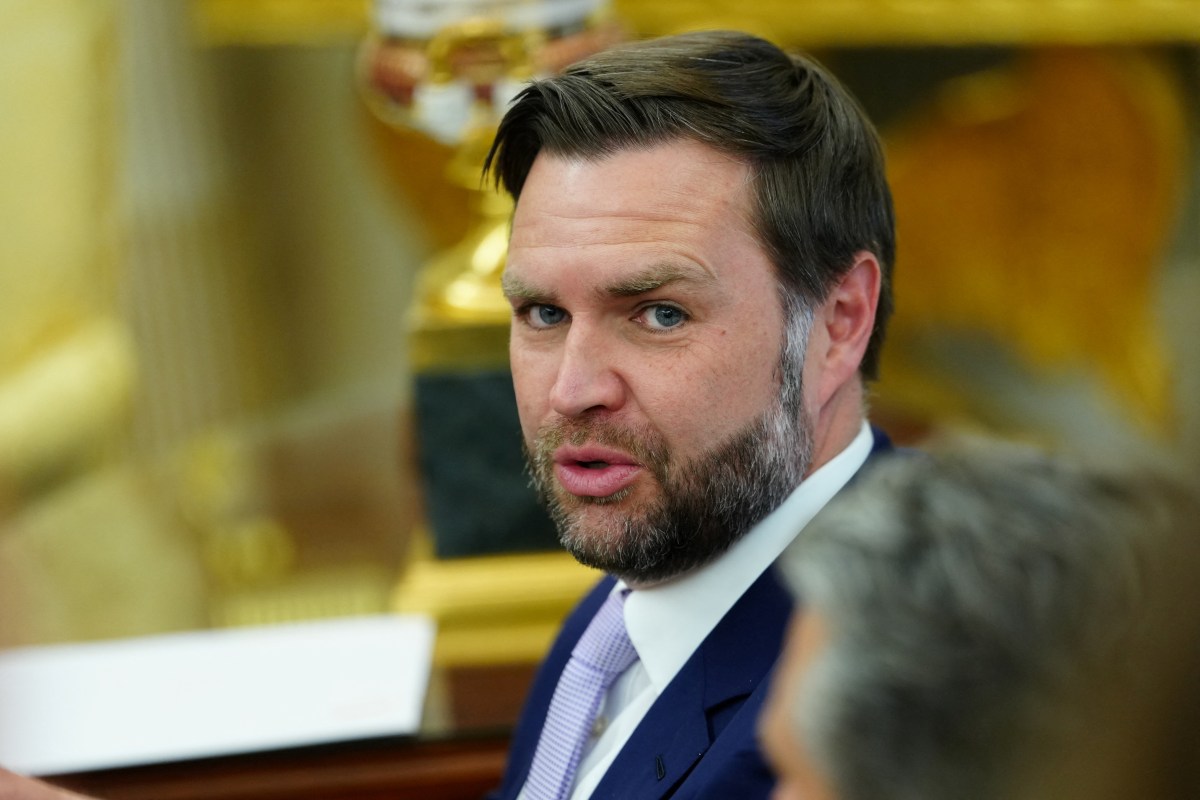
Vice President J.D. Vance said the United States is in a strong position no matter how talks with Iran turn out. He said a successful deal would change Iran’s behavior permanently, but even if talks fail, the U.S. would still be stronger because of damage already done to Iran’s nuclear and military capabilities.
Key Facts
Vance spoke on Fox News, stating the U.S. has leverage whether the Iran negotiation succeeds or fails.
A good deal would mean Iran stops supporting terrorism, abandons nuclear weapons, and rejoins the global economy.
If talks fail, Vance claimed Iran’s nuclear program and conventional military strength are already destroyed.
U.S. envoys met with Qatari officials in Doha during ongoing discussions related to Iran.
Qatar said there were no direct talks between U.S. and Iranian diplomats in Doha.
The situation is complicated by attacks on commercial ships in the Strait of Hormuz, a key shipping route.
Some experts express doubt that the U.S. will benefit if negotiations fail and warn of possible renewed conflict.
A clear ceasefire outcome from current talks is uncertain, said an expert on international relations.
Read the Original
Want the full story? Tap a source to open the original
article.
UN Secretary-General Antonio Guterres warned that millions of Palestinian refugees face serious risks due to a $100 million funding gap for the UN agency UNRWA. He highlighted funding cuts and restrictions by Israel, which have forced UNRWA to reduce its aid work in Gaza, the West Bank, and neighboring countries.
Key Facts
UNRWA provides aid, education, healthcare, and shelter to 2.6 million Palestinian refugees.
There is a $100 million shortfall in funding for UNRWA, causing cuts in services.
The United States stopped funding UNRWA in January 2024 after accusations against some agency staff related to the October 7, 2023 Hamas attack.
A UN investigation found possible involvement of nine UNRWA employees but no proof against others accused.
UNRWA was established in 1949 to help Palestinians displaced by the creation of Israel.
Israel has imposed restrictions on UNRWA’s work in the occupied Palestinian territories.
Since October 2023, 390 UNRWA staff have been killed by Israeli actions in Gaza.
UN Secretary-General called UNRWA a key stabilizing force and urged countries to provide urgent financial support.
Read the Original
Want the full story? Tap a source to open the original
article.
The Andrew Carnegie Foundation announced its 2026 list of “Great Immigrants, Great Americans,” honoring notable immigrants including Citi CEO Jane Fraser and others. The foundation highlighted the importance of recognizing immigrants’ positive contributions amid ongoing debates and new U.S. policies on immigration.
Key Facts
The award honors immigrants who have made significant contributions to the United States.
Notable honorees include Citi CEO Jane Fraser, authors Hernan Diaz and Cristina Rivera Garza, and fashion designer Gabriela Hearst.
The foundation recently changed its name to emphasize its nonprofit status and connection to Andrew Carnegie, a Scottish immigrant.
Foundation President Dame Louise Richardson said the awards are not meant to be political but are especially important during current immigration debates.
The U.S. government, under President Donald Trump, is increasing immigration enforcement and reducing legal immigration and asylum seekers.
Immigration remains a highly discussed issue in political and social spheres in the U.S. and globally.
Honoree Dr. Iman Abuzeid moved to the U.S. for opportunities and described it as a place where hard work and skills are rewarded.
The awards were launched in 2006 and celebrate the positive impact immigrants have on American society.
Read the Original
Want the full story? Tap a source to open the original
article.
Pope Leo XIV appointed Sister Alessandra Smerilli as the head of the Vatican office dealing with migrants, the environment, and development. This is the first major appointment of a woman to a high position in the Vatican hierarchy.
Key Facts
Sister Alessandra Smerilli is an Italian economist and was the number two leader of the Dicastery for Promoting Integral Human Development.
She replaces Canadian Cardinal Michael Czerny, who is retiring soon.
Pope Leo XIV is continuing the practice of his predecessor, Pope Francis, by promoting women to top positions in the Vatican.
A Mexican-American woman, Maria Montserrat Alvarado, was recently named head of Vatican communications.
Cardinal Fabio Baggio was simultaneously named “pro-prefect” of the same office to fulfill roles needed for ordained priests.
The Vatican reserves the priesthood for men, which limits how many roles women can hold despite their extensive work in the Church.
Cardinal Baggio will also lead an environmental education center near Rome linked to the Vatican.
Read the Original
Want the full story? Tap a source to open the original
article.
Italy has put on display ancient Etruscan paintings from the François Tomb, which it recently acquired for 15 million euros. These frescoes date back to the 4th century B.C. and are now exhibited at the Villa Giulia Etruscan Museum in Rome.
Key Facts
The fresco panels come from the François Tomb, an Etruscan tomb discovered in 1857.
Italy bought the frescoes in May from the Torlonia family, who had kept them private for many years.
The tomb was found on land owned by the Torlonia family in Vulci, Italy.
The frescoes date from about 330–310 B.C. and show scenes from Etruscan culture and mythology.
Italy has been trying to acquire these artworks since 1921 to bring important cultural items back into the public domain.
The tomb’s contents include jewelry, vases, and other objects loaned from museums worldwide for the exhibition.
This display is the third major cultural purchase by Italy’s Culture Ministry in 2026.
The frescoes are open to the public at Rome’s Villa Giulia National Etruscan Museum starting June 30, 2026.
Read the Original
Want the full story? Tap a source to open the original
article.
At Kenya’s largest mental health hospital in Nairobi, patients receive haircuts as part of a recovery program aimed at improving their self-care and dignity. The grooming sessions are organized by a community group and healthcare workers, highlighting the importance of personal hygiene in mental health treatment.
Key Facts
Patients at Mathari National Teaching and Referral Hospital in Nairobi get free haircuts from visiting barbers.
Personal grooming helps with recovery by encouraging self-care, which can decline during mental illness.
Kenya’s 2015 Mental Health Policy estimates that 25% of outpatients and 40% of inpatients in health facilities experience mental health issues.
Depression, anxiety, and substance use disorders are common mental health problems in Kenya.
June is recognized as Men’s Mental Health Awareness Month in Kenya.
Mental health staff encourage men to openly discuss their struggles instead of turning to alcohol or drugs.
The grooming initiative was started by Sheila Lugaliki, inspired by her experience as a psychiatric patient.
Nurses say grooming sessions boost patients’ confidence and support their overall mental health recovery.
Read the Original
Want the full story? Tap a source to open the original
article.
ExxonMobil and QatarEnergy found two natural gas deposits near Cyprus that could start supplying gas by 2033. The gas would likely be sent by pipeline to Egypt for processing and export, helping Cyprus become a new energy source for Europe.
Key Facts
ExxonMobil and QatarEnergy discovered the Glaucus and Pegasus gas deposits in Cyprus’s exclusive economic zone.
The deposits hold about 7 trillion cubic feet of natural gas.
The gas will probably be sent through a pipeline to Egypt’s processing plants to be turned into liquefied natural gas for export.
Building facilities in Cyprus itself or floating plants near the deposits is considered too expensive.
Cyprus aims to become a key energy hub for Europe using its natural gas resources.
Additional drilling at the Pegasus site is planned by the end of the year for more data.
Other companies like Italy’s Eni, French TOTAL, Chevron, Dutch Shell, and Israeli NewMed also hold licenses for gas exploration near Cyprus.
Eni may start developing another nearby gas field, Cronos, which could supply Europe by 2027 or 2028.
Read the Original
Want the full story? Tap a source to open the original
article.
Heavy rains caused floods and landslides in the capital cities of Ghana and Ivory Coast, killing at least 24 people. Emergency teams worked to rescue residents trapped in flooded buildings, while some areas remained cut off due to submerged roads.
Key Facts
At least 12 people died in Ghana, including a mother and her child swept away in Accra.
Floodwaters submerged entire buildings and roads in Accra and nearby Tema.
In Ivory Coast, more than a dozen people died, mostly in the Abidjan neighborhoods of Attécoubé and Yopougon.
Nine people were trapped and died under rubble in the Mossikro area after several days of rain.
Emergency services faced difficulties reaching some flooded neighborhoods and sought military help.
Residents had to swim through deep water to help trapped neighbors.
Ghana’s disaster agency reported floodwaters entering homes early Monday morning.
Meteorologists warned of more rain in Accra during the week.
Africa is vulnerable to extreme weather like floods despite contributing little to global pollution.
Read the Original
Want the full story? Tap a source to open the original
article.
Qatar’s Prime Minister confirmed his country is continuing to help mediate talks between the United States and Iran. These talks aim to support a peace agreement to end the ongoing conflict in the Middle East.
Key Facts
Qatar plays a mediator role in negotiations between the US and Iran.
The talks are based on a memorandum of understanding intended to stop the Middle East war.
Qatari Prime Minister Sheikh Mohammed met with US envoy Steve Witkoff and Jared Kushner, President Trump’s adviser.
Iran’s chief negotiator said Iran wants dialogue but is ready for war if talks fail.
Israeli Prime Minister Netanyahu visited troops in southern Lebanon, citing threats from Iran-backed Hezbollah.
Pakistan intercepted four drones from Afghanistan amid border tensions.
The Afghanistan Taliban vowed retaliation after Pakistani air strikes in eastern Afghanistan.
Read the Original
Want the full story? Tap a source to open the original
article.
Iran’s top negotiator, Mohammad Bagher Ghalibaf, said that during the US blockade, Iran could not export any oil. He also mentioned that since the blockade ended, Iran’s oil exports have increased a lot.
Key Facts
Iran was blocked from exporting oil during a US blockade of its ports.
Mohammad Bagher Ghalibaf is Iran’s chief negotiator.
He said that no oil was exported during this blockade period.
After the blockade stopped, Iran’s oil exports rose significantly.
The US blockade targeted Iran’s ability to sell oil internationally.
Iran is a major oil-producing country.
The statement highlights the impact of the US actions on Iran’s economy.
Read the Original
Want the full story? Tap a source to open the original
article.
Local pop music from Southeast Asia, especially from the Philippines, Indonesia, and Thailand, is becoming more popular than Korean, Japanese, and American pop music in the region. New Filipino pop groups are gaining international attention, and local music is growing quickly on streaming platforms and radio.
Key Facts
Filipino call center worker Jaycer Bajo now listens mostly to Pinoy Pop (P-pop) groups like ALAMAT, BGYO, and BINI.
BINI was the first all-Filipino girl group to perform at the Coachella music festival in April.
Between 2021 and early 2026, the share of local artists in Spotify’s top 10 songs rose significantly in Indonesia (39% to 97%), the Philippines (31% to 81%), and Thailand (71% to 76%).
Local music also gained more radio airplay in these countries during the same period.
Southeast Asian artists are influenced by K-pop but add their own cultural themes and languages.
K-pop’s success since 2012 showed that Asian music can be globally popular and profitable.
The K-pop industry earned $893 million overseas in 2023 through sales, streaming, and concerts.
Southeast Asia’s music market is still smaller than South Korea’s or Japan’s but is growing fast.
Read the Original
Want the full story? Tap a source to open the original
article.
Algerians will vote on July 2 to elect 407 members of the People’s National Assembly in a parliamentary election seen as a test of political change since the 2019 Hirak protests. While President Abdelmadjid Tebboune says the vote supports building a “new Algeria,” critics say political power remains concentrated and opposition voices face restrictions.
Key Facts
Over 24.7 million Algerians, including around 854,000 living abroad, are eligible to vote.
The election follows the 2019 Hirak protest movement that led to the resignation of long-time president Abdelaziz Bouteflika.
The ruling National Liberation Front (FLN) and its ally, the National Democratic Rally (RND), are competing against opposition and independent parties.
The electoral system allows voters to choose party lists and express preferences for individual candidates.
Voter turnout in the 2021 election was very low, at just 23 percent, showing public disengagement.
Human rights groups have criticized restrictions on opposition activity, media, and civil society; the government denies these claims.
Economic issues like jobs, inflation, and housing are central to the campaign and voter concerns.
Algeria’s economy depends heavily on oil and gas exports, making government spending vulnerable to changes in global energy prices.
Read the Original
Want the full story? Tap a source to open the original
article.