Neutral summaries of your favorite news sources — just the facts.
Your favorite news sources, one neutral feed — we distill their reporting into fact-first
summaries and always link to the original story. How it works
World News
Comprehensive coverage of international news and global events
Heat waves can cause serious health problems, especially for children, older adults, and people with health issues. Experts explain ways to stay safe during very hot weather, even without air conditioning, and describe how heat risk is measured using tools that consider temperature, humidity, and other factors.
Key Facts
Heat waves are dangerous and can cause illness to anyone.
People most at risk include children, older adults, and those with certain health problems.
The wet bulb globe temperature (WBGT) measures heat risk by combining temperature, humidity, cloud cover, and wind.
The heat index measures temperature and humidity but is simpler to find on weather apps.
Different places with the same temperature can feel more or less hot depending on conditions like shade and humidity.
Climate change is making heat waves more frequent and intense.
Health experts recommend strategies to stay cool and safe during heat waves, even without air conditioning.
Read the Original
Want the full story? Tap a source to open the original
article.
The United States and Iran have signed a memorandum of understanding that stopped fighting after three months and created a fund for Iran's rebuilding. This deal changed regional politics by showing US recognition of Iran as a power and affected Iran’s network of allied groups in the Middle East, which are adjusting their strategies after the conflict.
Key Facts
The US-Iran agreement stopped direct war and lifted a US naval blockade on Iran.
A $300 billion fund will help rebuild Iran after the conflict.
The deal means the US dropped its goal of changing Iran’s government by force.
The US now implicitly accepts Iran as a key power in the Middle East.
Iran’s “axis of resistance” includes groups like Hezbollah (Lebanon), the Houthis (Yemen), and armed groups in Iraq.
During the war, Iran mostly used its own missiles and drones rather than its allies fully.
Some experts say Iran’s network of allies is weaker now; others say it is adapting and becoming more focused on defending Iran itself.
Iran’s control over the Strait of Hormuz and its missile and drone capabilities are now central to its defense strategy.
Read the Original
Want the full story? Tap a source to open the original
article.
A recent Gallup survey shows that Russians feel more negative about their economy than in the last 20 years, with most saying their living standards are getting worse. An expert from the University of Chicago said this mood does not seem to affect President Vladimir Putin because he does not prioritize the quality of life for Russian people.
Key Facts
Russians are more pessimistic about their economy than at any time in the past 20 years.
A majority of Russians believe their living standards are declining.
The survey was published by Gallup on June 30, 2026.
Konstantin Sonin, a professor at the University of Chicago, commented on the situation.
Sonin said President Putin does not care much about Russians' quality of life.
The article connects these views to broader issues involving Ukraine, Russia, the economy, Europe, and NATO.
The expert’s view suggests this economic mood is unlikely to cause major changes in Putin’s policies.
Read the Original
Want the full story? Tap a source to open the original
article.
Cuba’s Foreign Minister Bruno Rodriguez said talks with the United States have made no progress in ending US sanctions on Cuba. Despite harsh US measures, including an oil blockade, Cuba remains open to dialogue but warns of growing tensions and pressure from the US government.
Key Facts
Cuban and US negotiations show no progress toward lifting US sanctions.
President Donald Trump has increased pressure on Cuba since starting his second term.
Trump’s administration cut Cuba off from much of its foreign oil supply, worsening shortages.
Cuba is planning a United Nations debate on US sanctions, despite US attempts to block it.
Cuba released more than 2,000 prisoners recently but not political dissidents.
Cuba’s Communist Party approved economic reforms allowing more private business and foreign investment.
Cuba rejects changes to its political system and warns against any US military action.
Fuel shortages in Cuba are causing long power outages and disrupting transportation and hospitals.
Read the Original
Want the full story? Tap a source to open the original
article.
A heatwave in Europe caused tram tracks in Leipzig, Germany, to melt, leading to problems with public transportation. Temperatures reached 41°C (106°F), making travel difficult in the area.
Key Facts
Temperatures in Leipzig reached 41°C (106°F).
The extreme heat caused tram tracks to melt.
Public transport services were disrupted because of the damaged tracks.
The heatwave is affecting many parts of Europe.
The hot weather is considered dangerous and has caused other problems across the continent.
Read the Original
Want the full story? Tap a source to open the original
article.
Taylor Swift has a long history with Madison Square Garden in New York City, starting from a talent competition when she was a child to major concerts and special events. She and Travis Kelce plan to hold several wedding-related celebrations at the venue this week, continuing her connection to the place.
Key Facts
Taylor Swift first performed at Madison Square Garden during a Knicks halftime talent show in 2003 when she was 12 or 13.
She held concerts there during her "Fearless" (2009) and "Speak Now" (2011) tours.
Swift appeared on stage with Ed Sheeran at Madison Square Garden in 2013 to sing their song "Everything Has Changed."
She has performed five times at the annual iHeartRadio Jingle Ball concerts held at Madison Square Garden.
Swift celebrated her 30th birthday at the Jingle Ball concert in 2019 at this venue.
She often attends Knicks basketball games and sits in celebrity seats at Madison Square Garden.
Swift and Travis Kelce plan to have a rehearsal dinner and a larger wedding celebration at Madison Square Garden this week.
The singer references Madison Square Garden and New York City in her song lyrics, showing her fondness for both.
Read the Original
Want the full story? Tap a source to open the original
article.
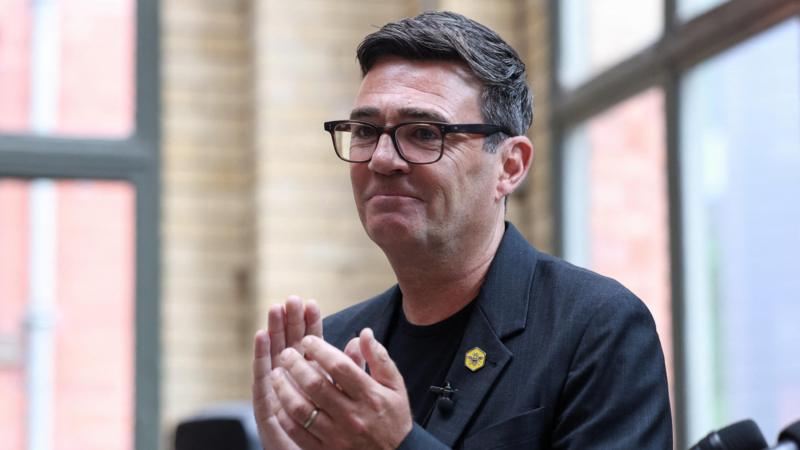
Female Labour MPs are urging Andy Burnham, a candidate for UK prime minister, to have half of his government made up of women if he wins. They want him to fix problems with unfair treatment of women in the party and government, and to give women top leadership roles.
Key Facts
Female Labour MPs want a 50:50 gender split in the government if Burnham becomes prime minister.
Labour has never had a female leader, unlike the Conservative Party which has had three female prime ministers.
Burnham is expected to replace female Chancellor Rachel Reeves with a man and bring back male allies to senior posts.
The Women's Parliamentary Labour Party (WPLP) wants a female deputy prime minister and a minister focused on women's issues.
Labour women say there is a "boy's club" culture causing bullying, misogyny, and ignoring sexual harassment complaints.
The WPLP asks for zero tolerance on bullying and misogyny from government staff and parliamentarians.
Female MPs, especially from ethnic minorities, face threats and online abuse; the group calls for better security and laws to stop this.
Burnham promised to fire staff who undermine women and said he supports women’s equality in government.
Read the Original
Want the full story? Tap a source to open the original
article.
James Van Der Beek, who passed away from cancer in February, will appear posthumously in his final acting project called "Elle." His co-star June Diane Raphael shared memories of Van Der Beek’s strong love for his family and praised his performance in the show, which will be available on Prime Video starting July 1.
Key Facts
James Van Der Beek died from cancer in February.
"Elle" is his last acting project and will be released on July 1 on Prime Video.
June Diane Raphael co-starred with him and described him as a family-oriented man.
Van Der Beek often talked about his six children and wife during filming.
He played the character Dean Wilson, the school superintendent, in "Elle."
Van Der Beek once brought his children to the set during filming.
Raphael said Van Der Beek’s fans will enjoy seeing his final performance.
The show "Elle" is a prequel to the movie "Legally Blonde."
Read the Original
Want the full story? Tap a source to open the original
article.
An explosion in Monaco injured a Ukrainian businessman with ties to Russia and two other people, including a woman and a child. Authorities are searching for a suspect who fled the scene, but the reason behind the attack is not yet known.
Key Facts
The explosion occurred at the entrance of an apartment building in Monaco late Monday evening.
Ukrainian construction tycoon Vadym Yermolaiev was among those injured; he renounced his Ukrainian citizenship in 2017 and holds Cypriot citizenship.
Two other people were hurt: a woman in life-threatening condition and a 13-year-old child and a partner with less severe injuries.
The suspect fled on foot and was seen on surveillance cameras walking around the area before the attack.
Monaco police are investigating the case as attempted murder but have not labeled it terrorism.
Ukrainian diplomats in France, which covers Monaco, are assisting local authorities and providing support.
Yermolaiev was sanctioned by Ukraine in 2023 due to his ties to Russia.
The motive for the attack remains unclear, and the family targeted were regular Monaco residents with no known recent threats.
Read the Original
Want the full story? Tap a source to open the original
article.
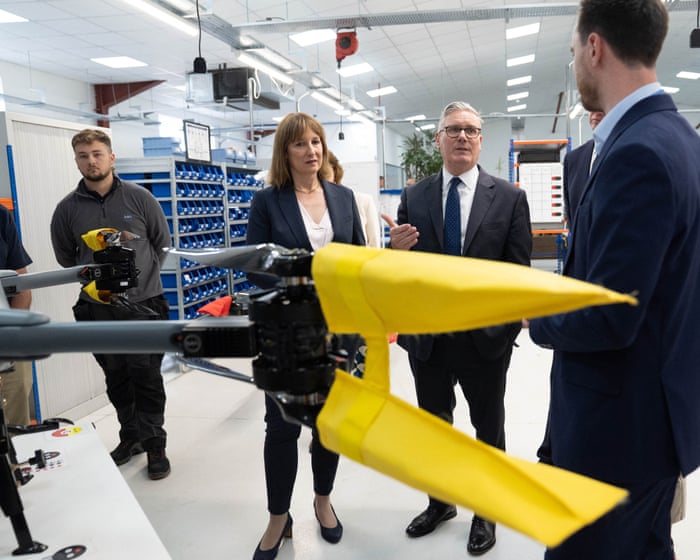
Keir Starmer has announced a new defence investment plan for the UK that includes an extra £15 billion to improve the armed forces. The plan aims to update military equipment and prepare for future threats. The government is discussing where the funding will come from and how it will be spent.
Key Facts
The UK government plans to invest an additional £15 billion in defence.
The investment is intended to equip the armed forces with better resources.
This defence plan is part of Keir Starmer’s political legacy.
The plan was announced despite defence issues causing previous political difficulties.
Discussions are ongoing about the sources of funding for this plan.
The announcement was covered and analyzed in a BBC podcast called Newscast.
The podcast is hosted by Alex Forsyth and James Cook, with contributions from security correspondent Frank Gardner.
The episode length is about 42 minutes and is available on various platforms including smart speakers.
Read the Original
Want the full story? Tap a source to open the original
article.
A veterinarian explains three important rules for taking care of dogs after surgery: watch the incision carefully, do not touch it, and limit the dog's activity to help healing. Dogs often want to return to normal activity too soon, which can harm their recovery.
Key Facts
The first few days after surgery are very important for a dog’s healing.
Owners should watch the surgery site for signs of infection or problems and contact a vet if needed.
Owners should avoid touching the incision and not use any creams or baths on it.
Dogs need to have their movement limited during recovery, even if they seem better.
The healing process can take about 10 days before dogs can safely return to normal activity.
Younger dogs may heal faster but are harder to keep calm.
Mental activities like scent games or puzzle feeders can help keep dogs calm while resting.
Leash walking is usually safe after surgery if the vet allows it, but running and jumping should be avoided.
Read the Original
Want the full story? Tap a source to open the original
article.
The Ebola virus is still spreading in the Democratic Republic of Congo (DR Congo) and putting pressure on hospitals. However, health workers say the situation has improved because more people are visiting treatment centers.
Key Facts
Ebola continues to spread in DR Congo.
The virus is causing strain on healthcare systems.
Local healthcare workers report improvement in the situation.
More people are now going to treatment centers.
The report comes from Bunia, a city in a highly affected area called the "red zone."
The improvement is noted despite the ongoing outbreak.
Read the Original
Want the full story? Tap a source to open the original
article.
Thousands of people protested across South Africa because campaign groups set June 30 as a deadline for undocumented migrants to leave the country. The protests focused on immigration issues and the presence of people without legal papers.
Key Facts
Protests happened across South Africa with many people joining.
Campaign groups declared June 30 as the deadline for undocumented migrants to leave.
The protests were against immigration and undocumented migrants.
The deadline for migrants was unofficial, meaning it was not set by the government.
The protests brought attention to challenges around immigration in South Africa.
Demonstrators demanded action on undocumented migrants living in the country.
The situation reflects ongoing tensions about migration and legal status in South Africa.
Read the Original
Want the full story? Tap a source to open the original
article.
Ukrainian drone attacks on Russian oil refineries have caused fuel shortages in Russia. This has led to rationing, long lines at gas stations, and bans on fuel exports.
Key Facts
Ukrainian drones targeted oil refineries in Russia.
These strikes caused fuel shortages across the country.
Russia introduced fuel rationing to manage supplies.
Long queues formed at petrol stations because of limited fuel.
The Russian government banned fuel exports to keep more fuel inside the country.
The Kremlin said it would handle the situation, but the attacks continue.
Ongoing strikes may cause more fuel problems in Russia.
Read the Original
Want the full story? Tap a source to open the original
article.
Lebanon and Israel agreed on a framework to stop fighting, aiming for peace. However, during the three months after the ceasefire, there were still Israeli airstrikes and over one million people were forced to leave their homes.
Key Facts
Lebanon and Israel reached a framework agreement to end hostilities.
The ceasefire has lasted about three months but remains fragile.
Despite the ceasefire, Israeli airstrikes continued during this period.
More than one million people were displaced, meaning they had to leave their homes.
Officials describe the agreement as a roadmap toward peace.
Some people criticize Lebanon for giving up accountability in exchange for a ceasefire.
The situation remains unstable and tense in the region.
Read the Original
Want the full story? Tap a source to open the original
article.
The UK has launched a new defence investment plan to address rising military threats and budget problems. The plan includes big spending on nuclear submarines but struggles to meet NATO’s defence spending targets, which could concern allies and the US.
Key Facts
The UK’s military budget will still be below NATO’s recommended level by the end of the decade.
Increasing the defence budget means cutting funds from other government departments, since raising taxes or borrowing more is difficult.
The defence plan responds to new threats like Russia’s invasion of Ukraine and instability in the Middle East.
Labour’s defence secretary, Dan Jarvis, said nearly all major defence projects are delayed or over budget.
About 20% of the defence budget is spent on nuclear weapons, rising to 25% as new submarines are built.
£47 billion is being spent on replacing old nuclear submarines that carry Trident missiles.
The programme’s costs are hard for parliament to check because of security concerns.
The UK aims to spend 2.7% of its GDP on defence by 2030, below the NATO target of 3.5%.
Internal disagreements in the UK government have slowed progress on defence spending.
Read the Original
Want the full story? Tap a source to open the original
article.
Berlin plans to demolish a Nazi-era bunker that remains from Adolf Hitler's New Reich Chancellery to build new housing and offices. Some people want to preserve the bunker as a historic site and turn it into a museum to remember the end of World War Two.
Key Facts
The bunker is part of Hitler's New Reich Chancellery, mostly destroyed after World War Two.
Berlin's Housing Senator supports demolishing the bunker for new construction.
Dietmar Arnold, from the Berlin Underworlds Association, opposes demolition and wants a museum and memorial.
The bunker is not the Führerbunker where Hitler died, but another part used during the war.
About 1,200 square meters of the bunker still exist with thick walls and ceiling.
The Berlin State Monuments Council called the bunker historically important and suggested further preservation review.
The bunker served as a hospital at the end of the war.
There is debate over how to balance development needs with preserving historical sites related to Nazi Germany.
Read the Original
Want the full story? Tap a source to open the original
article.
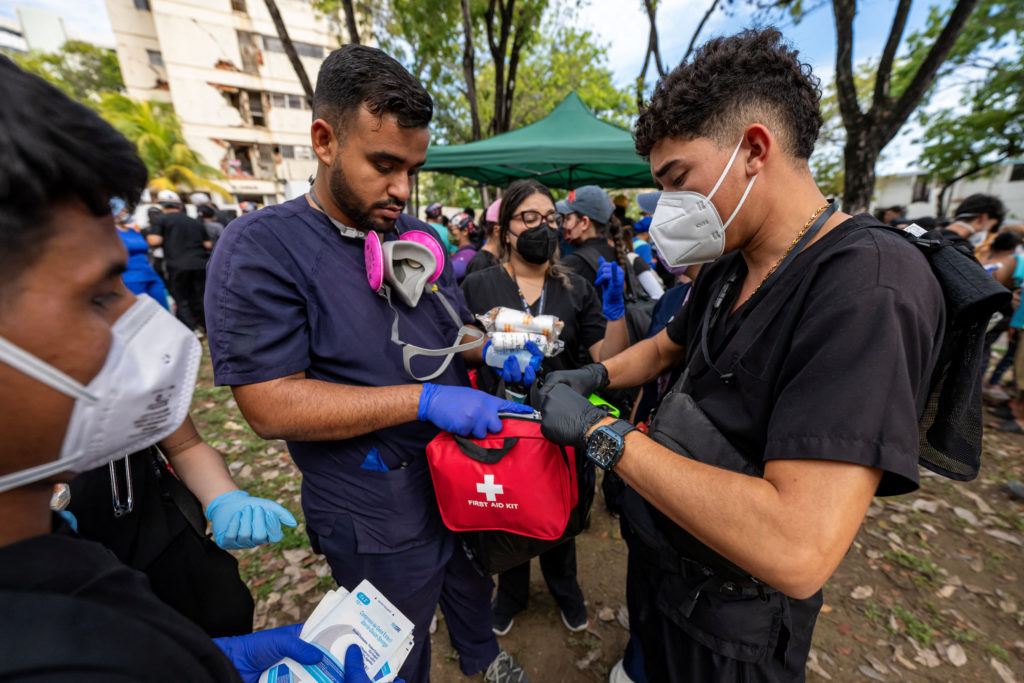
Two powerful earthquakes hit Venezuela nearly a week ago, damaging hospitals and causing many injuries. Aid groups warn that hospitals are overwhelmed, and poor living conditions are causing the spread of infectious diseases among displaced people.
Key Facts
Venezuela experienced two strong earthquakes about a week ago.
Hospitals are damaged, understaffed, and overwhelmed by the number of injured people.
More than 1,700 deaths have been officially reported, with many bodies still being found.
Over 15,800 people have been displaced and are living in unsafe, crowded conditions without enough shelter.
Lack of clean water, sanitation, and food is causing outbreaks of diseases like measles, dengue, yellow fever, and malaria.
More than 38 hospitals were damaged by the earthquakes; some have stopped working completely.
Many medical staff have left Venezuela in recent years, making it harder to provide care.
NASA estimates almost 59,000 buildings were damaged or destroyed, affecting hundreds of thousands of people.
Read the Original
Want the full story? Tap a source to open the original
article.
Volker Türk, the United Nations High Commissioner for Human Rights, said it is important to treat migrants and refugees as human beings and not to dehumanize them. He explained that issues like migration, climate change, nationality, and international law are connected and must be addressed together by respecting human rights and international principles.
Key Facts
Volker Türk is the UN High Commissioner for Human Rights.
He views migration, climate change, nationality, and governance as interconnected global challenges.
Türk emphasizes respecting universal human rights and international law as the best approach.
He warns against dehumanizing migrants and refugees.
Political division, environmental harm, and weaker international institutions threaten global stability.
Strengthening solidarity and legality helps societies become more stable.
Türk’s message focuses on long-term principles rather than short-term political pressures.
Read the Original
Want the full story? Tap a source to open the original
article.
The UK government is considering stepping in to review a planned $110 billion takeover of Warner Bros Discovery by Paramount Skydance. The intervention is due to concerns about maintaining a variety of viewpoints in the media.
Key Facts
Lisa Nandy is the British Secretary of State for Culture, Media and Sport.
She announced on Tuesday that she may intervene in the acquisition deal.
The deal involves Paramount Skydance buying Warner Bros Discovery for $110 billion.
The government’s concern is about preserving a "plurality of views," meaning having different voices and opinions in media.
Nandy has sent letters to both companies expressing this intent to intervene.
This potential intervention is based on protecting public interest in the media landscape.
Read the Original
Want the full story? Tap a source to open the original
article.