Neutral summaries of your favorite news sources — just the facts.
Your favorite news sources, one neutral feed — we distill their reporting into fact-first
summaries and always link to the original story. How it works
World News
Comprehensive coverage of international news and global events
Dr. Julie Elie from the University of California, Berkeley, won a $100,000 prize for decoding key parts of the zebra finch bird's language. Her research used machine learning to identify and understand 11 main calls the birds use to communicate with each other.
Key Facts
Dr. Julie Elie received the 2026 Coller-Dolittle prize for studying bird communication.
She identified 11 core calls in zebra finch vocabulary and their meanings.
The birds use calls to say who they are, what they are doing, and recognize each other.
Elie used machine learning to analyze thousands of bird calls and test their meanings.
Zebra finches learned to respond differently to calls that predicted a reward or not.
Birds sometimes confused calls with similar meanings, showing they understand the calls' ideas.
The prize is awarded by the Jeremy Coller Foundation and Tel Aviv University to promote animal communication research.
Other shortlisted research includes work on African striped mice, bonobos, and chimpanzees.
Read the Original
Want the full story? Tap a source to open the original
article.
The UK Met Office has issued red heat warnings for three days in a row in south-east England, including London and surrounding areas. Scotland and other parts of the UK face thunderstorms and flood alerts, while France and several European countries prepare for continued hot weather and related health issues.
Key Facts
South-east England has a red heat alert until 9pm Friday, covering London, Oxfordshire, Bedfordshire, Hampshire, and Kent.
Amber heat warnings cover wider areas in east and south-east England through Saturday.
Scotland faces yellow warnings for thunderstorms and flood alerts, except Shetland.
Temperatures hit 31.2°C in parts of Scotland on Thursday.
France has banned public drinking of alcohol at certain times in Paris to ease pressure on hospitals during the heatwave.
At least 48 people have drowned in France since the heatwave began.
The London Ambulance Service saw a 50% rise in life-threatening emergency calls, including a 30% increase in cardiac arrests.
Other European countries like Germany, Austria, Italy, and Czechia expect more high temperatures and have reported heat-related deaths.
Read the Original
Want the full story? Tap a source to open the original
article.
NATO’s deputy commander said the upcoming summit in Turkey aims to encourage member countries to spend more on defense, support Ukraine, and show alliance unity. There are current tensions in NATO due to mixed signals from the U.S. and debates over military spending among European members.
Key Facts
NATO’s deputy supreme allied commander, Air Chief Marshal Sir John Stringer, spoke before the NATO summit in Ankara on July 7-8, 2026.
The summit’s goals include increasing defense budgets, supporting Ukraine against Russia, and showing NATO’s unity.
President Donald Trump has sent mixed messages about U.S. military presence in Europe, causing concern among NATO allies.
U.S. Defense Secretary Pete Hegseth started a six-month review of American forces in Europe, causing further uncertainty.
Some European officials criticized their countries’ military spending, with UK ministers resigning over concerns about defense funding.
European NATO members, except Spain, have increased military spending recently in response to Russian threats.
European countries are boosting weapons production, including artillery shells, to strengthen their forces.
The summit will discuss increasing production of military supplies, something not done on this scale for decades.
Read the Original
Want the full story? Tap a source to open the original
article.
A new scientific study shows that the record-breaking heat wave in Europe would not have happened without climate change. The heat this June is much hotter than similar events in 1976 and 2003, and it is now far more likely due to global warming caused by burning fossil fuels.
Key Facts
Europe's extreme heat this June reached over 40°C (104°F) in many places.
Nighttime temperatures stayed high, making it harder for people to cool down.
The heat wave would have been about 3.5°C cooler during the day in 1976.
Nighttime temperatures were about 2.4°C cooler in 1976 than this year.
The heat wave is 200 times more likely today than 20 years ago.
About 45% of 850 cities in 30 European countries have broken or will break heat stress records.
The study was done by World Weather Attribution, a group that links extreme weather to climate change.
Climate change is caused mainly by burning coal, oil, and gas, which warms the planet.
Read the Original
Want the full story? Tap a source to open the original
article.
Two strong earthquakes hit northern Venezuela, killing over 230 people and injuring more than 4,300. Residents and rescue teams are searching through damaged buildings to find survivors and help those trapped in the rubble.
Key Facts
Two earthquakes with magnitudes of 7.2 and 7.5 struck northern Venezuela on Wednesday evening.
At least 235 people died and about 4,300 were injured according to Venezuela's Health Minister.
Many people remain missing, and rescue efforts are ongoing.
The coastal city of La Guaira, near the capital Caracas, was heavily damaged.
The main airport in La Guaira was closed because of earthquake damage.
Neighbors helped each other dig through rubble before official rescue teams arrived.
The earthquakes were some of the strongest in Venezuela in over 100 years.
Buildings collapsed, trapping people beneath, and emergency services are working to save survivors.
Read the Original
Want the full story? Tap a source to open the original
article.
South Korea plans to train 500,000 military personnel to operate drones as part of a major change in its defense strategy. The country aims to use drones widely on the battlefield, responding to new threats from North Korea and lessons from recent conflicts like the war in Ukraine.
Key Facts
South Korea will train all branches of its military (army, navy, air force, marines) to use drones.
The goal is for every soldier to handle drones like a personal weapon.
About 11,000 commercial drones will be bought for training by the end of 2024, increasing to 60,000 by 2029.
South Korea plans to deploy over 20,000 low-cost disposable combat drones by 2030.
A new long-range drone weapon system called K-Lucas is being developed, inspired by a U.S. system and originally based on an Iranian drone used by Russia.
The military will expand defenses against drones using lasers and high-power microwaves.
North Korea has increased its drone abilities, partly due to military cooperation with Russia and experience gained in the Ukraine war.
North Korea recently tested new missiles and plans to grow its nuclear weapons program rapidly.
Read the Original
Want the full story? Tap a source to open the original
article.
Venezuela experienced deadly earthquakes recently. Humanitarian aid efforts have become more difficult because President Donald Trump closed the US development agency USAID, which used to manage such relief work efficiently.
Key Facts
Venezuela suffered deadly earthquakes on June 25, 2026.
The US development agency USAID was closed by President Donald Trump.
USAID previously coordinated humanitarian aid efficiently.
Now, the Trump administration must organize aid through multiple agencies.
This multi-agency coordination makes relief efforts slower and harder.
Christopher Sabatini, a Latin America expert at Chatham House, commented on this issue.
The closure of USAID is affecting the delivery of help in Venezuela after the quakes.
Read the Original
Want the full story? Tap a source to open the original
article.
Scientists have found that Europe’s record heatwave in June 2026 would have been nearly impossible 50 years ago without human-caused climate change. The study shows that temperatures now are much higher due to global warming, which makes extreme heat events more frequent and severe.
Key Facts
The June 2026 heatwave in Europe was about 3.5°C hotter than a similar event would have been in 1976.
Human-caused climate change is the clear reason for the increased intensity of this heatwave.
The planet’s average temperature has risen about 1.4°C since pre-industrial times because of burning coal, oil, and gas.
The chance of heatwaves like this one has grown greatly in recent decades.
Compared to the deadly 2003 heatwave, current heatwaves are still about 2°C hotter during the day.
Nearly half of the 850 European cities studied reached or broke their all-time heat stress records in June 2026.
Scientists say the heatwave was not caused by natural climate patterns like El Nino.
Heat stress from high heat and humidity can cause serious health problems, including organ failure and death.
Read the Original
Want the full story? Tap a source to open the original
article.
Two strong earthquakes struck near the coast of Venezuela, causing damage in the city of La Guaira north of the capital, Caracas. Videos from the air show collapsed buildings and destruction in the area.
Key Facts
Two major earthquakes hit Venezuela on Wednesday.
The coastal city of La Guaira was heavily damaged.
Multi-storey buildings in La Guaira collapsed.
La Guaira is located north of Caracas, Venezuela’s capital.
The destruction was captured in aerial footage.
The earthquakes caused significant impact along the coast.
Read the Original
Want the full story? Tap a source to open the original
article.
A study shows that migratory swifts return every year to the same nests in buildings, highlighting the need to provide them with special hollow bricks for nesting when their usual sites are lost. The swift, which has declined by 70% in Britain since 1995 due to loss of nesting sites, is now protected by laws in Scotland but not in England.
Key Facts
Swifts return to the same nest about 94% of the time each year.
The swift population in Britain has dropped 70% since 1995 because old buildings where they nest are renovated.
Scotland requires new buildings to have hollow swift bricks for nesting, but England does not.
The RSPB studied 190 swifts over 15 years in a village on Dartmoor.
Only about 59% of swifts return with the same partner each year.
Some nesting boxes see fights between swifts competing for use.
Local groups help protect swifts and care for babies that fall to the ground.
A heatwave this year may cause more baby swifts to fall from nests and need rescue.
Read the Original
Want the full story? Tap a source to open the original
article.
A 14-year-old boy has been charged with the murder of a missing 14-year-old girl named Lilly in Wales. Her body was found in Duffryn Park, Blaina, and the boy is set to appear in court.
Key Facts
Lilly, a 14-year-old girl, was reported missing and last seen on June 20 in Blaina, Wales.
Her body was discovered on June 22 in Duffryn Park, Blaina.
A 14-year-old boy from the Blaenau Gwent area was arrested and charged with her murder.
The boy is described as white British and cannot be named for legal reasons.
He will appear at Newport magistrates court on Friday.
Police confirmed they released Lilly’s name with her family’s permission.
Parts of Pilgrims Park near the discovery site were cordoned off by police.
Police continue to investigate and ask the public to be mindful in discussions to avoid affecting the case.
Read the Original
Want the full story? Tap a source to open the original
article.
Europe experienced a strong heat wave in June, breaking temperature records in countries like the U.K., France, and Spain. Scientists say human-caused climate change made this extreme heat much more likely than in the past.
Key Facts
New June temperature records were set in the U.K. and France this week.
Spain reported at least 212 deaths linked to the heat wave.
France set new daily high and overnight temperature records, with some areas reaching nearly 44°C (111°F).
The U.K. recorded its highest June temperature two days in a row, hitting 36.7°C (98.1°F).
About 45% of cities in 30 European countries have or will break their highest heat stress levels.
Researchers found this week’s heat would have been about 3.5°C cooler without climate change.
The heat wave is causing increased risks of wildfires and health problems.
Climate scientists say human-made emissions are the main cause of these hotter and more frequent heat waves.
Read the Original
Want the full story? Tap a source to open the original
article.
NATO members Latvia and Poland have warned that Russia may be planning military provocations in the Baltic states or Poland to test NATO’s unity. This warning comes as Russia faces pressure from Ukraine’s attacks near Moscow and St Petersburg, raising concerns about possible escalations or new tactics from Russia.
Key Facts
Latvian intelligence reported signs of Russian plans for military provocations in the Baltic states or Poland.
Another NATO member also noted intelligence suggesting Russian President Vladimir Putin might test support for small NATO countries like Estonia, Latvia, and Lithuania.
The planned provocations would likely be smaller actions such as missile or drone attacks, not a full-scale war.
Russia’s invasion of Ukraine has stalled, which may lead Moscow to consider other ways to shift the conflict’s course.
Ukraine has increased its ability to strike deep inside Russia, recently hitting targets near Moscow with nearly 200 drones.
Belarus, a Russian ally, shut down drone relay stations under threat from Ukraine, signaling increasing tensions near NATO’s eastern border.
NATO is holding a summit amid uncertainty about U.S. commitment, with President Donald Trump expressing frustration over European allies’ reluctance to support U.S. military actions against Iran.
Past incidents include Russian sabotage like planting firebombs in parcels and drone intrusions into Polish airspace, prompting NATO defenses.
Read the Original
Want the full story? Tap a source to open the original
article.
Western Europe is experiencing its worst heatwave ever, made much worse by climate change caused by burning fossil fuels. This extreme heat is affecting millions of people, increasing health risks, and disrupting daily life across the region.
Key Facts
The heatwave in western Europe is the most severe and widespread recorded.
Nearly half of Europe’s largest cities are seeing their worst heat stress, combining high temperature and humidity.
The UK recorded its hottest June temperature ever at 36.4°C (97.5°F) in Somerset.
The heatwave has led to increased medical emergencies and some deaths, similar to the deadly 2022 heatwave that caused over 60,000 deaths in Europe.
Scientists say this heatwave would not have been possible without human-caused climate change.
Compared to past heatwaves in 2003 and 1976, current heat levels are 2°C to 3.5°C higher due to global warming.
Over 100 million people in Europe faced temperatures above 35°C during the recent heat peak.
Experts warn that if no action is taken to cut carbon pollution and switch to clean energy, future summers will be even hotter and more dangerous.
Read the Original
Want the full story? Tap a source to open the original
article.
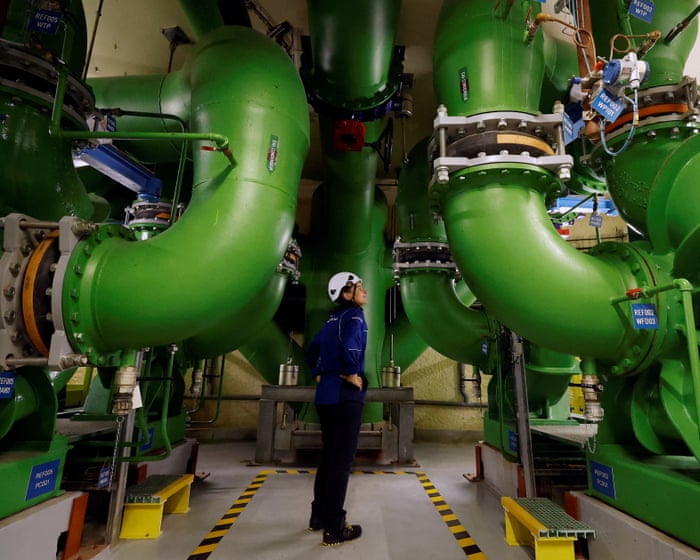
Paris has developed a large network that uses cold water from the Seine River to cool buildings instead of many air conditioners. This system sends chilled water through underground pipes to public places like museums and hospitals, helping the city deal with heat while using less energy.
Key Facts
Paris started planning this cooling network in the 1990s.
The system has 120 km (75 miles) of underground pipes delivering cold water to many public buildings.
Cold Seine River water cools warm water from buildings through a heat exchanger without mixing the two fluids.
The water is returned to the Seine slightly warmer but within safe environmental limits.
The city owns the network, which is run by companies including Engie and RATP under a contract renewed in 2022.
There are plans to triple the network’s size by 2042 to reach over 3,000 buildings across Paris.
The goal is to reduce the need for individual air conditioners that release heat into the streets.
The system helps fight the urban heat island effect and improves energy efficiency.
Read the Original
Want the full story? Tap a source to open the original
article.
Satellite images show the coastal city of La Guaira in Venezuela before and after two earthquakes hit. The earthquakes caused heavy damage, destroying many buildings in the city.
Key Facts
Two earthquakes struck the city of La Guaira, Venezuela.
The quakes happened close together in time.
Satellite images reveal the state of the city before and after the quakes.
Hundreds of buildings were destroyed by the earthquakes.
La Guaira is a coastal city in Venezuela.
The images help show the extent of the destruction caused by the earthquakes.
Read the Original
Want the full story? Tap a source to open the original
article.
An 84-year-old woman was found dead in a Sydney aged care home after her daughter allegedly gave her an unknown substance. The daughter, aged 53, was arrested at the scene and is now in police custody while the investigation continues.
Key Facts
The incident took place at Our Lady of Consolation aged care home in Rooty Hill, Sydney.
Police were called around 11:35 pm on Thursday and found the 84-year-old woman dead.
The 53-year-old daughter was arrested and taken to a hospital for medical assessment.
Police said the daughter allegedly gave the older woman an unknown substance.
The daughter has no criminal record or medical training and cooperated with police.
A nine-year-old boy was present during the incident and is now with family.
Police have set up a crime scene and are gathering evidence.
Autopsy and toxicology tests are being done to learn more about the cause of death.
Read the Original
Want the full story? Tap a source to open the original
article.
Labor party president Wayne Swan warned that authoritarian politics, like those of Pauline Hanson’s One Nation party, threaten Australia’s multicultural society. He compared Hanson’s approach to former U.S. President Donald Trump’s divisive style and called on Labor to resist these ideas in the next election.
Key Facts
Wayne Swan compared Pauline Hanson’s attacks on multiculturalism to Donald Trump’s impact on American politics.
Swan urged Labor to stop One Nation from gaining power to prevent a negative future for Australia.
Hanson wants to shut down SBS and make the ABC a paid service, promoting a single-culture Australia.
She opposes wage increases, questions the gender pay gap, and favors policies aligned with billionaire Gina Rinehart.
Labor membership has dropped from about 57,000 in 2022 to 51,500 in 2024, with a goal of 65,000 by 2029.
Swan will be replaced as Labor president by Kate Ellis in July.
Polls show One Nation leading in primary votes and Hanson leading as preferred prime minister.
NSW Labor premier Chris Minns criticized Hanson’s claims linking support for multiculturalism to extreme ideas like sharia law.
Read the Original
Want the full story? Tap a source to open the original
article.
Israel has been involved in ongoing conflicts across the Middle East since a surprise attack by Hamas in October 2023. Despite heavy fighting and many casualties, many Israelis feel frustrated, believing the United States has made peace deals that harm their goals, and they want to continue their military actions against groups like Hezbollah and Iran.
Key Facts
A recent poll showed 92% of Israelis feel the U.S. gave up on defeating their longtime enemies.
Nearly half of those polled want Israel to keep attacking Lebanon and Hezbollah, despite U.S. opposition.
Since October 7, 2023, Israel has been fighting wars with Hamas, Iran, Hezbollah, and in Syria and Yemen.
Over 73,000 Palestinians have died in Gaza, with much of the area destroyed.
Leading Israeli politicians across parties support ongoing military actions.
Israel links the Hamas attack to its historical trauma from the Holocaust.
Despite constant war, many Israelis do not feel safer now than before the conflict started.
Experts say the war continues because of Israel’s current situation and a change in Israeli national identity after the 2023 attack.
Read the Original
Want the full story? Tap a source to open the original
article.
Polish Deputy Prime Minister Radek Sikorski spoke in an interview about the ongoing war in Ukraine. He discussed the current situation, relations between Ukraine and Poland, and the role of NATO.
Key Facts
Radek Sikorski is the Deputy Prime Minister of Poland.
He gave an extended interview to CBS News.
The main topic was Russia's war in Ukraine.
Sikorski talked about the relationship between Ukraine and Poland.
The discussion included the state of NATO, the military alliance.
The interview was shared on the CBS News app and website.
Aidan Stretch from CBS News conducted the interview.
Read the Original
Want the full story? Tap a source to open the original
article.