Neutral summaries of your favorite news sources — just the facts.
Your favorite news sources, one neutral feed — we distill their reporting into fact-first
summaries and always link to the original story. How it works
World News
Comprehensive coverage of international news and global events
Brooke George, a 23-year-old TikTok influencer from the UK, has been charged with the murder of her boyfriend in Dubai. She says she acted in self-defense during an attack, but if convicted under UAE law, she could face execution.
Key Facts
Brooke George was arrested on June 22 in Dubai and charged with premeditated murder.
She is accused of stabbing her boyfriend, whom she met online.
George claims she stabbed him in self-defense after he became abusive and physically attacked her.
The advocacy group Detained in Dubai says she was held without proper legal support and experienced humiliating treatment during her detention.
George’s family and human rights groups are concerned for her safety and want her released on bail.
The UK Foreign Office is supporting Brooke George and her family.
Dubai laws carry the death penalty for murder convictions.
There are worries about the treatment of women reporting violence and about legal rights for British nationals detained abroad.
Read the Original
Want the full story? Tap a source to open the original
article.
The United States has introduced a plan to help unify Libya's divided government and encourage U.S. oil investments. While eastern Libyan groups support the plan, western factions and analysts are debating its fairness and effectiveness.
Key Facts
The U.S. plan aims to unify Libya's executive authorities and state institutions.
Massad Boulos, a U.S. presidential adviser, leads the initiative.
Eastern military leader Khalifa Haftar’s forces and eastern lawmakers back the plan.
Abdul Hakim Belhaj, a prominent western Libyan politician, also supports the plan and urges Tripoli’s government to respond.
Some lawmakers claim their support was falsely added to the plan’s list.
Critics say the plan favors certain individuals connected to powerful families.
The proposal is linked to efforts to increase American oil investments in Libya.
There are fears the plan could reinforce long-term power-sharing instead of democratic progress.
Read the Original
Want the full story? Tap a source to open the original
article.
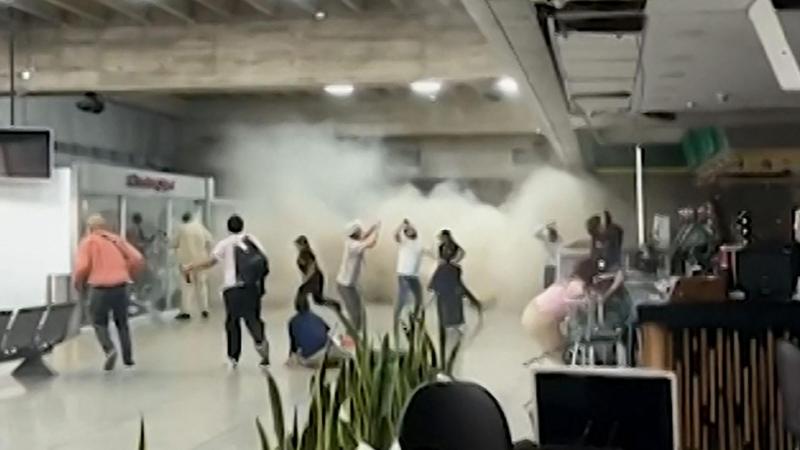
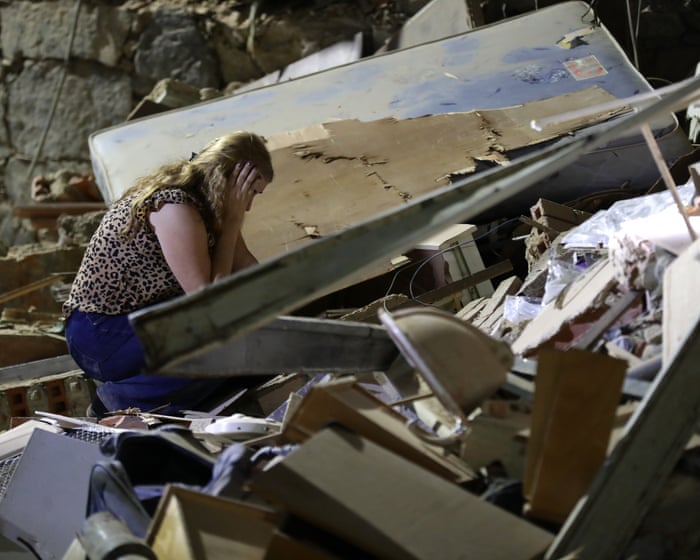
Two strong earthquakes hit Venezuela seconds apart, causing heavy damage and killing at least 164 people. The quakes damaged many buildings, including a hotel and the main international airport near Caracas, and injured hundreds more.
Key Facts
The first earthquake had a magnitude of 7.2 and struck 23 km southeast of Yumare.
The second quake, stronger at magnitude 7.5, occurred 38 seconds later in a similar area.
The second quake was shallower (10 km deep) than the first (20.3 km), increasing surface damage.
Damage occurred in Caracas, La Guaira, and other states like Trujillo, Yaracuy, Carabobo, Aragua, and Miranda.
A 10-story hotel in La Guaira collapsed completely, leaving only its entrance intact.
Caracas’s main international airport was seriously damaged and closed after the quakes.
Venezuela sits at the border of the Caribbean and South American tectonic plates, where friction caused the earthquakes.
The US Geological Survey (USGS) estimated a 44% chance that over 10,000 people could die from these quakes.
Read the Original
Want the full story? Tap a source to open the original
article.
Britain used to have prime ministers who stayed in office for many years, but recently, leaders have changed quickly. Political problems like Brexit, social media influence, and weaker support from members of Parliament (MPs) have made it harder for prime ministers to stay in power.
Key Facts
Britain is on track for its seventh prime minister in ten years.
Theresa May and Boris Johnson each served just over three years; Liz Truss lasted only 49 days.
Keir Starmer entered office with a large majority in 2024 but is leaving after less than two years.
Brexit caused deep political divisions and made governing more difficult.
Social media has increased political tensions in Britain.
Some recent leaders struggled with competence or judgment, affecting their popularity.
MPs have become more willing to rebel against their own party leaders than in the past.
Removing prime ministers between elections has become more common in recent British politics.
Read the Original
Want the full story? Tap a source to open the original
article.
President Donald Trump offered help to Venezuela after the country was hit by two large earthquakes. He stated that the earthquakes caused many deaths and said the United States is ready to assist.
Key Facts
Two major earthquakes recently struck Venezuela.
The earthquakes caused a large number of deaths.
President Trump shared his message on Truth Social, a social media platform.
He described the earthquakes as massive in scale.
The United States offered aid to Venezuela following the disaster.
The exact damage and number of victims are still being assessed.
The U.S. expressed willingness and ability to help Venezuela recover.
Read the Original
Want the full story? Tap a source to open the original
article.
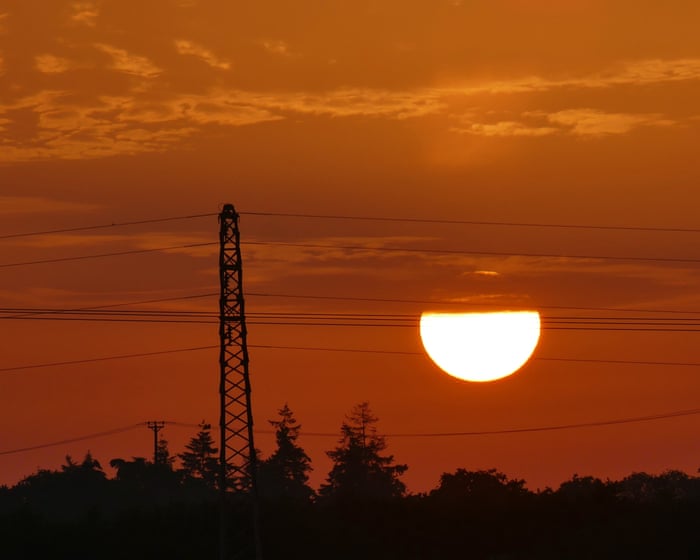
Cardiff recorded the highest minimum temperature ever for June in the UK, with 23.5°C overnight, as a severe heatwave continues across England and Wales. The heatwave, worsened by climate change, is breaking temperature records and causing significant health risks and disruptions.
Key Facts
Cardiff hit 23.5°C overnight, the highest June minimum temperature in the UK.
The UK June high temperature record was likely broken again, reaching 36.1°C at Gosport.
Climate change is increasing the severity and frequency of heatwaves by raising temperatures by 2 to 4 degrees Celsius.
Over 10,000 people died in the UK from summer heatwaves between 2020 and 2024.
The UK Health Security Agency extended its highest heat alert (red alert) until Friday night.
The UK Parliament set a legally binding goal to cut carbon emissions by 87% by 2040.
London’s mayor introduced a heat plan including home improvements and more tree planting to cope with extreme heat.
Greenpeace found some surfaces in London reaching temperatures up to 60°C during the heatwave.
Read the Original
Want the full story? Tap a source to open the original
article.
Israeli forces raided a home near Salfit in the West Bank and killed a 32-year-old Palestinian man. The incident took place in an area under Israeli military control.
Key Facts
The man killed was 32 years old.
The raid happened in the West Bank, near the town of Salfit.
Israeli forces carried out the raid on the man’s home.
The West Bank is a territory currently occupied and controlled partly by Israel.
The killing happened during an Israeli military operation.
Read the Original
Want the full story? Tap a source to open the original
article.
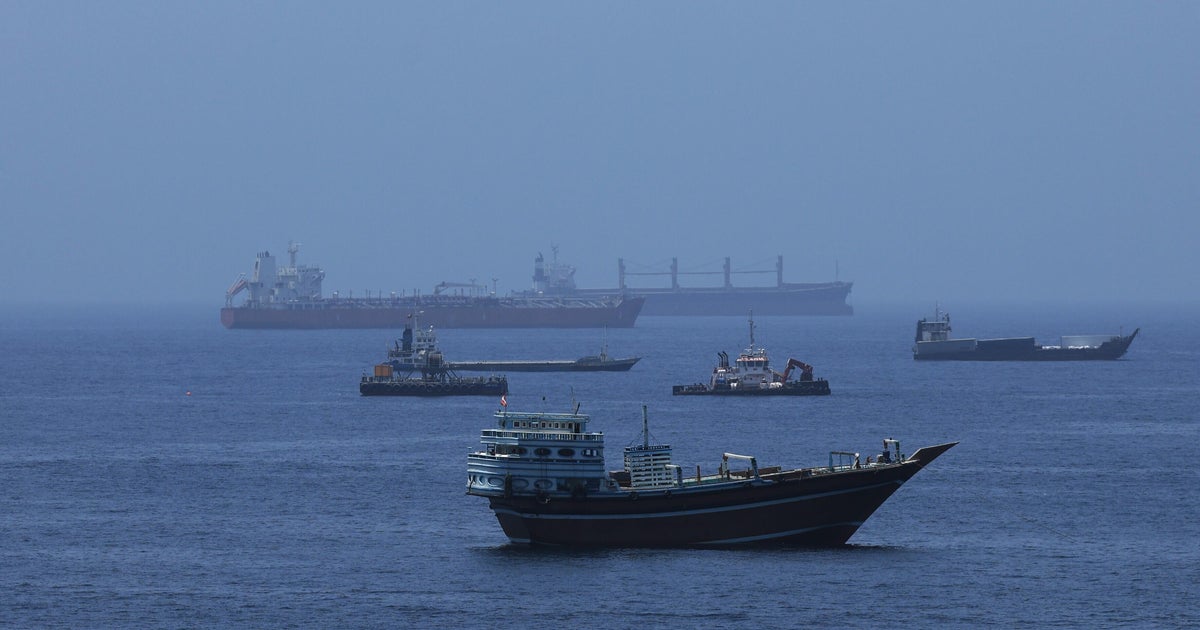
The United States and Iran have agreed to work on reopening the Strait of Hormuz after a recent conflict. Iran must remove any naval mines within 30 days, with France, the UK, and other countries helping to clear these dangerous underwater explosives that block ships.
Key Facts
The US and Iran signed a framework agreement to end conflict and reopen the Strait of Hormuz.
Navigation and shipping have increased but are still not back to pre-conflict levels.
Iran threatened to use various types of naval mines to block the strait but did not confirm planting them.
The Strait of Hormuz is a key global energy route and was blocked, causing a global energy crisis.
Under the agreement, Iran must clear all mines within 30 days.
France and the UK are leading mine-clearing efforts, supported by Germany, Italy, Japan, and Canada.
Naval mines are underwater bombs that can damage or sink ships and come in four types: bottom, moored, drifting, and limpet mines.
Clearing mines, called mine countermeasures, uses underwater drones and special vehicles to locate and destroy or sweep mines safely.
Read the Original
Want the full story? Tap a source to open the original
article.
The article discusses the third anniversary of Yevgeny Prigozhin’s failed mutiny against Russian President Vladimir Putin. It suggests that Russia and the occupied region of Crimea might have experienced different outcomes if Prigozhin had succeeded.
Key Facts
Yevgeny Prigozhin led a mutiny against President Putin three years ago.
The mutiny failed, and Prigozhin died as a result.
Prigozhin was once called "Putin’s chef" because of his close ties to the Kremlin.
The article focuses on the situation in Russia and the region of Crimea, which is controlled by Russia.
The mutiny challenged Putin’s long rule over Russia.
Crimea has been a key area of conflict since Russia took control in 2014.
The article implies potential changes for Russia and Crimea if Putin’s leadership had been overthrown.
Read the Original
Want the full story? Tap a source to open the original
article.
U.S. Secretary of State Marco Rubio told Gulf Arab allies that any deal to end the conflict between the U.S. and Iran would protect their security interests. He emphasized that the U.S. seeks a lasting peace with Iran that does not harm the safety or wealth of its Gulf partners.
Key Facts
Marco Rubio met Gulf Arab foreign ministers in Bahrain during a three-day diplomatic trip.
The talks follow a U.S.-Iran Memorandum of Understanding to extend a ceasefire and discuss ending a war that started on February 28.
Rubio assured Gulf allies that the U.S. deal with Iran would consider their security and prosperity.
Gulf leaders are concerned that the agreement might give Iran too much power in the region and affect oil shipping routes.
Iran’s ballistic missile program is not limited by the current draft agreement.
The deal includes a proposed $300 billion fund to help rebuild Iran after the war.
Rubio said Gulf countries would not be asked to pay for reconstruction during his trip, despite implications in the MoU.
Rubio stressed that the U.S. will not allow actions that weaken the security of its longstanding Gulf allies.
Read the Original
Want the full story? Tap a source to open the original
article.
Two strong earthquakes hit Venezuela, killing at least 164 people and injuring 971 more. The quakes caused buildings to collapse and disrupted services like airports and trains, leading the government to declare a state of emergency.
Key Facts
Venezuela was struck by two earthquakes, measuring 7.2 and 7.5 in magnitude.
The earthquakes are among the strongest ever recorded in the country.
At least 164 people died and 971 were injured, with the death toll expected to rise.
The capital city, Caracas, suffered major damage, including collapsed buildings and airport closure.
The Simón Bolívar airport and the metro and train systems were severely damaged and temporarily shut down.
The U.S. Geological Survey reported that the disaster likely caused extensive damage and high casualties across Venezuela.
This is an ongoing situation with developments still coming in.
Read the Original
Want the full story? Tap a source to open the original
article.
Europe is facing another day of very high temperatures, with over 100 million people experiencing heat above 35°C (95°F). Countries like France, Germany, Spain, and others are under heat alerts, and the extreme heat has caused power outages and some deaths.
Key Facts
More than 101 million people in Europe will face temperatures above 35°C on Thursday.
France and Germany are among the most affected, with 50 million and 18 million people respectively.
Nearly two-thirds of Europe's population, over 380 million people, will see temperatures over 30°C (86°F).
France has issued red alerts for extreme heat affecting three-quarters of the country from Thursday midday to Friday midday.
A heat-related power outage occurred in Brittany, France, leaving tens of thousands without electricity.
In the Paris area, a three-year-old child died inside a car during the heatwave.
Spain estimates 212 deaths related to the heatwave between Sunday and Wednesday.
Some northern parts of Spain, unusual for extreme heat, reached temperatures above 40°C and had tropical nights, making it hard to sleep.
Read the Original
Want the full story? Tap a source to open the original
article.
Ukraine has launched drone attacks deep inside Russia’s Urals region, marking a shift in the war’s reach. Meanwhile, Russia’s offensive in eastern Ukraine has stalled, and President Putin has expressed willingness to restart peace talks, although Ukraine is unlikely to accept Russia’s demands.
Key Facts
Ukraine attacked Yekaterinburg, a city more than 1,800 km from the Ukrainian border, targeting a plant linked to Russian air defense systems.
The Yekaterinburg airport has been closed at least five times since the drone attacks began in late April.
Russian citizens in the Urals region report growing economic problems, food shortages, and fuel scarcity following Ukrainian strikes on Russian facilities.
Russia’s military campaign to capture parts of southeastern Ukraine has failed to achieve its goals.
President Vladimir Putin offered to resume peace talks based on the Istanbul agreements from 2022.
Observers believe Putin’s peace proposal aims to buy time amid military difficulties.
Moscow’s demands include Ukraine abandoning its NATO ambitions, stopping what Russia calls “de-Nazification,” limiting weapons, and withdrawing from the Donbas region.
Kyiv is expected to reject these demands as unrealistic.
Read the Original
Want the full story? Tap a source to open the original
article.
Two strong earthquakes struck near Caracas, Venezuela, killing nearly 200 people and injuring more than 1,000. Many people are still trapped under the rubble, so the death toll may increase.
Key Facts
Two earthquakes happened close together in Venezuela near Caracas.
About 200 people have died because of the earthquakes.
Over 1,000 people were hurt in the disaster.
Rescue teams are still searching for people trapped under collapsed buildings.
The situation is ongoing, and more help is needed for those affected.
The earthquakes caused significant damage to homes and infrastructure.
Humanitarian aid is expected to be sent to assist survivors.
Officials warn that casualty numbers could rise as rescue efforts continue.
Read the Original
Want the full story? Tap a source to open the original
article.
Two strong earthquakes hit Venezuela near Caracas, killing at least 164 people and injuring 971. Central America is very prone to earthquakes because it sits where several large pieces of the Earth's crust meet and move.
Key Facts
Two earthquakes with magnitudes 7.2 and 7.5 struck west of Caracas on Wednesday evening.
Venezuelan officials declared a state of emergency after many buildings collapsed.
The US Geological Survey (USGS) warned the death toll could rise to thousands.
Venezuela lies along the boundary of the Caribbean and South American tectonic plates.
Earthquakes there are caused by movement along faults where Earth's plates slide past each other.
Central America has many tectonic plates interacting, including a plate moving under another, called a subduction zone.
Many buildings in Central America are old or not strong enough to handle big earthquakes.
The region has experienced several deadly earthquakes recently, such as in Guatemala, Honduras, and Costa Rica.
Read the Original
Want the full story? Tap a source to open the original
article.
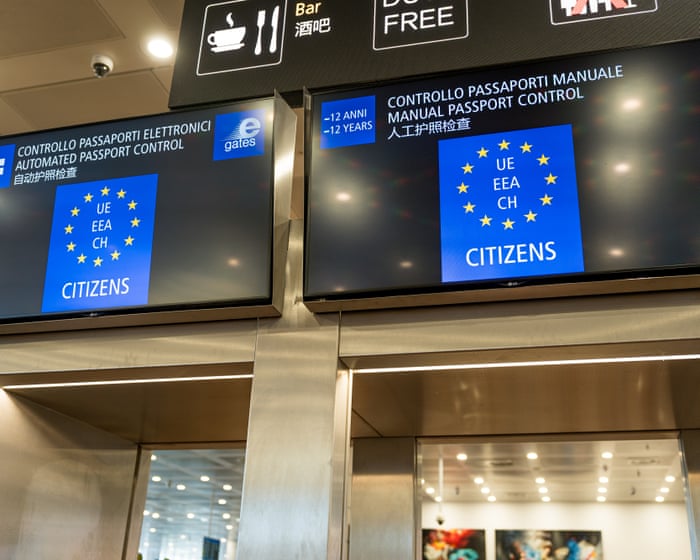
Rome’s airports may stop using the EU’s new digital system for non-EU travelers this summer to avoid long delays. The system, which checks fingerprints and facial images, has caused long wait times and travel problems since it started fully working in April.
Key Facts
The EU’s new entry-exit system (EES) requires non-EU citizens to give biometric data (fingerprints and facial images) when entering.
The system was fully implemented in mid-April after some delays and technical problems.
Rome’s airport chief says the system cannot handle the high number of summer travelers without causing chaos.
Some passengers face waits up to three hours or more, leading to missed flights.
Other countries, like France and Greece, have paused or delayed biometric checks for UK travelers.
Airport and airline groups warn that queue times could reach six hours at some airports during peak times.
EU officials say the system may take up to two years to work smoothly.
The European Commission allows some flexibility to suspend parts of the system if needed.
Read the Original
Want the full story? Tap a source to open the original
article.
Oil prices have dropped close to the levels seen before the Middle East war began, as more ships have started using the Strait of Hormuz because of a new U.S.-Iran agreement. U.S. Secretary of State Marco Rubio is visiting Gulf countries to assure them their concerns will be included in ongoing talks with Iran.
Key Facts
Brent crude oil price fell to $73.87 a barrel, near the $70 level before the war started.
U.S. crude oil prices also fell to about $70.34 a barrel.
Shipping through the Strait of Hormuz has increased following a new U.S.-Iran memorandum of understanding.
The Strait of Hormuz is a key waterway for global oil shipments.
Senator Rubio warned that allowing Iran to charge fees for ships passing through the Strait could cause problems worldwide.
Rubio says the U.S. wants a peace deal with Iran that is real, verifiable, and fair.
The U.S. Senate recently rejected a measure to limit President Trump's power to wage war against Iran.
Secretary Rubio is meeting with Gulf Cooperation Council countries to coordinate U.S. and regional actions in the Iran talks.
Read the Original
Want the full story? Tap a source to open the original
article.
Shiite Muslims worldwide observed Ashoura, a holy day remembering the martyrdom of Imam Hussein in 680 A.D. This year’s observance follows months of conflict in Iran and Lebanon, where fighting has involved Iran, Hezbollah, and Israel. The day included traditional mourning rituals amid war and political tensions.
Key Facts
Ashoura commemorates the death of Imam Hussein, grandson of Prophet Muhammad, at the Battle of Karbala in 680 A.D.
The event is important for Shiite Muslims and symbolizes resistance to oppression.
Iran and Lebanon have seen months of war involving Israel, Iran, and the Hezbollah group.
Iran’s Supreme Leader Ayatollah Ali Khamenei was killed recently in an Israeli airstrike; his funeral is imminent.
Hezbollah has fired rockets into northern Israel, prompting Israeli air and ground attacks on southern Lebanon.
Many Lebanese displaced by the war are trying to return to damaged villages and cities.
Ashoura rituals include chest-beating, lamentations, and prayers, observed publicly in Iran with shops closing and large gatherings.
Iranian officials took part in Ashoura ceremonies, highlighting religious and political significance during the conflict.
Read the Original
Want the full story? Tap a source to open the original
article.
The article provides advice on how to keep babies cool during heatwaves. It offers practical tips to help parents protect their young children from high temperatures.
Key Facts
The article focuses on caring for babies during very hot weather.
It gives suggestions to keep babies comfortable and safe from overheating.
The content includes steps parents can take at home.
It highlights the importance of monitoring babies in heat.
The article is part of a series covering babies, toddlers, and heatwaves.
Read the Original
Want the full story? Tap a source to open the original
article.
A couple named Sydney and Joe created a viral video of their marriage proposal. Joe chose not to propose in a common way during their trip to Italy to keep it surprising, which led to millions of views online.
Key Facts
Sydney and Joe are a couple whose proposal video became very popular on the internet.
Joe felt that proposing in Italy on vacation would be too obvious.
They looked for a less expected way for Joe to propose marriage.
Their video has received millions of views.
The story has attracted attention over the past few weeks.
The proposal took place during a vacation abroad, specifically in Italy.
The video went viral, meaning it spread quickly through social media and online platforms.
Read the Original
Want the full story? Tap a source to open the original
article.