Neutral summaries of your favorite news sources — just the facts.
Your favorite news sources, one neutral feed — we distill their reporting into fact-first
summaries and always link to the original story. How it works
World News
Comprehensive coverage of international news and global events
The United States and Iran signed an agreement that could unlock billions of dollars in Iranian assets frozen in foreign banks. These frozen funds, mostly from oil sales and currency reserves, have been blocked because of U.S. sanctions, and their release may provide economic relief to Iran.
Key Facts
Frozen Iranian assets include oil revenues and foreign currency reserves held abroad.
These assets have been blocked due to U.S. sanctions related to Iran's nuclear program and other issues.
Estimates of the total frozen assets vary, with figures ranging from under $50 billion to as high as $100 billion.
China holds the largest amount, estimated between $20 billion and $50 billion.
Other countries with frozen Iranian funds include Iraq (around $15 billion), Japan, Luxembourg, the U.S., South Korea, Qatar, and Oman.
The U.S.-Iran Memorandum of Understanding (MOU) states that the U.S. will release the funds once the agreement is implemented.
President Trump suggested Iran should use the funds to buy American food products, but Iranian officials said Iran will decide independently how to use the assets.
The agreement was signed on June 17, 2024, and includes a process for negotiating the release of frozen assets.
Read the Original
Want the full story? Tap a source to open the original
article.
The U.S. and Iran disagree about whether Iran has allowed U.N. inspectors to check its nuclear sites. Meanwhile, a plan involving multiple countries aims to safely move thousands of ships stuck in the Strait of Hormuz, a key route for global energy supplies.
Key Facts
The U.S. and Iran dispute if the U.N. nuclear inspectors can visit bombed sites in Iran.
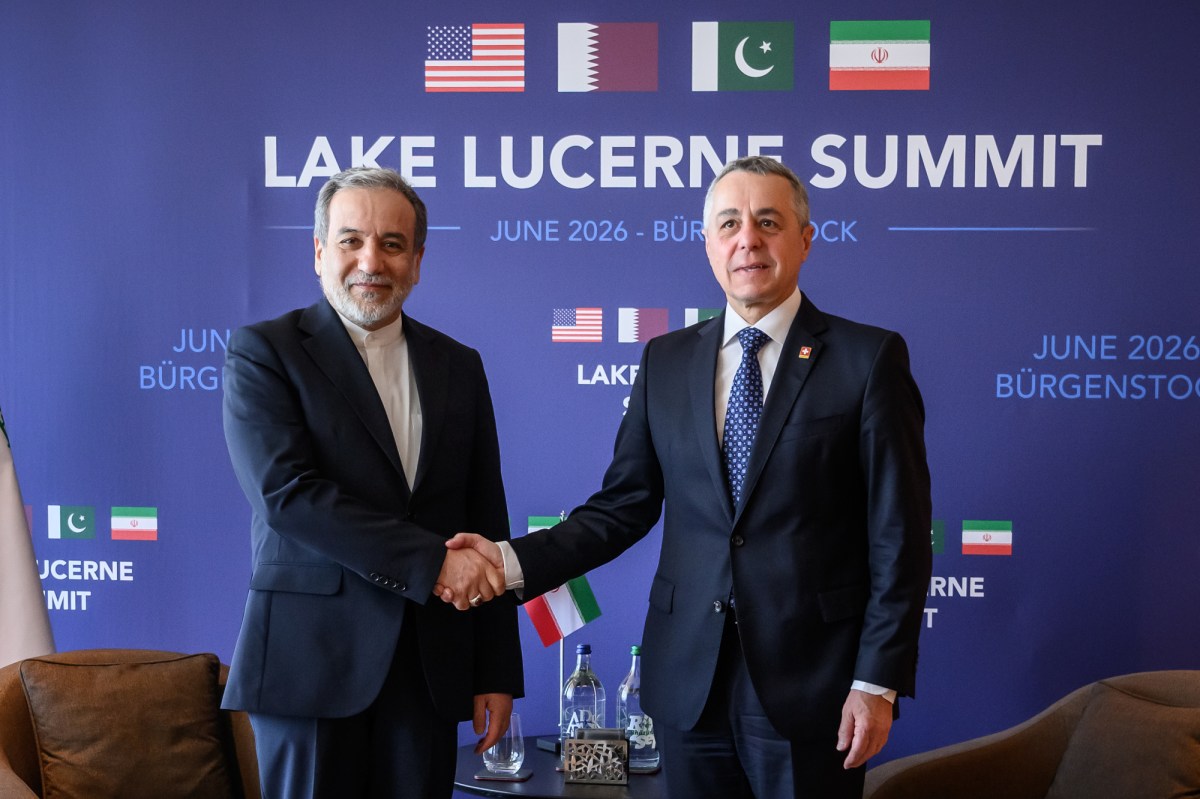
Talks involving the U.S. and Iran are ongoing in Switzerland to end the conflict and resolve nuclear issues.
Iran’s president visited Pakistan to discuss regional peace and economic cooperation.
A plan is underway, supported by Iran, Oman, the U.S., and others, to move 11,000 crew members stranded on ships in the Strait of Hormuz.
The Strait of Hormuz is a critical waterway for global energy and had been blocked by Iran after the war started.
Iran claims its nuclear program is for peaceful use, but it has uranium that could potentially be used for bombs.
The U.S. and Iran agreed to a deal requiring Iran to dilute its enriched uranium stockpile and pause some sanctions.
Despite a fragile ceasefire, there have been new outbreaks of violence near the region, raising concerns over control of the shipping route.
Read the Original
Want the full story? Tap a source to open the original
article.
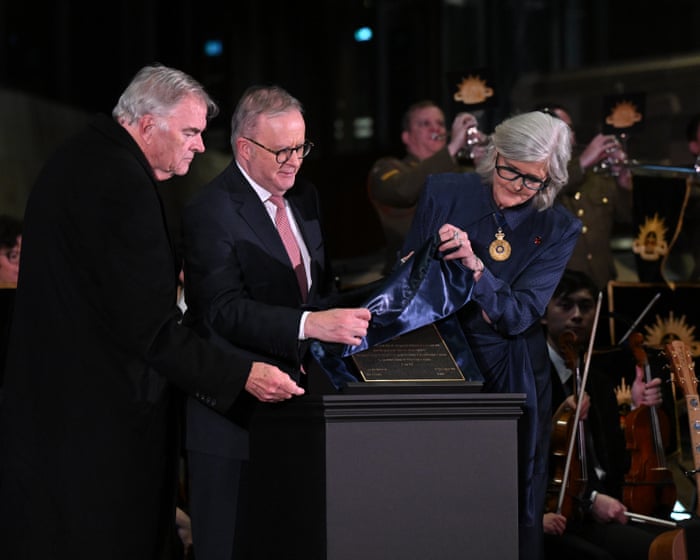
Australia’s Prime Minister Anthony Albanese opened a new gallery at the Australian War Memorial in Canberra. The gallery highlights Australia’s military missions in the Middle East, Afghanistan, and peacekeeping, aiming to preserve the memory of those who served for future generations.
Key Facts
The new gallery is located in the War Memorial’s atrium and Anzac Hall.
It focuses on Australian military involvement in the Middle East, Afghanistan, and peacekeeping missions.
The Prime Minister said the gallery will keep the "flame of memory" alive for future generations.
Parliament was adjourned to allow people to attend the opening ceremony.
Retiring Chief of Defence Force David Johnston and incoming military leader Mark Hammond attended the event.
The Prime Minister encouraged visitors to reflect on the personal stories behind the war experiences, including faces, smiles, and friendships.
The gallery adds to the Australian War Memorial’s role in honoring service and sacrifice.
The Greens political party is opposing Labor’s proposed reforms to the National Disability Insurance Scheme, which is a separate political issue mentioned in the article.
Read the Original
Want the full story? Tap a source to open the original
article.
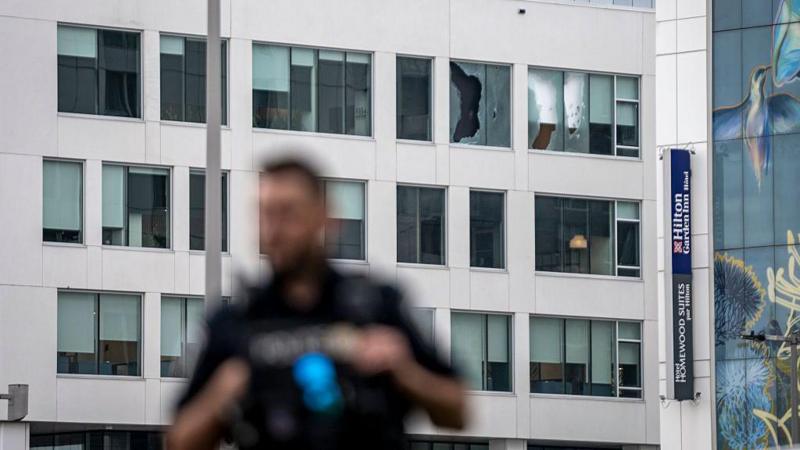
Canadian police identified Seth Hatfield as the person responsible for a shooting in Montreal that killed a police officer and a civilian. Hatfield was also killed by police, and authorities are examining a manifesto he allegedly left, which contains ideas linked to the "incel" movement, a group defined by unhappy feelings about being unable to find romantic partners.
Key Facts
The shooting occurred in Montreal's Côte-des-Neiges neighborhood on Monday.
Two people died in the shooting: Mohamed Lamine Benredouane, a 34-year-old police officer, and Michel Mizrahi, a 68-year-old civilian who was protecting others.
The suspect, Seth Scott Hatfield, 25, from Alberta, was killed by police.
Hatfield reportedly left a 100-page manifesto showing views consistent with the incel movement, which focuses on feelings of male loneliness and social rejection.
The manifesto discusses ideas about male attractiveness groups and criticizes capitalism for not benefiting common working-class men.
Police and the Quebec Independent Investigations Bureau have not commented on the manifesto.
Montreal police described the loss of Officer Benredouane as a significant loss to their department.
A rabbi who knew victim Mizrahi said Mizrahi helped others escape danger during the shooting.
Read the Original
Want the full story? Tap a source to open the original
article.
People in Makoko, a waterfront community in Lagos, Nigeria, are protesting again because of evictions. Their land has been taken away and sold to the highest bidders.
Key Facts
Makoko is a waterfront community in Lagos, Nigeria.
Residents have faced multiple evictions over time.
The land taken from the community is being sold to private buyers.
These evictions have caused ongoing protests.
The situation is part of a wider issue affecting similar communities in Lagos.
The protests highlight concerns about land rights and housing security.
This news is part of broader stories about Africa in the same report.
Read the Original
Want the full story? Tap a source to open the original
article.
After the war in Afghanistan, violence still affects people's daily lives. This violence is now mostly caused by social and economic pressures rather than armed conflict.
Key Facts
Afghanistan has moved from war-related violence to violence linked to social and economic problems.
Safety improvements have not led to better wealth or living conditions for many people.
Social and economic pressures continue to cause difficulties in everyday life.
The situation was discussed in an interview with Italian video journalist Silvia Boccardi.
The conflict’s aftermath still impacts Afghanistan’s society and stability.
The report was issued on June 23, 2026.
The source of the information is a France24 news segment.
Read the Original
Want the full story? Tap a source to open the original
article.
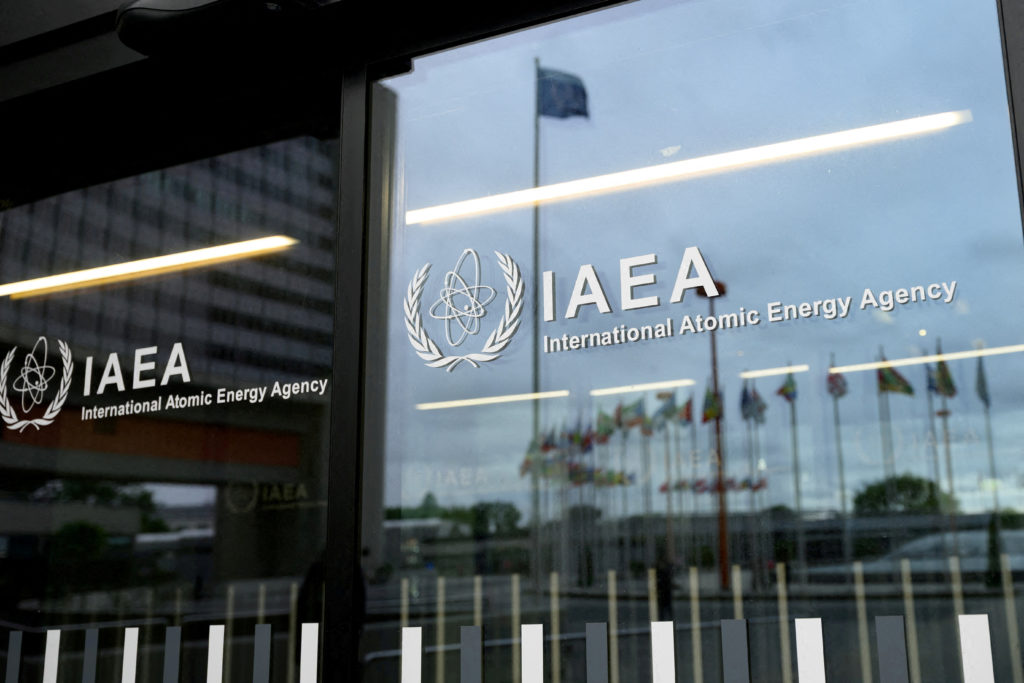
President Donald Trump responded to Iran’s foreign ministry statement saying Iran will not allow nuclear inspectors from the International Atomic Energy Agency (IAEA) into the country. He warned that if Iran blocks these inspectors, he will cancel future peace talks with Tehran.
Key Facts
Iran’s foreign ministry said it does not plan to let IAEA nuclear inspectors enter Iran.
The IAEA is an international group that checks on nuclear programs to make sure they are peaceful.
President Trump disagreed with Iran’s claim about blocking inspectors.
Trump threatened to stop peace talks with Iran if they refuse entry to inspectors.
The issue involves monitoring Iran’s nuclear activities and keeping agreements on track.
Peace talks are ongoing efforts to resolve nuclear tensions between the U.S. and Iran.
The situation is part of broader international concerns about nuclear security and diplomacy.
Read the Original
Want the full story? Tap a source to open the original
article.
India is preparing plans to deal with a weak monsoon season that has brought much less rain than usual. The weak rains could affect crops, water supplies, and the economy, as many farmers depend on the monsoon for irrigation and planting.
Key Facts
This year’s monsoon rains in India are about 43% below normal levels so far.
Monsoon rains provide around 70% of India’s yearly rainfall and are vital for farming and water supplies.
The monsoon arrived three days late in Kerala, a state in southwest India.
Nearly half of Indian farmland does not have irrigation and depends on the monsoon rains.
India’s Agriculture Minister emphasized the need to conserve water and repair water storage like reservoirs and dams.
Climate change and an El Nino weather pattern are expected to reduce rainfall further in 2024.
Mumbai received its first heavy rains after weeks of hot weather, easing some heat stress for its 22 million residents.
El Nino could cause one of the driest monsoon seasons India has seen in 11 years, raising concerns about food prices and economic growth.
Read the Original
Want the full story? Tap a source to open the original
article.
Andy Burnham, mayor of Greater Manchester in the UK, is moving his focus from local city issues to national politics. He had previously proposed giving more power to local governments instead of central government in Westminster.
Key Facts
Andy Burnham is the mayor of Greater Manchester.
He has shifted focus from local city issues to the national political stage.
In 2017, Burnham suggested transferring some power from the UK central government in Westminster to local governments.
The article references a France24 debate discussing Burnham’s political position.
The article was published on June 23, 2026.
Other news topics mentioned include heatwaves in Europe, violence in Afghanistan, and the World Cup.
The article briefly notes challenges in France related to extreme heat.
No detailed information about Burnham’s current political plans or outcomes is included.
Read the Original
Want the full story? Tap a source to open the original
article.
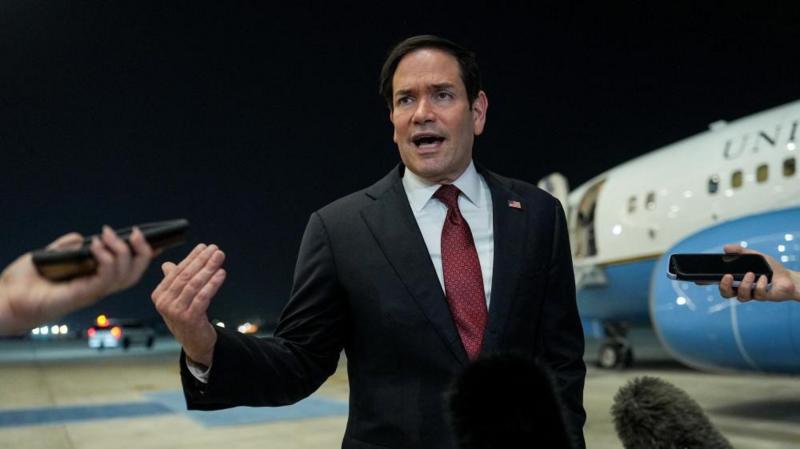
US Secretary of State Marco Rubio arrived in Abu Dhabi to begin a tour of Gulf countries. He aims to work with regional partners to advance the peace agreement between the US and Iran, saying recent discussions have created a foundation but further talks are needed on important issues.
Key Facts
Marco Rubio is the US Secretary of State.
He arrived in Abu Dhabi, United Arab Emirates.
Rubio is starting a tour of Gulf region countries.
His goal is to support the US-Iran peace deal.
Recent talks have helped create progress for the deal.
More discussions are required to address key concerns.
Rubio is working with regional partners to move the peace process forward.
Read the Original
Want the full story? Tap a source to open the original
article.
Senator Chris Murphy said that lifting some sanctions on Iran, as part of an agreement between the U.S. and Iran, makes it more difficult to reach a full deal with Iran's government. He explained that the previous U.S. administration did not remove all sanctions before trying to negotiate.
Key Facts
Senator Chris Murphy is from Connecticut and belongs to the Democratic Party.
Murphy spoke on the TV program “All In” with Chris Hayes.
The discussion focused on sanctions relief included in an agreement between the U.S. and Iran.
Murphy said that lifting some sanctions early makes it harder to negotiate further with Iran’s government.
The previous U.S. administration under President Obama did not remove all sanctions before negotiating.
The article refers to Iran’s government as an “Islamic regime.”
The issue relates to ongoing talks about Iran’s nuclear program and diplomatic relations.
Murphy’s comments suggest caution about giving sanctions relief too soon in negotiations.
Read the Original
Want the full story? Tap a source to open the original
article.
Peruvian presidential candidate Roberto Sanchez has rejected the recent election results that show Keiko Fujimori slightly ahead. He claims the vote count was manipulated, especially for votes cast abroad, and says he will not accept a Fujimori presidency.
Key Facts
The election run-off in Peru was between left-wing Roberto Sanchez and right-wing Keiko Fujimori.
With over 99.7% of votes counted, Fujimori leads with 50.11%, and Sanchez has 49.89%.
Sanchez alleges fraud, particularly in votes from Peruvians living overseas.
Peru has around 2,506 polling stations abroad, with more than 1.2 million overseas voters.
Election authorities recently stopped requiring overseas vote tally sheets to be scanned and digitized.
Sanchez says this change made the vote count vulnerable to interference and wants overseas votes declared invalid.
Fujimori called Sanchez’s fraud claims a desperate political move.
Peru has had unstable politics with nine different presidents in the last decade and frequent fraud claims during elections.
Read the Original
Want the full story? Tap a source to open the original
article.
A 25-year-old man from Alberta opened fire from a hotel room in Montreal, killing one police officer and one bystander before being shot dead by police. Authorities have identified the attacker and victims but have not confirmed a motive, while an unverified document linked to the suspect contains violent anti-government and anti-capitalist messages.
Key Facts
The suspect, Seth Hatfield, was from Lethbridge, Alberta, and was killed by police after the shooting.
The attack happened in the Côte-des-Neiges borough of Montreal.
One police officer, Mohamed Lamine Benredouane (34 years old), and one bystander, Michel Mizrahi (64 years old), died in the shooting.
Benredouane grew up in the neighborhood and joined the Montreal Police Force in 2021.
A second police officer was injured but survived.
A 104-page document allegedly linked to the suspect contains misogynistic, anti-capitalist, and anti-government ideas; it has not been confirmed by police.
The bystander Mizrahi was a Jewish man and family father; the neighborhood has a large Jewish community, raising fears about antisemitism.
Jewish community leaders urge caution against blaming the attack on antisemitism before full facts are known.
Read the Original
Want the full story? Tap a source to open the original
article.
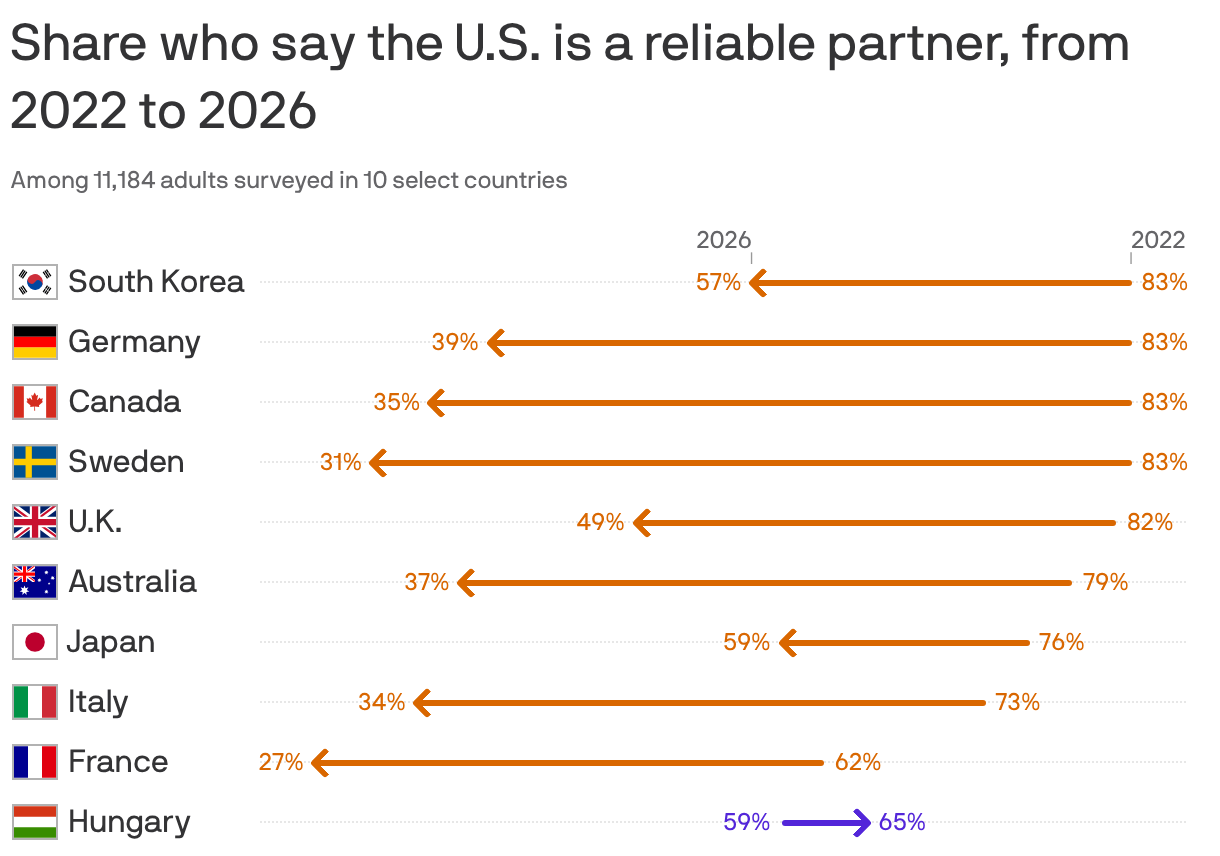
A new survey shows that many people in other countries trust President Trump's leadership less than before. His approach to international groups and alliances has led to doubts about whether the U.S. can be relied on by its partners worldwide.
Key Facts
A survey of over 40,000 adults in 36 countries found 76% have no confidence in President Trump’s leadership.
Only 32% believe the U.S. cares about other countries' interests, while 66% disagree.
57% of respondents view the U.S. negatively, and around half say the U.S. is an unreliable partner.
President Trump has criticized the United Nations and pulled the U.S. from several U.N. commitments.
NATO Secretary General Mark Rutte recently visited Washington to discuss the U.S.-NATO relationship amid withdrawal threats by Trump.
U.S. reliability ratings dropped significantly among traditional allies like Canada, Sweden, Germany, Japan, France, Spain, Italy, and the U.K. since 2022.
Hungary, led by Trump ally Viktor Orbán until April, showed increased trust in the U.S. under Trump.
No majority in any of the 36 countries approved of Trump’s handling of issues like conflicts in Iran, Gaza, Ukraine, immigration, or humanitarian aid.
Read the Original
Want the full story? Tap a source to open the original
article.
The United Nations’ International Maritime Organization (IMO) will evacuate more than 11,000 sailors stuck in the Gulf due to the conflict involving the US, Israel, and Iran. The evacuation will happen with the help of countries near the Strait of Hormuz, a key waterway that Iran had effectively closed during the conflict.
Key Facts
Over 11,000 sailors are stranded in the Gulf because of the war involving the US, Israel, and Iran.
The IMO will lead a large-scale evacuation with cooperation from Iran, Oman, the US, and other local countries.
An interim peace deal was signed recently, but the US and Iran still disagree on some details, especially Iran’s nuclear program inspections.
Iran's president stated that missile talks are not part of the agreement and said Iran will not negotiate its defense capabilities.
US Secretary of State Marco Rubio is visiting Gulf countries to discuss the agreement and oppose Iran’s attempt to charge fees for ships passing through the Strait of Hormuz.
The Strait of Hormuz is an international waterway, and international law says no country can charge tolls for passage.
The strait had been closed after the conflict started, causing a big rise in global oil prices.
Since the deal, some ships have restarted using the strait, but traffic is still below normal levels, with over 200 tankers waiting inside the strait as of the latest data.
Read the Original
Want the full story? Tap a source to open the original
article.
Displaced Lebanese people are returning to southern Lebanon after a ceasefire stopped months of Israeli air strikes. The truce was supported by both the United States and Iran, but many returnees worry the peace will not last.
Key Facts
Many Lebanese left southern Lebanon due to Israeli bombardment.
A ceasefire has now stopped the attacks.
The ceasefire was backed by the United States and Iran.
People are beginning to return to their damaged homes and towns.
There are concerns the ceasefire might not hold firmly.
The situation in southern Lebanon remains fragile after months of conflict.
Read the Original
Want the full story? Tap a source to open the original
article.
The Trump administration has made progress in talks with Iran to reopen the Strait of Hormuz and change its nuclear program. The U.S. Treasury Department issued a 60-day license that lets Iran sell oil in U.S. dollars, easing some sanctions on Iranian oil exports.
Key Facts
The negotiations focus on reopening the Strait of Hormuz, a key oil shipping route.
The talks also aim to reform Iran’s nuclear program.
The U.S. Treasury Department issued a 60-day license to Iran.
This license allows Iran to sell oil using U.S. dollars.
Selling oil in U.S. dollars enables easier international trading for Iran.
This move rolls back some of the long-standing U.S. sanctions on Iranian oil.
The easing of sanctions is part of ongoing efforts to reach a deal with Iran.
The Strait of Hormuz is important because a large portion of the world’s oil passes through it.
Read the Original
Want the full story? Tap a source to open the original
article.
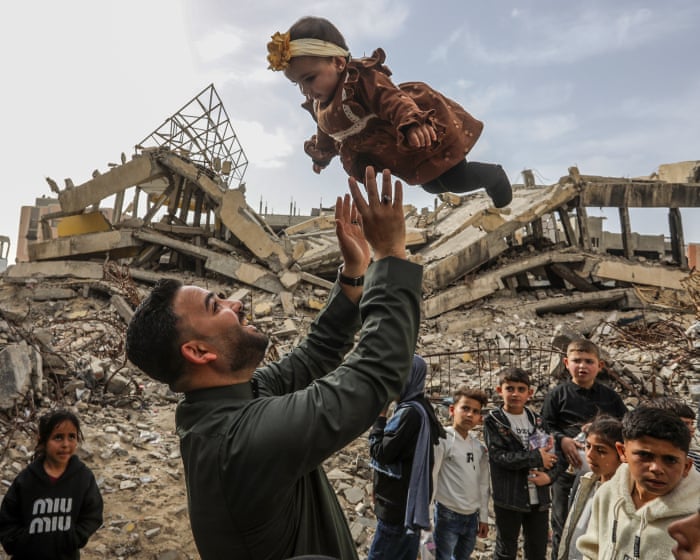
A United Nations inquiry found that Israeli forces have deliberately targeted Palestinian children in Gaza during the war, resulting in many child deaths. The commission stated that these actions may indicate a genocidal intent against Palestinians. Israel rejected the accusations, and the situation remains heavily disputed internationally.
Key Facts
The UN commission found about 30% of Palestinians killed by Israeli forces in Gaza were children.
The report says Palestinian children were deliberately targeted, including during a ceasefire in October 2025.
Previous UN reports accused Israel of genocide, with some Israeli officials wanted by the International Criminal Court for war crimes.
Israeli forces used powerful weapons in crowded residential areas despite high child casualties.
The report says Israel’s blockade has caused widespread harm to children’s health through lack of food, medicine, and aid.
Attacks on healthcare and reproductive facilities increased newborn deaths and miscarriages in Gaza.
Nearly all children in Gaza are reported to need psychological help due to trauma.
Israel denies the accusations and claims Hamas diverts humanitarian aid, while Hamas denies this and accuses Israel of blocking aid.
Read the Original
Want the full story? Tap a source to open the original
article.
Israeli soldiers and two Merkava tanks were seen in the countryside near the Syrian city of Quneitra. This event breaks the 1974 Disengagement Agreement between Israel and Syria.
Key Facts
Israeli troops entered the Syrian countryside near Quneitra city.
Two Israeli Merkava tanks were spotted during this patrol.
The presence of Israeli forces in this area violates the 1974 Disengagement Agreement.
The Disengagement Agreement was made to separate Israeli and Syrian forces after a conflict.
Quneitra is a city close to the border between Israel and Syria.
Read the Original
Want the full story? Tap a source to open the original
article.