Fact-first summaries of the news — stay informed, stay grounded.
Your favorite news sources, one calm feed — fact-first summaries that always link to the
original story. No outrage bait, and we tell you when you're caught up. How it works
World News
Comprehensive coverage of international news and global events
A Syrian woman saw her missing brother’s name displayed on a prison cell door at an exhibition in Damascus. The exhibit showed items taken from prisons operated by the Assad government.
Key Facts
The exhibition took place in Damascus, Syria.
It featured artifacts from prisons controlled by the Assad regime.
A woman recognized her missing brother’s name on one of the prison cell doors.
The prisons displayed are known for harsh conditions and detentions.
The exhibition aims to reveal the realities of these prisons to the public.
The Assad regime is the current government in Syria, led by President Bashar al-Assad.
Read the Original
Want the full story? Tap a source to open the original
article.
A 15-year-old boy in Wales was sentenced to four and a half years in youth detention after stabbing a history teacher in the head with a kitchen knife. The judge warned about the risk of similar attacks on school staff and highlighted the need for better security measures in schools.
Key Facts
The attack happened at Milford Haven comprehensive school in Pembrokeshire, Wales.
The boy approached the teacher alone in a classroom, shut the door, and stabbed her with an 8-inch kitchen knife.
The teacher suffered a scalp wound, scratches on her back, and cuts on her hands but managed to grab the knife.
The boy was found guilty of wounding with intent by a jury.
The teacher now suffers from post-traumatic stress disorder and cannot return to teaching.
The judge noted this was the second similar attack in the area in two years and warned of possible copycat crimes.
Another recent school stabbing in southwest Wales involved a girl who stabbed two teachers and a pupil and was sentenced to 15 years.
The judge emphasized that young people who commit such acts will face serious consequences and lose normal teenage freedoms.
Read the Original
Want the full story? Tap a source to open the original
article.
Dr. Temeka Zore shared three important questions that women should ask their doctors about their fertility. These questions help women understand their reproductive health better and make informed choices.
Key Facts
The information was shared on CBS News by Dr. Temeka Zore.
The focus is on helping women communicate with their doctors about fertility.
Women are encouraged to ask specific questions to learn about their reproductive health.
Understanding fertility can help women plan for pregnancy or address health concerns.
This advice aims to improve women’s overall health awareness.
Read the Original
Want the full story? Tap a source to open the original
article.
The article argues that accusing one nation of genocide while ignoring others in similar situations suggests the goal is not justice. It highlights the importance of fair and equal standards when making serious charges like genocide.
Key Facts
Genocide is a very serious accusation involving deliberate killing of a large group of people.
The article says singling out one country for genocide accusations, when others face similar issues, is unfair.
It implies that justice should apply equally to all nations.
The article stresses careful and balanced judgment in international conflicts and law.
It suggests motives behind unfair accusations may not be about seeking true justice.
Read the Original
Want the full story? Tap a source to open the original
article.
A Lebanese man named Malek Ghazi, who was held prisoner in Israel, was released and handed over to Lebanon through the International Committee of the Red Cross (ICRC). This is the first prisoner handover since the recent conflict began between Israel and Hezbollah six months ago.
Key Facts
Malek Ghazi was released by Israel and transferred to Lebanese authorities via the ICRC.
The handover took place at the Naqoura border crossing on Lebanon’s southern coast.
Ghazi is believed to be a civilian, although details about his capture are unclear.
Dozens of Lebanese prisoners, including Hezbollah fighters and civilians, remain in Israeli custody.
Lebanon and Israel signed a U.S.-mediated deal in June to ease tensions, involving Israeli troop withdrawal and Hezbollah disarmament.
Implementation of the deal has been slow, and further talks are planned in Rome.
Hezbollah refuses to disarm in southern Lebanon, and Israel insists on full Hezbollah disarmament before withdrawing.
Lebanon’s military is cautious about confronting Hezbollah due to the risk of renewed civil conflict.
Read the Original
Want the full story? Tap a source to open the original
article.
A severe monsoon storm caused flash flooding in the Grand Canyon’s North Rim area, particularly along Bright Angel Creek, leading to significant damage and rescue operations. Two people died, one person is missing, and more than 80 hikers were airlifted to safety as the floodwaters destroyed footbridges and infrastructure.
Key Facts
Heavy rain and strong winds from a monsoon storm hit the Grand Canyon’s North Rim on August 31, 2026.
Flash floods carried debris like tree branches and sediment, damaging trails and footbridges.
Two hikers died, and at least one person remains missing due to the flooding.
Over 80 people were rescued by helicopter from the flooded area.
The storm developed very quickly, with conditions changing in about a minute from clear skies to heavy rain and wind gusts around 40 mph (64 kph).
Emergency medicine physicians among the hikers noted the storm was unusually severe compared to typical weather patterns.
The National Park Service is currently assessing the damage caused by the flooding.
The storm struck near “The Box,” the last three miles before Phantom Ranch, a popular resting spot at the canyon’s bottom.
Read the Original
Want the full story? Tap a source to open the original
article.
Fighting broke out early Thursday between Somalia’s government troops and militias linked to former South West state President Abdiaziz Hassan Mohamed Laftagareen near Baidoa city. The clashes involved heavy gunfire, caused civilians to flee, and left some people wounded or dead.
Key Facts
The fighting happened on the outskirts of Baidoa, a city in southwestern Somalia.
Government forces said they acted against militiamen loyal to Laftagareen and the extremist group al-Shabab.
Baidoa is a key humanitarian center with over half a million displaced people living there.
Federal troops took control of Baidoa on March 30, after which Laftagareen resigned from his position.
Clashes stopped by early afternoon, but there were no full reports on casualties.
Bay Regional Hospital treated 24 wounded people and confirmed one civilian death from the fighting.
Residents reported fleeing their homes due to heavy gunfire and stray bullets.
Previous violence in the area last month caused at least four civilian deaths and many injuries.
Read the Original
Want the full story? Tap a source to open the original
article.
The USS Abraham Lincoln aircraft carrier has arrived in Pattaya, Thailand, after being at sea for over nine months. There were reports of tough living conditions and mental health struggles among the crew during this time.
Key Facts
The USS Abraham Lincoln is a U.S. Navy aircraft carrier.
It spent more than nine months continuously at sea before docking.
The ship arrived in Pattaya, a city in Thailand.
Crew members reportedly faced poor living conditions on the ship.
Mental health issues among the sailors were reported during this long deployment.
CBS News covered the story with a correspondent in Thailand.
Read the Original
Want the full story? Tap a source to open the original
article.
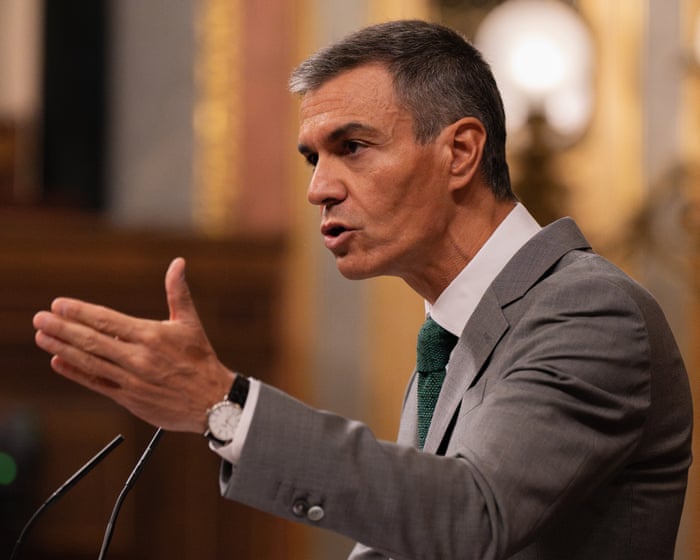
Spain’s Prime Minister Pedro Sánchez said there is no proof that Morocco planned or helped a large group of about 70,000 people cross into the Spanish territory of Ceuta in late July. He also denied that Spanish authorities had any warning about the event and said Spain is asking for help from other European countries to handle the situation.
Key Facts
Around 70,000 people crossed into Ceuta from Morocco in late July.
A police report suggested Moroccan border forces helped with the crossing, but Spain has found no solid evidence of this.
Prime Minister Sánchez told parliament no institution, including international bodies, confirmed Moroccan involvement.
Spain summoned Morocco’s ambassador in August due to controversial statements by Moroccan ministers about Spanish territories.
About 141 people died trying to enter Ceuta during this event.
Most migrants returned to Morocco quickly, but some thousands, including minors, still remain in Ceuta.
Spain says migrants must be treated according to Spanish, European, and international laws, giving them individual rights.
The crisis has caused tension within the European Union over how to manage immigration.
Read the Original
Want the full story? Tap a source to open the original
article.
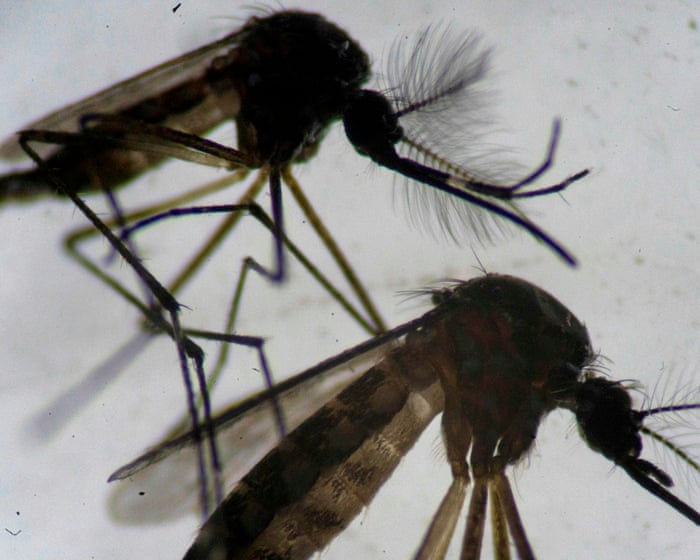
A tropical mosquito species known for spreading diseases has been found breeding in homes in east London for the first time. Although the risk to people is low and the mosquito cannot survive long in the UK climate, experts warn climate change may allow more invasive mosquitoes to live in the UK in the future.
Key Facts
The mosquito species, Aedes aegypti, usually lives in tropical areas and can carry diseases like dengue, chikungunya, and Zika virus.
This is the fourth time this mosquito has been found in the UK, but the first time it has bred there.
No human infections have been linked to these mosquitoes in east London so far.
The mosquito likely arrived through transport like vehicles, luggage, or imported plants.
The UK’s climate is usually too cold for this species to survive long.
Climate change is creating warmer conditions that could help invasive mosquitoes live longer in the UK.
Authorities have taken steps to kill larvae and will keep monitoring the area.
People are advised to remove standing water from outdoor places to stop mosquitoes from breeding.
Read the Original
Want the full story? Tap a source to open the original
article.
France experienced its hottest summer since records began, with extreme heatwaves, drought, and wildfires reported across the country. The Environment Minister said the summer of 2026 had unprecedented heatwave days and caused thousands of extra deaths.
Key Facts
The summer of 2026 was the hottest recorded in France since 1900.
France faced multiple severe heatwaves, including one lasting 23 days—the longest on record.
Over the summer, France had 53 days with heatwave conditions, more than ever before.
Wildfires burned six times more forest area than the average of the previous 20 years.
Scientists link the stronger heatwaves to human-caused climate change.
More than 7,300 extra deaths were recorded during the heatwaves in France.
Some homes in Paris lack air conditioning, leading residents to use foil blankets and fans to stay cool.
The government is planning new climate adaptation measures, with a funding plan expected by the end of September.
Read the Original
Want the full story? Tap a source to open the original
article.
A Swedish opposition party has promised to help British people facing deportation from Sweden due to Brexit-related paperwork problems if it wins the upcoming election. The party plans to reopen applications for British citizens who lost their right to stay because of administrative issues.
Key Facts
Many British citizens in Sweden face deportation because of strict Brexit rules and missed application deadlines.
Joyce Thomas, a 78-year-old British widow, has been told to leave Sweden after living there for 21 years.
The Centre party, part of the Swedish opposition, says it will change laws to allow affected British residents to reapply to stay.
The current Swedish government has a strict approach, causing hardship for British citizens despite legal agreements from Brexit.
The problem is seen as mainly affecting Sweden, with other EU countries less impacted.
British politicians and the European Commission have mostly stayed silent about the deportations, while some UK officials have been called to intervene.
Sweden’s election is scheduled for September 13, with polls showing the opposition may win and change immigration policies.
The withdrawal agreement between the UK and EU was supposed to protect British citizens living in Europe, but enforcement varies by country.
Read the Original
Want the full story? Tap a source to open the original
article.
A military expert says the war involving Iran is stuck with no clear winner. President Trump says the U.S. is ready to attack Iran whenever it wants, while Iran accuses the U.S. of killing civilians in a wedding strike.
Key Facts
A military expert states that the war with Iran is at a standstill.
President Donald Trump says the U.S. can strike Iran anytime it chooses.
Iran accuses the U.S. of committing war crimes by hitting a wedding and killing innocent people.
The discussion comes from comments shared by retired Marine Corps Colonel Mark Cancian.
This situation reflects ongoing tension between the U.S. and Iran.
Read the Original
Want the full story? Tap a source to open the original
article.
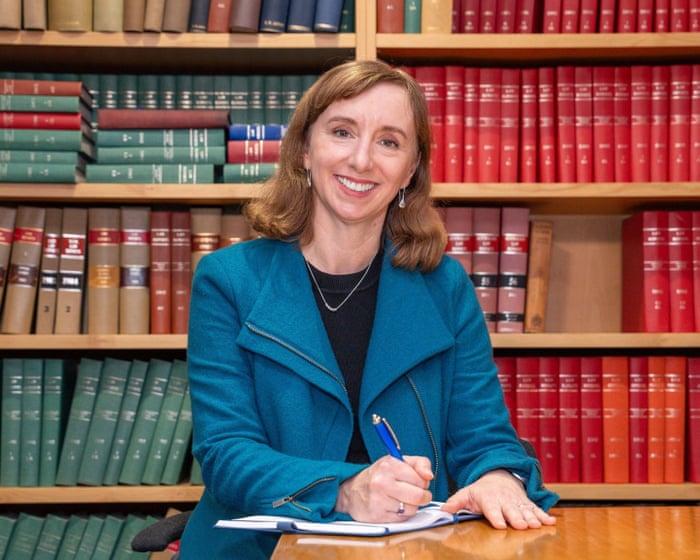
Helen Paterson, an Australian forensic psychology researcher, won a Eureka prize for her work on how survivors of repeated domestic violence recall memories differently from single-event witnesses. Her research shows survivors often mix details between episodes, which affects how credible they appear in court. The Eureka prizes also honored other Australian scientists for achievements in genetics, melanoma research, climate forecasting, and more.
Key Facts
Helen Paterson studies how survivors of repeated domestic violence remember events differently than those who witness a single incident.
Survivors of repeated abuse tend to give general descriptions and may confuse details of separate episodes.
Courts often view repeated-event witnesses as less credible, which concerns Paterson.
Paterson received the Eureka prize for excellence in forensic science at a ceremony in Sydney.
Another winner, Assoc Prof Jane Tiller, helped pass a law banning insurance discrimination based on genetic test results.
The insurance law change encourages use of genetics to prevent diseases like cancer and heart disease.
Prof Georgina Long won a prize for pioneering melanoma research.
Other awards went to projects on marine heatwave forecasting and discovering that bacterial vaginosis can be sexually transmitted.
Read the Original
Want the full story? Tap a source to open the original
article.
The Netherlands has moved about $10 billion of its gold reserves from the United States and Canada to the United Kingdom to be better prepared for serious crises. The Dutch Central Bank said this move improves the balance and accessibility of their gold holdings amid increasing global tensions.
Key Facts
The Netherlands holds 612.4 tonnes of gold worth around €72.2 billion ($83.8 billion).
Previously, 31.3% of this gold was stored in New York, 19.7% in Ottawa, 18.1% in London, and 30.8% in Zeist, the Netherlands.
The Dutch Central Bank moved approximately €10.11 billion ($11.73 billion) worth of gold from the US and Canada to the UK.
Gold was moved by both selling in one location and buying in another, and by physically transporting gold bars.
About 59 tonnes of gold were sold in New York and repurchased in London; 27 tonnes were physically moved from North America to Zeist and then from Zeist to London.
After the move, the new distribution is London 32.1%, Zeist 30.8%, New York 18.5%, and Ottawa 18.5%.
The Dutch Central Bank did not specify which crisis they are preparing for, but cited geopolitical tensions including trade disputes and conflicts involving the US.
The move is part of standard risk management to diversify where gold reserves are kept and improve readiness for financial emergencies.
Read the Original
Want the full story? Tap a source to open the original
article.
Gloria Steinem, a well-known writer and activist who fought for women's rights in the United States, has died at age 92 in New York City. She helped start Ms. Magazine and spent much of her life speaking out about equality and other social issues.
Key Facts
Gloria Steinem was 92 years old when she died at her home in New York City.
She co-founded Ms. Magazine, an important feminist publication.
Steinem was a public speaker at colleges, rallies, and community events.
She began her career as a journalist and changed to activism after attending a 1969 event supporting abortion rights.
Steinem had a secret illegal abortion at age 22, influencing her activism.
She believed that people must meet face to face to truly understand each other.
Steinem spoke about many issues, including women's equality, genital mutilation, and peace between North and South Korea.
She remained active in speaking and writing well into her 80s.
Read the Original
Want the full story? Tap a source to open the original
article.
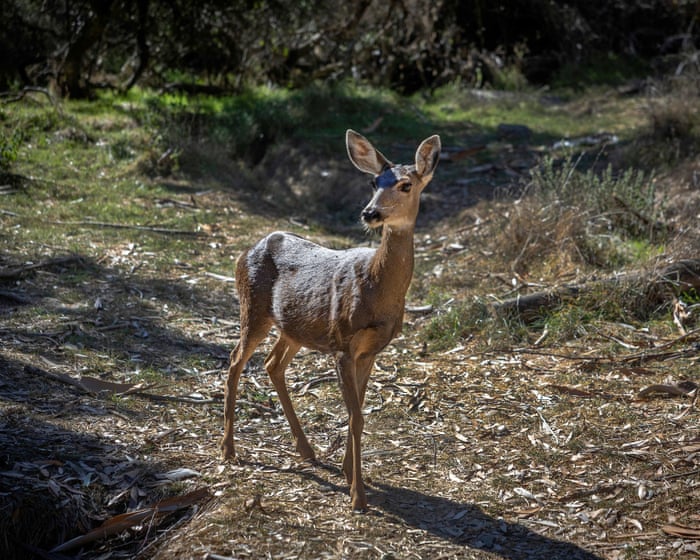
A judge approved a plan allowing the Catalina Island Conservancy to kill most of the 2,000 mule deer on Catalina Island to protect native plants and reduce wildfire risks. The deer, introduced nearly 100 years ago, eat native shrubs, which has allowed invasive grasses to spread and increase fire danger.
Key Facts
Catalina Island has about 2,000 non-native mule deer introduced for hunting nearly 100 years ago.
The deer eat native shrub plants, which are threatened by climate change.
Loss of native shrubs leads to invasive grass growth that spreads fire faster.
A judge denied a preliminary court request to stop the deer culling.
The Catalina Island Conservancy controls 88% of the island and will carry out a five-year plan to remove the deer.
About 200 deer will be hunted with rifles in the next two months as part of this plan.
Other population control options like contraception, fencing, and predators were found not feasible.
The culling aims to protect native species and reduce wildfire risks on the island.
Read the Original
Want the full story? Tap a source to open the original
article.
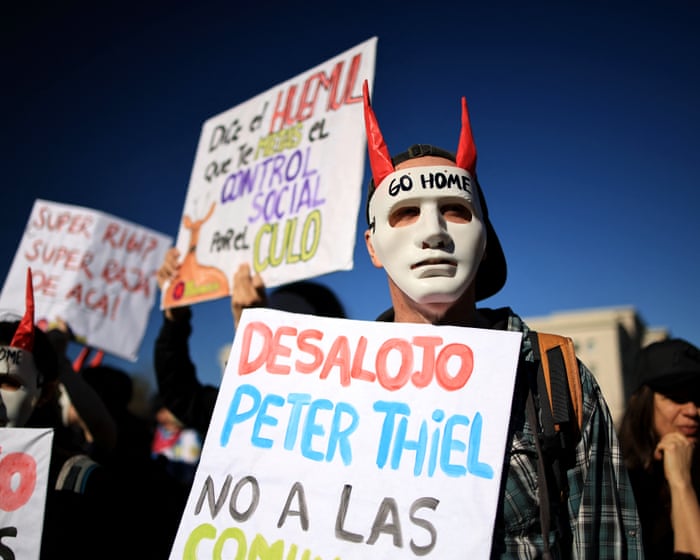
Peter Thiel, a tech billionaire, moved to Argentina and bought a $12 million mansion in Buenos Aires. His presence has caused protests and a political debate about new laws that could benefit foreign tech companies and investors, but there is no proof Thiel directly asked for these laws.
Key Facts
Peter Thiel bought a mansion in Buenos Aires and moved his family to Argentina in April.
Protesters in Argentina oppose Thiel's presence and new laws they believe favor him.
Argentina’s chamber of deputies debated a set of laws offering low taxes and regulatory protections to foreign investors.
One law specifically targets investments in AI data centers, which could benefit companies like Thiel’s.
Thiel has had private meetings with President Javier Milei and top advisers since arriving.
Some deputies suspect Thiel’s company, Palantir, may have undisclosed contracts with the Argentine government.
A proposed law to ease restrictions on foreign land ownership failed but raised concerns about “startup cities” that operate with less government control.
The government decree requires some agencies to share personal data with intelligence, raising privacy questions.
Read the Original
Want the full story? Tap a source to open the original
article.
A flood started in the Himalayas on the border between Tibet and Nepal. This disaster shows how powerful nature is and warns against trying to control it.
Key Facts
The flood happened in the Himalayas, the world’s youngest and tallest mountain range.
It occurred on the border between Tibet and Nepal.
The area is known for being very volatile, meaning it is prone to natural events like floods.
The flood is seen as a warning about the risks of trying to control natural forces.
The event highlights the strength and unpredictability of nature.
Read the Original
Want the full story? Tap a source to open the original
article.
Spanish Prime Minister Pedro Sanchez told lawmakers that there is no solid proof Morocco planned the recent migrant crisis in Ceuta. He described the situation as both a humanitarian and administrative problem but rejected a police report blaming Morocco’s government.
Key Facts
Tens of thousands of migrants crossed from Morocco into the Spanish territory of Ceuta.
This sudden influx created a crisis situation in Ceuta.
Prime Minister Sanchez said no clear evidence shows Morocco planned this crisis.
Many people in Spain protested against Sanchez’s handling of the migrant situation.
Sanchez said managing the crisis is a challenge for Spain’s government and humanitarian groups.
A police report implied Morocco might be responsible, but Sanchez rejected this claim.
The situation is causing political debate and public concern in Spain.
Ceuta is a Spanish territory located in North Africa, close to Morocco.
Read the Original
Want the full story? Tap a source to open the original
article.