A strike by air traffic control workers at Kenya's main airport in Nairobi has caused flight delays and cancellations for two days. Hundreds of passengers have been stuck at the airport, with some waiting many hours or overnight as talks between unions and airport managers continue without agreement.
Key Facts
The strike is happening at Jomo Kenyatta International Airport (JKIA) in Nairobi, Kenya.
Air traffic control workers are demanding better work conditions and enforcement of a previous agreement.
Kenya Airways and other airlines have delayed or canceled flights due to the strike.
Some passengers have waited over 12 hours and spent the night at the airport.
Talks between airport management and worker unions broke off without resolution.
JKIA is a busy regional hub, handling about nine million passengers last year.
Similar strikes have occurred at this airport in past years over worker issues.
Airlines are allowing passengers to change flights without extra fees due to the disruption.
Read the Original
Want the full story? Tap a source to open the original
article.
A severe flood hit Nepal on August 26, destroying villages and leaving many people without homes or food. Rescue workers are still searching for survivors, while those who escaped are trying to rebuild their lives despite the risk of more flooding.
Key Facts
The flood occurred in Nepal on August 26, 2026.
Entire villages were devastated, with families losing everything in minutes.
Rescue teams continue searching for survivors amid dangerous conditions.
Thousands of people remain missing, with ongoing rescue operations.
Survivors are struggling to find shelter, food, and basic needs.
The Nepali army is actively involved in rescue efforts, using helicopters.
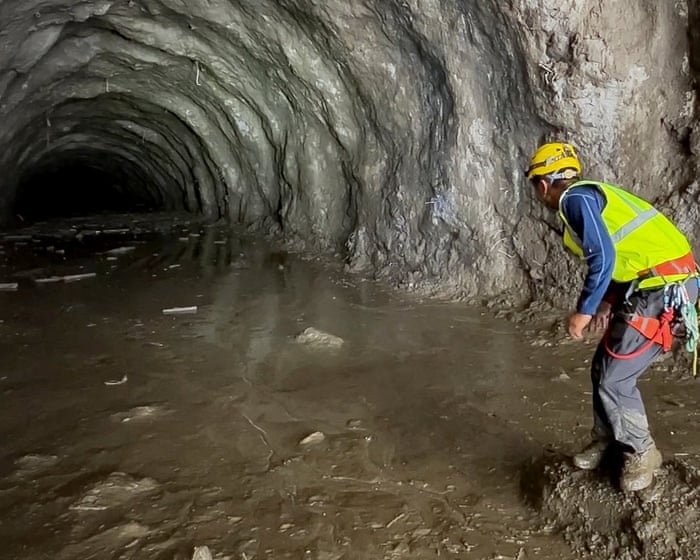
Some survivors are trapped in difficult places, such as hydropower tunnels.
There is a threat of further floods due to unstable river banks.
Read the Original
Want the full story? Tap a source to open the original
article.
A principal in Nepal saved at least 900 students by evacuating them just before flash floods destroyed their school. The floods, triggered by a glacial collapse in the Himalayas, killed over 900 people and caused widespread damage in Nepal and China.
Key Facts
Rajendra Dawadi, principal of Tribhuvan Trishuli Secondary School, ordered an immediate evacuation when flood warnings appeared.
About 900 students were on campus and were safely moved to higher ground.
Two school staff members are missing after the disaster.
The floods destroyed Dawadi’s school and many others, disrupting education for thousands of children.
The disaster was caused by a glacial collapse in the Himalayan region.
Over 900 people have died and more than 4,700 people remain missing because of the floods.
At least 69 schools were completely destroyed, threatening the education of nearly 19,000 students in northern Nepal.
Dawadi had a personal connection to the school, having studied and worked there for years.
Read the Original
Want the full story? Tap a source to open the original
article.
Three individuals from Asia won the Ramon Magsaysay Awards, which recognize outstanding service to society. The winners include a Singaporean diplomat who helped create an important sea law, a Myanmar activist jailed for defending democracy, and a Bangladeshi aid worker helping poor people.
Key Facts
The Ramon Magsaysay Awards are often called Asia’s Nobel Prize.
Tommy Koh, a Singaporean lawyer and diplomat, led negotiations that resulted in the 1982 U.N. Convention on the Law of the Sea.
This sea law treaty defines territorial waters and economic rights for countries, helping to resolve disputes.
Bo Kyi, a Myanmar activist, spent seven years in prison for promoting democracy and opposing military rule.
Bo Kyi helped form an organization to support political prisoners and document human rights abuses in Myanmar.
Runa Khan, from Bangladesh, worked to provide help to her country’s poorest people.
The awards have been given since 1958 and will be presented in Manila on November 15.
The awards recognize people who show selfless service and "greatness of spirit" in Asia.
Read the Original
Want the full story? Tap a source to open the original
article.
Niger’s military leaders stopped a mutiny by young soldiers in the capital city with help from Russian paramilitary forces. Russia’s Africa Corps has also helped other military regimes in the nearby Sahel region maintain control, increasing Russia’s influence in African security and politics.
Key Facts
Soldiers in Niger’s capital, Niamey, mutinied and took some fellow soldiers hostage at a key military base.
The mutiny included gunfire near the presidential palace but was ended within 24 hours.
Niger’s junta asked for and received help from Russia’s Africa Corps to stop the mutiny.
Africa Corps is a Russian paramilitary group under the Russian Defense Ministry.
This is the second time in 2025 Russia has intervened to protect junta-led governments in the Sahel.
The Sahel region includes Niger, Mali, and Burkina Faso, where Russia-backed forces are active.
Russia replaced the Wagner mercenary group in the Sahel with Africa Corps.
Russia’s military help supports these African governments politically, economically, and security-wise.
Read the Original
Want the full story? Tap a source to open the original
article.
Gaza is facing a severe shortage of drinking water because the ongoing war with Israel has damaged most of its water and sanitation systems. The extremely high temperatures are making the water crisis worse, creating a dangerous situation for people living there.
Key Facts
Nearly 90% of Gaza’s water and sanitation infrastructure has been damaged or destroyed after two and a half years of war with Israel.
The war has made it hard for people in Gaza to get clean drinking water every day.
Extreme heat in the region is making the water shortage much more serious.
UNICEF provided the estimate of damage to Gaza’s water systems.
The water crisis in Gaza is now a critical humanitarian problem that affects many people’s health and survival.
The conflict continues to have a direct impact on basic services like water and sanitation.
Rising temperatures increase the demand for water while supplies shrink, worsening the situation.
Read the Original
Want the full story? Tap a source to open the original
article.
Iran attacked U.S. military targets in the Middle East on Monday. This was in response to American strikes on an island in the Strait of Hormuz and marked the first exchange of fire between the two countries in a month during an ongoing regional conflict.
Key Facts
Iran launched attacks against U.S. military forces in the Middle East on August 31, 2026.
The attacks were retaliation for recent American strikes on an island in the Strait of Hormuz.
This incident was the first direct exchange of fire between Iran and the U.S. in one month.
The conflict has been ongoing in the Middle East, involving Iran and U.S. forces.
The Strait of Hormuz is a strategically important waterway for global oil transport.
The exchanges highlight rising tensions and military actions in the region.
Recent related events include U.S. threats of financial sanctions on Iran's allies.
The war in the area has had significant financial and human costs.
Read the Original
Want the full story? Tap a source to open the original
article.
Iran attacked U.S. military targets in the Middle East to respond to previous American strikes on its land. The attacks mark a new rise in conflict in the region, with the U.S. aiming to stop Iran from placing sea mines and threatening more economic punishments.
Key Facts
Iran launched attacks on U.S. military sites in the Middle East.
These attacks came after the U.S. conducted strikes on Iranian territory.
The conflict between the U.S. and Iran in the region has increased again.
The U.S. said its strikes prevented Iran from placing more sea mines in an important waterway.
The U.S. also threatened additional economic sanctions against Iran.
The situation reflects ongoing tensions and fighting in the Middle East.
Coverage includes perspectives from journalists in Tehran.
Read the Original
Want the full story? Tap a source to open the original
article.
French high schools are quickly working to enforce a ban on mobile phone use starting in September. President Macron supports this ban to reduce screen time among teenagers, after a related social media ban for children under 15 was rejected by France’s constitutional council.
Key Facts
The phone ban applies to lycées, where students are aged 15 to 18.
Primary and middle schools in France already ban mobile phone use.
Schools must change their internal rules to enforce the ban, which takes time and involves student consultation.
Students often use phones for essential school tasks like checking timetables or entering the canteen.
Some older students attend apprenticeships or higher education courses on high school campuses and also need phone access.
There are questions about where the ban will apply—inside classrooms, corridors, playgrounds, or the entire school.
President Macron’s proposed social media ban for under-15s was blocked due to constitutional concerns over freedom of expression and privacy.
The government is rewriting the social media law to try to pass it before Macron leaves office in May.
Read the Original
Want the full story? Tap a source to open the original
article.
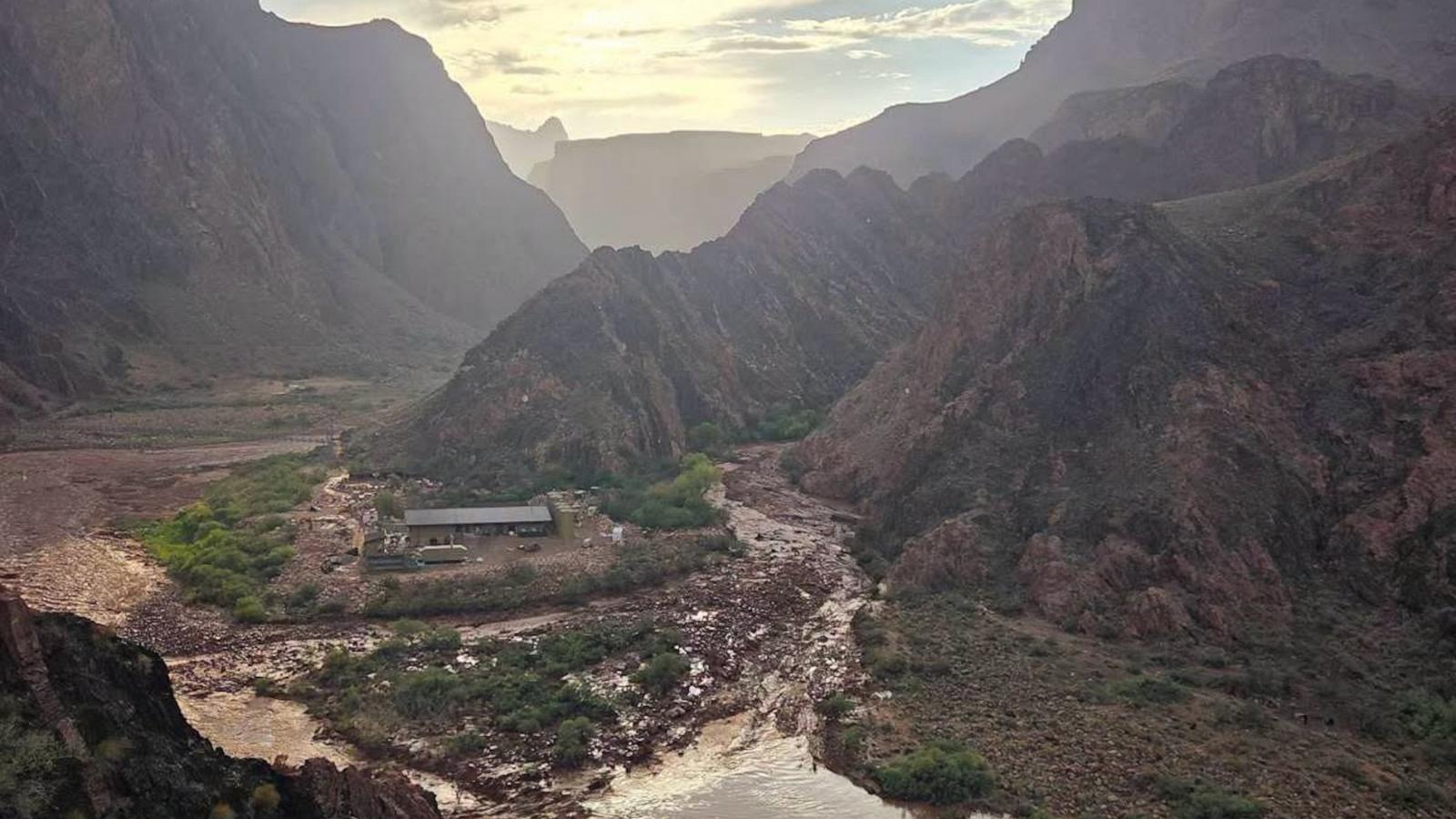
A flash flood hit the Grand Canyon in Arizona on August 29, 2026, causing one death and leaving at least 14 people missing or unaccounted for. Rescue teams are evacuating stranded hikers by air, while several trails and campgrounds remain closed due to damage.
Key Facts
The flash flood occurred on Saturday afternoon in Bright Angel Canyon and Phantom Ranch.
One person died; their identity has not been released.
At least 14 people may be missing or unaccounted for after the flood.
Over 60 people were air evacuated from the affected areas.
The park’s water pipeline was damaged, leading to water conservation measures and restrictions on overnight stays starting Monday.
Several campgrounds and trails are closed indefinitely.
The National Park Service is asking for information about any hikers in the affected areas on August 29.
Further thunderstorms and heavy rain may cause more flash flooding and rockfalls in the coming days.
Read the Original
Want the full story? Tap a source to open the original
article.
French winemakers are moving to northern regions like Normandy and Brittany because climate change is making traditional vineyards in southern France harder to maintain. These northern areas, once known for cider, are becoming more suitable for growing grapes due to warmer temperatures, though challenges from climate shifts still exist.
Key Facts
Climate change is making southern French vineyards like those in the Loire Valley less reliable.
Winemakers like Sebastien Fricker have relocated north to Normandy to grow grapes.
Normandy and Brittany have cooler climates that are becoming warmer and more stable, helping grape cultivation.
Northern regions currently produce very little wine compared to Bordeaux, a major wine area in the southwest.
Since 2016, EU rules on planting grapevines have become less strict, encouraging vineyard expansion in northern France.
Producers in northern regions mainly sell their wine directly to customers.
Recent heatwaves, droughts, and wildfires in France have caused early grape harvests and affected wine quality.
Local experts say the main challenge now is producing high-quality wine in these new northern vineyards.
Read the Original
Want the full story? Tap a source to open the original
article.
A flash flood hit Grand Canyon National Park, forcing the evacuation of dozens of people and leaving around 15 missing. The flood caused large rocks and metal objects to crash into the Colorado River and damaged a water pipeline for tourists.
Key Facts
The flood occurred over the weekend at Grand Canyon National Park in the US.
About 15 people are reported missing due to the flood.
More than 60 people were airlifted out of the area for safety by August 30.
The flood moved large boulders and metal parts into the Colorado River.
A water pipeline that serves visitors in the park was destroyed by the flood.
Additional evacuations were planned following the initial rescue efforts.
The flood caused significant disruptions to the park’s natural and tourist infrastructure.
Read the Original
Want the full story? Tap a source to open the original
article.
Staying informed here is free for everyone. If it's worth something to you, pay what you want. Supporters also get the daily digest by email every morning.
Rescue teams in Nepal are trying to reach hundreds of people trapped after severe flash floods hit the region, leaving over 900 dead and thousands missing. The floods also affected nearby Tibet, and the disaster is believed to be linked to climate change. In a separate event, tensions between the US and Iran escalated with missile attacks in the Strait of Hormuz.
Key Facts
Over 900 people have died in Nepal due to flash floods caused by a surge of ice, rock, mud, and debris.
More than 4,000 people are still missing in Nepal; an additional 500 are missing in Tibet.
Around 21,000 security personnel, along with civilians and volunteers, are involved in the rescue efforts in Nepal.
China sent over 2,100 rescue workers to assist in the disaster response.
The Red Cross estimates over 90,000 people have been affected by the floods.
The US attacked Iranian rocket launchers in the Strait of Hormuz, prompting Iran to retaliate with missile strikes on airbases in Jordan and the UAE.
President Donald Trump claimed that Iran’s Kharg Island, a key oil export hub, was being destroyed but provided no further details.
The recent military clashes between the US and Iran mark the first hostilities in a month, after a period of stalemate.
Read the Original
Want the full story? Tap a source to open the original
article.
Nepal has started burying bodies after deadly floods and mudslides caused many deaths and left over 4,200 people missing. The disaster also affected nearby parts of China and many workers on hydropower projects are among those missing.
Key Facts
Floods and mudslides in Nepal and China have caused more than 900 deaths.
Over 4,700 people are still missing.
Among the missing, 933 are workers on hydropower projects hit by the floods.
Morgues are full, so Nepal has begun burying bodies that have not been claimed.
Rescue efforts are ongoing despite dangerous conditions such as unstable river banks.
The disaster has impacted large communities, including those near rivers and hydropower tunnels.
Helicopters from the Nepal army are being used to rescue survivors and trapped people.
The event is one of the deadliest natural disasters in the region recently.
Read the Original
Want the full story? Tap a source to open the original
article.
The Shanghai Cooperation Organization (SCO) is holding a summit in Kyrgyzstan with leaders from China, Russia, India, and other countries. The SCO is often seen as a group challenging U.S. global influence, but not all its members share that view. The summit marks 25 years since the organization was created.
Key Facts
The SCO summit is taking place in Kyrgyzstan.
Leaders from China, Russia, and India are attending.
The SCO was founded 25 years ago.
It is sometimes described as a way to balance U.S. influence in the world.
Some member countries do not see the SCO as opposing the U.S.
The organization includes countries from Asia and the Pacific region.
The summit will discuss economic and security issues.
The SCO was originally formed to improve regional cooperation on security and economic matters.
Read the Original
Want the full story? Tap a source to open the original
article.
Russian forces have continued intense drone and air attacks on Kyiv and nearby cities for five days, damaging warehouses and causing some supermarket shortages. Ukraine is working to stop fast jet-powered drones Russia uses, while civilians face disruptions and risks from ongoing strikes.
Key Facts
Russia has launched nearly 1,500 drones at Ukraine in a few days, around 800 of which are fast jet-powered drones.
These attacks have hit Kyiv and surrounding areas, damaging warehouses and food distribution centers.
Some Kyiv supermarkets have empty shelves due to disrupted supply chains.
Four companies in Ukraine are developing interceptor drones to counter the jet-powered drones.
Schools in Ukraine have air raid shelters and can switch to online classes amid the attacks.
Ukrainian President Zelenskyy said Russia’s goal is to wear down Ukraine’s people.
Ukraine has also targeted Russian online retailers and oil facilities to impact Russian civilians.
Casualties from recent attacks include dozens of civilians killed and wounded.
Read the Original
Want the full story? Tap a source to open the original
article.
Hurricane Karina has grown into a strong Category 4 hurricane in the Pacific Ocean but is far from land and not expected to cause direct harm. Another storm, Tropical Storm Lowell, is also developing east of Hawaii and may strengthen into a hurricane later this week without posing an immediate threat.
Key Facts
Hurricane Karina reached Category 4 strength with winds of 145 mph (233 kph).
Karina is about 1,020 miles west-southwest of the southern tip of Baja California, Mexico.
The storm is moving west and is fueled by warm ocean waters far offshore.
No coastal warnings or watches are in effect for Karina.
Waves from Karina may affect Mexico and possibly Southern California.
Tropical Storm Lowell is about 855 miles east-southeast of Hilo, Hawaii, with winds of 60 mph (97 kph).
Lowell could become a hurricane by Monday night or Tuesday.
Lowell currently does not threaten land but may approach the Hawaiian Islands later this week.
Read the Original
Want the full story? Tap a source to open the original
article.
A U.S. missile called the Precision Strike Missile (PrSM) was used in southern Iran on February 28, 2026, killing at least 21 civilians, including children, in the city of Lamerd. An independent group named Airwars analyzed the strike and found that the missile’s blast affected a large area, causing damage far from the explosion site.
Key Facts
The PrSM is a new U.S. ballistic missile designed to explode in midair and spread metal pellets in all directions.
The missile was used for the first time in combat during the early stages of the Iran war.
Three missiles hit Lamerd, targeting areas near a sports complex and residential neighborhoods.
At least 21 civilians were killed, including seven children, according to Iranian officials.
Airwars reviewed photos, videos, and satellite images and concluded the strike’s damage pattern matches the PrSM.
U.S. military confirmed firing PrSMs into Iran but denied responsibility for the Lamerd attack.
Military experts advise against using this missile near populated areas because its blast covers a wide area.
It is unknown who the exact target was in Lamerd, and no damage was seen to a nearby military compound.
Read the Original
Want the full story? Tap a source to open the original
article.
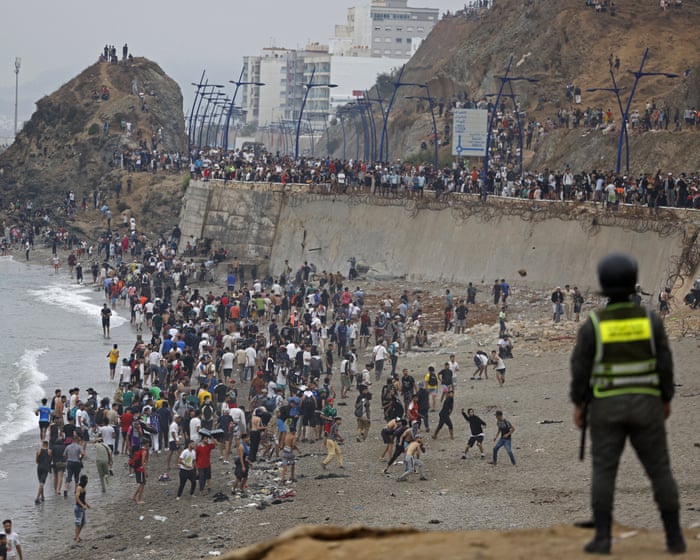
Spain’s Prime Minister Pedro Sánchez said there is no proof that the Moroccan government caused the large group of migrants to enter Ceuta last month. About 70,000 people crossed into Ceuta, creating a political and humanitarian challenge, but Spain is working with Morocco to handle the situation.
Key Facts
Around 70,000 migrants entered the Spanish enclave of Ceuta at the end of July.
Approximately 141 people died trying to enter Ceuta during this event.
Most migrants have returned to Morocco, but about 1,500 remain in Ceuta, including 1,200 minors.
Sánchez stated no evidence shows Morocco was behind the mass crossing.
The prime minister blamed criminal gangs and false information spread on social media for encouraging migration.
Tensions continue in Ceuta, with clashes between residents, migrants, and police.
Spain’s opposition parties criticize the government for not controlling the border crisis effectively.
Sánchez emphasized the need for cooperation between Spain and Morocco to solve the crisis.
Read the Original
Want the full story? Tap a source to open the original
article.
Heavy floods in Nepal have caused severe damage in the Rasuwa district, destroying villages like Syfrubesi. The national disaster agency reports that more than 4,200 people are missing after the floods.
Key Facts
Over 4,200 people are reported missing in Nepal due to floods.
The Rasuwa district is one of the areas hit hardest by the disaster.
Villages such as Syfrubesi have been left in ruins.
The BBC visited the affected area to report on the damage.
Local residents are shocked by the destruction caused by the floods.
The situation is part of a broader flooding event affecting the Nepal-Tibet region.
The national disaster agency is monitoring the ongoing crisis.
Read the Original
Want the full story? Tap a source to open the original
article.