Reporters Without Borders (RSF) Secretary-General Thibaut Bruttin discussed the dangers journalists face in an interview marking the United Nations’ International Day to End Impunity for Crimes Against Journalists. He cited killings, imprisonment, political intimidation and hostile working conditions as threats to press freedom and the public’s access to information.
Key Facts
The interview was published by FRANCE 24 on November 2, 2026.
Thibaut Bruttin is RSF’s director general and secretary-general.
The interview marked the United Nations’ International Day to End Impunity for Crimes Against Journalists.
The article lists lethal violence, imprisonment and political intimidation among threats journalists face.
Bruttin said the public has a right to know what is endangered when a journalist is killed.
The article frames control of public access to information as a central issue in press freedom.
Read the Original
Want the full story? Tap a source to open the original
article.
Ukraine and Russia reported cyberattacks overnight on mobile apps used to send air-raid warnings. Ukraine said the app carried false alerts about threats in Kyiv, while Russian authorities said their warning app was hacked and taken offline.
Key Facts
The apps send alerts about incoming missiles and drones and advise people to seek shelter.
Ukraine's app displayed false messages about a nuclear radiation threat in Kyiv, a chemical attack, street fighting, and incoming Oreshnik missiles.
Ukraine's Air Force urged people to stay calm and disregard the messages.
One of the false alerts was written in Russian.
Russian authorities said their warning app had been hacked and taken offline.
A Ukrainian hacker group claimed it sent false alerts about nuclear warheads to users in Russia.
The article described the incidents as a breach on an unusually large scale during the war.
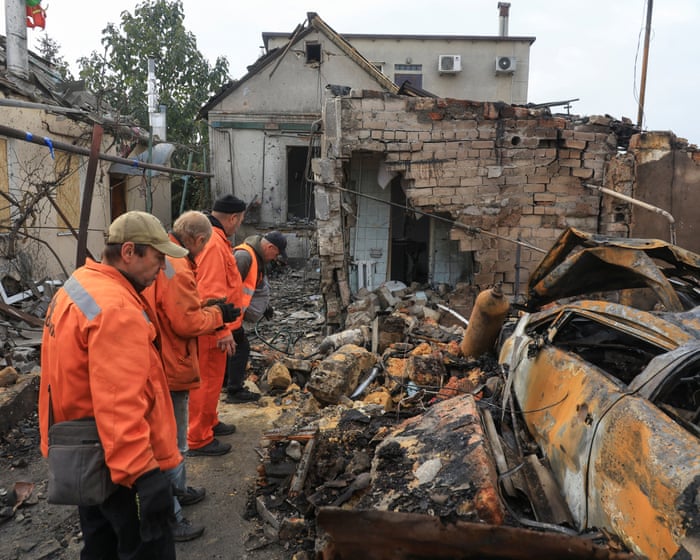
The article also reported strikes on energy sites, including in Zaporizhzhia and Odesa.
Read the Original
Want the full story? Tap a source to open the original
article.
Uganda has begun withdrawing troops serving in the African Union mission in Somalia after nearly 20 years. The phased withdrawal is expected to finish in August 2027, while Ugandan troops deployed under a separate bilateral security agreement will remain in Somalia.
Key Facts
The first reported group of 109 Ugandan troops left Mogadishu on Friday.
Uganda first sent troops to Somalia in 2007, under the African Union Mission in Somalia.
Army chief Gen Muhoozi Kainerugaba said Uganda would hand security responsibilities to Somali forces.
Ugandan forces also served under later African Union missions, including the mission replaced by the African Union Support and Stabilisation Mission in Somalia in 2025.
The article estimates that about 4,500 troops serve in Somalia under the African Union mission and about 2,000 more under bilateral agreements.
Somalia has faced a prolonged insurgency by al-Shabab, an al-Qaeda-linked militant group.
The African Union mission faces uncertainty over future funding as US and UN support is expected to wind down.
Read the Original
Want the full story? Tap a source to open the original
article.
Laboratory tests confirmed that anthrax caused the deaths of 28 hippos in the Semuliki River near Virunga National Park in eastern Democratic Republic of the Congo. Park officials are monitoring the area and managing carcasses, while warning nearby residents not to touch or eat animals found dead.
Key Facts
Hippo deaths began in mid-September, and officials recorded 28 deaths over about one month.
Tests identified anthrax, a disease caused by the bacterium Bacillus anthracis, as the cause.
People can be exposed to anthrax through contact with sick or dead animals or by eating their meat.
Virunga National Park is monitoring new deaths, arranging safe carcass disposal, and informing nearby communities.
Officials advise residents not to touch, skin, or consume animals found dead and to report carcasses.
Park officials said previous anthrax outbreaks among wildlife occurred during droughts.
The park has lost control of a significant part of its territory over the past four years amid fighting between the Congolese army and M23 fighters.
Read the Original
Want the full story? Tap a source to open the original
article.
Sydney has begun street patrols by a new police unit armed with military-grade assault rifles. The Armed Response Command was established after an attack at Bondi beach last December that killed 15 people.
Key Facts
The new unit is called the Armed Response Command.
The unit has begun patrolling Sydney’s streets.
Officers in the unit carry military-grade assault rifles.
Authorities established the unit after the Bondi beach attack.
The attack took place last December.
The attack killed 15 people.
Read the Original
Want the full story? Tap a source to open the original
article.
Authorities in Andhra Pradesh began evacuating coastal residents as Cyclone Murasu approached, with about 2,000 people moved by Monday and plans to evacuate around 30,000. The storm was forecast to reach the coast late Monday or early Tuesday with winds of 100 to 110 kilometres per hour, after a cyclone struck the same coastline last week and killed six people.
Key Facts
About 2,000 people had been evacuated from low-lying coastal areas by Monday.
Andhra Pradesh officials planned to evacuate about 30,000 people.
The India Meteorological Department forecast Murasu would cross the coast between Nellore and Narsapur, near Ongole, late Monday or early Tuesday.
The forecast called for sustained winds of 100 to 110 kilometres per hour, with gusts reaching 120 kilometres per hour.
Six National Disaster Response Force teams and seven state response teams had been deployed.
Schools were closed in Andhra Pradesh, Tamil Nadu and Odisha.
Officials warned that 6,000 to 8,000 electrical poles could be damaged.
Cyclone Arnab struck the same coastline the previous Wednesday, killing six people and damaging homes and crops.
Read the Original
Want the full story? Tap a source to open the original
article.
Chinese state broadcaster CCTV did not air Real Madrid’s Spanish league match against Racing Santander on Sunday, amid a dispute over Kylian Mbappe’s comments about Mao Zedong. Mbappe, Real Madrid and La Liga apologized, but CCTV’s parent organization has not announced that broadcasts will resume.
Key Facts
CCTV’s two sports channels did not broadcast the Real Madrid match, which kicked off at 15:15 GMT.
China Media Group, which oversees CCTV, announced on October 26 that it had suspended La Liga broadcasts.
The dispute followed a video in which Mbappe called Mao a “dictator” while discussing an internet meme.
Mbappe described his comments as ill-judged and apologized; Real Madrid and La Liga also apologized.
China’s Ministry of Foreign Affairs said it took Mbappe’s apology seriously.
The streaming service Migu showed Barcelona’s 6-1 win over Alaves on Saturday, according to reports.
Chinese brands canceled sponsorship deals with Mbappe after his comments.
Read the Original
Want the full story? Tap a source to open the original
article.
Australian author Craig Silvey was sentenced to seven months in jail for possessing and distributing child exploitation material. He pleaded guilty in May, and the sentence was backdated to 22 October; he is eligible for parole.
Key Facts
Police arrested Silvey in January after raiding his home in Western Australia and seizing electronic devices.
Silvey, 44, pleaded guilty to possessing and distributing child exploitation material in May.
A judge described his actions as serious and said the abuse depicted in the material causes lasting trauma to children.
Prosecutors said Silvey’s conduct contributed to the cycle of abuse; his lawyer argued that he had acted to cope with psychological distress.
Silvey is best known for the novel Jasper Jones and the children’s book Runt, both adapted for film.
Since his arrest, publishers and bookshops have withdrawn his works, and some schools have removed Jasper Jones from teaching lists.
Read the Original
Want the full story? Tap a source to open the original
article.
Australian author Craig Silvey was sentenced to seven months in jail after pleading guilty to distributing and possessing child exploitation material. A judge described the offending as very serious and disturbing; two additional charges were dropped in May.
Key Facts
Silvey, 44, was sentenced on Monday in Western Australia.
He pleaded guilty earlier this year to distributing and possessing child exploitation material.
Police found category one images and videos on his laptop and mobile phone during a raid at his Fremantle home.
Court evidence included online messages in which Silvey discussed sexual interest in young boys.
Judge Hayley Cormann said the offending involved children and was destructive and devastating.
Two charges of producing and possessing further child exploitation material were dropped in May.
Silvey wrote Jasper Jones, which was adapted into a film and stage productions.
Publishers Allen & Unwin and Fremantle Press stopped promoting his books after he was charged.
Read the Original
Want the full story? Tap a source to open the original
article.
The article challenges Robert F. Kennedy Jr.’s claim that Muslim Arabs do not produce science or literature, citing Arab and Muslim Nobel laureates and other contributors. It argues that differences in knowledge production reflect historical and institutional conditions, while noting challenges in research and education across many Arab countries.
Key Facts
Kennedy made the remarks at a campaign rally in Michigan, according to the article.
The article says Kennedy attributed the lack of scientific and literary achievement among Muslim Arabs to the influence of the Muslim Brotherhood.
The article names Naguib Mahfouz, Mohamed ElBaradei, Tawakkol Karman, Ahmed Zewail, Moungi Bawendi and Omar Yaghi as Nobel laureates.
The article describes past centers of Islamic scholarship including Baghdad, Damascus, Cairo and Cordoba.
It says scholars in those centers built on and exchanged knowledge from Greek, Syriac, Indian and other traditions.
The article says conditions that support knowledge production include institutions, education, economics, political support and networks for sharing knowledge.
It identifies research funding, university independence, education quality, research freedom and retaining scientists as challenges in many Arab countries.
Read the Original
Want the full story? Tap a source to open the original
article.
UN human rights employee Mohammad el-Shami died in Houthi custody in Yemen after being detained since June 2024. The UN has called for an independent investigation and the release of other detained personnel, while his family has not been told how he died.
Key Facts
El-Shami worked for the UN Human Rights Office and had been detained by the Houthis since June 2024.
His family was notified of his death more than a month after it occurred and has received no explanation of its cause or circumstances.
UN High Commissioner for Human Rights Volker Türk called for a prompt, transparent and independent investigation.
UN Secretary-General António Guterres called for the immediate release of detained UN personnel and other workers.
The Houthis accused more than 60 UN and NGO workers detained in 2024 of belonging to an alleged American-Israeli spy network.
Amnesty International reported that, as of February 2026, 73 UN staff and dozens of other humanitarian workers were detained.
El-Shami was the second UN staff member reported to have died in Houthi custody; a World Food Programme employee died there in February 2025.
Human rights advocates say Houthi control of prisons, medical records and witnesses makes accountability for deaths in custody difficult.
Read the Original
Want the full story? Tap a source to open the original
article.
The Strait of Hormuz remains dangerous and costly for shipping, despite U.S. claims that it is open. Analyst Trita Parsi says Iran still controls passage through the strait and that a deal to reopen it is central to efforts to end the war.
Key Facts
Shipping through the Strait of Hormuz remains dangerous.
Shipping through the strait remains costly.
The United States says the strait is open.
Analyst Trita Parsi says Iran continues to exert control over passage through the strait.
The article says a deal to reopen the waterway is a key part of efforts to end the war.
Read the Original
Want the full story? Tap a source to open the original
article.
Afghanistan’s Taliban government said it was seriously concerned by reports that the United States plans to send more than 150 Afghans to Pakistan for eventual return to Afghanistan. Advocacy groups warn that former allies of U.S. forces and their families could face danger if returned, while Taliban officials say they are ready to discuss the matter with Washington.
Key Facts
U.S. media reports and AfghanEvac say more than 150 Afghans in the United States could be deported through Pakistan.
The people expected to be deported include relatives of Afghans who assisted U.S. forces before the 2021 withdrawal.
Taliban foreign ministry spokesman Abdul Qahar Balkhi urged the United States to coordinate with Afghan authorities and consider the rights of the people affected.
The Taliban announced a general amnesty for people who worked with Western-backed forces and has said they can return safely.
The United Nations has recorded reports of extrajudicial killings, detentions and other abuses in Afghanistan.
Anonymous U.S. officials told The New York Times that Pakistan would oversee the Afghans’ expulsion to Afghanistan because the United States cannot arrange deportations there directly.
Pakistan ordered law enforcement earlier this year to arrest Afghan citizens without visas, as part of a policy that has returned millions of Afghans over several years.
Pakistan-Afghanistan relations have worsened amid deadly border clashes and a near-total border closure.
Read the Original
Want the full story? Tap a source to open the original
article.
The article says Palestinian citizens of Israel turned out in large numbers in the October 27 election, helping Palestinian parties win 19 Knesset seats and preventing Benjamin Netanyahu’s bloc from securing a majority. It argues that Palestinian voters can affect election outcomes but remain excluded from many efforts to form governments, and describes growing pressure on Palestinian political participation.
Key Facts
The article reports that 38 parties ran in the October 27 Israeli election.
It says two Palestinian-led parties won a combined 19 seats in the Knesset.
About 80 percent of Palestinian citizens of Israel reportedly voted.
Netanyahu’s bloc won 53 seats, while the Jewish-led opposition won 48, according to the article.
The article says Jewish-led parties have often refused to work with Palestinian parties in forming governments.
In 2021, Ra’am joined a coalition led by Naftali Bennett and Yair Lapid, after setting aside national demands in favor of civil and economic issues, the article says.
The article reports that after October 7, 2023, Palestinian citizens faced disciplinary cases, job losses, police investigations and arrests linked to speech and social-media posts.
Read the Original
Want the full story? Tap a source to open the original
article.
Hungary’s government plans to publish a searchable online database of communist-era state informant files on November 4. The release is intended to give the public access to records that remained largely restricted for decades, though many files are incomplete and some people named in them may still be alive.
Key Facts
Hungary’s communist state-security services used informants from 1945 to 1989 to monitor society and suppress dissent.
Informants included people who were coerced or blackmailed, as well as people recruited with promises of advantages.
Péter Magyar promised during his election campaign to make the files public.
The government passed a law in September to allow the files to be released.
The release was first scheduled for the anniversary of the 1956 anti-Soviet revolution, then postponed to November 4.
Historians estimate that 50,000 to 60,000 people are named in the records and that about 10% of them are still alive.
Researchers say the searchable database will make Hungary’s former state-security records especially accessible compared with those in other former Eastern Bloc countries.
Many files are incomplete, and records were destroyed or lost during the 1956 uprising and the 1989 transition.
Read the Original
Want the full story? Tap a source to open the original
article.
Protests over low wages and living costs have disrupted garment production in Bangladesh for a third day, with hundreds of factories temporarily closed and police deployed in industrial areas near Dhaka. The government has formed a wage board to review minimum pay as workers demand a monthly wage of 30,000 taka, more than twice the current 12,500 taka.
Key Facts
About 500 garment factories were temporarily shuttered after protests began on Saturday.
Thousands of workers have taken to the streets in areas including Savar, Ashulia and Gazipur.
Police used tear gas and sound grenades against protesters, according to the report.
Bangladesh formed a wage board on Sunday to review the minimum wage for garment workers.
Workers are seeking a monthly minimum wage of 30,000 taka, about $242, compared with the current 12,500 taka, about $101.
Prime Minister Tarique Rahman held an emergency meeting with ministers and advisers.
Bangladesh’s garment industry is worth about $38 billion and is a major source of export earnings and employment.
The garment manufacturers’ association said factory owners could use a “no work, no pay” provision if protests continued.
Read the Original
Want the full story? Tap a source to open the original
article.
A domestic violence survivor in England says her former partner was released from prison on 15 October without the GPS tag she had been told would monitor him. A report by the chief inspectors for probation and prisons found that nearly half of offenders are not tagged promptly after release, with some waiting up to five months.
Key Facts
Michelle said her former partner punched her, threatened her with a knife and kicked in her front door in 2024.
He was convicted of two counts of assault by beating and one count of affray, then sentenced to 38 months in prison in November 2024.
After his release in February 2025, he was ordered to stay away from Michelle’s home and town.
Michelle said he breached probation conditions in July 2025 and in April and August 2026; she reported two breaches that led to his recall to prison for 56 days each.
He was released again on 15 October 2026, but Michelle said no GPS tag had been fitted despite assurances that one would be.
Michelle moved with her four children to a static caravan after receiving council advice and said relatives were staying with her for safety.
A report by the chief inspectors for probation and prisons found that nearly half of offenders are not tagged promptly after release, and one in 10 waits as long as five months.
The prison officers’ union, POA, wrote to Justice Secretary Alex Norris proposing that prison staff be trained to fit tags before offenders leave prison.
Read the Original
Want the full story? Tap a source to open the original
article.
An Al Jazeera report describes Indian political consultants and social media workers running covert online campaigns for politicians in several countries. Researchers identified at least 28 X accounts sharing videos that supported Haley Stevens in Michigan’s Democratic Senate primary; the accounts drew more than seven million views, and Stevens lost to Abdul El-Sayed.
Key Facts
Rajan Kumar said he created social media content for Kenya’s William Ruto campaign in 2022 for $7 a day.
Kumar said shadow accounts shared content that was not posted by Ruto’s official campaign, including edited clips and false claims.
Ruto won Kenya’s 2022 election and became the country’s fifth president.
The article says researchers found Indian social media accounts posting videos in support of US political campaigns.
The New York Times first reported posts supporting Haley Stevens before Michigan’s August 4 Senate primary.
Stevens lost the Democratic primary to Abdul El-Sayed, the party’s candidate for the midterm election.
Antibot4Navalny told Al Jazeera that it found at least 28 X accounts sharing videos supporting Stevens; the accounts received more than seven million views.
Political consultants interviewed by Al Jazeera said shadow campaigns operate without clear limits or safeguards.
Read the Original
Want the full story? Tap a source to open the original
article.
Hebron Governor Khaled Dudin said Israeli forces withdrew from the southern West Bank city on Monday after imposing a 10-day siege. He said Palestinian security forces took control and displaced families could return, while the governorate reported widespread disruption and damage from the operation.
Key Facts
Israeli forces imposed the siege on October 23 after two Palestinians shot and killed two Israeli soldiers and wounded three others.
Israeli forces later killed the two attackers.
During the operation, Israeli forces closed parts of Hebron and nearby villages, took over some Palestinian homes for military posts, and carried out demolitions.
The Hebron Governorate said more than 3,300 Palestinians were displaced or otherwise affected, especially in Al-Jalda and Ein Deir Baha.
The governorate reported that 15 homes and other structures were demolished.
The governorate said the operation damaged infrastructure and the local economy and disrupted education.
Dudin said Palestinian security forces took control after the Israeli withdrawal and authorities were working to support residents’ safe return.
Read the Original
Want the full story? Tap a source to open the original
article.
Belfast City Hospital has introduced a Da Vinci robotic system for complex gynaecological surgery, including operations for endometriosis. The system may help treat patients sooner, while Colleen Crothers says she waited years for care and ultimately needed a hysterectomy.
Key Facts
The Da Vinci system joined Belfast City Hospital’s gynaecology team in May.
The hospital’s system is the first of its kind on the island of Ireland, according to the article.
The robot is operated by surgeons and uses movable instruments designed to work in tight pelvic spaces.
The system cost £2.4 million and was funded through charitable donations for gynaecological services.
It has performed 130 operations so far, including 105 on women with complex endometriosis.
Four consultants have been trained to use the system.
Northern Ireland’s average wait for complex surgery involving several specialties is about seven years.
Crothers first experienced chronic period pain at 14 and was diagnosed with adenomyosis and endometriosis 22 years later; she had a hysterectomy at 41.
Read the Original
Want the full story? Tap a source to open the original
article.