A New York divorce lawyer explains that divorce laws are changing in the U.S., especially for spouses who do not work and rely financially on their partners. Courts now tend to give less financial support and fewer assets to stay-at-home spouses compared to the past.
Key Facts
Divorce laws have shifted to be more gender-neutral and reflect current social roles, with more fathers seeking equal child custody and more mothers earning income.
Stay-at-home spouses, often women, are receiving less spousal support, fewer legal fee payments, and smaller shares of property after divorce.
No-fault divorce laws, enacted in New York about 15 years ago, allow divorces without blaming one partner, changing how cases are handled.
Courts now see each spouse more as an individual with their own income rather than part of a traditional household setup.
Financial dependence is a key issue; stay-at-home spouses may be at a disadvantage if financial roles change after divorce.
Prenuptial agreements mainly protect assets and inheritance before marriage and do not provide full protection for stay-at-home spouses.
Lifetime spousal support is becoming rare, so stay-at-home spouses should understand their financial rights before divorcing.
Understanding custody expectations and rights is important before making decisions about divorce.
Read the Original
Want the full story? Tap a source to open the original
article.
A very strong El Niño weather event is developing and may affect travel during Thanksgiving and Christmas in the United States. Southern states could face heavy storms and flooding, while northern states might have warmer and drier weather, which could mean fewer travel problems from snow or ice.
Key Facts
El Niño is a natural climate pattern where Pacific Ocean waters become warmer than usual.
The current El Niño is the strongest in 170 years, with ocean temperatures 3.05 degrees Celsius above average.
There is a 75% chance this El Niño will be the strongest since 1950.
Southern U.S. states like Texas, Louisiana, and California may experience heavy rain, flooding, and storms during the holiday season.
Flooding and mudslides could cause road closures and make travel harder in the South.
Northern states such as New York and Massachusetts may have warmer and drier winters, possibly easing travel problems.
Weather experts warn that warmer global temperatures caused by greenhouse gases can make flooding worse.
Past strong El Niño events, like the one in 1997-98, caused major flooding and road damage in southern California.
Read the Original
Want the full story? Tap a source to open the original
article.
German Chancellor Friedrich Merz made an unannounced visit to Kyiv amid ongoing Russian attacks on the city. Shortly after his arrival, Russian forces struck the North Bridge in Kyiv, damaging the bridge but causing no reported casualties.
Key Facts
Friedrich Merz visited Kyiv unexpectedly to show support for Ukraine.
Russian forces attacked Kyiv’s North Bridge shortly after Merz arrived.
The North Bridge is one of several bridges connecting Kyiv’s central area to suburbs.
Earlier strikes damaged other bridges over the Dnipro River, disrupting transportation.
Since April, Kyiv has faced more frequent Russian attacks including strikes on schools and infrastructure.
Merz brought German defense manufacturers and plans to meet Ukrainian President Zelenskyy.
Sirens sounded in Kyiv and smoke was visible after the bridge attack.
Ukraine is preparing for a difficult autumn and winter amid ongoing conflict.
Read the Original
Want the full story? Tap a source to open the original
article.
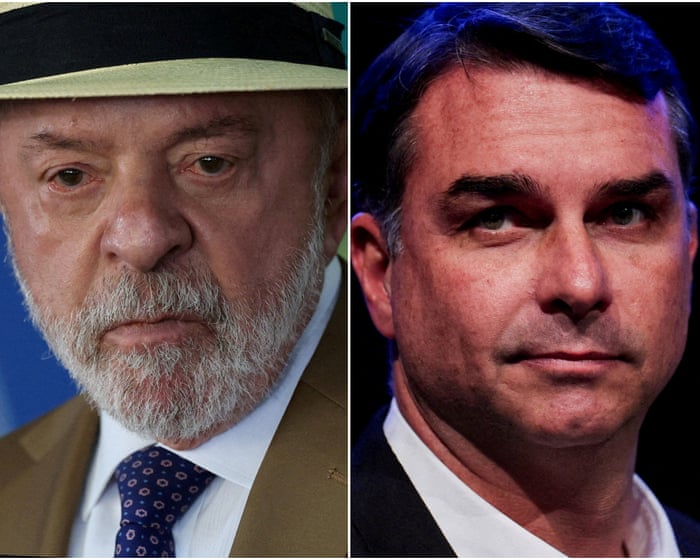
Brazilians are voting in a key presidential election that could affect the future of Latin America. The main candidates are the left-wing President Luiz Inácio Lula da Silva, seeking a fourth term, and far-right senator Flávio Bolsonaro, son of former President Jair Bolsonaro.
Key Facts
The election is highly divided and important for Brazil and the region.
Lula is 80 years old and opposes President Trump’s influence in Brazil.
Flávio Bolsonaro supports President Trump and wants to join a US-led anti-drug coalition.
Jair Bolsonaro is serving a 27-year prison sentence for attempting a coup after losing the 2022 election.
If no candidate gets more than 50% of votes, there will be a runoff on October 25.
The election includes votes for president, state governors, legislators, and senators.
Lula is favored by some for protecting vulnerable groups and the Amazon rainforest.
Both main candidates face corruption allegations, affecting voter opinions.
Read the Original
Want the full story? Tap a source to open the original
article.
A major bridge in Kyiv was struck by Russian drone attacks for the second day in a row, causing damage and disrupting traffic and heating services. This happened at the same time as German Chancellor Friedrich Merz made an unannounced visit to Kyiv to show support and promise more help for Ukraine’s air defenses.
Key Facts
The Pivnichnyi (Northern) Bridge in Kyiv was hit by Russian strikes on two consecutive days.
The attacks damaged the road surface and a heating main, causing a temporary lack of hot water in a Kyiv district.
Russian drones have also targeted the Pivdennyi (Southern) Bridge nearby in previous attacks.
Kyiv officials say these bridges are vital for moving troops and supplies between the west and east parts of the city.
German Chancellor Friedrich Merz visited Kyiv suddenly and pledged support for Ukraine’s air defense systems.
Russian officials claim these attacks are in response to Ukraine hitting Russian energy sites, though Russia started the strikes.
Repeated drone strikes risk weakening the bridges, forcing closures and disrupting city infrastructure.
Kyiv's mayor described the situation as very serious due to ongoing attacks on critical infrastructure.
Read the Original
Want the full story? Tap a source to open the original
article.
The remains of Tsar Samuel, a medieval Bulgarian ruler, were returned to Sofia, Bulgaria’s capital, after being located near the border with Greece. Bulgarian fighter jets transported the remains back following long negotiations with Greece, which included an exchange involving religious artifacts.
Key Facts
Tsar Samuel was a medieval ruler of Bulgaria.
His remains were found near the border between Bulgaria and Greece.
Bulgaria and Greece negotiated for decades over the remains.
The bones were returned to Sofia, the capital of Bulgaria.
Bulgarian fighter jets flew the remains back to Bulgaria.
The return was part of an exchange where religious artifacts were also returned.
This event highlights ongoing cultural and historical cooperation between Bulgaria and Greece.
Read the Original
Want the full story? Tap a source to open the original
article.
German Chancellor Friedrich Merz visited Kyiv and announced a new aid package for Ukraine worth over 1.3 billion euros to help with defense and energy needs. During his visit, Kyiv experienced renewed Russian drone attacks, including damage to key infrastructure like bridges over the Dnipro River.
Key Facts
Germany and Ukraine signed a 1.3 billion euro aid deal, including about 1 billion euros for weapons and 350 million euros for Ukraine’s energy sector.
The aid focuses on fighting increased Russian drone attacks and supporting Ukraine’s power and heating systems during winter.
Russian attacks struck Kyiv’s Northern Bridge and other infrastructure several times in recent days.
Air raid sirens repeatedly sounded during Merz’s visit, with damage to the National Academy of Sciences from a drone attack killing two people.
Kyiv’s mayor said the city should prepare for continuous attacks like a war zone.
Merz said supporting Ukraine is important to European security because unchecked Russian aggression could threaten other countries.
The aid deal includes plans for producing advanced anti-drone technology jointly with Ukraine to improve its air defense.
President Zelensky mentioned that the U.S. suggested new talks with Russia and Ukraine by the end of the month.
Read the Original
Want the full story? Tap a source to open the original
article.
Bosnia and Herzegovina held a general election to choose leaders for its multiethnic presidency, Parliament, and regional governments. The vote is important for the country’s efforts to join the European Union, but ongoing ethnic divisions and calls for reform shape the political landscape.
Key Facts
About 3.4 million people voted in the general election on October 4, 2026.
Voters chose three members of the country’s shared presidency, lawmakers, and leaders for two main regions: the Federation of Bosnia and Herzegovina (FBiH) and Republika Srpska.
Bosnia’s complicated government system was created in 1995 to manage tensions between Bosniaks (Muslims), Serbs (Orthodox Christians), and Croats (Catholics).
Political parties often focus on old war conflicts, which some voters find frustrating.
Republika Srpska’s right-wing leader, Milorad Dodik, has expressed strong separatist views.
Bosniak parties support a stronger central government and want to speed up EU and NATO integration.
Bosnia was granted EU candidate status in 2022, but negotiations were delayed until the country improves anti-corruption and justice reforms.
This election was the first to use electronic scanners and fingerprint verification to reduce voting fraud.
Read the Original
Want the full story? Tap a source to open the original
article.
Cornell University’s president, Michael Kotlikoff, spoke in a video about problems with how the university handled gang rape claims in 2024. He said the school needs to improve its response to such serious cases.
Key Facts
The allegations were about a gang rape reported in 2024.
Michael Kotlikoff was the interim president of Cornell at that time.
Kotlikoff made a public video statement addressing the issue.
He acknowledged concerns about the university’s handling of the case.
He committed to doing better in dealing with rape and sexual assault concerns in the future.
Cornell University is an Ivy League school located in the United States.
Read the Original
Want the full story? Tap a source to open the original
article.
Houthi forces took control of Mocha, a city in Yemen, in September 2024 during the ongoing civil war. Many residents have stayed despite danger, facing food shortages, power cuts, and restrictions while the Yemeni government declared the area a military strike zone.
Key Facts
The Houthis are an armed group controlling northern Yemen, including the capital Sanaa, since 2014.
Mocha had about 62,500 residents according to a 2004 census, but many fled after fighting intensified in September 2024.
Yemen’s government declared Mocha a “kill box,” meaning a strike zone where any Houthi movement would be attacked.
Some residents say Houthis have tried to recruit local young men to fight on the front lines.
Prices for cooking gas and flour have risen sharply, making basic needs harder to afford.
Electricity cuts and curfews have made life difficult for those still living in the city.
Schools are mostly empty as parents fear for their children's safety due to the ongoing conflict.
Many displaced people have fled toward other cities like Aden, Taiz, and Lahij.
Read the Original
Want the full story? Tap a source to open the original
article.
Brazil’s presidential election voting is set to begin soon. President Luiz Inacio Lula da Silva and his main opponent Flavio Bolsonaro finished their final campaign events in Sao Paulo, a key state with many voters, trying to gain support and influence undecided voters.
Key Facts
Brazil’s presidential election polls open within a few hours from the article’s date.
President Luiz Inacio Lula da Silva and Flavio Bolsonaro are the top contenders.
Both candidates held their last campaign rallies in Sao Paulo, a state representing about 20% of Brazil’s voters.
The election is expected to be very close and competitive.
Experts from universities are providing analysis and insights about the election and candidates.
Recent political news includes President Lula banning online betting ahead of the vote.
This election is important to Brazil’s future leadership and political direction.
Read the Original
Want the full story? Tap a source to open the original
article.
Flock Security uses cameras with artificial intelligence (AI) to track license plates and other vehicle details in the U.S. These cameras have raised privacy concerns and become a political issue before the midterm elections. Due to the controversy, some of the cameras have been damaged by vandals.
Key Facts
Flock Security operates AI-powered cameras that record license plates and vehicle information.
The cameras are part of a surveillance network used in the United States.
Their use has raised concerns about privacy among the public.
The issue has become important in the political debate before the midterm elections.
Some people have vandalized these cameras because of the controversy.
The company’s AI technology automatically collects and processes vehicle data.
The story was reported by Caitlin Brown with video coverage.
Read the Original
Want the full story? Tap a source to open the original
article.
Yemen’s Houthi rebels said they attacked oil facilities owned by Aramco near Riyadh, Saudi Arabia’s capital. In response, the Houthis accused Saudi Arabia of carrying out many airstrikes on Yemen’s capital, Sanaa, and warned they will keep responding with more attacks if fighting continues.
Key Facts
The Houthis are a rebel group from Yemen involved in a conflict with Saudi Arabia.
They claimed responsibility for attacks on Aramco oil facilities near Riyadh.
Residents reported seeing fire and smoke rising from the oil site.
Saudi Arabia has been conducting airstrikes on Sanaa, the capital of Yemen.
The Houthis warned they will escalate their attacks if Saudi Arabia continues bombing.
Aramco is the world’s largest oil company, based in Saudi Arabia.
The situation is part of ongoing fighting between Yemen’s Houthis and Saudi Arabia.
The conflict affects the broader Middle East region.
Read the Original
Want the full story? Tap a source to open the original
article.
Two Palestinian Christian women, Maysa Abu Daoud and her daughter Mary al-Najjar, were killed in an Israeli air attack on Gaza City’s Remal neighborhood. The attack occurred despite a U.S.-brokered ceasefire with Hamas and adds to the deaths of Christians in the ongoing conflict in Gaza.
Key Facts
Maysa Abu Daoud and her daughter Mary al-Najjar died in an Israeli air strike targeting a building in Gaza City’s Remal neighborhood.
The strike happened during a ceasefire agreement brokered by the United States between Israel and Hamas.
The two women were active in helping church members and displaced people in Gaza’s Christian community.
Their funeral was held at Saint Porphyrius Church in Gaza City’s Old City.
Gaza’s Christian population is fewer than 1,000, and many have died in attacks during the ongoing conflict since October 2023.
Earlier attacks have hit Christian sites, including Saint Porphyrius Church and the Holy Family Church compound.
According to Gaza’s Ministry of Health, Israeli attacks have killed over 74,000 people in Gaza, with around 1,445 deaths since the October 2025 ceasefire began.
Family members and local Christian leaders described the killings as a painful loss for the community and called for an end to the violence.
Read the Original
Want the full story? Tap a source to open the original
article.
Wales has passed a law to ban greyhound racing, the first such ban in the UK, but there are problems with how to stop the sport without harming the dogs’ welfare. Animal groups want the ban to happen slowly so dogs can be cared for and rehomed, while the industry wants a quicker end. The Welsh government has no clear way to solve this disagreement.
Key Facts
Wales passed a law banning greyhound racing, with a three-year period to stop the sport.
A working group with animal welfare and industry members oversees the ban’s rollout.
Animal welfare groups want a gradual stop to avoid forcing many dogs into care at once.
The racing industry says phasing out racing slowly is not practical.
The Welsh government suggested a 12-month wind-down but cannot require it.
Around 360 greyhounds and 18 trainers currently work at the last Welsh track, Valley Greyhounds Stadium.
Greyhound racing is considered dangerous; from 2018 to 2023, the sport recorded over 2,700 dog deaths and 26,500 injuries.
Similar bans have been introduced in Scotland, where the last track closed in 2024.
Read the Original
Want the full story? Tap a source to open the original
article.
Up to 77 million fish are killed each year in the UK, but there are no regular or mandatory government inspections of fish slaughterhouses in England and Wales. Animal welfare groups and some government advisers have called for laws to protect fish during slaughter and for inspections to ensure these laws are followed, but no new rules have yet been made.
Key Facts
Around 77 million fish are slaughtered annually in the UK.
England and Wales have no routine or mandatory inspections of fish slaughterhouses.
Government bodies responsible for animal welfare say they do not routinely inspect these facilities.
The Farm Animal Welfare Council has recommended legal protections for fish slaughtering since 1996, with further calls in 2014 and 2024.
The UK government promised to create humane slaughter rules for farmed fish in its 2025 Animal Welfare Strategy but has not yet introduced legislation.
Animal Equality UK says the delay puts millions of fish at risk of painful deaths.
The British Trout Association reports nearly 290 trout farms in the UK, mostly in northern and southern England and southern Scotland.
The Animal and Plant Health Agency (APHA) states it investigates fish welfare concerns and Fish Health Inspectorate conducts inspections but does not carry out routine checks of slaughterhouses.
Read the Original
Want the full story? Tap a source to open the original
article.
German Chancellor Friedrich Merz made an unannounced visit to Kyiv, Ukraine, to show support amid ongoing conflict with Russia. The visit happened shortly after Russia warned that Kyiv would face large new airstrikes.
Key Facts
Chancellor Friedrich Merz visited Kyiv on Sunday without prior announcement.
The visit was meant to show Germany's support for Ukraine during the war with Russia.
Russia had warned foreigners and diplomats to leave Kyiv ahead of "massive" airstrikes.
The visit took place amid increased Russian attacks on Ukrainian cities.
Merz's visit is part of diplomatic efforts related to the Ukraine conflict.
The situation in Kyiv remains tense due to threats of new bombings.
The article includes recent related events in Europe but focuses on this visit and the conflict.
Read the Original
Want the full story? Tap a source to open the original
article.
The Japanese government has officially protested after a U.S. Marine was arrested in Okinawa for the suspected murder of a local woman. The Marine, Devin J. Ballard, denies the charges while U.S. officials say they are cooperating with the investigation.
Key Facts
Devin J. Ballard, a 20-year-old Lance Corporal with the Third Marine Expeditionary Force, was arrested in Okinawa.
Ballard is suspected of robbing and killing Anna Yagi, a 39-year-old woman found dead in a hotel in Naha, Okinawa’s capital.
Japanese police say surveillance footage shows Ballard entering the hotel with the victim early on a Saturday.
The Japanese government issued a formal protest to the United States regarding the incident.
The U.S. embassy in Tokyo expressed condolences to the victim’s family and confirmed cooperation with Japanese authorities.
Okinawa hosts about 30,000 active-duty U.S. military personnel.
Ballard denies the allegations of murder and robbery.
The investigation is ongoing and updates are expected.
Read the Original
Want the full story? Tap a source to open the original
article.
The Saudi-led coalition said the Houthis’ claims of attacking Riyadh and an oil facility near the capital are misleading. Fighting between Houthi rebels and Yemen’s government forces has increased since a 2022 truce ended, leading to many casualties and displaced people.
Key Facts
The Houthis said they launched missile and drone attacks on an Aramco oil facility near Riyadh.
Saudi coalition spokesman Turki al-Maliki denied these claims as misleading.
Yemeni government forces said they carried out hundreds of precise attacks on Houthi targets, killing around 700 rebels.
The fighting worsened after a ceasefire ended in July 2023.
The Houthis captured the port city of Mocha and some islands important for global oil shipping in September.
The Saudi-led coalition then conducted more air and ground attacks on Houthi locations.
The conflict began in 2014 after Houthis took control of Yemen’s capital, Sanaa.
The ongoing war has caused large-scale destruction and displacement of people in Yemen.
Read the Original
Want the full story? Tap a source to open the original
article.
German Chancellor Friedrich Merz visited Kyiv on October 4, 2026, to show support to President Volodymyr Zelensky amid ongoing Russian attacks on Ukraine’s capital. The visit highlighted Germany's commitment to help Ukraine as Russia continues missile and drone strikes targeting important infrastructure.
Key Facts
Chancellor Merz made an unannounced trip to Kyiv to support Ukraine in its war with Russia.
Kyiv has recently experienced heavy drone and missile attacks, especially on energy infrastructure.
Merz was met by Ukrainian Foreign Minister Andriy Sybiga and plans to meet President Zelensky.
Germany is one of Ukraine’s largest supporters and promises to continue assistance.
The visit included Germany’s Economy Minister Katherina Reiche and discussions of German-Ukrainian business cooperation.
Russia warned of upcoming large airstrikes on Kyiv and urged foreigners and diplomats to leave the city.
Despite warnings, international leaders continue visits to Kyiv to show support.
Kyiv faces transportation and power disruptions due to attacks on bridges and key infrastructure.
Read the Original
Want the full story? Tap a source to open the original
article.