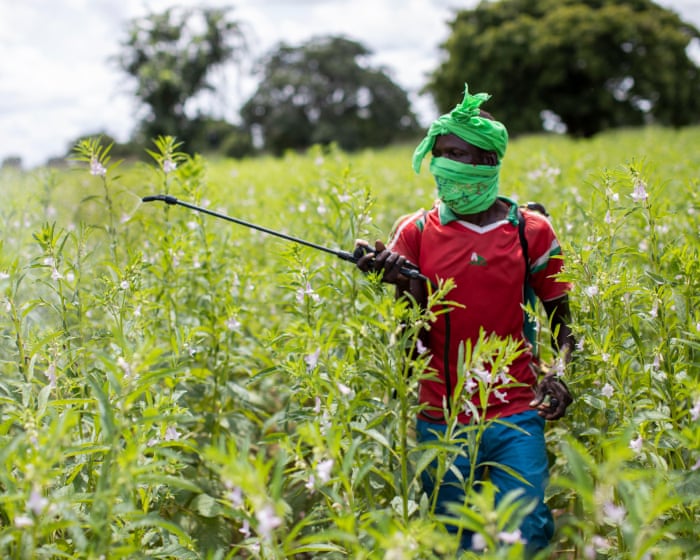
A new study finds that almost half of the world’s 934 million farmers and farm workers suffer from pesticide poisoning each year, with an estimated 402 to 433 million cases. The highest poisoning rates are in southern Asia and parts of Africa, leading to about 11,000 deaths annually, mostly in India. The study calls for urgent action to reduce the use of dangerous pesticides and provide safer alternatives to protect farmers' health.
Key Facts
Nearly 46% of the global farming population is poisoned by pesticides annually.
An estimated 402-433 million farmers and farm workers are exposed to acute pesticide poisoning each year.
Southern Asia has the highest number of poisoning cases, followed by southeast Asia and east Africa.
Burkina Faso in West Africa has the highest national poisoning rate, with about 84% of farmers affected.
Approximately 11,000 deaths from pesticide poisoning occur worldwide every year, with around 60% happening in India.
Pesticide use worldwide has doubled since 1990, reaching 3.8 million tonnes in 2023.
The study calls for phasing out highly hazardous pesticides and supporting farmers with safer options.
The research did not assess long-term health effects or pesticide exposure on the 84 million children working in agriculture.
Read the Original
Want the full story? Tap a source to open the original
article.
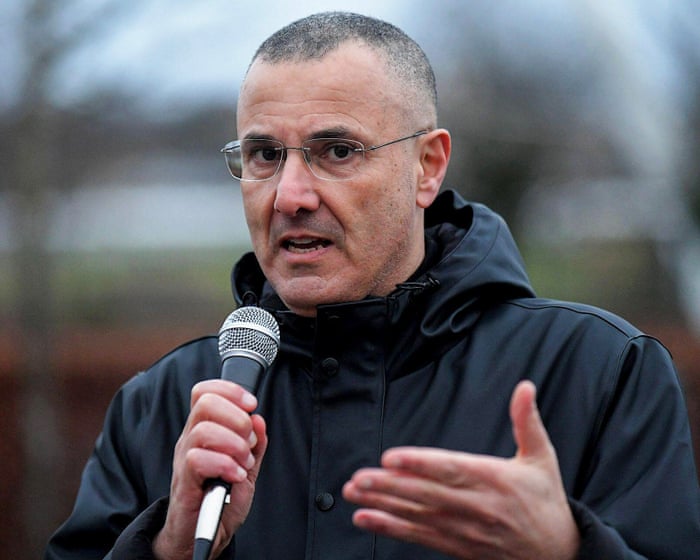
Omar Barghouti, co-founder of the BDS movement, says the UK must stop all trade and support for Israel to meet its legal duty to prevent genocide in Gaza. The UK government is considering banning trade with Israeli settlements in the West Bank as part of a policy reset, but there is debate about this approach among British Jewish groups and officials.
Key Facts
Omar Barghouti calls UK sanctions on Israeli settlements "smoke and mirrors" and urges a complete stop to all trade, arms exports, and academic ties with Israel.
The International Court of Justice (ICJ) ruled that Israel's occupation of Gaza, the West Bank, and East Jerusalem is illegal and may violate racial segregation and apartheid laws.
The ICJ also stated there is a plausible risk of genocide, which creates a legal obligation for other countries to act to prevent it.
The UK government plans a "comprehensive reset" of its policy on Israel, including possibly banning British companies from trade with illegal Israeli settlements.
British foreign secretary Ed Miliband criticized the E1 settlement plans, saying they threaten the possibility of a two-state solution.
Some British Jewish groups warn that a trade ban may increase antisemitism and express concern over the occupation and annexation of the West Bank.
Israel’s foreign minister warned the UK that if Britain takes actions against Israel, Israel will respond.
Barghouti says current UK sanctions have little real effect on Israel’s actions regarding Palestinians.
Read the Original
Want the full story? Tap a source to open the original
article.
A South Korean court sentenced the former head of a care home for people with disabilities to 15 years in prison for sexually assaulting three residents. The case led the government to inspect over 1,500 care facilities, finding 33 suspected abuse cases and raising questions about how the abuse went unnoticed for so long.
Key Facts
The former care home director, named Kim, was sentenced for abusing three residents.
The abuse was reported after a woman with a severe intellectual disability came forward in February 2023.
The Ministry inspected 1,507 disabled care facilities nationwide and found 33 suspected abuse cases.
Ganghwa County found 20 women at the home possibly experienced sexual abuse.
The care home, Saekdongwon in Incheon City, was ordered to close after the abuses were revealed.
The foundation running the home lost its license but has challenged this in court.
The closure is delayed until all residents can be safely relocated or supported to live independently.
South Korean laws were strengthened in 2011 to protect people with disabilities from sexual assault.
Read the Original
Want the full story? Tap a source to open the original
article.
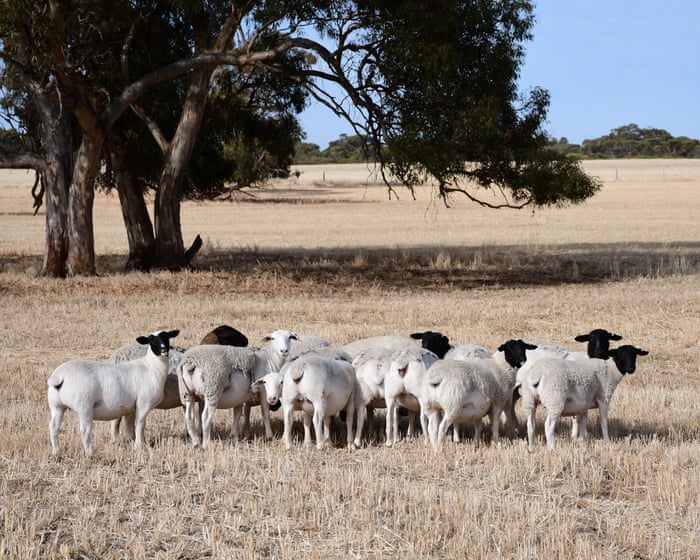
Queensland police are investigating the theft of about 5,500 Dorper sheep, worth over $1.7 million, from a farm near Blackall in western Queensland. The sheep were stolen between February and May, and police are asking for help from the public to find those responsible.
Key Facts
Around 5,500 Dorper sheep, both female (ewes) and male (rams), were stolen.
The sheep are valued at about $1.7 million Australian dollars.
The theft happened at a property near Blackall, 830 km west of Brisbane.
The sheep have white tags from the National Livestock Identification System.
Police describe the theft as complex and likely involved more than one person.
Sheep rustlers sometimes breed stolen sheep to increase profit before selling them.
The theft was probably done in several smaller events, not all at once.
Farms in Queensland can be very large, and theft is often found during stock counting (mustering).
Read the Original
Want the full story? Tap a source to open the original
article.
The Los Angeles Zoo is celebrating a significant increase in the number of great ape babies born recently. These births are important because great apes are endangered, meaning their populations are at risk of disappearing.
Key Facts
The Los Angeles Zoo has seen a baby boom in its great ape population.
Great apes include species like gorillas, chimpanzees, and orangutans.
These births help support the survival of endangered great ape species.
The growth in ape babies shows positive progress in animal care and breeding at the zoo.
Endangered species are animals that could become extinct if their numbers keep dropping.
The zoo’s efforts contribute to global conservation goals.
The article features a video report by David Muir highlighting this milestone.
Read the Original
Want the full story? Tap a source to open the original
article.
Heavy floods caused by a glacial collapse in Nepal have killed at least 1,118 people and left over 3,900 missing. Some missing tourists have contacted authorities, and rescue efforts continue, with foreign nationals among those affected.
Key Facts
The floods began on August 26, 2026, after a glacier collapsed in the Himalayas.
Floodwaters destroyed homes, roads, bridges, and other infrastructure downstream in Nepal and Tibet.
At least 1,118 people have died, and more than 3,900 are still missing.
Nepal’s Foreign Ministry says 324 foreign nationals have been rescued so far.
About 590 foreign nationals from 39 countries remain missing a week after the floods.
Some tourists reported missing have recently contacted authorities by email or phone.
Australia confirmed that five missing Australians are now safe, reducing their missing count from 43 to 38.
Chinese rescue crews built a temporary road to reach the flooded Gyirong Port on the Nepal border to support search efforts.
Read the Original
Want the full story? Tap a source to open the original
article.
German companies that make complex goods like cars and machinery face strong competition from China, whose similar products often cost less. This competition is contributing to slow economic growth in Germany, affecting jobs and company profits.
Key Facts
German economy depends on making and exporting complex products such as cars, locomotives, and machinery.
China’s exports in similar categories are growing, often matching German quality but selling for less.
Economic experts call the impact of China’s competition the "China shock."
Germany’s economy has been stagnant, shrinking in 2023 and 2024 with only 0.2% growth last year.
Major German companies like Volkswagen, BMW, and Bosch announced large job cuts.
Inflation outpaced wage growth after the pandemic, with real wages only recently recovering to 2019 levels.
China is supporting its companies in key sectors, increasing exports even though its own market demand is weak.
Germany is more affected by this competition than other major economies because of its large manufacturing and export sector.
Read the Original
Want the full story? Tap a source to open the original
article.
Asian stock markets dropped on Wednesday after U.S. stocks fell and global bond selling increased. This happened as worries about rising inflation, U.S. government debt, and growing military conflicts in the Middle East affected investor confidence.
Key Facts
Tokyo’s Nikkei 225 index fell 3% to 64,278.95.
South Korea’s Kospi dropped 3.6%, with Samsung Electronics down 3.3% and SK Hynix down 3.5%.
Hong Kong’s Hang Seng index decreased 0.8%; Shanghai Composite index fell 0.9%.
Wall Street indexes also declined on Tuesday: S&P 500 down 0.7%, Dow Jones down 0.8%, and Nasdaq down 1%.
U.S. military strikes and Iranian missile attacks increased tensions, pushing oil prices up.
Brent crude oil price reached $95.56 per barrel, up from around $72 before the conflict.
Bond yields rose globally, including the U.S. 10-year Treasury yield reaching about 4.80%, the highest since January.
Rising bond yields cause bond prices to fall, reflecting investor concerns about inflation and government debt.
Read the Original
Want the full story? Tap a source to open the original
article.
A charity called Blue Cross in Oxfordshire reports that more horse owners are giving up their horses because it is getting too expensive to care for them. This is partly due to dry weather causing hay shortages and higher food prices, along with other costs like vet care and horse shoes.
Key Facts
Blue Cross in Burford takes in 20 to 30 horses each month.
There has been a 160% increase in horses being given up in the UK in recent years.
Dry weather has caused less grass and hay, making feed more expensive.
Owners also face costs for vet visits, vaccinations, worming, and farrier services (horse hoof care).
The RSPCA found that welfare problems have shifted from just abandonment to poor care.
Lack of knowledge and proper facilities for horses is a problem for owners.
The charity encourages owners to ask for help early before their horses suffer.
Blue Cross promises support without judgment to struggling horse owners.
Read the Original
Want the full story? Tap a source to open the original
article.
About 2,000 University of Sydney staff went on a 24-hour strike over worries about job security, workload, and the use of artificial intelligence (AI). The university said most classes would move online during the strike, and talks between staff and management are ongoing.
Key Facts
Around 2,000 staff walked off the job in a strike organized by the National Tertiary Education Union (NTEU).
Staff cited concerns about trust, AI protections, fair workloads, and job security.
The University of Sydney moved most classes online during the strike.
Union leaders say management has not agreed to proper AI protections so far.
AI technology is seen as a major change in education, with some universities already using AI chatbots in teaching.
The university supports ethical use of AI but prefers to handle rules through policies, not the main staff agreement.
Other issues include larger class sizes and proposals for teaching-only roles with no research chance.
The strike also included support from the Student Representative Council and followed recent protests related to Gaza and university policies.
Read the Original
Want the full story? Tap a source to open the original
article.
Datacentres, which power technologies like AI, are facing growing resistance around the world due to concerns about their large energy and water use. Some governments and local groups want to stop or limit new datacentres because they believe these facilities worsen climate change and strain resources.
Key Facts
Datacentres store and process data for large technologies like AI, and their growth has increased since ChatGPT became popular.
Many governments see datacentres as necessary infrastructure to benefit from AI technology.
Campaigners say datacentres use too much electricity and water, contributing to climate problems.
In Scotland, some political parties support a pause on building new datacentres.
An example is a planned datacentre in east London approved despite local opposition and council rejection.
The International Monetary Fund (IMF) estimates datacentres will soon consume more energy than all but the three largest countries (China, India, and the US).
Datacentres have led to higher electricity prices in nearby areas, such as a 267% rise over five years in parts of Virginia.
Authorities do not have clear data on how much water datacentres use, which is a growing concern.
Read the Original
Want the full story? Tap a source to open the original
article.
Palestinian singer Saint Levant has postponed his North American tour due to unexpected US visa delays. His visa application was initially approved but later faced extra background checks, leading to a reschedule of the tour to spring 2027.
Key Facts
Saint Levant, a Palestinian artist, planned a 41-date tour in North America, Europe, and the Middle East.
His visa was first approved but later delayed by additional US background checks.
The North American leg of the tour is postponed until spring 2027.
Many international performers are facing similar visa troubles due to tighter US immigration rules under President Donald Trump’s second term.
Trump’s administration suspended visa processing for nationals from 75 countries and paused visa appointments for consular training.
Some artists, like the African band Tinariwen and Mexican singer Diego Millan, have canceled US tours over visa issues.
Critics worry that these visa policies discriminate against certain groups or political views, especially supporters of Palestinian rights.
Visa and green card revocations have targeted individuals speaking in favor of Palestinian causes, including students and officials.
Read the Original
Want the full story? Tap a source to open the original
article.
Each summary links back to the original reporting, so you can check the work. Support that, and get the daily digest every morning. Most choose $3.99/month.
Charities in Sussex say that the cost of school uniforms is still putting pressure on families, even though new government rules limit how many branded uniform items schools can require. The government believes these rules will help save parents money.
Key Facts
New government rules limit state schools to requiring only three branded uniform items for primary schools and four for secondary schools.
The rules started on 1 September and aim to reduce costs for families.
Pelican Parcels, a children's charity in Brighton and Hove, gave over 3,400 uniform items to 520 children last year and plans to double its support by 2026.
Horsham Matters charity says parents spend about £336 yearly for primary school uniforms and £439 for secondary school.
Some parents report uniform and shoe prices are still high and add up quickly.
The Department for Education says families could save up to £50 per child because of the new rules.
Some families said their children's schools were flexible and did not strictly enforce branded uniform rules.
Charities are asking for donations of good-quality, unbranded uniform clothes like polo shirts and PE shorts.
Read the Original
Want the full story? Tap a source to open the original
article.
A woman named Kate Matthews, who was very sick and in intensive care, received four parking tickets and a debt collection letter while she was in the hospital. The parking company APCOA and NHS Humber Health Partnership apologized and cancelled the charges after investigating the case.
Key Facts
Kate Matthews was admitted to Hull Royal Infirmary in March with a serious illness.
Her father, David Matthews, bought weekly parking permits for her car.
Despite this, four parking tickets were issued between June 28 and August 13.
APCOA only spoke to the registered car owner and refused to discuss the tickets with the family initially.
Kate has Ehlers-Danlos Syndrome, a condition affecting connective tissue.
David Matthews described dealing with tickets during his daughter’s illness as very stressful.
NHS Humber Health Partnership and APCOA apologized and said the tickets have now been cancelled.
The normal process for appealing parking tickets was not properly followed in this case.
Read the Original
Want the full story? Tap a source to open the original
article.
Japan has lowered the speed limit from 60 km/h (37 mph) to 30 km/h on many narrow city streets to reduce deaths and injuries, especially among children and older people. The new rule applies to about 870,000 km of residential roads without center lines or speed signs, covering around 70% of the country’s general roads.
Key Facts
The speed limit was cut to 30 km/h on narrow urban roads with no center lines or speed signs starting Tuesday.
These roads are common in crowded Japanese cities and are usually less than 5.5 meters wide.
The change affects roughly 870,000 km of roads, which is about 70% of Japan’s general roads.
Traffic deaths overall have fallen to a record low of 2,457 last year.
However, deaths involving children and older people on residential roads stay steady at about 300 a year and increased in 2025.
Earlier limited "zone 30" areas introduced in 2011 reduced serious injuries and deaths by 30%.
Data shows that pedestrian deaths are much lower at speeds of 30 km/h or less compared to higher speeds.
Police ask drivers to be extra careful on roads shared with pedestrians and cyclists.
Read the Original
Want the full story? Tap a source to open the original
article.
A new law in England limits school uniforms to three branded items and a tie, aiming to reduce costs for parents. Some parents and suppliers have mixed views on whether this will save money, while schools emphasize the importance of some branded items for student identity.
Key Facts
From this school term, schools in England can only require three uniform items with a logo plus a tie in secondary schools.
The government says this change could save some families up to £50 per child on uniform costs.
Parents report uniforms are still expensive, with items like PE tops costing about £18 and blazers £30.
A second-hand uniform bank in Fareham helps parents get uniforms at lower costs.
Some schools, like The Petersfield School, keep a few branded items to support student pride and belonging.
The Schoolwear Association warns that generic uniforms might wear out faster, potentially costing more over time.
The Department for Education says the average uniform cost per child is nearly £250, with PE kit costing about £140.
The government is working with schools to further reduce uniform costs.
Read the Original
Want the full story? Tap a source to open the original
article.
A secondary school in Surrey, The Winston Churchill School, opened its own uniform shop to sell clothing items directly to families at cost price. This effort helps reduce the cost of school uniforms, including blazers, following new government rules that limit the number of branded items a school can require.
Key Facts
The Winston Churchill School in Woking set up its own uniform shop onsite and online to sell uniforms at no extra cost beyond what the school pays.
The cost of a school blazer was reduced by £20 compared to the previous year.
New government rules from 2026-27 allow secondary schools to have only three branded uniform items plus a branded tie, aiming to save parents up to £50.
The school removed branded PE tops but offers plain, black PE shirts instead.
Parents showed strong interest in keeping blazers with the school badge, and the supplier agreed to provide them at no extra cost.
Family charity Stripey Stork distributed more than 15,000 uniform items and 1,500 pairs of shoes over summer to support families with back-to-school costs.
The school and charity efforts aim to make uniforms affordable and maintain dress standards, as uniforms help create equality among students.
Read the Original
Want the full story? Tap a source to open the original
article.
Israel has attacked multiple locations inside Syria recently, including military bases and villages. The new Syrian government is choosing to focus on rebuilding the country and restoring international relations rather than responding with military force, but this cautious approach may allow Israel to continue its actions unchecked.
Key Facts
Israel shelled a hilltop near Beit Jinn and raided a village in Quneitra province last week.
Israeli jets also struck the Abu al-Duhur military base in northern Syria days earlier.
Israel claims these strikes aim to block Turkish military moves in Syria, but Syria and Turkey disagree.
The Syrian government, led by Ahmed al-Sharaa, avoids military confrontation and focuses on rebuilding state institutions and economy.
The World Bank estimates Syria’s reconstruction will cost about $216 billion.
International sanctions on Syria have been eased: the US ended broad sanctions and removed Syria from the terrorism sponsor list, and the EU lifted most sanctions.
Syria’s rebuilding depends on stable international ties and investment, which could be hurt by increased fighting with Israel.
Israel is concerned about Syria’s new government and its ties to armed Islamist groups.
Read the Original
Want the full story? Tap a source to open the original
article.
Hong Kong activist Joshua Wong pleaded guilty to a charge of foreign collusion under the national security law. He faces a possible life sentence for asking foreign countries to take hostile actions against China and Hong Kong. Wong is already serving nearly five years in prison for subversion.
Key Facts
Joshua Wong, a 29-year-old Hong Kong pro-democracy activist, pleaded guilty to foreign collusion charges.
The charge relates to asking foreign governments to impose sanctions or blockades on China and Hong Kong in 2020.
The national security law in Hong Kong allows sentences from three years to life imprisonment if the crime is serious.
Wong is currently serving almost five years for subversion and was scheduled for release next year.
He became a well-known figure during the 2014 Umbrella Movement protests in Hong Kong.
Wong co-founded the pro-democracy political party Demosisto, which disbanded in 2020 when the national security law began.
Prosecutors said Wong met foreign politicians, including Nancy Pelosi and Marco Rubio, and called for sanctions through media.
The judge will decide Wong’s sentence soon, with Western diplomats attending his hearing.
Read the Original
Want the full story? Tap a source to open the original
article.
New York City Public Schools will ban the use of artificial intelligence (AI) for all students from pre-kindergarten through eighth grade during the 2026-2027 school year. The city will study how this technology affects education before deciding future policies.
Key Facts
The AI ban applies to more than 500,000 students and teachers in New York City Public Schools.
The ban covers grades from pre-kindergarten (2-K) through middle school (8th grade).
The ban starts with the new school year, beginning next week.
Mayor Zohran Mamdani called the ban a moratorium, or temporary pause, on using generative AI.
The city plans to spend the year researching AI’s effects on students and teaching.
This decision takes place amid growing calls for clear rules about AI use in education.
New York City Public Schools is the largest school district in the United States.
Read the Original
Want the full story? Tap a source to open the original
article.