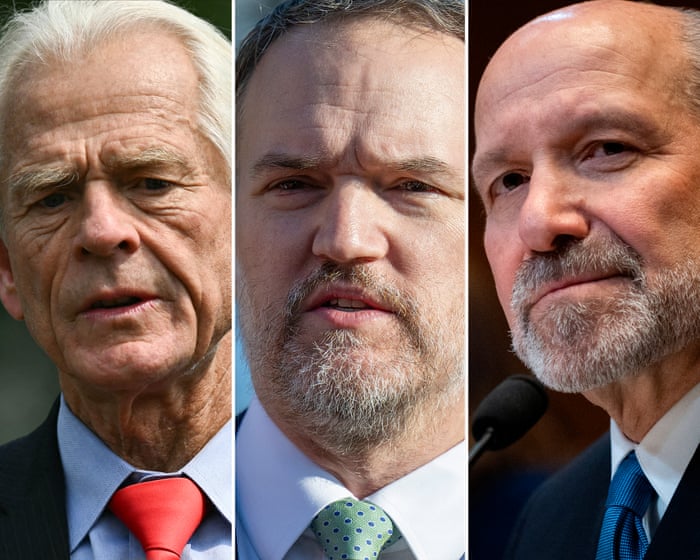
Trade talks between the United States and Canada have broken down, risking a trade war between the two neighboring countries. The talks stalled over disputes that include protections for the French language in Canada and tariffs on steel, aluminum, and cars.
Key Facts
Jamieson Greer is the US trade representative handling the talks with Canada.
Canada accused US negotiators of wanting to weaken laws protecting the French language, especially in Quebec.
Canada requires streaming and online companies to promote Canadian content and the French language.
Greer denied the claim that the US is attacking French language protections, saying he supports French-speaking communities.
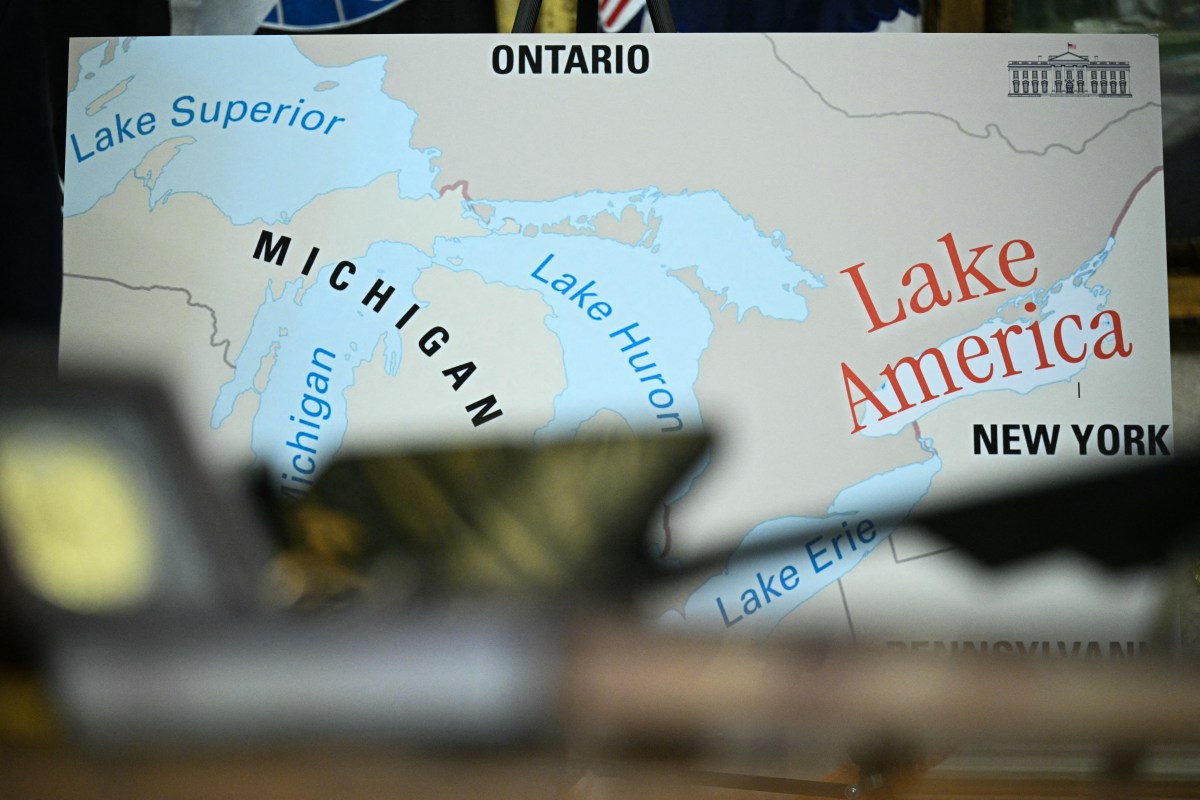
President Trump signed an executive order renaming Lake Ontario to "Lake America," escalating tensions.
The trade talks also involved disagreements over tariffs on Canadian steel, aluminum, and cars.
Howard Lutnick, US commerce secretary, opposed reducing tariffs as much as proposed.
Greer is described as calm and experienced, but his ability to influence President Trump’s aggressive trade approach is uncertain.
Read the Original
Want the full story? Tap a source to open the original
article.
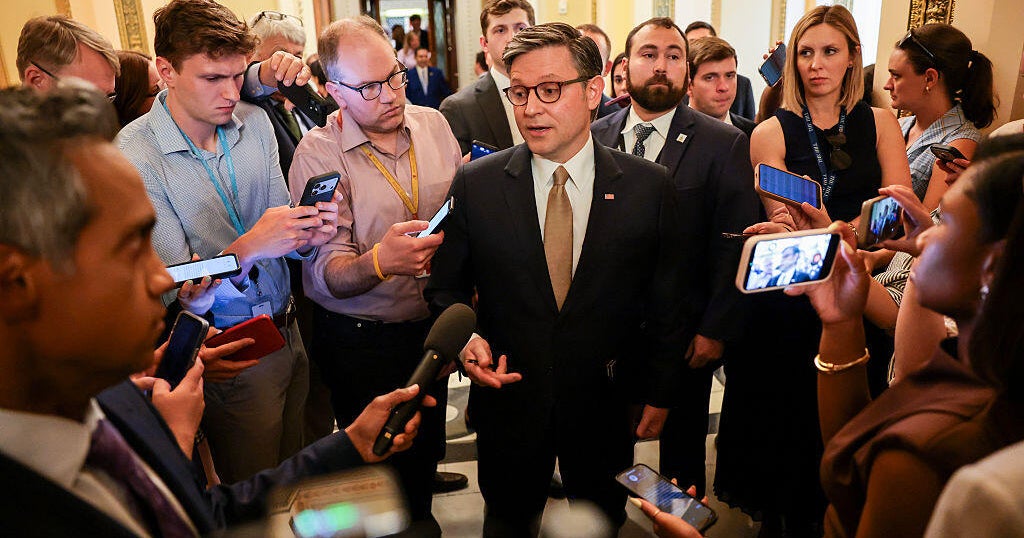
The House of Representatives returned from recess to vote on a short-term government funding bill to avoid a shutdown after September 30. The Senate passed a bipartisan bill funding the government until December 11, which includes changes that may gain more Democratic support in the House. The House is also dealing with ethics investigations of some members and has plans to vote on a resolution condemning socialism.
Key Facts
The government funding is set to expire on September 30 unless Congress passes a new bill.
The Senate approved a funding bill that extends government money until December 11.
The Senate bill closes a fund transfer loophole involving the Border Patrol and prevents political appointees from canceling federal grants temporarily.
Democrats oppose extra funding for Border Patrol due to concerns about immigration policies under President Trump.
The House Ethics Committee is investigating GOP Rep. Max Miller and Democratic Rep. Jimmy Gomez for misconduct allegations.
GOP Rep. Chuck Edwards was recommended for censure and ended his reelection campaign after findings of inappropriate conduct.
Republicans plan a vote condemning socialism, referencing recent wins by democratic socialist candidates.
The Democratic caucus will gain two new members from special elections after the resignation and death of other representatives.
Read the Original
Want the full story? Tap a source to open the original
article.
Republican leaders are starting to think deeply about the future of their party after President Donald Trump’s time in office ends in 2029. They say this reflection is becoming more important as the midterm elections near and as Trump moves toward being a lame duck president, which means he will have less influence before leaving office.
Key Facts
Republicans feel the party needs to rethink its goals and direction before 2029.
This discussion is growing because midterm elections are coming soon.
President Trump will become a lame duck president before 2029, meaning his power will decrease.
GOP strategists and political experts are leading the talks about the party’s future.
The party is considering changes to appeal to voters beyond Trump’s time in office.
The soul-searching is focused on how the GOP can remain relevant after Trump’s presidency.
The exact details of how the party will change are still being discussed.
Read the Original
Want the full story? Tap a source to open the original
article.
Hydro One, a major Canadian power company, apologized after its outage map showed Lake Ontario labeled as “Lake America.” This mistake happened because of a third-party map using the new U.S. name following President Trump’s executive order to rename Lake Ontario in U.S. government systems.
Key Facts
Hydro One is the largest electricity provider in Ontario, Canada.
The company’s outage map mistakenly labeled Lake Ontario as “Lake America.”
The error came from a third-party mapping service, not Hydro One itself.
The U.S. government renamed Lake Ontario as “Lake America” through an executive order by President Donald Trump on August 27.
Google Maps shows “Lake America” to U.S. users but keeps “Lake Ontario” for Canadian users.
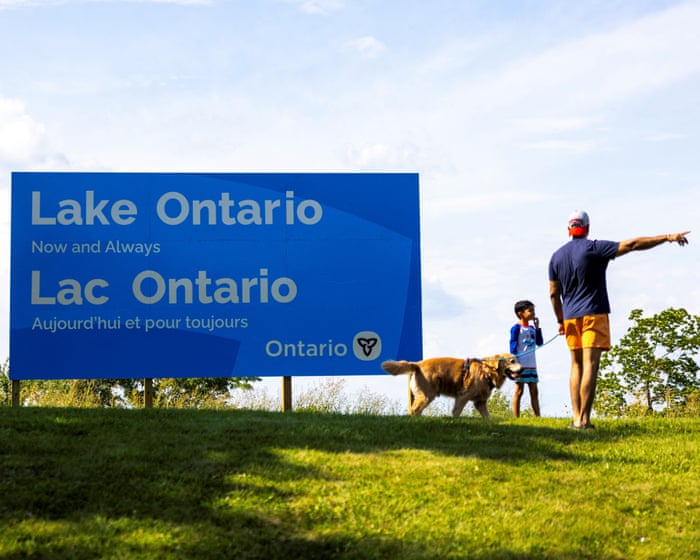
Canadian authorities and Ontario’s Premier Doug Ford reject the name change.
The rename is part of a broader dispute between the U.S. and Canada over trade tensions.
The name change has symbolic meaning and reflects strained U.S.-Canada relations.
Read the Original
Want the full story? Tap a source to open the original
article.
Spanish Prime Minister Pedro Sanchez said Russia and Israel spread false information about the recent large number of migrants arriving in Ceuta, a Spanish territory in North Africa. He mentioned that these actions aimed to criticize Spain and create division in Europe, and he denied that Morocco played a role in causing the migrant influx.
Key Facts
Over 70,000 migrants crossed into Ceuta from Morocco in late July.
Most migrants returned to Morocco quickly, but thousands remain in Ceuta.
Sanchez accused Russia and Israel of spreading false information on social media during the crisis.
The false information included claims that migrants entering by swimming could not be deported.
Sanchez said no intelligence showed Moroccan authorities were involved in the migrant influx.
Spain plans to give 168 million euros ($195 million) in aid to help Ceuta handle the crisis.
Residents of Ceuta have protested, citing security and hygiene problems linked to migrants.
Spain’s government estimates 3,500 to 7,000 migrants remain; local right-wing politicians say the number is at least 10,000.
Read the Original
Want the full story? Tap a source to open the original
article.
A Colombian rebel group called the Central General Staff, a breakaway faction from the old FARC guerrillas, said they kidnapped a Colombian soldier serving in the French Foreign Legion. They stated that the soldier, Jose Olger Melo Charry, is alive and in good health after being taken in southwest Colombia on August 6.
Key Facts
Jose Olger Melo Charry is a Colombian serving in the French Foreign Legion, an elite unit of the French Army.
Melo Charter was kidnapped on August 6 while traveling in Narino, Colombia.
The kidnapping was claimed by the Central General Staff, a dissident group formerly part of FARC guerrillas.
The rebels confirmed Melo Charry is alive, healthy, and receiving medical care and food.
Melo Charry had returned to Colombia on leave after joining the French Foreign Legion four years ago.
A woman traveling with Melo Charry was also seized but released shortly after.
The French Ministry of Defense is closely monitoring the case.
FARC is a former guerrilla army that signed a peace deal in 2016 but some factions remain active.
Read the Original
Want the full story? Tap a source to open the original
article.
Thousands of displaced people in southern Lebanon are living in public schools as shelters because their villages were destroyed or are occupied during the war between Israel and Hezbollah. With the school year starting soon, education is disrupted, and there is no political solution yet to allow them to return home.
Key Facts
About 200 families are sheltering in a public school in Tyre, a city in southern Lebanon.
Many families come from villages destroyed or occupied by Israeli forces or Hezbollah during recent fighting.
The school year in Lebanon is set to begin on September 15, 2026.
Thousands of displaced people still live in public schools used as shelters.
Negotiations between Israel, Lebanon, the U.S., and Iran are stalled with no solution in sight.
Lebanese education officials have a plan to reopen schools while keeping shelters for displaced families.
Families are anxious because they don’t know if they can return to their villages or if the crisis will worsen.
Lebanon’s education system has been strained by economic collapse, the COVID-19 pandemic, the 2020 Beirut explosion, and two recent wars.
Read the Original
Want the full story? Tap a source to open the original
article.
Mount Sinabung volcano on Indonesia’s Sumatra island erupted, sending black ash and smoke about 3,500 meters into the air. There are no reports of injuries or flight disruptions, but local people were warned to avoid areas within 6 kilometers of the volcano.
Key Facts
The eruption happened on Monday morning and produced a large ash column.
The volcano is 2,600 meters tall, and ash fell on nearby villages in Karo district, North Sumatra.
No casualties, evacuations, or flight disruptions have been reported so far.
Authorities raised the volcano alert level to “Watch,” the second-highest level.
Residents were given masks to protect against ash inhalation.
The safe zone was expanded to within 6 kilometers (3.7 miles) of the volcano’s summit.
Mount Sinabung has erupted several times in recent years, causing about 30,000 people to leave their homes.
Indonesia has more than 120 active volcanoes and is located on the Pacific “Ring of Fire,” making it prone to volcanic activity and earthquakes.
Read the Original
Want the full story? Tap a source to open the original
article.
Japanese car makers Nissan and Honda have agreed to work together to create and share software and key electronic parts for cars expected to launch in fiscal 2029. This partnership aims to reduce costs, speed up development, and improve efficiency by sharing technology for vehicles that rely more on software than traditional mechanics.
Key Facts
Nissan and Honda will jointly develop electronic control units (ECUs) and software for future vehicles.
The collaboration focuses on "software-defined vehicles" where software controls many functions.
The deal covers vehicles launching around fiscal year 2029.
Both companies began talks in 2024 about working together on electric vehicles and smart car technology.
Sharing technology helps lower costs and speeds up making new vehicles.
Nissan and Honda are working together to compete better against Toyota, Japan’s biggest car maker.
Toyota was not part of this announced agreement but is working with other partners on related software efforts.
The partnership also aims to advance zero-emission vehicles and improve traffic safety through new technologies.
Read the Original
Want the full story? Tap a source to open the original
article.
Japan plans to increase its defense budget to about 8.9 trillion yen ($55.6 billion) next fiscal year. The country will focus on new technologies like drones, artificial intelligence (AI), long-range missiles, and hypersonic weapons to improve its self-defense and counterstrike abilities.
Key Facts
Japan’s proposed defense budget for the next fiscal year is 8.9 trillion yen ($55.6 billion), slightly higher than this year’s 8.8 trillion yen ($55 billion).
Japan is adapting its defense strategy to use drones and AI for better warfare tactics.
The government aims to develop low-cost unmanned weapons to cut expenses and reduce casualties.
Japan plans to coordinate attack drones with long-range cruise missiles for more effective counterstrikes.
New weapons may include unmanned drones launched from air or underwater and hypersonic missiles from submarines.
AI will be integrated into command systems to speed up decision-making and target selection.
Japan wants to combine foreign AI technology, including from the U.S., with domestic AI development.
The defense upgrade responds to China's increased military presence and follows a five-year strategy to boost Japan’s defense spending to about 2% of its gross domestic product (GDP).
Read the Original
Want the full story? Tap a source to open the original
article.
President Donald Trump signed an executive order to rename Lake Ontario as Lake America as part of a trade dispute with Canada. In response, House Democrat Debbie Dingell plans to introduce a bill to reverse the name change and improve US-Canada relations.
Key Facts
President Trump issued an executive order renaming Lake Ontario to Lake America.
The order directs federal agencies to use the new name on US maps and documents.
House Democrat Debbie Dingell intends to introduce the "Hands Off Our Great Lakes Act" to nullify the name change.
Dingell has gathered over 100 signatures from House Democrats supporting her bill.
The renaming reflects escalating trade tensions, including a 50% US tariff on Canadian steel and retaliation from Canada.
The Ontario premier responded by erecting a large sign saying “Lake Ontario. Now and Always.”
President Trump posted a video demolishing a sign of Lake Ontario and replacing it with one saying Lake America.
This naming dispute is a public example of the worsening US-Canada trade conflict.
Read the Original
Want the full story? Tap a source to open the original
article.
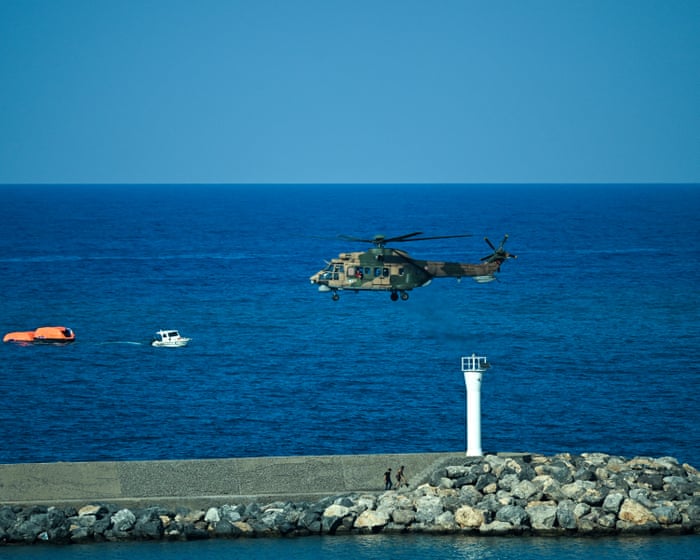
A ferry carrying 267 people capsized near northern Cyprus, killing at least eight and leaving about 18 to 19 people missing. Rescue teams, including divers from Turkey, continue searching the deep waters for survivors.
Key Facts
The ferry capsized off the port city of Kyrenia while traveling to the Turkish port of Taşucu.
At least eight people have died so far in the accident.
Around 18 to 19 people are still missing after the ferry flipped over.
The ferry was double-hulled and took in water before capsizing.
Survivors clung to the overturned ferry and were rescued by passing boats and the coastguard.
The sunken ferry lies more than 500 meters (1,640 feet) underwater.
Turkish divers have joined the search efforts.
The captain and crew have been detained for questioning by authorities.
Read the Original
Want the full story? Tap a source to open the original
article.
That's the point of this site, and readers keep it that way. Support for any amount and the daily digest lands in your inbox every morning at 7am Eastern.
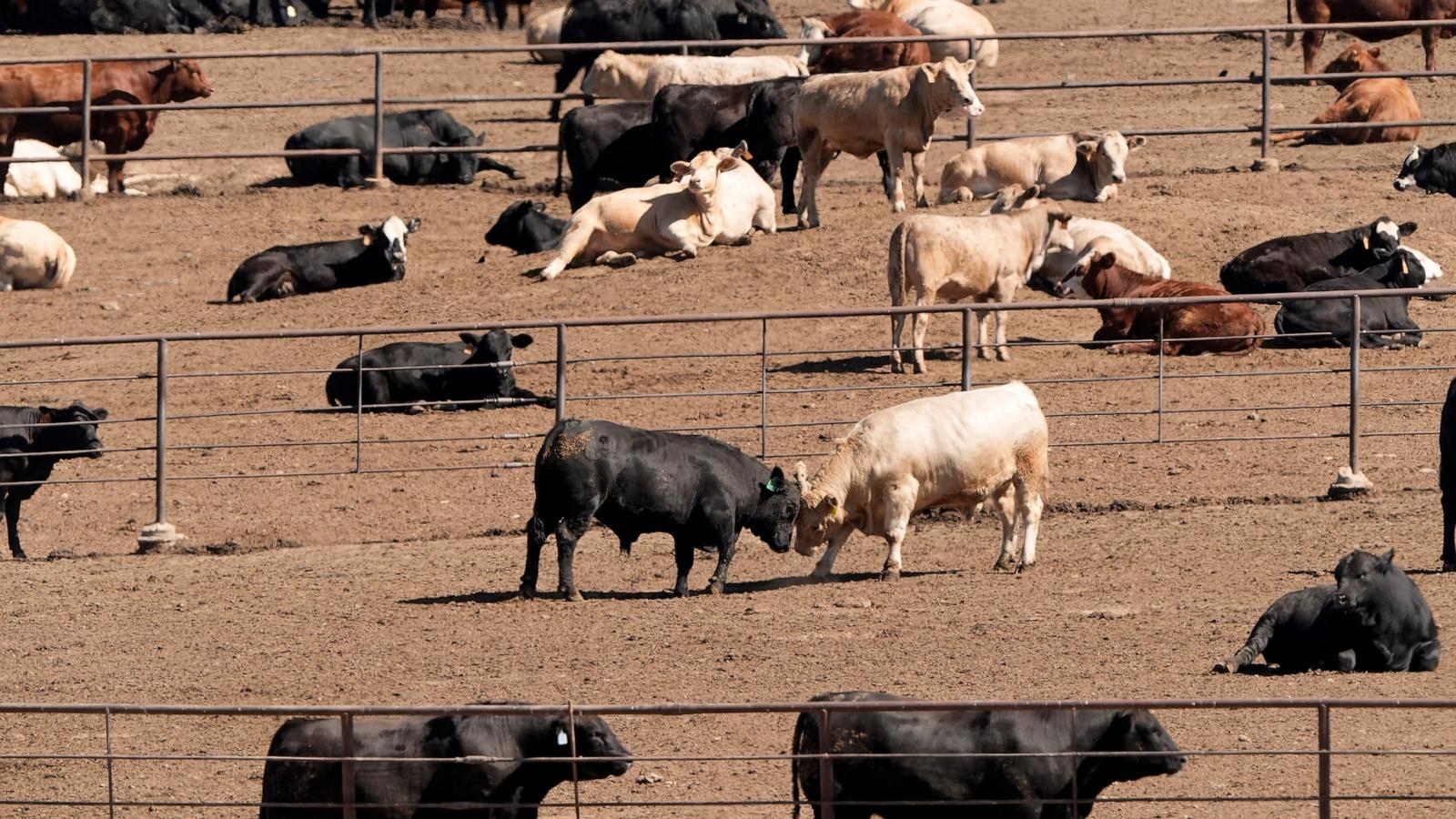
President Donald Trump approved a temporary pause on tariffs to allow imports of 300,000 metric tons of beef starting in September 2026. Some farmers are unhappy because they believe this will hurt their profits and make U.S. farming less sustainable. The move comes amid rising costs linked to the war in Iran and concerns over its impact on voters in farming areas ahead of the November midterm elections.
Key Facts
President Trump approved temporarily lifting tariffs on beef imports starting September 2026.
Farmers say high diesel and fertilizer prices, influenced by the Iran war, are already hurting their profits.
Some farmers believe importing beef hurts domestic agriculture and farming sustainability.
The U.S. cattle herd size is at a multi-decade low, causing supply challenges.
The White House said the tariff relief helps meet short-term beef demand while working to increase domestic production.
Some farmer groups oppose weakening meat inspection and food safety standards proposed in related legislation.
Farmers in key states like Kansas, Nebraska, Iowa, and Wisconsin are worried about impacts on their communities and upcoming midterm elections.
Some farmers are frustrated with Republican politicians for not strongly opposing the tariff changes and other related policies.
Read the Original
Want the full story? Tap a source to open the original
article.
Tensions between the United States and Iran have increased after a pause of one month. The U.S. accused Iran of planning to use sea mines in the Strait of Hormuz, while Iran responded by attacking U.S. military bases in Jordan. The U.S. also announced plans to impose more economic sanctions on banks that work with Iran.
Key Facts
Hostilities between the U.S. and Iran resumed after one month without major conflict.
The U.S. claimed Iran was preparing to place sea mines in the Strait of Hormuz, a vital waterway for oil shipments.
Iran retaliated by attacking U.S. military bases located in Jordan.
The U.S. Treasury Secretary stated that additional sanctions would target banks doing business with Iran.
These events are part of ongoing tensions in the Middle East involving multiple countries.
The situation highlights the use of both military actions and financial measures in the conflict between the U.S. and Iran.
The article reflects continuing concern about security and economic impacts in the region.
Read the Original
Want the full story? Tap a source to open the original
article.
A report by Amazon Web Services (AWS) says Europe faces problems adopting advanced artificial intelligence (AI) because of a lack of skilled workers and unclear rules. About 38% of European AI startups are thinking about moving to other countries.
Key Facts
Europe is not adopting advanced AI as fast as it could.
A skills shortage means there are not enough trained people to work with AI in Europe.
Unclear or changing regulations make it hard for AI companies to operate smoothly.
38% of AI startups in Europe want to relocate abroad for better conditions.
The report was commissioned by Amazon Web Services, a major US technology company.
Sasha Rubel from AWS spoke about these issues related to AI adoption in Europe, the Middle East, and Africa.
The report highlights challenges that could cause Europe to fall behind in AI development.
These challenges affect innovation and economic growth in the technology sector.
Read the Original
Want the full story? Tap a source to open the original
article.
Leaders from China and Russia met in Kyrgyzstan for the Shanghai Cooperation Organisation (SCO) summit. The regional group aimed to reduce U.S. influence in global affairs while the U.S. held a separate G20 finance meeting.
Key Facts
The SCO summit took place in Kyrgyzstan.
Chinese President Xi Jinping and Russian President Vladimir Putin attended the summit.
The SCO group focuses on cooperation among member countries in Central Asia and beyond.
The leaders discussed pushing back against U.S. dominance in global politics and economics.
At the same time, the U.S. hosted G20 finance ministers to discuss global financial issues.
The U.S. is dealing with a large national debt and new challenges for its central bank.
The meeting reflects ongoing tensions between China-Russia and Western countries.
The SCO includes several Eurasian countries working together on security and economic matters.
Read the Original
Want the full story? Tap a source to open the original
article.
Leading AI companies are focusing on health care to improve their public image and attract investors. They are using artificial intelligence to speed up drug development and medical research, but major breakthroughs may take years and there are concerns about safety and costs.
Key Facts
AI companies like Anthropic, Nvidia, Eli Lilly, and Google's Isomorphic Labs are investing heavily in health care and drug discovery.
Anthropic aims to show progress in biology and medicine soon to support its upcoming public stock offering.
Nvidia and Eli Lilly are building a $1 billion lab that pairs AI experts with life science researchers.
AI helps doctors analyze scans and diagnose conditions faster but can also raise health care costs.
There are worries that AI tools could be misused, for example, to create biological weapons.
The Trump administration is cautious, balancing a light regulatory touch with safety and privacy oversight.
Public skepticism remains due to distrust of big drug companies and concerns over data centers.
AI firms need to demonstrate clear benefits to patients to gain trust beyond pleasing investors.
Read the Original
Want the full story? Tap a source to open the original
article.
Dolly Parton was buried next to her late husband in Nashville after a private family funeral. A tribute concert was held at the Grand Ole Opry to honor her musical legacy, and Tennessee’s governor announced plans to name Nashville International Airport after her.
Key Facts
Dolly Parton died at the age of 80 and was buried in Woodlawn Memorial Park in Nashville.
She was laid to rest beside her husband, Carl Dean.
Family members shared heartfelt messages about her love and support.
A tribute concert took place at the Grand Ole Opry with performances by her niece Jada Star, Jelly Roll, and Carly Pearce.
The Tennessee governor announced plans to rename Nashville International Airport in her honor.
Parton’s legacy includes her music and the Imagination Library, a program that sends free books to children.
Fans worldwide have paid tribute, including candlelight vigils and chart success for her song "9 to 5" in the UK.
Read the Original
Want the full story? Tap a source to open the original
article.
There are no ads, so there is no reason to bait you. Readers who chip in keep it that way. Most choose $3.99/month, and get the daily digest every morning.
Millions of Americans will receive two types of Social Security payments this week, including Supplemental Security Income (SSI) and certain retirement, survivor, and spousal benefits. The payment dates vary based on birthdates and when benefits started, following a staggered schedule set by the Social Security Administration (SSA).
Key Facts
Over 75 million Americans received Social Security or SSI benefits in July.
SSI payments for September will be made on Tuesday, September 1.
People who began Social Security benefits before May 1997 will get payments on Thursday, September 3.
Others will receive payments on September 9, 16, or 23 depending on their birthdays.
The maximum Social Security retirement benefit in 2026 is $4,152 per month at full retirement age.
The average retired worker received about $2,086 monthly in July 2026.
SSI is a needs-based program with a max federal payment of $994 for individuals and $1,491 for couples in 2026.
Social Security benefits increase every year based on inflation, called the Cost-of-Living Adjustment (COLA).
Read the Original
Want the full story? Tap a source to open the original
article.
Iran attacked US military bases in Jordan and the United Arab Emirates after the US struck Iranian rocket launchers on Larak Island in the Strait of Hormuz. This exchange is the first direct conflict between the two sides since July and has increased tensions in the region.
Key Facts
The US targeted Iranian rocket launchers on Larak Island, claiming they were preparing to fire missiles with naval mines.
Iran responded by launching missile and drone attacks on US bases in Jordan and military assets in the UAE.
Iran’s Islamic Revolutionary Guard Corps (IRGC) reported casualties from the US strike and warned of further consequences.
The US Central Command said the attack on Larak Island was defensive to protect civilian ships and global trade routes.
President Donald Trump stated that Iran’s Kharg Island was heavily damaged, but Iran has not confirmed this.
Iran’s Ministry of Foreign Affairs called the US strike a violation of its sovereignty and said it caused civilian and military casualties.
The IRGC described the retaliatory strikes as legal self-defense under the UN Charter.
The US claimed it intercepted missiles from Iran targeting Jordan, suggesting Iran’s military power has weakened.
Read the Original
Want the full story? Tap a source to open the original
article.