Dolly Parton was buried next to her late husband in Nashville after a private family funeral. A tribute concert was held at the Grand Ole Opry to honor her musical legacy, and Tennessee’s governor announced plans to name Nashville International Airport after her.
Key Facts
Dolly Parton died at the age of 80 and was buried in Woodlawn Memorial Park in Nashville.
She was laid to rest beside her husband, Carl Dean.
Family members shared heartfelt messages about her love and support.
A tribute concert took place at the Grand Ole Opry with performances by her niece Jada Star, Jelly Roll, and Carly Pearce.
The Tennessee governor announced plans to rename Nashville International Airport in her honor.
Parton’s legacy includes her music and the Imagination Library, a program that sends free books to children.
Fans worldwide have paid tribute, including candlelight vigils and chart success for her song "9 to 5" in the UK.
Read the Original
Want the full story? Tap a source to open the original
article.
Millions of Americans will receive two types of Social Security payments this week, including Supplemental Security Income (SSI) and certain retirement, survivor, and spousal benefits. The payment dates vary based on birthdates and when benefits started, following a staggered schedule set by the Social Security Administration (SSA).
Key Facts
Over 75 million Americans received Social Security or SSI benefits in July.
SSI payments for September will be made on Tuesday, September 1.
People who began Social Security benefits before May 1997 will get payments on Thursday, September 3.
Others will receive payments on September 9, 16, or 23 depending on their birthdays.
The maximum Social Security retirement benefit in 2026 is $4,152 per month at full retirement age.
The average retired worker received about $2,086 monthly in July 2026.
SSI is a needs-based program with a max federal payment of $994 for individuals and $1,491 for couples in 2026.
Social Security benefits increase every year based on inflation, called the Cost-of-Living Adjustment (COLA).
Read the Original
Want the full story? Tap a source to open the original
article.
Iran attacked US military bases in Jordan and the United Arab Emirates after the US struck Iranian rocket launchers on Larak Island in the Strait of Hormuz. This exchange is the first direct conflict between the two sides since July and has increased tensions in the region.
Key Facts
The US targeted Iranian rocket launchers on Larak Island, claiming they were preparing to fire missiles with naval mines.
Iran responded by launching missile and drone attacks on US bases in Jordan and military assets in the UAE.
Iran’s Islamic Revolutionary Guard Corps (IRGC) reported casualties from the US strike and warned of further consequences.
The US Central Command said the attack on Larak Island was defensive to protect civilian ships and global trade routes.
President Donald Trump stated that Iran’s Kharg Island was heavily damaged, but Iran has not confirmed this.
Iran’s Ministry of Foreign Affairs called the US strike a violation of its sovereignty and said it caused civilian and military casualties.
The IRGC described the retaliatory strikes as legal self-defense under the UN Charter.
The US claimed it intercepted missiles from Iran targeting Jordan, suggesting Iran’s military power has weakened.
Read the Original
Want the full story? Tap a source to open the original
article.
A Tibetan advocacy group says the actual damage from recent floods on the Tibetan side of the Nepal-China border is much worse than China’s official reports. Chinese authorities report 16 deaths and 546 missing people, but the advocacy group estimates hundreds of homes destroyed and more missing people than stated. Chinese officials have restricted information and punished those sharing what they call false disaster news.
Key Facts
Deadly floods hit the Nepal-Tibet border on August 26, caused by a glacier collapse.
Chinese officials report 16 dead and 546 missing, including 261 foreigners.
The International Campaign for Tibet estimates at least 300 homes destroyed in Tibet.
Public discussion and independent reporting about the disaster in Tibet is heavily restricted.
At least 10 people were punished by Tibetan security officials for sharing "false disaster information."
The death toll on the Nepal side is over 900, with more than 4,000 missing.
Survivors in Tibet have been moved to a nearby town under strict control and limited communication.
Chinese social media mostly reflects official statements, with some questioning why updates only come from Nepal.
Read the Original
Want the full story? Tap a source to open the original
article.
Business groups in Scotland have urged Deputy First Minister John Swinney to cancel plans for a legal cap on the prices of some essential food items. They argue that price caps will not solve the reasons behind high food prices and could lead to problems like shortages and higher overall costs.
Key Facts
The Scottish government wants to limit prices on essential food items like milk, eggs, cheese, and rice.
Twenty-three business organizations, including retail and food producers, oppose this plan.
They say rising costs in production, refrigeration, and delivery cause high food prices, not retailers’ profits.
Price caps in other countries, like Hungary, have caused shortages and replaced local products with cheaper imports.
Small shops in Scotland may be hurt because they would not have to follow the price cap rules.
Business representatives say current food prices in Scotland are among the lowest in Western Europe.
The plan may require changing UK laws that protect trade between Scotland and other parts of the UK.
The Scottish government says helping with the cost of living is a priority and will soon ask for more opinions on the proposal.
Read the Original
Want the full story? Tap a source to open the original
article.
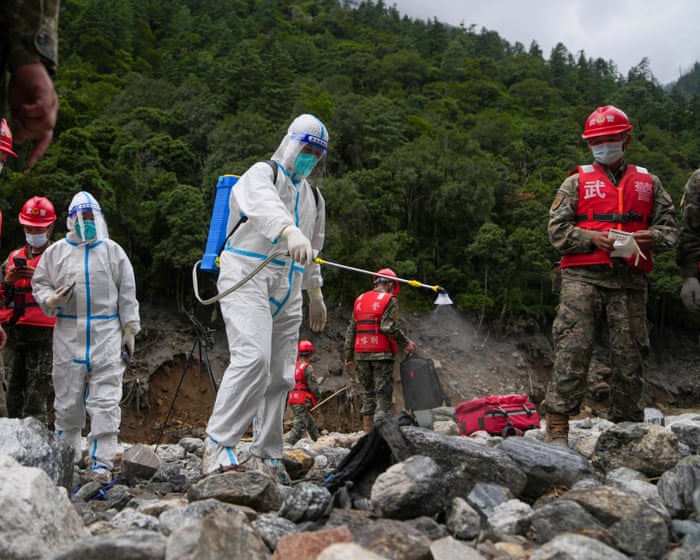
Rescue teams from Nepal, with help from Chinese and Indian experts, are trying to reach hundreds of workers trapped in hydropower tunnels after severe floods hit the Himalayan region. The floods, caused by a glacier collapse, have killed over 900 people and left thousands missing in Nepal and China.
Key Facts
Heavy floods struck the Nepal-Tibet border, triggered by a glacier collapse.
More than 900 people have died and around 5,000 are missing.
About 933 workers are believed to be trapped inside tunnels at 11 hydropower projects.
Rescue teams use excavators, controlled blasts, and searchlights to clear debris and water.
Over 90,000 people are estimated to have been affected by the floods.
Nepal’s Prime Minister says this is an unprecedented natural disaster and difficult terrain complicates rescue efforts.
Nearly 21,000 security workers, along with civilians and volunteers, are involved in rescue operations.
Chinese officials report 16 deaths and over 500 missing in their area; foreign nationals are also unaccounted for near Tibet.
Read the Original
Want the full story? Tap a source to open the original
article.
Kazakhstan’s President Tokayev appointed Erlan Karin as the country’s first vice president, a role created under a new constitution. Karin, a longtime adviser to Tokayev, is now next in line to lead Kazakhstan. The Kazakh parliament also reapproved Olzhas Bektenov as prime minister.
Key Facts
Erlan Karin was named Kazakhstan’s first vice president under a new constitution adopted earlier in 2024.
Karin has worked closely with President Tokayev since 2019 and has experience in counter-terrorism and public administration.
President Tokayev described Karin as experienced and a patriot.
The vice president role makes Karin first in line to succeed Tokayev as leader.
Olzhas Bektenov was reappointed as prime minister; he has held the position since 2024.
Both appointments were quickly approved by the pro-Tokayev parliament, controlled by the Adilet party.
Tokayev’s new constitution allows him to run for another seven-year term; his current term ends in 2029.
Tokayev became president in 2019, succeeding Kazakhstan’s first president, Nazarbayev, and distanced himself from Nazarbayev after unrest in 2022.
Read the Original
Want the full story? Tap a source to open the original
article.
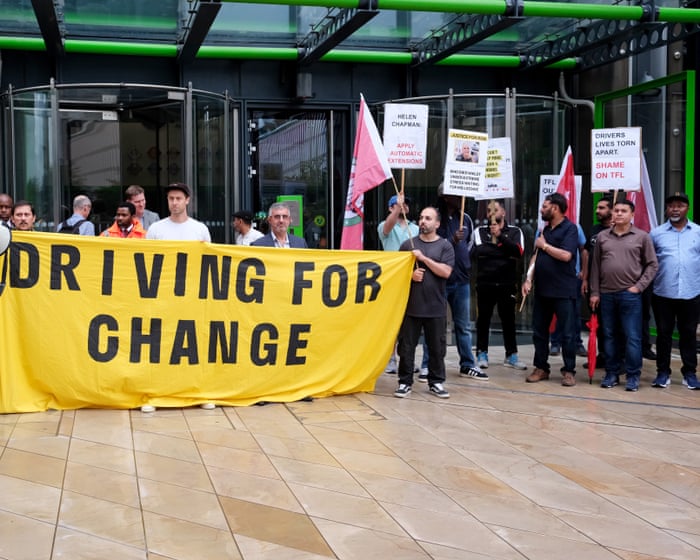
An Uber driver, Julius Mugabo, is suing Transport for London (TfL) because delays in renewing his private hire licence caused him to fall into debt and nearly lose his home. TfL acknowledges the delays and faces a legal review after thousands of drivers experienced similar problems.
Key Facts
Julius Mugabo has been an Uber driver licensed by TfL since 2016.
Private hire driver licences in London must be renewed every three years by TfL.
TfL delayed Mugabo’s licence renewal, requesting documents he said he had already provided.
The delays caused Mugabo to owe £20,000 in tax debt due to missed payments and interest.
Around 18,000 private hire drivers received “goodwill” payments from TfL because of licence delay issues.
About 100,000 private hire drivers work through apps like Uber and Bolt in London.
The Independent Workers’ Union of Great Britain supports Mugabo’s court case and reports many drivers have lost cars, fallen into debt, or faced eviction due to TfL delays.
A judge recognized that TfL’s delay caused serious harm to Mugabo and his family and allowed the case to continue.
Read the Original
Want the full story? Tap a source to open the original
article.
Young people today face unstable jobs, high living costs, and unclear futures, leading them to change how they work and earn money. Instead of traditional careers, many choose flexible side jobs or online platforms that offer faster income and personal freedom.
Key Facts
Many young people struggle with job insecurity and cannot afford homes.
Only 6% of young people aim for leadership roles in their careers.
More than half of Generation Z prefer "portfolio careers," which involve multiple jobs or income sources.
Platforms like Shopify and OnlyFans enable new types of work not imagined by past career advisors.
57% of Gen Z have side hustles, more than twice the rate of baby boomers.
Traditional long-term career goals are less realistic, so young people focus on earning money and autonomy now.
Economic uncertainty has changed how young people relate to work and the future.
Some young workers train artificial intelligence (AI) to do parts of their jobs.
Read the Original
Want the full story? Tap a source to open the original
article.
This podcast episode discusses whether Zohran Mamdani, born in Uganda, could serve in a Democratic cabinet despite not being eligible to run for president. The hosts also compare President Donald Trump and former President Lyndon B. Johnson, and explore the role of money and social media in U.S. political campaigns.
Key Facts
Zohran Mamdani cannot run for U.S. president because he was born outside the United States.
There is a question about whether Mamdani could hold a cabinet position in a future Democratic administration.
The podcast compares President Donald Trump and former President Lyndon B. Johnson, noting differences in their political careers but some shared outsider status.
The Democratic Party is being outspent by Republicans before the midterm elections.
Despite this, individual Democratic candidates often have enough money to run their campaigns.
Social media is changing how political campaigns are conducted in the U.S.
The episode features hosts Justin Webb, Anthony Zurcher, and Marianna Spring.
Americast is part of the BBC News Podcasts family and can be accessed on smart speakers and other platforms.
Read the Original
Want the full story? Tap a source to open the original
article.
When President George W. Bush returned to Washington, D.C. on August 31, 2001, the CIA director briefed him but did not mention a recent terrorism arrest or discuss domestic threats. On the same day, Saudi Prince Turki bin Faisal al-Saud unexpectedly resigned as head of Saudi intelligence after 23 years, a move tied to tensions over handling terrorism and relations with Osama bin Laden.
Key Facts
President Bush returned from a month-long vacation on August 31, 2001.
CIA director George Tenet resumed intelligence briefings but did not mention Zacarias Moussaoui’s arrest or domestic terror threats.
Saudi Prince Turki bin Faisal al-Saud resigned as head of Saudi intelligence, surprising the CIA.
Prince Turki had led Saudi intelligence for 23 years and had close ties with the CIA.
He helped manage Saudi support and financing for Arab fighters in Afghanistan during the Soviet invasion.
Prince Turki was believed to have had a relationship with Osama bin Laden, possibly an agreement to avoid attacks inside Saudi Arabia.
Saudi cooperation with the U.S. was limited during investigations of attacks on U.S. sites in Saudi Arabia during the 1990s.
The U.S. pressured Pakistan after 9/11 but did not issue similar warnings to Saudi Arabia.
Read the Original
Want the full story? Tap a source to open the original
article.
The author lost her sister and father within a short time and was grieving while experiencing persistent pain and other symptoms. After several hospital visits and surgeries, she was diagnosed with ovarian cancer, which explained her earlier symptoms that had been mistaken for other conditions.
Key Facts
The author’s sister died suddenly in September 2023 at age 30.
Soon after, the author experienced pain under her right breast and other symptoms like bloating and nausea.
Her father passed away in January 2025, and in summer 2025, her mother was diagnosed with cervical cancer.
In January 2026, she was hospitalized and had her gallbladder removed due to gallstones and chronic inflammation.
Less than a month later, she developed severe abdominal pain linked to appendicitis, and a CT scan revealed liver lesions.
Her appendix was removed, and the surgeon suspected endometriosis, but pathology later showed the cancer originated from the ovary.
The author was surprised by the ovarian cancer diagnosis after several months of symptoms and misdiagnoses.
She has since started treatment and is receiving free therapy to help cope emotionally.
Read the Original
Want the full story? Tap a source to open the original
article.
On the biggest stories we show what the outlets agree on and where they differ. Readers keep that going, and get the daily digest by email every morning. Most choose $3.99/month.
Uzbekistan's startup scene is growing fast, with many new tech companies in areas like finance, e-commerce, and artificial intelligence. This growth is attracting international investment and helping Uzbekistan become a key technology hub in Central Asia.
Key Facts
Uzbekistan's largest tech company, Uzum, reached a $2.3 billion valuation in 2026.
The country joined StartupBlink's Global Top 100 Startup Ecosystems in 2025, ranking 98th worldwide.
In 2026, Uzbekistan was named Country of the Year for startup growth, increasing by 227.3%, the fastest globally.
Tashkent, the capital, saw 132% growth as a startup city in Central Asia.
IT Park Uzbekistan has over 2,800 member companies, including 752 with foreign investment, exporting to 90 countries.
The venture capital market in Uzbekistan grew from $69.5 million in 2024 to $329 million in 2025.
U.S. companies operate in IT Park Uzbekistan, helping establish a commercial presence in the region.
The U.S. government is promoting technology partnerships in Central Asia to compete with Russian and Chinese influence.
Read the Original
Want the full story? Tap a source to open the original
article.
President Donald Trump’s approval ratings are negative on all major issues tracked by recent surveys. Though many voters strongly disapprove of him, this disapproval does not always lead to higher support for Democrats, as both parties have low favorability ratings.
Key Facts
Trump’s approval on border security dropped from +1 to -5 between July and August.
His approval on handling prices is at minus 48 percent, a key issue for voters.
An August survey showed Trump’s overall net approval rating at -23 percent, and another poll found it at -32 percent.
Among voters who only mildly disapprove of Trump, support splits evenly between Republicans and Democrats for the House election.
Strong disapproval of Trump (49% of registered voters) heavily favors Democrats (76% to 5%).
Despite economic concerns, voters are almost equally divided on which party they trust for economic policies.
Both Republicans and Democrats have low favorability ratings, with many voters unhappy with both parties.
Voter motivation seems to be driven more by opposition to Trump than support for him.
Read the Original
Want the full story? Tap a source to open the original
article.
The price of the American hamburger has risen due to higher costs for ingredients like beef and bread. These price increases reflect broader challenges in the U.S. economy, such as labor shortages and supply issues, which are affecting food prices and the farming industry.
Key Facts
The median price of a burger in the U.S. reached $14.72 in July, more than double the federal minimum wage of $7.25.
Beef prices rose by 9.4 percent, driven by drought, fewer cattle, disease outbreaks, and trade limits.
President Donald Trump announced a plan to allow tariff-free beef imports to lower grocery prices, but this was opposed by farmers and some Republican lawmakers.
Bread prices have gone up about 30 percent over five years, despite wheat costs dropping initially after Russia’s invasion of Ukraine.
The bakery industry faces rising costs in labor, transportation, energy, and has many unfilled jobs expected by 2030.
Gasoline prices remain about 40 percent higher than before the Iran conflict started in February, affecting delivery costs.
Major meat companies like JBS USA and Tyson Foods are closing facilities due to cattle shortages and financial pressures.
The burger price increase is seen by some as a simple example of wider economic struggles in the U.S. economy today.
Read the Original
Want the full story? Tap a source to open the original
article.
Federal agents raided a home in Kansas City, Kansas, and found fake green cards and Social Security cards. Two immigrants admitted to using fake documents, and the case is part of a wider effort by President Donald Trump’s administration to stop immigration fraud.
Key Facts
Two migrants, Santos Ramirez-Ramirez and Yolanda Mendoza-Emiliano, pleaded guilty to possessing counterfeit green cards.
The fake green cards had real names and photos but used wrong immigration ID numbers.
Fake Social Security cards with invalid numbers were also found during the raid on May 28.
Agents entered the home after occupants did not comply with instructions to leave.
Mendoza-Emiliano was caught four times in Arizona for illegal entry in April 2024 and sent back to Mexico each time.
A third suspect with false documents has not resolved their case yet.
Several others at the home face charges like unlawful reentry after deportation.
The inquiry was led by Homeland Security Investigations, a branch of ICE, focused on immigration fraud.
The Justice Department recently charged 11 people in a large scheme involving fake marriages to help immigrants get green cards.
Read the Original
Want the full story? Tap a source to open the original
article.
A ferry carrying 267 people sank off northern Cyprus on August 30, 2026, killing eight people and leaving 18 missing. Survivors described panic and chaos as they tried to escape, while rescue teams searched for missing passengers.
Key Facts
The ferry left Kyrenia in northern Cyprus and was headed to Tasucu in Turkey when it capsized.
There were 267 people on board, including passengers and crew.
Eight people died, and 18 were still missing as rescue efforts continued.
Survivors said the ferry began to list and take on water after loud noises came from below decks.
The crew initially said the problem was a loose gasket causing a leak.
Panic grew as people struggled to find life jackets and many were trapped below decks.
Rescuers in nearby boats pulled many survivors from the sea.
Northern Cyprus authorities have launched an investigation and detained the ferry’s crew.
Read the Original
Want the full story? Tap a source to open the original
article.
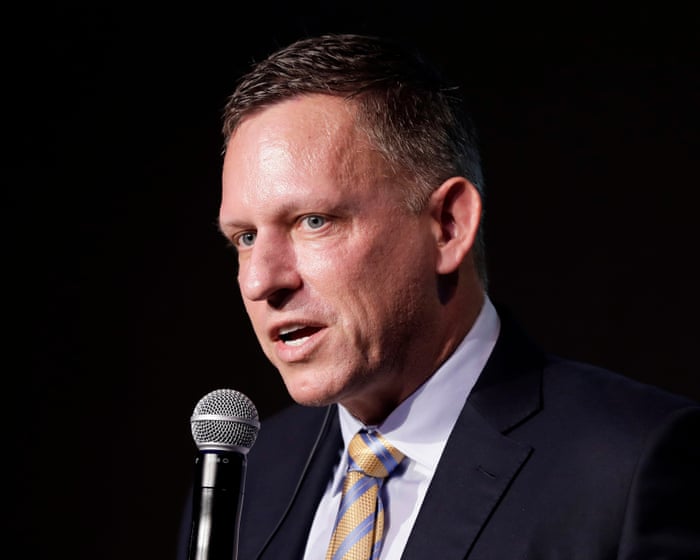
The British Museum hosted tech billionaire Peter Thiel for a private viewing of the Bayeux tapestry before it opened to the public. Thiel is the founder of Palantir, a software company with controversial government contracts, including a large deal with the NHS in the UK.
Key Facts
Peter Thiel visited the British Museum for a special preview of the Bayeux tapestry on August 18.
The museum’s director of development, Charlotte Appleyard, hosted the viewing, and museum chair George Osborne knew about it but did not attend.
Some museum staff worried about giving special access to Thiel due to his ties to Jeffrey Epstein and Palantir’s controversial role in public contracts.
The museum uses a system called “lux hours” to limit light exposure and protect the tapestry; no public viewing hours were taken away for this private event.
Thiel is not a donor to the British Museum and no money was received from him or his companies.
Public ticket sales for the Bayeux tapestry had long online queues, with tens of thousands waiting for a chance to visit.
Palantir has multiple contracts with UK public agencies, including a £330 million NHS deal that has drawn criticism.
London’s mayor blocked a £50 million Palantir contract with the Metropolitan Police, and the company is challenging the decision in court.
Read the Original
Want the full story? Tap a source to open the original
article.
Leaders from China, Russia, India, and other countries will meet in Kyrgyzstan for the 25th Shanghai Cooperation Organisation (SCO) summit. They plan to discuss peace, development, trade, and security amid ongoing global conflicts.
Key Facts
The SCO summit will be held in Bishkek, Kyrgyzstan, with the theme "Together for Sustainable Peace, Development and Prosperity."
Key attendees include President Xi Jinping (China), President Vladimir Putin (Russia), Prime Minister Narendra Modi (India), and President Masoud Pezeshkian (Iran).
Leaders from Pakistan, Uzbekistan, Belarus, Kazakhstan, Turkey, the UN, and ASEAN will also participate.
The SCO started in 1996 as a security group to resolve border disputes among China, Russia, and Central Asian countries.
The summit marks 25 years of the SCO’s existence and aims to deepen cooperation among member countries.
The meeting happens during ongoing conflicts like the Russia-Ukraine war and tensions involving Iran, affecting global energy and finance.
The SCO is seen as a way for rising powers like China and India to promote a multipolar world, where global power is shared among several countries.
The leaders may discuss strengthening trade, security, and peaceful conflict resolution, though major breakthroughs are uncertain.
Read the Original
Want the full story? Tap a source to open the original
article.
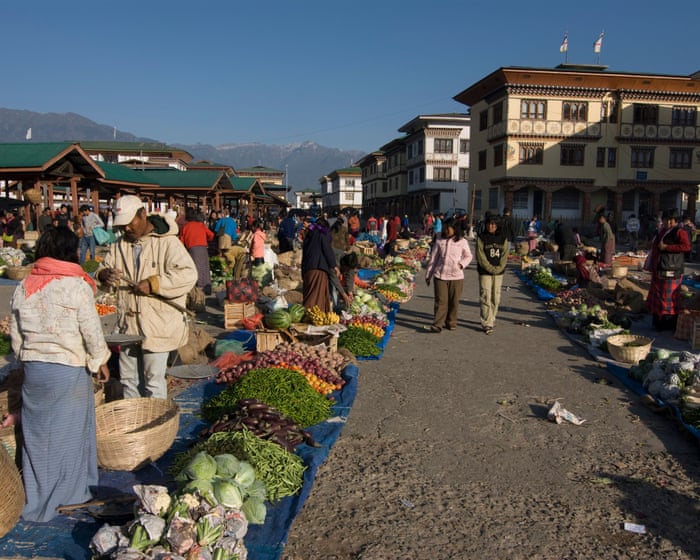
Leaders and experts from over 60 countries are meeting in Bhutan for the first “conscious food summit” to discuss how to fix global food problems worsened by climate change and conflict. The summit promotes a new approach that combines science with spiritual and cultural values to improve food systems and resilience.
Key Facts
The summit is held in Paro, Bhutan, and lasts five days.
Delegates include governments, farmers, mindfulness experts, and yoga therapists.
Bhutan’s Prime Minister Tshering Tobgay emphasizes that food issues relate to hunger, poverty, climate change, and stability.
The summit focuses on “conscious eating” and regenerative farming, using Indigenous knowledge.