Evergrande, once one of China’s biggest property developers, grew rapidly and took on a huge amount of debt. Its collapse has caused a crisis in China’s housing market and hurt the country’s economy. The company’s founder, Hui Ka-yan, has been sentenced to life in prison for crimes like bribery and illegal use of funds.
Key Facts
Evergrande was a major player in China’s property boom and economic growth.
The company became one of the world’s most indebted businesses.
Evergrande’s financial problems contributed to a housing market crisis in China.
Its collapse revealed weaknesses in China’s way of managing property development.
Hui Ka-yan, the founder and chairman, received a life sentence for corruption and misuse of funds.
The situation with Evergrande has implications for China’s wider economy and the global economy.
The news program discussed Evergrande’s rise, fall, and impact with reporters based in Beijing.
Read the Original
Want the full story? Tap a source to open the original
article.
Iran and Oman are talking to create a temporary shipping route through the Strait of Hormuz, a key waterway for global oil trade that has been blocked during the Middle East war. They have not agreed on all the terms yet, and Iran wants the U.S. to lift its blockade and end the war first.
Key Facts
Iran and Oman border the Strait of Hormuz, vital for global oil and gas shipping.
The strait has been blocked by Iran since U.S.-Israeli attacks started the war in February 2026.
A U.S.-Iran deal in June aimed to reopen the strait but has since failed.
Iran and Oman discussed a temporary corridor for ships and clearing mines in the strait.
The plan would have ships entering the Gulf use Iranian waters, and ships leaving use Omani waters.
Iran’s Revolutionary Guards are involved in drawing maps and negotiations.
Iran wants the U.S. to lift blockades and end the war before the strait fully reopens.
Negotiations include issues like who controls the waters, fees for passage, and following international law.
Read the Original
Want the full story? Tap a source to open the original
article.
The FDA has approved Rasonque, an oral medicine for advanced pancreatic cancer that targets proteins driving tumor growth. The drug, developed by Revolution Medicines, has shown in trials to extend the survival of patients with metastatic pancreatic cancer compared to chemotherapy.
Key Facts
Rasonque (generic name daraxonrasib) is a once-daily pill approved for advanced pancreatic cancer treatment.
It targets the RAS protein family, especially KRAS mutations, which are common in over 90% of pancreatic cancers.
The FDA approved the drug about 6.5 months before the deadline and granted special designations to speed up approval.
Rasonque is for adults whose cancer has worsened after prior treatment or who cannot use standard chemotherapy.
The drug costs $39,800 for a 30-day supply at wholesale price; patient costs may vary with insurance and assistance programs.
In clinical trials, patients on Rasonque lived a median of 13.2 months versus 6.7 months with chemotherapy, reducing death risk by 60%.
Side effects were fewer and less severe than chemotherapy’s and included rash, diarrhea, nausea, and fatigue.
Over 2,000 patients accessed the drug early through an expanded-access program before full approval.
Read the Original
Want the full story? Tap a source to open the original
article.
Sal Veder, a photographer for the Associated Press, died at age 99. He is best known for his Pulitzer Prize-winning photo "Burst of Joy," which shows a U.S. Air Force lieutenant colonel joyfully reuniting with his children after being a prisoner of war in Vietnam.
Key Facts
Sal Veder was born in 1926 in Berkeley, California.
He worked as a staff photographer for the Associated Press starting in 1961.
In 1973, he captured the famous photo of Lt. Col. Robert L. Stirm reuniting with his family at Travis Air Force Base.
The photo "Burst of Joy" won the 1974 Pulitzer Prize for feature photography.
Veder died in his sleep at his home in El Dorado County, California, on August 22, 2025.
The photo became a symbol of the end of U.S. involvement in the Vietnam War.
Sal Veder was known as a humble person who mentored younger photographers.
Lt. Col. Stirm, pictured in the photo, later divorced his wife and died in 2025.
Read the Original
Want the full story? Tap a source to open the original
article.
The U.S. Army announced plans to build small nuclear reactors, called microreactors, at five military bases across the country. These reactors will provide a reliable source of power independent from the commercial electric grid and will help improve the military’s energy resilience.
Key Facts
The Army will install nuclear microreactors at five bases from New York to Texas.
Microreactors are small nuclear power sources that can run for years without refueling.
Five companies will receive up to $2.2 billion over five years to build and operate these reactors.
The project is part of the Army’s Janus Program to develop next-generation nuclear energy.
The Army aims to have an advanced reactor operational at a military base by September 30, 2028.
These microreactors are intended to provide safe, reliable power if the commercial electric grid fails.
The Army is working with the Energy Department to manage radioactive waste from the reactors.
President Donald Trump signed orders in May 2025 to accelerate nuclear power development in the U.S.
Read the Original
Want the full story? Tap a source to open the original
article.
A court in Peru sentenced four men to prison for the 2023 killing of Quinto Inuma Alvarado, an Indigenous leader who defended the Amazon rainforest from illegal logging. Two men received 35-year sentences, one received 28 years, and an accomplice was sentenced to 15 years. The case is seen as important for holding people accountable for violence against Indigenous and environmental defenders.
Key Facts
Quinto Inuma Alvarado was a 50-year-old Indigenous Kichwa leader from Peru’s northern Amazon.
He was shot and killed on November 29, 2023, while returning to his community by boat.
Four men were convicted of murder-for-hire related to his killing, including a timber operator accused of ordering the attack.
Sentences ranged from 15 to 35 years in prison.
Inuma had repeatedly reported illegal logging and other crimes in his community’s territory.
Police protection was ordered for Inuma, but local authorities faced challenges patrolling the remote area.
The trial lasted nearly eight months and involved witness testimonies and hearings in the Amazon region.
The case is the first in Peru with such severe sentences for killing an Indigenous defender and may influence future cases.
Read the Original
Want the full story? Tap a source to open the original
article.
The Michigan Strategic Fund approved up to $50 million in state grants to support the Copperwood copper mine project in the Upper Peninsula. The project by Highland Copper Inc. aims to create 380 jobs over 11 years but has faced public opposition over environmental concerns.
Key Facts
The Copperwood mine is located in the far western Upper Peninsula of Michigan.
Highland Copper Inc., based in Toronto, proposed the project with a $425 million budget.
The mine is expected to create 380 jobs during its 11-year life.
The Michigan Strategic Fund granted $45 million for site preparation and $5 million for local road improvements.
Funding comes from the now-defunded SOAR Fund that had unused money allocated in 2022.
This would be the first Upper Peninsula mine since 1955, supported by some lawmakers and economic groups.
Many local residents and environmental advocates expressed concerns about possible harm to Lake Superior and nearby natural areas.
Highland Copper’s CEO said the grant is crucial as it lowers the project’s financing challenges.
Read the Original
Want the full story? Tap a source to open the original
article.
Canadian officials have suggested that cutting off electricity exports to the U.S. could be considered as a trade response, but experts say this would not cause major blackouts in U.S. cities. The U.S. gets some electricity from Canada, but it has many other sources, so electricity supply would continue, though prices might rise.
Key Facts
Ontario Premier Doug Ford said "everything is on the table" in the trade dispute with the U.S., including possibly cutting electricity exports.
Canada imposed about $20 billion in tariffs on U.S. goods but has not limited electricity exports so far.
Canada exported $3.3 billion worth of electricity to the U.S. in 2025; the U.S. imported $1.4 billion worth from Canada.
The U.S. generated 4,430 terawatt hours of electricity in 2025, while Canadian exports accounted for about 33 terawatt hours to the U.S.
Experts say stopping electricity from Canada would not cause blackouts because the U.S. has many other electricity sources.
If Canada cut off electricity, prices in the U.S. could rise due to more expensive alternative energy sources.
In extreme cases, businesses like data centers might need to reduce power use or switch to backup generators temporarily.
Any necessary rolling blackouts would be managed with notifications to consumers ahead of time.
Read the Original
Want the full story? Tap a source to open the original
article.
Brazilian Senator Flavio Bolsonaro plans to impose a debt ceiling if elected president in October. This rule would limit government debt and spending to improve Brazil’s financial stability. Bolsonaro is competing against current President Luiz Inacio Lula da Silva in a close presidential race.
Key Facts
Flavio Bolsonaro’s economic adviser said a debt ceiling will help control Brazil’s public debt and spending.
The debt ceiling would trigger spending cuts if government debt gets too high.
Brazil’s current public debt is about 82% of its economy’s total output (GDP).
Bolsonaro is the main challenger to leftist President Luiz Inacio Lula da Silva in the election.
Polls show a close race, with Lula slightly ahead or tied with Bolsonaro.
Lula’s government increased social programs and lowered unemployment but also increased public debt.
Bolsonaro’s economic adviser previously served as minister under Bolsonaro’s father.
U.S. President Donald Trump is seen as politically close to Bolsonaro and has imposed tariffs on Brazil in the past, which may affect the election.
Read the Original
Want the full story? Tap a source to open the original
article.
John Sweeney, a man who killed and cut up two women before throwing their bodies into canals in London and the Netherlands, has died in prison. He was serving a life sentence with no chance of release for murders committed in 1990 and 2001.
Key Facts
John Sweeney was 69 years old when he died in prison on August 14.
He was convicted in 2011 of murdering two former girlfriends.
One victim, Paula Fields, was killed in London in 2001; parts of her body were found in bags in Regent's Canal.
The other victim, Melissa Halstead, was killed in 1990; her body was found in a Dutch canal but identified 18 years later.
Police found violent paintings and poems in Sweeney’s home, including images of a bloody axe.
Sweeney had previously attacked another ex-girlfriend with an axe in 1994 but survived.
Authorities suspected he may have killed other women who went missing.
The prison service called his crimes horrific, and an official investigation into his death is ongoing.
Read the Original
Want the full story? Tap a source to open the original
article.
A federal judge in Houston ordered Immigration and Customs Enforcement (ICE) to release a man who witnessed a fatal shooting involving ICE officers in Texas. The judge approved the man’s legal request to be freed.
Key Facts
The incident involved the fatal shooting of Lorenzo Salgado Araujo in Texas.
ICE officers were involved in the shooting.
Daniel Tirado Pantoja is the witness who was detained by ICE.
U.S. District Judge Alfred H. Bennett ruled in favor of Tirado Pantoja.
The judge granted a writ of habeas corpus, a legal order to release someone from custody.
ICE must release Tirado Pantoja following the court’s order.
The shooting occurred last month in Houston, Texas.
The case highlights legal challenges related to ICE actions and detainees.
Read the Original
Want the full story? Tap a source to open the original
article.
A Maryland judge stopped a plan that would have allowed people to vote on changing the state's congressional district boundaries. The judge ruled against a new law, House Bill 2100, which was approved by Maryland Governor Wes Moore, saying there was a problem with how it was written.
Key Facts
A Maryland judge made a decision on a redistricting proposal.
The proposal involved a constitutional amendment for congressional district maps.
The plan would have let residents vote on the amendment.
House Bill 2100 was the law enabling this proposal.
Governor Wes Moore signed House Bill 2100 into law on August 5.
Judge Robert Thompson blocked the proposal due to issues with the bill's wording.
This ruling is a setback for Democrats trying to change district boundaries in Maryland.
Read the Original
Want the full story? Tap a source to open the original
article.
A new poll shows a close race for Wisconsin governor in 2026 between Democrat David Crowley and Republican Tom Tiffany. Both candidates have strong support, with Crowley holding a slight lead, but many voters remain undecided as the election approaches.
Key Facts
Incumbent Wisconsin Governor Tony Evers, a Democrat, is retiring after two terms.
David Crowley, Milwaukee County Executive, and Tom Tiffany, a Republican congressman, are the main candidates.
A Marquette Law School poll shows Crowley leading Tiffany 49% to 44% among likely voters.
Among all registered voters, the race is tied at 44% each, with 12% undecided.
Republicans show higher enthusiasm to vote than Democrats according to the poll.
President Donald Trump’s approval rating is low in Wisconsin, which could affect Republican chances.
Other polls also show Crowley with a small lead, but the race remains competitive.
Political analysts describe the race as a toss-up or leaning slightly Democratic.
Read the Original
Want the full story? Tap a source to open the original
article.
Eight young migrants died when their boat sank off the coast of Ben Guerdane, Tunisia. They were trying to reach Europe on a small vessel with 15 people aboard.
Key Facts
Eight migrants drowned near Ben Guerdane, a coastal town in Tunisia.
The migrants were young individuals seeking to travel to Europe.
The boat held 15 people in total.
The vessel sank during the attempt to cross the sea.
Residents of Ben Guerdane held funerals for the eight migrants.
The incident highlights the ongoing risk migrants face when crossing the Mediterranean Sea.
The exact cause of the boat sinking was not reported.
Rescue or survival information about the other seven people on board was not mentioned.
Read the Original
Want the full story? Tap a source to open the original
article.
The U.S. Army and the Defense Innovation Unit have chosen Antares to build and run small nuclear reactors at Fort Bragg, North Carolina. These reactors aim to provide reliable energy for military operations without depending on the civilian power grid.
Key Facts
Antares will build nuclear microreactors at Fort Bragg, a major Army base in North Carolina.
This project is part of the Army’s Janus program, which answers a White House executive order to improve energy for military bases.
Antares plans to deliver the reactors in groups of three.
The reactors will help power military equipment and housing without relying on outside electricity sources.
Antares has contracts with the Army, Air Force, and Space Force worth around $1 billion.
The company recently raised $470 million in funding.
The nuclear fuel used, called TRISO, was developed for a Pentagon project focused on mobile reactors.
Other companies won contracts to build microreactors at different Army bases in the U.S.
Read the Original
Want the full story? Tap a source to open the original
article.
Louisiana Governor Jeff Landry said he is not worried about environmental problems from SpaceX’s new $100 billion launch site on the Gulf Coast. The spaceport will be built on land that was used before and aims to support space launches.
Key Facts
SpaceX plans to build a $100 billion launch facility in Louisiana along the Gulf Coast.
The site will be a spaceport used for launching rockets.
The land for the project was previously used for other purposes.
Governor Jeff Landry expressed no concerns about environmental damage from the spaceport.
The project is expected to have a large economic impact on the state.
Construction and operations at the facility will create jobs and business opportunities.
The announcement was made during an interview with CBS News.
Read the Original
Want the full story? Tap a source to open the original
article.
The Kurdish-led Syrian Democratic Forces (SDF) announced they have dissolved and merged with the Syrian government’s military. Many Kurds feel cautious but hopeful that their rights will be respected under the new government led by interim President Ahmad al-Sharaa.
Key Facts
The SDF controlled about 25% of Syria’s northeast before gradually losing territory.
The SDF officially dissolved on August 25, 2026, and merged with the Syrian army.
Kurdish fighters are now part of the Syrian state military.
Civilian institutions once run by the SDF are now managed by the Syrian government.
Interim President Ahmad al-Sharaa promises to protect Kurdish rights after years of marginalization.
Some Kurds remain cautious but want their language, land, and political rights respected.
Kurdish leaders hope to ensure Kurdish people can participate actively in Syria’s future.
The transition has gone more smoothly than many expected despite previous conflicts.
Read the Original
Want the full story? Tap a source to open the original
article.
The U.S. Department of State paused visa processing worldwide to train staff on new rules about public charge, which could deny visas if applicants rely on government benefits. This pause delays interviews for many green card applicants living abroad who have already waited years, causing more uncertainty about their immigration status.
Key Facts
The U.S. temporarily stopped visa interviews globally to train embassy workers on new public charge rules.
Public charge rules assess if an applicant might depend on government benefits, potentially leading to visa denial.
The pause mainly affects green card applicants living outside the U.S. using consular processing.
Consular processing requires an interview at a U.S. embassy or consulate as a final step before visa approval.
Applicants inside the U.S. using Adjustment of Status are not affected by this pause.
The government canceled many visa interviews without saying when they will resume.
This pause comes after prior policies under President Trump that slowed parts of legal immigration.
The Department of State has not fully explained the new rules to the public, causing frustration for applicants.
Read the Original
Want the full story? Tap a source to open the original
article.
There are no ads, so there is no reason to bait you. Readers who chip in keep it that way. Most choose $3.99/month, and get the daily digest every morning.
Meta agreed to settle lawsuits with nearly every US state by paying almost $18 billion and setting limits on how much time children can spend on its social media apps. The deal includes a two-hour daily limit for teens, restricted night use, and a school mode to reduce distractions, but Florida rejected the settlement and plans to continue fighting Meta in court.
Key Facts
Meta will pay about $16.7 billion to 47 states, D.C., and several territories, plus an additional $1 billion to Texas in a separate deal.
The settlement includes a two-hour daily limit on Facebook and Instagram use for people under 18, which teens can only disable with parental permission.
Meta will block app use between midnight and 6 a.m. by default for teens and mute notifications during school hours.
Teens will get prompts after 15 minutes of continuous use and at 60 and 90 minutes of total daily use.
If other major social media companies don’t make similar deals, Meta’s payment will reduce by $5 billion.
Florida Attorney General rejected the settlement, calling it too small given the harm caused and plans to continue legal action.
Some advocacy groups said the deal is not enough to change Meta’s business practices permanently.
New Mexico won a separate state court case against Meta, resulting in fines and funds to address social media’s public harm, which Meta is appealing.
Read the Original
Want the full story? Tap a source to open the original
article.
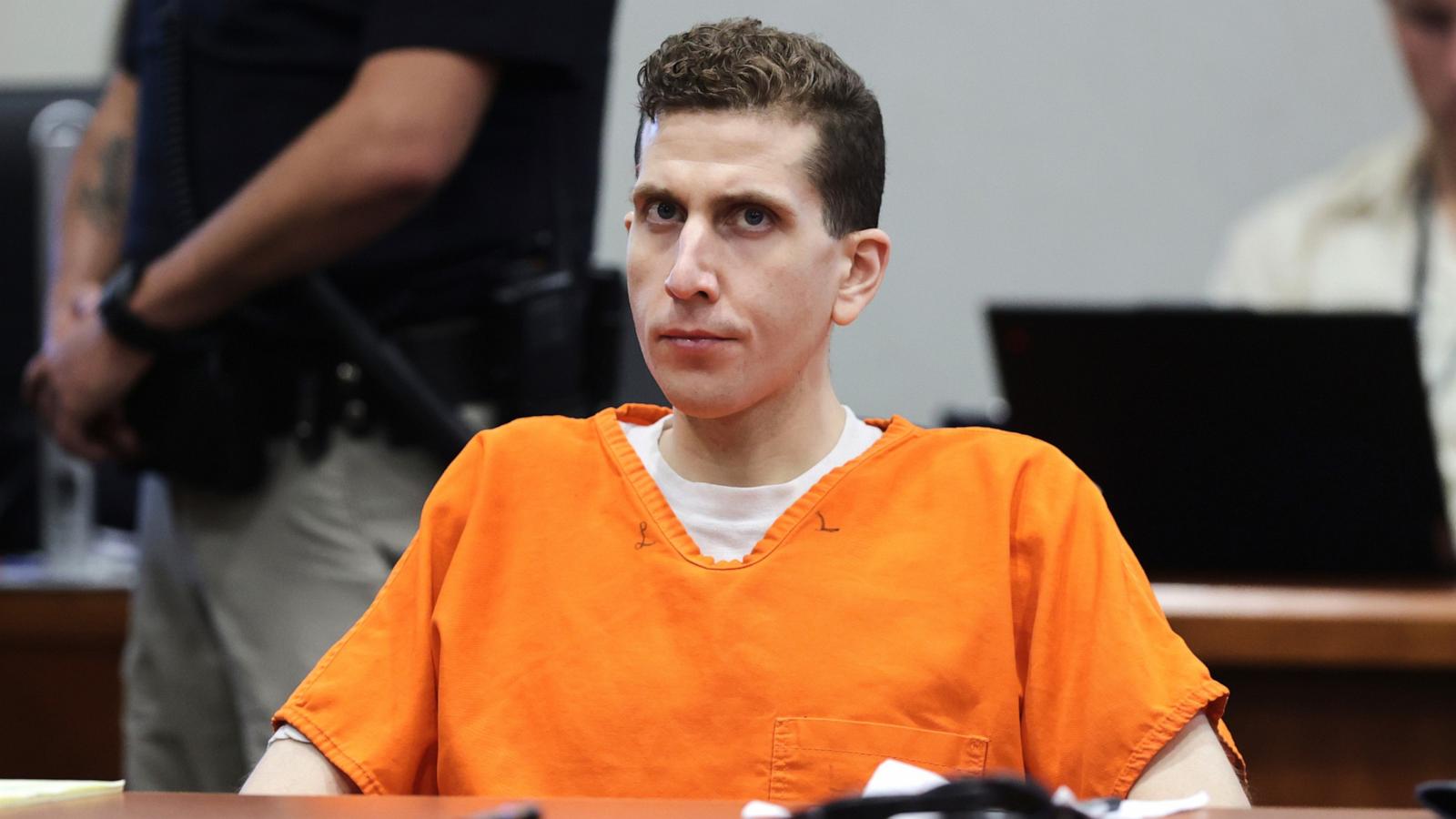
Bryan Kohberger, who pleaded guilty in July 2025 to killing four University of Idaho students, has been granted a new court hearing to try to withdraw his guilty plea. His new hearing is set for June 17, 2027, after he claimed he was pressured to confess and that important information was withheld from his defense.
Key Facts
Bryan Kohberger pleaded guilty to killing four University of Idaho students in July 2025.
The murders happened in November 2022 at an off-campus house in Moscow, Idaho.
Kohberger received four life sentences plus 10 years for burglary as part of a plea deal.
The plea deal removed the possibility of the death penalty.
Kohberger now wants to take back his guilty plea and has filed for a new hearing.
He claims he was pressured to confess and that evidence was kept from him.
The new hearing will take place on June 17, 2027.
At the time of the murders, Kohberger was a criminology student at Washington State University.
Read the Original
Want the full story? Tap a source to open the original
article.