A federal trial has begun in California against Meta, the company that owns Facebook and Instagram. Attorneys general from several states accuse Meta of harming children by creating addictive features and collecting personal data without consent. Meta denies these claims and says it works hard to protect teens on its platforms.
Key Facts
The trial started in Oakland, California, with opening arguments from state attorneys general.
California, Colorado, Kentucky, and New Jersey lead the lawsuit, with 29 states involved in total.
The states want Meta to pay damages and change how it runs Facebook and Instagram.
The lawsuit claims Meta deliberately designed features that addict children and breaks federal laws by collecting data from kids under 13 without parents’ permission.
Meta says it has worked for years to protect young users and is confident it will win the case.
U.S. District Judge Yvonne Gonzalez Rogers is overseeing the trial, expected to last six to eight weeks.
Meta CEO Mark Zuckerberg and other company leaders will testify during the trial.
Similar lawsuits are also happening against other social media companies like YouTube, TikTok, and Snap.
Read the Original
Want the full story? Tap a source to open the original
article.
Marisa Mender-Franklin started a flower business in Memphis by using unused yards and gardens shared by her neighbors through a local Facebook group. Her community support helped her grow flowers on nine different plots of land, leading to the creation of her full-time business, Midtown Bramble & Bloom.
Key Facts
Marisa Mender-Franklin wanted to grow flowers for her wedding in 2020 during the COVID-19 pandemic.
She did not own any land, so she asked her local Buy Nothing Facebook group for unused garden space.
Within minutes, many neighbors offered their yards and gardens for her to use free of charge.
By 2021, she was growing flowers on four different plots and receiving help like supplies and labor from the community.
Today, she runs nine flower farms and employs 10 people at her flower shop in Memphis.
Her business held 57 workshops in one year and provided flowers for 44 weddings and large events.
The idea was inspired by a Canadian flower gardener named Sarah Nixon, who also worked with shared land.
Read the Original
Want the full story? Tap a source to open the original
article.
The Guinea Pig Sanctuary in Salisbury, Massachusetts cares for nearly 400 guinea pigs that have been abandoned or need temporary homes. The sanctuary provides food, medical care, and helps find new owners for these small pets. Volunteers work hard every day in a crowded space to meet the needs of the guinea pigs.
Key Facts
The sanctuary is located about 40 miles north of Boston in Salisbury, Massachusetts.
It houses between 350 and 400 guinea pigs at any time.
Guinea pigs live in stacked cages inside a converted office building.
Each guinea pig has a name and unique personality described by volunteers.
The sanctuary also offers boarding services for guinea pigs when owners travel.
Guinea pigs come from South America and were domesticated around 5,000 B.C.
The animals are sensitive and can provide therapy similar to horses, according to a volunteer.
Many guinea pigs need to be adopted in pairs to keep them happy and healthy.
Read the Original
Want the full story? Tap a source to open the original
article.
Alaska voters took part in a primary election to select candidates for the November general election, including a key U.S. Senate race. The Senate contest features two candidates named Dan Sullivan—one the incumbent Republican senator and the other an independent challenger—as well as Democratic former U.S. Rep. Mary Peltola.
Key Facts
Alaska held primary elections for the U.S. Senate, U.S. House, governor, legislature, and a campaign finance initiative.
Alaska uses an open primary system where all candidates appear on the same ballot regardless of party.
The top four vote-getters in the primary advance to a ranked choice voting general election in November.
The U.S. Senate race in Alaska includes incumbent Senator Dan Sullivan (Republican), former Congresswoman Mary Peltola (Democrat), and an independent candidate named Dan J. Sullivan Jr.
The two Dan Sullivans are listed differently on the ballot to reduce voter confusion: the senator as Dan S. Sullivan (Republican) and the challenger as Daniel J. Sullivan Jr. (no party).
Senator Dan Sullivan supports military funding, opening land for oil development, and President Trump’s tax and spending policies.
Mary Peltola campaigns on protecting fishing, family values, freedom, and criticizes political special interests.
The independent Dan J. Sullivan argues his candidacy aims to offer an alternative due to dissatisfaction with the incumbent senator.
Read the Original
Want the full story? Tap a source to open the original
article.
On Tuesday, several states including Florida and Alaska will hold important primary elections that could shape the U.S. Congress and influence President Donald Trump’s second term. Key issues include new voting districts drawn by Republicans, challenging matchups, and historic Black candidates running for governor.
Key Facts
Florida’s congressional districts have been changed by Republicans, creating tough races.
Byron Donalds, a Black Republican congressman supported by President Trump, is running for Florida governor.
If elected, Donalds would be Florida’s first Black governor.
Other Black candidates for governor are running in Michigan, Minnesota, Wisconsin, Nevada, South Carolina, and Georgia.
Current Black governors are rare, with Maryland’s Wes Moore being the only one now, and he seeks reelection.
Democratic candidate David Jolly will likely face Donalds in Florida’s governor race.
In Florida, Democratic Representative Debbie Wasserman Schultz faces a tough contest against Sheila Cherfilus-McCormick, who resigned earlier this year but wants her old seat back.
Alaska has a unique Senate race involving two candidates named Dan Sullivan.
Read the Original
Want the full story? Tap a source to open the original
article.
Florida is scheduled to carry out its 13th execution of 2026, continuing its high rate of using the death penalty. William Frances Silvia will be executed for a 2006 murder, and Florida has carried out more than half of the country’s 22 executions this year.
Key Facts
William Frances Silvia, 61, is set to be executed on Tuesday at Florida State Prison.
Silvia was convicted of killing his estranged wife and wounding her mother in 2006.
He was sentenced to death twice, once in 2008 and again in 2018 after an appeal.
Silvia’s lawyers argued they did not have enough resources to represent him well, but the Florida Supreme Court rejected this claim.
Florida has executed 13 people in 2026 and has two more executions planned in September.
Florida accounts for more than half of the 22 executions in the U.S. so far in 2026.
Executions in Florida use a three-drug injection: a sedative, a paralytic, and a drug that stops the heart.
The state’s use of the death penalty has increased during the final term of Republican Governor Ron DeSantis.
Read the Original
Want the full story? Tap a source to open the original
article.
A large rock formation called Spitze Stei above the Swiss village of Kandersteg is at risk of collapsing due to thawing permafrost caused by climate change. This collapse could cause a major landslide similar to one that damaged a nearby village, Blatten, in 2025. Authorities are monitoring the situation closely and have prepared evacuation plans to protect residents.
Key Facts
Spitze Stei is a mountain rock formation above Kandersteg, Switzerland, that may collapse.
Thawing permafrost, frozen soil and rock that helps hold mountains together, is causing instability.
Rising temperatures linked to climate change are melting glaciers and permafrost in the Alps.
A similar landslide occurred in May 2025 in the nearby Loetschental valley, damaging the village of Blatten.
The collapse could involve 15 to 20 million cubic meters of rock.
Local authorities are monitoring the rock constantly and have evacuation plans ready.
Experts expect the rock to break down gradually rather than in one big collapse.
Residents feel safer due to preparations and ongoing monitoring but acknowledge risks from global warming.
Read the Original
Want the full story? Tap a source to open the original
article.
Florida is holding primary elections for governor and Congress, with key races testing President Donald Trump’s influence in the state. Republican Byron Donalds, endorsed by President Trump, seeks the governorship while Democrats compete for fewer seats due to new district maps.
Key Facts
Florida’s governor, Ron DeSantis, cannot run for a third term in a row.
Byron Donalds is a Republican candidate aiming to become Florida’s first Black governor.
Donalds has President Trump’s endorsement and faces opponents Jay Collins and James Fishback.
David Jolly, a former Republican congressman turned Democrat, leads the Democratic race for governor.
Florida’s congressional districts were recently redrawn, reducing the number of seats for Democrats.
Angie Nixon, a progressive Democrat, and Alex Vindman, a former National Security Council official, compete in a Democratic U.S. Senate primary.
Senator Ashley Moody, appointed by DeSantis, is running for re-election and has President Trump’s endorsement.
These primaries will influence Florida’s role as a political battleground ahead of the November elections.
Read the Original
Want the full story? Tap a source to open the original
article.
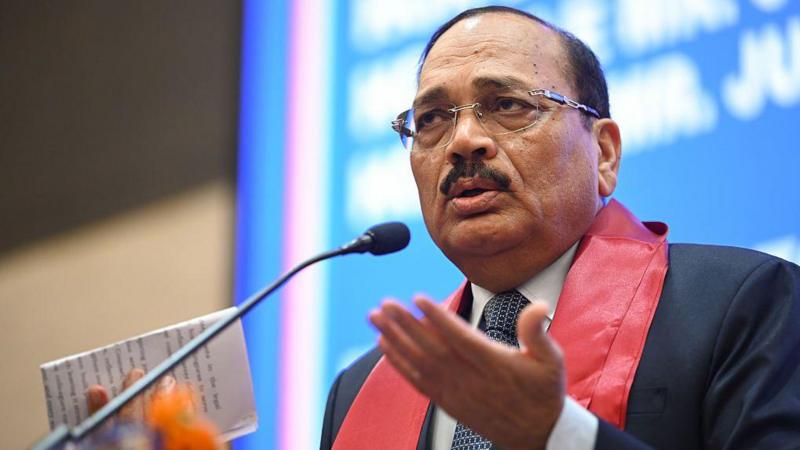
Students at India's Nalsar University of Law have asked their college not to invite Chief Justice Surya Kant to their graduation because of his response to police violence during recent protests. The controversy began after the Chief Justice reportedly dismissed urgent requests to hear cases about police brutality at a student demonstration in Delhi.
Key Facts
Nalsar University students sent an email asking that Chief Justice Surya Kant not be the chief guest at their convocation.
About 450 out of 1,400 students supported this request.
The protests involved police using force against unarmed students demanding education reforms.
The Chief Justice was said to have dismissed requests to urgently hear cases on police brutality.
Surya Kant denied refusing to hear the cases and said he was misquoted.
The Supreme Court has started hearing cases about the violence and concerns over police using face recognition on protesters.
Bar Council of India chairman Manan Kumar Mishra threatened to block Nalsar graduates from enrolling as lawyers over the protest.
Mishra is a member of the ruling Bharatiya Janata Party and asked for a report on students behind the campaign.
Read the Original
Want the full story? Tap a source to open the original
article.
Hakainde Hichilema won re-election as president of Zambia with 60% of the vote. The vote counting was briefly stopped due to attacks on election officials.
Key Facts
Hakainde Hichilema won a second term as Zambia’s president.
He received 60% of the votes in the election.
The vote count was paused because some election officials were attacked.
Zambia is the second-largest producer of copper in Africa.
Copper is important for global energy technologies, like electric cars and renewable energy.
Both China and the United States are interested in Zambia's copper resources.
The election results were announced after the vote count resumed.
Read the Original
Want the full story? Tap a source to open the original
article.
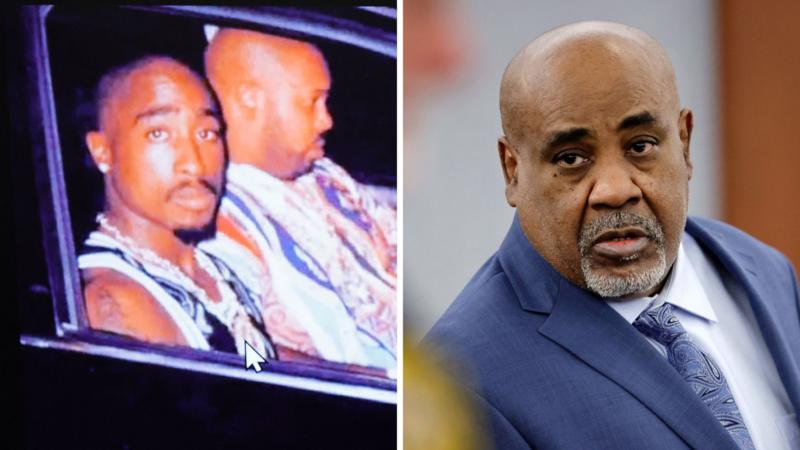
A man named Duane "Keffe D" Davis is on trial in Las Vegas for the 1996 murder of rapper Tupac Shakur. He faces one murder charge and has pleaded not guilty. Both the prosecution and defense gave their opening statements as the trial began.
Key Facts
The trial is taking place in Las Vegas, Nevada.
Duane "Keffe D" Davis is 63 years old.
He is accused of murdering Tupac Shakur in a drive-by shooting on September 7, 1996.
The charge against Davis is murder with a deadly weapon.
Davis denies the murder and has entered a not guilty plea.
The trial opening statements have been presented by both sides.
Tupac Shakur was a famous rapper at the time of his death.
This trial has been long awaited by the public and media.
Read the Original
Want the full story? Tap a source to open the original
article.
Researchers studied a tomb in Egypt’s Theban necropolis to learn how burial practices changed over time. They found that ancient Egyptians shifted from burying people individually in coffins to reusing tomb spaces, placing new bodies alongside older ones in a careful and respectful way.
Key Facts
The tomb studied is called Tomb 209, located in the Theban necropolis, an area with over 400 ancient tombs.
Tomb 209 dates back to the early 25th Dynasty (754–656 BCE) and was used until the Ptolemaic period (305–30 BCE).
The original owner of the tomb was probably a high official named Nisemro, of Nubian origin.
Researchers found 16 mummified people, one mummified dog, and remains of at least four more individuals in one chamber.
The tomb was subject to flash flooding, making the site archaeologically complex.
Early burials were individual and separated by gender; later burials reused tomb space, increasing body density.
The study used a detailed approach combining body positions, coffin use, and bone analysis to understand burial timelines.
Around 80% of Theban tombs show evidence of reuse, with remains from different time periods placed together.
Read the Original
Want the full story? Tap a source to open the original
article.
On the biggest stories we show what the outlets agree on and where they differ. Readers keep that going, and get the daily digest by email every morning. Most choose $3.99/month.
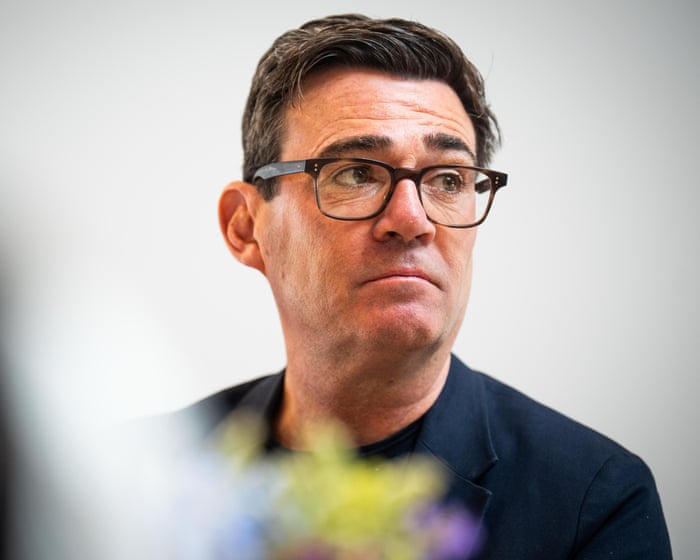
Forty leading economists and academics are urging Prime Minister Andy Burnham to have the UK join a new United Nations initiative called the International Panel on Inequality (IPI). This group aims to study global inequality and suggest ways for countries to reduce it, with the UK expected to play a key role as it prepares to lead the G20 in 2027.
Key Facts
Forty prominent progressive academics, including Nobel Prize winner Joseph Stiglitz, signed the open letter.
They want the UK to support the creation of the International Panel on Inequality (IPI) at the UN.
The IPI will provide trusted global evidence and policy advice on inequality issues.
The UK will chair the G20 in 2027, a forum including major global economies like China, India, Brazil, and others.
Burnham previously worked on reducing inequality as mayor of Greater Manchester.
Some Labour MPs want the party to return to spending 0.7% of national income on overseas aid, a target set in the past by Gordon Brown.
Recent aid cuts have reduced help to some African countries by up to 90%.
Foreign Secretary Ed Miliband wants to prioritize international development, including UK involvement in the World Bank.
Read the Original
Want the full story? Tap a source to open the original
article.
The article explains how the digital age has transformed society, especially politics, through computers, data, and algorithms. It looks back at early warnings from experts who predicted that machines might take over democratic decision-making and warned of an "artificial state" replacing traditional government.
Key Facts
Between the 1950s and 1980s, computers became smaller, faster, and cheaper, leading to widespread use in business, medicine, and politics.
Early scientists and thinkers predicted two possible futures: a utopia of harmony or a dystopia dominated by automated government control.
In 1958, American researchers created a machine claimed to predict and influence voting behavior.
A key conference in London discussed the future role of computers in tasks like composing music, legal decisions, and running governments.
Edward L. Greenfield proposed making an “information bank” from voter data to sort people by opinions and influence elections.
These developments initiated the use of technology in political campaigning and policy-making in wealthy countries.
Many early warnings about the risks of machines replacing democratic processes were ignored.
The article suggests that the current digital moment did not happen by chance and that humans still have choices about the future.
Read the Original
Want the full story? Tap a source to open the original
article.
A Chinese animated film called "Niulai" was criticized online for its low-quality animation but unexpectedly became a box-office success. The movie, made mostly by two people over five years, went from earning very little to making over $2.5 million.
Key Facts
"Niulai" is an animated film about a calf dreaming of growing up with family support.
The film initially earned only about 10,000 yuan ($1,480) in the first 10 days.
On August 17, 2026, the film's daily earnings surged to 8.2 million yuan ($1.2 million).
Total box office earnings reached 17.1 million yuan ($2.5 million).
The movie was made mainly by director Xin Yumeng and his mother over five years.
Online comments mocked the film’s crude animation and called it "terrible" and a form of internet humor.
Some moviegoers recommend it as a prank or joke to friends.
Its unusual popularity has been compared to viral, meme-driven internet trends.
Read the Original
Want the full story? Tap a source to open the original
article.
Meta, the company that owns Instagram and Facebook, is facing a major court trial starting in Oakland, California, over claims its platforms harm children's mental health by encouraging addictive use. Several U.S. states are suing Meta and other social media companies like TikTok and Snapchat, alleging their platforms negatively impact children, possibly leading to new rules on how these sites operate.
Key Facts
Meta is going to trial in California with four states (California, Colorado, Kentucky, and New Jersey) accusing it of harming kids through addictive features on Instagram and Facebook.
Over 25 other states have also filed lawsuits against Meta, with more trials expected.
Social media companies including TikTok, Snapchat, and YouTube are also defending themselves against similar claims nationwide.
Meta previously lost two big cases this year related to harm to kids and teens, contributing to a rare profit drop, with $2.4 billion spent on legal costs.
New Mexico won a case against Meta resulting in a $375 million fine and an additional $567 million ordered later, along with safety rules like monthly time limits for users under 18.
Tennessee is also investigating Instagram for harming children’s mental health as part of a larger multistate effort.
Meta denies the allegations and says it works with parents, experts, and law enforcement to protect young users.
The outcomes of these lawsuits could lead to new laws or changes in how social media platforms are designed and run to protect children.
Read the Original
Want the full story? Tap a source to open the original
article.
A student at a Catholic junior high school in Zamboanga City, Philippines, was shot and killed by a fellow student who then died by suicide. This is the second school shooting in the Philippines within two months.
Key Facts
The shooting happened at a Catholic junior high school in Zamboanga City, southern Philippines.
The shooter brought a .45-calibre pistol into the classroom.
The suspect fired at a teacher but missed, then shot a student who later died.
The shooter took his own life after the incident.
Authorities confirmed the situation was controlled with no other threats.
Two months ago, a similar school shooting in Tacloban City killed three students and injured 20.
The earlier suspects were linked to playing a violent online game called Gorebox, which is banned in the Philippines.
Southeast Asian countries are considering limits on social media use for minors due to concerns about exposure to violent content.
Read the Original
Want the full story? Tap a source to open the original
article.
California’s governor, Gavin Newsom, is considering vetoing a bill that would give more power to the independent watchdog overseeing the state’s high-speed rail project. The watchdog says he needs these powers to properly check on the project, which has faced cost increases and delays for more than ten years.
Key Facts
California is building the nation’s first bullet train, but the project is over budget and behind schedule.
An independent inspector general was created in 2023 to monitor the rail project and look for problems like fraud or contract issues.
The inspector general, Ben Belnap, says he lacks the authority to fully do his job.
Assembly Bill 1608 would give the inspector general more power, such as control over spending and job roles.
Governor Newsom has already approved a controversial part of the bill quietly that allows withholding some reports for security or legal reasons.
Newsom’s office is now reportedly planning to veto the rest of the bill giving the inspector general added powers.
The bill has bipartisan support and passed several legislative committees.
The governor’s office declined to comment specifically on the veto threat and said it doesn’t usually discuss pending bills.
Read the Original
Want the full story? Tap a source to open the original
article.
Each summary links back to the original reporting, so you can check the work. Support that, and get the daily digest every morning. Most choose $3.99/month.
Asian stock markets fell as rising oil prices and concerns about inflation outweighed gains from strong company earnings. Despite some positive reports from firms in Japan and other parts of Asia, worries about the impact of the war in Iran on global oil supply pushed prices higher, affecting markets worldwide.
Key Facts
Japan’s Nikkei 225 index dropped 1.6% to 68,098.54.
Australia’s S&P/ASX 200 slightly rose by 0.2% to 9,088.60.
South Korea’s Kospi fell 0.6% to 6,933.60 after earlier gains.
Hong Kong’s Hang Seng and Shanghai Composite indexes lost 0.6% and 0.5%, respectively.
Rising crude oil prices are linked to worries about the war in Iran affecting oil flows from the Persian Gulf.
Brent crude oil price climbed to about $91 per barrel, increasing inflation concerns.
Higher energy costs have pushed U.S. Treasury yields up, raising pressure on the economy and investments.
Strong earnings in Asia, helped by growing demand tied to AI investments, have not fully offset market declines caused by oil price fears.
Read the Original
Want the full story? Tap a source to open the original
article.
Thousands of people gathered in London’s Trafalgar Square to mourn Jason Arday, a former Cambridge professor who died after intense media coverage over plagiarism claims. Mourners accused the press of racism and harassment that contributed to his death, while Cambridge University and other institutions responded to the controversy.
Key Facts
Jason Arday was the youngest Black professor at Cambridge University.
He died at age 41 in his south London home; the death was unexpected but not considered suspicious.
Arday faced allegations of plagiarism and exaggerating his personal story related to his 2015 doctoral thesis.
He denied the allegations and resigned from Cambridge in early August, citing the toll on his family and himself.
Liverpool John Moores University cleared him of plagiarism, while Cambridge reviewed his appointment after originally defending him.
Thousands of mourners held a vigil in London, carrying signs accusing the media of racism and harassment.
A petition demanding a public investigation into the media’s role in his death received over 96,000 signatures.
Media analysis showed heavy coverage with nearly 250 articles in the weeks before Arday’s death, intensifying after his resignation.
Read the Original
Want the full story? Tap a source to open the original
article.