Benjamin Franklin’s eldest son, William Franklin, remained loyal to Britain during the American Revolution and was buried in London in 1813. This family conflict highlights how the Revolution was also a civil war that divided families and communities. Historians say the struggles from that time still influence American society today.
Key Facts
William Franklin was Benjamin Franklin’s oldest son.
William sided with the British Crown during the American Revolution.
He was forced to leave America and died in London in 1813.
The American Revolution was both a war for independence and a civil war.
About one-third of American colonists stayed loyal to Britain (called Loyalists).
Enslaved Black people and Indigenous people fought on both sides during the war.
The Revolution caused deep divisions among families and communities.
Historians believe these conflicts continue to affect American society now.
Read the Original
Want the full story? Tap a source to open the original
article.
Republicans led a nationwide effort to redraw voting districts to gain more U.S. House seats. In response, California Democrats altered the map to split Republican Representative Kevin Kiley’s district, moving some conservative voters into heavily Democratic districts. This redistricting fight shows how both parties are using map changes to try to win future elections.
Key Facts
Republicans pushed for new voting maps to increase their chances in the U.S. House.
A recent Supreme Court ruling weakened protections against certain redistricting practices.
California Democrats split Rep. Kevin Kiley’s district into multiple parts, moving some conservative voters out.
Anne Smull, a conservative voter, can no longer vote for Kiley due to these changes.
Other Democratic states plan similar measures to divide Republican-leaning areas by 2028.
Democrats have faced stricter rules on redistricting but found ways around them in states like California.
The California redistricting was approved by voters after originally being done by an independent commission.
This ongoing conflict highlights partisan battles over congressional district boundaries across the U.S.
Read the Original
Want the full story? Tap a source to open the original
article.
Four rare Renaissance paintings by Antonello da Messina were stolen from a museum in Messina, Sicily, during the national holiday on August 15. Thieves broke into the museum, bypassed alarms, and took important wood panels and a small double-sided painting.
Key Facts
The theft happened at the regional museum of Messina, also called MuMe.
Thieves took three panels from the Polittico di San Gregorio, an important altarpiece by Antonello da Messina.
The altarpiece originally had six panels made for a monastery destroyed in 1908.
A small double-sided painting showing the Virgin and Child, with Christ and a Franciscan monk, was also stolen.
This painting was bought by the Sicilian regional government in 2003 and is attributed to da Messina.
Antonello da Messina was a 15th-century artist who studied in Naples and was influenced by Provençal and Flemish painters.
In February, the Italian government bought another da Messina masterpiece, Ecce Homo, at an auction in New York for $14.9 million.
The theft came just after Italian police recovered stolen paintings by Cézanne, Renoir, and Matisse earlier in the year.
Read the Original
Want the full story? Tap a source to open the original
article.
The war between Iran and the United States, along with U.S. naval blockades and sanctions, has severely hurt Iran’s economy. Many Iranians struggle to find well-paying jobs, and prices for food, housing, and other essentials have risen sharply, making daily life very difficult for most people.
Key Facts
Many Iranian workers earn less than $107 per month, which is below or just around the official minimum wage.
Employers often require long hours, offer no insurance, and sometimes reduce wages unfairly.
Inflation in Iran reached about 88% year-on-year, with food prices increasing by more than 128%.
Specific food groups like oils and fats have seen price rises above 260%, while meat and dairy prices grew over 140%.
Unemployment rose in 2026, with youth unemployment at 23.4% in the spring.
Iran’s economy faces challenges from war, U.S. and U.N. sanctions, past corruption, mismanagement, and internet shutdowns.
Despite these problems, Iran’s economy has not collapsed and is somewhat diversified beyond oil exports.
The government raised the minimum wage by 60% in early 2026, but the cost of living still remains very high.
Read the Original
Want the full story? Tap a source to open the original
article.
A 55.6-meter (182 feet) statue of the Virgin Mary, believed to be the tallest in Europe, was unveiled in a small village in rural Poland. The statue was consecrated on the Catholic feast day of the Assumption of the Blessed Virgin Mary and was commissioned by a local millionaire couple.
Key Facts
The statue is made of concrete and stands 55.6 meters tall, about 18 meters taller than Rio de Janeiro’s Christ the Redeemer statue.
It is located in Konotopie, a remote village far from any large population centers in Poland.
The statue was consecrated by Bishop Krzysztof Wętkowski during a ceremony that included helicopters dropping rose petals.
The unveiling took place on the Feast of the Assumption of the Blessed Virgin Mary, a significant Catholic holy day.
Catholic influence in Polish public life has recently declined, especially among younger people in cities.
Lech Wałęsa, Poland’s first democratically elected president and a known Catholic, attended the ceremony.
The statue features the Virgin Mary with open arms standing in a large crown.
The statue is smaller than a 98-meter Virgin Mary statue in the Philippines but is the tallest in Europe.
Read the Original
Want the full story? Tap a source to open the original
article.
Four valuable paintings from the 15th century were stolen from a museum in Messina, Sicily. The stolen artworks include parts of a multi-panel painting called the San Gregorio Polyptych and a painting named The Madonna and Child, both by the artist Antonello da Messina.
Key Facts
Four Renaissance paintings were stolen late Saturday from the Regional Interdisciplinary Museum of Messina in Sicily.
The stolen works include three panels from the San Gregorio Polyptych and a double-sided panel of The Madonna and Child.
Both artworks are attributed to Antonello da Messina and date back to the 15th century.
The polyptych originally had at least five sections and was damaged in an earthquake in 1908.
The Madonna and Child painting was sold for over $300,000 in 2003, according to an auction website.
Italy's Minister of Culture said the stolen pieces have great importance for the country's cultural heritage.
The mayor of Messina condemned the theft and expressed hope the paintings would be recovered.
This theft happened shortly after Italy purchased another Antonello da Messina work called "Ecce Homo" for nearly $15 million.
Read the Original
Want the full story? Tap a source to open the original
article.
A Hamas delegation began talks with Egypt's intelligence chief to discuss how to move forward with a U.S.-backed peace plan for Gaza proposed by President Donald Trump. The talks aim to push Israel to follow the agreement, but Israeli Prime Minister Benjamin Netanyahu has rejected the plan and opposes Israeli withdrawal until Hamas is fully disarmed.
Key Facts
Hamas started meetings with Egypt’s spy chief to discuss a post-war peace plan for Gaza.
The plan includes a 15-point roadmap backed by President Trump’s Board of Peace.
Hamas said it was ready to hand over weapons to a new governing committee in Gaza under the plan.
Israeli Prime Minister Netanyahu rejects the plan and refuses to withdraw Israeli forces until Hamas disarms.
Hamas’s delegation, led by Khalil al-Hayya, is in Egypt ahead of U.S. envoy Jared Kushner’s visit to the region.
Talks include efforts to hold Israel accountable for ceasefire violations and to start plan implementation.
Meetings are being arranged with U.S. and international mediators to address obstacles to the plan.
Kushner plans to visit Israel and Egypt to try to bridge differences in the Gaza peace plan.
Read the Original
Want the full story? Tap a source to open the original
article.
Andy Burnham is being urged to protect 4 million gig economy workers by prosecuting companies that use false self-employment status to avoid giving worker rights. A report from the Fabian Society and Joseph Rowntree Foundation calls for stronger laws and enforcement to ensure gig workers receive protections like parental leave and redundancy pay.
Key Facts
About 4 million gig economy workers, such as drivers and personal trainers, often have limited rights due to being classed as self-employed.
The Fabian Society and Joseph Rowntree Foundation warn many workers miss out on key legal protections like parental leave and protection against unfair dismissal.
The report urges the Fair Work Agency to use its powers to prosecute companies that misclassify employees as self-employed.
Britain’s employment law has three worker statuses: employee (most rights), self-employed (few rights), and an intermediate "worker" status with some rights.
Labour once promised a single worker status but delayed the plan due to political pressure before the 2024 election.
Proposed employment rights changes aim to ban exploitative zero-hour contracts and give sick pay from day one but face business opposition.
The report recommends shifting the burden of proof so employers must prove a worker is self-employed, reducing legal fights for workers.
Burnham has expressed determination to improve employment rights and protect insecure workers.
Read the Original
Want the full story? Tap a source to open the original
article.
A Jamaican man who has lived in the UK for over 20 years and has a British family was allowed to rejoin them after facing deportation. After a legal challenge and public attention, the government canceled his deportation, and he was released from detention.
Key Facts
Mark Nelson, 47, came to the UK in 2000 and has five British children and a British partner.
He was convicted in 2017 for drug possession, electricity theft, and racially aggravated harassment and served a four-year prison sentence.
The government initially tried to deport him in 2022 but later canceled the deportation and required him to report weekly.
In 2024, he was arrested again for deportation, given a flight ticket to Jamaica, but lawyers challenged this last minute.
After a judicial review application, the Home Office canceled his deportation and granted him bail.
Nelson says he has no close family in Jamaica and fears for his safety there.
His lawyers argue that after serving his sentence, he should not continue to face deportation threats.
The Home Office says all foreign offenders are referred for deportation and that deportations have increased recently.
Read the Original
Want the full story? Tap a source to open the original
article.
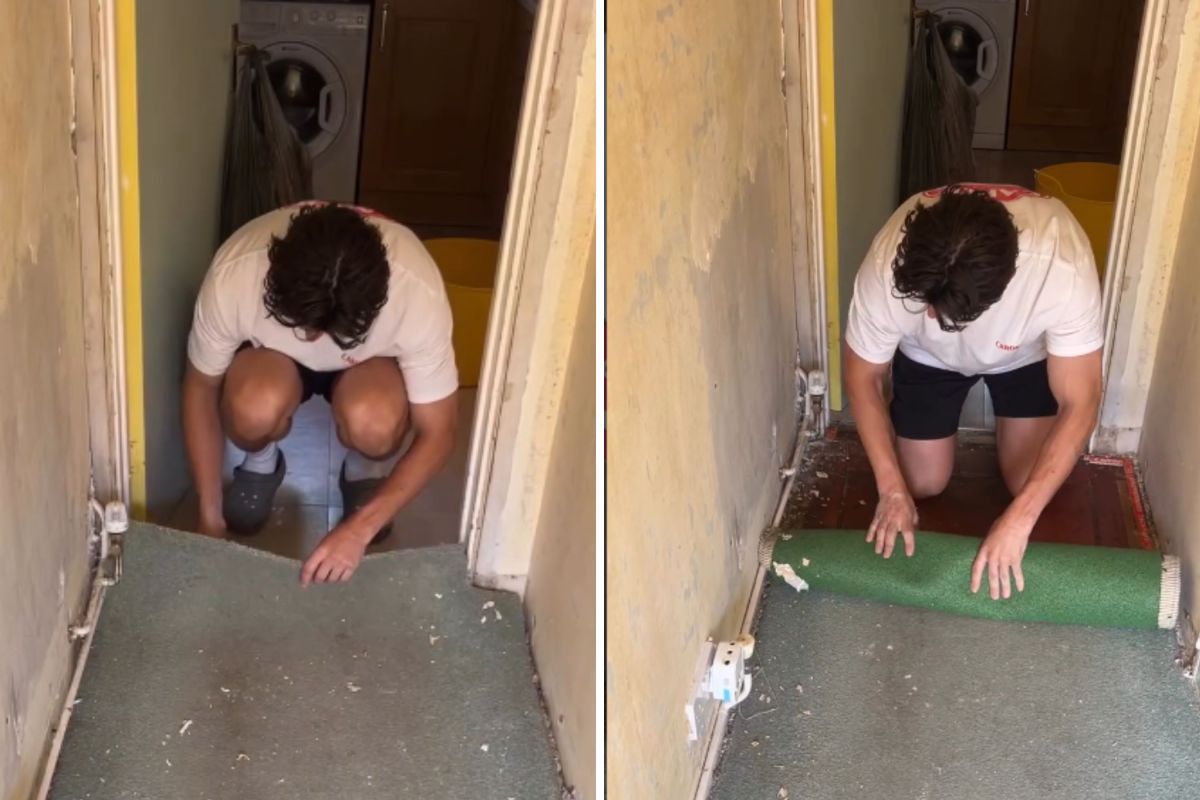
A couple in London bought an old house from the 1950s and discovered original parquet wood flooring hidden under old carpet throughout their downstairs. They plan to restore the historic floor, which is expected to require significant work and expense.
Key Facts
The house was bought late last year and described as a fixer-upper.
Original parquet flooring was found under carpet in the living room and other downstairs areas.
Parquet flooring features small wooden blocks arranged in geometric patterns and became popular in 16th-century France.
The couple is sharing their renovation process on Instagram under @hillendhousereno.
A professional floor restorer will assess the condition and restoration needs of the floor.
Restoring vintage parquet can be costly and usually requires allocating 10-15% of the renovation budget for unexpected expenses.
The couple wants to preserve and restore the original flooring rather than replace it.
The discovery was made by peeling back decades-old carpeting covering the entire lower floor.
Read the Original
Want the full story? Tap a source to open the original
article.
The Simon Fraser University pipe band from Canada won the 2026 World Pipe Band Championships held in Glasgow. This is the first time in 16 years that a band from outside the UK has won the title among 211 bands from 14 countries.
Key Facts
The competition took place over two days at Glasgow Green.
Simon Fraser University pipe band from Canada won first place.
The Field Marshal Montgomery band from Northern Ireland came second.
The Peoples Ford Boghall and Bathgate Caledonia band placed third.
211 bands from 14 countries, including youth bands, participated.
Countries represented included Australia, New Zealand, Oman, France, Malaysia, Sweden, Switzerland, and Germany.
The event is known as the World Pipe Band Championships or "the Worlds."
The competition boosts tourism and contributes to Glasgow’s and Scotland’s economy.
Read the Original
Want the full story? Tap a source to open the original
article.
President Donald Trump said he plans to declare the Strait of Hormuz a U.S. territory soon, claiming control over this key waterway. Iran responded strongly, calling the claim nonsense and insisting the strait belongs to Iran and Oman. The strait is a critical passage for global oil and gas and has been the focus of military actions and blockades from both sides.
Key Facts
The Strait of Hormuz is a narrow waterway where about 20% of the world’s oil and gas pass through.
President Trump said he will make the Strait of Hormuz U.S. territory after defeating Iran.
Trump claimed the U.S. naval blockade means no ships pass through unless the U.S. allows them.
Iran and Oman share control of the Strait of Hormuz, according to international law and Iran’s statements.
Iranian officials called Trump’s claim “nonsense” and said the strait will remain under Iranian control.
Iran is working with Oman to manage maritime traffic in the strait.
The U.S. and Iran have been in a standoff, each using blockades and threats related to the strait.
The current military and diplomatic situation around the strait is tense, with a risk of conflict.
Read the Original
Want the full story? Tap a source to open the original
article.
That's the point of this site, and readers keep it that way. Support for any amount and the daily digest lands in your inbox every morning at 7am Eastern.
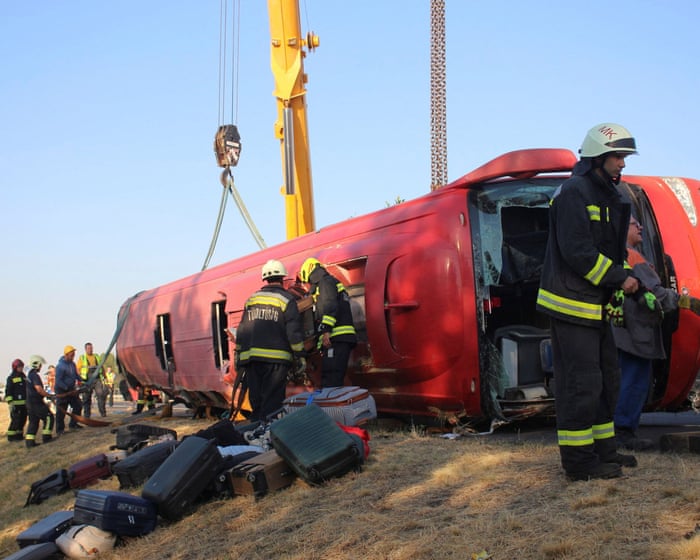
A bus carrying Polish pilgrims overturned on a Hungarian highway, killing 12 people and injuring many others. The crash likely happened because the driver fell asleep, and the injured passengers were taken to hospitals in Hungary.
Key Facts
The bus crashed on the M3 motorway near Mezőkeresztes, Hungary, at 1 am local time.
The bus had 57 passengers and 2 drivers returning from a pilgrimage site in Bosnia and Herzegovina.
12 people died in the crash, and many passengers were injured; 10 were in serious condition.
The driver survived and was taken into custody; early reports say he may have fallen asleep.
Polish and Hungarian leaders offered condolences and praised emergency workers.
Poland will increase checks on bus safety and drivers’ working hours after the accident.
A Polish investigation team will lead the crash inquiry.
Similar deadly bus crashes involving Polish pilgrims happened in 2002 and 2022 in the region.
Read the Original
Want the full story? Tap a source to open the original
article.
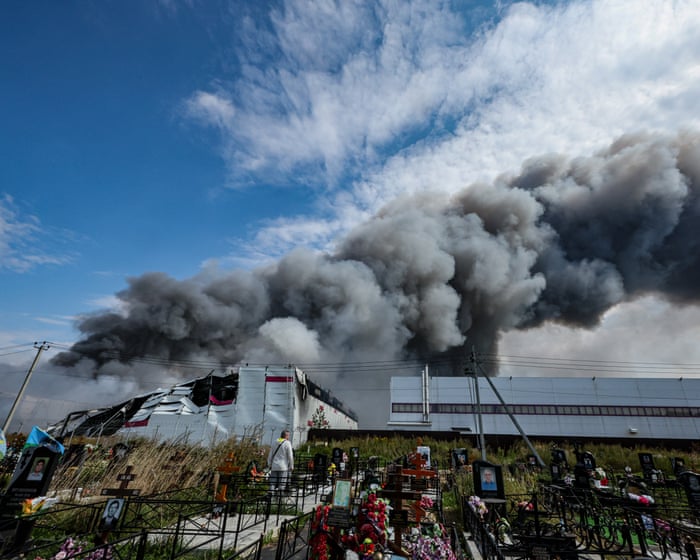
Ukraine launched a large drone attack on Russia, hitting a warehouse near Moscow and killing at least six people, according to Russian authorities. Both sides have increased their drone and missile attacks recently, causing damage and casualties in Russia and Ukraine.
Key Facts
Ukraine carried out one of its biggest drone attacks since the war began, targeting areas near Moscow.
Russian officials said they shot down over 800 drones and nine cruise missiles during the attack.
The attack caused a fire at a large warehouse owned by the Wildberries company near Moscow.
Moscow's mayor called it the largest drone attack on the city in two years.
Ukraine has improved its long-range strike abilities, attacking targets up to 1,500 miles away.
Russia also launched missile attacks on Ukraine, killing at least seven people and causing damage in Kyiv.
A Spanish NATO fighter jet shot down a suspected Russian drone that entered Romanian airspace.
Both Ukraine and Russia's air defenses are under heavy pressure trying to stop the increasing missile and drone attacks.
Read the Original
Want the full story? Tap a source to open the original
article.
A New Orleans journalist and a lawyer were handcuffed while trying to cover a court case involving the state attorney general, Liz Murrill. A media rights group says this action was wrong and warns it could scare journalists and the public from exercising their rights to attend court hearings.
Key Facts
Journalist Danny Monteverde and lawyer Elana Beiser were handcuffed in July at a New Orleans courthouse.
They were covering the indictment of Louisiana Attorney General Liz Murrill, a case later dismissed.
The courtroom was closed by judge Leon Roche during the grand jury indictment, sparking protests.
A media group, the Reporters Committee for Freedom of the Press (RCFP), called the handcuffing "outrageous."
RCFP says the closure lacked proper justification and called for respecting public and press access to courts.
The judge said the closure was to protect grand jurors’ safety and privacy.
RCFP offered training to courthouse staff on legal rights related to court access.
The case involved political conflict between Louisiana Republicans and New Orleans Democrats over local office positions.
Read the Original
Want the full story? Tap a source to open the original
article.
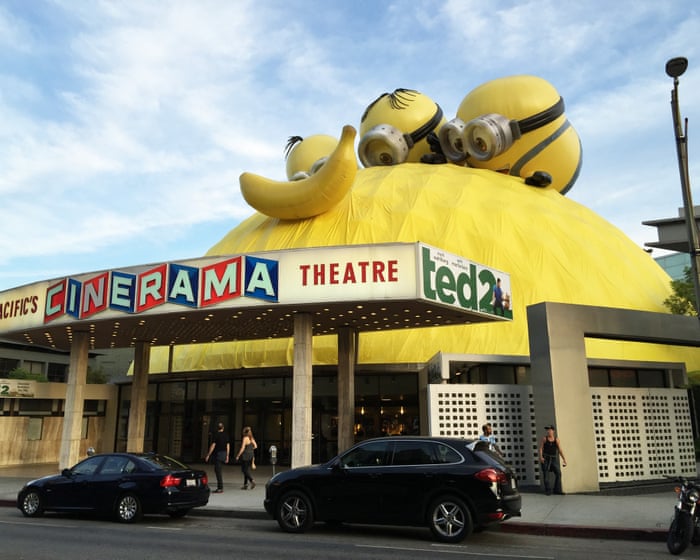
The historic Cinerama Dome movie theater in Hollywood, Los Angeles, will reopen in 2028 after being closed since 2020. Sony Pictures announced a new deal to operate the venue through its Alamo Drafthouse chain, preserving its unique design and history.
Key Facts
The Cinerama Dome was built in 1963 and is known for its white, geodesic, golf ball-like structure.
It was designated a historic cultural monument in 1998.
The theater closed in 2020 and remained shut due to the COVID-19 pandemic.
Sony Pictures made an agreement with the theater owners for reopening in 2028.
Alamo Drafthouse, a dine-in theater chain owned by Sony, will run the Dome but without requiring food orders at this location.
The Dome originally showcased films using Cinerama technology with three projectors and a curved screen.
Film fans and local activists campaigned strongly for its reopening through petitions and rallies.
The Dome seats 956 people and will keep showing films on its large curved screen.
Read the Original
Want the full story? Tap a source to open the original
article.
California passed a law requiring diaper makers to list all toxic chemicals in their products. Companies must disclose these ingredients online by 2028 and on packaging by 2029 to help parents know what touches their babies’ skin.
Key Facts
California passed a bill to make diaper companies reveal toxic chemicals in disposable diapers.
Chemicals found include phthalates, lead, PFAS, quats, arsenic, VOCs, and fragrances that may harm health.
Diapers stay on babies’ skin for long periods, which can increase chemical absorption.
The law demands ingredient disclosure on a public website by 2028 and on diaper packaging by 2029.
The bill passed the California Assembly with a vote of 68-1 and awaits state Senate approval.
Toxic chemicals serve different functions, like moisture barriers (PFAS) and flexibility (phthalates).
Studies show some toxic chemicals are present in diapers, but more research is needed on health effects.
Industry groups say diapers meet strict safety standards, but advocates want more transparency to protect babies.
Read the Original
Want the full story? Tap a source to open the original
article.
A U.S. law designed to help federal agencies investigate foodborne illness outbreaks has been delayed for over 15 years. Originally passed in 2010 and set to start in 2026, the rule requiring better tracking of risky foods will now begin in 2028, after recent lobbying delayed its implementation.
Key Facts
The law, often called the "traceability rule," was created under the Food Safety Modernization Act of 2011.
It requires companies to keep detailed records of high-risk foods like leafy greens, soft cheese, eggs, and peanut butter.
The rule helps the FDA trace contaminated food back through the supply chain to find the source of illness faster.
The rule was first asked for by Congress in 2010 but has not yet been enforced.
Lobbying by food companies and retailers has delayed the rule’s start date multiple times, most recently pushing it from 2026 to 2028.
In 2025, a large outbreak of cyclosporiasis sickened over 24,000 people and caused two deaths, which the rule might have helped to control earlier.
Local health departments begin investigations of outbreaks, while federal agencies track the food’s path from restaurants back to farms.
Current tracking is based on the “one up, one back” system from a 2003 law, which can make tracing outbreaks complicated due to mixed food sources.
Read the Original
Want the full story? Tap a source to open the original
article.
The author describes how a hiking trip in Maryland led to an unexpected health condition caused by tick bites from lone star tick larvae. Months after the bites, the author developed symptoms linked to Alpha-Gal Syndrome, a tick-related allergy that affects the immune system and causes reactions to certain foods like red meat and dairy.
Key Facts
The author was bitten by many lone star tick larvae during a hike in Maryland.
The bites did not itch at first but later caused severe itching for weeks.
Months after the bite, the author developed stomach problems lasting two days at a time.
The symptoms appeared intermittently over six weeks and were hard to diagnose.
The author eliminated certain foods like gluten but symptoms persisted.
Eating chocolate chip ice cream triggered a bad reaction, indicating a new food sensitivity.
The condition is linked to Alpha-Gal Syndrome, caused by a molecule injected by ticks that changes the body’s immune response.
Alpha-Gal Syndrome can cause allergic reactions to red meat and other products from mammals.
Read the Original
Want the full story? Tap a source to open the original
article.
Israel has launched airstrikes in southern Lebanon that killed at least 11 people, including children, despite ceasefire agreements brokered by the United States earlier this year. The attacks targeted areas near the border, reportedly aimed at Hezbollah positions, while Lebanese leaders condemned the strikes and called for a timeline for Israeli withdrawal.
Key Facts
At least 11 people were killed in Israeli airstrikes in southern Lebanon’s Nabatieh district.
The violence occurred despite two ceasefire agreements made in June, mediated by President Donald Trump’s administration.
The June 4 ceasefire required Hezbollah to stop firing and evacuate fighters; the June 26 agreement linked Israeli withdrawal to Hezbollah disarmament.
Hezbollah opposes the ceasefires and Israeli forces have continued expanding control and carrying out attacks.
Israeli strikes recently targeted villages near the border including Ansar, Deir al-Zahrani, Bint Jbeil, Taybeh, and al-Mansouri.
Israel said its attacks responded to actions by Hezbollah against Israeli soldiers at a strategic location called Ali al-Taher Ridge.
Israeli Prime Minister Benjamin Netanyahu’s office said Hezbollah put civilians near military targets deliberately.
Lebanese leaders and locals say the airstrikes have destroyed villages, including graveyards and historic sites.
Read the Original
Want the full story? Tap a source to open the original
article.