Four U.S. states have started a trial against Meta, accusing the company of making Facebook and Instagram addictive for children. The states want Meta to change its apps and pay up to $1.4 trillion in damages. Meta denies these claims and says it is committed to protecting young users.
Key Facts
The states involved are California, Colorado, Kentucky, and New Jersey.
The lawsuit alleges Meta uses technology to deliberately make its social media platforms addictive for kids.
The states want changes to Meta’s apps and financial penalties up to $1.4 trillion, close to Meta’s market value.
Jury selection began in Oakland, California, and opening statements are expected to start August 18, 2026.
Meta has faced similar lawsuits before, with previous combined damages nearing $1 billion.
Experts compare this case to lawsuits against tobacco companies in the 1990s.
Meta founder Mark Zuckerberg is expected to testify during the trial.
Meta states it has worked with parents, experts, and law enforcement to protect young people.
Read the Original
Want the full story? Tap a source to open the original
article.
Four U.S. states have sued Meta, the company behind Facebook and Instagram, claiming it designed its apps to be addictive to children. The states want Meta to change its apps and pay up to $1.4 trillion in penalties. Meta denies these claims and says it supports young people using its platforms.
Key Facts
The lawsuit involves California, Colorado, Kentucky, and New Jersey.
States accuse Meta of making Facebook and Instagram addictive for kids.
Jury selection for the trial started in Oakland, California.
The states seek both changes to Meta’s apps and financial penalties up to $1.4 trillion.
Experts compare this case to past legal actions against tobacco companies in the 1990s.
Meta has faced similar lawsuits before, with damage awards near $1 billion.
Mark Zuckerberg, Meta’s CEO, is expected to testify in the trial.
The lawsuit focuses on Meta’s business practices and the harm to children’s mental health.
Read the Original
Want the full story? Tap a source to open the original
article.
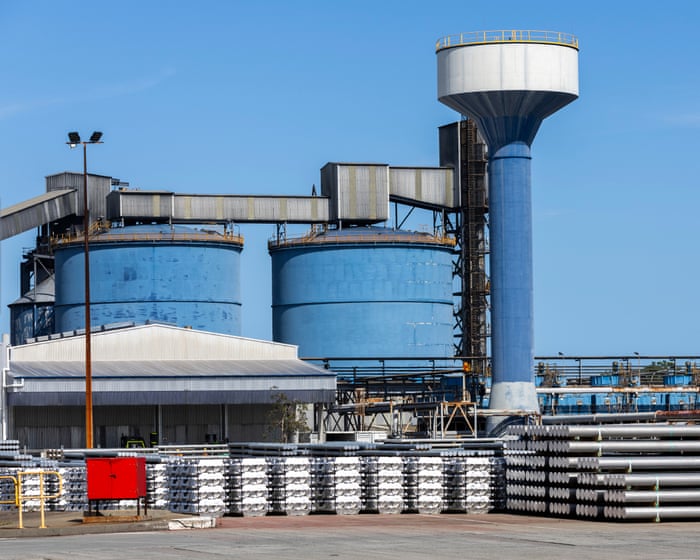
Australia’s Prime Minister Anthony Albanese and New South Wales Premier Chris Minns are set to announce a government bailout worth up to $2.5 billion for the Tomago aluminium smelter. The funding aims to keep the smelter open despite rising energy costs, with the cost shared equally between the federal and NSW governments.
Key Facts
The Tomago smelter is Australia’s largest aluminium smelter and uses over 10% of New South Wales’ energy.
The smelter employs about 1,000 workers and produces up to 590,000 tonnes of aluminium per year.
Rio Tinto, the smelter’s owner, considered closing the site when its electricity contract ended.
The bailout deal is expected to include $1 billion for capital improvements to the smelter.
The announcement is planned for a joint visit to Tomago by Prime Minister Albanese and Premier Minns.
The deal is linked to power purchase agreements with Snowy Hydro, a government-owned energy utility, creating about 2.5 gigawatts of new energy supply.
Other metal smelters in Australia, including copper and steel works, are also receiving government support to continue operations.
Tomago plans to become nearly 100% renewable in energy use by the end of the decade.
Read the Original
Want the full story? Tap a source to open the original
article.
Vermont Governor Phil Scott, a moderate Republican, is expected to run against progressive Democrat Amanda Janoo in the upcoming November election. Scott has been governor since 2016 and is seeking his sixth term.
Key Facts
Phil Scott is the current governor of Vermont.
He was first elected in 2016 and is running for a sixth term.
Scott is known as a moderate Republican.
Amanda Janoo is the progressive Democratic challenger in the race.
The election is scheduled for November.
The prediction about the candidates is from Decision Desk HQ.
Read the Original
Want the full story? Tap a source to open the original
article.
The U.S. will release its July inflation report, which is expected to show that inflation is slowly cooling but still above the Federal Reserve’s 2% target. After recent high gas prices driven by geopolitical events and rising costs in technology, inflation may have temporarily eased but still remains a concern for the economy and consumers.
Key Facts
The July inflation report is expected to show a 3.4% increase in consumer prices compared to a year ago, slightly down from 3.5% in June.
Monthly prices likely rose 0.1% from June to July after a drop in gas prices in June.
Core inflation, which excludes volatile food and energy prices, is expected to drop to 2.5% in July from 2.6% in June.
Gas prices fell after a cease-fire in the U.S.-Iran conflict but started rising again by late July.
Inflation has stayed above the Fed’s 2% target for over five years.
Rising costs for services like healthcare and restaurant meals are contributing to sustained inflation.
Increased wages lead companies to raise prices, but income growth is not keeping up with inflation.
Economists and Federal Reserve officials are closely watching the data to understand where inflation is headed next.
Read the Original
Want the full story? Tap a source to open the original
article.
A strong 7.4 magnitude earthquake hit western Colombia, killing at least 181 people and injuring over 2,500. The new Colombian government, led by President Abelardo de la Espriella, is struggling to manage rescue efforts and provide aid in areas also affected by poverty and armed conflict.
Key Facts
The earthquake struck cities including Cali, Pereira, Manizales, and Quibdo.
At least 181 people died and about 2,595 were injured; around 195 to 4,000 remain missing.
Rescue teams are working urgently to find survivors within the critical first 48 to 72 hours after the quake.
Some survivors, including a baby and a woman, were pulled alive from rubble.
President Abelardo de la Espriella declared an emergency to speed up emergency funding and recovery efforts.
The response is complicated by long-standing issues like poverty and ongoing armed conflicts causing displacement.
A 2016 peace accord has helped aid groups maintain a presence in conflict zones, improving delivery of emergency aid.
Aid organizations such as the Norwegian Refugee Council and the U.N. are involved in the humanitarian response.
Read the Original
Want the full story? Tap a source to open the original
article.
Millions of people in Somalia are facing severe hunger due to a long drought combined with conflicts and economic challenges. Many are fleeing their homes and living in displacement camps as international aid decreases, while warnings of possible flooding may worsen the situation.
Key Facts
About 2 million people in Somalia face emergency food shortages, more than double compared to last year.
Families are leaving rural areas and moving to cities like Baidoa to escape drought and hunger.
Displacement settlements around Baidoa now house hundreds of thousands of people affected by the crisis.
Aid organizations have helped over 200,000 people but say more support is urgently needed.
Somalia is at high risk of extreme weather, with droughts followed by possible heavy rains from El Nino expected later in 2026.
The drought has lasted four years in some regions, destroying crops and killing livestock.
The combination of drought, conflict, and economic problems is causing many people to lose their homes and livelihoods.
Humanitarian groups and Somalia's government are calling for increased international aid to prevent further suffering.
Read the Original
Want the full story? Tap a source to open the original
article.
Kosovo has started digging up newly found mass graves linked to its 1998-99 war, where around 1,600 people remain missing. The excavation near Kalluder aims to find the remains of intellectuals and others who disappeared during the conflict between ethnic Albanians and Serbian forces.
Key Facts
Excavations began in late July near Upper and Lower Kalluder in northern Kosovo.
The mass graves may contain victims who went missing during the 1998-99 Kosovo war.
About 1,600 people are still missing from the war, including ethnic Albanians, Serbs, and Roma.
Erblin Ademi’s father, a surgeon and one of 23 intellectuals who disappeared in April 1999, may be among the victims.
Kosovo’s Prime Minister Albin Kurti stated the victims could be those caught fleeing forces trying to round them up.
Kosovo’s war caused roughly 13,000 deaths and led to Kosovo declaring independence in 2008.
Serbia does not recognize Kosovo’s independence.
The search aims to bring closure to families who have waited decades for answers.
Read the Original
Want the full story? Tap a source to open the original
article.
President Donald Trump signed an executive order that changes the way childhood vaccines are given, suggesting the measles, mumps, and rubella (MMR) vaccine be separated into three individual shots. Doctors warn this move could cause confusion, increase fear among parents, and put children at risk during a time when measles cases are rising and fewer children are being vaccinated.
Key Facts
President Trump signed the vaccine executive order on August 10, 2026, in the White House.
The order suggests giving the MMR vaccine as three separate shots instead of one combined vaccine.
It also recommends spacing out all childhood vaccines at different appointments when possible.
The Health and Human Services Secretary, Robert F. Kennedy Jr., who leads the department, has been involved in the anti-vaccine movement.
Many scientists and doctors say studies do not support any link between vaccines and autism.
Experts say the current combined MMR vaccine is safe and effective, having been tested over many years.
Measles is currently spreading widely in the US, and vaccination rates are dropping.
Medical professionals warn that the new order could create confusion and make parents hesitant to vaccinate their children.
Read the Original
Want the full story? Tap a source to open the original
article.
Sir Anthony Hopkins has released his first music album called "Life Is a Dream," featuring 12 compositions he wrote over 60 years. The album was recorded with the Philharmonia Orchestra in London and will be released on August 21 by Decca Records.
Key Facts
Anthony Hopkins began playing piano at age 4 and wrote his first composition at 22.
The album "Life Is a Dream" reflects his childhood and life experiences growing up in Wales.
The music was conducted by Gustavo Dudamel and performed by the Philharmonia Orchestra.
Hopkins has composed music for films including "Shadowlands," "August," "Slipstream," and "Elyse."
The album explores themes of nostalgia, sadness, and the bittersweet nature of life.
The first single is part of a three-part suite about a summer in South Wales.
"Stella Aria," a song named after his wife, explores loneliness and happiness.
Hopkins describes music as a more freeing art form compared to acting, which he sees as more disciplined.
Read the Original
Want the full story? Tap a source to open the original
article.
A passenger ferry caught fire near Bali, Indonesia, while traveling to the nearby island of Lombok. Rescue teams and passing boats saved 106 people and were working to rescue 25 others amid rough seas.
Key Facts
The ferry named Putri Yasmin caught fire early in the morning while traveling from Bali to Lombok.
The fire began around 4:15 a.m., and rescue teams were notified about 30 minutes later.
The ferry was carrying 114 passengers, 17 crew members, 44 vehicles, and 53 motorcycles.
Rescue efforts involved Indonesian navy ships, patrol boats, rescue vessels, and a helicopter for aerial search.
Waves up to 4 meters (13 feet) high made the rescue more difficult.
So far, 106 people have been rescued from the burning ferry.
Indonesia relies heavily on ferries for travel between its many islands.
Ferry accidents happen often in Indonesia, sometimes due to weak safety rules.
Read the Original
Want the full story? Tap a source to open the original
article.
Democratic Lieutenant Governor Peggy Flanagan and Republican Michele Tafoya won their primaries for the Minnesota Senate race. Polls and experts show Flanagan currently has an advantage for the general election in a state that typically votes Democratic.
Key Facts
Peggy Flanagan won the Democratic primary with about 59% of the vote.
Michele Tafoya won the Republican primary with about 53% of the vote.
Flanagan is seen as a progressive Democrat with endorsements from Bernie Sanders and Ilhan Omar.
Polls show Flanagan leading Tafoya by 6 to 7 points in the general election.
Minnesota tends to vote Democratic and has a large voter base in the Twin Cities metro area.
Experts say Democrats have an advantage due to anti-Trump sentiment and metro voter turnout.
Prediction markets estimate a 93-94% chance of a Democratic win in the Senate race.
Forecasters like Cook Political Report label the race as "Likely Democratic."
Read the Original
Want the full story? Tap a source to open the original
article.
Each summary links back to the original reporting, so you can check the work. Support that, and get the daily digest every morning. Most choose $3.99/month.
President Donald Trump said that during a recent secret flight from Turkey, he switched planes as directed by the Secret Service and the military. He flew on a different, military aircraft while a decoy Air Force One carried other passengers, a move made for security reasons amid potential threats.
Key Facts
President Trump followed the Secret Service and military orders to switch planes during a secret flight from Turkey.
He flew on a military aircraft, while a decoy Air Force One carried others, including some Cabinet members.
The switch involved using a catering container to move the president off one plane secretly, without press or some White House officials knowing.
Secretary of State Marco Rubio and Treasury Secretary Scott Bessent were on the decoy Air Force One.
Defense Secretary Pete Hegseth flew with President Trump on the secret plane.
Trump said he did not know specific details about the threat that caused the plane switch.
He believes the plane he flew on was at greater risk than the decoy Air Force One.
The decoy Air Force One had its transponder turned off, making it harder to track, while reporters onboard were told to keep windows closed for security.
Read the Original
Want the full story? Tap a source to open the original
article.
President Donald Trump said the decision to change planes in Turkey after the NATO meeting was made by the Secret Service. Reports said Trump first got on Air Force One but then moved to another plane using a catering truck because of a possible Iranian threat.
Key Facts
President Trump was in Turkey for a NATO summit.
After the summit, a plane change took place.
Trump initially boarded Air Force One.
He then transferred to another plane using a catering truck.
The switch was reportedly due to a threat from Iran.
President Trump said the Secret Service decided on the plane change.
The information about the plane switch was reported by The Washington Post.
Read the Original
Want the full story? Tap a source to open the original
article.
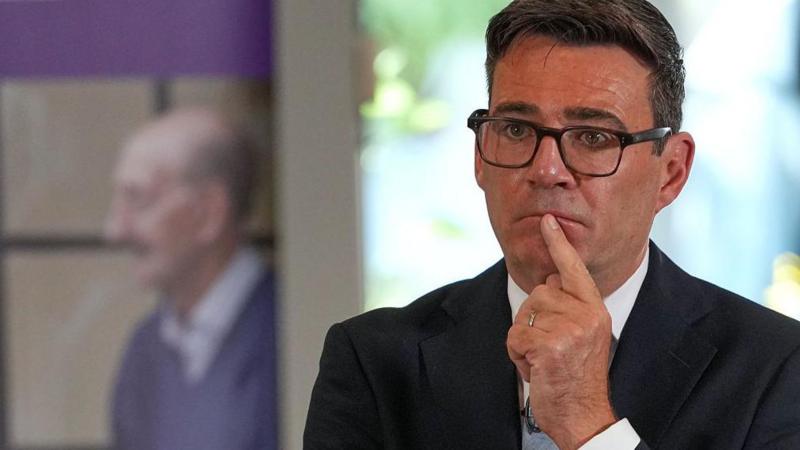
Prime Minister Andy Burnham said that his current efforts to help with the rising cost of living are not enough on their own. He plans to introduce a series of smaller changes, including public control of services like energy, water, and housing, and will ask the Chancellor to consider more support in the upcoming Budget.
Key Facts
Burnham admitted his announcements so far won't fully ease the cost-of-living pressures on people.
He plans to combine smaller actions to help reduce household costs.
Promised changes include reforming train fares and increasing public control of energy, water, and housing services.
He removed VAT from domestic energy bills and brought forward ending "subscription traps."
Burnham is touring the UK to discuss cost-of-living issues while Parliament is not in session.
He asked Chancellor John Healey to focus on the cost of living in the next Budget on 28 October.
The Chancellor will continue with strict spending limits, meaning support may be limited.
Burnham wants to help businesses by lowering business rates, especially for pubs and live venues, but will not make promises before the Budget.
Read the Original
Want the full story? Tap a source to open the original
article.
A drone attacked a power station in Zawiya, a city in western Libya. This power station is close to Libya’s largest working oil refinery, which has faced multiple attacks recently.
Key Facts
The attack involved a drone hitting a power station in Zawiya, Libya.
Zawiya is located in western Libya.
The power station is near Libya’s biggest operational oil refinery.
The oil refinery has been attacked several times in the past few days.
Due to ongoing attacks, the Libyan government is thinking about shutting down the refinery.
Read the Original
Want the full story? Tap a source to open the original
article.
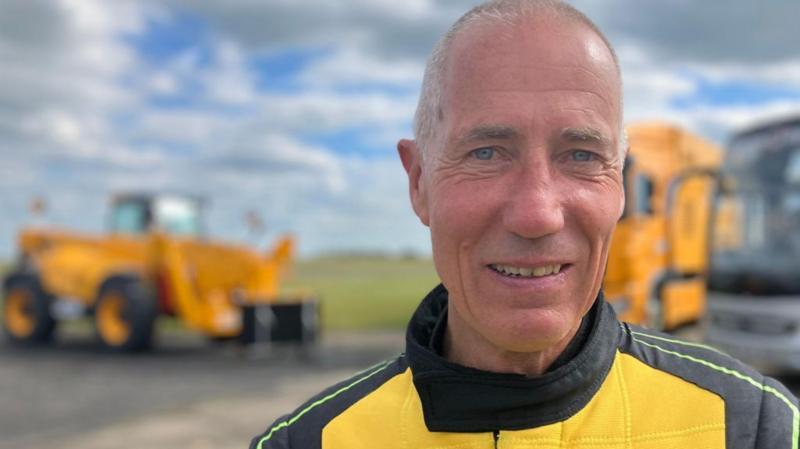
British driver Andy Green set a new land speed record by driving a hydrogen-powered car at 406 mph (654 km/h) at the Bonneville Salt Flats in Utah. This is the fastest speed ever recorded for a hydrogen-powered vehicle and more than double the previous record from 2004.
Key Facts
Andy Green is a 64-year-old retired Royal Air Force pilot and the first person to break the sound barrier on land.
He reached 406 mph in a hydrogen-powered car called the JCB Hydromax.
The JCB Hydromax uses two hydrogen internal combustion engines delivering a total of 1,600 brake horsepower (bhp).
Green previously set speed records with jet-powered and diesel-powered cars, including a 763 mph run breaking the sound barrier in 1997.
The new hydrogen car record more than doubled the previous 2004 hydrogen speed record of 185.5 mph.
The Hydromax car was developed by JCB, a British engineering company, which also created a diesel-powered record car 20 years earlier.
Testing for the Hydromax car reached 208 mph in May 2024 before the record-breaking run.
Lord Anthony Bamford, chairman of JCB, highlighted the achievement as a milestone for British engineering with hydrogen power.
Read the Original
Want the full story? Tap a source to open the original
article.
Repeated heatwaves in the UK this year have caused an estimated £4.4 billion loss in economic output by the end of July. Heat reduces worker productivity and forces some equipment to shut down, with the highest impact in London and the southeast.
Key Facts
UK heatwaves in May, June, and July have reduced economic output by around £4.4 billion.
Workers become less productive during high temperatures, and some machines must stop working due to overheating.
Verdant recommends rules to limit working temperatures and supports paying workers who lose hours due to heat.
The UK experienced its hottest summer on record, with an amber warning for extreme heat issued recently.
Indirect costs like wildfire fighting and extra energy use are not included in the £4.4 billion figure.
If heatwaves continue to worsen, annual economic losses could exceed £25 billion by 2030.
Research shows for every 1°C rise above 30°C, worker productivity drops by 3%.
Nearly three-quarters of England is officially in drought following this summer’s heatwaves.
Read the Original
Want the full story? Tap a source to open the original
article.
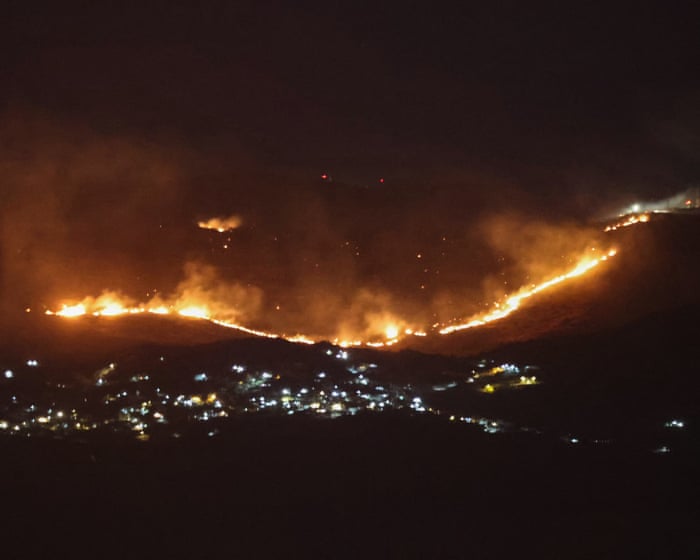
Firefighters and residents in southern Lebanon say the Israeli military has been starting wildfires by dropping flares and using drones to drop incendiary materials. These fires have damaged large areas of woodland and farmland since a ceasefire in June 2023 mainly ended fighting between Hezbollah and Israel.
Key Facts
Firefighters say Israeli military actions have caused fires in about 30-40% of forested land near the Lebanon-Israel border.
Israeli drones have been dropping incendiary devices that start fires in olive groves, woodlands, and agricultural land.
Firefighters sometimes had to stop fighting fires because drones attacked near them.
The Lebanese army coordinates firefighting efforts and communicates with an Israeli-led “deconfliction” group to allow firefighters to work safely.
Environmental groups claim this is a repeated Israeli tactic to damage Lebanon’s natural environment.
The fires harm important ecosystems that support trees like stone pine and oak and migratory birds.
These environmental attacks are described as "ecocide," meaning they destroy ecosystems to disrupt people’s lives and control the land.
Fighting between Hezbollah and Israel reignited in October 2023 and has included damage to south Lebanon's woodlands.
Read the Original
Want the full story? Tap a source to open the original
article.
UK scientists are growing tiny human organs, called organoids, from patients’ cells to test new drugs. This method aims to reduce animal testing and improve how medicines are developed by using human tissue models that better show how diseases work and respond to treatments.
Key Facts
Scientists will grow miniature human organs from NHS patients’ cells to test medicines.
Organoids are tiny tissue clumps that can mimic real organs and show disease effects.
The approach will help find which treatments work best for different patients.
Animal testing has a high failure rate, with over 90% of drugs passing animal tests failing in humans.
The new research hub in Cambridge is funded with £20 million by the Medical Research Council.
The UK government plans to reduce animal testing using new methods like organoids and technology such as artificial intelligence.
Last year, the UK performed 2.54 million animal testing procedures, mostly on mice, rats, fish, and birds.
Initial research will focus on diseases like ulcerative colitis, Crohn’s disease, cancer, and neurological disorders.
Read the Original
Want the full story? Tap a source to open the original
article.