Two mosques in the Israeli-occupied West Bank were set on fire overnight, in what appears to be an attack by Israeli settlers. This follows a weekend of violence that resulted in the deaths of four Palestinians and two Israeli soldiers, raising tensions in the region.
Key Facts
Two mosques in the villages of Qusra and Kour in the northern West Bank were heavily damaged by fires.
Attackers left graffiti on one mosque with messages referring to revenge for an Israeli soldier killed recently.
Israeli soldiers and police increased their presence in the West Bank after the attacks, closing roads and searching for militants.
Over 70 Palestinians were arrested during efforts to control the rising violence.
The violence is linked to growing criticism of Prime Minister Netanyahu’s government, accused of ignoring attacks by Israeli settlers against Palestinians.
Residents of affected villages reported previous incidents like theft and said Israeli authorities had not provided help.
Security footage showed people detonating an explosion at the mosque entrance in Kour.
Israeli military and police said they are investigating the mosque attacks and condemned violence against religious sites.
Read the Original
Want the full story? Tap a source to open the original
article.
Cuba held a rally to mark the 73rd anniversary of a key revolutionary attack, with President Miguel Díaz-Canel leading the event and former President Raúl Castro absent for the first time in decades. The rally highlighted ongoing tensions between Cuba and the United States, including recent U.S. sanctions and accusations against Cuba.
Key Facts
Cuba celebrated the 73rd anniversary of the July 26, 1953, attack on military barracks led by Fidel and Raúl Castro, which started the Cuban Revolution.
Raúl Castro, 95, did not attend the event for the first time in at least 30 years; no reason was given.
President Miguel Díaz-Canel led the rally in Pinar del Río and read a message from Raúl Castro.
The event included criticism of a U.S. State Department report accusing Cuba of espionage and influence operations.
Raúl Castro was recently charged by the U.S. with crimes related to the 1996 downing of civilian aircraft, accusations denied by Cuba.
Cuba is facing a severe economic crisis worsened by U.S. sanctions, including an oil embargo imposed under President Donald Trump.
Daily blackouts, reduced work hours, halted industrial production, and shortages of essentials are affecting daily life in Cuba.
Many international companies, including hotel chains, airlines, and payment processors, have stopped operations in Cuba due to these sanctions.
Read the Original
Want the full story? Tap a source to open the original
article.
A van attack during Berlin’s Pride festival on July 26, 2026, killed one person and injured many others. The suspect, believed to be motivated by Islamic extremism, is still missing, and police are warning the public that he may be armed and dangerous.
Key Facts
One person died and around 29 were injured in the attack at Berlin’s Pride festival.
The attack involved a van ramming into a crowd and a stabbing.
Authorities suspect the attack was carried out by an Islamic extremist.
The suspect is Abdul Ballout, a 21-year-old German citizen with Lebanese roots, currently at large.
Police have issued a warning to avoid approaching the suspect.
The attack took place near Tiergarten park, where people gathered afterward to mourn and support LGBTQ+ rights.
Victims and witnesses expressed concern about increased fear and potential social division following the attack.
Ali Darwich, a gay Muslim police officer born in Berlin, spoke about the attack’s personal impact on his identity and worries about society’s future.
Read the Original
Want the full story? Tap a source to open the original
article.
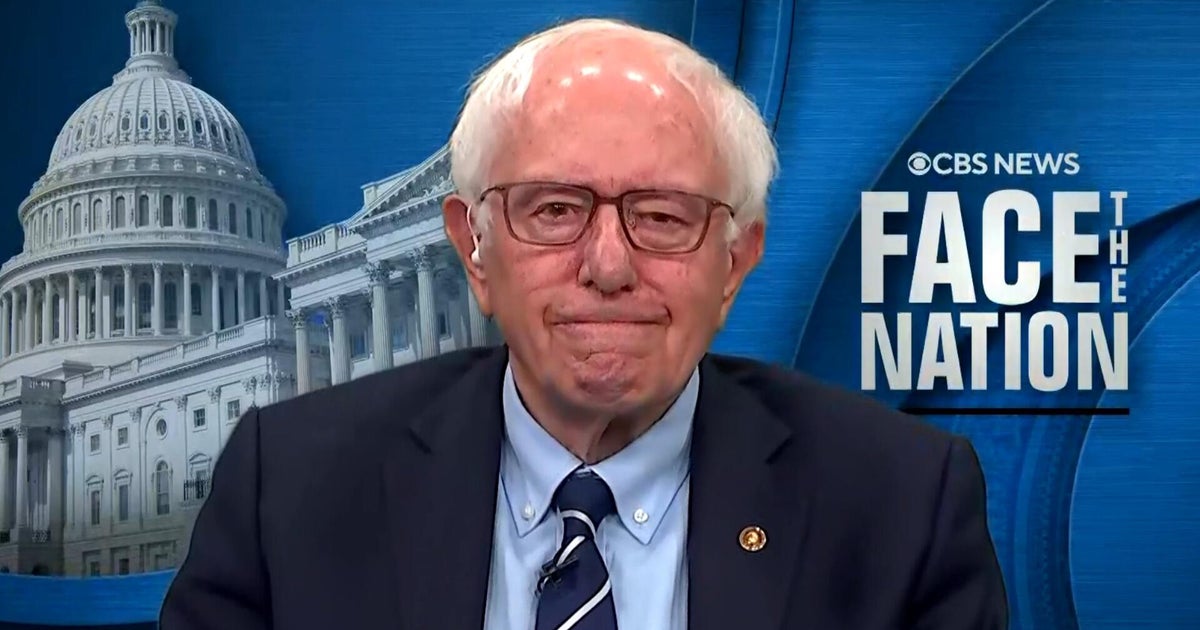
Senator Bernie Sanders spoke about the 2026 midterm elections and expressed hope for progressive candidates' success. He also called for negotiations to end the war involving Iran.
Key Facts
Senator Bernie Sanders appeared on the show "Face the Nation with Margaret Brennan."
He discussed the upcoming 2026 midterm elections.
Sanders spoke about the chances of progressive candidates in those elections.
He urged for a negotiated end to the war in Iran.
The discussion was shared by CBS News.
Sanders is an independent senator known for progressive views.
Read the Original
Want the full story? Tap a source to open the original
article.
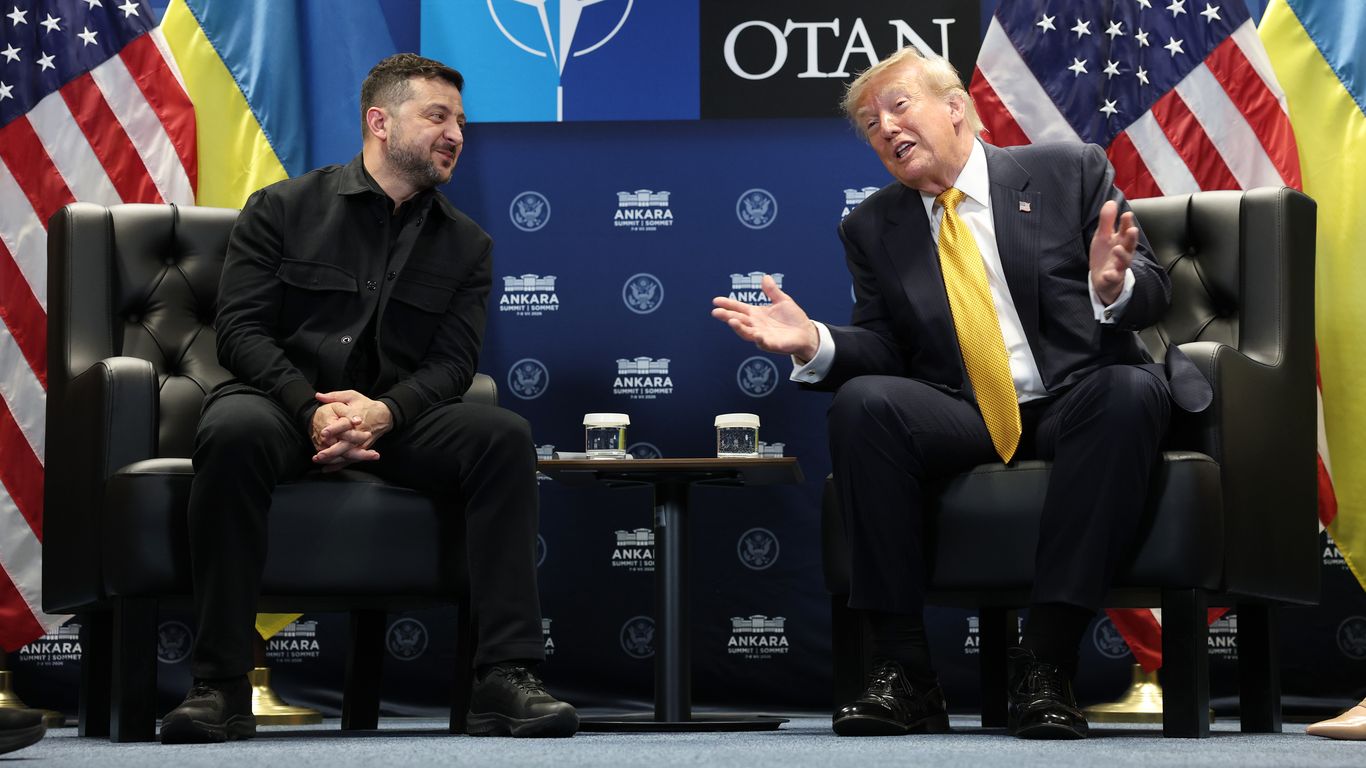
President Donald Trump will meet Ukrainian President Volodymyr Zelensky at the White House this Tuesday. The meeting follows recent discussions in Turkey and happens as Russia increases missile attacks while Ukraine responds with drone strikes.
Key Facts
President Trump will host Ukrainian President Zelensky at the White House on Tuesday.
Zelensky recently met Trump at the NATO summit in Turkey to talk about Ukraine's air defenses and efforts to end the war.
Zelensky's visit also coincides with the funeral of Senator Lindsey Graham, a strong supporter of Ukraine.
Russia has increased its missile attacks, including strikes on Kyiv.
Ukraine has intensified the use of long-range drones against Russian targets.
Two notable supporters of former MAGA views, Laura Loomer and Tim Pool, have recently shifted to support Ukraine.
Loomer met Zelensky in Kyiv and admitted being misled by Russian propaganda.
President Trump shared Loomer's positive remarks about Zelensky on his social media platform, Truth Social.
Read the Original
Want the full story? Tap a source to open the original
article.
On the July 26, 2026 episode of "Face the Nation," Senators Bernie Sanders and John Kennedy talked about the ongoing conflict with Iran and the 2026 midterm elections. Other guests included U.S. Ambassador to the United Nations Mike Waltz, former FDA Commissioner Scott Gottlieb, and CBS News election expert Anthony Salvanto with a new poll update.
Key Facts
The show aired on July 26, 2026.
Senators Bernie Sanders and John Kennedy discussed the war with Iran.
They also talked about the 2026 midterm elections.
U.S. Ambassador to the United Nations Mike Waltz appeared on the show.
Former FDA Commissioner Scott Gottlieb was a guest.
CBS News director of elections and surveys Anthony Salvanto shared the latest poll results.
The program focused on U.S. politics and current events.
Read the Original
Want the full story? Tap a source to open the original
article.
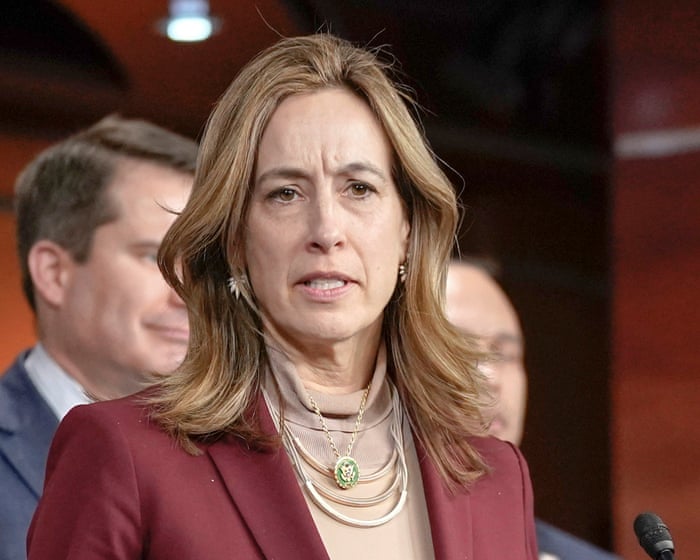
New Jersey governor Mikie Sherrill signed a new law that stops businesses from using shoppers’ personal information to charge different prices for the same products. The law aims to protect consumers from "surveillance pricing," where companies use data like online activity and purchase history to change prices unfairly.
Key Facts
The law is called the Fair Price Protection Act.
It prohibits businesses from using personal data to set individual prices on groceries and essential items.
The law does not affect loyalty programs or other types of discounts.
New Jersey is the third state to ban surveillance pricing, after Maryland and Connecticut.
New York is considering a similar law, waiting for the governor’s approval.
The law pauses the introduction of new electronic shelf labels for one year so their effects can be studied.
Existing electronic shelf labels can still be used, repaired, or replaced.
A labor union leader said the law helps protect shoppers and workers from harmful pricing based on artificial intelligence.
Read the Original
Want the full story? Tap a source to open the original
article.
Large wildfires are burning in southwest France, causing thousands of people to leave their homes. French farmers are helping firefighters by bringing water tankers to supply water for putting out the fires.
Key Facts
The wildfires in southwest France are some of the largest since World War II.
About 42,000 hectares (104,000 acres) of land have burned.
Around 220,000 people have been evacuated to safer areas.
Farmers are supporting the firefighting effort by delivering water in tankers.
High winds have made it harder to control the fires.
Firefighters are exhausted after many days of continuous work.
Authorities describe the fire situation as still very serious.
Read the Original
Want the full story? Tap a source to open the original
article.
Tom Homan, who works on border issues for the White House, said he does not know the current situation of two ICE officers involved in recent deadly shootings in Texas and Maine. He mentioned this in an interview on CNN’s show "State of the Union."
Key Facts
Tom Homan is the White House border czar.
Two ICE officers were involved in fatal shootings, one in Texas and one in Maine.
Homan spoke about the cases in a CNN interview with Dana Bash.
He said he does not have specific information on the officers’ status.
Homan has not been involved in the investigations of these incidents.
The interviews took place on a Sunday on the program "State of the Union."
ICE stands for Immigration and Customs Enforcement, a U.S. government agency.
Read the Original
Want the full story? Tap a source to open the original
article.
German police are looking for a man who drove a van into a crowd near Berlin's Pride festival, killing one person and injuring others. The suspect is also said to have attacked people with a machete, and authorities believe the attack was an act of Islamic extremist terror.
Key Facts
The attack happened near the Berlin Pride festival in Germany.
One person died and several others were injured.
The attacker used a van to ram into people and then stabbed others with a machete.
German investigators are searching for the suspect.
Authorities consider this attack an Islamist extremist terror act.
The incident took place in July 2026.
Pride festivals are events celebrating LGBTQ+ communities.
Police have not yet caught the attacker at the time of the report.
Read the Original
Want the full story? Tap a source to open the original
article.
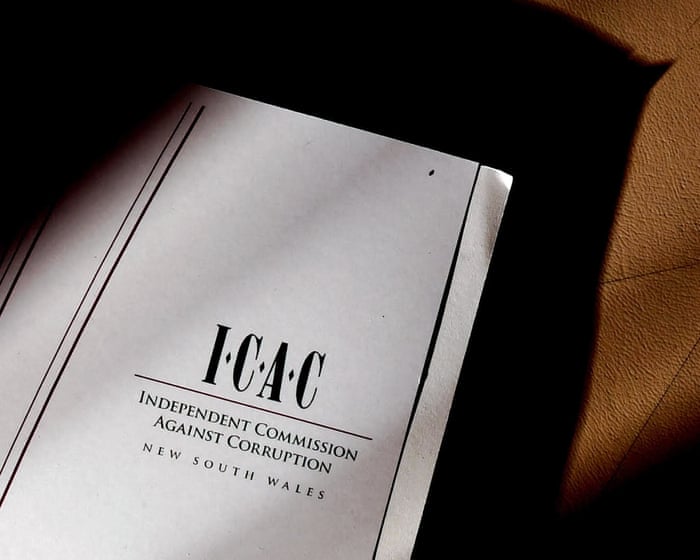
A former New South Wales Liberal Party powerbroker, Christian Ellis, who is at the center of an anti-corruption investigation, has moved to the UK and is not expected to appear in upcoming hearings by the Independent Commission Against Corruption (ICAC). ICAC is investigating allegations of illegal donations and branch stacking involving Ellis and others between 2020 and 2023.
Key Facts
Christian Ellis, linked to the NSW Liberal Party, has moved to the UK and likely will not attend ICAC hearings.
ICAC’s Operation Rosny hearings will run for eight weeks and investigate multiple individuals.
The inquiry looks into possible breaches of the Electoral Funding Act related to undeclared or excessive donations to the Liberal Party.
Allegations include taking illegal donations and branch stacking, which means recruiting or renewing party members for political advantage.
Property developer Jean Nassif and his company Toplace are accused of making banned donations in exchange for political favors.
Ellis was involved with a lobbying firm that had Toplace as a client and served on the NSW Liberal party executive from 2019.
Federal Liberal leader Angus Taylor once endorsed Ellis for a party position but is not implicated in wrongdoing.
Ellis did not appear at a 2023 parliamentary inquiry because he could not be served with a summons.
Read the Original
Want the full story? Tap a source to open the original
article.
Senator Malcolm Roberts from the One Nation party in Australia said the party wants to deport at least 200,000 people, including illegal visa holders and international students. He used the term "remigration," which means sending people back to their home countries, a concept linked to far-right groups.
Key Facts
One Nation’s official policy aims to deport 75,000 illegal migrants like visa overstayers and unlawful workers.
Senator Roberts claimed in podcasts that the party wants to deport 100,000 illegal temporary residents and 100,000 international students.
Roberts said the party plans to tighten visa rules and work on deporting even more people after these groups.
The party has not explained how it would carry out mass deportations.
One Nation leader Pauline Hanson expressed support for mass deportation ideas after meeting a hard-right British politician.
Experts say deporting so many people would be very expensive and difficult to manage properly in Australia.
The term “remigration” has been used by far-right groups worldwide and was part of some policies during President Trump’s administration.
Australian officials said deportations happen when people are found to be illegally present, such as when seeking medical help.
Read the Original
Want the full story? Tap a source to open the original
article.
Cory Doctorow, a writer and journalist, says the current enthusiasm for AI may end with an "AI bubble" bursting, causing problems for companies that replaced skilled workers with AI. He warns that relying only on copyright laws to protect creative work against AI companies is not enough, and suggests focusing on workers' rights and open-source AI after the market corrects.
Key Facts
Cory Doctorow believes the AI industry is in a bubble that will eventually burst.
Many executives have replaced human workers with AI tools, but lost skills will be hard to recover.
AI investments come heavily from wealthy funds and billionaires, which keep the bubble inflated.
If investments or tech company funding fail, the AI bubble could collapse.
Australian Prime Minister Anthony Albanese promised stronger copyright laws to make AI companies pay for using creative work.
Doctorow thinks copyright law alone won't fix issues between AI firms and creative workers.
He suggests protecting workers’ rights around AI use and their creations.
Doctorow advises governments not to invest heavily in AI now but wait for a market correction and support open-source AI instead.
Read the Original
Want the full story? Tap a source to open the original
article.
Three Israeli siblings living in Australia have been allowed to reapply for protection visas after a tribunal found they fear being forced to break international law if conscripted into the Israel Defense Forces (IDF). The tribunal ruled that the siblings face persecution if sent back to Israel because they refuse to take part in military actions in Gaza that may violate humanitarian laws.
Key Facts
Three Israeli siblings in Australia are facing compulsory military service in Israel.
They believe they would be forced to break international humanitarian law in Gaza during their service.
The Australian Administrative Review Tribunal found this fear genuine and granted the siblings the right to reapply for protection visas.
The tribunal stated that refusal to serve could lead to imprisonment of up to two years in Israel.
The tribunal referenced international reports alleging Israel’s military actions in Gaza breach humanitarian law.
The family initially came to Australia a decade ago on a working visa, which later expired.
Their initial protection visa application was denied, but the decision was overturned on appeal.
The tribunal distinguished between general risks from conflict (like Hamas rocket attacks) and persecution targeting these individuals due to their beliefs.
Read the Original
Want the full story? Tap a source to open the original
article.
Andy Burnham recently became the UK prime minister after Keir Starmer stepped down. Burnham’s leadership style is more informal and uses social media a lot, while Starmer focused more on traditional media and long-term plans.
Key Facts
Andy Burnham became UK prime minister six weeks after not being an MP.
Burnham uses social media platforms like TikTok, Reddit, and X to communicate directly with the public.
Keir Starmer preferred traditional media and regular interviews despite increasing his social media use.
Burnham promises honest, relaxed communication but has faced criticism over unclear or changing positions.
Burnham introduced short-term economic measures like VAT cuts on electricity bills, a bus fare cap, and business rate cuts for pubs.
Starmer prioritized long-term solutions, including a digital ID system to improve public services.
Burnham plans to create No 10 North to decentralize power from London to local communities in the UK.
Opposition parties have been skeptical of Burnham’s decentralization plans.
Read the Original
Want the full story? Tap a source to open the original
article.
A long-planned skyscraper in New York City called Hotel Attraction, designed by architect Antoni Gaudí more than 100 years ago but never built, has been digitally recreated. The new visualizations show the building’s unique interiors and its mix of hotel, cultural spaces, and large halls, giving a sense of what might have been a remarkable tower in Lower Manhattan.
Key Facts
Hotel Attraction was designed around 1908 by Antoni Gaudí for two unknown American businessmen but was never built.
The tower would have been about 1,181 feet tall, making it the tallest building in the world at the time until surpassed by the Empire State Building in the 1930s.
The building features four large entrances and a grand reception hall around 56 feet high decorated with Gaudí’s signature ceramic mosaic called trencadís.
Its interiors included themed halls for different regions: America, Europe, Asia, Australia, and Africa.
The Europa Hall was designed as a combined dining room, concert hall, and theater with stained-glass windows and ceiling sculptures.
The skyscraper was meant to function as a mix of hotel, cultural center, museums, theaters, and residences, like a vertical city or secular cathedral.
The digital reconstruction is part of a YouTube project by Daniel Coughlin, who recreates unrealized architectural projects to explore their design and impact.
Interest in Gaudí’s work has grown during the 100th anniversary of his death, with progress continuing on his famous church, the Sagrada Família, in Barcelona.
Read the Original
Want the full story? Tap a source to open the original
article.
The article discusses how artificial intelligence (AI) can change the way prices are set by focusing on how much a buyer is willing to pay instead of the product's worth. This approach could affect taxes related to consumer purchases.
Key Facts
AI can analyze how much consumers are willing to pay for products.
This method differs from traditional pricing based on the product's value or cost.
Using AI for pricing could impact tax systems, especially those related to sales or consumption.
The article explores potential changes to taxes caused by AI-driven pricing strategies.
AI's role in pricing represents a shift in how markets might operate in the future.
Read the Original
Want the full story? Tap a source to open the original
article.
With 100 days left until the 2026 midterm elections, Democrats have a chance to take control of the U.S. Senate by winning at least four Republican seats. Key battleground states include Alaska, Maine, North Carolina, and Ohio, with mixed polling and betting markets showing competitive races.
Key Facts
Republicans currently hold a 55-45 majority in the Senate.
Democrats need a net gain of four seats to control the Senate outright.
Alaska, Maine, North Carolina, and Ohio are key states where Democrats could flip seats.
Alaska, Maine, and Ohio are rated as Toss Ups, meaning both parties have a good chance.
North Carolina is rated Lean Democrat, giving Democrats a slight edge.
Prediction markets show Democrats favored in Alaska, Maine, and North Carolina but see Ohio as a tie.
Polls in Alaska and Maine show close races between Democratic and Republican candidates.
North Carolina polling shows Democrat Roy Cooper leading Republican Michael Whatley.
Read the Original
Want the full story? Tap a source to open the original
article.
Large wildfires have burned 42,000 hectares of land in southwest France, forcing about 220,000 people to leave their homes. Firefighters are working to control the fires, but the situation remains difficult due to strong winds.
Key Facts
Wildfires have affected 42,000 hectares in southwest France.
Around 220,000 people have been evacuated to keep them safe.
The fires started several days ago and are still burning.
Firefighters are facing exhaustion from continuous efforts to stop the fires.
Strong winds are making it harder to control the wildfires.
The region’s vulnerability to fires is a concern for local authorities.
Officials have described the fire situation as very unfavorable.
Evacuations have been happening over multiple days as the fires spread.
Read the Original
Want the full story? Tap a source to open the original
article.
Workers at the Victoria and Albert (V&A) museums in London are voting on whether to strike because of concerns over high temperatures at work, access to drinking water, and pay. The union wants the museum to improve heat safety policies, allow staff to drink water during shifts, and pay all workers a fair living wage.
Key Facts
More than 300 workers at four V&A locations in London are taking part in a strike ballot.
The strike vote is partly due to concerns about heatwave conditions and limited water access while working.
The Public and Commercial Services Union (PCS) started the strike ballot on 23 July citing unresolved staff concerns.
The union requests a policy to close public areas if temperatures rise above 30°C and heat safety measures for workers.
PCS wants the V&A to allow workers to drink water while on duty without needing breaks or relief.
The unions also want the V&A to become an accredited living wage employer, paying at least £14.80 an hour in London.
V&A says all direct staff earn at least the living wage, but some outsourced contractors do not.
The museum has offered a 3.6% overall pay increase, with a 6.9% raise for the lowest-paid workers, and says staff safety is a priority.
Read the Original
Want the full story? Tap a source to open the original
article.