The article argues that the United States has gained access to Brazilian rare earths despite political tensions between President Donald Trump and Brazil’s President Luiz Inácio Lula da Silva. It points to financing, a long-term supply agreement and a company acquisition involving Serra Verde as ways the U.S. can secure strategic materials while Brazil seeks more domestic processing and economic benefits.
Key Facts
Serra Verde said an agreement covering all of its Phase I production for 15 years took effect on August 24.
The agreement’s buyer is a special-purpose vehicle backed by $750 million from the U.S. Department of War.
USA Rare Earth completed its acquisition of Serra Verde on September 3; the company has a $1.6 billion funding deal with the Commerce Department.
The U.S. International Development Finance Corporation signed a $565 million loan agreement to expand and improve Serra Verde’s Brazilian mine.
The supply agreement sets minimum prices for four rare earths used in permanent magnets for electric vehicles, wind turbines and defense equipment.
Serra Verde describes its mine as the only large-scale producer outside Asia of all four magnetic rare-earth elements.
A Brazilian law signed by Lula on September 16 promotes domestic mineral processing and industrial development, and gives a government council a role in reviewing certain corporate changes involving mineral assets.
Read the Original
Want the full story? Tap a source to open the original
article.
Venezuelan opposition leader María Corina Machado returned to Venezuela after more than 10 months in exile. Supporters welcomed her at a church in Lara state and along her route through Caracas.
Key Facts
Machado announced her return in a post on X on Sunday.
She attended Mass at a church in Lara state, where supporters gathered around her.
Large crowds lined Machado’s route through Caracas.
The article says earlier attempts by Machado to re-enter Venezuela had failed.
Machado left Venezuela to accept the Nobel Peace Prize in Norway.
The article says U.S. forces seized President Nicolás Maduro in January.
The Trump administration backed Maduro’s deputy, Delcy Rodríguez, as interim leader.
Read the Original
Want the full story? Tap a source to open the original
article.
World leaders congratulated Brazilian President Luiz Inácio Lula da Silva after Brazil’s electoral court said he won re-election in a runoff. Leaders from France, Spain, China and the European Union issued messages, while Lula’s opponent, Senator Flávio Bolsonaro, refused to accept the result and said he would seek to annul the election.
Key Facts
Brazil’s electoral court announced that Lula won the runoff election, giving him an unprecedented fourth term.
Flávio Bolsonaro, Lula’s opponent and the eldest son of former president Jair Bolsonaro, refused to accept defeat.
The article says Lula led Bolsonaro by more than four million votes.
French President Emmanuel Macron congratulated Lula and called for stronger ties between France and Brazil.
Spanish Prime Minister Pedro Sánchez called Lula’s win a “progressive comeback.”
China congratulated Lula and said it respected the choice of the Brazilian people.
European Commission President Ursula von der Leyen described Lula’s victory as a win for democracy and multilateralism.
Read the Original
Want the full story? Tap a source to open the original
article.
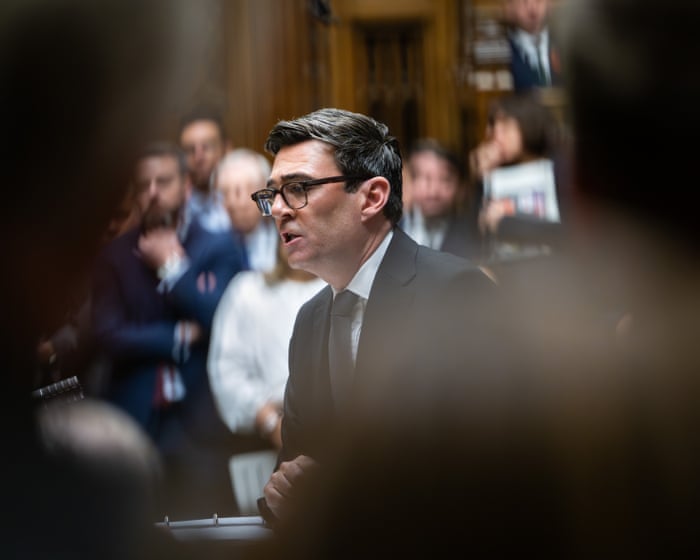
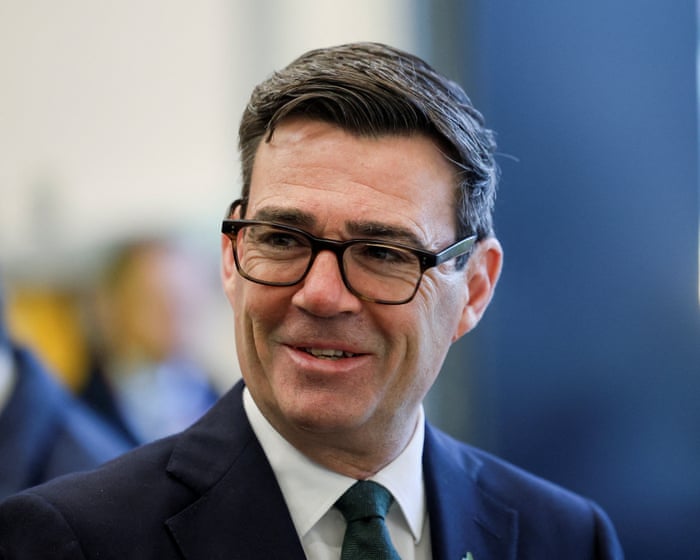
Andy Burnham said the UK’s Brexit deal has not delivered what voters were promised and is not good enough for Britain. He said he would not seek to rejoin the EU or make major changes during the current parliament, but wants practical steps to improve UK-EU arrangements.
Key Facts
Burnham said the UK ended up with a harder Brexit than the one presented during the referendum campaign.
He said Brexit had weakened the economy and the UK’s control of immigration.
Burnham linked the small boats crisis to the UK’s reduced ability to return people to Europe.
He said he would like to see the UK rejoin the EU in his lifetime but would not get ahead of public opinion.
He ruled out proposing EU membership again during the current parliament and said he would stick to Labour’s manifesto red lines.
Burnham supported the principle of a plan requiring some foreign workers to wait 15 years before qualifying for permanent residency.
He said there was no early general election planned.
Burnham said the UK-EU summit scheduled for 20 November could produce a deal that helps British food manufacturers.
Read the Original
Want the full story? Tap a source to open the original
article.
Several 2026 midterm campaigns are using images, recordings, or accounts tied to family tragedies in attack ads, sometimes without the families’ consent. Some families have demanded that ads be withdrawn, while one survivor says she chose to share her story to criticize a politician’s decision.
Key Facts
Georgia Republican gubernatorial nominee Rick Jackson used images of murdered 8-year-old Secoriea Turner and her mother's 911 call in ads attacking Democrat Keisha Lance Bottoms.
Turner's family said the campaign used their grief without permission and demanded that the ads be removed; Jackson said he would continue airing them.
Ohio Republican gubernatorial nominee Vivek Ramaswamy's campaign is spending $4 million on an ad featuring his Democratic opponent Amy Acton's estranged mother, Donna Arthur.
Acton has said her late stepfather sexually abused her as a child; her brother corroborated her account, and court records and contemporary news reports support key details.
President Trump urged Ramaswamy to continue the attack on Acton, despite objections from some Republicans.
A Republican ad against former Democratic Sen. Sherrod Brown used images of a family killed in a highway crash to criticize Brown's immigration policies; the family demanded the ad's removal.
A Republican super PAC linked the murder of a North Carolina man's son to former Gov. Roy Cooper's prison policies; fact-checkers found no connection between the killer and Cooper's prisoner-release agreement.
In Nebraska, Jody Snogren voluntarily appeared in an ad criticizing Sen. Pete Ricketts for pardoning a man who had pleaded guilty to raping her; she said she had no regrets about sharing her story. Ricketts defended the pardon.
Read the Original
Want the full story? Tap a source to open the original
article.
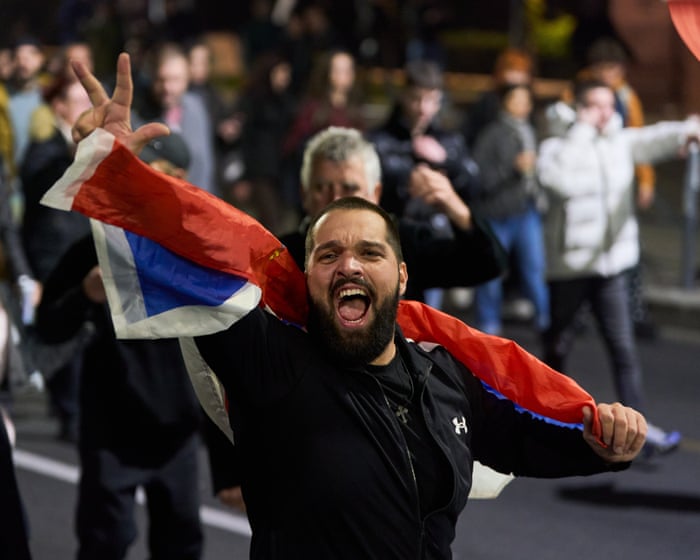
A student-led opposition movement won Serbia’s parliamentary election, defeating the bloc of Aleksandar Vučić. With 96.9% of polling stations processed, projections gave the Student List a majority, while international observers were expected to issue a preliminary report.
Key Facts
The Student List received 52.6% of votes, compared with 39.22% for Vučić’s bloc.
CeSID projected 140 seats for the Student List, above the 126 needed for a majority.
CeSID projected 103 seats for Vučić’s bloc.
No other party crossed the 3% threshold; national minority parties were projected to take the remaining seven seats.
Hungarian Prime Minister Péter Magyar commented on the celebrations and compared the Serbian result with Hungary’s political change.
Bulgaria’s presidential election first round had 22% turnout, and a second round was scheduled for Sunday.
Defence ministers from France, Germany, Italy, Poland and the UK were due to meet in Paris to discuss Ukraine.
Read the Original
Want the full story? Tap a source to open the original
article.
Meta has faced $42 billion in penalties and settlements tied to privacy and teen mental health, illustrating how legal claims can bring large costs years after events occur. The article says AI firms may face similar exposure because Section 230 generally protects platforms from claims over user content, while AI systems generate their own content and may face product liability or negligence claims.
Key Facts
A jury imposed a $25 billion penalty on Meta over allegations that it misled users about Facebook privacy practices; Meta says it expects to win an appeal.
Meta agreed in August to a $17 billion settlement with states over the impact of products such as Instagram on teen mental health.
Section 230, part of a 1996 law, limits lawsuits against online platforms over content posted by users.
The article says Section 230 does not provide the same protection for AI-generated content, leaving companies potentially open to product liability and negligence claims.
AI companies face legal threats over harms caused by their models, misuse by bad actors, and copyright disputes.
Companies that use AI could also face lawsuits related to its effects.
Internal records about warnings, testing, and product decisions may help shape court findings.
The article says Anthropic is expected to pursue an initial public offering before Thanksgiving.
Read the Original
Want the full story? Tap a source to open the original
article.
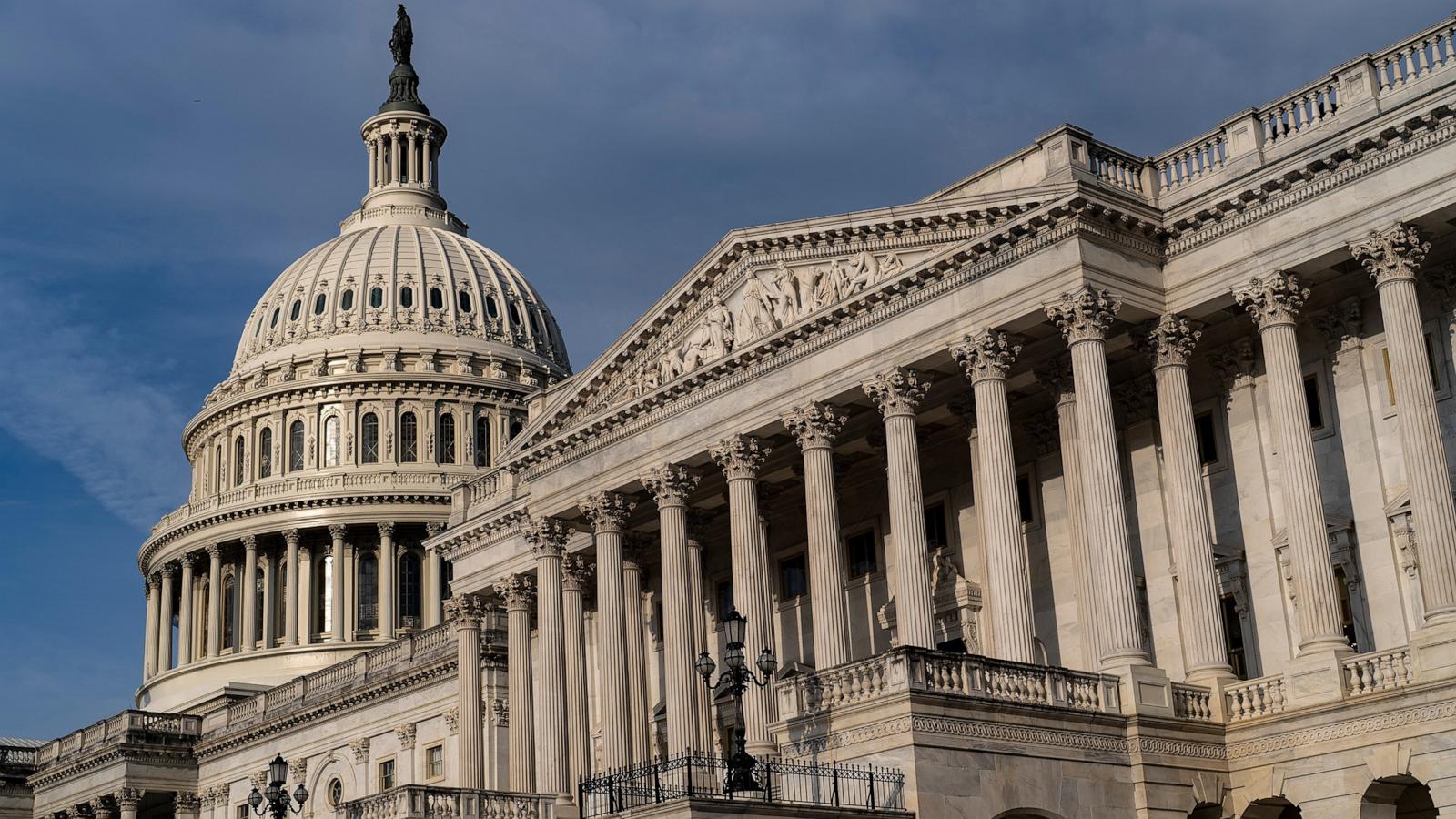
Thirty-five Senate seats are on the ballot on Nov. 3, and a small group of close contests could decide which party controls the chamber next year. Republicans currently hold 53 seats; Democrats need to gain four seats to take control, while Republicans can lose up to three and retain a majority with Vice President JD Vance’s tie-breaking vote.
Key Facts
Republicans hold 53 Senate seats, while Democrats and two independents hold the other 47.
Democrats need a net gain of four seats to control the Senate.
Republicans can lose up to three seats and keep control with the vice president’s tie-breaking vote.
The article rates Michigan’s Senate race between Republican Mike Rogers and Democrat Abdul El-Sayed as Lean Democrat.
Rogers lost his 2024 Senate race to Elissa Slotkin by fewer than 20,000 votes.
Republicans have criticized El-Sayed over his policy positions and made attacks about his faith and ethnicity; El-Sayed has denied ties to terrorism and called the characterizations Islamophobic.
The article rates Texas’s Senate race between Republican Ken Paxton and Democrat James Talarico as a tossup.
Paxton defeated incumbent Republican Sen. John Cornyn in a costly primary runoff, aided by President Donald Trump’s endorsement.
Read the Original
Want the full story? Tap a source to open the original
article.
Flavio Bolsonaro says he will not concede after Lula da Silva won Sunday’s election, according to the article. Al Jazeera correspondent Lucia Newman reports from Brasília.
Key Facts
Flavio Bolsonaro is refusing to concede.
Lula da Silva won Sunday’s election, the article says.
The article describes Lula’s win as a historic fourth term.
Al Jazeera’s Lucia Newman reports from Brasília.
Read the Original
Want the full story? Tap a source to open the original
article.
California voters will decide on November 3 whether to impose a one-time 5 percent tax on the assets of the state’s billionaires. Opponents have raised far more money than supporters and are running ads that, according to the proposal’s coauthor and a campaign volunteer, include misleading claims about who would be taxed.
Key Facts
The proposed tax would apply once to the assets of California billionaires.
University of California, Berkeley economics professor Brian Galle helped write the proposal and said an anti-tax flyer included claims he had not written.
Billionaires and business leaders, including Sergey Brin, Tony Xu, Patrick Collison, Chris Larsen, John Doerr, Michael Moritz and Vinod Khosla, have donated more than $300 million to oppose the tax.
Supporters of the tax have raised $32 million, according to the article.
Meta founder Mark Zuckerberg has not donated to oppose the tax, but company filings revealed that he told Meta’s board he would buy a home outside California to avoid the tax.
Meta’s board created a new class of shares that Zuckerberg could use to pay the tax, according to the article.
The article says any change to the tax would require a two-thirds majority in the California Assembly and would need to stay true to its purpose.
The state Democratic Party endorsed the proposal, but volunteer Ashley Craig said she had not received ground-level campaign support from the party.
Read the Original
Want the full story? Tap a source to open the original
article.
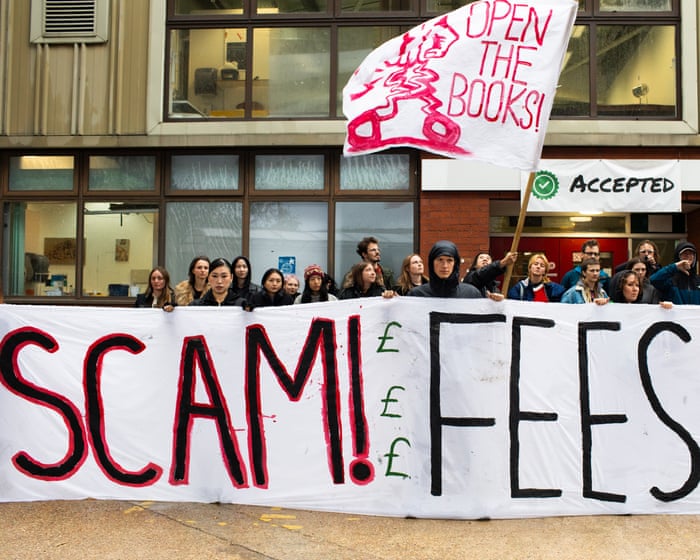
Fine art students at Goldsmiths, University of London, say a prolonged staff strike has disrupted teaching and are seeking compensation for lost learning. The university says about 8.5% of staff are on strike and cites financial pressures and steps to reduce the impact on students.
Key Facts
Ten of the 12 usual tutors on Goldsmiths’ master of fine art course are on strike, according to the article.
Students say they have received little teaching this term and that the disruption has caused financial strain and distress.
The strike began in June after a staff marking boycott over proposed job cuts and the university’s decision to deduct 100% of pay from those involved.
The University and College Union says the action responds to the scale and speed of proposed cuts and restructuring.
The strike is in its 21st week, and the article describes it as the longest in living memory in British higher education.
Goldsmiths says around 8.5% of its staff are on strike and says it has offered compromises, including a pause on compulsory redundancies.
The university says it faces significant financial challenges and has spent money to limit the effects of the dispute on students.
Read the Original
Want the full story? Tap a source to open the original
article.
The 3 November 2026 midterm elections will decide control of Congress and choose governors and other state and local officials. Republicans are defending narrow House and larger Senate majorities, while Democrats hope to gain seats; the results will shape legislation and oversight during the final two years of Donald Trump’s second term.
Key Facts
All 435 voting seats in the House of Representatives are up for election, and Democrats need a net gain of four seats to take control.
Thirty-five Senate seats are up for election, including two special elections; Republicans hold 53 seats, while Democrats and independents who caucus with them hold 47.
Democrats need to gain four Senate seats to secure a majority.
Voters will choose governors in 36 states and three U.S. territories, as well as thousands of state legislators and local officials.
The president’s party has lost House seats in 18 of the past 20 midterm elections since 1946.
A RealClearPolitics average of national generic polls showed Democrats leading Republicans by 8.2 percentage points in early October.
About 40 to 50 House races are considered truly competitive, according to an estimate cited from Reuters.
The article identifies Michigan and Georgia as Senate battlegrounds, naming Abdul El-Sayed and Jon Ossoff as Democratic candidates and Mike Collins as a Republican challenger.
Read the Original
Want the full story? Tap a source to open the original
article.
Alaska’s fishing concerns, including salmon declines and trawl-fishing bycatch, are emerging as issues in the 2026 Senate race between Democratic challenger Mary Peltola and Republican incumbent Dan Sullivan. The contest is among a small number of races that could affect Senate control, and Alaska’s ranked-choice voting system and varied voter base add complexity.
Key Facts
Democrats see Alaska as one of their more realistic chances to flip a Republican-held Senate seat in 2026.
Alaska has not elected a Democrat to the Senate since 2008.
The article identifies high living costs, including fuel and grocery prices, as concerns for Alaskans.
Commercial fishing supports workers and businesses across many Alaska communities and is a major state industry and export sector.
Salmon stocks have fluctuated, and some have struggled in recent years.
Bycatch is the unintended capture of species during fishing; concerns about it have become a grassroots issue in Alaska.
United Fishermen of Alaska president Matt Alward said changing ocean and river conditions are a major factor in struggling salmon stocks.
The article says ranked-choice voting and Alaska’s varied electorate shape statewide elections.
Read the Original
Want the full story? Tap a source to open the original
article.
The article outlines ways Republicans could retain control of the Senate after the 2026 midterms, despite forecasts that favor Democrats. It says Republicans could hold their current seats, limit losses, or win competitive races in Michigan or Minnesota; the outcomes remain uncertain.
Key Facts
Republicans entered the 2026 midterms with a 53–47 Senate majority, according to the article.
The article says Democrats need a net gain of four seats to take control, because Vice President JD Vance can break a 50–50 tie.
The article cites Democratic chances of winning the Senate at 57 percent from Decision Desk HQ, 73 percent from RacetotheWH, and 68 percent on Polymarket.
It identifies Alaska, Iowa, Kansas, Maine, Michigan, South Carolina, Minnesota, New Hampshire, Nebraska, Ohio, and Texas as battlegrounds.
The article says a North Carolina win by Democrat Roy Cooper could make it harder for Republicans to keep the majority without winning or holding other close races.
It describes Michigan as competitive, while noting that most polls favor Democrat Abdul El-Sayed over Republican Mike Rogers.
It says Minnesota is a less likely Republican pickup, and that most polls and prediction markets favor Democrats there.
The article reports that Republican Ashley Hinson is favored in Iowa and that Republican Roger Marshall holds an advantage in Kansas.
Read the Original
Want the full story? Tap a source to open the original
article.
The author argues that NATO’s predictable restraint may weaken deterrence as Russia escalates its actions against Ukraine and NATO countries. He calls for clearer red lines and less predictable responses, saying NATO should set the terms for how it responds to aggression.
Key Facts
The author is Vytautas Leskevicius, chief policy advisor at the Geopolitics and Security Studies Center.
The article cites Russia’s wars in Georgia in 2008 and Ukraine’s Crimea region in 2014, followed by its full-scale invasion of Ukraine in 2022.
The author says Russia has also carried out sabotage, cyber operations and interference with satellite navigation signals, and that drones have entered NATO territory.
The author criticizes NATO’s use of the term “sub-threshold” for hostile actions, arguing that it can weaken deterrence if NATO does not define the threshold or consequences for crossing it.
The article refers to NATO Secretary General Mark Rutte urging Allies to “keep calm, carry on, and support Ukraine.”
The author points to NATO’s 1967 flexible-response strategy as a model that kept the specific response uncertain while signaling that aggression could bring unacceptable costs.
The author argues that setting clearer red lines could lead Russia to test them, but says predictable restraint may also encourage further escalation.
Read the Original
Want the full story? Tap a source to open the original
article.
The article reviews the USA PATRIOT Act 25 years after its passage and its continuing effects on Americans’ privacy. It says Congress has limited some surveillance powers and added oversight, while civil liberties advocates argue that reforms have not fully restored constitutional protections; federal officials say the law remains important for national security.
Key Facts
President George W. Bush signed the PATRIOT Act 45 days after the September 11, 2001 attacks.
The law expanded government access to some phone and electronic communications and business and financial records during terrorism investigations.
The act also reduced barriers to information sharing between intelligence and law enforcement agencies.
The ACLU criticized the speed of the law’s passage, which followed one public hearing and little debate.
Later reforms banned some bulk record collection and strengthened court reviews.
Civil liberties advocates say the reforms have not done enough to protect Americans’ constitutional rights.
Federal officials cite judicial oversight, congressional scrutiny, and transparency requirements as safeguards.
Assistant Attorney General John A. Eisenberg said the act’s authorities support a range of national security priorities.
Read the Original
Want the full story? Tap a source to open the original
article.
Andy Burnham said he would like to see the UK rejoin the European Union in his lifetime, but said the British public must decide and he would not push ahead of public opinion. He argued that revising the post-Brexit relationship could improve the economy and help bring together people who voted differently, while ruling out rejoining before the next election.
Key Facts
Burnham discussed Brexit in an interview on ITV’s Good Morning Britain.
He said he was not dogmatic about rejoining the EU and described his approach as pragmatic.
Burnham said he would like the UK to rejoin the EU in his lifetime.
He said the British public should be in charge of decisions about the UK’s relationship with Europe.
Burnham argued that the current post-Brexit settlement was not working and should be revised.
He said a practical discussion about Brexit could help unite people who voted differently.
Burnham ruled out trying to rejoin the EU before the next election.
He said there would be no election anytime soon.
Read the Original
Want the full story? Tap a source to open the original
article.
Palestinians displaced in Gaza are closely watching Israel’s election but remain uncertain that a new government would change Israeli policy or improve conditions. Two residents interviewed by Al Jazeera said they hoped for an end to the war and less restrictive policies, while doubting that major change or reconstruction would come soon.
Key Facts
Israelis are due to vote on Tuesday in an election shaped by the war on Gaza, the article says.
The article reports that Gaza has been under a ceasefire since October 2025 but continues to face near-daily Israeli air strikes, shortages and severe living conditions.
Mohammed Eliyan, a displaced resident living in Deir el-Balah, hopes Netanyahu will lose and says a different leader might be less hardline.
Eliyan called for an end to the war, prevention of displacement and starvation, and fewer restrictions at Gaza’s crossings.
Islam Salem, who was displaced from Beit Lahiya, said Israeli policy toward Gaza was unlikely to change after the election.
Salem cited Israel’s control of about 65 percent of Gaza’s territory inside the Yellow Line.
The article says more than 80 percent of buildings in Gaza have been damaged, and about two-thirds of those have been completely destroyed.
Read the Original
Want the full story? Tap a source to open the original
article.
A France 24 interview examined the political challenges facing Lula after his electoral victory in Brazil. Political scientist Felipe Krause said the right has strengthened its influence in state governments and the legislature, while pressure to address the needs of a growing middle class could limit Lula’s ability to advance his agenda.
Key Facts
The article describes Lula’s electoral victory as an “extraordinary victory.”
Political scientist Felipe Krause discussed Brazil’s political landscape in an interview with Oliver Farry.
Krause said the Brazilian right has consolidated influence across state governments and legislative institutions.
Krause said Lula faces pressure to adopt economic measures that support a growing middle class.
Krause said Lula may focus on preventing existing policies from eroding rather than advancing agendas such as environmental policy.
The article’s keywords include Flavio Bolsonaro, populism, and Big Tech.
Read the Original
Want the full story? Tap a source to open the original
article.
The article says Luiz Inácio Lula da Silva won Brazil’s presidential runoff with 51.8% of the vote, defeating Flávio Bolsonaro and ending a campaign that it frames as a contest over democracy, economic concerns and national sovereignty. It argues the result could disrupt a run of right-wing gains in Latin America and challenge the Trump administration’s involvement in Brazilian politics.
Key Facts
Lula won the runoff with 51.8% of the vote, compared with 48.2% for Flávio Bolsonaro.
Flávio Bolsonaro had led Lula in the first round, 47% to 45%, according to the article.
Brazil’s economy grew by a cumulative 9.2% from 2023 to 2025, the article says.
Unemployment fell from 9.3% in 2022 to 5.4% in 2026, which the article describes as a historic low.
Brazil left the United Nations Hunger Map in 2025, and deforestation in the Amazon fell to its lowest level in decades, the article reports.
The article says Lula proposed debt relief, limits on online betting, expanded social benefits, fuel subsidies and a shift to a five-day workweek.
Flávio Bolsonaro proposed spending cuts, privatisations, lower taxes and tougher crime measures; he also pledged to pardon his father and people convicted over the January 2023 assault on Brazil’s institutions.
The article says the Trump administration imposed tariffs on Brazil, sanctioned a Supreme Court justice involved in Jair Bolsonaro’s prosecution and publicly supported Flávio Bolsonaro.
Read the Original
Want the full story? Tap a source to open the original
article.