The 17th Conference of the Parties to the Convention on Biological Diversity (COP17) recently took place in Yerevan, Armenia, marking the first time the event was held in a former Soviet republic. Although Armenia was chosen to host the conference as a sign of its environmental ambitions, the country faces serious problems with pollution, waste management, and industrial mining that challenge its role as an environmental leader.
Key Facts
COP17 was held in Yerevan, Armenia, for the first time in a former Soviet republic.
Armenia ranks 75th out of 177 countries in Yale University’s 2026 Environmental Performance Index.
The country ranks very low in waste management (164th) and wastewater treatment (165th).
Mining, especially open-pit copper-molybdenum and gold mining, causes major environmental pollution in Armenia.
Mining operations have led to water contamination and reduced national park areas.
Forests cover only 11.1% of Armenia, and air pollution in Yerevan is five times above WHO limits.
Russian-linked companies have large stakes in Armenia’s mining industry and are major investors and taxpayers.
The Armenian government promoted the controversial Amulsar gold mine for economic benefit despite environmental concerns.
Read the Original
Want the full story? Tap a source to open the original
article.
A fire broke out on Friday night at Hitler’s Eagle’s Nest mountain retreat in Germany. Police have arrested one person and are investigating the cause of the fire. No one was hurt, but the building was fully on fire when firefighters arrived.
Key Facts
The fire happened around 9:15 p.m. local time at the Eagle’s Nest on Obersalzberg mountain in Bavaria, Germany.
The Eagle’s Nest is also called Kehlsteinhaus and was built in 1938 for Adolf Hitler.
Firefighters found the building completely on fire but there were no injuries since no one was inside.
Fire trucks had trouble reaching the site due to difficult local conditions.
Police have detained a suspect and are investigating the fire as a possible crime.
The Eagle’s Nest survived World War II bombings mostly intact.
Today, it is a tourist spot with a restaurant and beer garden.
The site of the Eagle’s Nest is considered a historical monument from the Nazi era, highlighting the regime’s history.
Read the Original
Want the full story? Tap a source to open the original
article.
Playwright James Graham talks about how culture in society seems to be stuck and not growing. He explains how this slow change in culture also affects politics, causing political ideas and actions to be stuck as well.
Key Facts
James Graham is a playwright known for works like "Dear England" and "Quiz."
He believes cultural stagnation means culture is not evolving or developing much.
This stagnation has political consequences, making politics feel stuck or unchanging.
Some say algorithms—computer programs that decide what content people see—are part of why culture is flat or repetitive.
Books like *Filterworld* by Kyle Chayka and *Blank Space* by W. David Marx offer different ideas on why culture is not growing.
Mark Fisher wrote about a "slow cancellation of the future," meaning people feel less hope or ideas for a new future.
The conversation is part of a podcast episode with James Graham.
James Graham’s new film *INK* will come out in UK cinemas in January 2027.
Read the Original
Want the full story? Tap a source to open the original
article.
The article explains that global politics today faces big challenges because no single country controls world events. New technologies like artificial intelligence (AI) make threats bigger and harder to manage, while countries form competing groups instead of working together. The article says that strong international rules and cooperation are the best ways to keep the world safe in this new situation.
Key Facts
The world is moving toward a "multipolar" order, meaning no one country dominates global power.
Artificial intelligence is creating new risks and making old problems harder to solve.
Powerful countries find it harder to control smaller states or manage conflicts, shown by examples like Iran and Ukraine.
New threats could come from cyberattacks, disease outbreaks, or dangerous technology spreading unnoticed.
Countries acting only in their own interest and focusing on military strength will not solve these problems.
Some leaders want to compete for AI dominance instead of cooperating internationally.
Global risks, even if small each year, add up to a high chance of major problems over time.
Strong international laws, organizations, and cooperation are needed to manage these threats.
Read the Original
Want the full story? Tap a source to open the original
article.
Arif Patel, a UK businessman who stole more than £33 million through a complex tax fraud scheme, has been living in Dubai since 2011, avoiding his 20-year prison sentence. He was convicted in his absence for leading an organized crime group involved in a VAT carousel fraud, which tried to steal up to £90 million from the UK tax system.
Key Facts
Arif Patel ran a textile business in Preston, UK, but secretly organized a large-scale VAT carousel fraud.
VAT carousel fraud involves pretending to buy and sell goods many times to illegally claim tax refunds.
Patel’s fraud cost taxpayers over £33 million, with attempts to steal as much as £90 million.
He fled the UK in 2011 and was convicted in 2023 without being present in court.
A judge called Patel and his brothers high-level organized criminals.
Patel has not served any prison time due to living outside the UK, specifically in Dubai.
Investigations by HM Revenue and Customs took years to uncover and prove the fraud.
Patel appeared as a wealthy businessman and investor before being exposed.
Read the Original
Want the full story? Tap a source to open the original
article.
A fire broke out at the Eagle’s Nest, Adolf Hitler’s former mountain retreat in Bavaria, Germany. Police detained a suspect, and firefighters worked through difficult conditions to control the blaze, with no injuries reported.
Key Facts
The fire occurred at the Eagle’s Nest, located at 1,834 meters (6,000 feet) high on Obersalzberg in southern Germany.
About 200 firefighters responded but found the building fully on fire when they arrived.
A suspicious person was taken into temporary custody related to the fire.
The fire alarm went off around 9:50 p.m. local time on Friday.
Firefighters had trouble reaching the site and needed special breathing gear due to the altitude and conditions.
There were no people inside the building when the fire started.
Authorities suspect the fire may have been caused by arson but have not confirmed the cause yet.
The Eagle’s Nest was built in 1937-1938, survived World War II without damage, and now serves as a historical exhibition and restaurant.
Read the Original
Want the full story? Tap a source to open the original
article.
Republican Ohio governor candidate Vivek Ramaswamy released an attack ad against Democrat Amy Acton, featuring Acton's estranged mother accusing her of lying about her childhood. The ad caused controversy within the Republican Party, with some leaders calling for its removal, while President Trump supports it.
Key Facts
The ad shows Amy Acton’s mother accusing Acton of lying about her past and mental health.
Acton and her mother have been estranged since 1978 after Acton was removed from her mother’s custody due to abuse by her stepfather.
Court records and reports back Acton’s story, contradicting her mother’s claims in the ad.
Ramaswamy’s campaign confirmed the ad and plans to spend $4 million promoting it.
Acton’s campaign responded with a video of her brother describing the abuse Acton faced as a child.
Some senior Republicans, including Ohio Governor Mike DeWine, find the ad troubling and want it withdrawn.
President Trump and Vice President JD Vance support the ad and Ramaswamy’s decision to continue it.
The controversy highlights a split within the Republican Party between Trump supporters and traditional members.
Read the Original
Want the full story? Tap a source to open the original
article.
Most "levelling up" projects in the UK have not been completed years after money was given to local councils. Data shows that 821 out of 1,347 projects were still unfinished by May 2024, delaying promised improvements to towns and regions.
Key Facts
821 out of 1,347 levelling up projects are unfinished as of May 2024.
73 UK council areas with approved projects have not completed any.
Wales, Scotland, and Northern Ireland have slower project delivery despite fewer projects overall.
The Future High Streets Fund, Town Deals, and Levelling Up Fund are the main sources of levelling up money.
Initial deadlines for these funds ranged from March 2024 to March 2026 but were extended to March 2028.
Inflation has caused councils to reduce or pause projects because costs increased.
Labour’s new Pride in Place program offers longer-term funding with local decision-making.
Some areas like Blackburn with Darwen and Leeds have no completed levelling up projects yet.
Read the Original
Want the full story? Tap a source to open the original
article.
More than one-third of post offices inside TG Jones stores are planned to close by early 2027. This comes after many closures this year and is part of a larger pattern of post office branch reductions affecting several towns and cities in the UK.
Key Facts
TG Jones used to be part of WH Smith and now operates about 180 post offices after restructuring under new ownership by Modella.
So far in 2024, 36 TG Jones post office branches have closed, and 34 more will close by early 2027.
Modella plans to close around 150 of the 450 stores it acquired, including 70 with post offices.
Morrisons is also closing 52 post offices this year within its convenience stores as part of a plan to shut 100 small, unprofitable stores.
Several towns and smaller cities, including Stevenage, Bracknell, Orpington, Hull, York, and Telford, will lose multiple post offices in a short time.
Many of the closed TG Jones sites replaced former large “crown” post offices that offered more services.
Regions such as Essex, West Midlands, Wales, Suffolk, and Hertfordshire are especially affected by post office closures.
The Post Office is trying to open new branches or temporary sites but has had limited success so far.
Post offices remain important for small and medium businesses, with many relying on them weekly or monthly.
The CWU union warns that closures risk turning some areas into “postal deserts,” where people have no local post office access.
Read the Original
Want the full story? Tap a source to open the original
article.
The menú del día is a traditional set-price lunch in Spain that has been part of daily life for over 50 years. It started in the 1960s during the Franco dictatorship to attract tourists but became popular with locals. Today, the menú del día faces challenges because of changing eating habits and economic pressures, though it still serves millions each day.
Key Facts
The menú del día is a fixed-price lunch that includes a starter, main dish, pudding or coffee, bread, and a drink.
It began in the mid-1960s under Franco’s regime to show tourists that Spanish food was good and affordable.
The original menu required three main course options based on eggs, fish, or meat, with sides.
Prices back then ranged from 50 to 250 pesetas, with rules about the quality of wine served.
In the 1970s, the menu was renamed to appeal more to everyday Spanish people, not just tourists.
Today, about 4 million menú del día lunches are served every weekday in Spain.
Challenges include busy lifestyles, more people eating quick meals at work, and higher food and energy costs affecting family-run restaurants.
The menú del día is seen as a cultural tradition, but it is slowly disappearing from everyday life.
Read the Original
Want the full story? Tap a source to open the original
article.
Greg Bovino, former US border patrol chief, said the Trump administration’s withdrawal of agents from Minneapolis was a "surrender" and defended the operation despite two fatal shootings during it. The family of one victim has filed lawsuits claiming wrongful death and civil rights violations, while Bovino criticizes the legal actions and supports tougher immigration enforcement.
Key Facts
Greg Bovino was the US border patrol chief during the Minneapolis deportation operation earlier this year.
Two US citizens, Renee Good and Alex Pretti, were shot and killed during the operation.
Video of the shootings caused protests and backlash from both political parties.
President Trump ordered a reduction of immigration agents in Minneapolis after the shootings.
Renee Good’s family has filed lawsuits against the Trump administration for wrongful death and civil rights violations.
Bovino says the withdrawal from Minneapolis was a “surrender” and regrets not arresting more undocumented immigrants.
Bovino was removed from his role soon after the shootings but has not received an official reason.
The White House calls the lawsuits “baseless” and defends its immigration agents.
Read the Original
Want the full story? Tap a source to open the original
article.
Benjamin Netanyahu is Israel's longest-serving prime minister and has greatly influenced the country's institutions, politics, and society. His leadership pushed Israel to the right, expanded the power of religious courts, and changed laws related to the state's Jewish identity and Palestinian citizens.
Key Facts
Netanyahu has been prime minister of Israel for 19 years on and off, making him the longest-serving leader in the country.
He rose to prominence in the 1990s by opposing peace talks with Palestinians and Syria.
Netanyahu’s rallies in the 1990s were linked to tensions that preceded the assassination of Prime Minister Yitzhak Rabin in 1995.
His political style has strengthened right-wing and religious parties in Israel.
Religious courts gained more power over civil and business matters during his time in office.
In 2018, a law was passed declaring Israel the state of the Jewish people and prioritizing illegal settlements, which some say supports apartheid-like policies.
Netanyahu appointed loyal supporters to top security positions and clashed with security leaders who opposed him.
He faces corruption charges from 2019, which he denies, and has led changes to the judiciary while under investigation.
Read the Original
Want the full story? Tap a source to open the original
article.
France is preparing for new protests by deploying about 70,000 police officers nationwide and closing major museums in Paris on Saturday. The protests began with high school students upset about school conditions but have grown to include anger over rising living costs, leading to looting and violence in recent demonstrations.
Key Facts
About 70,000 police officers will be on duty across France, including helicopters, armored vehicles, and water cannons.
Major Paris museums such as the Louvre, Orsay, Picasso Museum, and Grand Palais will be closed during the protests.
The protests started with high school students but expanded across the country due to dissatisfaction with the cost of living.
Last week’s protests included looting, burned cars, and attacks on public buildings in Paris and other cities.
Around 3,000 shops in France were damaged or looted during recent unrest.
Some cities, including Lyon, Nice, and Montpellier, have banned protests, which trade unions say violates freedom of expression.
President Emmanuel Macron has defended the increased security measures to protect city centers and businesses.
Demonstrations are planned in Paris, Marseille, and Orléans, where groups will also protest against the far-right party ahead of the 2027 presidential election.
Read the Original
Want the full story? Tap a source to open the original
article.
The Republican Hospital in Taiz, Yemen, is close to stopping dialysis treatment because of a shortage of medical supplies and fuel caused by a Houthi group siege. The siege has blocked deliveries and fuel needed to run hospital machines, putting many kidney failure patients at risk.
Key Facts
The hospital in Taiz serves about 270 kidney failure patients needing dialysis.
Dialysis sessions have been cut from four hours to two and a half because of supply shortages.
The latest medical supply delivery was missed due to the Houthi siege that began in early October.
The siege blocks important roads, disrupting fuel and medical supply deliveries to the city.
Over 1,100 patients in the Taiz region depend on dialysis, which requires about 210 sessions daily.
Hospitals rely on diesel generators due to destroyed electricity infrastructure from the war.
Diesel prices have increased five times due to scarcity caused by the siege.
Some hospital departments have already stopped working because of the lack of supplies.
Read the Original
Want the full story? Tap a source to open the original
article.
Brazil's working class is changing from mostly factory workers to many people working in services and gig jobs like food delivery. This shift is affecting the presidential race, with some voters who supported President Lula in 2022 now choosing Flávio Bolsonaro in 2024, hoping for change amid economic struggles and high prices.
Key Facts
The city of Osasco shifted from factories to shopping malls and tech companies, changing the type of jobs available.
Osasco voted for President Lula in 2022 but supported Flávio Bolsonaro in the first round of the 2024 election; the two candidates will compete in a run-off.
Since 1989, the candidate who wins the first round in Brazil’s presidential elections usually wins the presidency.
Many traditional Lula supporters, including union leaders, feel the union movement is outdated and not keeping up with changes in the workforce.
The working class now includes many people in the gig economy, doing jobs like driving for Uber or selling goods informally.
Some voters want change because they feel the economy, crime, and corruption problems remain despite Lula’s social programs.
Flávio Bolsonaro has promised to cut government spending and lower some taxes but keep key welfare programs.
Voting is mandatory in Brazil, but abstention rates were higher this election, showing some voter frustration.
Read the Original
Want the full story? Tap a source to open the original
article.
As Israel’s October 27 election approaches, many people in Lebanon doubt that a new Israeli government will change the situation in southern Lebanon. Israel has occupied parts of southern Lebanon for years, leading to conflict with Hezbollah and displacement of over one million Lebanese civilians.
Key Facts
Israel’s government that occupied southern Lebanon could be replaced in the upcoming October 27 election.
Many Lebanese are doubtful that any change in Israeli leadership will end the occupation or improve relations.
Israel and Hezbollah have been in conflict since October 2023, after a Hamas attack on Israel and Israel’s war on Gaza.
Israel and Lebanon signed a US-brokered agreement aiming for phased Israeli withdrawal, but occupation and destruction continue.
Over one million people have been forced from their homes in southern Lebanon due to Israeli actions.
A 2026 survey found 54% of Lebanese support diplomacy with Israel, while 35% support armed resistance, but 87% see Israel as an enemy.
Benjamin Netanyahu faces a challenge from Gadi Eisenkot, a former Israeli general linked to military strategies causing heavy damage in Lebanon.
Eisenkot supports continuing attacks on Hezbollah targets throughout Lebanon, similar to current Israeli policies.
Read the Original
Want the full story? Tap a source to open the original
article.
AI-generated ads are becoming more common in the US midterm election campaigns happening in November 2024. Both outside political groups and candidates in important races are using these ads.
Key Facts
AI election ads are increasing in the 2024 US midterm campaigns.
Some ads are funded by outside political groups.
Candidates in key races also create their own AI ads.
BBC Verify has tracked many AI ads to study how campaigns use them.
The rise of AI ads shows how technology is changing political campaigns.
Read the Original
Want the full story? Tap a source to open the original
article.
A German teenager was arrested on suspicion of causing the death of a 14-year-old girl from Indiana by manipulating her to harm herself. The FBI worked with local and German authorities to investigate the case, which involves a social media platform called Discord.
Key Facts
The victim was a 14-year-old girl from Fort Wayne, Indiana.
The suspect is an 18-year-old male living in Germany, who was 17 at the time of the alleged crimes.
Authorities say the suspect manipulated the girl through Discord, telling her to hurt herself and take her own life.
The suspect threatened the girl’s friends with publishing private and compromising information.
The death happened on October 2, 2026, and whether it was recorded is still unclear.
Officials believe the suspect wanted to use the footage to join or gain status in an online extremist group called "Nefarious Maniac Kult" (NMK).
The group NMK is linked to other violent online networks like "764," which target vulnerable teenagers.
Discord has stated it actively works to remove harmful groups and protect users from exploitation.
Read the Original
Want the full story? Tap a source to open the original
article.
Israel is holding an important election with two main groups: supporters of Prime Minister Benjamin Netanyahu and those against him. Gadi Eisenkot, a former army chief, leads the opposition and promises a government focused on honesty and responsibility, contrasting himself with Netanyahu's long political career and style.
Key Facts
Benjamin Netanyahu has been Israel's prime minister on and off for 19 of the last 30 years.
Gadi Eisenkot, former chief of staff of Israel’s army, is the main opposition candidate.
Eisenkot’s party is called Yashar, meaning “straight” or “direct,” highlighting contrast with Netanyahu.
Eisenkot calls for honesty in politics and suggests term limits for prime ministers.
Israeli politics are mainly split into Netanyahu supporters and opposition, not traditional left-right lines.
Some right-wing politicians who once worked with Netanyahu are now against him.
Netanyahu is seen as central to the political system, with others positioning themselves in relation to him.
There is debate over Israel's policies towards Palestinians, settlements, and security, with Netanyahu playing a key role.
Read the Original
Want the full story? Tap a source to open the original
article.
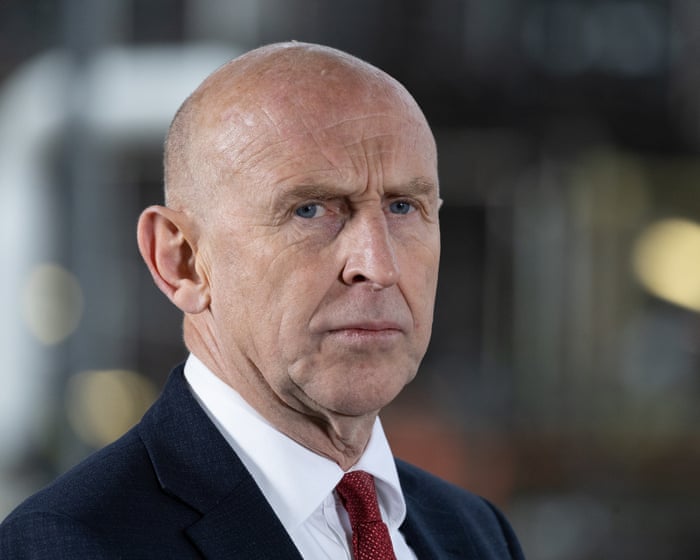
John Healey, the UK chancellor, plans to use the upcoming budget to invest heavily in artificial intelligence (AI) to improve Britain's security and economy. The budget includes funding for AI research, cybersecurity, and supporting British businesses while protecting jobs and national interests.
Key Facts
The budget will include hundreds of millions of pounds for a “distinctively British” AI strategy.
Investments will support the AI Security Institute and other important organizations.
New funding will go toward AI chip design in Edinburgh and an AI Centre of Excellence in Manchester.
The government plans to spend £10 million yearly to study how AI will change jobs and industries.
These moves aim to reduce the UK’s reliance on other countries for AI technology.
The budget arrives amid global economic challenges, including higher energy prices caused by the war in the Middle East.
AI investment has helped the UK have the strongest economic growth in the G7 group during the first half of the year.
Concerns exist about AI risks such as cyberattacks and job losses, prompting protective measures.
Read the Original
Want the full story? Tap a source to open the original
article.