European countries are facing a hard problem with Afghanistan. Even though they do not officially accept the Taliban government, they are talking with the Taliban more often about sending back migrants, diplomatic contacts, and economic help. This is happening because Europe needs to handle the situation practically despite political disagreements.
Key Facts
Europe does not officially recognize the Taliban government in Afghanistan.
European governments are increasing talks with the Taliban about migrant deportations.
These talks also cover diplomatic representation and economic assistance.
The growing conversations show a gap between official political positions and real-world needs.
The situation is made worse by the economic crisis in Afghanistan.
European governments prefer practical engagement to avoid problems linked to migrants and security.
This approach highlights tensions between political principles and urgent actions.
The investigation reporting this information was done by The New York Times.
Read the Original
Want the full story? Tap a source to open the original
article.
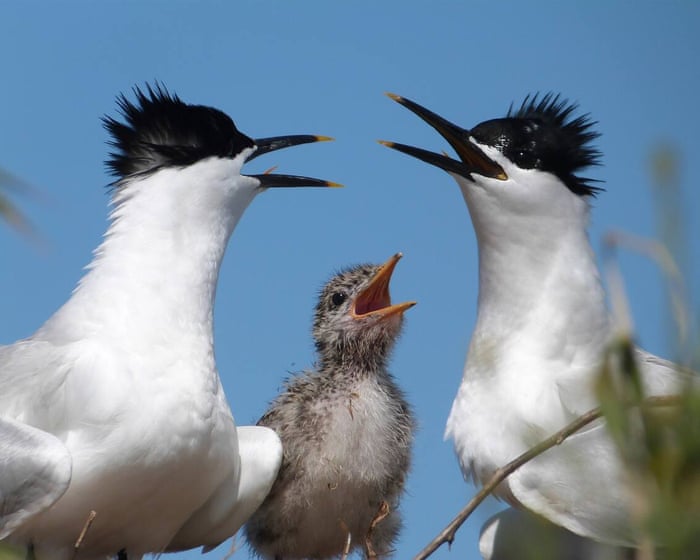
The number of seabirds in the Solent area of southern England has grown a lot after bird flu caused a big drop in 2022. Conservation groups worked to protect nests, reduce predators, and create safe spaces, helping species like sandwich terns and black-headed gulls recover.
Key Facts
Sandwich terns at Pagham harbour went from zero breeding pairs in 2022 to 756 pairs in 2026.
Other birds like little terns, ringed plovers, oystercatchers, and black-headed gulls also increased along the coast.
The sandwich terns produced 570 young birds this summer, one of the largest counts in the region.
Black-headed gull fledglings grew from 51 in 2025 to 504 in 2026.
Conservation actions included fencing to keep out predators like foxes, monitoring for rats, and removing some plants to make nesting space.
New safe islands in a lagoon helped avocets, with 18 pairs nesting there.
Volunteers educated visitors about protecting ground-nesting birds and provided dog-friendly areas away from nests.
Floating nesting rafts helped common terns and black-headed gulls breed safely in places like Medmerry and West Hayling.
Read the Original
Want the full story? Tap a source to open the original
article.
The World Food Programme (WFP) must cut food aid to Gaza because it does not have enough money. The number of people receiving help will drop from 1.6 million to 1.1 million, and fewer meals will be given out, just as winter is coming. Many families in Gaza already depend on this aid to survive.
Key Facts
WFP is reducing food aid to Gaza due to a lack of funding.
The number of people helped will go down by about one-third, from 1.6 million to 1.1 million.
Daily hot meals given by community kitchens will drop from 250,000 to 150,000.
Families in hard-to-reach areas will receive food every other day instead of daily.
Almost all 2.1 million people in Gaza are displaced, and two-thirds rely on food aid.
WFP needs $450 million to keep its critical operations running for the next six months.
Over 80% of people in Gaza are unemployed, making most unable to buy food from markets.
Restrictions on goods entering Gaza and cuts to cash assistance have made the situation worse.
Read the Original
Want the full story? Tap a source to open the original
article.
Russia said it carried out a large missile strike on Kyiv and nearby areas, targeting military and industrial sites. U.S. Senator Marco Rubio denied claims that the U.S. stopped sharing intelligence with Ukraine and urged Ukrainian President Volodymyr Zelensky to focus on ending the war.
Key Facts
The Russian Defense Ministry reported a "massive strike" on Kyiv and surrounding regions.
Targets included military-industrial facilities, missile and drone storage sites, and data centers.
U.S. Senator Marco Rubio said intelligence sharing with Ukraine has not paused.
Rubio emphasized that Ukraine should focus on ending the war with Russia.
Rubio made these comments while visiting Uzbekistan for talks with Central Asian leaders.
Kyiv officials had previously claimed intelligence sharing with the U.S. had paused, but Rubio denied this.
The conflict involves ongoing military attacks on the capital of Ukraine, Kyiv.
Read the Original
Want the full story? Tap a source to open the original
article.
In the upcoming Israeli election on October 27, the Arab parties Ra’am and the Joint List could be very important for forming the next government. These parties represent about 20% of Israel’s population and have the potential to decide which side can build a coalition in the 120-seat parliament called the Knesset.
Key Facts
Ra’am and the Joint List are political parties representing Palestinian citizens of Israel.
Together, these Arab-led parties may win 13 seats in the Knesset.
Palestinian citizens make up about 20% of Israel’s population.
In 2021, Ra’am made history by joining an Israeli government coalition for the first time.
Prime Minister Benjamin Netanyahu and his rivals have both ruled out officially working with these Arab parties for forming a government.
Polls show a close race between Netanyahu’s Likud party and the opposition, with no clear majority winner.
Netanyahu’s campaign warns that if he loses, Arab parties could become kingmakers for the next government.
The Arab parties have demanded steps toward Palestinian statehood and reducing crime within Palestinian communities as part of their conditions.
Read the Original
Want the full story? Tap a source to open the original
article.
China’s economy grew 4.5 percent in the third quarter of the year, which was better than experts expected. This growth was helped by strong exports, especially in technology products related to artificial intelligence.
Key Facts
China’s GDP grew 4.5 percent from July to September compared to the same period last year.
This growth beat many analysts’ predictions and was higher than the 4.3 percent growth in the previous quarter.
In the first nine months of the year, China’s economy grew 4.6 percent year-on-year.
Exports rose by more than 16 percent in the first three quarters, mainly from semiconductors and tech goods.
Domestic spending is slower; retail sales grew 1.1 percent in September and 2.6 percent for the year to date.
Industrial production increased by 5.5 percent in September and 5.3 percent in the first nine months.
Investment in properties, factories, and machinery went up 0.7 percent in September but fell 7.2 percent for the first nine months.
China aims for GDP growth between 4.5 and 5 percent in 2026, one of the slowest rates in many years aside from the pandemic period.
Read the Original
Want the full story? Tap a source to open the original
article.
A journalist shared how deleting Instagram helped her reduce stress and enjoy life more. She realized she took many photos and posts to seek approval online, but without Instagram, she focused on real experiences and personal happiness.
Key Facts
The author started using Instagram at 17 and gradually became more focused on it during university and work.
On a trip to Sri Lanka, she noticed her constant thoughts about what to post rather than just enjoying the moment.
After posting photos from the trip, she felt anxious about the number of likes and comments.
She deleted Instagram for one month, which grew into nearly a year without the app.
Without Instagram, she took photos for herself and enjoyed her experiences more privately.
She used the time away from the app to read more and work on writing novels.
The author found it freeing to live without seeking approval from online followers.
She feels more present in real life and less distracted by social media.
Read the Original
Want the full story? Tap a source to open the original
article.
Protests erupted across France over the weekend, leading to violence, fires, and arrests in several cities. President Emmanuel Macron condemned the unrest in a televised speech, while many peaceful demonstrations also took place during the weekend. The unrest has raised concerns about the stability of Macron's government.
Key Facts
Large protests occurred in France with both peaceful marches and violent riots.
Some rioters set fire to buildings, including the town hall in Limoges and Lyon’s tourism office.
Around 2,400 people were arrested across France, including 855 in Paris.
Many protesters were schoolchildren and parents participating peacefully.
Some groups vandalized property and looted shops.
President Macron publicly condemned the violence in a televised speech.
Protests also spread to nearby countries like Spain, Portugal, and Italy.
The French government appeared unprepared for the sudden escalation of violence.
Read the Original
Want the full story? Tap a source to open the original
article.
The Aberfan disaster happened on October 21, 1966, when a coal waste tip collapsed and buried a school and homes in the Welsh village of Aberfan, killing 144 people, including 116 children. Years later, portraits of the lost children were created from photos and family memories to help those families remember and grieve their loved ones. A BBC program shares these stories and shows the deep impact the disaster continues to have on the community.
Key Facts
On October 21, 1966, a coal tip collapsed on Pantglas Junior School and nearby homes in Aberfan, Wales.
144 people died in the disaster, including 116 children from the school.
Portraits of the lost children were made years later from old photos and letters from grieving parents.
Families use these portraits as a way to remember and honor the children who died.
One family member described how the disaster caused lifelong trauma and sadness at home.
The disaster is still deeply felt in Aberfan, especially at the memorial garden and cemetery.
A new BBC program, Unseen: The Aberfan Portraits, tells the stories behind these paintings and their importance.
Survivors and relatives have shared memories about the children and the day of the disaster.
Read the Original
Want the full story? Tap a source to open the original
article.
Students in France have started protests over problems like missing teachers and poor school resources. The protests have grown into a wider movement demanding big, long-term changes in the public education system to fix deep inequalities.
Key Facts
The protests began at a high school in Créteil due to missing teachers and lacking resources.
The movement quickly spread across France to highlight broader education problems.
Students want structural, or deep, changes rather than short-term fixes.
Issues include poor school facilities and unequal access to education.
Young people show increased political awareness through this movement.
Social media helped spread the protests fast.
The protests show concern about the outlook for young people’s futures in France.
These student protests are part of ongoing social and political discussions in the country.
Read the Original
Want the full story? Tap a source to open the original
article.
French President Emmanuel Macron rejected the resignation of Interior Minister Laurent Nunez after violent protests across France led to thousands of arrests. The unrest involved fires, looting, and clashes, with politicians blaming each other ahead of the 2027 presidential elections.
Key Facts
At least 2,400 people were arrested after protests that included fires and looting in several French cities.
The protests were partly against rising living costs and poor school conditions.
Interior Minister Laurent Nunez offered to resign but President Macron refused to accept it.
Macron criticized security failures and called for new policing methods.
The protests followed calls from labor unions, student groups, and activists linked to the “yellow vest” movement.
Far-right leader Marine Le Pen and far-left leader Jean-Luc Mélenchon blamed each other’s sides for the violence.
Macron condemned the violent acts and promised to hold those responsible accountable.
Authorities planned to work with local officials to protect public buildings and may ban protests if needed.
Read the Original
Want the full story? Tap a source to open the original
article.
French Prime Minister Sébastien Lecornu has asked local leaders to set partial curfews in cities affected by riots and looting after two days of unrest. The disturbances have involved burned town halls and looted businesses, with police struggling to control some protests, while calls for more demonstrations continue.
Key Facts
France has experienced riots and looting for two days, including attacks on town halls and hundreds of businesses.
Prime Minister Lecornu suggested partial curfews in some cities to restore order.
Interior Minister Laurent Nunez admitted that police lost control in several places.
Paris Mayor Emmanuel Grégoire called for a political solution and urged talks with student and worker groups.
Far-left politician Jean-Luc Mélenchon challenged claims that the far left plans to disrupt the upcoming election, asking for proof.
Protests over the cost of living have spread to other European countries like Italy, Spain, and Portugal.
In Milan and Madrid, demonstrations turned violent or included large tent occupations demanding government action.
China advised its citizens traveling to France to take extra safety precautions amid the unrest.
Read the Original
Want the full story? Tap a source to open the original
article.
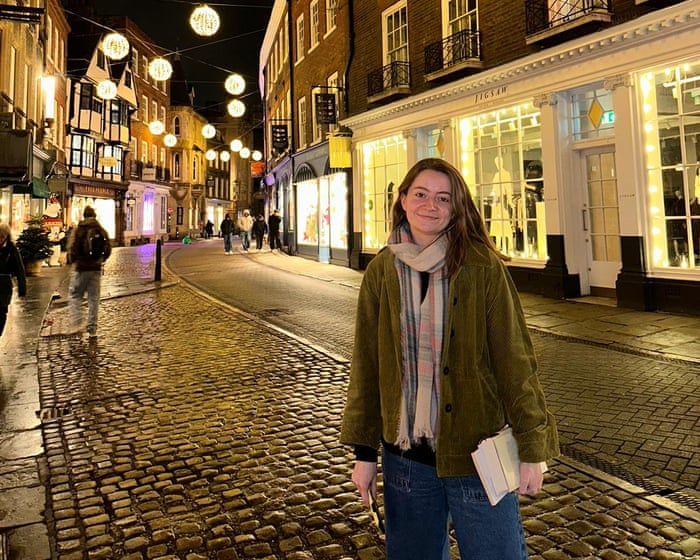
Amy Burns says foster care gave her stability after she entered care at 14 and helped her attend university and build a media career. The UK government has launched a campaign to recruit 10,000 more foster care places as the number of carers falls and demand for placements rises.
Key Facts
Burns, now 26 and from Bristol, entered foster care after a difficult family situation.
She said her foster parents’ support changed the course of her life.
The number of foster carers has fallen by 12% since 2021, while the number of children needing care has risen.
The number of children in care in Bristol and Somerset has increased by 35% over the past seven years.
The government campaign aims to recruit 10,000 more foster care places and attract people from a wider range of backgrounds.
The initiative includes £88 million in new funding and efforts to make fostering guidelines clearer.
The South West Fostering Hub helps councils work together to recruit and support foster carers.
A residential care placement can cost £318,000 a year, according to Wiltshire Council cabinet member Jon Hubbard.
Read the Original
Want the full story? Tap a source to open the original
article.
President Donald Trump has officially supported Israel’s Prime Minister Benjamin Netanyahu in the upcoming Israeli election. This endorsement shows U.S. support for Netanyahu’s campaign.
Key Facts
President Donald Trump endorsed Benjamin Netanyahu for re-election as Israel’s Prime Minister.
The endorsement was made publicly from Washington, DC.
Netanyahu is running in an upcoming Israeli election.
This is an official U.S. statement of support for Netanyahu.
The news was reported by Al Jazeera’s Patty Culhane.
The endorsement highlights the relationship between the U.S. and Israel.
The Israeli election will determine who leads the country’s government.
Read the Original
Want the full story? Tap a source to open the original
article.
Charities in Hampshire, UK, report increasing demand for furniture help due to many people living without basic household items like beds and fridges. A national charity and some MPs want the government to create a plan to address "furniture poverty," which means not having essential furniture and appliances for a normal home.
Key Facts
About six million people in the UK lack essential furniture and appliances.
Most social housing in the UK is rented out empty, without furniture.
The charity Scratch has been helping people for 27 years and now has more requests than ever.
People may need furniture help after crises like domestic violence, fleeing relationships, or financial hardship.
Scratch operates through referrals from councils and social workers and sells furniture packs at low prices.
End Furniture Poverty defines furniture poverty as not being able to afford or access basic household furniture and appliances.
Over 25% of social housing tenants live in furniture poverty, but less than 3% of social housing is furnished.
Furniture poverty can harm physical and mental health, including poor sleep and inability to store food properly.
Read the Original
Want the full story? Tap a source to open the original
article.
A 15-year-old boy named Ethan in Nottinghamshire saved a man’s life by performing CPR after finding him collapsed on the street. Ethan had learned CPR through a course and bought training manikins to teach others, and he applied his knowledge during the emergency.
Key Facts
Ethan is a 15-year-old student from Mansfield Woodhouse, Nottinghamshire.
He completed a CPR course with the East Midlands Ambulance Service last year.
Ethan bought three resuscitation manikins to teach life-saving skills to others.
He found a 75-year-old man collapsed and unresponsive on Ley Lane.
Ethan performed CPR with help from bystanders until paramedics arrived.
The man showed a shockable heart rhythm and is now recovering.
The man’s family thanked Ethan for his bravery and life-saving actions.
Ethan aims to become a paramedic and encourages young people to learn CPR.
Read the Original
Want the full story? Tap a source to open the original
article.
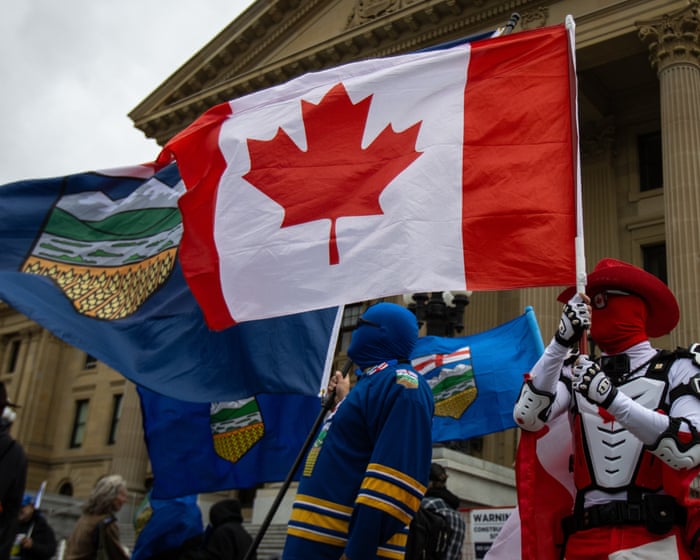
Albertans are voting in a referendum to decide if the province should stay in Canada or hold a second vote on independence. The referendum has highlighted deep disagreements in Alberta, including within the group that wants the province to separate, especially about the financial and practical costs.
Key Facts
The referendum asks whether Alberta should remain part of Canada or hold another vote on independence.
Some Albertans want separation because they feel the province is not getting a fair financial deal from the federal government and want full control over their fossil fuel resources.
A deadly fire at a military base in Alberta weighed on public mood during the referendum period.
Alberta Premier Danielle Smith held the referendum after pressure from her party but did not support independence, citing high costs estimated at about C$400 billion to separate.
Opponents highlight studies that estimate the cost of independence at up to C$170 billion in five years and warn of long-term economic uncertainty.
Former Alberta premiers from opposite political sides appeared together to support remaining in Canada.
Mark Carney, a popular Alberta-born politician and former Bank of England governor, campaigned for unity, warning against the risks of separation.
Energy policy and control over natural resources have been central to Alberta’s disputes with Canada since at least 1980.
Read the Original
Want the full story? Tap a source to open the original
article.
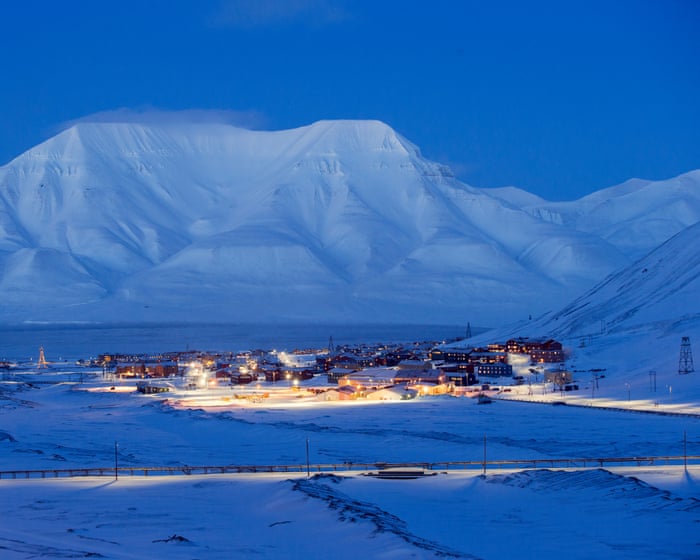
A town in Norway called Longyearbyen has stopped people from drinking tap water because it contains dangerous levels of heavy metals. Scientists say this happened because warming temperatures melted frozen ground, releasing metals from the rocks into the town’s main water supply.
Key Facts
Longyearbyen is in Svalbard, about 800 miles from the North Pole, and is warming much faster than most places on Earth.
The town gets its drinking water from a lake called Isdammen.
Thawing permafrost (frozen ground) exposed rock containing minerals like pyrite, which cause acid to form and release metals into the water.
Manganese levels in the water were found to be 25 times higher than safe limits last year.
High manganese can cause brain and nervous system problems, especially in children.
The local government gave residents purified water from a filtered tank at a supermarket.
Other metals like sulphate and nickel have also been found above safe levels, so the tap water ban continues.
Officials are considering costly options like new water pipes, filtration systems, or desalination plants, but cold temperatures make solutions difficult.
Read the Original
Want the full story? Tap a source to open the original
article.
Scientists, politicians, and activists have called on UK leaders to investigate how air pollution affects poorer and minority communities more than others. Research shows that air pollution is linked to serious health problems, with children being especially vulnerable. Some cities still have illegal pollution levels, leading to many hospital visits for breathing problems.
Key Facts
Lower-income areas in England have higher air pollution than richer areas.
Minority-ethnic groups experience about 6% more pollution than white groups.
Air pollution causes diseases like heart problems, strokes, cancer, asthma, and affects children's lung growth.
London’s low emission zone has helped improve air quality and children’s lung health.
In 2025, parts of London, Glasgow, and Bristol still had illegal pollution levels.
Over 200,000 children in 11 English cities were hospitalized for breathing issues in 2025.
Children are more affected because their lungs are still growing and they breathe more air per body weight.
In Manchester, hospital admissions for young children with lung problems rose from 653 in 2023 to 1,072 in 2025.
Read the Original
Want the full story? Tap a source to open the original
article.