President Donald Trump used his authority to block several new sanctions against Russia that Congress recently passed to punish Russia for its war in Ukraine. Although Trump signed the sanctions bill into law in September, he issued an order to withhold some sanctions, saying it is in the U.S. national interest.
Key Facts
President Trump blocked some sanctions on Russia that Congress approved to respond to the war in Ukraine.
The sanctions law, named after Senator Lindsey Graham, targets Russia’s economy, government officials, banks, and oil shipments.
The law allows tariffs up to 100% on the top buyers of Russian oil and gas, including China and India.
Trump signed the sanctions bill in September, but delayed full implementation by issuing an executive order.
Trump plans to import Russian diesel to lower U.S. energy prices before the November midterm elections.
The move to import diesel from Russia surprised and upset many U.S. lawmakers and allies.
Some U.S. lawmakers urged Trump to fully enforce the sanctions law to pressure Russia to negotiate peace.
Ukrainian President Zelensky criticized the diesel deal, saying it helps Russia continue the war.
Read the Original
Want the full story? Tap a source to open the original
article.
President Donald Trump signed an executive order to delay sanctions against Russia that were scheduled to start soon. These sanctions were part of a new law named after the late Senator Lindsay Graham, designed to pressure Russia.
Key Facts
President Trump signed an executive order on a Friday evening.
The order delays sanctions against Russia.
The sanctions were set to begin shortly under a new law.
The law was passed and signed by President Trump last month.
The legislation was dedicated to Senator Lindsay Graham, who recently passed away.
The sanctions aim to increase pressure on Russia’s government.
This action pauses the sanctions before they officially take effect.
Read the Original
Want the full story? Tap a source to open the original
article.
President Donald Trump signed a new executive order to impose large tariffs and sanctions on Russia but immediately waived them. This decision follows a recent deal with Russia to increase diesel fuel supplies to the U.S. and global markets. The waivers will stay in place until Trump or his administration decide otherwise.
Key Facts
President Trump signed an executive order implementing new sanctions and tariffs on Russia, including up to a 500% tariff on Russian goods.
He immediately waived these sanctions and tariffs, citing national interest and notifying Congress.
The sanctions were part of the Lindsey O. Graham Sanctioning Russia and Iran Act of 2026, which expands U.S. powers to target Russian energy trade.
The order sets potential 100% tariffs on countries buying Russian oil or gas and on countries that help Russia evade these sanctions.
The waiver can be lifted by President Trump or his administration officials, depending on circumstances.
The executive order does not cancel any previous Russian sanctions already in place.
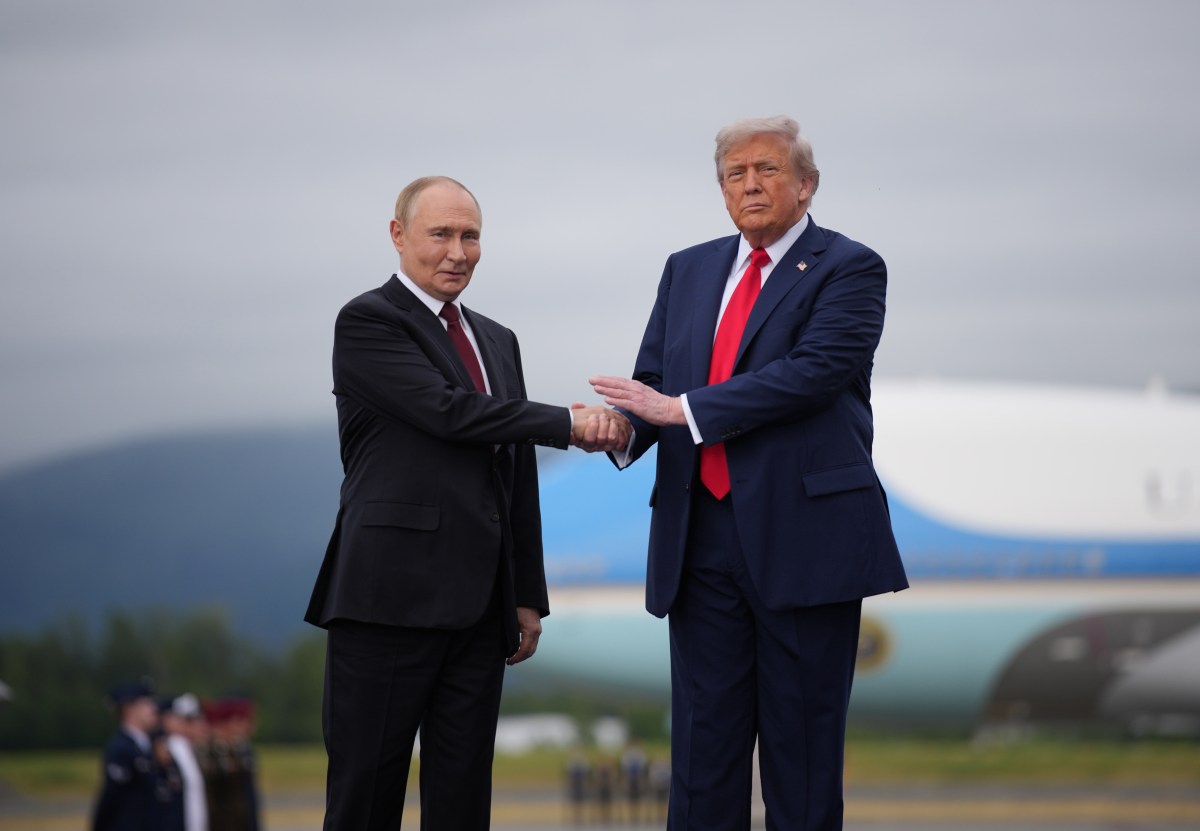
The move comes one week after an agreement between Trump and Russian President Vladimir Putin to increase Russian diesel supplies to the market.
The diesel deal aims to help lower fuel costs in the U.S. and globally.
Read the Original
Want the full story? Tap a source to open the original
article.
President Trump used his power to stop new sanctions and high tariffs on major buyers of Russian oil from starting. He said this will help lower energy prices and kept the waivers in place while his administration watches countries buying Russian energy.
Key Facts
President Trump waived tariffs of 100% on the five largest importers of Russian crude oil and gas, set by the Lindsey O. Graham Sanctioning Russia Act.
The law lets the president pause sanctions if it serves U.S. national interests, which Trump decided to do.
Trump also lifted 500% tariffs on other Russian goods and stopped some other sanctions.
The law targets countries like China, India, and Turkey that buy a lot of Russian energy.
This waiver came a week after Trump eased sanctions on Russian diesel and agreed with Putin to import diesel to the U.S.
The U.S. has pressured countries to avoid Russian energy to block funding Russia's war in Ukraine, but Trump has focused on lowering U.S. energy costs instead.
Ukrainian President Zelenskyy agreed to an "energy ceasefire" but later resumed attacks on Russian energy sites after Russia continued strikes.
Many U.S. senators opposed Trump’s decision, calling it a betrayal of Ukraine and urging stronger sanctions on Russia.
Read the Original
Want the full story? Tap a source to open the original
article.
The United States ended the 2026 fiscal year with a budget deficit of nearly $2 trillion, which is about 12 percent higher than the year before and one of the largest in history. President Donald Trump's plan to raise money through tariffs has not offset the rising government spending and deficits.
Key Facts
The 2026 budget deficit was $1.992 trillion, up 12% from the $1.775 trillion deficit in 2025.
This deficit is the third highest in U.S. history, only behind 2020 and 2021 during the pandemic.
Federal income (taxes and fees) rose 3% to $5.40 trillion, but spending increased 6% to $7.40 trillion.
Tariff revenue dropped 11% to about $173 billion, partly due to a Supreme Court ruling requiring refunds of $145 billion.
The Congressional Budget Office expects deficits to grow by $900 billion over 10 years because of changes to tariff policies.
U.S. debt surpassed $40 trillion, with interest payments reaching $1.36 trillion—12% more than last year.
Spending on Social Security, Medicare, and defense increased, with defense at $917 billion.
Treasury Secretary Scott Bessent believes stronger economic growth can help reduce debt problems.
Read the Original
Want the full story? Tap a source to open the original
article.
Brazil's government announced a record drop in deforestation in the Amazon and savanna regions. This comes ahead of a presidential run-off election where the future of the rainforest is a major topic.
Key Facts
Deforestation in the Amazon fell by 41.8% in the year up to July 2026, the biggest drop since 1988.
In the Cerrado savanna, deforestation dropped by 23.8% in the same period.
Left-wing President Luiz Inácio Lula da Silva promised to end illegal deforestation by 2030.
Lula reversed policies of his predecessor, Jair Bolsonaro, who allowed more forest clearing.
Bolsonaro’s government saw nearly 60% more forest loss in the Amazon compared to the previous four years.
Lula strengthened environmental monitoring and increased penalties for illegal logging.
The Amazon rainforest covers 60% of Brazil and helps reduce global climate change by absorbing carbon dioxide.
The presidential run-off will be between Lula and Bolsonaro’s son, Flavio, who supports his father’s policies.
Read the Original
Want the full story? Tap a source to open the original
article.
Katie Zacharia spoke publicly for the first time after leaving her job as White House press secretary just five days after starting. She said it was an honor to work for President Trump and thanked him for his leadership.
Key Facts
Katie Zacharia was White House press secretary for only five days.
She announced her departure through a White House official.
Zacharia posted on the social media platform X to share her thoughts.
She praised President Donald Trump’s leadership in her statement.
Zacharia said it was an honor to work for President Trump.
The announcement came on a Friday night.
Her short tenure is notable because press secretaries usually serve longer.
No specific reason for her departure was given in the statement.
Read the Original
Want the full story? Tap a source to open the original
article.
Global economic leaders gathered at the IMF meetings in Bangkok to discuss challenges like higher interest rates, trade conflicts, and the impact of war. They also talked about the positive effects of increased AI investment and strong growth in smaller economies like the UK and Thailand, which is benefiting from Chinese electric vehicle sales.
Key Facts
Interest rates are rising sharply in wealthy countries, making borrowing more expensive.
Problems such as energy shocks, trade conflicts, and war are slowing economic growth.
Spending on artificial intelligence (AI) is helping boost the economy, especially in smaller countries.
The UK’s economy is growing better than expected, partly due to AI and technology investments.
France’s finance minister said France can still sell debt, even if it costs more, and helped keep the G7 group united.
Thailand is seeing a big increase in sales of Chinese electric cars, showing China’s growing influence in manufacturing.
The European Union is planning new rules to protect products made in Europe, which may affect UK trade and tariffs.
Experts are uncertain about the future direction of the global economy due to these mixed forces.
Read the Original
Want the full story? Tap a source to open the original
article.
Actress Selma Blair was accused of assaulting two flight attendants, a nurse, and an officer on a Delta Airlines flight from Los Angeles to New York. Blair says she had a medical emergency during the flight related to her neurological condition multiple sclerosis (MS) and denies intending to harm anyone.
Key Facts
Selma Blair, 54, has multiple sclerosis (MS), a disease that affects the nervous system.
She experienced a medical episode on the flight, which her team says influenced her behavior.
Blair was charged with assaulting two flight attendants, a nurse, and a police officer after being removed from the plane.
She pleaded not guilty to all charges and was released on bail.
A pilot reported a "bloody nose" and "bite marks" during the incident.
Blair’s team denies reports that she tried to open the plane door and says media coverage is incomplete.
Blair also has pseudobulbar affect, a condition causing sudden uncontrollable emotional outbursts.
The New York Port Authority confirmed two flight attendants were injured, and one was hospitalized.
Read the Original
Want the full story? Tap a source to open the original
article.
The UK has not experienced any named storms this autumn so far because strong winds and storms have been guided away by stable high-pressure areas. However, weather experts warn that this calm period may change soon, with increased chances of rain and wind linked to a climate pattern called El Niño.
Key Facts
The UK usually gets named storms when weather systems have strong winds or heavy rain, which helps people prepare.
This year, high-pressure areas have kept stormy weather away from the UK.
The jet stream, a fast wind high in the atmosphere that guides storms, has been located north-west of the UK.
Southern parts of England have had very little rain, causing drought and low water levels in reservoirs.
The UK's Met Office predicts wetter and windier weather as autumn and winter go on because El Niño is growing stronger.
Storm naming in the UK, Ireland, and the Netherlands started in 2015 to increase public awareness.
Storms are most frequent in the winter months of December, January, and February.
Forecasters say there could be widespread disruptive weather later this season.
Read the Original
Want the full story? Tap a source to open the original
article.
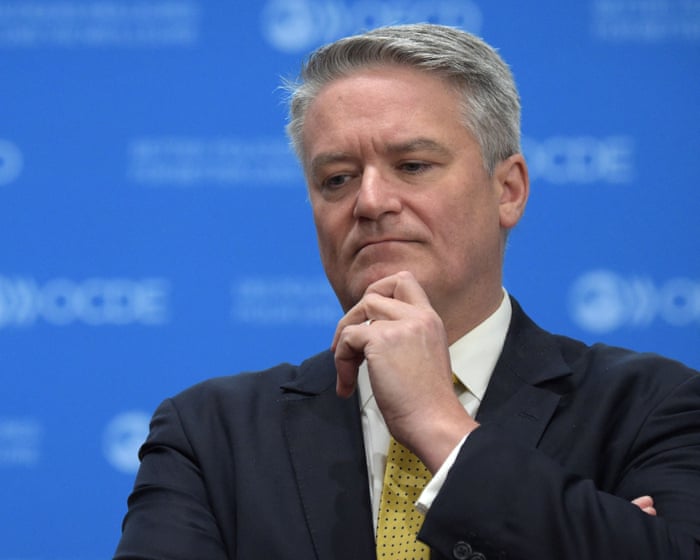
Mathias Cormann, secretary general of the OECD and former Australian finance minister, warns against adopting populist policies like migration caps to fix the cost of living. He says the long-term solution is to boost productivity, which means producing more goods and services to lower costs and improve wages.
Key Facts
Populist policies such as migration caps are rising in popularity in Australia, partly due to concerns over housing and living costs.
Cormann advises against copying populist economic ideas because this can make mainstream parties lose voters to both populists and centrists.
He recommends focusing on increasing housing supply, improving infrastructure, and managing migration types rather than reducing overall migration.
OECD research shows that more migrants arriving in an area corresponds with higher employment growth for Australian-born workers and no wage loss.
Without migration, Australia’s working-age population would shrink as its population ages, creating challenges for health and care spending.
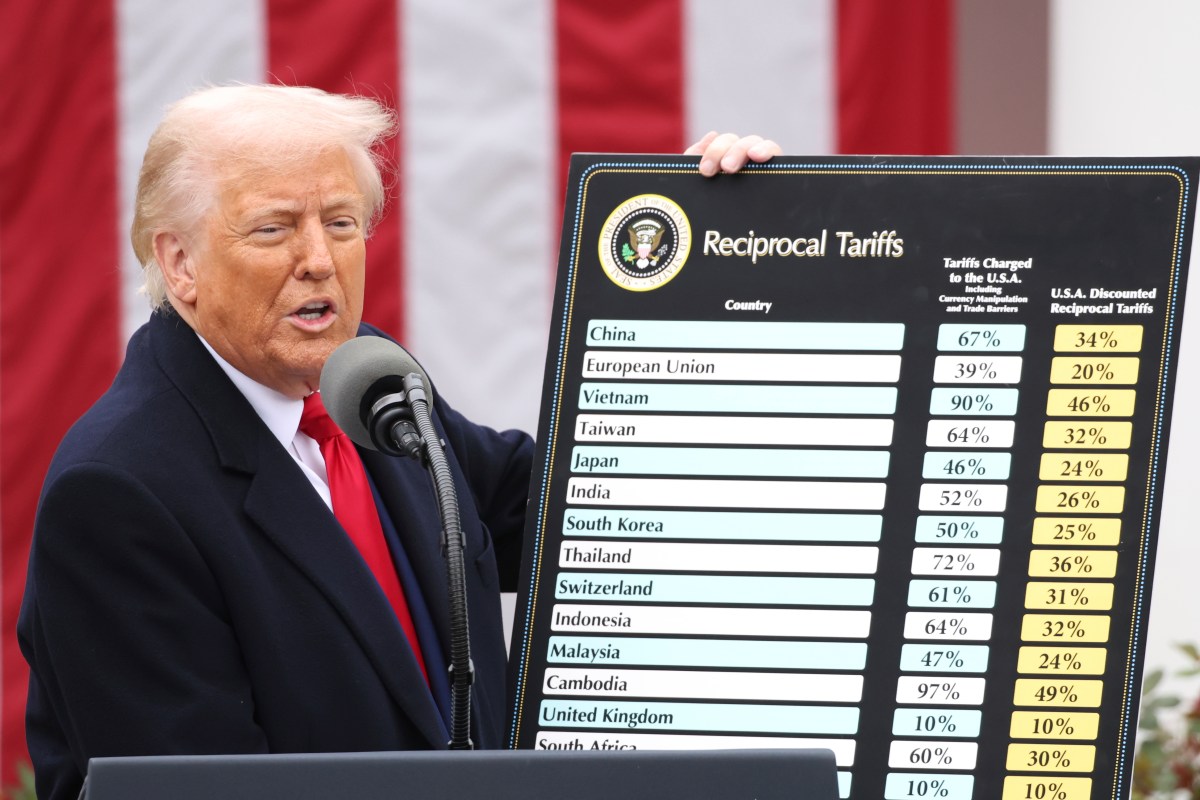
Tariffs proposed by President Donald Trump and some Australian parties could raise costs for key industries and would not solve the cost of living issue.
Cormann believes productivity growth is the only reliable way to lower living costs and increase real wages over time.
He warns that quick fixes like tariffs, migration caps, or state banks will not work and may harm the economy.
Read the Original
Want the full story? Tap a source to open the original
article.
Matt Quinn, the deputy director of the U.S. Secret Service, announced he is stepping down after about 18 months in the role. He has been working with the Secret Service Director Sean Curran on a plan for a smooth transition.
Key Facts
Matt Quinn served as deputy director of the U.S. Secret Service for about a year and a half.
He announced his decision to step down on Friday.
Quinn shared his news on the social platform X.
He has been coordinating with Director Sean Curran about the transition for several months.
The Secret Service is responsible for protecting the president and other important officials.
Sean Curran is the current director of the U.S. Secret Service.
Read the Original
Want the full story? Tap a source to open the original
article.
Federal agents have used a covert method called "dumpster diving" to collect DNA from people when they could not get search warrants. This involves searching through a person’s trash to find genetic material.
Key Facts
Investigators searched people’s trash to collect DNA.
This method is called "dumpster diving."
They used this approach when they did not have permission from a court (a search warrant).
The DNA was intended to help with investigations.
This practice is secret and not widely known.
It was part of efforts around important searches or raids.
The use of DNA helps law enforcement identify or confirm suspects.
The article focuses on the activities of federal agents.
Read the Original
Want the full story? Tap a source to open the original
article.
Fighting between Yemen’s Houthi forces and the internationally recognized government has worsened the humanitarian situation in the city of Taiz. The conflict is blocking important supplies like food, fuel, and medicine, making life harder for people living there.
Key Facts
Taiz is a key battleground in Yemen’s ongoing war.
The conflict is between the Houthi group and Yemen’s internationally recognized government.
Fighting has cut off access to essential supplies such as food, fuel, and medicine.
The lack of supplies is causing a growing humanitarian crisis.
The war in Yemen has displaced thousands and created widespread suffering.
Taiz’s situation highlights the challenges civilians face in war zones.
International aid efforts are hindered by the ongoing fighting.
The conflict in Yemen remains unresolved with serious impacts on its people.
Read the Original
Want the full story? Tap a source to open the original
article.
A fast-moving wildfire called the Norte Fire has burned six homes and forced evacuations in southern Los Angeles and Orange County, California. Strong Santa Ana winds and dry conditions are making the fires worse, with several other fires burning across the state and hundreds of firefighters working to control them.
Key Facts
The Norte Fire started on Friday in Orange County and grew to 465 acres by the evening.
Six homes have been damaged or destroyed, and one firefighter suffered heat exhaustion.
Santa Ana winds reaching over 40 mph are expected to continue until Saturday, increasing fire risks.
A red flag warning is in place for several California counties because of wind, low humidity, and dry plants.
13 wildfires are active across California, including the Bryson Fire in Malibu and the Henderson Fire in San Diego County.
The Bryson Fire has grown to 147 acres and has over 400 firefighters working on it.
The Henderson Fire has grown to more than 2,000 acres and forced temporary closures of the I-5 highway.
Temperatures are unusually high for the season, reaching up to 95°F (35°C), raising heat-related illness concerns.
Read the Original
Want the full story? Tap a source to open the original
article.
The latest episode of The Celebrity Traitors featured a slow, suspenseful game where traitors tried to make others bored enough to yawn, which could mean elimination. A new player, King Kenny, brought energy to the traitor group, while Joe Lycett was voted out by most of the contestants.
Key Facts
The Celebrity Traitors is a game show where celebrities try to identify traitors among them.
In this episode, the traitors tried to fake tiredness to make others yawn and face elimination.
A new traitor, King Kenny, joined the group and showed enthusiasm for the role.
Joe Lycett wanted to become a traitor but was considered too obvious as a suspect.
Joe Lycett was voted out by 11 of the 14 contestants and left the castle.
Contestants often watch for suspicious behavior to find traitors.
The episode ended with a cliffhanger about who would "die" by yawning next.
The show airs new episodes every Thursday and Friday on iPlayer.
Read the Original
Want the full story? Tap a source to open the original
article.
The US Coast Guard rescued 16 people after their boat sank off the coast of Baja, Mexico. Rescue efforts continue to find 11 others who are still missing.
Key Facts
The boat sank about 225 km (140 miles) west of Ensenada, Mexico.
A Mayday call was sent around 1 a.m. (08:00 GMT) on Friday.
A rescue helicopter arrived about two hours after the call.
Coast Guard crew pulled 16 people from the water in about 90 minutes.
The rescued individuals were Mexican nationals; one had a possible shark bite and two were in critical condition.
Survivors were flown to San Diego, California, for hospital treatment.
The Coast Guard and US Navy continue searching for 11 missing people using helicopters, a plane, a cutter ship, and a navy combat ship.
The area is known both for fishing and for smuggling migrants to the US; the boat’s purpose is unknown.
Read the Original
Want the full story? Tap a source to open the original
article.
Canada's Marineland closed in 2024 and moved its 30 beluga whales and four dolphins to various aquariums around the world after the government stopped a sale to China due to animal welfare concerns. Despite the rescue effort, several whales and dolphins have died in their new homes, raising questions about their health and future.
Key Facts
Marineland, a Canadian sea park near Niagara Falls, closed in 2024.
The Canadian government stopped a plan to sell the belugas to China over animal welfare concerns.
30 belugas and 4 dolphins were moved to aquariums in the US and Spain, including SeaWorld San Antonio and Oceanogràfic València.
Five belugas and one dolphin have died since the transfer.
Some whales had health problems like chronic liver and digestive diseases, and had swallowed foreign objects before the move.
Canada banned keeping and breeding whales in captivity seven years ago.
Public opinion in Canada and other countries has shifted against keeping whales in captivity.
There are about 3,600 captive cetaceans worldwide, but few safe options for whales that cannot live in the wild.
Read the Original
Want the full story? Tap a source to open the original
article.
A man named Kaylub Giamanco fatally shot a teenage gunman during a shooting at Silver Rail Elementary School in Oregon that killed three children and a teacher. Giamanco, who has children at the school, acted quickly to stop the shooter and is now dealing with the emotional impact of the event.
Key Facts
The shooting happened at Silver Rail Elementary School in Bend, Oregon.
Three children and one teacher were killed in the attack.
The shooter was a 16-year-old boy named Griffin J. John II.
Kaylub Giamanco, a 36-year-old contractor and father, stopped the shooter by shooting him dead.
Giamanco was on a lunch break and saw the shooter on campus, then followed him into the school.
The shooter fired up to 15 rounds using a shotgun bought by his mother.
Two others, one child and one teacher, were wounded and hospitalized.
Giamanco legally owns and carries a firearm and grew up familiar with guns.
Giamanco feels traumatized because he could not save everyone during the shooting.
Read the Original
Want the full story? Tap a source to open the original
article.
A new tour in Philadelphia called Philly Pigeon Tours takes visitors to places where pigeons gather and teaches them interesting facts about these birds. The tour was started by Hannah Michelle Brower and Aspen Simone, who want people to pay more attention to pigeons and learn about them in a fun way.
Key Facts
Philly Pigeon Tours is a 90-minute walking tour around neighborhoods with many pigeons.
The tour is the third most popular in Philadelphia on TripAdvisor.
It explains pigeon behavior, such as why pigeons face the wind to keep their feathers smooth.
Hannah Michelle Brower started the tour after nursing a sick pigeon back to health.
The pigeon they cared for is named Primrose and lives with them as a pet.
The tour aims to help people notice and appreciate everyday animals like pigeons.
The tour encourages curiosity about things people usually ignore.
Read the Original
Want the full story? Tap a source to open the original
article.