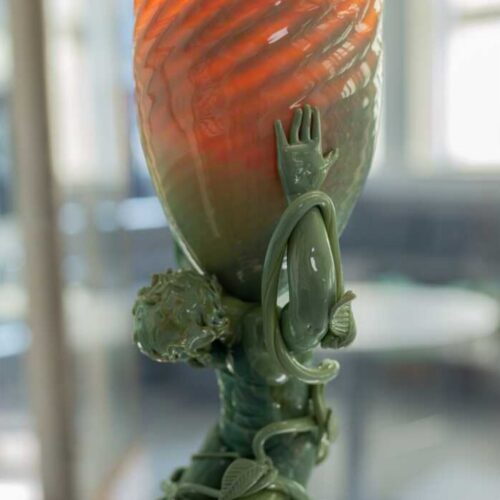
Sculpture recreates odd optical effects of famed Lycurgus Cup
Summary
University of Sheffield scientists recreated the Lycurgus Cup’s green-to-red color shift in a modern glass sculpture. The effect comes from gold and silver nanoparticles embedded in the glass, which change how it interacts with light.Key Facts
- The Lycurgus Cup dates to around 400 CE and depicts King Lycurgus of Thrace.
- The cup looks green in reflected light and deep red when light passes through it from behind.
- Scientists identified nanoparticles in the glass as the source of its color shifts in 2007.
- Roman artisans produced the nanoparticles by adding materials containing gold and silver to the glass mixture.
- University of Sheffield researchers Lisa Hollands and Caroline Jackson developed a repeatable method for recreating the effect.
- The researchers tested different furnaces, ingredients, and oxygen levels while developing their method.
- Dutch researchers had reproduced the color effect in a 3D-printable nanocomposite in 2020, but had not established a consistent glassmaking recipe.
Read the Full Article
This is a fact-based summary from The Actual News. Click below to read the complete story directly from the original source.