The U.S. Department of Agriculture (USDA) has started a new program to help cattle ranchers. The program focuses on rebuilding cattle herds, recovering from hard times like natural disasters, and creating more market chances for ranchers.
Key Facts
The USDA launched an initiative to support U.S. cattle ranchers.
The program helps ranchers rebuild their cattle herds.
It supports recovery after disasters that affect livestock.
The initiative aims to create more chances for ranchers to sell their cattle.
The program is designed to strengthen the cattle industry in the U.S.
Read the Original
Want the full story? Tap a source to open the original
article.
Hospitality businesses in Northern Ireland want a cut in the value-added tax (VAT) to compete with lower VAT rates in the Republic of Ireland. Industry leaders say a VAT cut would help businesses survive but may not directly lower prices for customers. The UK government has refused the request, saying it would cost too much.
Key Facts
Hospitality VAT in Northern Ireland and the rest of the UK is 20%, while in the Republic of Ireland it is 9% on food and 13.5% on accommodation.
Northern Ireland businesses face higher costs due to wage increases, taxes, and supply chain issues.
Hospitality leaders say a VAT cut would help them offer better prices to tour operators and keep business from declining.
The Republic of Ireland has changed VAT rates several times since 2011 to support tourism and the hospitality industry.
The latest Irish VAT cut on food service is estimated to cost around €680 million per year.
The UK government argues a VAT cut is expensive and may not help customers with lower prices.
An economic expert suggested a trial VAT cut in Northern Ireland to see if it encourages investment, estimating an initial cost of £225-250 million per year.
Read the Original
Want the full story? Tap a source to open the original
article.
Chevron announced a deal to grow its oil production in Venezuela by getting more land in the Orinoco Belt. The company plans to invest over $7 billion in the next five years and increase oil output in the region.
Key Facts
Chevron secured additional acreage in Venezuela’s Orinoco Belt oil region.
The Orinoco Belt is an important oil-producing area where Chevron already operates.
Chevron plans to invest more than $7 billion over the next five years.
The goal is to increase oil production to a higher level (exact target not specified).
This expansion is part of a joint venture arrangement.
Chevron’s move marks a significant investment in Venezuela’s oil industry.
The announcement was made early on a Wednesday.
Read the Original
Want the full story? Tap a source to open the original
article.
Chevron plans to invest $7 billion in Venezuela over five years to double its oil production. This comes after President Donald Trump announced a deal with Venezuela to create a joint venture to operate large oil fields in the country.
Key Facts
Chevron is the only U.S. oil company operating in Venezuela.
The company aims to raise oil production to about 600,000 barrels per day, double its current output.
Chevron will develop new areas called Carabobo 1 and Carabobo-2-South in the Orinoco Belt, a region rich in oil.
The investment follows a deal announced by President Trump on August 28 to create a private joint venture with Venezuela.
Producing oil in Venezuela currently costs Chevron approximately $20 per barrel.
The Orinoco Belt contains about 65 billion barrels of petroleum, a key resource in the deal.
Chevron’s CEO stated the investment offers low-cost growth potential and long-term value.
Read the Original
Want the full story? Tap a source to open the original
article.
The US government announced a deal with Venezuela to control part of its large oil reserves and increase oil production for the US market. However, experts say this deal will not reduce fuel prices in the US soon, as the oil is costly to extract and global prices have actually risen since the announcement.
Key Facts
Venezuela has about 303 billion barrels of proven oil reserves, the largest in the world.
The US is partnering with North American Blue Energy Partners (NABEP), owned by Venezuelan businessman Alejandro Betancourt, to access these oil reserves.
The Pentagon’s Office of Strategic Capital will own 35% of NABEP, which can produce about 200,000 barrels of oil per day.
The US is guaranteed the right to buy 20% of the oil output at cost.
Venezuelan interim leader Delcy Rodriguez supports the deal, which helps Venezuela’s government get funds.
Since January 2024, the US has imported around 500,000 barrels of Venezuelan oil daily, about 40% of Venezuela’s oil output.
Despite the deal, US oil prices rose from about $83-$86 per barrel to above $90 after the announcement.
Venezuela’s oil is heavy and sour crude, which is more expensive to process than lighter oils.
Read the Original
Want the full story? Tap a source to open the original
article.
The UK government is paying more to borrow money because investors expect inflation to stay high. This rise in borrowing costs might mean the government has less money to spend on services or may need to raise taxes.
Key Facts
UK government borrowing costs are rising, with some bond yields at their highest since 1998.
Bonds (gilts) are like government IOUs that pay interest to investors over time.
Rising bond yields mean it costs the government more to borrow money long-term.
Higher borrowing costs could limit government spending or lead to tax increases.
Mortgage rates may also rise on new fixed-rate deals because lenders face higher funding costs.
Bond yields are rising worldwide due to concerns about inflation and events causing high oil prices.
Increased government borrowing and competition from big tech borrowing for AI investments are pushing interest rates up.
The government’s upcoming budget must address these financial challenges.
Read the Original
Want the full story? Tap a source to open the original
article.
Chevron, a major U.S. oil company, will expand its operations in Venezuela by investing more than $7 billion over five years. This move follows a deal announced by President Donald Trump to develop Venezuela’s oil reserves and give the U.S. Pentagon a share in the profits.
Key Facts
Chevron will increase its operations in Venezuela’s Orinoco Belt, an area rich in oil.
The investment aims to more than double oil production to about 600,000 barrels a day by 2031.
Chevron has operated in Venezuela since 1923 and currently runs projects producing extra-heavy oil.
The U.S. government, under President Trump, partnered with a North American energy company to boost Venezuela’s oil industry.
The deal grants Chevron 100-year rights over 17 oil fields holding 65 billion barrels of reserves.
Some experts doubt Venezuela’s ability to quickly restore oil production after years of neglect.
Questions remain about the legal authority of Venezuela’s acting President to make such agreements.
The agreement’s future may depend on upcoming political changes in both Venezuela and the U.S.
Read the Original
Want the full story? Tap a source to open the original
article.
Alejandro Betancourt is a Venezuelan businessman who acted as a key mediator in a recent oil deal between the United States and Venezuela. US officials helped him overcome legal problems so he could work on the agreement, which involves collaboration between Washington and Caracas.
Key Facts
Alejandro Betancourt is a Venezuelan oil magnate involved in the US-Venezuela oil deal.
He has worked with both the Venezuelan government under Nicolás Maduro and the US before.
Betancourt gathered information from Venezuelan officials about possible changes in leadership.
US officials intervened internationally to assist Betancourt with his legal issues in the spring.
The deal aims to increase cooperation on oil between the US and Venezuela.
This agreement was made during President Donald Trump’s administration.
Betancourt benefits financially from the oil agreement between Washington and Caracas.
The article also briefly mentions unrelated international events, such as climate talks in the Pacific Islands Forum and the Bayeux Tapestry exhibition.
Read the Original
Want the full story? Tap a source to open the original
article.
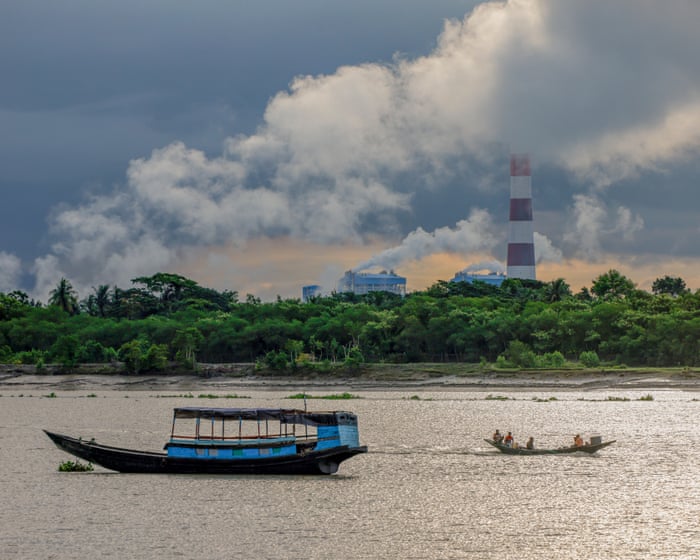
Barclays Bank is facing a complaint for financially supporting a coal power plant near the Sundarbans, the world’s largest mangrove forest in Bangladesh and India. The complainants say Barclays did not properly check the environmental and human risks before backing the project, which threatens local wildlife, including Bengal tigers, and communities.
Key Facts
Barclays helped fund the Rampal coal power plant near the Sundarbans, a UNESCO world heritage site.
The Sundarbans is a large mangrove forest home to many species and millions of people depending on the ecosystem.
Complaints say Barclays broke international rules by supporting companies involved in a project that pollutes air and water.
Heavy metals like mercury and arsenic have been found in the water around the power plant, threatening the forest and wildlife.
Barclays underwrote debt for NTPC Ltd, a company involved in the plant, and bonds for the Export-Import Bank of India, which lent money for the project.
The plant’s emissions contribute to climate change and put the region at risk from rising seas and extreme weather.
UNESCO and some banks opposed the project due to its likely environmental harm, but Barclays continued support.
Experts urge Barclays and other banks to stop financing fossil fuel projects and invest more in renewable energy like solar power.
Read the Original
Want the full story? Tap a source to open the original
article.
Walmart removed a World War II-era German soldier costume from its website after public criticism. Other major retailers like Amazon and Target had already taken the costume off sale.
Key Facts
The costume was sold as a "German Army Soldier Adult Costume" inspired by the 1940s.
It included a jacket, trousers with boot covers, a belt, and a hat.
The outfit resembled German military uniforms from World War II and was listed by a third-party seller on Walmart’s site.
Amazon and Target had removed the costume before Walmart acted.
None of the companies or the costume maker Orion Costumes responded to requests for comment.
It is unclear if Walmart, the seller, or Orion Costumes decided to remove the product.
The costume was described as "vintage-themed" but sparked criticism leading to its removal.
Newsweek reported on the issue and followed up as the retailers removed the costume.
Read the Original
Want the full story? Tap a source to open the original
article.
The US Energy Secretary Chris Wright visited Venezuela to sign a major oil deal. The agreement will create a US-controlled private company holding 65 billion barrels of proven oil reserves, aiming to increase US oil production from Venezuela and attract more American energy companies to invest there.
Key Facts
US Energy Secretary Chris Wright visited Venezuela on February 9, 2026.
A landmark oil deal was signed between the US government and Venezuela during this visit.
The deal creates a private company controlled by the US that holds 65 billion barrels of proven oil reserves.
The goal is to double Venezuela’s oil output under US management.
This agreement aims to encourage other US energy firms to invest in Venezuela.
The deal faces serious challenges related to Venezuela’s political and economic situation.
Venezuelan oil tycoon Alejandro Betancourt is involved in related business interests.
Read the Original
Want the full story? Tap a source to open the original
article.
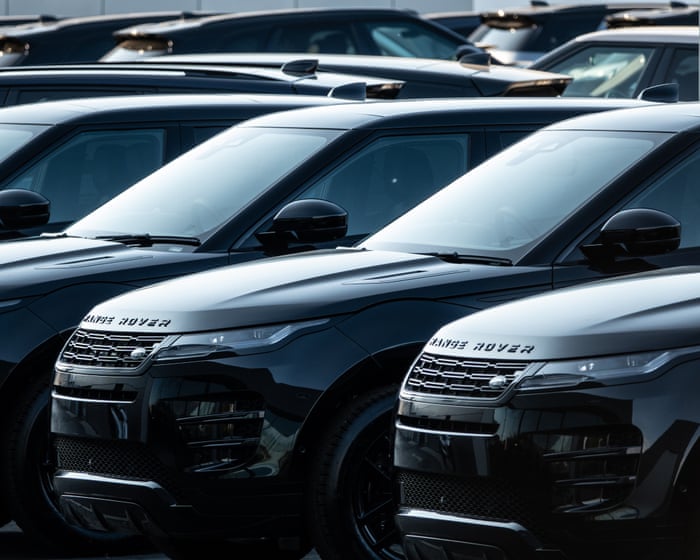
Range Rover has launched its first electric vehicle, starting at £154,070, marking a shift away from fossil fuel cars for Jaguar Land Rover (JLR). The vehicle is made in Solihull, UK, and highlights new technology and extensive testing after delays caused by tariffs and supply chain issues.
Key Facts
The new electric Range Rover starts at a price of £154,070.
Production happens in Solihull, the historic home of Range Rover since 1970.
Jaguar Land Rover is owned by Tata Motors (India) but based in Coventry, UK.
The launch was delayed by a year due to tariffs, supply chain problems, and a cyber-attack.
Over 10,500 staff received extra training to work on this electric model.
The vehicle can accelerate to 60 mph in 4.3 seconds.
It underwent testing equal to driving 38 times around the world.
Customers can personalize colors, finishes, materials, and embroidery details.
Read the Original
Want the full story? Tap a source to open the original
article.
The US national debt has reached $40 trillion, making interest payments the second largest government expense. Economist Kenneth Rogoff explains that the US dollar has remained strong because it is the world’s main reserve currency, but he believes the dollar’s dominance may be weakening.
Key Facts
The US national debt recently hit $40 trillion.
Interest payments on this debt are now the government’s second biggest budget cost, after social security.
The US dollar is the world’s main reserve currency, meaning many countries hold it for trade and savings.
Kenneth Rogoff, a Harvard economist and former IMF chief economist, discussed why the dollar holds this status.
Being the reserve currency gives the US benefits such as easier borrowing.
Rogoff thinks the dollar’s global dominance is now declining.
The National Debt Clock in New York City displays real-time US debt figures.
The discussion was part of a World Service episode focusing on the US economy and debt issues.
Read the Original
Want the full story? Tap a source to open the original
article.
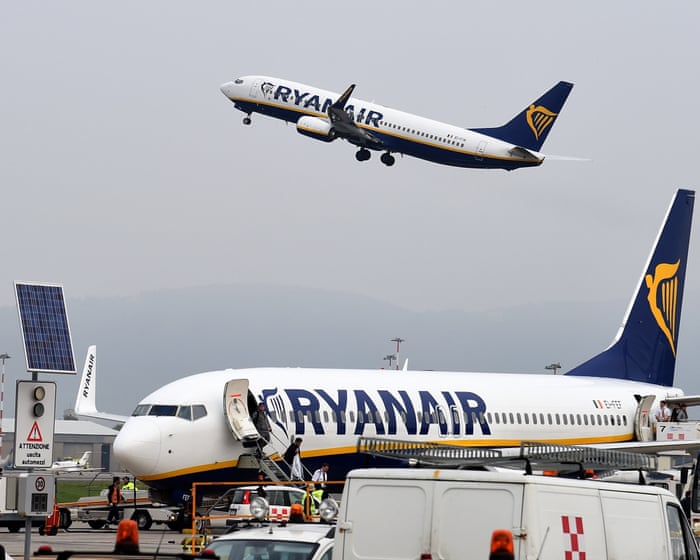
Ryanair has lowered its expected passenger numbers due to high oil prices, which raise fuel costs. The airline warns that if oil prices stay high, air fares in Europe will rise next year, and some airlines may go out of business.
Key Facts
Ryanair cut its passenger target for the year ending March 31 from 216 million to 214 million.
Jet fuel prices are around $140 a barrel, which increases airline costs.
Ryanair has hedged 80% of its jet fuel at $67 per barrel to limit losses.
The airline expects winter losses to drop by €70-100 million due to cutting its schedule.
Passenger numbers for next winter are expected to stay about the same as last year.
If oil prices remain high through summer 2027, short flights in Europe may get more expensive.
Ryanair plans to increase summer passenger numbers by over 5% compared to last year.
Rival budget airline Wizz Air saw a 25.9% rise in passenger numbers last month.
Ryanair reassured customers about safety after a passenger was partly sucked out of a plane window during a flight caused by engine failure.
Read the Original
Want the full story? Tap a source to open the original
article.
Global government bond prices fell again due to rising inflation concerns linked to renewed conflict between the US and Iran. This caused UK borrowing costs to rise sharply, presenting challenges for the UK government’s budget plans.
Key Facts
The interest rate on 10-year UK government bonds rose to nearly 5.3%, the highest since 2008.
Investors are selling bonds because of fears over inflation and growing government deficits.
Fighting between the US and Iran has pushed up oil prices to about $95 a barrel.
Higher bond yields mean it costs more for the UK government to borrow money.
UK Chancellor John Healey faces reduced budget flexibility ahead of his October 28 budget announcement.
Economists estimate the UK’s financial room to maneuver may shrink from £26 billion to less than £14 billion.
The UK may need to consider tax increases or spending cuts due to higher debt costs and defense spending pressures.
The US attempted to stabilize financial markets by supporting the Japanese yen and buying US bonds, but these actions were not successful.
Read the Original
Want the full story? Tap a source to open the original
article.
BP has permanently appointed Ian Tyler as its new chair after removing Albert Manifold in May over concerns about his behavior and governance. Tyler, who was interim chair and has board experience, will help guide BP’s shift back towards fossil fuel production and oversee company strategy.
Key Facts
Ian Tyler was named permanent chair of BP immediately after serving as interim chair.
Albert Manifold was removed as BP chair in late May after just eight months for governance and conduct issues.
Amanda Blanc, BP’s senior independent director, led the search for the new chair and will step down next year.
Manifold was criticized for treating the chair role like an executive position and reportedly belittling colleagues.
Tyler has prior leadership roles at several companies, including Balfour Beatty and Anglo American.
BP is focusing on fossil fuels again and reducing investments in renewable energy.
BP CEO Meg O’Neill encouraged use of UK oil and gas, even as BP plans to sell its North Sea business.
BP recently posted its highest quarterly profits since early in the Russia-Ukraine war, helped by oil and gas price rises.
Read the Original
Want the full story? Tap a source to open the original
article.
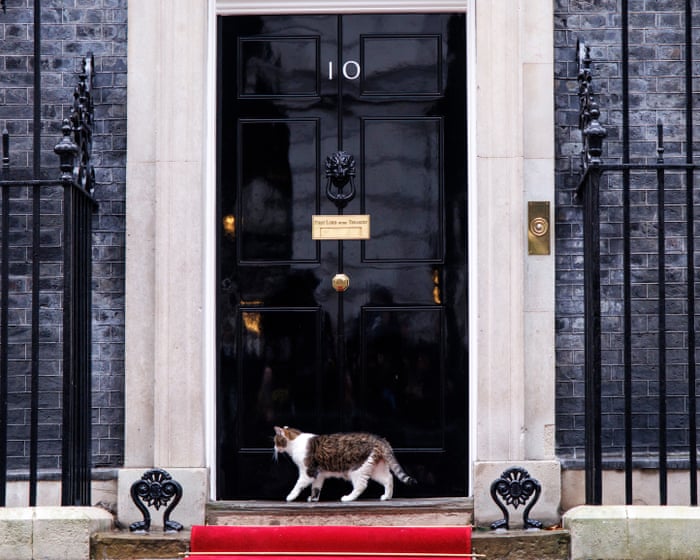
Researchers from consumer group Which? created a fake listing for 10 Downing Street on Booking.com, a popular travel booking site. The fake listing accepted payments and posted fake reviews before being taken down six weeks later, revealing security problems on the platform.
Key Facts
Which? researchers listed 10 Downing Street as a rental property on Booking.com on June 18.
The listing included the exact address and a photo of the prime minister’s official residence.
Users had to request stays, and a test payment for a week was accepted by Booking.com.
A fake positive review mentioning "Larry the cat," Downing Street's pet, was added quickly.
Booking.com’s system did not block suspicious messages asking for credit card details.
The fake listing was removed only on August 27, about six weeks after it first appeared.
Booking.com said the test was limited and not visible to the public, and that many fake listings are removed within 24 hours.
Ofcom noted platforms must remove illegal user content when aware but said Booking.com is not yet covered by certain new rules.
Read the Original
Want the full story? Tap a source to open the original
article.
The UK’s energy system was once led by state-owned companies that installed gas boilers for free and built large infrastructure efficiently. Since privatization began in the 1980s, the energy industry became complex, less efficient, and reliant on imported fossil fuels, which has contributed to high energy bills today. A new book by Arthur Downing argues that ownership plays a key role in how energy systems develop and that looking at history can help improve the current system.
Key Facts
Gas boilers became common in UK homes because a state-owned gas company installed them at no direct cost from the 1940s to the 1980s.
The state-owned energy industry in that period was very innovative, efficient, and built infrastructure quickly and cheaply.
Since the 1980s privatization, the UK’s energy industry has become fragmented and more dependent on imported fossil fuels.
Consumers now face rising energy bills amid a cost of living crisis.
The UK has cut greenhouse gas emissions by 50% from 1990 levels, mainly by switching from coal to gas and reducing industry.
The author, Arthur Downing, works in the energy industry but wrote the book in his own time to explain Britain’s energy history.
Downing argues that who owns and controls energy systems affects what technologies are used and how people benefit from energy.
He challenges the common belief that privatization is always more efficient than public ownership.
Read the Original
Want the full story? Tap a source to open the original
article.
German companies that make complex goods like cars and machinery face strong competition from China, whose similar products often cost less. This competition is contributing to slow economic growth in Germany, affecting jobs and company profits.
Key Facts
German economy depends on making and exporting complex products such as cars, locomotives, and machinery.
China’s exports in similar categories are growing, often matching German quality but selling for less.
Economic experts call the impact of China’s competition the "China shock."
Germany’s economy has been stagnant, shrinking in 2023 and 2024 with only 0.2% growth last year.
Major German companies like Volkswagen, BMW, and Bosch announced large job cuts.
Inflation outpaced wage growth after the pandemic, with real wages only recently recovering to 2019 levels.
China is supporting its companies in key sectors, increasing exports even though its own market demand is weak.
Germany is more affected by this competition than other major economies because of its large manufacturing and export sector.
Read the Original
Want the full story? Tap a source to open the original
article.
Asian stock markets dropped on Wednesday after U.S. stocks fell and global bond selling increased. This happened as worries about rising inflation, U.S. government debt, and growing military conflicts in the Middle East affected investor confidence.
Key Facts
Tokyo’s Nikkei 225 index fell 3% to 64,278.95.
South Korea’s Kospi dropped 3.6%, with Samsung Electronics down 3.3% and SK Hynix down 3.5%.
Hong Kong’s Hang Seng index decreased 0.8%; Shanghai Composite index fell 0.9%.
Wall Street indexes also declined on Tuesday: S&P 500 down 0.7%, Dow Jones down 0.8%, and Nasdaq down 1%.
U.S. military strikes and Iranian missile attacks increased tensions, pushing oil prices up.
Brent crude oil price reached $95.56 per barrel, up from around $72 before the conflict.
Bond yields rose globally, including the U.S. 10-year Treasury yield reaching about 4.80%, the highest since January.
Rising bond yields cause bond prices to fall, reflecting investor concerns about inflation and government debt.
Read the Original
Want the full story? Tap a source to open the original
article.