Apple renamed Lake Ontario to Lake America on its map app for users in the United States. This change follows President Donald Trump's order amid a trade conflict between the US and Canada, which includes new US tariffs on Canadian goods.
Key Facts
Apple Maps shows Lake Ontario as Lake America only for users in the US.
The name stays as Lake Ontario for users in Canada.
President Donald Trump issued the order after trade talks between the US and Canada failed.
The US imposed a 50% tariff on $20 billion worth of Canadian goods.
Google also renamed the lake for US users before Apple did.
Canada responded with matching tariffs on US goods.
Canadian Prime Minister Mark Carney ended trade talks, calling US demands unacceptable.
Carney said serious discussions can start only when the US is more reasonable.
Read the Original
Want the full story? Tap a source to open the original
article.
Range Rover has introduced its first fully electric vehicle after a one-year delay. The launch is part of Jaguar Land Rover’s plan to modernize its factories and workforce despite recent financial challenges and supply problems.
Key Facts
The new Range Rover Electric will be made in Solihull, England.
Jaguar Land Rover (JLR) has trained about 10,500 workers to build electric cars.
JLR is upgrading its factories, including new battery and electric drive unit production lines.
The company faces lower profits and supply issues after a 2023 fire at a supplier in Norway.
JLR had a cyber attack last year that stopped production for over a month.
The business is restructuring and cutting fewer than 300 jobs this year.
JLR’s Electric Propulsion Manufacturing Centre in Wolverhampton now makes batteries and electric motors as well as traditional engines.
Company leaders describe the new electric Range Rover as the result of 10 years of careful engineering.
Read the Original
Want the full story? Tap a source to open the original
article.
Many people in the UK are spending less on eating out because of rising costs. Restaurants face higher bills for food, energy, wages, and taxes, so they have raised their prices. To attract customers, many places now offer discounts, loyalty rewards, and special deals.
Key Facts
Over one-third of Brits are cutting back on dining out due to higher living costs.
Restaurants have raised prices because of increased costs for food, energy, wages, and taxes.
Loyalty programs like Pizza Express Club and Nando's rewards give discounts and freebies.
Eating early or late can save money, with apps offering up to 50% off at off-peak times.
Many places offer free or very cheap meals for kids during school holidays.
New restaurants often run discounted “soft launches” to attract customers.
Supermarket loyalty points can be exchanged for meal vouchers at some restaurants.
Apps like Too Good To Go help customers buy surplus food cheaply to save money.
Read the Original
Want the full story? Tap a source to open the original
article.
The Resolution Foundation thinktank says Chancellor John Healey may need to raise taxes on middle earners to pay for higher defence spending planned by the Labour government. Despite previous tax increases, taxes on average workers in the UK are still lower than in many similar countries.
Key Facts
John Healey plans to increase defence spending to 3.5% of the UK’s GDP by 2035.
The Resolution Foundation says raising £28 billion a year for this will likely require higher taxes on middle-income earners.
Since Labour took power in 2024, taxes have risen by £70 billion a year overall.
The UK still taxes average workers less than most countries in the OECD and G7 groups.
Tax increases under Healey’s predecessor caused the biggest rise in the “tax wedge” (taxes paid minus benefits received) of any OECD country last year.
Countries with higher public spending often tax middle earners more instead of relying mostly on taxes on businesses or the wealthy.
Labour’s current rules prevent raising income tax rates, VAT, or employee national insurance rates.
Healey’s first budget is due on 28 October, and he needs to find about £1.4 billion a year to support defence spending plans.
Read the Original
Want the full story? Tap a source to open the original
article.
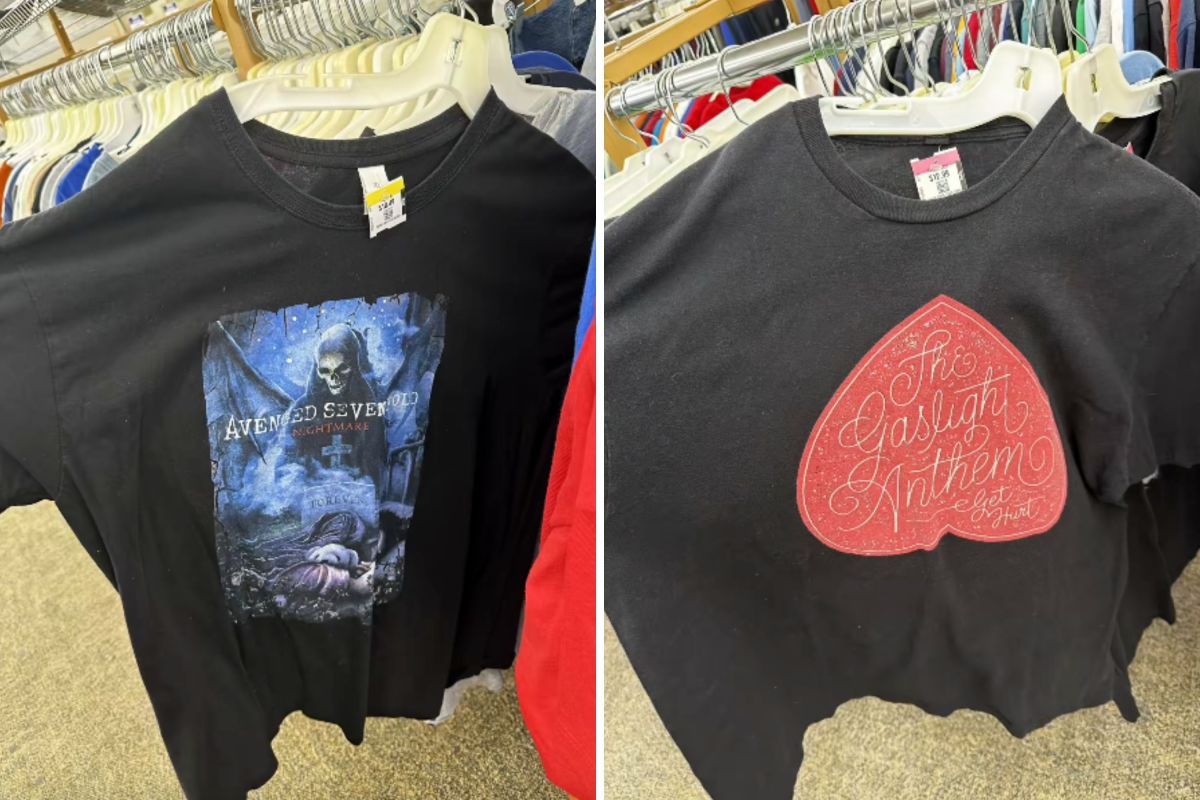
Jordan Lee, a TikTok user and music expert, often finds collections of band T-shirts at thrift stores. He shared a recent find of multiple shirts from various bands, which suggests they came from one person's donated collection, showing how band shirts can tell stories beyond their value.
Key Facts
Jordan Lee is known on TikTok for finding band merchandise at thrift stores.
He recently found several band T-shirts together, not just one isolated shirt.
The shirts featured artists like Gwen Stefani, Interpol, and WWE’s John Cena.
Lee uses clues like size, band genre, and wear patterns to identify collections.
Vintage and rare band T-shirts can sometimes sell for hundreds or thousands of dollars.
Factors affecting a shirt’s value include rarity, artist popularity, tour significance, artwork, condition, and authenticity.
Some T-shirt brands help identify the production time, which helps Lee evaluate their significance.
Lee believes the personal meaning and memories tied to a shirt can be just as important as its market price.
Read the Original
Want the full story? Tap a source to open the original
article.
A group representing European textile companies wants a 10-euro fee on imported fashion items to limit cheap clothes mainly from China. An expert says it is unclear if this will make companies like Shein change their business, and that fast-fashion stores may face problems from customers getting tired of buying so much.
Key Facts
European textile associations propose a 10-euro import fee on fashion goods.
The goal is to reduce competition from very cheap clothes imported mostly from China.
Dr. Sheng Lu, a fashion professor, said it’s uncertain if companies like Shein will change their business ideas because of this fee.
Fast-fashion retailers may have to deal with "consumer fatigue," meaning customers lose interest in frequently buying cheap clothes.
The suggestion aims to protect European clothing makers against cheap imports.
The issue reflects challenges in the fast-fashion market linked to cost and changing consumer habits.
Consumer fatigue means people might be starting to buy less due to feeling overwhelmed or guilty about fast fashion's effects.
Read the Original
Want the full story? Tap a source to open the original
article.
Interest rates on government bonds are rising worldwide, making borrowing more expensive for people and companies. This increase affects loans like mortgages and car payments and raises concerns about government debt and inflation.
Key Facts
Bond yields, or interest rates on government debt, are going up globally.
Higher bond yields make borrowing more costly for consumers and businesses.
Inflation worries and ongoing conflicts in the Middle East have driven oil prices higher, contributing to rising yields.
The 10-year U.S. Treasury yield hit 4.80%, the highest since early 2025, affecting mortgage rates.
The 5-year Treasury yield reached 4.55%, influencing car loan rates.
The U.S. government is borrowing more due to budget deficits larger than before the pandemic.
Large tech companies are borrowing to expand data centers for artificial intelligence.
Federal Reserve Chair Kevin Warsh suggested short-term interest rates might rise again if inflation stays high.
Treasury Secretary Scott Bessent took unusual steps last month to try to slow the increase in bond yields.
Read the Original
Want the full story? Tap a source to open the original
article.
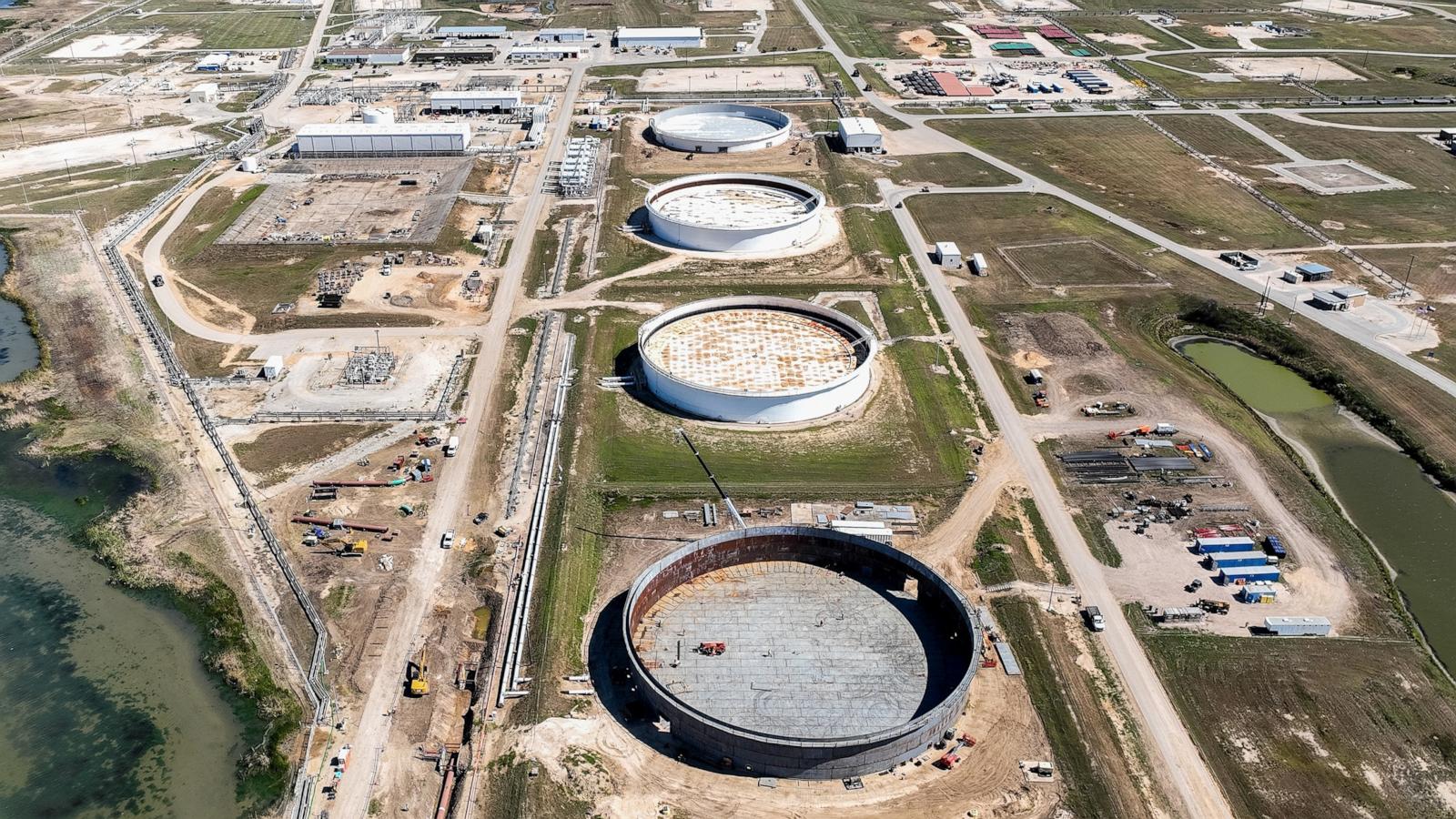
The U.S. Strategic Petroleum Reserve has dropped to its lowest level since 1982 due to releasing millions of barrels of oil in response to a global energy shortage linked to the Iran war. The reserve now holds about 286.6 million barrels, which is around 40% of its capacity, as the government tries to ease higher oil prices.
Key Facts
The U.S. Strategic Petroleum Reserve fell below levels not seen since 1982.
It dropped by more than 3 million barrels in one week, ending August 28, 2026.
The reserve currently holds 286.6 million barrels of oil, about 40% of its total 714 million barrel capacity.
The reserve is stored underground in salt caverns along the Gulf coasts of Texas and Louisiana.
The reserve was created after the 1970s Arab Oil Embargo to provide emergency oil supply during shortages.
The U.S. released about 128 million barrels from the reserve since the Iran war started in late February 2026.
The International Energy Agency coordinated a release of 400 million barrels among its 32 member countries to manage the supply crisis.
Historically, the reserve has been used in emergencies only four times before this event, including recent releases after the Russian invasion of Ukraine.
Read the Original
Want the full story? Tap a source to open the original
article.
A new office tower called Bevel is planned for downtown Bellevue, Washington. It aims to become the tallest mass timber office building in North America, using wood as the main building material and focusing on sustainability and modern design.
Key Facts
Bevel will be a 12-story, 55-meter (180 feet) tall office tower made primarily from mass timber (engineered wood).
The project is designed by Mithun and Waugh Thistleton Architects and developed by Skanska.
Bevel is still awaiting approvals and depends on new building codes that allow timber to be used as the main material in commercial buildings.
This will be one of the first commercial office buildings in the U.S. to use exposed timber structure and ceilings throughout.
The design includes a steel core for support due to the high earthquake risk in the area, and five levels of underground concrete parking.
Bevel aims to achieve LEED v4 Platinum certification, the highest green building rating, with features like stormwater reuse, full electrification, and nature-focused design.
The project shows that mass timber construction can be cost-effective compared to traditional concrete buildings.
Biophilic design elements like floor-to-ceiling windows and natural daylight are part of the building’s sustainable features.
Read the Original
Want the full story? Tap a source to open the original
article.
After the US launched new attacks on Iranian targets, global bond prices fell sharply, oil prices went up, and stock markets dropped. Investors worry about rising inflation and increasing government debt, with U.S. debt now over 40 trillion dollars and inflation in the Eurozone hitting a three-year high.
Key Facts
The US military conducted fresh attacks on targets in Iran.
Oil prices increased following these attacks.
Stock markets declined worldwide after the news.
Bond yields, which move opposite to bond prices, rose sharply; Japan’s 10-year bond yield reached 3% for the first time since 1996.
Global inflation fears are growing, partly due to higher energy prices.
US government debt has exceeded 40 trillion dollars.
Inflation in the Eurozone rose to its highest level in three years in August.
These events contribute to a deepening global financial selloff.
Read the Original
Want the full story? Tap a source to open the original
article.
Allison Ellsworth started Poppi soft drinks using apple cider vinegar as a kitchen experiment. Her company became very successful, leading to PepsiCo buying it for $1.95 billion.
Key Facts
Allison Ellsworth is the founder of Poppi soft drinks.
Poppi uses apple cider vinegar in its soft drinks.
The business started as a kitchen experiment with a SodaStream machine.
Allison pitched her company on the TV show Shark Tank while nine months pregnant.
Poppi became the number one soda brand on Amazon in the US.
The company relaunched during the Covid lockdowns.
PepsiCo bought Poppi for $1.95 billion.
The story was featured on BBC’s Business Daily program.
Read the Original
Want the full story? Tap a source to open the original
article.
Certificate of deposit (CD) accounts currently offer higher interest rates than many other savings options. The highest rates this September are found in longer-term CDs, ranging from about 4.35% to 4.50%, but shorter-term CDs and alternatives like high-yield savings accounts also provide competitive options.
Key Facts
CD accounts offer fixed interest rates, usually higher than regular savings accounts.
CD terms vary from 3 months to 10 years.
Longer-term CDs (18 months to 5 years) have the highest rates currently, between 4.35% and 4.50%.
Shorter-term CDs have slightly lower rates, ranging from around 3.90% to 4.30%.
Withdrawing money before a CD matures often results in penalties that reduce earned interest.
High-yield savings and money market accounts offer variable rates that are a bit lower than top CD rates but allow easier access to funds.
Savers should choose CD terms that match when they can leave their money untouched.
Expected interest rate changes from the Federal Reserve may affect future rates on CDs and savings accounts.
Read the Original
Want the full story? Tap a source to open the original
article.
Treasury Secretary Scott Bessent urged G20 countries to use tariffs like the Trump administration did to protect their industries from cheap imports. He emphasized the need to safeguard jobs and manufacturing, while also discussing U.S.-China trade tensions and global economic challenges.
Key Facts
Bessent encouraged G20 nations to adopt tariff measures to guard against cheap imports harming local industries.
He warned early in President Trump’s second term that U.S. tariffs would cause Chinese goods to flood other markets.
Trump administration tariffs raised retail prices on imported goods by about 7% in 2025, according to the Tax Foundation.
The U.S. Supreme Court ruled in February that Trump’s global tariffs under an emergency law were unconstitutional.
The U.S. is considering an additional 7.5% tariff on Chinese imports due to concerns about excess capacity and forced labor.
Bessent spoke with Chinese officials but gave no details, emphasizing a need to “de-risk” trade without breaking ties.
China’s trade surplus hit $1.2 trillion in 2025, which Bessent says hampers global growth.
Global debt reached $353 trillion, and U.S. debt hit $40 trillion in August, though Bessent said bond markets are stable.
Read the Original
Want the full story? Tap a source to open the original
article.
Opening a $100,000 certificate of deposit (CD) for 18 months now can earn savers about $6,300 to $6,600 in interest by the time the CD matures. These fixed returns are higher than typical savings accounts, but early withdrawal penalties mean savers should choose carefully.
Key Facts
A CD is a bank account where money is locked in for a set time in exchange for fixed interest.
Current top interest rates for an 18-month $100,000 CD range from 4.20% to 4.35%.
At these rates, interest earned after 18 months would be about $6,366 to $6,595.
CDs offer guaranteed returns unlike some other savings options with variable rates.
Early withdrawal from CDs often results in penalties that can reduce earnings.
Traditional savings accounts offer much lower returns, around 0.38% interest now.
Alternatives like high-yield savings or money market accounts may offer similar returns without CD restrictions.
Savers should compare options and consider dividing money among different accounts for best results.
Read the Original
Want the full story? Tap a source to open the original
article.
A $75,000 home equity loan currently has monthly payments between $723 and $916, depending on repayment length. Interest rates are around 8.14%, which is lower than personal loans or credit cards, but rates could rise soon if the Federal Reserve increases its rates again.
Key Facts
The average home equity loan interest rate is 8.14% as of September 1, 2026.
A 10-year loan at this rate costs about $915.51 per month.
A 15-year loan costs about $722.81 per month.
Home equity loans are typically cheaper than personal loans (over 12% interest) and credit cards (over 22% interest).
Home equity loans use the house as collateral, so missing payments may lead to foreclosure.
Interest rates for home equity loans have been slightly lower in 2025 but may rise soon due to possible Federal Reserve rate hikes.
Borrowers can find and compare loan rates online to get the best deal and do not have to use their existing mortgage company.
Read the Original
Want the full story? Tap a source to open the original
article.
U.S. Treasury bond yields rose on Tuesday, continuing a global trend of rising bond yields that could increase borrowing costs for Americans. This rise is caused by inflation, concerns over government debt, and tensions between the U.S. and Iran, which have increased energy prices.
Key Facts
The 10-year Treasury yield increased to 4.78%, the highest since January 2025, affecting mortgage rates.
The 2-year Treasury yield rose to 4.37%, reflecting expectations for Federal Reserve interest rate decisions.
The 30-year Treasury yield stayed near 5.25%.
Rising inflation and government debt worries are causing investors to sell bonds, pushing yields higher.
U.S.-Iran military tensions have increased oil prices, adding to inflation concerns.
The Federal Reserve may raise interest rates again in September to fight inflation.
Higher bond yields can increase loan costs, like for mortgages and car loans, but can raise earnings for savers.
Analysts expect yields to stay volatile but possibly stabilize near the end of the year.
Read the Original
Want the full story? Tap a source to open the original
article.
Mortgage interest rates are currently higher than they were six months ago, with an average rate of 6.87% for a 30-year mortgage. Buyers may want to lock in their mortgage rate this September to protect themselves from possible increases, especially since the Federal Reserve might raise interest rates again soon.
Key Facts
The average mortgage rate on a 30-year loan is 6.87% as of September 1.
Mortgage rates had been expected to fall but have instead risen over the past six months.
The Federal Reserve is likely to increase interest rates on September 16.
Lenders might raise mortgage rates even before the official Fed announcement.
A Fed rate hike this month could start a series of rate increases in coming months.
Locking a mortgage rate now can protect buyers from higher future rates.
Buyers can sometimes lower their locked rate before closing if rates drop.
It is important to know if your mortgage lender offers a “rate float down” option.
Read the Original
Want the full story? Tap a source to open the original
article.
Employers in the U.S. are expected to give modest pay raises averaging 3.5% in 2027. These increases may not fully keep up with inflation, which rose 3.4% yearly as of July, potentially reducing workers' purchasing power.
Key Facts
The average salary increase in 2027 is predicted to be 3.5%, including all types of raises.
Inflation was rising at about 3.4% per year in July, close to the projected pay increase.
Companies are focusing raises on top performers rather than giving small increases to everyone.
High-tech and banking industries expect slightly higher raises, around 3.7% to 3.8%.
Retail and industries with fewer job opportunities may offer lower raises that do not keep up with inflation.
Employers face budgeting challenges due to economic uncertainty and aim to use pay hikes to keep key workers.
Most companies have not finished deciding their official salary budgets for 2027.
2023 had the highest salary hikes recently, but salary increases are expected to slow down next year.
Read the Original
Want the full story? Tap a source to open the original
article.
The Federal Trade Commission (FTC) and 22 states have sued Amazon, saying the company overcharged advertisers for seven years by secretly raising prices in its ad auctions. The FTC claims Amazon replaced true auction results with higher prices to make more money, affecting about 1.2 million advertisers and likely costing them over $20 billion.
Key Facts
The FTC and 22 states filed the lawsuit against Amazon in a U.S. court in Washington state.
Amazon runs auctions for ads shown on its site, where advertisers bid to display their ads.
Since 2019, Amazon allegedly added hidden fees by setting higher prices than the auction results.
These fees were called a “soft reserve price” internally and were not disclosed to advertisers.
Amazon earned $200.6 billion in sales and $62.6 billion in profit in the second quarter of 2026.
Amazon says the FTC chose only certain details and that its ad system does not harm advertisers or consumers.
The FTC wants a permanent order to change Amazon’s ad pricing, plus fines and refunds.
The case involves over 1.2 million advertisers whose ads include Sponsored Products, Sponsored Brands, and Sponsored Display ads.
Read the Original
Want the full story? Tap a source to open the original
article.
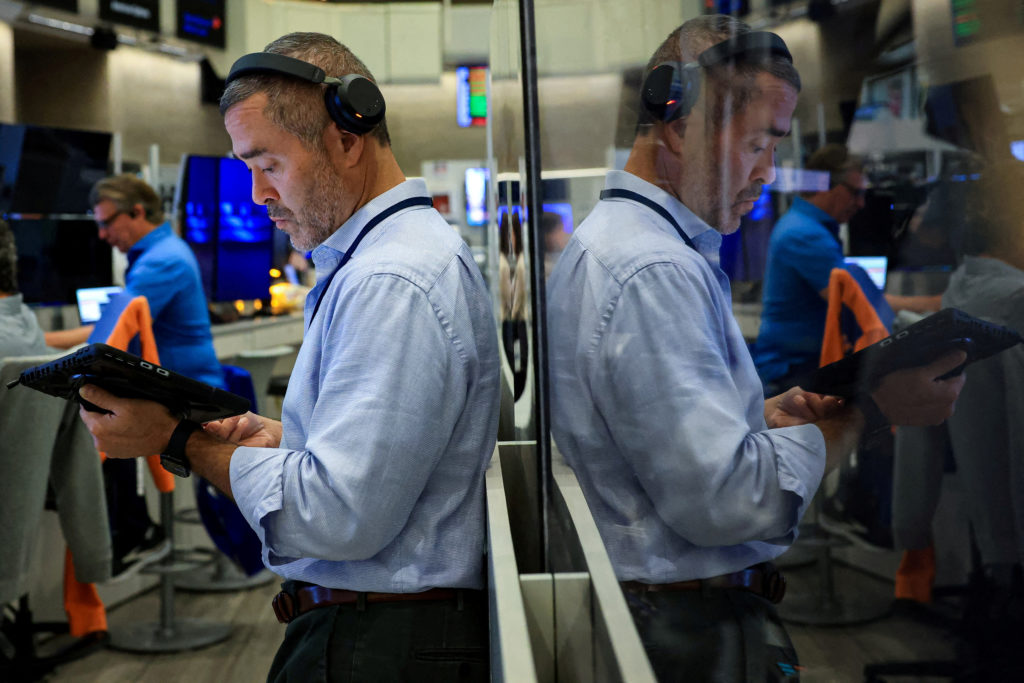
Stocks fell on Wall Street as oil prices rose and U.S. government bond yields increased. Rising oil prices and higher bond yields add to concerns about inflation and borrowing costs, which can slow down economic growth.
Key Facts
The S&P 500 fell 0.4%, the Dow Jones dropped 190 points (0.4%), and the Nasdaq declined 0.5%.
Oil prices increased, with Brent crude rising 2.3% to $92.61 per barrel.
U.S. government bond yields rose, with the 10-year Treasury yield reaching 4.77% and the 2-year Treasury yield rising to 4.37%.
Bond yields go up when bond prices go down, indicating investors want higher returns due to higher risks like growing government debt.
U.S. government debt recently surpassed $40 trillion, increasing concerns about federal spending and borrowing costs.
Higher bond yields usually lead to higher borrowing costs for mortgages and business loans, which can slow investment and growth.
Inflation remains above 3%, and the Federal Reserve is expected to raise interest rates to try to reduce it.
The ongoing conflict involving the U.S. and Iran has disrupted oil shipping routes, contributing to higher energy costs and inflation.
Read the Original
Want the full story? Tap a source to open the original
article.