The common advice for renters to spend no more than 30% of their income on rent is becoming less realistic due to rising housing costs and inflation. Experts say that while the 30% rule still applies in some areas, many renters now spend more, and the rule may need updating to match today’s economic conditions.
Key Facts
The 30% rent rule suggests renters should spend no more than a third of their income on housing.
Lenders often require monthly mortgage payments to be no more than 28% of income.
New York City plans to offer affordable housing where rent is capped at 25% of income for the lowest-income households.
Inflation in the U.S. was at 3.8% in April 2026, keeping living costs high.
The average rent for a one-bedroom apartment rose from $1,141 in January 2020 to a peak of $1,427 in August 2022 and slightly decreased to $1,356 by April 2026.
Housing market experts say the 30% rule is outdated and many renters now spend about 38% of their income on housing and related costs.
Higher rents combined with stagnant wages make it harder for many people to follow the 30% rule.
Some renters cope by moving to cheaper cities or sharing housing with roommates.
Read the Original
Want the full story? Tap a source to open the original
article.
When you change jobs, an active wage garnishment usually stops with your old employer because they no longer pay you. However, your debt still exists, and the creditor can ask the new employer to start garnishing your wages again, often quickly once they find out where you work.
Key Facts
Wage garnishment stops at your old job once you leave because that employer can’t withhold money anymore.
The debt that caused the garnishment does not go away when you change jobs.
Creditors often find your new employer using credit reports or public records and can request a new garnishment order.
The gap between jobs may cause a brief pause in wage garnishment, but it usually resumes soon.
Different types of debts have different garnishment rules; for example, child support and unpaid taxes are collected more aggressively.
Federal law limits garnishments to 25% of your disposable income or the amount above 30 times the federal minimum wage per week.
State laws may provide extra protections or rules about wage garnishment.
Changing jobs does not remove your debt or the garnishment order; the debt collection continues unless you pay or settle the debt.
Read the Original
Want the full story? Tap a source to open the original
article.
UK farmers face rising costs for fuel and fertiliser, causing financial strain and worries about the future of farming. Many farmers report losses and say farming may no longer provide a good income, leading some to consider leaving the industry or changing how land is used.
Key Facts
Fuel costs on Woodlands Farm in Suffolk have doubled in one year, with red diesel costs rising from £27,000 to £54,000.
Fertiliser costs on the same farm climbed from £53,200 to £67,200 annually.
The farm is currently losing money, and future crops are not expected to be profitable.
Some farmers are leaving farming, and farmland is being converted to solar farms, renewables, or housing.
Organic farmer John Pawsey reported a 25-35% rise in fixed costs and worries about crop yields due to drought.
Farmers say they need fair prices for their products to cover rising expenses while keeping customers.
The Country Land and Business Association notes that farming is very tough right now and calls for more consistent policies and investment.
The government is cutting red diesel fuel duty to help reduce costs and aims to protect farming from global pressures like the Iran war.
Read the Original
Want the full story? Tap a source to open the original
article.
Required minimum distributions (RMDs) are yearly withdrawals that people must take from most retirement accounts starting at age 73. For a retirement account with $400,000, the amount you must withdraw grows as you get older, and these withdrawals are taxed as regular income.
Key Facts
RMDs start at age 73 for most traditional IRAs and 401(k)s.
The RMD amount is calculated by dividing the account balance by a life expectancy factor given by the IRS.
At age 73, with $400,000 saved, the minimum withdrawal is about $15,094.
By age 80, the minimum withdrawal rises to about $19,802.
The life expectancy factor goes down as you age, increasing the withdrawal percentage.
RMDs are treated as ordinary income by the IRS, which can raise your tax bill and affect Social Security and Medicare costs.
Missing an RMD can lead to a penalty of up to 25% of the amount you should have withdrawn.
Withdrawals from multiple IRAs can be combined, but 401(k) RMDs must be taken separately from each plan.
Read the Original
Want the full story? Tap a source to open the original
article.
Gas prices in the U.S. have risen sharply due to ongoing conflict linked to Iran, costing American households hundreds of dollars more. Experts predict that gas prices may not return to lower levels until 2028, while officials believe prices will fall quickly once the conflict ends.
Key Facts
The war involving U.S. and Israeli strikes against Iran began nearly three months ago.
Rising gas and diesel prices have added about $50 billion in extra costs for U.S. consumers since late February.
The average price for regular gasoline is currently around $4.45 per gallon, about 50% higher than before the conflict.
Brown University research estimates the average household has paid about $370 more due to higher gas and diesel prices.
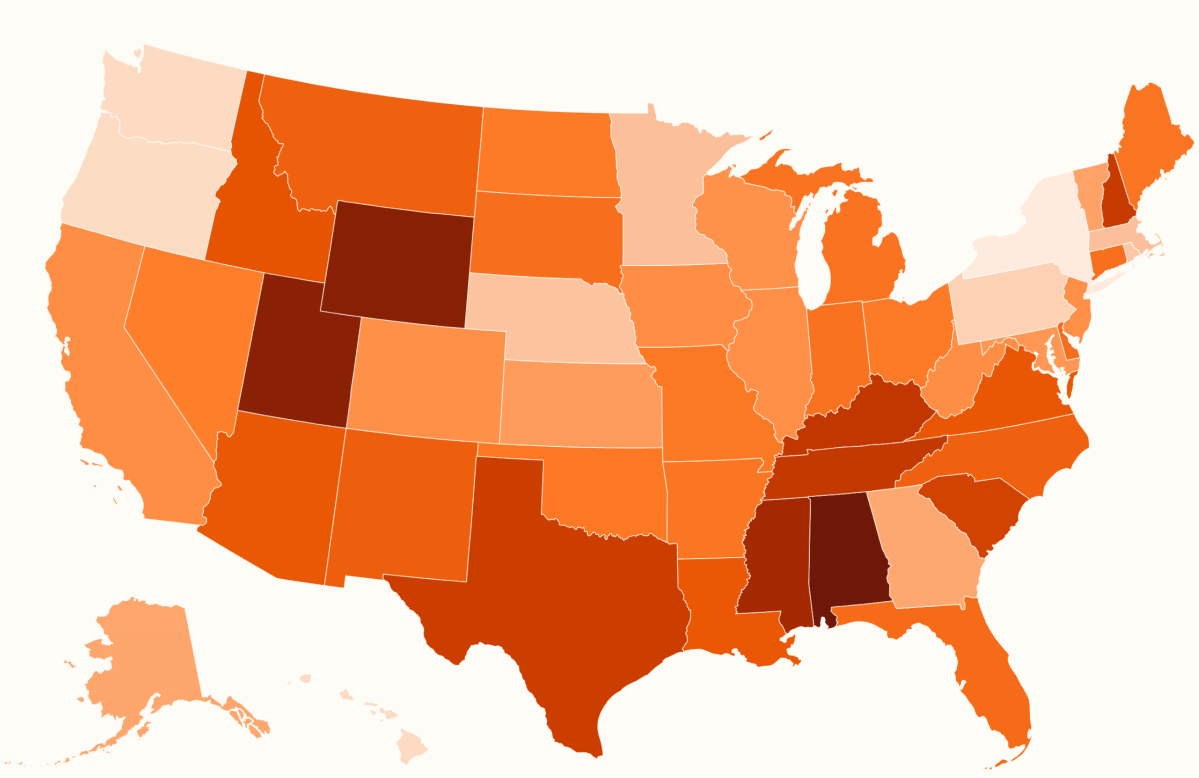
The states hardest hit by rising gas costs are Alabama, Wyoming, and Utah.
Increased fuel prices have contributed to higher overall inflation, affecting prices of other goods like food.
GasBuddy analysts predict oil prices may stay above $70 per barrel until 2028, delaying price relief.
The White House expects prices to fall quickly once the conflict ends and supply returns to normal.
Read the Original
Want the full story? Tap a source to open the original
article.
The number of Canadians interested in buying homes in the United States has increased in early 2026 after a drop during President Donald Trump’s tariff policies in 2025. Canadians remain the largest group of international homebuyers in the U.S., especially in states like Florida and Arizona.
Key Facts
In the first quarter of 2026, Canadians made up 37.8% of all international online home shopping traffic in the U.S.
This is higher than 34.8% in the first quarter of 2025 but lower than 41.8% in the first quarter of 2024.
Canadian interest in U.S. homes is growing but hasn’t fully returned to past levels.
President Donald Trump’s tariffs on Canada and a weak Canadian dollar have affected Canadians’ home buying power in the U.S.
Other international buyers include Mexico (6.4%), the UK (5.9%), Germany (3.9%), and Australia (3%).
Canadian buyers favor U.S. Sunbelt and Southwest areas, with Cape Coral, Florida, as the top destination (71% of its international demand from Canadians).
Other popular cities include Naples and North Port in Florida, Phoenix in Arizona, Tampa in Florida, and Riverside in California.
Some U.S. markets like Chicago and Atlanta saw a decline in Canadian interest compared to previous years.
Read the Original
Want the full story? Tap a source to open the original
article.
Volvo Cars received approval from the US Department of Commerce to import connected cars into the US, even though there is a ban on such vehicles with Chinese links starting in 2027. This approval came after Volvo showed it meets requirements about technology and data security under the new US rules.
Key Facts
The US banned connected vehicle software with Chinese links starting from the 2027 model year.
Connected vehicle hardware with Chinese links will be banned starting in the 2030 model year.
Volvo Cars, partly owned by Chinese company Zhejiang Geely Holding, got an exemption to import connected cars into the US.
The exemption was granted after discussions about Volvo’s governance, technology, and data security.
Automakers can request similar exemptions on a case-by-case basis.
Polestar, owned partly by Volvo, is also working with US authorities to meet these regulations.
The ban and exemptions aim to protect US cybersecurity interests against Chinese influence.
This approval may open the door for other Chinese electric vehicles to enter the US market in the future.
Read the Original
Want the full story? Tap a source to open the original
article.
Toyota is recalling over 43,000 Tundra trucks because of problems with their engines. The company is working on a fix, and when it is ready, they will repair the trucks for free.
Key Facts
Toyota is recalling more than 43,000 Tundra pickup trucks.
The recall is due to concerns about the truck's engine.
Officials have said a solution to fix the issue is being developed.
Repairs will be done at no cost to the truck owners.
The recall addresses safety and reliability issues linked to the engine problem.
Read the Original
Want the full story? Tap a source to open the original
article.
Pittsburgh, Pennsylvania is named the cheapest city to live in the U.S. for 2026, with a median home price of $250,000, significantly below the national median. Other affordable cities mostly in the Midwest and South include Decatur, Illinois and Oklahoma City, Oklahoma, due to their stable economies and steady housing demand.
Key Facts
Pittsburgh has the lowest median home price at $250,000, over $150,000 less than the U.S. median.
Decatur, Illinois is second cheapest, with a median home price around $89,855 and a cost of living 10% below national average.
The top 10 cheapest cities include mainly Midwestern and Southern cities like Enid, Oklahoma and Fort Wayne, Indiana.
These cities have steady economies focused on manufacturing, health care, agriculture, and finance.
Unlike many places with rapid home price spikes, Pittsburgh’s housing prices have grown steadily and remain affordable.
Pittsburgh benefits from industries like health care, technology, and education, contributing to housing stability.
Iowa has four cities in the top 25 most affordable metros, with strong job markets in finance, insurance, and manufacturing.
Bangladesh has asked the International Monetary Fund (IMF) for financial help due to economic problems caused by the war involving the United States, Israel, and Iran. The conflict has raised fuel prices and disrupted supplies, impacting Bangladesh’s energy costs, garment industry, and raw material prices.
Key Facts
Bangladesh requested a new IMF-supported aid program; details about the amount were not shared.
Bangladesh imports 95% of its oil and natural gas, mostly from the Middle East, and faces energy shortages due to the Iran war.
Fuel prices in Bangladesh increased by 10-15% in April, with petrol rising from $0.95 to $1.10 per litre.
The war disrupted shipping routes used to deliver raw materials for key industries like garments and plastics.
The garment sector, which provides over 80% of Bangladesh’s export income, expects a 20-25% drop in work orders due to supply delays.
Resin, a plastic raw material linked to crude oil, nearly doubled in price from about $900 to $1,500 per tonne.
Bangladesh’s foreign debt has increased as the government borrowed more to finance projects and manage payments.
The Strait of Hormuz remains controlled by Iran, with a US naval blockade affecting global oil transport and prices.
Read the Original
Want the full story? Tap a source to open the original
article.
A heatwave in the UK has caused prices to rise for summer-related products like inflatable hot tubs and air conditioners. Prices for some items have nearly doubled in a few weeks due to increased demand and costs for materials and shipping.
Key Facts
The Bestway inflatable hot tub price rose from £160 in May to at least £299 recently.
The Dyson Cool Tower fan increased from about £250 to £299 on Amazon.
Portable air conditioning units like the Morphy Richards and De’Longhi models saw price increases of around 15-17% since April.
Price changes are influenced by supply and demand, shipping costs, and raw material prices such as oil and plastics.
Some retailers use algorithms that adjust prices based on how many people are interested in a product.
Experts warn prices may be marked up before demand peaks and then discounted without falling to previous low levels.
Consumers are encouraged to compare prices and check manufacturer recommended prices (RRP) before buying.
Shipping costs can increase two to three times during peak seasons, affecting final retail prices.
Read the Original
Want the full story? Tap a source to open the original
article.
Amazon is recalling several beverage mixes and dietary supplements due to possible contamination with Salmonella bacteria. The U.S. Food and Drug Administration (FDA) announced recalls after learning about the contamination risk, which can cause serious illness, especially for young children, older adults, and people with weak immune systems.
Key Facts
Two product recalls involve drink mixes by SKS Copack and Mogo Moringa dietary supplements sold on Amazon.
SKS Copack recalled powdered drink mixes like matcha, taro, milk tea, cappuccino, latte, and smoothie bases.
The recalls affect products distributed in 25 states, including California, Texas, Florida, and New York.
The recall started after Salmonella was found in a nonfat dry milk ingredient used in the drink mixes.
Mogo Moringa voluntarily recalled two lots of their Moringa Oleifera capsules sold online, even though tests did not find Salmonella.
Consumers should check package lot numbers and expiration dates to see if their products are included.
People who have recalled products should stop using them immediately and seek medical help if they get sick.
Salmonella is a bacteria that can cause diarrhea, fever, stomach cramps, nausea, and vomiting, with symptoms appearing within hours to days after exposure.
Read the Original
Want the full story? Tap a source to open the original
article.
A new fashion trend among Gen Z is centered on limited-edition sweatshirts made by entrepreneur Chelsea Parke Kramer. Her brand, Parke, sells popular sweaters that often sell out quickly, creating a sense of scarcity that makes them highly desirable despite their high price.
Key Facts
Chelsea Parke Kramer created the brand Parke, known for its fashionable sweatshirts popular on college campuses.
Parke sweaters usually cost about $130 each and sell out rapidly after release.
The limited availability encourages long lines and quick purchases, with some stores selling out in minutes.
Sold-out sweatshirts often appear on resale sites at much higher prices.
Scarcity is what makes these items special to Gen Z buyers, more than just their price.
This trend is part of a larger shift where young people value cultural status and unique stories over simply showing wealth.
Social media plays a big role by teasing new releases and building excitement around the brand.
Similar patterns appear with other products like limited-edition tumblers and seasonal tote bags, where quick sellouts lead to resale markups.
Read the Original
Want the full story? Tap a source to open the original
article.
Mortgage interest rates have recently declined from their high levels earlier in May 2026. As of May 27, the average rate for a 30-year mortgage is 6.49%, and for a 15-year mortgage, it is 5.87%, making it a better time for some borrowers to shop for loans and refinancing options.
Key Facts
The average interest rate for a 30-year mortgage is 6.49% as of May 27, 2026.
The average interest rate for a 15-year mortgage is 5.87%.
Mortgage rates have fallen from highs reached earlier in May; last week, 30-year rates were about 6.62%.
Average refinance rates are 6.73% for 30-year terms and 5.83% for 15-year terms.
Refinancing rates have also decreased compared to May 21 levels.
Borrowers who shop around and compare lenders can often find rates about half a percentage point lower than the average.
Closing costs and terms vary by lender and are important to consider when selecting a mortgage or refinance option.
Economic factors like inflation reports, oil prices, Federal Reserve meetings, and geopolitical events (e.g., the war in Iran) can influence mortgage rates in the near future.
Read the Original
Want the full story? Tap a source to open the original
article.
Energy bills are set to increase starting in July, which will affect household expenses. This rise is related to changes in the cost of living and energy prices.
Key Facts
Energy bills will go up beginning in July.
The increase will lead to higher monthly costs for energy users.
This change is linked to economic factors such as inflation and rising energy prices.
The cost of living is also affected by these changes, meaning overall expenses for households may rise.
The article provides guidance on what these changes mean for consumers.
Read the Original
Want the full story? Tap a source to open the original
article.
Oil prices fell about 4% after Iranian state TV reported that Iran plans to restore commercial shipping through the Strait of Hormuz to pre-war levels within one month. This news raised hopes of reduced tension in the Middle East, easing fears about global energy supply disruptions.
Key Facts
Brent crude oil price dropped 4% to below $95 a barrel, later settling near $95.24.
Iran and the US are reportedly discussing a draft peace deal involving reopening shipping through the Strait of Hormuz.
The deal would exclude military vessels and requires verification before any actions are taken.
If finalized within 60 days, the agreement could become a UN Security Council resolution.
The US dollar fell 0.2% against other major currencies following the news.
Oil prices are at a five-week low due to growing hopes of easing Middle East tensions.
Markets are cautious until more concrete details of the agreement emerge.
The draft deal includes the US withdrawing military forces nearby and lifting a naval blockade.
Read the Original
Want the full story? Tap a source to open the original
article.
In 2025, the typical pay for CEOs at large U.S. companies increased by nearly 6% to $17.7 million, while the median worker's pay rose by 4.7% to about $89,744. The gap between CEO and typical worker pay remains very large, with some CEOs making over 1,700 times more than their median employee.
Key Facts
Median CEO pay at S&P 500 companies rose to $17.7 million in 2025, up nearly 6% from the previous year.
Median pay for typical employees at these companies increased 4.7% to $89,744 in 2025.
CEO pay packages often include big rewards like stock bonuses and incentives to keep executives motivated.
The pay gap between CEOs and average workers remains huge; at some companies it takes 200 years for a worker to earn what a CEO makes in one year.
Coca-Cola’s CEO earned nearly 1,739 times more than its median worker, while TJX’s CEO earned about 1,774 times the median pay.
The data comes from an Associated Press survey using Equilar analysis of 337 S&P 500 CEOs with at least two full years in their roles.
Some cities are considering tax rules targeting companies with very large CEO-worker pay gaps.
Despite wage increases, many workers still struggle with living costs and have had to use credit to cover expenses.
Read the Original
Want the full story? Tap a source to open the original
article.
Global stock markets mostly rose following new record highs on Wall Street, driven by strong gains in technology and chip-related companies. Oil prices dropped as investors showed less concern about geopolitical tensions after U.S. President Donald Trump said talks with Iran on ending the war were progressing.
Key Facts
European markets mostly rose: Germany’s DAX gained 0.7%, France’s CAC 40 rose 0.5%, while Britain’s FTSE 100 slightly dropped 0.1%.
U.S. futures indicated small gains for the S&P 500 and Dow Jones Industrial Average.
Technology stocks, especially chipmakers like Micron Technology, saw heavy buying; Micron’s shares jumped 19.3%.
Analysts at UBS raised Micron’s 12-month price target from $535 to $1,625.
Asian markets showed mixed results: South Korea’s Kospi and Taiwan’s Taiex reached record highs, while Hong Kong and Shanghai indexes fell.
Japan’s Nikkei 225 rose then closed nearly unchanged after an initial boost from tech shares.
Oil prices fell as investors became less worried about geopolitical risks following President Trump’s comments on Iran talks.
U.S. stock gains followed a holiday break and were part of a broader global rally linked to optimism about economic and political developments.
Read the Original
Want the full story? Tap a source to open the original
article.
Samsung’s memory chip workers will get big bonuses averaging about £310,000 each after a new profit-sharing deal. This deal comes as strong demand for computer chips used in AI has raised Samsung’s profits and helped avoid a strike.
Key Facts
Samsung’s memory chip workers approved a profit-sharing deal with a 74% vote in favor.
The company will give 10.5% of its semiconductor division’s operating profits as bonuses.
Bonuses average around £310,000 per employee, mostly paid in company stock.
The bonus deal covers about 78,000 workers in Samsung’s semiconductor division.
Rising demand for AI data center chips has caused chip prices and profits to increase sharply.
Competitors SK Hynix and Micron each reached market values above $1 trillion recently.
Strong stock performances in chip companies helped boost major stock indexes like Nasdaq and Korea’s KOSPI.
The growth reflects a shift in investment focus toward memory chips essential for AI data processing.
Read the Original
Want the full story? Tap a source to open the original
article.
It has become more difficult for people, especially young people, to find jobs on Saturdays. Changes in the job market and retail sector have affected the availability of weekend positions.
Key Facts
Saturday jobs have become harder to find.
This trend mainly affects young job seekers.
Changes in retail businesses impact weekend work options.
Youth unemployment is connected to fewer available jobs.
The shift in employment patterns affects the retail and service industries.
Employers may be offering fewer hours or fewer weekend positions than before.
Read the Original
Want the full story? Tap a source to open the original
article.