The article says the United States needs to invest more in processing light crude oil. It suggests doing this will help the country avoid problems if key supply points are blocked.
Key Facts
The article focuses on the importance of refining light crude oil in the U.S.
Light crude oil is a type of oil that is easier and cheaper to process into fuels.
Investing in refining can protect the U.S. from disruptions at important supply locations (called chokepoints).
Chokepoints are narrow routes that oil shipments pass through, which can sometimes be blocked.
Strengthening refining capacity helps the U.S. have more stable fuel supplies.
The article gives three main reasons for why investing in light crude refining is urgent.
Read the Original
Want the full story? Tap a source to open the original
article.
Credit card companies start trying to collect missed payments quickly, using fees and calls. If payments are not made for about six months, banks may mark the debt as unlikely to be paid and pass it to collection agencies, which can try to collect for years. Legal time limits exist for suing over debts, but collection efforts can continue even after those limits expire.
Key Facts
Americans owe record amounts in household debt, with credit cards being a large part.
Average credit card interest rates are about 22%, making debts expensive.
Missing payments leads to late fees, extra charges, and collection efforts.
Creditors usually begin collection activities soon after a missed payment.
After about 180 days without payment, a credit card company charges off the debt but may still try to collect.
Charged-off debts can be sold to collection agencies, which may contact borrowers for years.
Different agencies can own the same debt over time and try to collect separately.
States have laws limiting how long creditors can sue for unpaid debts, but collectors may still ask for payment after that.
Read the Original
Want the full story? Tap a source to open the original
article.
Homeowners insurance prices in the U.S. have risen significantly from 2018 to 2024, with insurers also cutting back coverage in many areas. The West saw the highest premium increases and the most policy cancellations, while the Southeast had the highest average premiums overall.
Key Facts
Homeowners insurance premiums rose faster than inflation in all U.S. regions between 2018 and 2024.
Premiums increased by 18.3% in the Northeast, 24.7% in the Midwest, 26.5% in the Southeast, and 43.3% in the West.
The Southeast had the highest average premium in 2024 at $1,818 per year; the Northeast had the lowest at $1,396.
Insurers canceled or did not renew many policies, especially in the West where nonrenewals rose by 216%.
Overall, one-third of all homeowners insurance policies in 2024 were in the West.
Coastal regions face the largest premium increases and insurer pullbacks due to higher risk from natural disasters.
Rising costs are linked to more frequent severe weather, expensive building materials, and higher reinsurance costs.
Lawmakers and regulators are trying to address the shrinking insurance market in disaster-prone states like California and Florida.
Read the Original
Want the full story? Tap a source to open the original
article.
Since 2019, the typical full-time American worker’s pay rose significantly, by about 38%, but most of this increase was offset by rising prices. After accounting for inflation, workers have about $70 more per week to spend, a modest gain over seven years.
Key Facts
The typical American worker earned $1,250 per week in early 2026, up $342 from before the pandemic.
Consumer prices increased by 30% from 2019 to 2026, eroding about 80% of wage gains.
After inflation, the typical worker’s real pay increased about 6% over seven years, less than 1% per year.
Pay increases were uneven: half of workers outpaced inflation, one quarter matched it, and one quarter lagged behind.
Lower-paid jobs like nursing aides and waiters saw pay rises above inflation, while teachers and postal workers lost purchasing power.
Police officers’ real pay grew nearly 10%, but registered nurses’ pay stayed flat after inflation.
Postal workers rejected a contract offering about 1.3% annual wage increases, marking their first such rejection since 1978.
Overall, the wage growth after inflation since 2019 is better than most seven-year periods since 1979.
Read the Original
Want the full story? Tap a source to open the original
article.
A $10,000 certificate of deposit (CD) with a 3-year term can earn between $1,330 and $1,412 in interest at current rates of about 4.25% to 4.50%. CDs protect your initial money and offer a fixed interest rate, making them a safe choice for those who want steady growth without market risk.
Key Facts
Current top 3-year CD interest rates range from 4.25% to 4.50%.
A $10,000 CD opened now will earn roughly $1,330 to $1,412 in interest over three years.
CDs guarantee your principal and interest, unlike investments that can lose value.
High-yield savings accounts offer similar interest rates (about 4.10%) but rates can change and are not guaranteed.
CDs charge fees if you withdraw money early, so accessibility is limited.
Inflation and possible Federal Reserve rate hikes make fixed rates of about 4% attractive now.
Ordinary savings accounts have much lower rates (average 0.38%), meaning they earn less interest.
Online marketplaces can help compare CD rates from different banks quickly.
Read the Original
Want the full story? Tap a source to open the original
article.
US domestic airfares are much higher than last year, rising around 26.5%, partly due to higher jet fuel prices caused by the US-Iran conflict and limited oil refining capacity. Even if a ceasefire lowers oil prices, experts say airfares are likely to stay high because of ongoing airline costs, reduced flight capacity, and strong travel demand.
Key Facts
US domestic airfares increased 26.5% compared to the previous year.
Global airfares are up about 25-30% compared with 2025.
Jet fuel prices rose sharply due to the Iran war, reaching about $149 per barrel in August from $90 at the start of 2026.
Only about 10% of refined oil becomes jet fuel, making its supply more sensitive to disruptions.
Several oil refineries have closed, reducing jet fuel supply and driving prices higher.
Airlines spend 30-35% of their operating costs on jet fuel.
Flight capacity is limited by delays in aircraft deliveries and staffing issues at the FAA, keeping fares high.
Even with potential easing of conflict, it may take about a year for jet fuel and airfare prices to return to normal levels.
Read the Original
Want the full story? Tap a source to open the original
article.
A recent Gallup survey shows that about 20% of U.S. adults who sought financial advice in the past year used artificial intelligence (AI) tools, but only a small number trust AI strongly for managing money. Most Americans trust financial advisers more, though many rely on their own internet research or family and friends for financial guidance.
Key Facts
About 1 in 5 Americans who sought financial advice recently used AI tools.
Only around 30% of U.S. adults have some or great confidence in AI’s financial expertise, with just 3% trusting it a great deal.
Roughly 80% of adults have some confidence in professional financial advisers.
Despite this trust, only about one-third of those seeking advice actually used a professional adviser.
About 73% relied on their own internet searches for financial guidance.
Younger adults (Gen Z and millennials) are more likely to use AI for financial advice than older adults.
Cost may prevent younger adults from hiring financial advisers, so they turn to lower-cost options like AI and internet research.
Financial experts recommend using AI mainly to learn about financial concepts, combined with advice from trusted sources.
Read the Original
Want the full story? Tap a source to open the original
article.
A recent study shows that many working parents want job security, mental health support, and good pay more than extra workplace perks. Even though some companies offer flexible work options, many parents still find it hard to balance family needs with job demands, especially as COVID-19 era policies are reduced. Experts say having family-friendly workplace rules is not enough if employees don’t feel safe using them.
Key Facts
85% of working parents say job security and stability are very important for work satisfaction.
83% value mental well-being support, and 82% prioritize compensation and benefits.
Only 63% of parents feel they have enough opportunities to work from home, which is below the national average of 65%.
Just 69% of working parents are comfortable talking about mental health with their direct manager, compared to 72% overall.
Employers often make the mistake of creating family-friendly policies without ensuring employees feel safe using them without career risk.
Challenges for working parents include childcare timing not matching work schedules and the difficulty of starting work early with children’s needs.
Some companies, like Cisco, offer extended paid parental leave and family support benefits.
Workplace culture, like allowing employees to easily take time off for family reasons, also helps parents balance work and home life.
Read the Original
Want the full story? Tap a source to open the original
article.
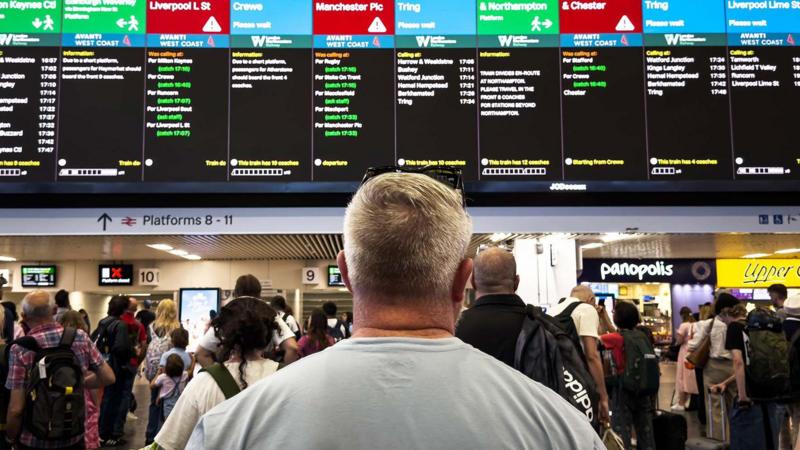
A brief power outage at Network Rail’s control centre in Manchester caused major disruptions to train services across the North West of England. The backup power did not activate quickly enough, impacting signalling systems and causing delays while repairs were made.
Key Facts
The power cut lasted about 90 seconds at Network Rail’s Manchester operating centre.
Backup power failed to start as quickly as expected, causing signalling systems to stop working.
Signalling systems control train traffic, so trains had to be stopped during the outage.
Some signal system parts were damaged and needed replacement, causing longer delays.
The Manchester operating centre manages a large part of the railway network in the North West.
Network Rail is investigating the incident and working on improving system resilience.
Network Rail has moved from many old signal boxes to 12 centralised Rail Operating Centres across Great Britain.
Experts warn that centralising controls makes the network more vulnerable if one centre fails.
Network Rail receives government funding every five years; the latest budget started in 2024 with £44.1 billion allocated.
Read the Original
Want the full story? Tap a source to open the original
article.
Section 301 tariffs were created by Congress to be precise tools in economic policy, aiming to address specific trade issues without causing widespread harm. These tariffs are meant to target particular problems rather than apply broad, heavy-handed trade restrictions.
Key Facts
Section 301 is a law passed by Congress related to trade policy.
It allows the U.S. government to impose tariffs as a form of economic diplomacy.
The goal is to use these tariffs carefully to solve trade disputes.
Tariffs under Section 301 are designed to be targeted, not broad or excessive.
This approach aims to fix problems without damaging the overall economy.
The law reflects a preference for precise actions rather than large-scale trade wars.
Section 301 has been used in recent years for trade negotiations with other countries.
Read the Original
Want the full story? Tap a source to open the original
article.
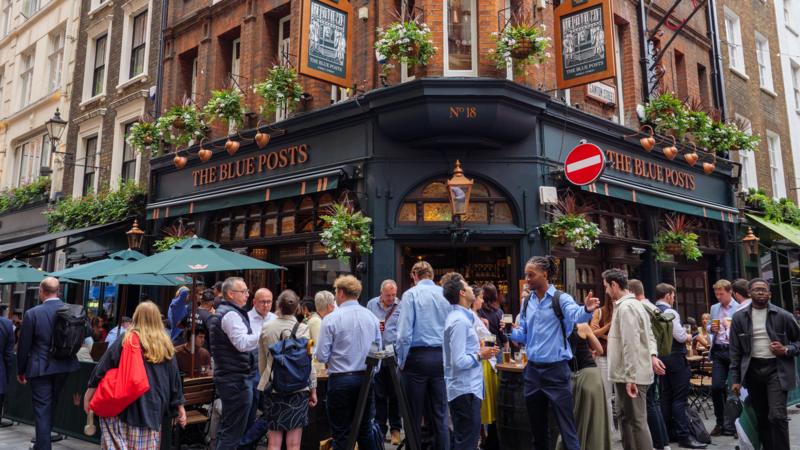
Westminster City Council in London is proposing new rules to reduce standing drinking ("vertical drinking") in pubs and bars in central areas like Soho to manage noise and overcrowding. The council says it wants more seating and table service to create a better environment, but some business groups and politicians disagree with these plans.
Key Facts
Vertical drinking means standing up to drink, often outside pubs or bars.
Westminster has about 500 pubs, bars, and wine bars, and nearly 1,750 cafes and restaurants.
The council's draft policy aims to discourage excessive drunkenness and encourage seated drinking with table service.
The plan includes refusing new licenses for places in a busy part of London called the West End cumulative impact zone.
Westminster City Council denies plans to ban standing drinking outright.
Some local business groups say the council is trying to reduce venue capacities and change Soho’s character.
London’s Mayor Sadiq Khan said nightlife areas need a supportive approach, not restrictive rules.
A Labour spokesperson highlighted the importance of busy pubs for jobs and local culture.
Read the Original
Want the full story? Tap a source to open the original
article.
William Orbit, a British music producer known for working with stars like Madonna and Blur, died at age 69 on July 23. He was famous for producing Madonna’s highly successful 1998 album Ray of Light and contributed to many other popular music projects.
Key Facts
William Orbit died at home on July 23, aged 69; no cause of death was given.
He produced Madonna’s 1998 album Ray of Light, which won three Grammy Awards and sold millions worldwide.
Orbit also worked with bands and artists such as Blur, All Saints, U2, and Pink.
His music style combined electronic genres like trip-hop, jungle, and techno.
He started in music in the 1980s with the electronic group Torch Song and later had solo success.
Orbit’s real name was William Wainwright; he grew up in north London and left school at 16.
He helped redefine Madonna’s sound in the late 1990s, collaborating closely on the Ray of Light album.
Besides producing for others, Orbit released his own albums and had hit singles, including an electronic version of Adagio for Strings.
Read the Original
Want the full story? Tap a source to open the original
article.
More than a dozen U.S. states do not require home inspectors to have licenses or training, allowing anyone to work as an inspector. This lack of regulation can lead to missed problems in homes, which may cause financial and safety issues for buyers.
Key Facts
Only 35 states require home inspectors to have a state-issued license or registration.
In 15 states, no license or formal training is needed to be a home inspector.
Homebuyers rely on inspectors to find issues like structural problems, electrical faults, or plumbing leaks.
Poor inspections can cause buyers to overpay, face unexpected repairs, or encounter safety hazards.
Legal options for buyers against negligent inspectors are often limited.
Examples include buyers discovering costly foundation problems after inspections missed them.
Some inspectors rely too much on checklists and may miss important home issues.
The 15 states with no licensing requirements include California, Illinois, Michigan, Pennsylvania, and others.
Read the Original
Want the full story? Tap a source to open the original
article.
A photographer and director describes how a serious childhood accident led to decades of hidden injuries and surgeries that paused his public career. Despite this, he continued creating art privately and later returned to his career after a long absence, surprising many who thought he had retired or died.
Key Facts
At age 15, the author had a severe accident causing a coma and major organ and spinal injuries.
Doctors missed some spinal injuries because advanced scans weren't available at the time.
He started as a painter and photographer, then began directing music videos without prior experience.
He directed nearly 400 music videos and won Emmy and Peabody Awards.
His photography style focused on personal conversations rather than staged setups.
Starting around age 50, his undiagnosed spinal injuries required nineteen surgeries and implanted metal rods.
His recovery time caused people in Hollywood to think he had retired or died.
Despite being out of the public eye, he kept creating art privately during his recovery.
Read the Original
Want the full story? Tap a source to open the original
article.
Bari Weiss has been leading CBS News for 10 months and is making big changes, especially to the news program 60 Minutes. The show still has a large audience, but Weiss’s changes have caused worries about how well it will do in the future.
Key Facts
Bari Weiss became editor-in-chief of CBS News in October 2025.
She overhauled 60 Minutes by changing correspondents and production staff before its new season premiere.
60 Minutes averages about 9 million viewers per night, more than CBS’s other news shows.
Weiss replaced the anchor of CBS Evening News, but its viewership dropped by 7% in early 2026.
CBS Evening News had about 3.81 million viewers in July 2026, which is less than competitors NBC and ABC.
CBS Mornings, now with Gayle King and Nate Burleson as hosts, had its lowest-ever viewership recently at 1.57 million.
CBS’s late-night show Stephen Colbert was cancelled, replaced with a less popular alternative.
Weiss’s leadership has raised concerns about whether CBS News can improve its ratings and compete with other networks.
Read the Original
Want the full story? Tap a source to open the original
article.
The Paris-based fashion brand Matières Fécales, also known as Fecal Matter, has recently gained significant attention in the fashion world. Founded over ten years ago in Montreal by designers Steven Raj Bhaskaran and Hannah Rose Dalton, the brand is known for its unusual name and edgy style and has been worn by celebrities like Zendaya, Lady Gaga, and Demi Moore.
Key Facts
Matières Fécales means "Fecal Matter" in English, chosen to give a glamorous twist to a vulgar term.
The brand was started by two designers while they were students in Montreal.
Their style includes dramatic looks, like white makeup and skin boots that resemble real feet.
The brand aims to challenge the wasteful aspects of the fashion industry.
They went from selling on Depop, a secondhand platform, to showing collections at Paris Fashion Week.
Celebrities such as Zendaya, Lady Gaga, Demi Moore, and Kylie Jenner have worn their designs.
In 2024, Dover Street Market, a well-known fashion retailer, began supporting the brand.
The designers use fashion to blend beauty with unconventional, sometimes decaying, elements.
Read the Original
Want the full story? Tap a source to open the original
article.
Several large US companies received tariff refunds during the latest quarter, which helped improve their reported earnings. Amazon said it got $600 million back, and Apple said the refunds increased its profit per share by $0.11.
Key Facts
Tariff refunds are payments from the government returning money collected from import taxes.
The Trump administration returned about $100 billion in tariff refunds so far.
These refunds are helping some big US companies report better financial results.
Amazon received $600 million in tariff refunds during the quarter.
Apple reported that refunds added $0.11 to its earnings per share.
PepsiCo also informed investors about receiving tariff refunds.
The refunds are part of a broader effort to ease the financial impact of trade tariffs on companies.
Read the Original
Want the full story? Tap a source to open the original
article.
UK house prices were mostly unchanged in July, with an average price of about £299,253. Higher mortgage rates and concerns about events in the Middle East made it harder for buyers to afford homes, leading to very slow price growth compared to last year.
Key Facts
The average UK house price in July was £299,253, nearly the same as June.
Prices rose only 0.1% over the past year, the slowest growth since November 2023.
Mortgage rates have increased, with typical two-year fixed rates around 5.63%.
Higher mortgage rates and uncertain events in the Middle East are affecting buyers' ability to afford homes.
Northern Ireland saw the highest price growth, with prices up 7.4% to £231,131.
In England, northern regions had modest price increases, while southeast England and London saw price drops.
Experts say the property market is stable but sluggish, caught between high mortgage rates and limited affordability.
The difference between northern and southern England housing markets is growing, with more demand and investment in the north.
Read the Original
Want the full story? Tap a source to open the original
article.
President Donald Trump has ordered a 15% tariff on imported polysilicon, a key material used to make microchips and solar panels, starting December 4. The goal is to help US producers compete with China and strengthen US supply chains for technology and clean energy products.
Key Facts
Polysilicon is a very pure form of silicon used to make semiconductors for AI, data centers, and solar panels.
The US has two main polysilicon factories: Hemlock Semiconductor in Michigan and Wacker Chemie in Tennessee.
The tariff sets minimum prices for polysilicon and related solar products to support US industry.
The Commerce Department may offer incentives to companies investing in polysilicon production in the US.
China criticizes the tariff as unfair protectionism that harms US and Chinese businesses.
US solar factories accuse Chinese rivals of selling cheap panels to undercut competition, helped by government subsidies.
China’s exports, especially of AI-related products, grew strongly despite rising trade tensions.
Experts say China’s strength in electronics and AI hardware will likely help it keep growing its global market share.
Read the Original
Want the full story? Tap a source to open the original
article.
Argos, a retail company, is planning to change how it looks and operates. The goal is to attract more customers by updating its stores and shopping experience.
Key Facts
Argos is undergoing a makeover to improve its stores.
The company wants to attract new shoppers.
Argos is part of the retail and shopping industry.
The update includes changes to store design and services.
This change aims to increase customer visits and sales.
Argos is working on adapting to current shopping trends.
The news was published recently in the business section.
Read the Original
Want the full story? Tap a source to open the original
article.