Global oil supplies are dropping at an unusually fast rate due to reduced exports from the Middle East caused by the war involving Iran. The International Energy Agency (IEA) reported that oil reserves fell sharply in March and April as countries used their stockpiles to cover the shortage, and warned that this fast depletion may cause oil prices to rise in the future.
Key Facts
Global oil inventories decreased by 129 million barrels in March and 117 million barrels in April.
The decline in oil stocks is because exports through the Strait of Hormuz dropped during the Iran war.
Before the conflict, the world had about 8.2 billion barrels of oil in storage; by the end of April, stocks dropped to approximately 7.8 billion barrels.
Analysts predict that by the end of May, oil inventories could reach a record low near 7.6 billion barrels.
The International Energy Agency released its largest government oil reserve stocks in mid-March to help offset the supply loss.
Global oil demand in 2024 is expected to fall by 420,000 barrels per day, partly due to higher prices and weaker economic conditions.
Oil supply is forecasted to be on average 1.78 million barrels per day less than demand this year.
The shrinking oil stockpiles could lead to future increases in oil prices.
Read the Original
Want the full story? Tap a source to open the original
article.
U.S. producer prices rose 6% over the past year, the largest increase since December 2022, driven by higher energy costs linked to the Iran war. This rise in wholesale prices puts pressure on companies to raise prices for customers and may lead to higher consumer inflation.
Key Facts
Producer prices increased 6% from a year ago, the biggest jump since December 2022.
In April alone, producer prices rose 1.4%, the largest monthly increase since March 2022.
Energy costs rose sharply: 7.8% from March to April and 22.7% compared to last year.
Gasoline prices went up 15.6% in April, and diesel prices rose 12.6%.
Core producer prices, which exclude food and energy, rose 1% in April and 5.2% over the year.
Consumer prices also increased 3.8% from last year, the biggest rise in over three years.
Rising prices come at a time when many Americans are already concerned about the cost of living.
Inflation and affordability are expected to be important topics for voters in the November elections.
Read the Original
Want the full story? Tap a source to open the original
article.
The article argues that using E15 fuel all year is not a good answer for climate issues, reducing fuel costs, or long-term energy planning. It suggests that Congress should say no to allowing E15 fuel to be sold throughout the year.
Key Facts
E15 fuel is gasoline with 15% ethanol mixed in.
The article claims year-round use of E15 does not help fight climate change.
It also says E15 is not a way to make fuel more affordable.
The article views year-round E15 as an unreliable energy policy for the future.
It urges lawmakers in Congress to reject approving continuous sales of E15 fuel.
Read the Original
Want the full story? Tap a source to open the original
article.
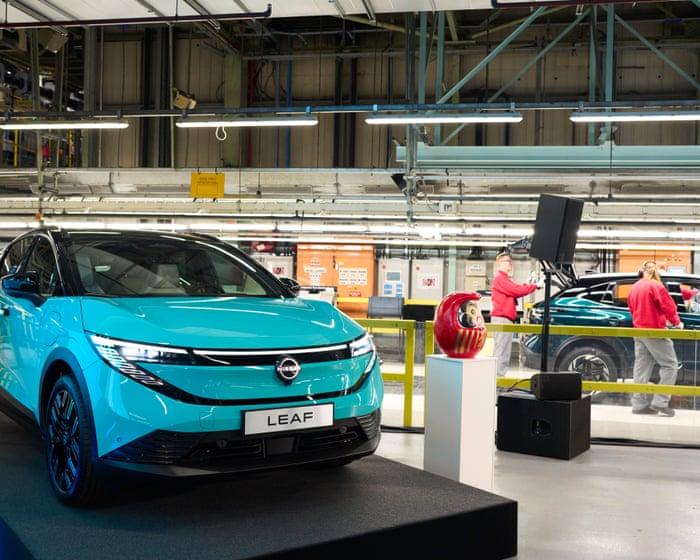
Nissan’s chief executive said the company is thinking about making cars for other brands at its Sunderland factory in the UK. This follows big losses and the closure of one production line, as Nissan looks for ways to add more work to the plant amid weak sales.
Key Facts
Nissan is considering building cars for Chinese rival Chery at its Sunderland plant.
The Sunderland factory employs about 6,000 people and recently closed one of its two production lines.
Nissan reported a net loss of around £2.5 billion for the year ending March.
Other European carmakers are also discussing sharing factories with Chinese brands to use spare capacity.
Chinese car sales in Europe have risen because their cars often cost less to make.
Nissan plans to cut costs and work more closely with external partners to stay competitive.
The company faces challenges from tariffs and strong competition, especially from China.
Nissan’s CEO Ivan Espinosa took charge a year ago with a goal to improve profitability.
Read the Original
Want the full story? Tap a source to open the original
article.
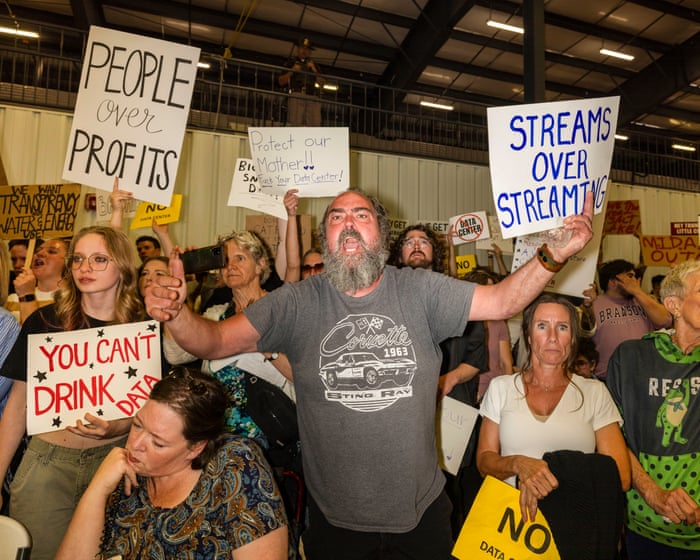
Utah approved a large datacenter project called Stratos, which will cover over 40,000 acres and use more power than the entire state currently consumes. The decision has caused strong public concern due to the datacenter's expected high energy use and large water consumption in a drought-affected area.
Key Facts
The Stratos datacenter will cover 62 square miles in Box Elder County, Utah.
It will require about 9 gigawatts of power, more than Utah’s current total electricity use.
The project will consume a large amount of water in a state experiencing severe drought.
Environmentalists warn it could harm the Great Salt Lake ecosystem and bird habitats.
Critics say the project could increase Utah’s pollution by about 50%.
Cooling the facility may raise local temperatures by several degrees Fahrenheit.
Kevin O’Leary, a venture capitalist, supports the project, citing job creation and competing with China in AI development.
Nearly 4,000 people have formally opposed the project, leading to public protests and heated meetings.
Read the Original
Want the full story? Tap a source to open the original
article.
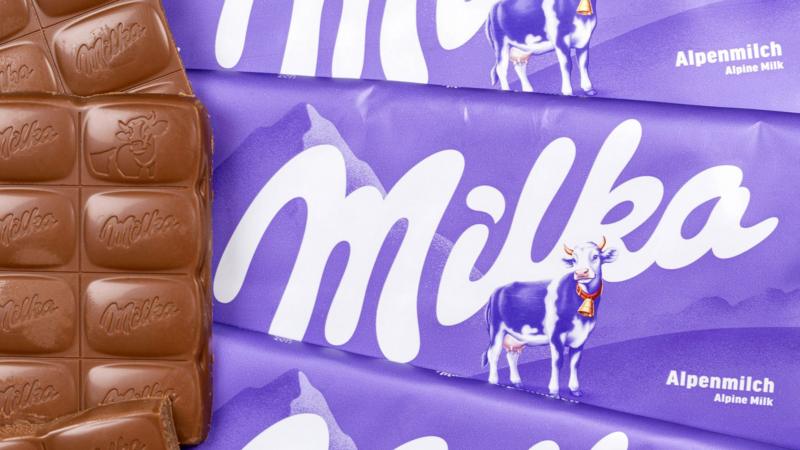
A German court ruled that Milka’s Alpenmilch chocolate bar misled customers by reducing its weight from 100g to 90g while keeping almost the same packaging. The court said the company should have clearly informed buyers about the change to avoid confusion, as this practice is known as "shrinkflation."
Key Facts
Milka's Alpenmilch bar was reduced from 100 grams to 90 grams.
The wrapper looked almost the same, causing customers to think they were buying the same amount of chocolate.
German Bremen regional court found this misled consumers and broke competition law.
The case was brought by Hamburg’s consumer protection group (VZHH).
Mondelēz, the maker of Milka, said they informed consumers online and blamed rising costs for the smaller bars.
The price of the bar went up from €1.49 to €1.99 despite less chocolate inside.
The court ruled that clear and easy-to-see notice about the size change was needed on the packaging.
This issue is part of a wider trend called shrinkflation, where companies reduce product size but keep prices the same or higher.
Another German chocolate brand, Ritter Sport, has also reduced the weight of some bars while keeping similar packaging.
Shrinkflation affects other products too, like toothpaste, oats, and coffee.
Read the Original
Want the full story? Tap a source to open the original
article.
Intertek, a laboratory testing company, is considering a £10.6 billion takeover offer from the Swedish private equity firm EQT, owned by the Wallenberg family. After rejecting three earlier offers, Intertek’s board now plans to recommend the £60-a-share deal to its shareholders, pending final approval.
Key Facts
Intertek is a laboratory testing firm listed on the London Stock Exchange since 2002 and part of the FTSE 100 index since 2009.
EQT is a Swedish buyout firm owned by the billionaire Wallenberg family; it values Intertek at £10.6 billion including debt.
Intertek had previously rejected three lower offers (£58, £54, and £51 per share) before considering the latest offer of £60 per share.
Intertek has about 45,000 employees and operates more than 1,000 labs worldwide.
The company recently reviewed its strategy and was exploring splitting off its energy and infrastructure division from its product testing business.
Some investors, including Matt Peltz of Lost Coast Collective, pressured Intertek’s board to accept the takeover offer.
The deal depends on conditions such as due diligence and will require shareholder approval.
EQT was founded in 1994 as a spinout from Investor AB, the Wallenberg family’s industrial holding company with a business empire worth about $40 billion.
Read the Original
Want the full story? Tap a source to open the original
article.
Several large class action settlements are currently paying or preparing to pay millions of Americans money. These settlements cover areas such as health insurance, technology products, and banking services, and eligibility depends on specific dates and account or purchase history.
Key Facts
Blue Cross Blue Shield agreed to a $2.7 billion settlement for alleged anti-competitive behavior affecting premiums from 2008 to 2020.
Eligible BCBS customers may receive around $300 on average, with payments starting in May 2026 for those who filed by November 2021.
Apple reached a $250 million settlement over claims it misled customers about Siri features on iPhone 15 Pro/Pro Max and iPhone 16 models bought between June 2024 and March 2025.
Apple customers may get $25 to $95 per device once the settlement is approved and proof of purchase is submitted.
Capital One agreed to a $425 million settlement for allegedly offering higher interest rates to new savings accounts while disadvantaging older accounts from 2019 to 2025.
Capital One 360 Savings account holders may receive payments based on missed interest, with funds expected automatically starting July 2027.
The article also highlights a divorce case where a Netflix subscription was treated as a valuable asset, showing how digital services can have legal and financial significance.
Deadlines and documentation requirements vary by settlement, so qualifying individuals should check specific terms to claim their money.
Read the Original
Want the full story? Tap a source to open the original
article.
Tui, Europe's largest travel company, has seen its summer holiday bookings from UK customers fall by 10%. Customers are booking trips closer to departure dates and choosing Western Mediterranean destinations more than Eastern ones, partly due to concerns about the Iran war and jet fuel prices.
Key Facts
Tui’s revenue from UK summer holiday bookings dropped by 10%.
Customers are booking holidays later and choosing destinations in the Western Mediterranean instead of the Eastern Mediterranean.
Tui is reducing the number of airline seats it buys by 4-5% but will keep its own flights at current levels.
Tui’s CEO said there are no expected jet fuel shortages in the coming weeks.
The Strait of Hormuz, important for oil and gas shipping, is effectively closed, increasing jet fuel prices.
Some airlines have raised ticket prices or reduced flights to manage costs and cautious customers.
Tui reported a €40 million profit loss linked to the US-Israel war with Iran in the first quarter.
Overall summer booking revenues for Tui fell by 7% compared to last year.
Read the Original
Want the full story? Tap a source to open the original
article.
California homeowners insured by Farmers Insurance will see an average 1.5% increase in their home insurance premiums starting after September 15. The state insurance department approved the increase as part of a new pricing plan that also offers more discounts and incentives for wildfire safety measures.
Key Facts
Nearly 915,000 California homeowners with Farmers Insurance are affected.
The average premium rise approved is 1.5%, lower than the 6.99% Farmers originally requested.
Premium changes may vary depending on discounts and wildfire risk efforts.
The increase follows California’s Sustainable Insurance Strategy to help insurers handle wildfire risks and costs.
Farmers had limited issuing new policies in early 2023 but lifted those restrictions after reforms.
New discounts include raising the home-and-auto insurance bundling discount from 15% to 22%.
Homeowners taking steps to reduce wildfire risks can get additional incentives.
California’s insurance market faces challenges from wildfires, rebuilding costs, and reinsurance expenses.
Read the Original
Want the full story? Tap a source to open the original
article.
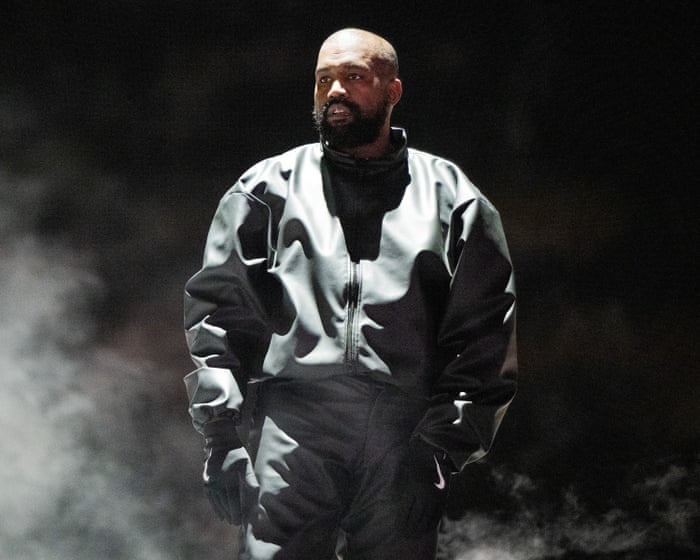
Kanye West, who now goes by Ye, lost a lawsuit over using an uncleared music sample at a live event in 2021. A jury ordered him to pay a six-figure sum to four musicians whose work was played without permission during a stadium listening party.
Key Facts
In July 2021, Ye played his unreleased album *Donda* at Atlanta’s Mercedes-Benz Stadium to 40,000 fans.
The song "Hurricane" included a sample called MSD PT2, created by four musicians in 2018.
Ye did not get permission to use this sample at the event, which made money from ticket sales and merchandise.
Ye removed the sample from the final album version and credited the four musicians for interpolation (using parts of the music differently).
The musicians sued for compensation for the unapproved use at the live event and won the case.
The jury awarded the plaintiffs a six-figure payment, but Ye’s lawyers argued the amount would be less than claimed.
Ye appeared in court and said he tries to be fair but feels people take advantage of him.
This is Ye’s second lawsuit loss this year; he also had to pay $140,000 to a handyman.
Read the Original
Want the full story? Tap a source to open the original
article.
President Donald Trump is traveling to Beijing with a group of US business leaders for a meeting with Chinese President Xi Jinping. Trump plans to ask China to allow more access to its markets for American companies and to increase purchases of US products like soybeans.
Key Facts
President Trump is visiting China on a Wednesday for a summit with President Xi Jinping.
He is accompanied by many US business executives.
Trump wants China to "open up" its market to US businesses, meaning fewer restrictions and easier access.
One of the main discussion points is China's buying of US soybeans.
The trip aims to improve trade relations between the US and China.
Other topics likely include tensions about Taiwan and Iran, as suggested by related reports.
The visit is part of ongoing efforts to boost US exports and reduce trade barriers.
This business-focused delegation shows the US interest in strengthening economic ties with China.
Read the Original
Want the full story? Tap a source to open the original
article.
Lee Lai won the 2026 Stella Prize, becoming the first non-binary person and first graphic novelist to receive this $60,000 Australian literary award. Her book Cannon tells the story of a queer Chinese woman in Montreal and explores themes of responsibility and personal struggles.
Key Facts
Lee Lai is the first non-binary and first graphic novelist to win the Stella Prize.
The Stella Prize awards $60,000 to women and non-binary writers for outstanding books.
Cannon follows a queer Chinese woman named Lucy, also called Cannon, living in Montreal.
Lai was nominated before for her debut Stone Fruit, which won several LGBTQ and comics awards.
The Stella Prize began accepting non-binary writers in 2021.
Judges praised Cannon for its emotional depth and artistic storytelling.
Lai hopes this win encourages more readers to explore graphic novels.
The prize money gives Lai time to focus on her writing, as comic artists often have little financial support.
Read the Original
Want the full story? Tap a source to open the original
article.
UK housebuilder Vistry expects much lower profits due to uncertainty from the US-Israeli war on Iran. The company is cutting home prices and offering discounts to attract buyers while facing higher costs for materials and wages.
Key Facts
Vistry’s shares dropped 10.5%, reaching their lowest level in nearly 15 years.
First-half profits are expected to be significantly lower than last year.
The Middle East conflict has raised building material and wage costs.
Buyers have become cautious, leading to slower sales recently.
Vistry is using bigger incentives and discounts to encourage home sales.
The company stopped buying its own shares to focus on reducing debt.
Vistry’s CEO Adam Daniels is conducting a full review of company operations.
The estate agent Savills also expects the Iran war to reduce UK housing sales.
Read the Original
Want the full story? Tap a source to open the original
article.
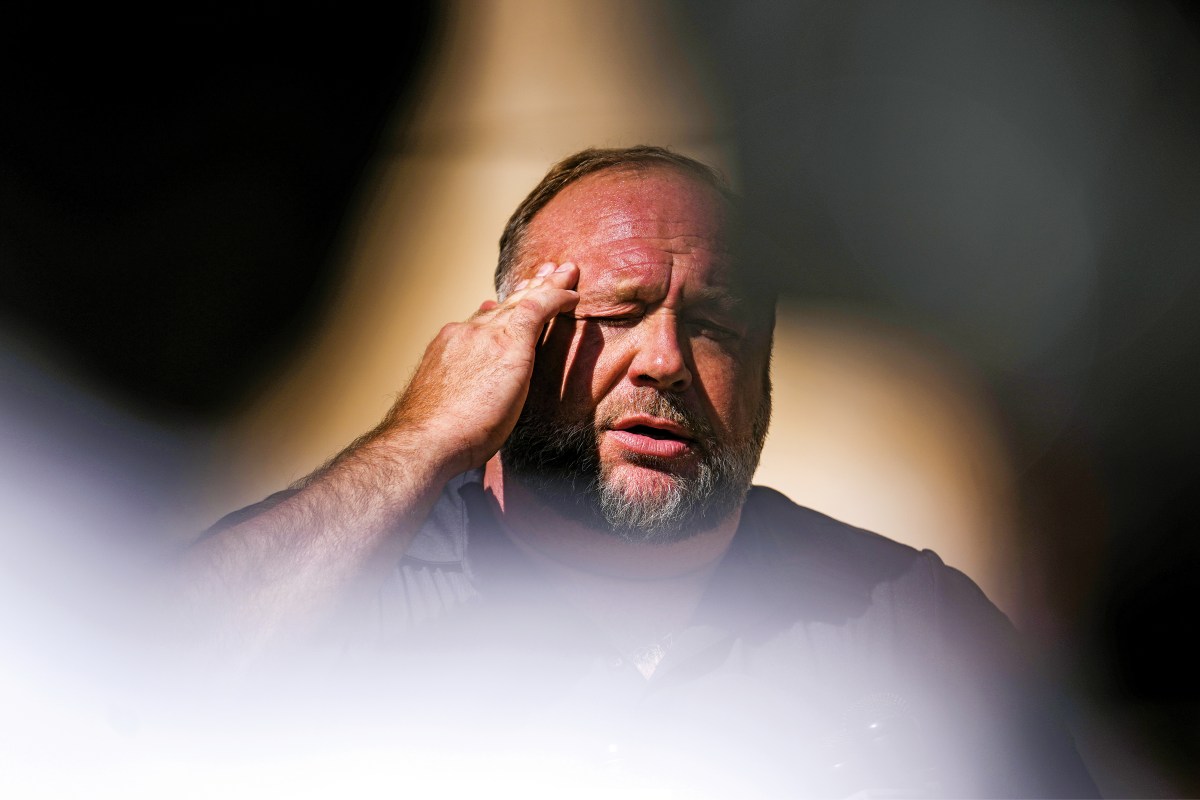
The Onion, a satirical news outlet known for fake headlines, has bought the bankrupt conspiracy theory website Infowars. The deal follows a large legal judgment against Infowars’ owner, Alex Jones, and aims to transform the site and direct any profits to victims of past tragedies.
Key Facts
The Onion is known for parody news that jokes about real social and political issues.
Infowars was founded by Alex Jones in 1999 and spread conspiracy theories.
Infowars gained influence during President Trump’s earlier terms and promoted false election fraud claims.
Alex Jones faced a $1.4 billion defamation judgment over false claims that the Sandy Hook shooting was a hoax.
Infowars filed for bankruptcy after the judgment.
The Onion won a bankruptcy court bid in 2024 to buy Infowars’ website and assets.
The legal process faced delays, but The Onion aims to finish the takeover soon.
The Onion plans to repurpose the Infowars platform and give profits to Sandy Hook victims’ families.
Read the Original
Want the full story? Tap a source to open the original
article.
Asian stock markets showed mixed results as interest in artificial intelligence (AI) stocks lessened and concerns about ongoing conflicts affected investor confidence. Oil prices remain high due to the war in Iran, impacting markets and adding to uncertainty.
Key Facts
Japan’s Nikkei 225 rose 0.8% to 63,244.43 points.
South Korea’s Kospi gained 2.7% to 7,849.21 points after earlier losses.
Australia’s S&P/ASX 200 dropped 0.5% to 8,630.40 points.
Hong Kong’s Hang Seng was almost unchanged, down less than 0.1%, while China’s Shanghai Composite increased 0.6%.
U.S. stock indexes had mixed results: S&P 500 fell 0.2%, Dow Jones rose 0.1%, Nasdaq dropped 0.7%.
Semiconductor stocks like Intel and Micron Technology fell sharply after previous gains.
Oil prices remain elevated, with U.S. crude around $100.88 and Brent crude about $106.44 per barrel, influenced by the Iran conflict and restrictions on the Strait of Hormuz.
The U.S. dollar strengthened slightly against the Japanese yen, while the euro weakened a bit against the dollar.
Read the Original
Want the full story? Tap a source to open the original
article.
A 22-year-old man from Melbourne, Kyle Hudson, gambled nearly $900,000 over four years on online betting platforms before he took his own life. An inquest is examining how targeted promotions from betting companies may have encouraged his gambling and whether those companies properly assessed his risk of harm.
Key Facts
Kyle Hudson started gambling on his 18th birthday and died at age 22.
He placed 8,485 bets totaling $895,733 and deposited $406,725 into betting accounts.
Hudson’s total income over this time was about $105,000, but his gambling losses were nearly $48,000 overall.
He redeemed 489 targeted inducements (promotions) from companies like Sportsbet, Bet365, and Entain.
These promotions, such as deposit-match bonuses, were sent frequently via email and SMS and influenced his betting behavior.
Hudson sometimes withdrew all his funds and only returned to bet after receiving bonus offers.
In the last year of his life, his bets increased in size, often between $3,000 and $9,400.
Betting companies blocked some bonus bets when Hudson tried to use strategies to reduce his losses.
Read the Original
Want the full story? Tap a source to open the original
article.
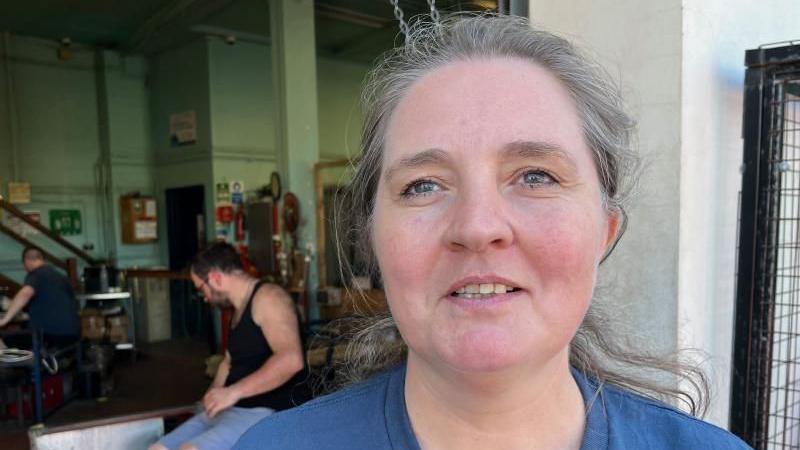
Bristol Blue Glass, a long-running glassmaker in the UK, announced it will close in May due to high energy and tax costs. The company’s managing director said rising fuel prices and National Insurance payments make manufacturing very difficult in the UK.
Key Facts
Bristol Blue Glass has made specialist glassware for nearly 40 years.
The company’s lease was extended until the end of May after public support.
Rising fuel prices and National Insurance increases have heavily impacted costs.
The managing director questioned the future of manufacturing in the UK.
Bristol Blue Glass’s products appeared in Dr Who and Harry Potter films.
A key employee has spent 17 years as a glassblower and is upset about the closure.
Nearby Bath Aqua Glass is also cutting costs by reducing visits and staff.
Running glass furnaces is very expensive, costing around £4 per minute.
Read the Original
Want the full story? Tap a source to open the original
article.
Mango sellers in south London face a shortage of Alphonso mangoes this spring, leading to higher prices and fewer deliveries. The shortage is caused by lower production due to bad weather in India and shipping disruptions linked to conflict in the Middle East.
Key Facts
Alphonso mangoes, known as the "king of mangoes," are prized for their sweetness and distinctive aroma.
The fruit usually arrives in the UK by air from India between April and June each year.
This year, fewer Alphonso mangoes have been delivered to London’s markets, especially in the Tooting area.
Bad weather in parts of India has reduced the harvest of Alphonso mangoes.
Conflict in the Middle East has caused longer flight routes and increased fuel costs, raising prices.
Despite higher prices, customer demand for Alphonso mangoes remains strong.
The Alphonso season lasts only a few weeks, making it a special time for buyers, especially in the South Asian community.
Other mango varieties are still available during the summer but do not match the Alphonso’s taste and texture.
Read the Original
Want the full story? Tap a source to open the original
article.
Prize draws and competitions have become a large and growing market in the UK but can cause addiction and financial problems. One woman, Lisa, shared how her addiction to these prize draws led her to spend thousands of pounds, run into debt, and struggle to afford basic needs. The government has introduced voluntary guidelines for the industry, but some experts and affected people say they are not enough to prevent harm.
Key Facts
Prize draws and competitions are widespread on social media and TV and are considered a major market by the government.
Lisa, a 33-year-old single mother, became addicted to prize draws and spent over £5,000, including her disability benefit, leading to debt and financial hardship.
Instant-win draws, costing as little as one penny and allowing unlimited entries, are especially tempting and contribute to addiction.
Gambling laws do not fully cover prize draws, which avoid regulation by offering free entry or skill questions.
The government created a voluntary code of practice signed by 177 operators to encourage safer conduct in this market.
Experts say this voluntary code does not fully address the risks from the fast growth of prize draws and competitions.
Lisa could not access some safeguards like bank blocks or ad filters because prize draws are not fully regulated as gambling.
Lisa described the emotional toll of the addiction, including shame, desperation, and using tissues as tampons due to lack of money.
Read the Original
Want the full story? Tap a source to open the original
article.