UK long-term borrowing costs have reached their highest level since 1998 as investors worry about political uncertainty around Labour leader Keir Starmer. The value of UK government bonds fell, the pound dropped, and stock prices declined amid fears that a leadership change could lead to more public spending and inflation.
Key Facts
The interest rate on 30-year UK government bonds rose to 5.794%, the highest since May 1998.
The 10-year UK government bond yield increased to 5.11%, near its highest level since 2008.
The British pound fell 0.5% against the US dollar and 0.3% against the euro.
More than 70 Labour MPs publicly called for Keir Starmer to resign amid internal party pressure.
Investors fear a left-leaning replacement would increase government spending and loosen fiscal rules.
The FTSE 100 stock index dropped nearly 1%, with bank shares losing 3-4%.
Oil prices rose due to concerns over fragile peace talks between the US, Israel, and Iran.
Higher energy prices and political uncertainty are increasing inflation risks and financial market instability.
Read the Original
Want the full story? Tap a source to open the original
article.
The mining company Fortescue has been ordered by a federal court to pay $150 million to the Yindjibarndi traditional owners for cultural losses caused by the Solomon Hub iron ore mine in Western Australia. This is the largest native title compensation payout in Australian history and follows a long legal fight by the Yindjibarndi people over damage to their land and culture.
Key Facts
Fortescue’s Solomon Hub mine has generated about $80 billion in revenue since 2013.
The Western Australian government approved the mine without the Yindjibarndi traditional owners’ consent.
The Yindjibarndi Ngurra Aboriginal Corporation (YNAC) filed the compensation claim in 2022, initially seeking $1.8 billion.
The court awarded $150 million for cultural loss and only $100,000 for economic loss.
The Yindjibarndi people gained exclusive native title rights to the land around the mine in 2017.
The court found 140 cultural sites completely destroyed and 240 moved off the land.
The judge described the cultural damage as harming the community’s spirit and soul deeply.
Fortescue had made deals with a breakaway group to secure land agreements after YNAC refused offered royalties.
Read the Original
Want the full story? Tap a source to open the original
article.
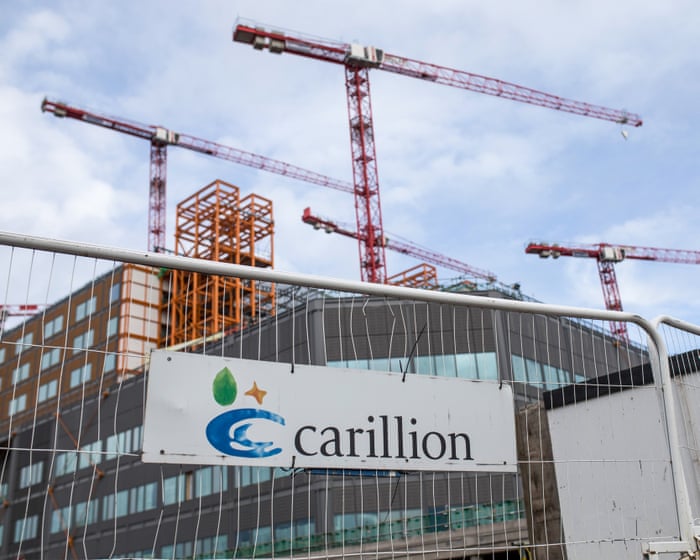
Five former top accountants at Carillion, a major UK construction company that collapsed in 2018, have been banned from working as accountants for several years due to reckless actions related to false financial reporting. The company’s collapse caused huge debts, job losses, and delays in public projects.
Key Facts
Carillion was a large UK construction and services company that went into compulsory liquidation in January 2018.
The collapse was one of the biggest corporate failures in UK history, with debts of £7 billion.
Five former senior accountants at Carillion have been banned by the UK accountancy regulator (FRC) for acting recklessly in financial reporting.
Richard Adam, the former finance director, was banned for 15 years and fined over £220,000.
Zafar Khan, another former finance chief, was banned for 10 years and fined over £60,000.
Three other senior accountants received bans between 2 and 8 years, along with fines and reprimands.
The misleading financial statements covered transactions and contracts from 2013 to 2017.
Carillion’s collapse led to 3,000 job losses and disrupted 450 projects in schools, roads, prisons, hospitals, and sports facilities.
Read the Original
Want the full story? Tap a source to open the original
article.
Japanese snack company Calbee will temporarily use black and white packaging for 14 products due to shortages of an ingredient for ink caused by the conflict in Iran. The war has disrupted supplies of naphtha, a chemical used in ink and plastics, raising costs for many companies in Asia and around the world.
Key Facts
Calbee is Japan’s largest snack maker and will change packaging colors starting May 25.
The war in Iran has disrupted supplies of naphtha, a byproduct of oil refining used in inks and plastics.
Naphtha prices in Asia have nearly doubled since the conflict began on February 28.
About 40% of Japan’s naphtha imports come from the Middle East.
The Japanese government is working to stabilize supply and find alternative sources, including the US.
Other companies such as Mizkan and car makers Toyota and Hyundai are also affected by higher material costs.
Airlines worldwide have paused flights due to increased jet fuel prices caused by the war.
Some retailers like UK’s Next have raised prices because of fuel costs and supply chain issues.
Read the Original
Want the full story? Tap a source to open the original
article.
Asian stock markets showed mixed results as a strong rise on Wall Street met worries about rising oil prices and concerns about a possible bubble in artificial intelligence (AI) stocks. Oil prices went up due to the ongoing war with Iran, which is disrupting oil supplies and adding to global inflation.
Key Facts
Japan’s Nikkei 225 index rose by 0.6% to 62,828.07.
South Korea’s Kospi index fell 2.7%, partly due to fears of overdependence on AI companies.
Australia’s S&P/ASX 200 dropped 0.4%, Hong Kong’s Hang Seng fell slightly by less than 0.1%, and China’s Shanghai Composite lost 0.4%.
Oil prices increased, with U.S. crude rising to $99.64 per barrel and Brent crude reaching $105.51 per barrel amid the Iran war.
The war with Iran is causing higher oil prices by blocking key oil shipping routes like the Strait of Hormuz.
Despite higher gasoline prices and tariffs, some companies are reporting better profits than expected, showing some strength in the U.S. economy.
Wall Street’s main indexes all reached or neared record highs: the S&P 500, Dow Jones Industrial Average, and Nasdaq composite all gained modestly.
The U.S. dollar strengthened against the Japanese yen, while the euro weakened slightly against the dollar.
Read the Original
Want the full story? Tap a source to open the original
article.
Buyers of Liza Minnelli’s memoir say the signed copies are fake and want refunds. Experts and fans believe the signatures were made by a machine called an autopen, not by Minnelli’s hand.
Key Facts
Signed copies of Liza Minnelli’s memoir were sold as "hand-signed collectibles" costing up to $250.
Some buyers noticed the signatures all look exactly the same and think they were made by an autopen, a machine that copies handwriting.
Experts from an autograph authentication company said the signatures do not look like they were signed by a person.
Other celebrities have also faced criticism for using machines or stamps to sign books sold as autographs.
Minnelli’s publishers said all copies were signed by her but did not reply to recent questions about the issue.
Fans plan to return the books because they feel the signatures are not genuine.
The autograph market is worth over $25 billion worldwide, but buyers are warned about fake signatures.
A buyer said he feels "deceived" because autographs are supposed to be a special, personal moment captured in time.
Read the Original
Want the full story? Tap a source to open the original
article.
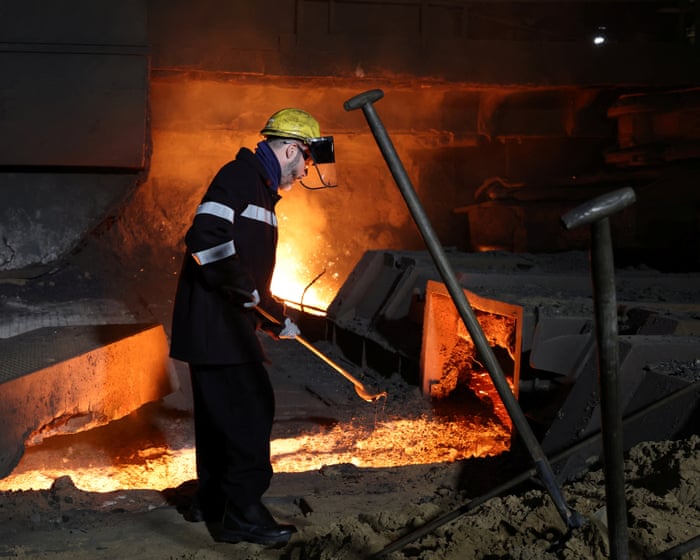
The British government plans to nationalise the British Steel plant in Scunthorpe after years of financial losses and failed private ownership attempts. The steelworks, important for making steel from iron ore, has suffered from aging equipment, foreign competition, and high energy costs, leading to government intervention to protect jobs and steel production.
Key Facts
The British Steel plant in Scunthorpe may soon be fully owned by the government.
The plant has a long history, with blast furnaces dating back to 1938 and 1954.
Private owners, including Chinese company Jingye Steel, have struggled to make the plant profitable.
Jingye lost about £350 million on the steelworks by the end of 2023.
Government officials have controlled the plant since 2024, but Jingye retains economic ownership.
Jingye demanded up to £1 billion to repay debts, which the government declined.
The government offered £100 million for the plant, which Jingye rejected.
The government wants to keep British Steel’s ability to produce steel from iron ore to preserve industry and jobs.
Read the Original
Want the full story? Tap a source to open the original
article.
Japan’s largest snack company, Calbee, will use black-and-white packaging for 14 products due to a shortage of ink ingredients caused by disruptions in oil supply linked to the Iran war. The company plans to keep supplying products steadily despite these challenges and delays in launching new snacks.
Key Facts
Calbee will switch to simple black-and-white packaging for some products by the end of May.
The change is because of a shortage of naphtha, a key oil-based ingredient used in ink.
The shortage is caused by disruptions near the Strait of Hormuz, related to the war involving Iran.
Calbee is delaying a new snack release because of this supply problem.
Japan imports about 40% of its naphtha from the Middle East.
The Japanese government is increasing imports of naphtha through routes outside the Strait of Hormuz to prevent shortages.
Government officials say ink supply shortages should not cause major problems in Japan.
Calbee, founded in Hiroshima in 1949, is a major international snack company with sales over $2 billion in 2025.
Read the Original
Want the full story? Tap a source to open the original
article.
The United States has started releasing 53.3 million barrels of oil from its strategic reserve as part of an emergency plan coordinated with the International Energy Agency (IEA). This action aims to increase oil supply and stabilize prices amid disruptions caused by tensions in the Middle East.
Key Facts
The U.S. Department of Energy awarded contracts to nine companies to distribute 53.3 million barrels of crude oil.
The biggest shares went to Trafigura (13 million barrels), Marathon Petroleum (12.4 million), and ExxonMobil (11.4 million).
Other companies involved include Macquarie, BP Products North America, Energy Transfer Crude Marketing, Mercuria Energy America, and Phillips 66.
The companies must replace the oil in the reserve later through an exchange program.
This release follows an earlier March agreement to share 172 million barrels with the IEA to increase global oil supplies.
Oil prices have risen due to conflict between the U.S., Israel, and Iran, including Iran blocking the Strait of Hormuz, a key shipping route for oil.
President Donald Trump announced plans to suspend the federal gas tax to help reduce fuel prices, though Congress controls taxation.
Brent crude oil prices climbed above $105 per barrel amid ongoing tensions and supply concerns.
Read the Original
Want the full story? Tap a source to open the original
article.
New data shows that more than a third of properties in Edinburgh’s Quartermile development were bought by people living outside the UK. The area contains luxury apartments and offices, attracting international buyers including many from Hong Kong, Singapore, and Malaysia.
Key Facts
Edinburgh’s Quartermile development has 751 property titles; 263 were purchased by overseas buyers.
95 properties were bought by people based in Hong Kong.
Overseas owners come from 44 countries, including Russia and the Cayman Islands.
Quartermile is located on the former Royal Infirmary site and includes modern glass towers and historic sandstone buildings.
The development is popular for its central location near the university and city center.
Average rents in Edinburgh rose 59% over the past ten years, with Quartermile properties being more expensive than similar ones.
Overseas buyers include international students, their families, and global investors.
The trend reflects a broader shift toward high-end properties and markets in Edinburgh’s city center.
Read the Original
Want the full story? Tap a source to open the original
article.
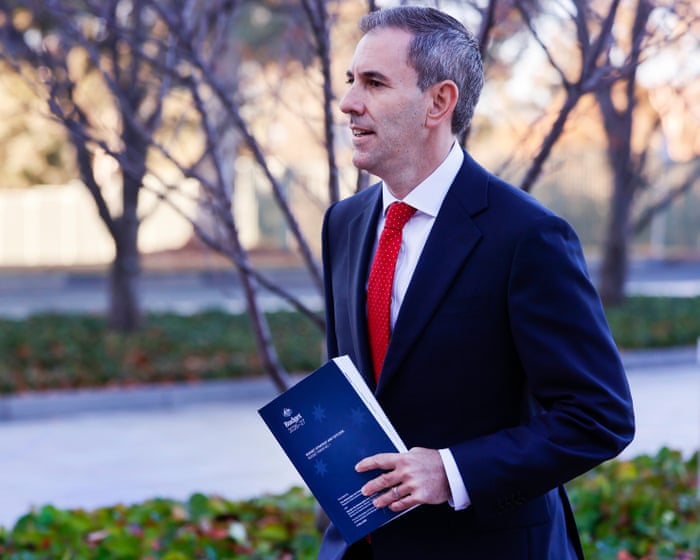
Australia’s federal government is introducing budget changes to address economic concerns, especially around housing affordability. Treasurer Jim Chalmers says these changes aim to help ordinary Australians and respond to rising support for the rightwing One Nation party, which has gained votes partly due to economic worries.
Key Facts
One Nation recently won its first lower house seat in 30 years and is polling strongly in some areas.
Many Australians feel locked out of the housing market, and this problem is growing.
The government plans to reform negative gearing (a tax rule on property investment), capital gains tax, and how trusts are treated to help more regular people.
Treasurer Jim Chalmers says the budget addresses economic pressures that push voters toward parties like One Nation.
Prime Minister Albanese acknowledges worsening economic conditions and the difficulty for younger Australians to buy homes.
Critics argue changes to tax rules may reduce opportunities for young people while protecting benefits for current investors.
The Australian Council of Social Services urges more government support for low-income people, including better income support and affordable housing.
The government aims to increase housing supply and fairness in the tax system as part of the budget.
Read the Original
Want the full story? Tap a source to open the original
article.
Syria has allowed its banks to work again with Visa and Mastercard to accept credit card payments. This move is part of Syria’s attempt to reconnect with the global economy. The European Union has also agreed to improve trade relations with Syria, but Syria continues to ask the United States to remove it from a special terrorism list.
Key Facts
Syrian banks can now use Visa and Mastercard for payments.
This change helps Syria rejoin the global economy.
The European Union is restoring stronger trade ties with Syria.
Syria wants the US to remove it from the "state sponsors of terrorism" list.
Being on this list restricts Syria’s trade and financial activities internationally.
The restoration of credit card payments is a significant step toward normal economic relations.
Syria is working to improve its international economic connections.
Read the Original
Want the full story? Tap a source to open the original
article.
Byron Allen is buying a controlling share in BuzzFeed and will become the company's CEO and chairman. This deal helps BuzzFeed avoid bankruptcy by providing needed funds, with BuzzFeed's founder Jonah Peretti moving to lead a new AI-focused division.
Key Facts
Byron Allen will buy 40 million BuzzFeed shares at $3 each, totaling $120 million.
Allen's family office, Allen Family Digital, will own 52% of BuzzFeed after the deal.
Jonah Peretti will transition from CEO to president of a new BuzzFeed AI division.
BuzzFeed has struggled with debt, falling stock prices, and shrinking revenue.
The company was at risk of being removed from the Nasdaq stock exchange due to low share price.
BuzzFeed is making cost cuts and creating a new independent branch for its food brand Tasty and its studios.
BuzzFeed's value has dropped from $1.7 billion in 2016 to about $28 million now.
The deal is expected to be completed by the end of May.
Read the Original
Want the full story? Tap a source to open the original
article.
The Senate voted 49-44 to move forward with confirming Kevin Warsh as the next chairman of the Federal Reserve. If confirmed, Warsh will replace Jerome Powell as the head of the U.S. central bank.
Key Facts
Kevin Warsh was nominated by President Trump to chair the Federal Reserve.
The Senate voted 49-44 to advance Warsh’s nomination.
This vote means Warsh’s confirmation is likely to happen later this week.
Warsh will replace Jerome Powell as chairman of the Federal Reserve.
The Federal Reserve Board of Governors guides U.S. monetary policy.
The vote occurred in the Senate Banking Committee.
The decision is important for U.S. economic policy and interest rates.
Read the Original
Want the full story? Tap a source to open the original
article.
Starting 12 May, learner drivers in the UK must book their own driving tests. This change aims to stop driving instructors or others from booking tests in bulk and reselling them at high prices, helping reduce long waits.
Key Facts
From 12 May, only the learner driver can book, change, or swap their driving test; instructors cannot do this anymore.
Previously, some instructors sold test booking details to resellers who charged learners up to £500 for tests that normally cost £62 to £75.
Learners need their instructor’s reference number when booking to confirm the instructor’s availability.
Since 31 March, learners are allowed only two changes to their booked test slot (date, time, centre, or swaps).
If learners need more than two changes, they must cancel and rebook their test, with refunds available if cancellation happens 10 working days before the test.
From 9 June, test location changes are limited to the three closest test centres to the original booking.
Learners assisting others with booking must do so in person, and confirmations must be sent to the learner’s email or phone.
The changes are designed to reduce long waiting lists that can be up to six months.
Read the Original
Want the full story? Tap a source to open the original
article.
UK households spent less in April, with the biggest year-on-year drop in 18 months, as worries about the conflict in the Middle East raised fears of higher living costs. Spending on non-essential items and travel fell, while essential spending rose, especially on fuel.
Key Facts
Barclays data shows UK card spending fell 0.1% in April compared to a year earlier, the first drop since November 2024.
Non-essential spending dropped 0.3%, and travel spending fell 5.7% in April. Airline spending declined by 8.3%.
Spending on digital content and subscriptions increased 9.2%, possibly due to popular TV shows like *Euphoria* and *The Testaments*.
Essential spending rose 0.3%, with fuel costs up 10.4%, the largest increase since December 2022.
The Bank of England expects energy bills to rise 16% and food prices to increase 7% by the end of the year due to the Iran war's impact.
A Barclays survey found 72% of people believe the Middle East conflict will affect their living costs through 2026.
Confidence in non-essential spending dropped to its lowest since March 2023, at 49%.
Retail sales fell 3% in April, with food sales down 2.5%, partly influenced by the timing of Easter.
Read the Original
Want the full story? Tap a source to open the original
article.
The bridal industry is changing how it fits wedding dresses because new weight loss drugs like Ozempic cause unpredictable body changes. David’s Bridal’s CEO Kelly Cook said these medications lead to more frequent dress alterations and new fitting policies.
Key Facts
GLP-1 drugs, such as Ozempic, are used for weight loss.
These drugs cause people’s body sizes to change more unpredictably.
Bridal shops, including David’s Bridal, are adjusting their dress fitting processes.
Customers need more frequent dress alterations due to body changes.
New policies are being put in place to handle these fitting challenges.
The bridal business is adapting to these shifts to better serve customers.
The changes affect how weddings are planned and dresses are prepared.
Read the Original
Want the full story? Tap a source to open the original
article.
BuzzFeed has been sold to media entrepreneur Byron Allen in a $120 million deal. Allen will become the new CEO while BuzzFeed founder Jonah Peretti stays on as president of BuzzFeed AI. The company plans to cut costs and focus on free streaming video, audio, and user-generated content.
Key Facts
Byron Allen bought a controlling stake in BuzzFeed for $120 million.
Allen will replace Jonah Peretti as CEO; Peretti remains president of BuzzFeed AI.
BuzzFeed owns the news outlet HuffPost.
The company will make significant cost cuts, which might include layoffs.
Allen plans to expand BuzzFeed into free streaming video and other content types.
BuzzFeed’s value peaked in the 2010s but has fallen since shifting away from journalism in 2023.
BuzzFeed went public in 2021 but has struggled financially, with losses such as $15 million in the first quarter of 2026.
Allen is buying 40 million shares at $3 each, although the current stock price is around $0.71 per share.
Read the Original
Want the full story? Tap a source to open the original
article.
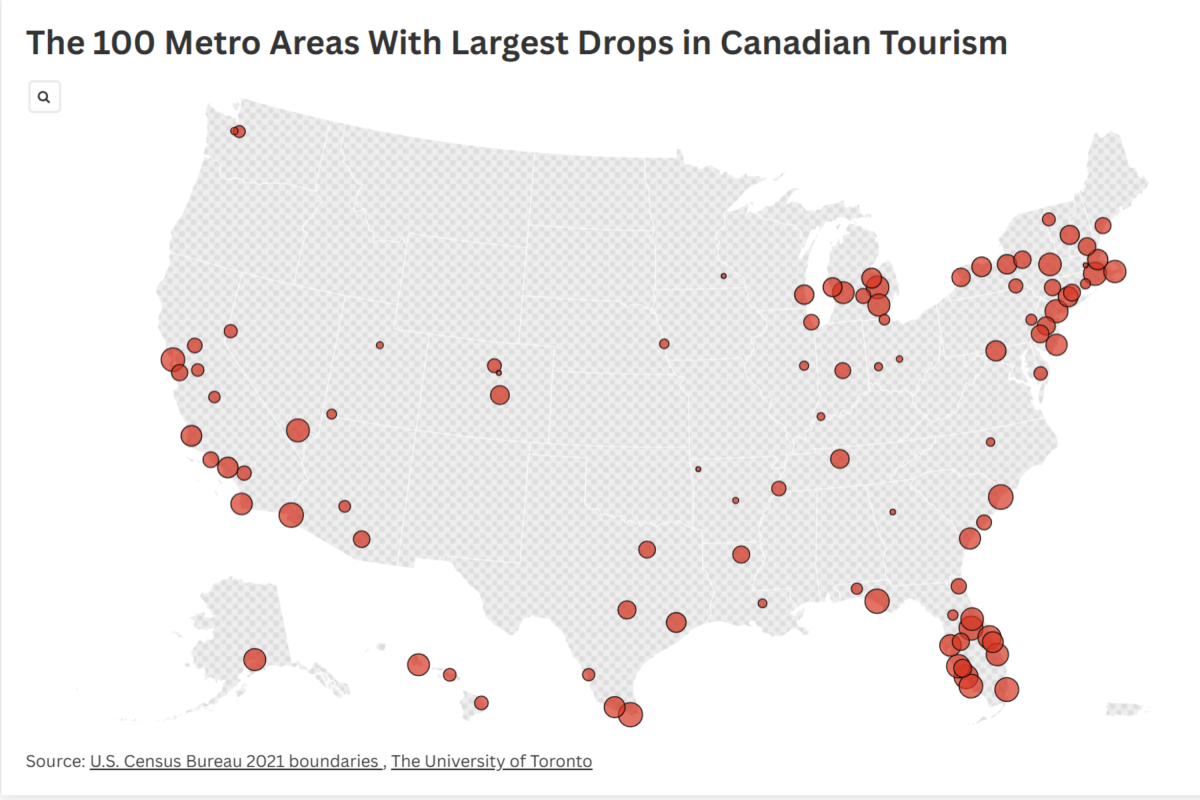
A report from the University of Toronto shows that U.S. cities have seen a big drop—up to 65%—in Canadian visitors since President Donald Trump introduced tariffs and made comments about Canada’s status. This decline affects not only tourists but also business travelers, especially in cities with strong economic ties to Canada.
Key Facts
Canadian visits to major U.S. cities dropped by about 42% between April 2024–March 2025 and April 2025–March 2026.
The data comes from tracking Canadian cell phone activity in U.S. cities.
The drop is larger than official border crossing numbers, which showed only a 25% decline.
Cities in the Sun Belt and Northeast U.S. near the Canadian border experienced the biggest falls in Canadian visitors.
Myrtle Beach, South Carolina, saw the largest decrease at 65.4%.
Business travel from Canada also fell sharply as some workers choose virtual meetings over trips.
The decline has hurt U.S. cities and businesses that rely on Canadian tourists and business visitors.
Some recent data suggests a small recovery, but tariffs and trade tensions may keep visits lower long-term.
Read the Original
Want the full story? Tap a source to open the original
article.
Experts are discussing whether suspending the federal gas tax would lower prices at gas stations. This debate comes as many drivers get ready for the busy summer travel period.
Key Facts
The federal gas tax is a fee added to the cost of gasoline to help pay for roads and bridges.
Some people suggest temporarily stopping this tax to lower gas prices for drivers.
Experts are analyzing if this tax break would actually result in cheaper gas at the pump.
The discussion is timely because summer is a peak time for travel in the U.S.
Patrick De Haan from GasBuddy is one expert examining the possible effects of the tax suspension.
The federal gas tax holiday is being considered as a way to help drivers face high fuel costs.
There is debate over whether gas stations will pass the savings directly to customers.
The outcome may affect how much Americans pay for gasoline this summer.
Read the Original
Want the full story? Tap a source to open the original
article.