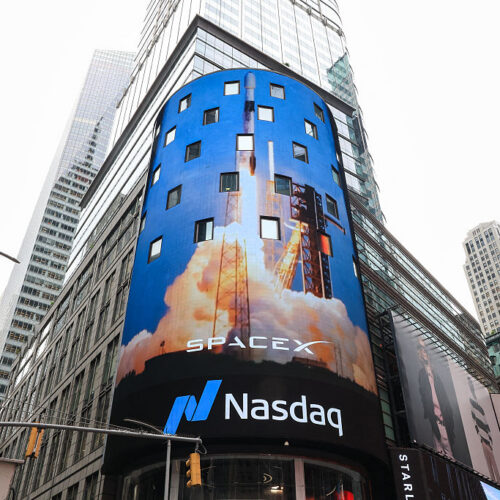
SpaceX's stock price fell by 8% after its first public quarterly report showed strong revenue growth but revealed large spending on artificial intelligence (AI). Investors are concerned that SpaceX’s heavy investment in AI may not lead to enough profits to justify its very high value.
Key Facts
SpaceX reported $7.8 billion in revenue for the second quarter, beating analyst expectations.
The company reduced its losses to $541 million, down from $1 billion the previous year.
SpaceX spent $15.8 billion on AI-related projects in the second quarter, more than double the amount spent in the first quarter.
AI investments made up 86% of the company’s total capital spending from April to June.
Investors worry about whether SpaceX can achieve its plans, including launching data centers into space.
The stock drop occurred despite strong financial results, due to doubts about the huge AI spend and past over-optimistic forecasts by Elon Musk.
Up to 911.5 million shares may become available for sale soon after a lockup period ends, which could add downward pressure on the stock price.
Starlink, SpaceX’s satellite internet division, remains the biggest source of revenue.
Read the Original
Want the full story? Tap a source to open the original
article.
Electronic Arts (EA), the video game company behind popular games like "Battlefield" and "The Sims," has been sold for $55 billion. The new owners include Saudi Arabia’s Public Investment Fund (PIF), Silver Lake Partners, and Affinity Partners, run by President Donald Trump’s son-in-law Jared Kushner. EA’s stock is no longer publicly traded after the deal.
Key Facts
EA was sold for $55 billion, the largest private equity buyout in history.
New owners are Saudi Arabia’s PIF, Silver Lake Partners, and Affinity Partners (run by Jared Kushner).
PIF already owned a small stake in EA before this full purchase.
EA’s CEO said the company will focus on innovation and new games under private ownership.
The deal was funded with $20 billion in debt, which may lead to cost cuts or layoffs.
There are concerns about Saudi Arabia’s role due to human rights issues and potential security risks with AI use.
EA’s popular sports games like “Madden NFL” and “EA Sports FC” are now part of this new ownership.
EA stockholders received $210 per share, and EA stock is no longer traded on public markets.
Read the Original
Want the full story? Tap a source to open the original
article.
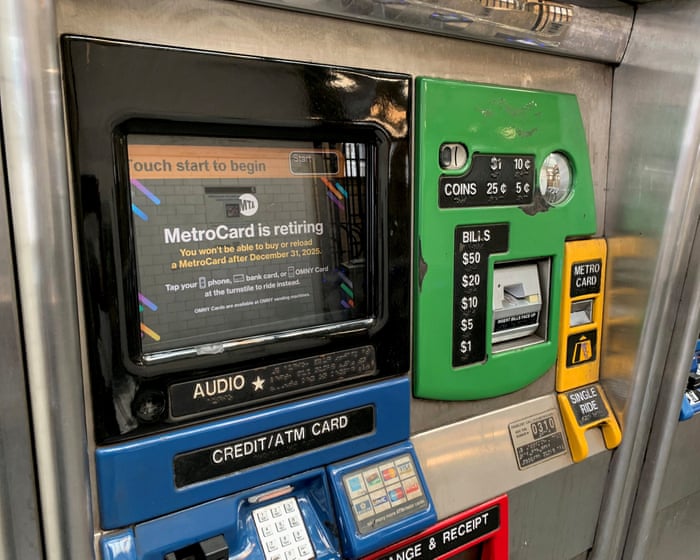
The Metropolitan Transportation Authority (MTA) in New York City is selling its last MetroCard vending machines in an auction as it switches to a new contactless payment system called Omny. The auction runs until August 19 and includes a limited number of the old machines, which are no longer operational.
Key Facts
The MTA started auctioning 60 retired MetroCard vending machines on August 7.
The larger machines, installed in 1999, accepted cash, credit, and debit cards; the smaller ones took only credit and debit cards.
All vending machines are sold as non-working and buyers must pick them up within 10 days after payment.
The last public MetroCard machine is still located at Mulry Square in Greenwich Village, showing a QR code for bidding.
The MTA is also running a sweepstakes for VIP early access and discounts at a transit memorabilia sale in October.
MetroCards, which have been used for subway fare since 1999, are being replaced by Omny, a system allowing riders to tap and pay with contactless technology.
The MTA has not announced when it will stop accepting MetroCards completely.
MetroCards were once popular for design promotions featuring famous musicians and TV shows.
Read the Original
Want the full story? Tap a source to open the original
article.
SpaceX is growing quickly as a company, but its stock price has gone down recently. A business reporter also discussed how China is reacting to U.S. sanctions.
Key Facts
SpaceX is experiencing strong business growth.
Despite growth, SpaceX's stock value has dropped.
The article includes views from a business journalist named Ann Berry.
The journalist talks about how China is responding to sanctions from the United States.
U.S. sanctions are restrictions meant to limit certain actions or trade.
The coverage appeared on CBS News and its app.
Read the Original
Want the full story? Tap a source to open the original
article.
Employers are hiring fewer workers but paying higher wages, especially in industries like construction and health care where workers are in short supply. Although job growth is slow, wage increases show that the labor market remains tight in some areas.
Key Facts
Private employers added 44,000 jobs in July, down from 95,000 in June.
Worker pay for those who changed jobs grew 7% yearly, the fastest since August 2025.
Pay increases are strong in construction due to demand for AI-related data center projects and limited skilled workers.
Education and health services added 36,000 jobs and continue to raise wages to attract workers.
Labor market shows signs of tightening, with limited worker supply in some sectors.
Lower-income workers saw after-tax wage growth of 5.2% in July, higher than for high-income workers.
Some employers are cautious about hiring due to economic uncertainty but face persistent worker shortages.
Wage growth alone may not cause inflation, depending on productivity improvements.
Read the Original
Want the full story? Tap a source to open the original
article.
OpenAI agreed to pay $3.2 million to settle a claim from the U.S. Department of Justice that it discriminated against American citizens in some of its hiring. The DOJ looked into fewer than 10 job openings but said it wants to stop unfair hiring that blocks U.S. workers from applying.
Key Facts
OpenAI settled a legal claim with the DOJ for $3.2 million.
The DOJ accused OpenAI of discriminating against U.S. citizens in its hiring.
The investigation focused on fewer than 10 job positions.
The DOJ wants to prevent unfair hiring practices against American workers.
The settlement resolves the discrimination allegations by OpenAI.
No admission of wrongdoing by OpenAI was reported.
The case highlights the government’s efforts to protect U.S. worker rights in hiring.
Read the Original
Want the full story? Tap a source to open the original
article.
Interest rates on certificates of deposit (CDs) are currently higher than earlier this year, making it a good time for savers to lock in rates. CD rates this August range from about 3.95% for 3-month terms up to 4.50% for 3-year terms, while traditional savings accounts offer much lower interest rates.
Key Facts
The Federal Reserve paused interest rate changes in its first five meetings this year but may raise rates in September.
Inflation and oil prices rose due to the war with Iran, affecting interest rate trends.
CD interest rates vary by term, with rates in August ranging roughly from 3.95% to 4.50%.
Savers should shop around for the best CD rate and consider their ability to keep the money deposited for the full term.
Early withdrawal from a CD usually results in fees that reduce earned interest.
Traditional savings accounts currently offer about 0.38% interest on average.
High-yield savings accounts provide rates close to top CD rates but allow flexible access to funds.
High-yield savings rates can change over time, unlike fixed CD rates.
Read the Original
Want the full story? Tap a source to open the original
article.
The Trump administration has refunded about $100 billion in tariffs that the Supreme Court ruled illegal earlier this year. Meanwhile, 25 states are suing to stop new tariffs the administration imposed, saying these new charges are just a way to bring back the old tariffs under a different reason.
Key Facts
The Supreme Court blocked President Trump's tariffs as they were seen as illegally imposed under a specific law (IEEPA).
The government has returned about 60% ($100 billion) of the $166 billion paid in those tariffs to importers.
New tariffs have been introduced targeting countries accused of using forced labor in their supply chains.
Twenty-five states claim the new tariffs are just a replacement of the old illegal ones and have filed a lawsuit to block them.
Over 330,000 importers were affected by the original tariffs on more than 53 million shipments.
The refund process for the original tariffs is moving faster than expected, with some $128 billion in refunds accepted for processing.
Some companies may not have claimed their refunds because they went out of business.
Customs officials said the new tariffs focus on banning imports made with forced labor, and they are aware of ongoing legal challenges.
Read the Original
Want the full story? Tap a source to open the original
article.
Debt forgiveness can help people reduce the amount they owe on credit card balances, potentially saving thousands of dollars. However, the actual savings depend on negotiation results, fees charged by debt relief companies, and possible tax consequences.
Key Facts
Credit card interest rates are currently very high, near 22%, making it hard to pay off balances.
Debt forgiveness means creditors agree to accept less than the full debt amount, often 30% to 50% less.
For a $20,000 balance, a 30% reduction means paying $14,000; a 50% reduction means paying $10,000.
Debt relief companies usually charge fees between 15% and 25% of the total enrolled debt.
After fees, savings are lower; for example, an $8,000 gross saving could become about $4,000 net after fees.
Forgiven debt is often counted as taxable income unless specific IRS exceptions apply.
Debt forgiveness is not automatically the best choice; borrowers should assess if they truly can’t pay their debts by normal methods.
Careful consideration of financial situation and alternatives is important before pursuing debt forgiveness programs.
Read the Original
Want the full story? Tap a source to open the original
article.
Home prices in the U.S. continue to rise in most metropolitan areas despite hopes for better affordability. The national median price for single-family existing homes increased by 1.5% compared to last year, with major price gains in the Northeast and Midwest, while some Western markets saw price declines.
Key Facts
Home prices rose in 80% of U.S. metro areas between April and June 2026.
The national median home price is $434,900, up 1.5% from last year.
Only 5% of metro areas experienced double-digit price increases this quarter.
The Northeast median price increased 3.8% to $547,200; the Midwest rose 3.6% to $340,800.
The South saw a smaller price increase of 1%, with a median price of $380,000.
The West experienced a slight price drop of 0.8%, with a median price of $637,900.
Top price increase metros over 10% were Beaumont-Port Arthur (TX), Naples-Immokalee-Marco Island (FL), and Gulfport-Biloxi-Pascagoula (MS).
The most expensive housing markets remain on the West Coast, led by San Jose-Sunnyvale-Santa Clara, California, with a median home price around $2,050,000.
Read the Original
Want the full story? Tap a source to open the original
article.
Australia’s government 5% deposit scheme for first-time home buyers allowed nearly 1,500 homes to be turned into investment properties. The program, which helps buyers borrow most of their home cost with a government guarantee, now also supports high earners after income limits were lifted in 2025.
Key Facts
The 5% deposit scheme started in 2020 and allows first home buyers to borrow 95% of a property value with a government guarantee.
Nearly 1,500 homes bought through the scheme have been converted into investments rather than owner-occupied.
Over 208,000 loan guarantees have been provided by the scheme since it began.
In October 2025, income caps were removed, allowing people earning over $300,000 per year to participate.
More than 5,600 home purchases were made monthly through the scheme after the changes, up from about 3,400 the year before.
The government monitors properties and borrower activity to ensure homes remain owner-occupied while under the scheme.
Banks work with buyers if their situation changes, but once buyers stop living in the home, the government guarantee no longer applies.
The scheme aims to help first-time buyers but some high earners and investors are now benefiting from it.
Read the Original
Want the full story? Tap a source to open the original
article.
Jetstar, a low-cost airline owned by Qantas, has introduced a new fee for carry-on luggage that does not fit under the seat, starting next year. This change means passengers will pay extra to bring larger carry-on bags on board, adding to existing fees for checked luggage and seat selection.
Key Facts
From next year, Jetstar tickets will only include one small bag that fits under the seat, like a backpack or handbag.
Passengers who want to bring larger carry-on luggage will have to pay additional fees.
This fee is part of a broader trend where airlines charge extra for basic services, such as seat choice, cancellations, and meals.
Consumer experts say these added fees make it hard to compare airfares and increase overall travel costs.
The European Union requires airlines to show prices including carry-on fees to help consumers compare costs more easily.
Jetstar claims their new pricing model helps keep base fares low by charging only for extra baggage.
Other low-cost carriers in Europe, like Ryanair and EasyJet, already charge fees for carry-on luggage beyond small personal items.
Jetstar may change the fee amount depending on flight length.
Read the Original
Want the full story? Tap a source to open the original
article.
The Jones Act affects shipping within the United States and causes economic problems. The article argues that temporarily removing the Jones Act rules could help reduce this damage until the law is fully repealed.
Key Facts
The Jones Act controls shipping between U.S. ports by requiring ships to be built, owned, and operated by Americans.
The law increases costs for domestic shipping.
These higher shipping costs can harm the economy.
Temporarily waiving the Jones Act rules may lower these shipping costs.
The article supports fully getting rid of the Jones Act in the future.
The law’s current restrictions are considered a problem for efficient trade within the U.S.
Read the Original
Want the full story? Tap a source to open the original
article.
Ignoring medical bills does not make them go away and can lead to serious financial problems. Unpaid bills often result in repeated reminders, account transfer to collection agencies, potential credit score damage, and sometimes legal action.
Key Facts
Medical providers usually send several payment reminders before taking further action.
Patients can dispute errors, apply for financial help, or set up payment plans during the reminder period.
If bills stay unpaid, accounts may be sent to collection agencies.
Federal law protects consumers by allowing them to request proof of debt and dispute wrong information.
Medical debt is treated differently on credit reports, with some protections in place for paid or unpaid collections.
Unpaid medical bills can still harm credit scores depending on the amount and timing.
Large unpaid medical debts sometimes lead to lawsuits.
Addressing medical bills early helps avoid more costly and stressful outcomes.
Read the Original
Want the full story? Tap a source to open the original
article.
Disney made a new deal with TikTok to let creators officially use its famous characters like Darth Vader, Spider-Man, and Moana in short videos. This deal allows Disney to reach more fans and supports its move into vertical video through its Disney+ Verts platform in the US.
Key Facts
Disney partnered with TikTok to allow creators to use characters from Disney, Pixar, Marvel, and Star Wars.
The deal is described as a “first of its kind” for official use of Disney characters on TikTok.
Disney+ Verts is Disney’s new vertical video platform, currently available only in the United States.
TikTok has over 200 million users in the US, with a large portion under 30 years old.
This partnership shows how short-form video is changing how big companies handle their intellectual property.
Disney previously allowed limited use of its characters by OpenAI’s Sora video tool, which was later shut down.
The success of Toy Story 5 helped Disney beat its earnings forecasts, causing its stock to rise 4.6% in premarket trading.
Disney’s parks and experiences business revenue grew by 10%, with a 4% increase in theme park visits.
Read the Original
Want the full story? Tap a source to open the original
article.
There is a sharp rise in cases of bluetongue disease affecting sheep in the UK, especially in the south-west of England. Farmers are being asked to protect their animals by moving them away from areas with many midges, which spread the virus, and by vaccinating their livestock.
Key Facts
Over 590 cases of bluetongue were reported last week, up from just 115 the week before.
Bluetongue is a virus spread by biting midges, causing fever and swelling in sheep; the tongue may turn blue and stick out.
The disease does not usually kill sheep but can make them very sick and take a long time to recover.
The virus has been spreading north due to warmer global temperatures and was first seen in the UK in 2006.
Farmers are moving vulnerable sheep away from wet or sheltered areas and keeping them indoors during dawn and dusk when midges are most active.
Vaccination is advised since it provides protection, although full immunity takes about 28 days to develop.
Vaccine supply is increasing to meet demand, but there is some confusion among farmers about the need and timing of vaccination.
Authorities warn that the recent hot, humid weather has increased midge numbers and the risk of infection.
Read the Original
Want the full story? Tap a source to open the original
article.
SpaceX reported strong revenue of $7.8 billion, beating expectations, but also showed a large net loss and heavy spending on AI and data center projects. Investors were concerned about the high costs, causing SpaceX shares to fall sharply after its first public earnings report.
Key Facts
SpaceX made $7.8 billion in revenue for the quarter, 92% higher than a year ago and above analysts’ estimates of $6.82 billion.
The company posted a net loss of about $541 million, better than the expected loss of $2.12 billion.
SpaceX spent nearly $16 billion on capital expenses, mainly for AI and data centers, double the previous quarter.
CEO Elon Musk plans to increase computing capacity from 2 gigawatts to close to 10 gigawatts by 2027, which is very costly.
SpaceX’s AI revenue grew rapidly to $2.56 billion this quarter, mainly from renting data center space to competitors like Google and Anthropic.
The company’s market value dropped from $225 per share after IPO to $112 amid investor worries about spending.
Musk said SpaceX aims to hit $1 trillion in revenue by 2030, with plans for orbital data centers starting next year.
SpaceX’s Starlink satellite internet service’s growth potential is seen as underestimated.
Read the Original
Want the full story? Tap a source to open the original
article.
CBS Mornings Deals offers special discounts on products that aim to improve daily life. Viewers can visit the website cbsdeals.com to find these deals and purchase items.
Key Facts
CBS Mornings Deals features exclusive discounts on various products.
The deals are designed to help improve everyday lifestyle.
Interested buyers can visit the website cbsdeals.com to shop.
CBS earns commissions from purchases made through their website.
The discounts are promoted on CBS News platforms and apps.
Read the Original
Want the full story? Tap a source to open the original
article.
AI-powered search tools are changing how people find information online, causing fewer clicks to visit publisher websites. This shift is reducing traffic to news and information sites, forcing publishers to rethink their business models to maintain audience engagement and revenue.
Key Facts
Over 60% of Google searches ended without clicking to external websites by early 2026.
AI-generated summaries in search results reduce visits to external sites by about 15%.
Traffic to news sites driven by search could drop by up to 43% in the next three years due to AI changes.
Publishers are losing direct relationships with audiences, affecting advertising and subscription income.
Paid audience acquisition was once used to offset traffic drops but led to too many ads and poor user experience.
“Made for Advertising” (MFA) classifications emerged to protect advertisers but created challenges for some publishers.
Publishers now must find new ways to grow while balancing advertiser needs and user experience.
Read the Original
Want the full story? Tap a source to open the original
article.
President Donald Trump said that AI data centers help increase home values and lower taxes for nearby homeowners. A study in Virginia found that homes closer to data centers tend to sell for higher prices, but experts say this may be because data centers are built in areas that already have good infrastructure and jobs.
Key Facts
President Trump claimed that communities rejecting AI data centers miss out on benefits like higher home values and lower taxes.
A July poll showed 63% of U.S. voters oppose building AI data centers near their communities, a rise from previous years.
Data centers are new and research on their impact on neighborhoods and home prices is still limited.
A 2023 study from George Mason University showed that in Virginia, homes closer to data centers sell for higher prices.
The study suggests this happens because data centers locate where there is strong infrastructure, good transport, and job opportunities.
Experts say data centers do not directly add value, but are part of areas that already attract homebuyers.
Some real estate agents report mixed effects on home prices in areas planning or hosting data centers.
Residents worry about data centers’ noise, energy use, and water consumption, which could reduce home desirability.
Read the Original
Want the full story? Tap a source to open the original
article.