The British Chambers of Commerce leader says fixing the economic problems caused by Brexit should be the main goal for Andy Burnham and the Labour Party. Many businesses feel the current UK-EU trade deal is not working well, and the economic damage from Brexit is significant.
Key Facts
The British Chambers of Commerce (BCC) wants the UK government to prioritize repairing Brexit's economic impact.
More than half of surveyed business leaders say the Brexit trade deal is not helping their companies.
Economists estimate Brexit has cost the UK economy up to £240 billion so far.
The UK’s income per person is between 6% and 8% lower than it would have been without Brexit.
Labour’s Andy Burnham said Brexit has done more harm than good and is open to options including rejoining the EU.
The BCC plans to consult its 50,000 members, who employ over 6 million people, about future UK-EU relationship options.
Rising costs from energy prices and international conflicts are putting extra pressure on UK businesses.
Business leaders want the government to take strong action to help companies, not just maintain the current budget approach.
Read the Original
Want the full story? Tap a source to open the original
article.
The number of cloned vehicle number plates involved in offences on UK roads has reached a record high. More than 11,400 drivers contacted the DVLA last year after receiving fines for offences they did not commit, mostly due to cloned plates that copy legitimate number plates to avoid cameras.
Key Facts
Over 11,400 drivers complained to the DVLA last year about fines for offences they did not commit.
The number of complaints increased by 9% from 2024 and nearly doubled since 2018.
Cloning means copying a real car’s number plate onto a similar vehicle to avoid detection by enforcement cameras.
More than 130 official UK number plate suppliers were found selling cloned plates.
“Ghost” plates are designed to be unreadable by automatic cameras and help drivers avoid fines.
The UK has about 18,000 automatic number plate recognition (ANPR) cameras enforcing road safety rules.
The government plans a new crackdown on illegal plates, including funding a new roads policing team.
Drivers caught with illegal plates can be fined up to £1,000.
Read the Original
Want the full story? Tap a source to open the original
article.
Economist Isabella Weber argues that many economists focus too much on strict ideas and ignore real problems like inequality and climate change. She says making basic needs like housing, food, and healthcare affordable is key to fighting rising fascism and saving democracy. Weber advises politicians in the US, Europe, and Latin America and promotes practical economic solutions instead of ideological ones.
Key Facts
Isabella Weber believes economists often stick to old ideas instead of solving real social problems.
She compares economists to dentists, saying dentists focus on pain, while economists focus on ideology.
Weber says inequality and corporate power threaten democracy worldwide.
The climate crisis is giving big companies large profits while harming the environment.
She created the term “greedflation” to describe profit-driven price increases during cost of living crises.
Weber wrote a book called Anti-Fascist Economics, promoting affordable essentials as a way to fight fascism.
Many progressive politicians, including some in the US and UK, use her ideas on making housing, transport, and care affordable.
Weber calls for economists to drop ideology and support broad policies to fix economic hardships and protect democracy.
Read the Original
Want the full story? Tap a source to open the original
article.
Zimbabwe is trying to get people to use its own currency, the Zimbabwe Gold (ZiG), more instead of the US dollar. The government hopes this will reduce reliance on the US dollar, but many Zimbabweans still do not trust the local currency after past problems with money losing value.
Key Facts
The Zimbabwe Gold (ZiG) currency was introduced in April 2024 and is backed by foreign currency reserves and gold.
Zimbabwe stopped using its local currency in 2009 after hyperinflation and switched to a system using many currencies, mainly the US dollar.
The local currency was brought back in 2018 but has been unstable, making people hesitant to use it.
Inflation for the ZiG was reported at 3.7% annually as of May 2024.
Many people, like teacher Charles Mbwandarikwa, quickly exchange ZiG to avoid losing value, due to previous currency collapses.
Businesses find it hard to sell products in ZiG because most customers prefer to pay in US dollars.
The Reserve Bank of Zimbabwe is encouraging a slow and voluntary shift to more ZiG use, depending on economic stability.
Public trust in the currency depends on people believing it will keep its value and be useful for daily payments and savings.
Read the Original
Want the full story? Tap a source to open the original
article.
Chancellor John Healey is planning to increase taxes on banks in his upcoming UK budget to raise money for public finances affected by the war in the Middle East. The proposed changes may also lead to higher household energy bills and no extension of the Prime Minister’s cost of living support. Separately, there are court reports on comedian Russell Brand facing serious sexual assault charges.
Key Facts
Chancellor John Healey may raise a special tax on bank profits in the October 28 budget.
The biggest four UK banks made about £15 billion profit in the first half of this year.
Additional tax revenue from banks could help cover costs caused by the Middle East war.
Energy bills in the UK are expected to double again next year, with no promise to extend current help.
Russell Brand faces seven charges including rape and sexual assault, which he denies.
The UK government plans to extend the BBC licence fee to online platforms like Netflix and Disney+.
NHS England will change policy on transgender patients’ hospital ward placement, using biological sex instead of gender identity.
Labour’s plan to give equal importance to speaking skills in schools faces criticism.
Read the Original
Want the full story? Tap a source to open the original
article.
France and Germany have reached a temporary agreement to relax European Union (EU) rules on car emissions. They also agreed to include Britain in a "made in Europe" scheme, which defines which vehicles qualify for benefits under EU industry policies.
Key Facts
France and Germany support easing the EU's car emissions limits to help automakers meet targets more easily.
The deal removes the need for carmakers to offset the last 10% of emissions by using credits like low-carbon steel.
Cars running on renewable fuels can now be counted as "zero-emission" vehicles.
"Super credits," which give extra benefits for electric cars, will apply to all vehicle sizes.
The "made in Europe" label for cars will cover the 27 EU countries plus some others like Britain and Norway if they opt in.
Britain’s government said this agreement would be positive for its automotive industry and jobs.
The EU had planned tougher rules to restrict public funds to companies using mostly EU-made parts, but this deal offers a narrower definition of "made in Europe."
The deal is provisional and awaits final approval from Germany.
Read the Original
Want the full story? Tap a source to open the original
article.
Many people prefer shopping for clothes online because it is easier and offers better size options, especially for plus-size shoppers. Primark, a popular UK clothing store, plans to start home delivery after years of only in-store or click-and-collect shopping, to stay competitive as more people shop online.
Key Facts
Jess Bacon, a plus-size shopper, prefers online clothes shopping because stores often have poor size options and shopping in person is tiring.
Primark currently stocks plus-size clothes up to size 22 but only offers in-store or click-and-collect shopping, not home delivery.
Primark has bought a warehouse in Sheffield to prepare for home delivery services in the UK but has not given a launch date.
Online shopping made up 27.3% of all UK retail sales in August 2023, up from 18.1% in 2019.
The decline of physical stores on High Streets makes online shopping more popular.
Returns policies are very important for online shoppers, who want easy, free, and fast returns.
Some shoppers, like Sandra Davies who has health issues, rely on online shopping because visiting stores is physically difficult.
Retail experts say Primark's move to home delivery is a response to competition from fast-fashion online brands like Shein.
Read the Original
Want the full story? Tap a source to open the original
article.
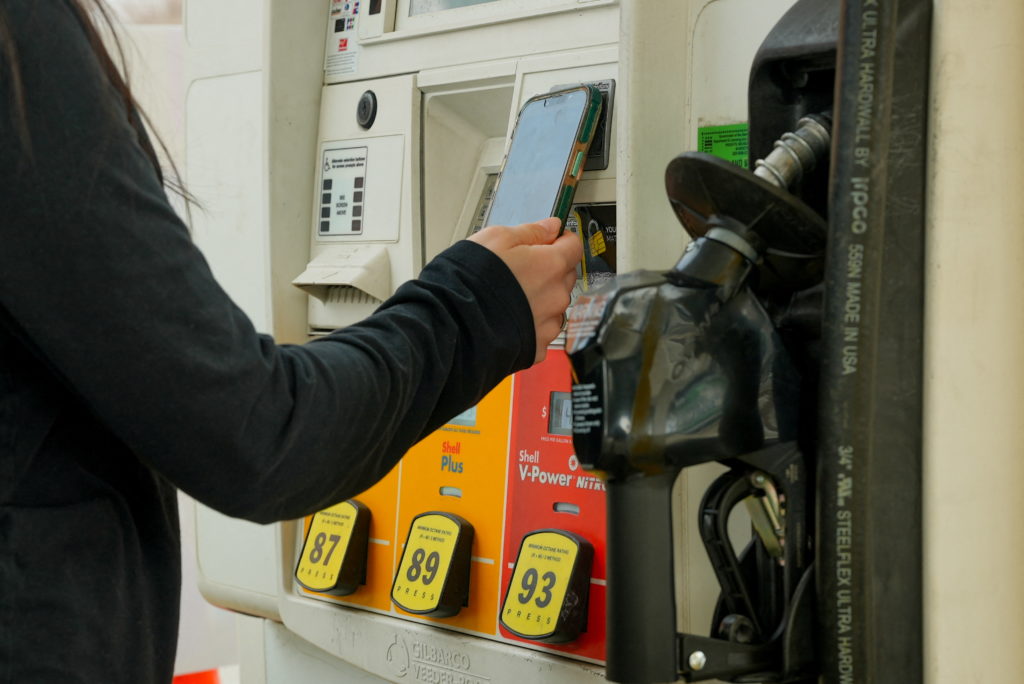
Retail sales in the U.S. increased by 0.8% in September, mainly because people spent more on gasoline. When gas station sales are removed, overall retail sales rose just 0.2%, showing that higher prices, especially for gas, are influencing shopping habits.
Key Facts
Retail sales rose 0.8% in September, following a 1.3% gain in August.
Gas station sales increased by 6.4% in September due to rising gas prices.
Without gas sales, retail sales went up just 0.2%.
Furniture stores sales rose 1.3%; electronics and appliance stores increased by 0.6%.
Online retailers saw a small increase of 0.3%, while clothing store sales stayed flat.
Restaurant sales, a service category, increased by 1.1%.
Inflation in September was 3.7% higher than a year ago, driven in part by gas and other goods.
Higher prices mean some shoppers use savings and look for deals to manage budgets.
Read the Original
Want the full story? Tap a source to open the original
article.
Oxfam France is suing the French government, arguing that billionaires pay less tax compared to nurses and firefighters. They say this unequal tax system harms public services and goes against the principle of fairness in taxation.
Key Facts
Oxfam claims billionaires in France pay proportionally less tax than ordinary workers like nurses and firefighters.
They argue this breaks the constitutional rule that taxes should be fair and equal for all.
The lawsuit challenges the French government’s tax policies under President Emmanuel Macron.
Oxfam says the government focuses on attracting investments but struggles to fund public services and fight poverty.
Wealth among French billionaires has grown significantly while tax fairness decreases.
The group also criticizes weaker enforcement of tax laws that allows rich people to avoid paying their fair share.
The case questions whether France’s tax system is legally and morally legitimate.
Oxfam wants the government to change tax policies to support public services and social equality.
Read the Original
Want the full story? Tap a source to open the original
article.
EU member countries have started tough talks about the bloc’s budget for the next seven years. They disagree on what to spend money on, and upcoming elections in some countries are making the talks more difficult.
Key Facts
EU lawmakers are negotiating the seven-year budget for the European Union.
Member states have different views on how to prioritize spending.
Elections soon in France, Italy, and other countries put extra pressure on the budget talks.
The discussions are taking place in Brussels, the EU’s main political center.
The budget talks are expected to be long and intense.
The negotiations will decide funding for many EU programs and policies.
Budget disagreements reflect larger political challenges within the EU.
Read the Original
Want the full story? Tap a source to open the original
article.
Porsche revealed the Mission S concept, a new mid-engined sports car that will be positioned above the 911 in its lineup. This model is planned as a regular production car and is part of Porsche’s strategy to improve profits and focus on high-value, customizable vehicles by 2035.
Key Facts
Porsche showed the Mission S concept in New York as a preview of a future production sports car.
The Mission S will be positioned above the Porsche 911 model.
Unlike Porsche’s limited-run supercars, this will be a regular production model.
Porsche’s profit margin dropped from 18% to 1% recently but aims to recover to double digits by 2035 through the “Sportwagenschmiede ’35” plan.
The plan focuses on selling fewer cars but with more individual options and higher prices.
Porsche intends to lay off 9,000 employees as part of Volkswagen Group’s workforce reduction over ten years.
Other planned Porsche models include an electric 718 Boxster/Cayman, a smaller SUV below the Macan, and new luxury models in bigger segments.
The Mission S interior focuses on driver experience with minimal screens and uses a smartphone docking system instead of traditional infotainment.
Read the Original
Want the full story? Tap a source to open the original
article.
Higher gas prices are causing inflation to rise and taking more money from American consumers. Despite this, people are continuing to spend, which is helping the economy for now. Recent data shows that inflation grew last month due to rising oil and gas costs affecting other prices like shipping and food.
Key Facts
Gas prices have increased, contributing to higher inflation.
Inflation rose last month with oil and gas costs leading the increase.
Higher fuel prices cause shipping and warehousing costs to go up.
Wholesale food prices also jumped, which may make groceries more expensive soon.
Consumers are still spending money despite rising prices.
The increased spending is currently supporting the U.S. economy.
Inflation levels are reaching heights not seen since 2022.
Read the Original
Want the full story? Tap a source to open the original
article.
A new housing project called Lion Green Road in Coulsdon, south London, won the 2026 Stirling Prize, the UK’s top architecture award. The design combines affordable and private homes in a way that fits well with the natural landscape and provides green spaces for residents.
Key Facts
Lion Green Road consists of 157 homes arranged in five unique 13-sided blocks.
The development replaces a former car park on a sloping site with an eight-meter height difference.
It was designed by Mary Duggan Architects and built with RUFF Architects for Croydon Council.
The project mixes affordable and private housing to serve the local community.
The design includes winding paths, planting, and shared outdoor areas connecting the buildings.
The buildings use soft purple and pink brickwork to blend into the surrounding green belt land.
The project was praised for addressing challenges of a difficult plot and creating a welcoming community space.
The Stirling Prize judges value design vision, innovation, sustainability, and usability when choosing the winner.
Read the Original
Want the full story? Tap a source to open the original
article.
The article, titled "I'd spend $1,000 on a wedding present," is not available due to an error. It was related to weddings, personal finance, and money topics, and included a video showing how people in London responded to the question about spending on wedding gifts.
Key Facts
The article's main question was about how much people would spend on a wedding present.
The content is currently not accessible because of an error.
The article included a video with responses from London residents.
It covered topics related to weddings and personal finance.
It was published recently, only 2 minutes before the notice appeared.
The article was categorized under business-related themes like money and finance.
It was connected to locations like New York City and London through the topics followed.
Readers could follow updates on weddings, money, and personal finance through this source.
Read the Original
Want the full story? Tap a source to open the original
article.
The U.S. Food and Drug Administration (FDA) has approved a new rule that lets food makers use salt substitutes in many common foods. This change may affect how some products taste and their nutritional content.
Key Facts
The FDA has finalized a rule on salt substitutes.
The rule applies to dozens of standardized food products.
Salt substitutes are alternatives to regular salt, often with less sodium.
This change allows food manufacturers to replace some salt with these substitutes.
The goal is to possibly reduce sodium in foods to improve health.
The rule affects a wide range of popular packaged foods.
It may influence food labeling and ingredient lists.
The FDA’s action is part of efforts to promote healthier eating.
Read the Original
Want the full story? Tap a source to open the original
article.
UK banking leaders expect the government to increase taxes on their sector in the upcoming Budget. The banks have made large profits recently, and the government is considering raising their tax rates or changing rules to collect more money.
Key Facts
The UK’s biggest banks made about £15 billion profit in the first half of 2024.
Banks currently pay a 3% tax surcharge on top of the 25% corporation tax plus a levy on some assets.
The banking sector contributed nearly £40 billion to the UK Treasury last year, including employee income taxes.
The 3% surcharge was cut from 8% under former Chancellor Rishi Sunak when corporation tax rose to 25%.
Returning the surcharge to 8% could raise around £2 billion more tax per year.
The bank levy is charged at 0.1% or 0.05% on certain loans, excluding mortgages.
Banks can currently use past losses to reduce their tax bills; suspending this rule could bring an extra £1 billion yearly.
Foreign banks warn that more bank-specific taxes may reduce investment and weaken UK competitiveness.
Read the Original
Want the full story? Tap a source to open the original
article.
Payments companies often start by helping customers send money across borders quickly and cheaply. However, this service, called remittance, is a basic offering where customers mainly choose by price, making it hard to keep them loyal. Successful companies expand their services to include managing and holding money, which builds longer-term customer relationships.
Key Facts
Remittance means sending money between countries quickly and at a lower cost than traditional banks.
Customers usually pick remittance providers based on price, speed, and reliability for each payment.
Modern technology, like APIs (tools that let software connect easily), makes switching providers simple for customers.
Because many providers offer similar services, customers often change providers to get the best price.
Remittance is a starting point, not a full business; companies must offer more to keep clients.
Treasury management services include holding money, currency conversion, managing capital, and settling payments.
Treasury services create ongoing business because customers use these services between payments.
Treasury management builds trust and makes it harder for customers to switch providers due to the complexity of moving their financial operations.
Read the Original
Want the full story? Tap a source to open the original
article.
Many Americans are traveling to Tijuana, Mexico, to get cosmetic treatments like Botox and laser procedures at much lower prices than in the United States. While these trips save money, experts warn there are risks involved, similar to treatments done in the U.S.
Key Facts
Americans are seeking cheaper cosmetic treatments in Tijuana due to high healthcare and living costs in the U.S.
Common services include Botox injections, laser treatments, facials, and other beauty procedures.
Prices in Tijuana can be much lower; for example, CO2 laser treatments cost about $220 there versus $1,800 in the U.S.
The lower prices are mainly due to cheaper labor costs, while providers say the products and quality are the same.
About 70% of patients at Lipo Tijuana VIP, a popular medical spa, come from the U.S.
Travelers generally find the overall cost, including airfare and hotels, still cheaper than similar treatments at home.
Some patients appreciate the chance to afford cosmetic care they otherwise could not.
Experts caution that getting cosmetic procedures abroad carries health risks, just like in the U.S.
Read the Original
Want the full story? Tap a source to open the original
article.
Recent U.S. economic data shows strong growth with rising prices, indicating inflation is becoming more widespread. This situation puts the Federal Reserve in a tough position about whether to increase interest rates to control inflation.
Key Facts
The Producer Price Index (PPI), which measures wholesale prices, rose 1.3% in September, higher than expected.
Consumer prices also increased at a concerning rate earlier in the week.
Retail sales grew by 0.8% in September, beating expectations.
Unemployment claims remain low at around 199,000, showing a strong job market.
Inflation is spreading to many parts of the economy, not just energy costs.
Federal Reserve officials, including Chris Warsh, are debating whether to raise interest rates soon.
Bond yields fell despite the strong inflation data, as investors moved money to safer government bonds.
Businesses are passing higher costs to customers partly due to expenses linked to artificial intelligence development.
Read the Original
Want the full story? Tap a source to open the original
article.