Young people, especially those in Gen Z, often order food delivery frequently but feel guilty about the cost and think of it as a luxury they can’t always afford. Delivery apps like DoorDash and Grubhub grew popular during the pandemic, but users sometimes hide how much money they spend on these services. Authorities are looking into fees charged by delivery apps, and companies face fines for worker payment issues.
Key Facts
Many Gen Z individuals order food delivery about five times a month, twice as often as older generations.
Food delivery is seen as an affordable way to treat oneself, despite the extra fees that add up.
Some people feel embarrassed or guilty about how much they spend on delivery and may lie about it to friends or family.
Delivery apps became widely used during the pandemic and are now part of everyday life for many Americans.
The Federal Trade Commission is considering rules about hidden fees and price changes on delivery apps.
DoorDash was fined $131.5 million in New York City for underpaying delivery workers, the largest settlement of its kind there.
Rising grocery prices are making cooking at home as expensive as ordering food for some people.
Delivery companies say all fees are clearly shown before orders are placed, and customers can adjust orders to fit their budget.
Read the Original
Want the full story? Tap a source to open the original
article.
AJ Ayers, author of Creative Money, talks about how artists and creative people can manage their money better. He gives practical advice for those who feel the usual financial rules don’t work well for them.
Key Facts
AJ Ayers is the author of the book Creative Money: New Financial Rules for Artists, Innovators, and Misfits.
The discussion focuses on financial planning specifically for creative people.
AJ shares tips to help artists and innovators handle money in a way that fits their unique situations.
The regular financial system may not suit everyone, especially those in creative fields.
This episode aims to help viewers understand new ways to think about money.
The conversation is part of the CBS News Money Moves series.
The episode runs about 30 minutes long.
Financial advice is tailored to people who feel left out of traditional financial planning.
Read the Original
Want the full story? Tap a source to open the original
article.
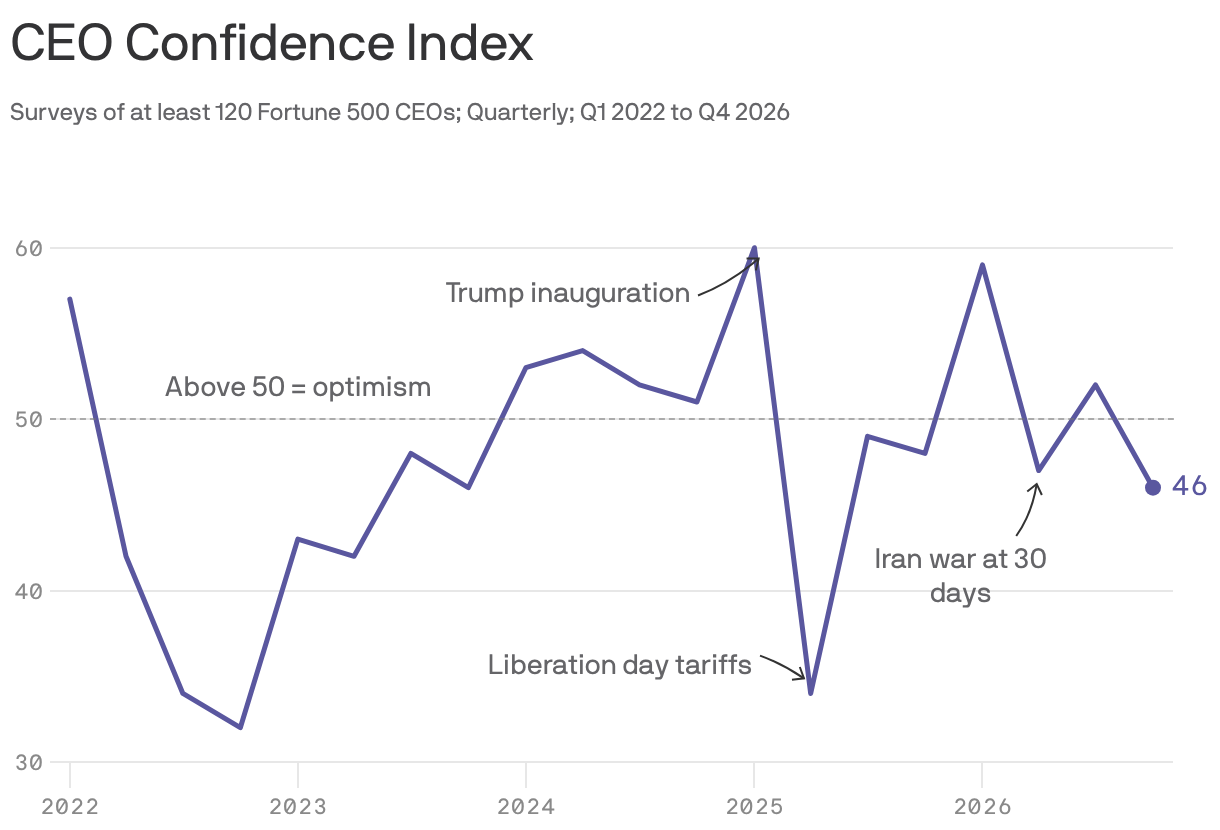
A survey shows that U.S. CEOs' confidence in the economy has dropped below a neutral point, meaning they now feel negative about the economy's direction. Despite their worries about issues like inflation, cybersecurity, and rising energy costs, most CEOs still plan to increase hiring and invest in their businesses.
Key Facts
The CEO Confidence Index fell to 46, down from 52 three months ago; a number below 50 means negative sentiment.
The survey included 131 CEOs from large public companies, taken between Sept. 21 and Oct. 5.
41% of CEOs expect the economy to get worse, up from 19% in the last quarter.
CEOs are more concerned about cybersecurity, artificial intelligence (AI), and global political issues than before.
94% of CEOs listed cybersecurity threats as a top worry related to AI.
Higher energy prices, especially for diesel, added to CEOs’ concerns.
Although CEOs feel pessimistic, 89% say they plan to increase the number of employees over the next three years, as AI drives new opportunities.
CEO Tim Walsh from KPMG said AI expansion could grow business and job opportunities despite economic worries.
Read the Original
Want the full story? Tap a source to open the original
article.
Anthropic, an AI company, reported it made more money than it spent in the third quarter, with revenue rising by nearly 50% to $16.8 billion. This shows that creating advanced AI can be a profitable business, even as some other tech giants face financial challenges from AI costs.
Key Facts
Anthropic was cash flow positive in the third quarter, meaning it earned more money than it spent.
Its revenue increased by about 50% from the previous quarter, reaching $16.8 billion.
This financial success contrasts with companies like Alphabet (Google's parent), which spent more on AI infrastructure than they earned.
Anthropic charges 20% to 30% more than competitors because its AI is seen as more valuable by customers.
The company’s API business uses less computing power but generates around 90% of its revenue with a high profit margin.
Despite profits, Anthropic still has high costs for training AI models and employee stock payments.
The company plans to spend over $500 billion on AI infrastructure and computing in the next ten years.
Investors are watching to see if Anthropic can keep growing and expand AI use beyond software, such as in drug discovery.
Read the Original
Want the full story? Tap a source to open the original
article.
The Iraqi government lowered the value of its currency, the dinar, against the US dollar to address financial problems caused by disruptions in oil exports. This change has created uncertainty and losses for traders who buy goods in dollars but sell them in dinars.
Key Facts
Iraq devalued the dinar by about 15%, changing the official exchange rate from 1,320 to 1,520 dinars per US dollar.
The devaluation helps the government get more local currency from oil revenues to pay public salaries and expenses.
Iraq’s oil exports, which fund most government revenue, were disrupted by the US-Israeli war on Iran and the Strait of Hormuz crisis.
Traders face losses because imported goods cost more in dinars, but they must sell goods within Iraq in dinars, not dollars.
Some traders have stopped buying and selling until prices stabilize.
The Iraqi government inherited a large public debt and must find ways to cover about $6.7 billion in monthly expenses.
Options to address the financial crisis included salary cuts, delayed payments, or taking foreign loans, but the government chose devaluation.
Iraq’s foreign currency reserves fell from $106 billion to about $80 billion amid the crisis.
Read the Original
Want the full story? Tap a source to open the original
article.
Global stock markets have fallen sharply, especially shares related to artificial intelligence (AI) and memory chip makers. This drop was caused by worries about higher inflation in the US and the possibility that the Federal Reserve will raise interest rates again soon.
Key Facts
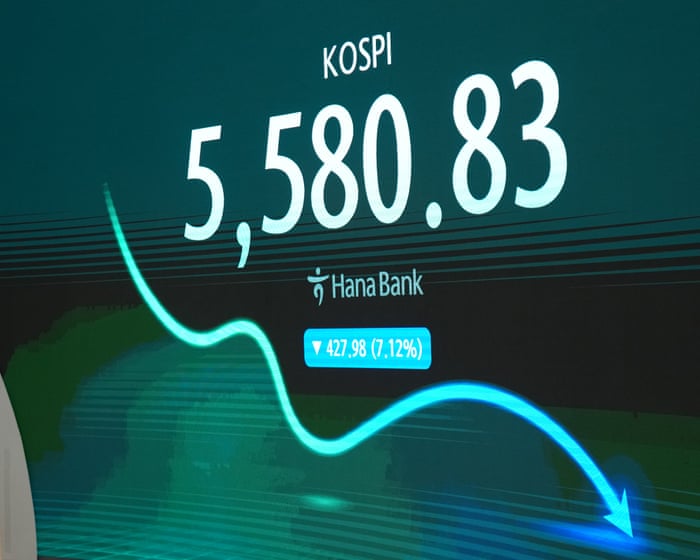
South Korea’s Kospi 200 index fell over 8%, hitting a six-month low and causing trading pauses.
Major companies like SK Hynix and Samsung Electronics saw their shares drop about 11% and 9.5%, respectively.
Japan’s Nikkei 225 index dropped 4.9%, with large declines in memory chip maker Kioxia and SoftBank.
US stock indexes also fell, with the Nasdaq down 1.9% and the S&P 500 down 1.1%, marking the worst day since July.
US inflation rose to 3.7% in September, faster than expected and raising fears of more interest rate increases by the Federal Reserve.
The International Monetary Fund warned that a sharp drop in AI-related shares could threaten global financial stability.
Chinese and European markets also experienced losses, with Shanghai’s CSI 300 and Taiwan’s TSMC shares dropping.
Stock futures in the US indicated further expected losses for technology stocks.
Read the Original
Want the full story? Tap a source to open the original
article.
Aardman, the British animation company behind Wallace & Gromit and Shaun the Sheep, did not return to profit in 2025 as planned. Despite earning more money last year, the company lost £1.1 million due to delays in production and challenges in the children’s content market.
Key Facts
Aardman’s revenue grew by 8% to £20.4 million in 2025.
The company had a loss of £1.1 million in 2025, smaller than the £4.1 million loss in 2024.
Production delays and a tough market for children’s content hurt profits.
Aardman launched a five-year plan focusing on investing in its creative works and cutting costs.
Staff numbers dropped from 297 to 230, with permanent employees falling from 128 to 110.
The company sees artificial intelligence as both a risk and an opportunity for creativity.
Recent successes include a new Shaun the Sheep film and an exhibition on Aardman’s history.
Aardman became employee-owned in 2018 to keep the company independent, and co-founders were knighted in 2026.
Read the Original
Want the full story? Tap a source to open the original
article.
The UK economy grew by 0.1% in August, slightly more than expected, ahead of Chancellor John Healey's upcoming Budget. Growth was helped by production industries, while the services sector stayed the same and construction shrank.
Key Facts
The UK's economy grew 0.1% in August 2026.
July's economic growth was 0.4%.
Over three months to August, overall growth was 0.7%.
Production industries like manufacturing, oil, gas, and energy boosted growth.
The largest part of the economy, services, did not grow in August.
The construction sector shrank during August and the three-month period.
Computer programming was the main factor for the recent economic growth.
The International Monetary Fund praised the UK’s growth prospects and debt-cutting plans.
Chancellor John Healey plans to present his Budget later in October 2026.
Read the Original
Want the full story? Tap a source to open the original
article.
The UK economy grew by 0.1% in August, which was more than expected despite a drop in consumer spending. This growth happened amid rising energy costs and global economic challenges tied to the war in the Middle East.
Key Facts
The UK’s GDP grew 0.1% in August, after 0.4% growth in July.
Economists had predicted the UK economy would shrink by 0.1% in August.
Consumer spending fell during this period, but business activity linked to artificial intelligence increased.
Rising energy costs due to the Middle East conflict are impacting British households and businesses.
Chancellor John Healey will deliver a budget on October 28, under pressure to support people and businesses.
Government borrowing costs have increased, making budget decisions more difficult.
The International Monetary Fund recently raised its growth forecast for the UK this year but expects slower growth in 2027.
The UK showed the strongest growth rate in the G7 during the first half of 2026.
Read the Original
Want the full story? Tap a source to open the original
article.
Thousands of workers in Northern Ireland will receive a pay increase as the Real Living Wage goes up. This change is designed to help workers cover the rising cost of living.
Key Facts
The Real Living Wage in Northern Ireland is being increased.
This increase will raise pay for thousands of workers.
The Real Living Wage sets a higher hourly rate than the government minimum wage to better reflect living costs.
The increase aims to help people cope with higher prices for essentials like food and housing.
The change affects workers employed by companies and organizations that follow the Real Living Wage standard.
Northern Ireland faces economic challenges linked to the cost of living.
The pay rise is part of broader efforts to support workers and improve living standards in the region.
Read the Original
Want the full story? Tap a source to open the original
article.
A company named Synetal Solutions promised healthcare job training and guaranteed sponsored jobs but did not deliver the jobs to several customers. People who paid thousands of pounds said the training was poor and that job offers never arrived, leaving them financially hurt. The company denies the main complaints and says it follows agreements, while some organizations said they have no connection to the company.
Key Facts
Synetal Solutions was registered in 2025 and offers training programs for healthcare and IT jobs.
Customers, including Apurv Patel, paid around £3,600 for training and promised job placements that never happened.
Patel reported poor-quality training and no job interviews or offers after eight months.
Citizens Advice in London has seen more scams like this since the government stopped overseas care worker recruitment.
Synetal Solutions disputes claims that their training and job offers are fake.
Emails from the company offered a "three-month recruitment programme" with training and sponsored job placement for £5,500.
The training platform iHasco confirmed Synetal Solutions is a customer but said its content is not allowed to be resold to individuals.
Some healthcare organizations listed on Synetal Solutions’ website said they are not connected to the company and did not approve use of their logos or certificates.
Read the Original
Want the full story? Tap a source to open the original
article.
UK households have paid nearly £14,000 more on average for mortgages, loans, energy, and water bills since 2021 due to rising inflation. The Trades Union Congress (TUC) urged Chancellor John Healey to take measures in the upcoming budget to help with the cost of living crisis.
Key Facts
UK households have spent an extra £13,961 on bills since 2021, about £2,792 more per year.
Rising inflation is linked to the pandemic exit and wars in Ukraine and the Middle East.
Mortgages alone cost an average of £9,034 more since 2021, or about £1,806 extra yearly.
Consumer spending growth in the UK is the weakest among G7 countries since before the pandemic.
The Chancellor plans a budget on 28 October to help households but has limited resources.
There are calls to reduce energy bills, cut employer national insurance, and lower business costs.
Think tanks suggest raising taxes on wealth to fund support measures like capping rents and energy bills.
Inflation and higher interest rates have increased costs for both homeowners and renters.
Read the Original
Want the full story? Tap a source to open the original
article.
Poland has transformed its economy since the Soviet era, growing rapidly to become one of the world's largest economies. The Varso Tower in Warsaw, now the tallest building in the EU, symbolizes Poland's economic progress beyond its communist past.
Key Facts
The Varso Tower in Warsaw is the tallest building in the European Union at 310 meters high.
Poland's income per person increased from 40% of the EU average in the mid-1990s to 81% by last year.
Poland’s national income passed $1 trillion last year, placing it among the top 20 largest economies worldwide.
The country transitioned from Soviet domination to democracy in 1990, aided by movements like Solidarność and support from Pope John Paul II.
Poland joined NATO in 1999 and the European Union in 2004, further boosting its economy.
Many Poles emigrated to work abroad after EU membership, but since Brexit, more Poles have returned home, and migration patterns in Europe have shifted.
Polish professionals who worked abroad, such as architects, are now returning to contribute to large projects like Warsaw’s new airport.
Poland’s economy growth reflects increased integration with Western countries and a shift from communism to a market-driven system.
Read the Original
Want the full story? Tap a source to open the original
article.
Experts warn that artificial intelligence (AI) might let stores change prices for the same product based on a person’s data. This means different people could pay different amounts for the same item.
Key Facts
AI can analyze personal data to set prices individually.
Retailers could use this technology for dynamic pricing, changing prices quickly.
Some customers might end up paying more for the same product than others.
This practice could change how we understand price tags.
The story was reported by CBS News MoneyWatch reporter Megan Cerullo.
The warning aims to highlight potential unfairness in shopping caused by AI.
The concern ties into broader discussions on how AI affects business and consumers.
Read the Original
Want the full story? Tap a source to open the original
article.
Illegal tobacco is becoming harder to identify because counterfeiters are making fake cigarette packs that even include Australian health warnings. The government is considering new laws to give authorities more power to fight the production and sale of illegal tobacco linked to organized crime.
Key Facts
Criminal groups in southeast Asia, especially Cambodia, produce fake cigarettes on a large scale.
These fake products copy common brands and use Australian health warnings to avoid detection.
Australian customs minister Julian Hill wants stronger laws to tackle illegal tobacco.
A new bill giving law enforcement more power will be debated soon in the Senate.
Some Australian states, like Queensland and New South Wales, are actively cracking down on illegal tobacco sales.
NSW police recently closed 10 stores selling illegal tobacco and seized large amounts of cigarettes and loose tobacco.
Since the start of the year, NSW authorities have confiscated 2.4 tonnes of illegal tobacco.
The illegal trade benefits criminal syndicates that adapt quickly to enforcement efforts.
Read the Original
Want the full story? Tap a source to open the original
article.
Most toys sold in the United States are made in China, with nearly 80% of imported toys coming from there. The process from design to finished toy takes one to two years, and factories in Guangdong province play a major role by producing millions of toys annually for the U.S. market.
Key Facts
About 78.3% of toys imported into the U.S. in 2024 come from China.
Chinese toy imports to the U.S. were worth $9.8 billion in 2023.
Guangdong province is the main area in China where toys are made, especially the city of Dongguan.
The Mihox factory in Dongguan employs over 800 workers and makes around 55 million toys yearly for the American market.
Designing a toy takes one to two years, including prototypes and several design changes.
The factory receives about 20% of the toy’s retail price; for a $30 toy, that is about $6.
Chinese toy factories rely mainly on manual labor, as automation is mostly used only in moulding and packaging.
Even though labor costs in China have risen, most factories remain there due to efficient cooperation between different specialized facilities close to each other.
Read the Original
Want the full story? Tap a source to open the original
article.
On 1 April 2026, the UK increased the National Living Wage to £12.71 per hour for workers aged 21 and over. The National Minimum Wage also rose for younger workers, with those aged 18 to 20 now earning £10.85 per hour.
Key Facts
The National Living Wage for workers 21 and over is £12.71 per hour, up 50p from 2025.
Full-time workers (37.5 hours/week) earning the Living Wage make about £24,784.50 per year.
Workers aged 18 to 20 earn £10.85 per hour, an 85p increase since last year.
The wage for 16 and 17-year-olds rose to £8 per hour.
Apprentices aged 16 to 18 earn the minimum wage for their age; those over 19 or past their first year receive wages based on their age and apprenticeship stage.
Some groups, like the self-employed, company directors, volunteers, armed forces members, and prisoners, do not qualify for National Minimum or Living Wages.
Employers must pay the correct wages or face fines and penalties by HMRC; in 2026, 389 employers were fined about £12.6 million.
The Real Living Wage, set by a charity and not required by law, will increase to £14.10 per hour across the UK and £15.45 in London in October 2026.
Read the Original
Want the full story? Tap a source to open the original
article.
Inflation in the U.S. increased to 3.7% in September, largely due to higher energy prices. The latest Consumer Price Index (CPI) report shows this rise amid ongoing tensions involving President Trump's conflict with Iran.
Key Facts
Inflation reached 3.7% in September.
Energy costs increased significantly, pushing inflation higher.
The Consumer Price Index (CPI) measures changes in the prices consumers pay for goods and services.
Rising inflation affects the overall cost of living.
The article links inflation trends to international events involving President Trump's situation with Iran.
The report was covered by CBS News and includes expert analysis.
Inflation impacts markets and the economy broadly.
Read the Original
Want the full story? Tap a source to open the original
article.
Diesel prices are expected to rise in October, possibly reaching the highest level ever recorded. This increase is part of a broader rise in inflation, driven mainly by higher energy costs.
Key Facts
Inflation rose to 3.7% in September, according to the Consumer Price Index.
Energy costs, including diesel fuel, are a major reason for the inflation increase.
Patrick De Haan, a petroleum analyst at GasBuddy, commented on this trend.
Diesel fuel prices are predicted to break their all-time high in October.
Rising fuel costs affect transportation and goods prices, which contribute to overall inflation.
The inflation data came out about three weeks before the U.S. midterm elections.
Higher diesel prices can impact consumers and businesses by increasing costs.
Read the Original
Want the full story? Tap a source to open the original
article.
A small toy store in Brooklyn called Art of Play became popular after singer Kelly Clarkson said they treated her badly when she tried to buy a $15,000 singing mechanical bird. The store says the bird on the wall is not for sale and offered her a similar one for $15,000 and another for $2,000, and now faces threats and lots of media attention.
Key Facts
Kelly Clarkson posted online that she was treated poorly at Art of Play in Brooklyn when wanting to buy a singing bird.
Clarkson said the bird cost $15,000 and she felt looked down on by store staff.
The store said the bird on the wall, named Molly, is not for sale because it is attached to the wall.
Art of Play offered Clarkson a similar bird for $15,000 and suggested another singing bird from Germany for $2,000.
The store received a large amount of negative attention and threats after Clarkson’s complaint.
Surveillance video shows Clarkson browsing and speaking with staff during her visit.
A price tag of $15 million was humorously placed next to the bird in the store after the incident.
Local customers and neighbors described the store as a welcoming small business surprised by the controversy.
Read the Original
Want the full story? Tap a source to open the original
article.