A new study suggests that a 2% wealth tax on UK households worth over £100 million could raise £10 billion a year. The tax would target fewer than 1,000 very wealthy families and aims to reduce inequality while funding public services.
Key Facts
The proposed tax is a 2% minimum charge on households with more than £100 million in wealth.
Fewer than 1,000 of the richest UK households would be affected.
Wealth would be calculated by HM Revenue & Customs (HMRC), including property, businesses, pensions, art, and land.
The tax would make billionaires pay a similar rate as other taxpayers, helping to reduce extreme wealth inequality.
Wealthy families who leave the UK would still have to pay the tax for 10 years to prevent tax avoidance.
Andy Burnham, a UK political figure, is considering including a wealth tax in his 10-year economic plan.
This tax idea comes amid growing global discussions about taxing the super-rich to fight poverty and raise government revenue.
Experts say the tax would be focused on very rich households, minimizing problems like complex administration and asset valuation.
Read the Original
Want the full story? Tap a source to open the original
article.
The UK faces a shortage of water to support its planned growth of datacentres, which need large amounts of water to cool their servers. The water industry warns that government plans do not consider these water needs, and current water supplies are already under pressure due to droughts and hosepipe bans.
Key Facts
Datacentres use a lot of water for cooling, humidifying, and electricity needs.
Water UK, representing water companies, says government water forecasts ignore datacentre demand.
The Environment Agency’s water resource plans also do not include datacentre water use estimates.
Most datacentres are being built in water-stressed areas in the south and east of England.
Water shortages may make new datacentre construction impossible without new policies or increased water supply.
Building new reservoirs can take up to 15 years.
Datacentres currently use about 6.6 million litres of drinking water daily, which could triple by 2030.
Water companies have reduced leaks by 40% but critics say water waste through leaks still greatly exceeds savings from water use restrictions.
Read the Original
Want the full story? Tap a source to open the original
article.
The average price of a gallon of regular gasoline in the U.S. has risen to about $4, increasing by 13 cents in one week. This price change comes as tensions with Iran intensify.
Key Facts
The average U.S. gas price is now around $4 per gallon.
Gas prices went up by 13 cents in just one week.
The price increase is linked to rising tensions between the U.S. and Iran.
Severin Borenstein, a professor at UC Berkeley, provided expert analysis on the price trend.
The information comes from AAA, a group that tracks gas prices.
The news was reported by CBS News.
Read the Original
Want the full story? Tap a source to open the original
article.
Sylvia Bugg, a senior programming executive at PBS, has passed away unexpectedly at age 55. She held key leadership roles managing general audience programming and supported the News Hour team.
Key Facts
Sylvia Bugg worked at PBS as chief programming executive.
She was also general manager for general audience programming.
She supported the PBS News Hour team.
Bugg died unexpectedly during the recent weekend.
She was 55 years old at the time of her death.
Read the Original
Want the full story? Tap a source to open the original
article.
Live shopping on TikTok Shop UK is helping small businesses sell large amounts of products directly to customers through video streams. Entrepreneurs like Daisy Kelly and Manny Malik use live streams to boost sales and grow their businesses quickly by connecting directly with viewers.
Key Facts
Daisy Kelly started Glow For It in 2020, creating an eyelash serum, and now makes £6 million in sales yearly.
Over 40% of Glow For It's sales come from TikTok Shop UK, especially through live streams.
Daisy says one 12-hour TikTok live generated more than £100,000 in revenue.
TikTok Shop UK reports over 6,000 livestreams daily, with sales growing more than 30% year-on-year as of June.
Manny Malik, a halal butcher, sold £8,000 worth of meat in a 3-hour TikTok live, which usually takes days in his store.
TikTok Shop charges sellers a 9p fee per £1 sold; this is similar to eBay's fees for marketplaces and live selling.
Buket Sevic’s jewellery brand increased orders from 50 per month to 500 per week after starting live selling on TikTok UK.
Live shopping platforms include TikTok, Instagram Live, YouTube Shopping, eBay Live, and Amazon Live.
Read the Original
Want the full story? Tap a source to open the original
article.
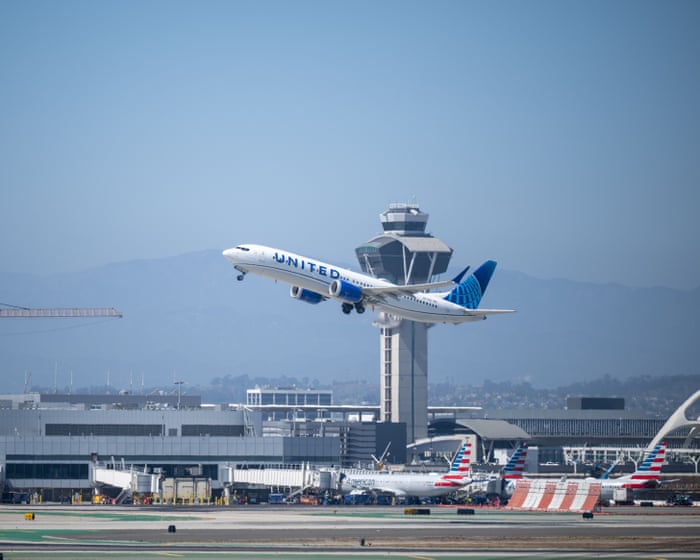
United Airlines is investigating a video showing one of its employees threatening to call Immigration and Customs Enforcement (ICE) on a customer at San Francisco Airport. The incident happened after a long wait and argument about a ticket name error, and the customer, a U.S. citizen, was not detained after his return from Canada.
Key Facts
The video shows a United Airlines employee threatening to call ICE on Julio Varela, a Mexican American man and U.S. citizen.
The incident took place at San Francisco International Airport.
The argument started because of a long delay fixing a mistake in Varela’s daughter’s ticket name for a flight to Canada.
Varela asked the employee for her name to report her, and she responded by threatening to call ICE.
Varela said he is a naturalized U.S. citizen and worried about being detained by ICE.
United Airlines said it is looking into the situation but gave no other details.
Varela returned from Montreal without any problems related to ICE.
Read the Original
Want the full story? Tap a source to open the original
article.
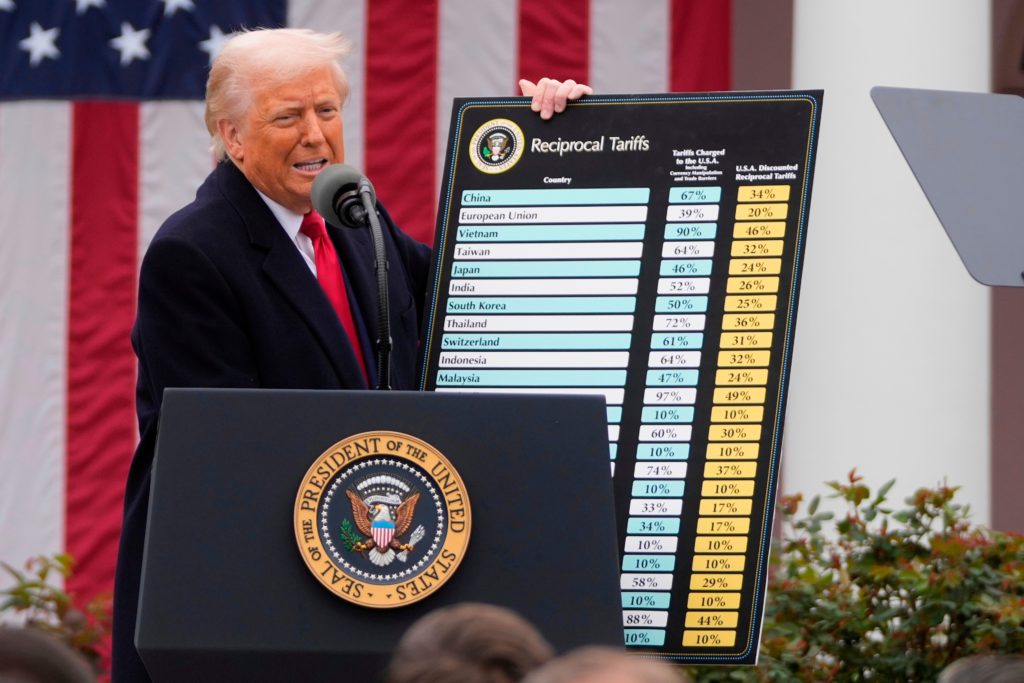
President Donald Trump put a 50% tax on most goods coming from Canada. He said this is because Canada treats American cars, alcohol, and dairy unfairly. This action may cause economic problems and hurt relations between the two countries.
Key Facts
The tariffs are set at 50% on most Canadian goods.
President Trump claims Canada unfairly limits American autos, alcohol, and cheese.
This is in response to Canada's previous retaliation against U.S. tariffs.
An official said only Canada and China have retaliated against U.S. tariffs so far.
The tariffs could increase prices and cause economic difficulties.
The U.S. and Canada have had close economic ties before this move.
The decision was announced on a Monday in Washington.
The tariffs may worsen relations between the U.S. and Canada.
Read the Original
Want the full story? Tap a source to open the original
article.
Many young people in their 20s are investing a lot of their savings in technology stocks, hoping to grow their money. This interest is driven by the excitement around artificial intelligence (AI) and tech company growth, but the market for these stocks is very unpredictable with large price swings.
Key Facts
Michelle Huynh, 26, invested heavily in tech stocks and saw gains of about A$22,000 this year after an initial rise of A$31,000.
Younger investors are motivated by shrinking purchasing power and see investing as necessary.
The US Nasdaq tech index rose about 10% this year, Japan's Nikkei 225 increased over 20%, and South Korea’s Kospi index surged more than 50% before falling sharply.
The Kospi index in South Korea has experienced wild ups and downs, causing trading to be stopped seven times this year to prevent panic selling.
Many retail investors, including those new to investing like stay-at-home parents, have joined the stock market excitement in places like South Korea.
Concerns have been raised about people borrowing money to invest in stocks, leading to government actions to limit this practice.
Experts warn that some investments are based on hopeful future profits rather than current earnings, which can be risky.
Retail investors often see price drops as buying chances but may not fully understand the risks of big losses if the market value drops suddenly.
Read the Original
Want the full story? Tap a source to open the original
article.
President Donald Trump announced new 50 percent tariffs on many Canadian products, including cars, alcohol, and dairy, starting in 30 days. The tariffs target goods previously duty-free under the USMCA trade agreement and respond to trade disputes between the U.S. and Canada.
Key Facts
The tariffs apply to most Canadian goods that were duty-free under the USMCA agreement.
Products affected include automobiles, auto parts, wine, beer, spirits, cheese, cement, construction materials, hockey sticks, and other manufactured goods.
Energy products, potash, fish, and critical minerals are exempt from these tariffs.
The tariffs are based on Section 338 of the Trade Act of 1930.
The White House accused Canada of unfair treatment of U.S. cars, alcohol, and dairy, and retaliating against previous U.S. tariffs.
The trade dispute occurs as USMCA renewal talks have stalled and economic relations between the U.S. and Canada are sensitive.
Economists warn the tariffs could raise costs for businesses and consumers and increase inflation.
The White House may consider additional tariffs related to wildfire smoke impact on U.S. air quality.
Read the Original
Want the full story? Tap a source to open the original
article.
President Donald Trump has ordered a 50% tariff on many goods imported from Canada, starting August 19. This move responds to issues with trade fairness involving US cars, dairy, and alcohol, increasing tensions between the two countries.
Key Facts
The tariff is set at 50% on a large range of Canadian products.
It targets items like wine, hockey sticks, and commercial cement.
Some important Canadian exports to the US, such as energy, potash, critical minerals, and fish, are not affected.
The US already has tariffs from 15% to 50% on Canadian steel, aluminum, and copper.
The US also charges 35% on Canadian softwood lumber and 25% on non-US parts in cars.
Canada has retaliated with a 25% tariff on some American steel, aluminum, and vehicles.
The tariffs are meant to protect American businesses from what the US government calls unfair trade treatment.
The tariff action follows President Trump’s earlier threats regarding issues like Canadian wildfire smoke affecting US cities.
Read the Original
Want the full story? Tap a source to open the original
article.
Dogs can get sunburned just like people, especially those with thin or light-colored fur, or areas of exposed skin. Sunburn in dogs can cause redness, pain, and in severe cases, blisters or infections, so owners should protect their pets by limiting sun exposure and using pet-safe sunscreen when needed.
Key Facts
Dogs’ fur does not fully protect them from harmful ultraviolet (UV) rays from the sun.
Early signs of sunburn in dogs include pink or red skin, warmth, sensitivity, and licking or scratching.
Dogs at higher risk are those with thin, short, or sparse fur; white or light-colored coats; hairless breeds; or shaved areas.
Areas like the nose, ear tips, eyelids, belly, and groin have less fur and are more vulnerable to sun damage.
Repeated sun exposure can increase dogs’ risk of skin cancer and premature skin aging.
Owners should limit dogs’ sun exposure during peak UV hours, provide shade and water, and consider UV-protective clothing.
Only use sunscreens made specifically for dogs, as some ingredients in human sunscreens can be toxic.
Owners should see a vet if a dog’s sunburn worsens with blisters, peeling, swelling, or signs of pain and illness.
Read the Original
Want the full story? Tap a source to open the original
article.
A federal judge has temporarily stopped Paramount Skydance and Warner Bros. Discovery from completing their $111 billion merger. This pause follows a lawsuit by 12 states, led by California, who argue the merger would reduce competition in the movie and TV market.
Key Facts
A federal judge issued a 14-day temporary restraining order to halt the Paramount-Warner Bros. merger.
The order may be extended or turned into a preliminary injunction to delay the merger longer.
Twelve states, led by California, sued to block the merger, fearing less competition in Hollywood.
The merger would combine two of the five biggest movie studios and cable TV channel owners.
The judge said the merged company would hold about 27% of the wide-release movie market.
Courts generally view mergers with 30% or more market share as likely to break antitrust laws.
The judge noted the merger could increase market concentration in a way that hurts competition.
A hearing on a preliminary injunction is scheduled for August 3, and Paramount may appeal.
Read the Original
Want the full story? Tap a source to open the original
article.
Taylor Farms recalled iceberg lettuce linked to a large outbreak of cyclospora, a parasite causing severe diarrhea. The outbreak has sickened over 5,000 people, much higher than normal, and Taylor Farms is a major supplier of lettuce in the U.S.
Key Facts
Cyclospora is a parasite that can cause diarrhea lasting days or weeks.
Over 5,000 cases of cyclospora have been reported in the current outbreak, compared to the usual 200-1,000 per year.
Taylor Farms recalled iceberg lettuce from central Mexico after it was linked to some Taco Bell restaurants.
The company employs 25,000 people and had $6 billion in revenue in 2022.
Taylor Farms supplies lettuce to big retailers like Walmart, Costco, and restaurant chains including McDonald’s and Taco Bell.
The FDA initially found contaminated lettuce but later said the positive test was a false alarm.
Despite the false positive, the FDA continues to investigate and supports the ongoing recall.
Cyclospora testing is more complicated than for other pathogens like E. coli or Salmonella.
Read the Original
Want the full story? Tap a source to open the original
article.
A U.S. federal judge has temporarily blocked the $110 billion merger between Paramount Skydance and Warner Bros Discovery. This pause follows a lawsuit by 12 states worried the merger would reduce competition and hurt movie theaters and viewers.
Key Facts
The merger deal is worth $110 billion.
A coalition of 12 states, including California and New York, filed a lawsuit to stop the merger.
The states say merging the two studios could harm movie theaters, cable distributors, and audiences.
Paramount Skydance and Warner Bros claim the merger would improve streaming services.
Judge Araceli Martínez-Olguín issued a 14-day temporary restraining order blocking the merger.
The judge expressed concern that undoing the merger later would be very difficult if it is allowed now.
The merged company would control over a quarter of major film releases and include popular franchises like Harry Potter and Batman.
The next court hearing about the merger is scheduled for August.
Read the Original
Want the full story? Tap a source to open the original
article.
John Healey, now the UK chancellor, previously criticized the Treasury for not properly funding the military's modernization plans. As chancellor, he faces the challenge of increasing defense spending to meet government goals, while balancing other financial demands.
Key Facts
Healey resigned as defense secretary last month, citing insufficient funding for Britain's armed forces.
The Defense Investment Plan (DIP), meant to modernize the military, was delayed by almost a year due to funding issues.
Healey said the Treasury's offer of an extra £13.5 billion was not enough to keep the country safe.
The government aims to raise defense spending to 3% of the UK's GDP by 2030, but no clear timeline was given under previous leadership.
According to forecasts, defense budgeting would need to grow from £63 billion to about £90 billion annually by 2030 to meet this target.
Increasing defense budgets may require tax rises or other funding methods, such as defense bonds, though some see bonds as borrowing.
Without more money, key military projects like drones, uncrewed ships, air defense, and long-range weapons remain underfunded.
As chancellor, Healey now has the power to work on plans to meet and possibly increase defense spending targets.
Read the Original
Want the full story? Tap a source to open the original
article.
A federal judge ruled that California can keep requiring AT&T to offer basic phone service to new customers in the state. AT&T sued to stop these rules, but the court denied their request to pause enforcement while the case continues.
Key Facts
California has rules called Carrier of Last Resort (COLR) that require AT&T to provide phone service to any potential customer in its area.
AT&T sued California in May to stop these rules and asked the court to temporarily block the rules during the lawsuit.
US District Judge Linda Lopez denied AT&T’s request for this temporary block.
AT&T wants to stop offering phone service to 184,000 homes and 15,000 businesses by June 1, 2027.
AT&T claims maintaining old copper phone lines costs $1 billion a year in California.
AT&T currently uses old copper lines but wants to switch to newer fiber technology in some places or rely on cell networks where fiber isn’t profitable.
California says AT&T must keep offering basic phone service either through copper lines or modern fiber lines.
AT&T can appeal the judge’s decision, but for now it must continue following California’s rules.
Read the Original
Want the full story? Tap a source to open the original
article.
A U.S. judge has ordered a temporary pause on the merger between Paramount Skydance and Warner Bros Discovery after 12 states, led by California, filed a lawsuit claiming the deal would hurt competition. The judge gave the states two weeks to present their full case, with a hearing scheduled for August 3, and the final decision could take months.
Key Facts
Twelve states, led by California, sued to stop the Paramount–Warner Bros merger, saying it would reduce competition.
U.S. District Judge Araceli Martinez-Olguin paused the merger and gave states 14 days to argue their case.
The judge will hold a hearing on August 3, with a final ruling expected months later.
If the deal is delayed, Paramount must pay $650 million per quarter starting September 30 as a penalty fee.
The merger combines studios and news outlets, including CNN and CBS News, raising concerns about fewer jobs and less diverse news coverage.
Some people worry the new owners, linked to President Trump’s ally Larry Ellison, might change CNN’s direction, leading top anchors to consider leaving.
The Writers Guild of America also sued, saying the merger threatens jobs and creative variety in TV and film.
Shares of Warner Bros Discovery dropped after the ruling, while Paramount’s stock fell then recovered.
Read the Original
Want the full story? Tap a source to open the original
article.
A federal judge has temporarily stopped the merger between Paramount Skydance and Warner Bros. Discovery after a group of state attorneys general sued to block the deal over competition concerns. The judge set a hearing for August 3 to decide if the pause should continue, while foreign regulators still review the merger without blocking it.
Key Facts
A dozen state attorneys general filed a lawsuit to stop the merger on antitrust grounds, meaning they worry it will reduce competition.
California District Judge Araceli Martínez-Olguín issued a 14-day restraining order preventing the companies from completing the merger.
The judge said the public’s interest requires further review of the antitrust concerns raised by the states.
A hearing is scheduled for August 3 to decide whether to extend the pause on the merger.
The states claim the merger would give too much market power to the combined company, affecting movie studios and cable channels.
Paramount says the merger is legal, promotes competition, and benefits consumers and workers.
Delays could cost Paramount around $650 million per quarter due to a "ticking fee" promised to Warner Bros. Discovery shareholders.
Paramount hopes to complete the merger by the end of September despite the current pause.
Read the Original
Want the full story? Tap a source to open the original
article.