A U.S. judge temporarily stopped the planned merger between Paramount Skydance and Warner Bros. Discovery after 12 states sued to block it. The judge said the merger could reduce competition in the movie business and break antitrust laws, and the decision will be reviewed at a hearing in two weeks.
Key Facts
A U.S. district judge issued a temporary restraining order to halt the Paramount-Warner Bros. Discovery merger.
The order will last 14 days, with a court hearing scheduled for August 3.
12 states, led by California, sued to block the merger, citing concerns about less competition in movie distribution.
The states argue the merger violates the Clayton Act, a 1914 law aimed at preventing monopolies.
The merger would combine two major media companies controlling about one-third of cable programs and blockbuster films.
Paramount says the merger will help compete with companies like Netflix and create more jobs for actors and writers.
The judge ruled the merged company would have a large market share, which likely breaks antitrust laws.
Paramount and Warner Bros. will continue operating separately during the legal process.
Read the Original
Want the full story? Tap a source to open the original
article.
A federal judge has ordered Paramount and Warner Bros. Discovery to pause their $81 billion merger for at least two weeks. This pause gives twelve states, led by California, more time to challenge the merger in court, arguing it would reduce competition and hurt consumers.
Key Facts
Paramount is trying to buy Warner Bros. Discovery for $81 billion.
Twelve states, led by California, sued to block this merger.
The states say the merger would reduce competition and limit options for consumers.
A federal judge granted a temporary restraining order to delay the merger for at least 14 days.
The merger would combine major studios, TV networks, streaming services, and news outlets under one company.
Paramount was bought by Skydance last year and plans to defend the merger strongly.
The companies want the deal to close by September 30 to avoid paying extra fees to shareholders.
A court hearing on the states' request to block the merger will take place around August 3.
Read the Original
Want the full story? Tap a source to open the original
article.
Many companies are changing how they talk about diversity and inclusion at work because of new government rules and public attitudes. A consulting firm called Insight Education Systems says leaders should focus more on the small, everyday messages they send, like tone and gestures, because these affect how employees feel and perform more than formal policies.
Key Facts
Federal government actions have increased scrutiny of diversity initiatives in companies.
Fewer Fortune 500 companies shared information about their diversity efforts publicly in 2026.
Insight Education Systems suggests focusing on "MicroMessages," the subtle signals leaders send daily.
These small signals impact employee motivation, teamwork, and work performance.
Leadership communication is evolving from formal language to everyday personal interactions, called "Cultural Optimization."
People respond more to tone, expressions, and body language than just spoken words.
Trust in leadership includes many parts, like trusting judgment, reliability, representing others, and honesty.
Making trust clear and specific helps leaders build better workplace relationships.
Read the Original
Want the full story? Tap a source to open the original
article.
A federal judge has paused the $81 billion merger between Paramount and Warner Bros Discovery for at least two weeks. This pause allows 12 states, led by California, more time to argue that the merger would reduce competition and harm consumers.
Key Facts
Twelve states filed a lawsuit to block the merger, claiming it would hurt competition in Hollywood and reduce choices for viewers.
The states asked the companies not to finalize the merger until the court reviewed their concerns.
When the companies refused, the states requested a temporary restraining order, which the judge approved.
The judge’s order stops the merger from moving forward for at least 14 days, possibly up to 28 days.
A court hearing on a longer pause (preliminary injunction) is scheduled for August 3.
The merger would combine two major Hollywood studios and their TV networks, movies, and streaming services, including HBO Max and Paramount+.
Paramount’s owner, Skydance, disagrees with the lawsuit and plans to strongly defend the merger.
The merger was previously approved by regulators, including the Trump administration.
Read the Original
Want the full story? Tap a source to open the original
article.
A judge in California paused the planned merger between Paramount and Warner Bros. Discovery because of a new antitrust lawsuit. The pause will last two weeks while the court reviews the legal challenge.
Key Facts
Paramount planned to take over Warner Bros. Discovery.
A lawsuit was filed last week against this merger, claiming it breaks antitrust laws.
Antitrust laws are rules meant to keep companies from becoming too powerful and unfairly limiting competition.
California Attorney General Rob Bonta asked the court to pause the merger.
Judge Araceli Martínez-Olguín approved this pause for two weeks.
The pause allows time to properly consider the antitrust lawsuit.
The merger is valued at billions of dollars.
The decision affects major companies in the entertainment industry.
Read the Original
Want the full story? Tap a source to open the original
article.
A federal judge has temporarily stopped the $81 billion merger between Paramount and Warner Bros. Discovery for at least two weeks. This pause allows a group of twelve states, led by California, to continue their legal challenge that the merger will reduce competition and harm consumers.
Key Facts
Paramount and Warner Bros. Discovery planned to merge for $81 billion.
Twelve states, led by California, sued to block the merger, saying it would reduce competition in Hollywood.
The states want the deal delayed until courts fully review their claims.
Judge Araceli Martínez-Olguín granted a temporary stop of the merger for at least 14 days.
The pause could last up to 28 days and a court hearing is set for August 3.
Warner and Paramount are two of the last major Hollywood studios, with popular shows, movies, and streaming services like HBO Max and Paramount+.
Paramount, owned by Skydance since last year, insists the merger will increase competition and was approved by regulators including President Donald Trump’s administration.
The legal battle will determine if the companies can complete the merger or if it will be blocked.
Read the Original
Want the full story? Tap a source to open the original
article.
Petrol prices have increased due to rising tensions between the United States and Iran, along with a naval blockade declared by Yemen’s Houthis against Saudi Arabia. These factors have disrupted oil shipping routes, especially through the Strait of Hormuz, causing concerns about oil supply and driving fuel costs higher for US consumers.
Key Facts
Brent crude oil prices rose to $91.42 before falling slightly to $88.04.
US West Texas Intermediate (WTI) oil reached $85.39, the highest since June 12, then dropped to $82.29.
Yemen’s Houthis declared a naval blockade against Saudi Arabia, adding pressure to shipping routes.
The Strait of Hormuz, a key route for about 20% of the world’s oil, saw significantly reduced tanker traffic amid fighting.
Petrol prices in the US reached over $4.00 per gallon, up from $3.87 a week ago.
Inflation data showed a recent drop driven by falling petrol prices, but renewed tensions reversed this trend.
Two ships from a Greek company were hit by projectiles near Oman, though the attacker was not identified.
US stock markets showed mixed results, influenced by geopolitical concerns and new AI tech announcements from companies like Alibaba and Apple.
Read the Original
Want the full story? Tap a source to open the original
article.
A judge has issued a temporary restraining order to pause the merger between Paramount Skydance and Warner Bros. Discovery. This order stops the merger from moving forward while legal matters are reviewed.
Key Facts
A judge granted a temporary restraining order against the merger.
The merger involves Paramount Skydance and Warner Bros. Discovery.
Paramount Skydance is the parent company of CBS News.
The order temporarily blocks the merger from happening.
This legal step allows more time to examine the merger details.
The merger aims to combine two major entertainment companies.
Read the Original
Want the full story? Tap a source to open the original
article.
The FDA issued a warning about shredded lettuce after an initial test suggested it might be unsafe. Later, this test result was found to be a false positive, meaning the lettuce was not actually contaminated.
Key Facts
The FDA initially flagged shredded lettuce for safety concerns.
Testing showed a possible problem, but this was later proven to be incorrect.
The issue was called a false positive, which happens when a test indicates a problem where there is none.
Despite the false alarm, regulators are still paying close attention to shredded lettuce safety.
The FDA wanted to keep the public informed about the situation.
The recall of lettuce was based on the initial test results.
Consumers were warned to be cautious during the recall period.
The focus remains on ensuring food safety for shredded lettuce products.
Read the Original
Want the full story? Tap a source to open the original
article.
New UK Prime Minister Andy Burnham has announced plans to support people with the cost of living, which will be paid for by higher taxes or spending cuts. He is considering changes to income tax thresholds and borrowing rules, while also planning long-term strategies for defence, housing, and welfare.
Key Facts
Burnham's cost of living support will be funded either by tax increases or spending cuts.
UK government borrowing costs on 10-year bonds have risen slightly under Burnham’s leadership.
He may unfreeze income tax thresholds earlier than planned, affecting workers earning around £50,000.
The current tax threshold freeze was started to pay off Covid-related government borrowing and extended until 2030-31.
Some major unions support lifting tax thresholds to reduce tax burdens on their members.
Burnham plans a 10-year economic plan focusing on decentralisation, devolution, and rebuilding infrastructure.
He aims to fund the Defence Investment Plan, which involves large multi-year military spending.
Ending rough sleeping is a top priority, with immediate funds provided and long-term plans for building council houses.
Read the Original
Want the full story? Tap a source to open the original
article.
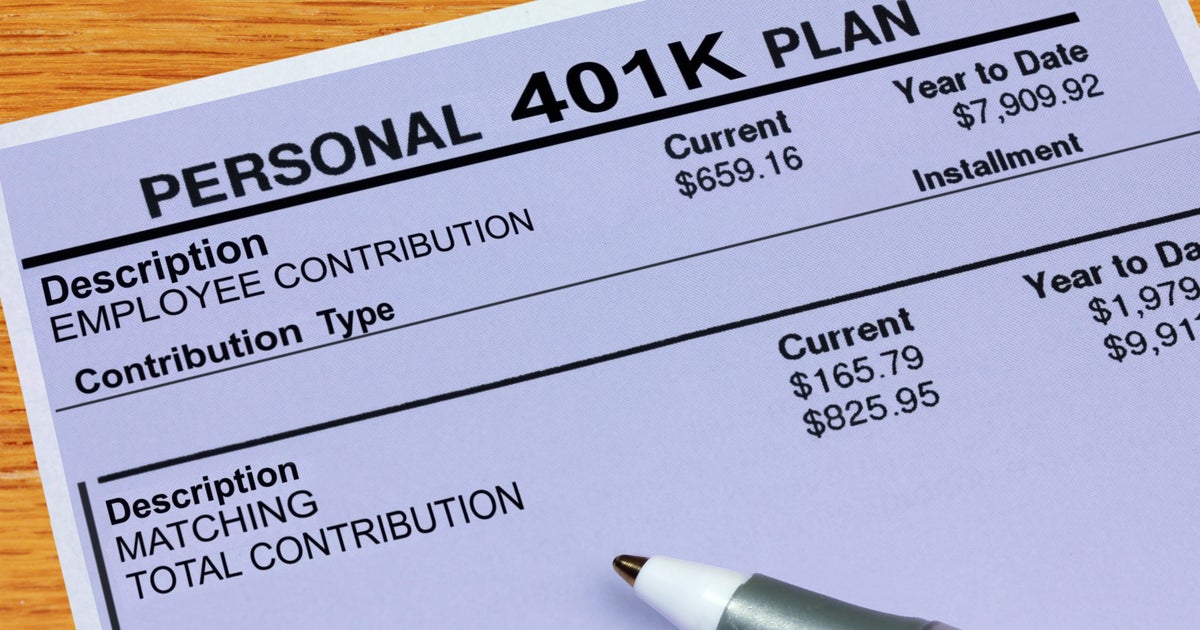
Many U.S. workers use 401(k) retirement plans but may not know about fees that can reduce their savings by tens of thousands over time. These fees vary by plan size and investment choices and include investment management, administrative costs, and optional service charges.
Key Facts
Over half of U.S. workers rely on 401(k) plans to save for retirement.
A difference of 1% in fees can reduce retirement savings by about 28% over 35 years.
For example, $25,000 invested with 1.5% fees could grow to $163,000 versus $227,000 with 0.5% fees.
About 40% of workers do not realize they pay fees on their 401(k) accounts.
Fees come in three types: investment fees, administrative fees, and individual service fees.
Larger plans usually have lower fees (0.3% to 0.5%) while smaller plans often have higher fees (1% or more).
Employers may pay some fees, but many are deducted from workers’ balances.
Plan holders should regularly check their accounts, as fees can change and employers must inform workers of changes within 30-90 days.
Read the Original
Want the full story? Tap a source to open the original
article.
Gas prices in the U.S. have started to rise again as tensions between the U.S. and Iran increase. Experts say these political tensions can affect oil supply and make fuel more expensive.
Key Facts
Gas prices in the U.S. are going up.
The rise is linked to increased tensions between the U.S. and Iran.
Political conflicts can disrupt oil supply chains.
When supply is uncertain, prices tend to increase.
Experts monitor international relations to predict fuel costs.
Gas price changes affect everyday costs for consumers.
Tensions include diplomatic disagreements and regional conflicts.
The situation is being watched closely by energy markets.
Read the Original
Want the full story? Tap a source to open the original
article.
West African leaders have approved a $25 billion plan to build a 6,000 km gas pipeline from Nigeria to Morocco, linking to Europe’s gas network. The pipeline will carry gas to 14 countries, aiming to boost regional energy use and economic growth, with construction expected to start in 2028.
Key Facts
The Nigeria-Morocco Atlantic Gas Pipeline will be 6,000 km (3,700 miles) long along the Atlantic coast.
It will serve 14 West African countries and connect to Europe's gas system via Spain.
The project cost is estimated at $25 billion and construction will begin in phases starting in 2028.
About 30 billion cubic meters of gas per year will flow through the pipeline, serving 400 million consumers.
The pipeline aims to reduce Africa’s reliance on exporting raw gas and importing processed gas at higher prices.
The project has taken nearly a decade of negotiations and has passed major political approval.
Initial construction will start in Morocco, Mauritania, and Senegal before extending toward Nigeria.
The pipeline route avoids the Sahel region’s insecure areas but offshore building increases costs.
Read the Original
Want the full story? Tap a source to open the original
article.
Gas prices in the United States have risen above $4 per gallon again due to increased fighting in the Iran war. The conflict has disrupted global oil supplies, especially after Iran closed the Strait of Hormuz, a key oil shipping route.
Key Facts
Gasoline prices increased by 13 cents per gallon last week, reaching an average of $4.003 per gallon.
The Iran war led Iran to close the Strait of Hormuz, which carries about 20% of the world’s oil.
U.S. and Iran exchanged military strikes recently, worsening the conflict and raising fears of oil shortages.
The U.S. has resumed a naval blockade of the Strait of Hormuz after Iran attacked oil tankers there.
Two U.S. service members were killed in related attacks in Jordan and Iraq.
Gas prices had briefly dropped below $4 last month after a tentative U.S.-Iran agreement seemed likely.
Before the war, gas prices last exceeded $4 in August 2022 following Russia’s invasion of Ukraine.
The Iran war caused one of the largest oil shocks, pushing prices as high as $4.56 per gallon in May.
Read the Original
Want the full story? Tap a source to open the original
article.
A $45,000 deposit in a long-term certificate of deposit (CD) can earn much more interest than the same money in a regular savings account. Longer CD terms offer higher rates and compound interest, leading to significantly more earnings over time, but the money is locked in and not easily accessible.
Key Facts
Savings accounts currently earn an average interest rate of about 0.38% per year.
Long-term CDs offer higher interest rates, around 4% or more per year.
A 1-year CD at 4.11% would earn about $1,850 in interest on $45,000.
A 10-year CD at 4.30% would earn about $23,558 in interest on the same $45,000.
Longer CD terms earn more interest because of compounding, where interest grows on both the original money and previous interest.
Savings accounts offer easy access to money, while CDs require locking up funds, often with penalties for early withdrawal.
Over 10 years, a savings account would earn about $1,739 in interest, much less than a long-term CD.
Choosing between a savings account and a CD depends on how soon the money will be needed.
Read the Original
Want the full story? Tap a source to open the original
article.
The European Commission fined AliExpress over $625 million for not properly controlling illegal, unsafe, and counterfeit products on its platform. Despite being ordered to fix these issues by June 2025, AliExpress failed to do so, leading to this record penalty.
Key Facts
AliExpress was fined more than $625 million, the largest under the EU’s Digital Services Act (DSA).
The company did not have enough staff to remove counterfeit and dangerous products effectively.
Many banned products reappeared on the site and sometimes stayed online for over a month.
Sellers bypassed rules by mislabeling products to avoid detection checks.
AliExpress’s system recommended illegal products to users instead of limiting their exposure.
The EU gave AliExpress a deadline of June 2025 to comply with regulations, but the company failed to meet it.
Other companies like Temu and X were previously fined smaller amounts under the same law.
AliExpress said it was surprised by the fine and plans to appeal, stating it has invested in safety and risk management.
Read the Original
Want the full story? Tap a source to open the original
article.
Several customers have sued Taco Bell and its lettuce supplier, Taylor Farms, after a cyclospora parasite outbreak linked to shredded iceberg lettuce served at Taco Bell restaurants in five U.S. states. Federal agencies initially linked the outbreak to lettuce from Taylor Farms but later said tests produced a false positive and have not confirmed the exact source.
Key Facts
Customers filed three lawsuits in Ohio and Michigan against Taco Bell and Taylor Farms.
The lawsuits claim the companies were negligent and caused illnesses from cyclospora, a parasite that causes diarrhea.
The outbreak was reported in Indiana, Kentucky, Michigan, Ohio, and West Virginia.
The CDC advised people not to eat lettuce from Taylor Farms de Mexico used in Taco Bell restaurants.
Taco Bell said it removed potentially affected lettuce quickly after the outbreak was reported.
The FDA later said testing showed a "false positive" for contaminated lettuce from Taylor Farms.
Taylor Fresh Foods, the parent company, said the FDA apologized for the testing error.
The lawsuits seek damages ranging from $25,000 to $75,000 for medical costs and suffering caused by the outbreak.
Read the Original
Want the full story? Tap a source to open the original
article.
An authorized user on a credit card can use the card but is generally not legally responsible for paying the debt. If the primary cardholder does not pay, the credit card company cannot usually sue the authorized user, but joint account holders have equal responsibility.
Key Facts
An authorized user is allowed to use a credit card but does not sign the cardholder agreement.
The primary cardholder applies for the card, signs the contract, and is legally responsible for payment.
Authorized users usually do not undergo a credit check and have no legal duty to repay charges.
Credit card companies cannot normally sue authorized users for unpaid balances.
Debt collectors may contact authorized users but have no legal claim to their payment.
Joint account holders have signed the agreement and share legal responsibility and liability for the card balance.
If the primary cardholder cannot pay, early action like debt settlement or credit counseling may avoid lawsuits and reduce financial stress.
Read the Original
Want the full story? Tap a source to open the original
article.
The Australian Manufacturing Workers’ Union (AMWU) has released a detailed plan calling for major tax changes, including higher taxes on the rich, wealth, and inheritance, as well as more revenue from gas companies. The plan aims to fund free education, better welfare, and public aged care, and it will influence discussions at the Labor party’s national conference.
Key Facts
The AMWU’s manifesto proposes a new tax rate for people earning over $500,000 a year.
It suggests a wealth tax on assets except the family home and an inheritance tax on large inheritances.
The manifesto calls for higher taxes on gas exports and reform of the petroleum resource rent tax.
The Labor party is expected to support some of these policies in principle at its upcoming conference.
The union wants to add dental care to Medicare and make all education, from childcare to university, free.
The plan includes raising welfare payments and nationalizing the aged care system.
Workers should have a say on how artificial intelligence is used at work and share profits from it.
The manifesto supports Indigenous sovereignty and justice, including adopting the Uluru Statement from the Heart and removing symbols tied to colonial oppression.
Read the Original
Want the full story? Tap a source to open the original
article.
Florida and Texas continue to lead the U.S. in population and economic growth, with many cities in these states showing strong development despite slowed migration after the pandemic. While growth rates have cooled, Florida and Texas still have the highest increases in overall population numbers and remain attractive due to no income tax and good job markets.
Key Facts
Nine Texas cities and four Florida cities are among the top 20 fastest-growing U.S. cities.
Out of 75 boomtowns analyzed, 18 are in Texas and 19 in Florida.
Florida saw a big drop in domestic migration from 310,892 in 2022 to 22,517 in 2025 but had the highest international migration at 178,674.
Texas had the fourth highest population growth by percentage (1.2%) and gained 391,243 people.
South Carolina saw the highest population growth percentage at 1.5%, followed by Idaho and North Carolina.
Housing prices in some Florida and Texas cities dropped over 10% from 2022 peaks, with Austin down 27.8% and Punta Gorda down 25.4%.
Florida’s GDP grew by 1.6% and Texas’ GDP grew by 0.9% in the latest reported quarters.
The slowdown is linked to higher mortgage rates and more people returning to offices.
Read the Original
Want the full story? Tap a source to open the original
article.