Fact-first summaries of the news — stay informed, stay grounded.
Your favorite news sources, one calm feed — fact-first summaries that always link to the
original story. No outrage bait, and we tell you when you're caught up. How it works
Business News
Business news, market updates, and economic developments
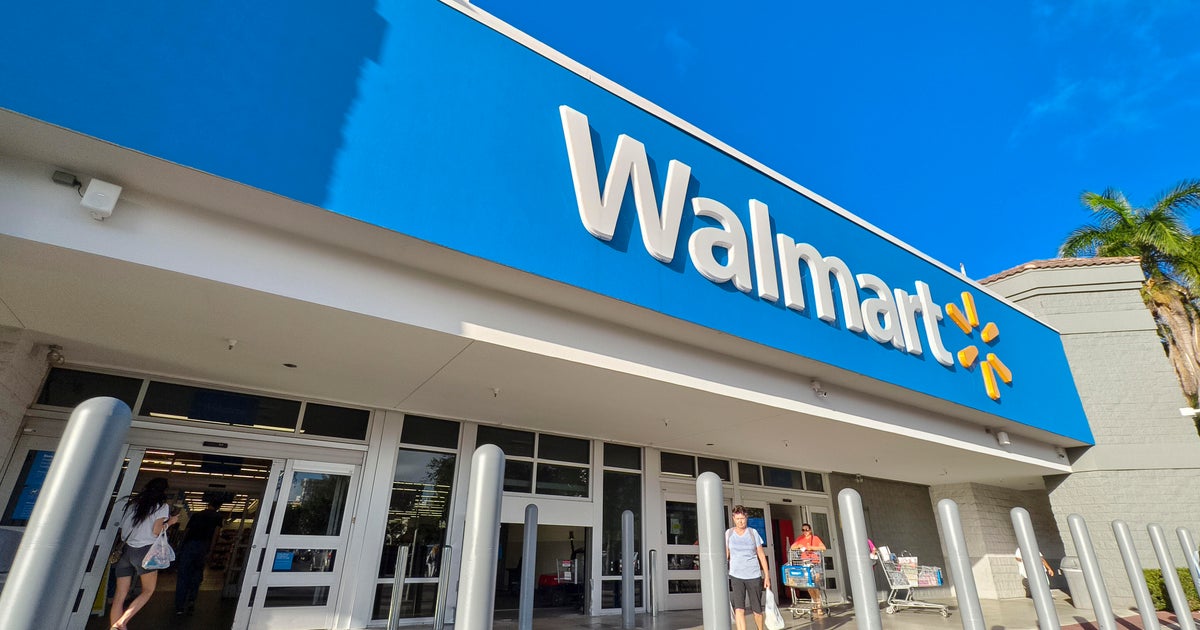
Walmart will start accepting Apple Pay and other tap-to-pay methods at some stores on August 24. The company plans to have this payment option in all Walmart and Sam's Club locations by the end of 2026 and at its gas stations by mid-2027.
Key Facts
Walmart will let customers pay with Apple Pay, Google Pay, and other tap-to-pay options starting August 24 at select stores.
Tap-to-pay will be available at all Walmart and Sam's Club stores by the end of 2026.
Walmart gas stations will offer tap-to-pay by mid-2027.
This change aims to give customers more payment choices and make shopping easier.
Walmart previously encouraged customers to use its own Walmart Pay app, which uses QR codes.
Customers have complained that they could not use Apple Pay at Walmart stores before.
Apple Pay is accepted at over 85% of U.S. retailers.
This move aligns Walmart with common digital payment methods used nationwide.
Read the Original
Want the full story? Tap a source to open the original
article.
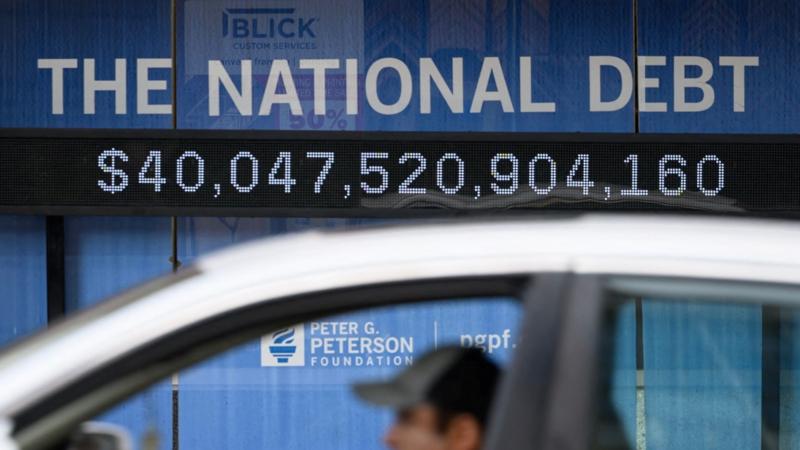
The US national debt has grown to $40 trillion, more than doubling in ten years. This increase comes from large government spending and rising interest payments under President Donald Trump and President Joe Biden.
Key Facts
The US national debt is now $40 trillion.
In 2016, the debt was just under $20 trillion.
The debt has increased due to heavy government spending.
Both President Donald Trump’s and President Joe Biden’s administrations contributed to the rise.
Higher interest payments have also added to the debt total.
The growing debt can impact American consumers and the global economy.
Treasury Department data provides these debt figures.
Read the Original
Want the full story? Tap a source to open the original
article.
Two New York City renters have filed a class action lawsuit against the real estate company Compass. They claim Compass removed many rental listings from free websites like Zillow to create a false shortage, which raised rent prices in Manhattan.
Key Facts
Compass controls over 80% of rental listings in Manhattan as of 2025 data.
Renters say Compass hides thousands of rental listings from free online platforms.
By hiding listings, Compass allegedly increases rent prices and broker fees.
Zillow owns a popular free New York City rental platform called StreetEasy.
Compass stopped listing many units on Zillow to push renters towards brokers.
Zillow responded by blocking hidden listings from its sites to keep listings public.
Compass filed an antitrust lawsuit against Zillow but dropped it after a judge’s decision.
U.S. government and local authorities, including Senator Elizabeth Warren, are investigating Compass for possible unfair market control.
Read the Original
Want the full story? Tap a source to open the original
article.
Dutch regulators have fined Uber nearly $1 billion for using automated software to suspend driver accounts without human checks. The fine was given because Uber broke European privacy rules by not informing drivers about these automatic decisions and by relying on fully automated account suspensions.
Key Facts
The Dutch Data Protection Authority fined Uber 825 million euros (about $964 million).
Uber used automated software to suspend driver accounts without human review from 2018 to 2022.
The fine is based on violations of the EU’s General Data Protection Regulation (GDPR) that bans fully automated decision-making.
Uber did not properly inform drivers that account suspensions were decided automatically.
Uber disagrees with the fine and plans to appeal the decision.
This is the fourth time Dutch regulators have fined Uber for privacy violations.
In 2024, Uber was fined 290 million euros ($324 million) for transferring driver data to the U.S. without proper safeguards.
Uber says it now includes human reviews and allows drivers to appeal suspension decisions.
Read the Original
Want the full story? Tap a source to open the original
article.
People in many U.S. cities are searching for hidden money dropped in public places, guided by social media accounts that post videos and clues. These accounts use cash drops to promote themselves and local businesses and can earn money through sponsorships and advertising on social platforms.
Key Facts
Social media accounts post videos showing large amounts of cash hidden in places like parks, trash bins, and tree hollows for people to find.
People quickly rush to find the money, sometimes arriving by bike, car, or on foot.
Some cash drops are linked to promotions by local businesses like restaurants or lawyers, while others mainly promote the social media accounts themselves.
Over 50 such accounts exist across about 24 U.S. cities, with more than 7 million followers combined.
The activity reflects economic concerns like inflation, according to experts.
PassPass is a national group behind many cash drops, also running an app where users can win prizes and get clues to cash drops.
These accounts make money through sponsorships, collecting user data, advertising revenue, and app subscriptions.
The cash drops create large crowds and social media attention, helping these accounts grow their brand.
Read the Original
Want the full story? Tap a source to open the original
article.
Trade negotiators from the US and Canada have met for the third day to try to finalize a deal before new US tariffs on Canadian goods begin. President Donald Trump has set a Saturday deadline to impose 50% tariffs on about $20 billion of Canadian imports if no agreement is reached.
Key Facts
US and Canadian trade negotiators have been meeting in Washington, DC, for three days.
President Donald Trump has threatened 50% tariffs on $20 billion worth of Canadian goods starting Saturday.
The tariffs were paused earlier in the week while negotiations continue.
The last tariffs were introduced by President Trump in 2025 during his second term, causing Canada to retaliate.
A possible deal may reduce vehicle tariffs from 25% to 15% and cut steel and aluminum tariffs by half.
Canadian public opinion is largely against making concessions to the US in these talks.
Key Canadian provinces have differing views, some wanting tariffs completely removed.
Canada sends 70% of its exports to the US, making it very sensitive to American trade policies.
Read the Original
Want the full story? Tap a source to open the original
article.
Logitech is facing a class action lawsuit for not refunding customers the money related to import tariffs that the U.S. Supreme Court declared unlawful. The lawsuit claims Logitech raised prices because of these tariffs, kept the extra money, and did not pass on the refunds it received from the government to customers.
Key Facts
In April 2025, Logitech raised prices on 51% of its products by up to 25% due to import tariffs.
The U.S. Supreme Court ruled in February 2026 that these tariffs, imposed under the International Emergency Economic Powers Act (IEEPA), were illegal.
Logitech received a full refund of $61 million from the government for these tariffs.
Customers who bought Logitech products at higher prices are suing for refunds of the tariff-related price increases.
Logitech’s CFO said in 2026 that the price increases offset tariff costs and contributed to high company profits.
The lawsuit was filed in the U.S. District Court for the Northern District of California by a housing builder and a California resident.
Logitech has not publicly commented on the lawsuit or the price increases.
Other companies like Microsoft, Nintendo, and Sony are facing similar lawsuits over tariff refund issues.
Read the Original
Want the full story? Tap a source to open the original
article.
Aon, a large insurance broker, expects that health costs for U.S. employers will increase by about 9.5 percent in 2024. They also predict a roughly 10 percent rise in 2027 if current trends continue.
Key Facts
Aon is the second largest insurance broker worldwide.
They performed a risk analysis on employer health costs in the U.S.
Health costs for employers are expected to rise by 9.5 percent in 2024.
Costs could increase by about 10 percent by 2027.
The projections assume no major changes in current healthcare conditions.
Read the Original
Want the full story? Tap a source to open the original
article.
Walmart plans to use $2.9 billion it received from tariff refunds to lower prices for customers. The company aims to pass the savings from these refunds onto shoppers.
Key Facts
Walmart received $2.9 billion from tariff refunds.
The refunds come from tariffs previously placed on imported goods.
Walmart intends to use this money to reduce prices.
Lower prices are meant to benefit Walmart customers.
The company is focusing on making shopping more affordable.
Tariffs are taxes on imports that can increase costs for retailers.
By getting refunds on tariffs, Walmart can spend less on products.
Read the Original
Want the full story? Tap a source to open the original
article.
Tesla and several Chinese car companies are recalling more than 4 million vehicles due to door handle safety problems. Tesla is recalling nearly 3 million cars in China because the door handles might not open properly in emergencies, posing a risk to passengers.
Key Facts
Tesla recalled about 2.98 million vehicles in China, including Model 3, Model Y, Model X, and Model S.
The recall is mainly because the hidden or flush door handles can fail during accidents or electrical problems.
If door handles fail, passengers might get trapped, and rescuers may not access the cars quickly.
Tesla plans to fix the issue with software updates on the affected cars.
Other Chinese carmakers like Xiaomi, Leapmotor, Geely, and XPENG are also recalling vehicles for similar door handle issues.
Chinese authorities will ban hidden door handles on electric vehicles starting in 2027.
The recall aims to improve safety before this new rule takes effect.
Read the Original
Want the full story? Tap a source to open the original
article.
Chinese regulators have ordered Tesla to add warning labels to nearly 3 million Model 3 and Model Y cars in China to show how to open rear doors in emergencies. Tesla must also update software to lower windows automatically after a crash and improve the driver monitoring system with interior cameras.
Key Facts
Chinese regulators want clearer emergency exit instructions inside about 2.98 million Tesla Model 3 and Model Y cars.
The labels will help people open rear doors if the car loses power during an accident.
New Chinese rules starting next year specify handle sizes for all new cars, but existing cars have until 2028 before changes are required.
Tesla must update software to automatically roll down windows after a crash to help occupants escape.
Another recall affects 2.74 million Teslas needing an upgraded driver monitoring system using interior cameras.
The new system tracks where drivers are looking to ensure they stay alert.
Some Tesla owners have bypassed the camera system by putting a doll’s head in front of the camera.
These recalls show China’s stricter focus on car safety and Tesla’s need to comply with local rules.
Read the Original
Want the full story? Tap a source to open the original
article.
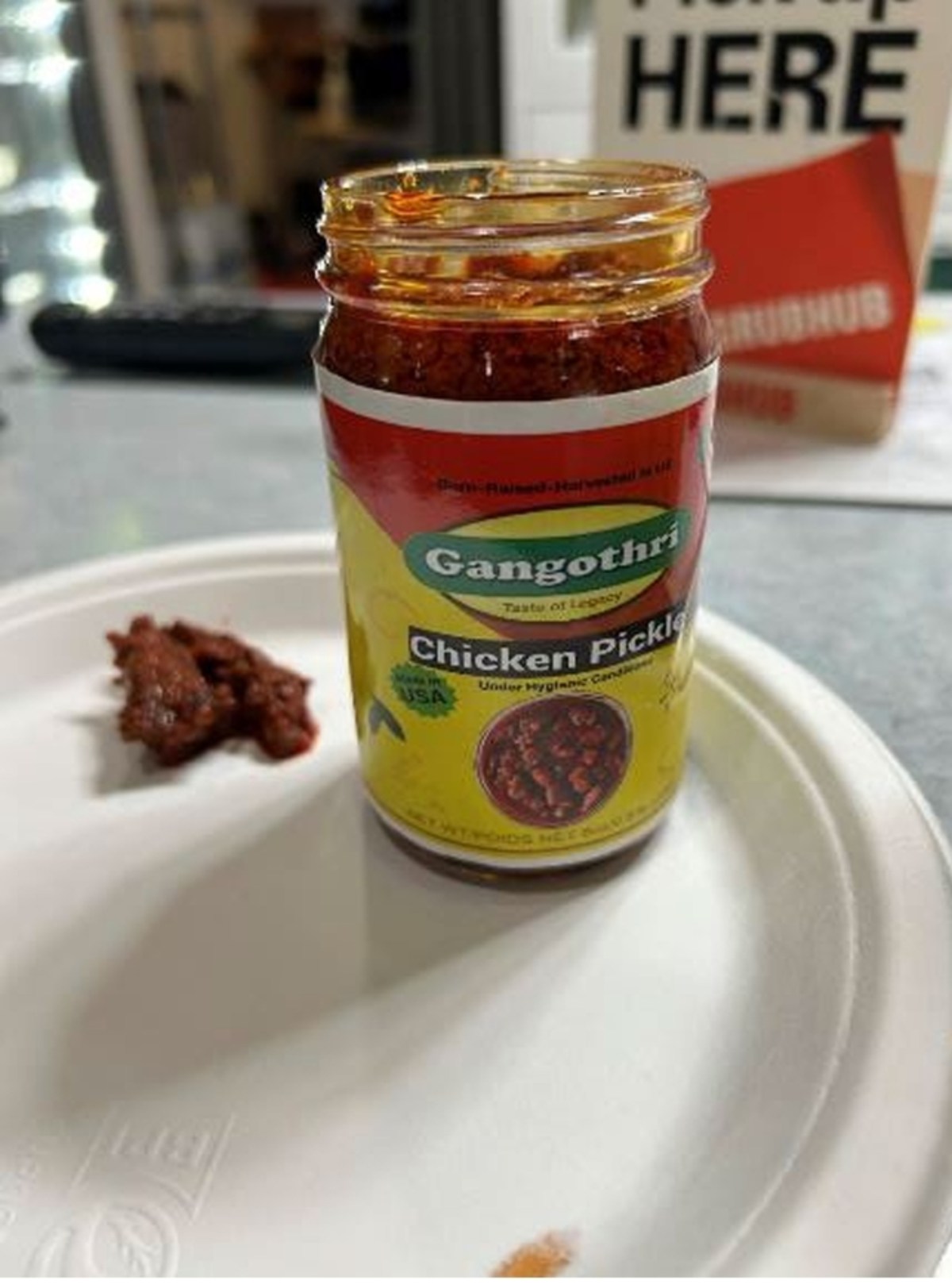
Over 1,600 pounds of ready-to-eat pickled chicken and goat products made by Indus Foods LLC (Gangothri Foods) in Austin, Texas, have been recalled nationwide. The U.S. Department of Agriculture's Food Safety and Inspection Service (FSIS) issued a Class I recall because the products were produced without the required federal inspection.
Key Facts
The recall concerns about 1,626 pounds of pickled goat and chicken products.
Products were made between January 28, 2025, and May 6, 2026.
These items were sold nationwide through stores, restaurants, distributors, and online sales.
The products lack the USDA inspection mark, which is required for meat and poultry.
The recalled items include four varieties of pickled meat sold in 8-ounce glass jars.
No illnesses have been linked to these products so far.
Consumers are advised not to eat the recalled products and to discard or return them.
FSIS discovered this issue during routine surveillance checks.
Read the Original
Want the full story? Tap a source to open the original
article.
President Donald Trump plans to start 50% tariffs on some Canadian products early Saturday, after a delayed deadline linked to ongoing trade talks. Canada says progress has been made in negotiations but important issues remain unresolved.
Key Facts
The 50% tariffs target various Canadian goods like dairy, honey, alcoholic drinks, hockey sticks, and more.
Some key imports from Canada are exempt, so the tariffs affect only some U.S. imports from Canada.
President Trump said a preliminary trade deal was reached, aiming to remove Canadian tariffs on American farm products.
Canada’s Prime Minister Mark Carney said negotiations continue to strengthen Canada’s economy.
The U.S. Trade Representative office mentioned the deal would cover market access, economic security, and digital trade rules.
President Trump hinted the Keystone XL Pipeline project might be revived as part of the deal.
These tariffs follow earlier broad tariffs Trump imposed on 60 other trade partners, including the European Union.
The tariffs are set to take effect at 12:01 a.m. Eastern Time on Saturday.
Read the Original
Want the full story? Tap a source to open the original
article.
The U.S. Interior Department announced short-term water cut plans for California, Arizona, and Nevada that mostly follow the states' own suggestions. These plans avoid large immediate reductions in Colorado River water use.
Key Facts
The federal government set short-term water reduction plans for three states: California, Arizona, and Nevada.
The plans mostly agree with proposals given by the states themselves.
The states will not face severe water cuts right now.
The Colorado River is a major water source for these states.
The decision aims to manage water resources amid ongoing shortages.
The announcement was made by the Interior Department on a Friday.
Managing Colorado River water is important for farms, cities, and communities in the region.
These plans are part of broader efforts to address water supply challenges in the western U.S.
Read the Original
Want the full story? Tap a source to open the original
article.
A study by KPMG and the University of Texas at Austin shows that only 5% of users use artificial intelligence (AI) in advanced ways at work. Most people use AI for simple tasks, while a few use it to help with complex thinking and problem-solving in their workflows.
Key Facts
KPMG is organizing its tax teams with different AI roles: power users, makers, and builders.
Only 5% of users consistently show advanced AI skills, according to KPMG research.
Routine AI use involves simple tasks like summarizing or answering questions.
Sophisticated AI use means using AI as a partner to explore ideas and handle complex assignments.
Advanced users provide AI with context and goals to manage multi-step tasks.
AI can take over repetitive tax tasks, allowing professionals to focus on analysis and risk management.
Many companies can access AI quickly, but developing skills and judgment to use it well takes more time.
Upcoming webinars will discuss AI’s impact on business operations and how companies overcome challenges in AI adoption.
Read the Original
Want the full story? Tap a source to open the original
article.
Long-term borrowing costs in the US went up again despite the Treasury Department's recent effort to lower them by buying back government debt. The national debt has passed $40 trillion, and investors remain worried about high borrowing levels and inflation, causing bond yields to rise.
Key Facts
The US Treasury Department tried to lower borrowing costs by buying back more government debt.
After a short-term drop, the interest rate on 30-year government bonds rose to about 5.27%.
Governments and companies borrow money by selling bonds and pay interest called yields.
Bond yields increase when inflation is high or expected to rise.
US national debt recently surpassed $40 trillion, more than double what it was 10 years ago.
Rising oil prices and large corporate borrowing, especially by tech firms investing in AI, have pushed yields higher.
The US dollar weakened following bond market volatility.
Gold prices rose to a three-month high amid economic uncertainty.
Read the Original
Want the full story? Tap a source to open the original
article.
The Federal Trade Commission (FTC) is considering new rules to limit personalized pricing, where companies charge different prices to different customers based on their personal data. The FTC wants businesses to clearly explain how they use personal data to set prices and to get customer consent. Some people worry these limits might reduce discounts or cause prices to rise.
Key Facts
Personalized pricing means charging each customer a different price based on their personal information.
The FTC cannot ban personalized pricing completely but can penalize businesses that don’t disclose how prices are set.
FTC Chair Andrew Ferguson said many consumers expect prices to be the same for everyone in stores.
The FTC invited the public to comment on a proposed policy to restrict hidden personalized pricing practices.
Research shows personalized pricing often helps businesses make more money but can hurt some consumers.
If prices are misrepresented as the same for everyone when they’re not, that could break FTC rules.
The FTC wants companies to tell customers what data they use for pricing and get permission to collect it.
Consumers may not realize how much data they create or how it’s used to set individual prices.
Read the Original
Want the full story? Tap a source to open the original
article.
There are increasing worries about the bond market and the rise in borrowing costs. Kristin Myers, an expert in exchange-traded funds (ETFs), discussed these issues in a CBS News segment.
Key Facts
Concerns are growing about the bond market worldwide.
Borrowing costs, or interest rates, are rising.
Kristin Myers is the ETF editor-in-chief for Asset TV.
Myers provided insights in a CBS News report.
The discussion appeared on the CBS News platform.
Read the Original
Want the full story? Tap a source to open the original
article.
The U.S. National Science Foundation awarded a $15 million federal grant to a group of New England fishing advocates, researchers, and tech companies. The money will fund new technologies like underwater cameras and autonomous robots to help fishermen catch fish more accurately and improve the seafood processing industry in the region.
Key Facts
The grant aims to help commercial fishermen catch better and healthier fish.
A camera system called a “third eye” will be developed to see what fish enter the nets before hauling them on deck.
This camera can reduce bycatch, which is unwanted or regulated fish caught accidentally.
Autonomous robots will monitor underwater conditions that affect lobster traps, such as low oxygen zones that kill lobsters.
Researchers at the University of Massachusetts Dartmouth’s marine school will work on the camera systems.
Recorded data from cameras can help resolve disputes about fishing rules between crews and observers.
The Cape Cod Commercial Fishermen’s Alliance leads efforts on robots to detect harmful environmental factors for lobsters.
The grant also supports strengthening the seafood processing industry, which has lost jobs and moved some work overseas.
Read the Original
Want the full story? Tap a source to open the original
article.