Fact-first summaries of the news — stay informed, stay grounded.
Your favorite news sources, one calm feed — fact-first summaries that always link to the
original story. No outrage bait, and we tell you when you're caught up. How it works
Business News
Business news, market updates, and economic developments
Au Vodka, a drinks company based in Swansea, is reportedly close to being sold for £500 million to Sazerac, the owner of Southern Comfort and BuzzBallz. The founders, Charlie Morgan and Jackson Quinn, are expected to each earn over £100 million from the sale.
Key Facts
Au Vodka is based in Swansea and was founded in 2015 by Charlie Morgan and Jackson Quinn.
The company is known for its gold-colored vodka bottles and ready-to-drink cans.
Sazerac, which owns Southern Comfort and BuzzBallz, is the potential buyer.
The deal is worth about £500 million.
Co-founders Morgan and Quinn could each make over £100 million from the sale.
Au Vodka grew quickly, partly due to celebrity endorsements like DJ Charlie Sloth and YouTube star Jake Paul.
The firm opened a new headquarters in Swansea in 2025 with a unique gold theme, including gold-wrapped cars and a themed mini golf course.
Charlie Morgan gained early media attention in 2013 as a Swansea City ball boy involved in a football incident with Eden Hazard.
Read the Original
Want the full story? Tap a source to open the original
article.
The article discusses how the growth of clean energy depends on mining minerals needed for technologies like batteries and solar panels. It says that mining these minerals can be done responsibly while also protecting the environment.
Key Facts
Clean energy technologies require minerals such as lithium, cobalt, and nickel.
Mining these minerals is necessary to support the transition to renewable energy.
Responsible mining means extracting minerals in ways that minimize harm to people and nature.
Strong environmental protections can be maintained alongside mineral development.
The article suggests that responsible mining and environmental care are complementary goals.
Read the Original
Want the full story? Tap a source to open the original
article.
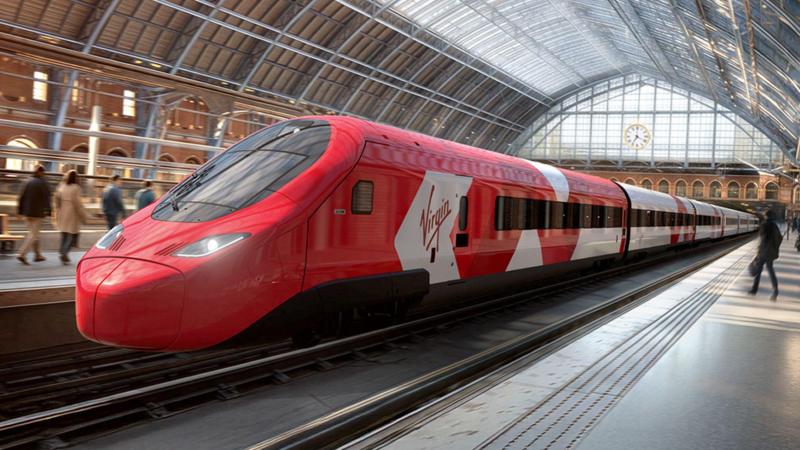
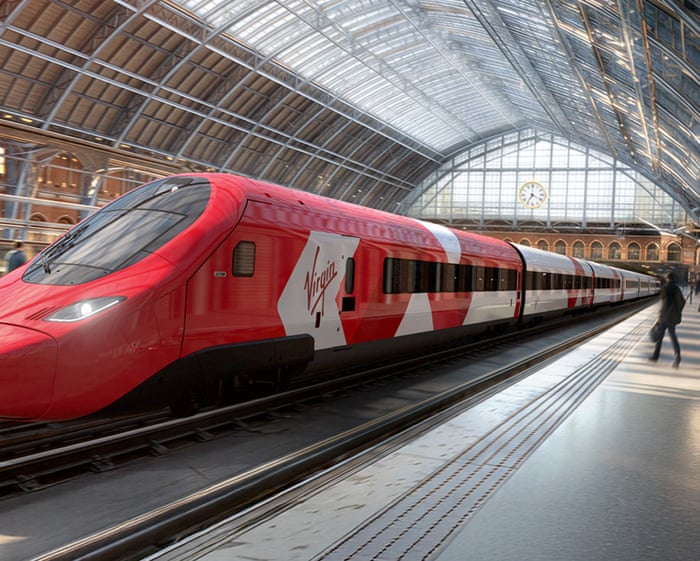
Virgin has been given permission by the UK regulator to run up to 20 daily train services through the Channel Tunnel between London and destinations like Paris, Brussels, and Amsterdam. This approval, valid from 2030 to 2040, is a major step towards ending Eurostar’s long-held monopoly on the route, although Virgin still needs to secure trains and approvals before starting.
Key Facts
The UK’s Office of Rail and Road (ORR) approved Virgin to run up to 20 daily return trips through the Channel Tunnel.
The approval covers travel from London’s St Pancras station to the Channel Tunnel, starting in October 2030 until December 2040.
Eurostar has been the only passenger train operator through the Channel Tunnel since 1994.
Virgin must still get safety clearances from UK and EU authorities and secure train access in mainland Europe.
Virgin plans to buy 12 high-speed trains from train maker Alstom for these services.
Italy’s FS Italiane Group is also planning to run trains through the tunnel using its Trenitalia France subsidiary.
Last year, Virgin got permission to share a key rail depot in London with Eurostar, helping their preparations.
Eurostar said it remains committed to investing in its own services and expects to carry 30 million passengers annually.
Read the Original
Want the full story? Tap a source to open the original
article.
Wildfires are causing utilities in the U.S. to redesign the electric grid to better resist fire damage. As wildfire seasons worsen, utilities are planning long-term upgrades, such as burying power lines and using microgrids, to make the grid more reliable and safer.
Key Facts
This year's wildfire season has more fires and burned acres than the average of the last 10 years.
Utilities are using weather and wildfire data to guide where to invest in making the grid stronger.
Burying power lines underground helps protect against wildfires and other disasters like hurricanes and storms.
Old power infrastructure is a major problem that utilities must manage alongside building new systems.
California was one of the first states to require utilities to publish wildfire resilience plans.
Some utilities use microgrids to keep power running during wildfires by disconnecting parts of the grid.
Utilities have spent billions on wildfire prevention and often must balance costs with safety improvements.
Expanding and upgrading the U.S. electric grid includes efforts to build in more wildfire resilience.
Read the Original
Want the full story? Tap a source to open the original
article.
Virgin Trains has received approval from the UK rail regulator to run up to 20 daily passenger services through the Channel Tunnel between London and cities like Paris, Brussels, and Amsterdam starting in 2030. This decision allows Virgin to challenge Eurostar’s long-standing control over international rail travel through the tunnel.
Key Facts
The Office of Rail and Road (ORR) granted Virgin Trains track access for services from October 2030 to December 2040.
Virgin Trains can run up to 20 new daily return trips on the cross-Channel route.
Virgin was previously given access to Eurostar’s Temple Mills depot in London to maintain and store trains.
Eurostar has had a monopoly on passenger rail services through the Channel Tunnel since 1994.
Virgin plans to run trains from London’s St Pancras station to Paris, Brussels, and Amsterdam.
Virgin aims to invest £700 million in this project and expects to create around 400 UK jobs.
Virgin still must secure access to other rail networks and obtain safety approvals from UK and EU regulators before starting the services.
The ORR sees this as a step toward increasing competition and growth in international rail travel from the UK.
Read the Original
Want the full story? Tap a source to open the original
article.
Jamie Dimon, the head of JP Morgan, asked UK Chancellor John Healey not to raise taxes on bank profits in his upcoming budget. Dimon warned that higher taxes on banks might lead to job losses and hurt the business environment in the UK.
Key Facts
JP Morgan CEO Jamie Dimon spoke with Chancellor John Healey about avoiding tax hikes on banks.
There is speculation about a new windfall tax on UK banks to help fund Andy Burnham’s cost of living plans.
Campaigners estimate such a tax could raise £19 billion.
UK banks currently pay a 28% corporation tax and an extra tax on their balance sheets, higher than standard rates.
Dimon has previously said raising bank taxes could have bad effects on business.
JP Morgan plans to build a large new office in London if the UK business environment remains positive.
The UK’s four biggest banks made £29.2 billion in profits in the first half of the year.
Nearly half of those profits were paid out to investors via dividends and share buybacks.
Read the Original
Want the full story? Tap a source to open the original
article.
Japan’s economy grew by 0.3% in the second quarter of 2026, which is slower than expected and less than the previous quarter’s growth. The growth was mainly supported by strong exports, but weak consumer spending and lower business investments weighed down overall economic activity.
Key Facts
Japan’s GDP grew 0.3% from April to June 2026, below the forecast of 0.5%.
This growth marks the third quarter in a row of economic expansion.
On an annualized basis, Japan’s economy grew 1.1%, underperforming the expected 1.67%.
Private consumption (what people buy) stayed flat, and capital spending by companies fell by 1.2%.
Net exports contributed positively (+0.5%) to GDP growth, while domestic demand reduced it (-0.2%).
Rising energy costs and a weak Japanese yen have increased financial pressures on consumers and companies.
The Bank of Japan raised interest rates to 1% in June, its highest level in over 30 years, aiming to move away from very low borrowing costs.
Japan’s stock market and other regional markets like South Korea and Hong Kong showed gains following the report.
Read the Original
Want the full story? Tap a source to open the original
article.
Asian stock markets mostly rose Monday, following a small drop in U.S. stocks after weaker economic data. U.S. stock futures and oil prices remained steady amid concerns about economic growth and inflation.
Key Facts
Tokyo’s Nikkei 225 index rose 0.3% after Japan reported its economy grew 1.1% yearly in the second quarter.
Hong Kong’s Hang Seng increased by 1.6%, and Shanghai’s index went up 0.8%.
U.S. stocks fell slightly on Friday after reports showed consumers spent less in July.
The Federal Reserve may keep interest rates low due to slower growth but high inflation remains a concern.
Oil prices stayed mostly steady with Brent crude at $88.62 per barrel and U.S. crude at $82.19 per barrel.
The Strait of Hormuz is nearly closed, raising concerns about oil supply stability from the Middle East.
Major U.S. retailers like Home Depot, Target, Lowes, and Walmart will report earnings this week.
The Federal Reserve will release meeting minutes on Wednesday to clarify its interest rate plans.
Read the Original
Want the full story? Tap a source to open the original
article.
Sainsbury's stopped using facial recognition cameras at a London store after a customer was wrongly accused of shoplifting and asked to leave. The supermarket said the mistake was due to human error, not the technology, and apologized to the customer while promising to investigate.
Key Facts
A customer named Matt Arnold was mistakenly flagged as a shoplifter by AI-powered cameras at Sainsbury's East Dulwich store.
He was asked to leave the store despite having scanned and paid for his items and using his loyalty card.
Sainsbury's said the error was caused by staff, not the facial recognition software itself.
This was not the first wrong accusation involving the same facial recognition system from the company Facewatch.
The system has also been used in other stores and has had similar mistakes before.
Sainsbury's paused the use of the technology at this location while investigating.
The company said the use of facial recognition is part of their effort to reduce violence against retail workers.
The customer expressed concern that staff may rely too much on technology without applying human judgment.
Read the Original
Want the full story? Tap a source to open the original
article.
Four states have begun a trial against Meta in California, accusing the company of harming children by creating addictive social media features and collecting data without parental consent. The states seek large financial penalties and changes in how Meta runs Facebook and Instagram.
Key Facts
The lawsuit claims Meta knowingly designed features that make children addicted to its platforms.
It alleges Meta collected data on children under 13 without parental permission, breaking federal law.
The trial involves California, Colorado, Kentucky, and New Jersey, with 25 other states expected to have separate trials.
States are seeking up to $1.4 trillion in damages and operational changes to Meta’s platforms.
Meta denies the allegations and says it works to support young people, citing expert research and law enforcement cooperation.
Meta has already lost two similar cases this year and has spent $2.4 billion on legal costs recently.
The proposed financial penalty is close to Meta’s total market value, which could threaten the company’s existence.
The court will decide the size of any penalty, but experts say the full $1.4 trillion is unlikely.
Read the Original
Want the full story? Tap a source to open the original
article.
The average asking price for newly listed homes in the UK’s richest borough, Kensington and Chelsea, fell by about £95,000 in one month. Across the UK, average asking prices dropped by 2% in August, the biggest August fall in eight years, mainly due to more competition among sellers and higher mortgage costs squeezing buyers.
Key Facts
The average asking price in Kensington and Chelsea dropped from about £1.65 million to £1.55 million in one month.
Nationally, newly listed home asking prices fell 2% in August, the largest drop in that month since 2015.
London saw the biggest price drop among regions, with a 4.4% fall, around £30,000 less on average.
The number of homes for sale in London is the highest in 16 years, increasing competition among sellers.
Buy-to-let investors (landlords) are buying more homes and often paying less than the asking price, taking advantage of the weaker market.
In July, landlords made up 14.1% of home purchases, higher than earlier in the year.
More than half of landlord offers in July were at least 10% below asking price, a level not seen since early 2020.
Sellers are increasingly likely to accept low offers, especially for leasehold properties, with 41% of those low offers accepted.
Read the Original
Want the full story? Tap a source to open the original
article.
Japan’s economy grew at an annual rate of 1.1% during April to June 2026, despite flat consumer spending and slower export growth. The growth was supported by demand for Japanese cars and computer chips, but rising energy costs and a weak yen created challenges.
Key Facts
Japan’s GDP grew 0.3% from the first quarter to the second quarter of 2026 when adjusted for seasonal changes.
The annualized GDP growth rate for April-June was 1.1%, down from 2.1% in the previous quarter.
Private consumer spending fell by 1.2% in the April-June period compared to January-March.
Exports increased by 0.5%, driven by strong demand for automobiles and semiconductors.
Japan faces higher energy costs due to the war in Iran disrupting oil supply routes.
The Bank of Japan raised its economic growth forecast slightly to 0.6% for the current fiscal year.
The yen has weakened against the U.S. dollar, helping exporters but making imports more expensive.
Wage growth in Japan remains low, contributing to concerns about rising prices and weak consumer spending.
Read the Original
Want the full story? Tap a source to open the original
article.
Ferrari's first all-electric car, the Luce, sold for $40 million at a charity auction in California, setting a new record for a new car sold at auction. All the money raised will support Ferrari Foundation's educational programs.
Key Facts
The Ferrari Luce is the brand’s first electric vehicle.
It sold for $40 million, about 35 times its usual price.
The car was designed by Sir Jony Ive, known for designing the iPhone.
The Luce has unique features like special wheels, customized brakes, and a white finish.
Some people criticized the car for not fitting Ferrari’s traditional style and brand identity.
The buyer was not publicly named.
Proceeds from the auction go to educational programs run by the Ferrari Foundation.
A previous Ferrari, a Daytona SP3 supercar, sold for $26 million in 2025 for charity as well.
Read the Original
Want the full story? Tap a source to open the original
article.
In 2026, Hollywood has seen a strong recovery with five blockbuster movies each earning more than $1 billion at the box office. Together, these films have generated over $5 billion in ticket sales.
Key Facts
Hollywood’s box office is booming in 2026.
Five movies have each made over $1 billion.
Total box office revenue from these films exceeds $5 billion.
The news report is from Los Angeles.
This shows a significant comeback for the film industry this year.
Read the Original
Want the full story? Tap a source to open the original
article.
China has launched the first regular shipping service through the Northern Sea Route (NSR), a shipping lane along Russia’s Arctic coast. This route can cut travel time between China and Europe by more than half but carries environmental and political risks.
Key Facts
The Northern Sea Route is about 5,500 km long and goes through the Arctic Circle.
It is navigable during warmer months due to shrinking sea ice caused by climate change.
China’s Sea Legend shipping company started a regular container service through this route in 2025.
The NSR trip from Ningbo-Zhoushan (China) to Felixstowe (UK) takes about 18 days, versus over 40 days via the Suez Canal.
The route is good for shipping sensitive cargo like electric vehicles, lithium batteries, and solar products.
Russia controls and manages the route, including issuing permits and providing nuclear-powered icebreakers.
Using the NSR can lower emissions by reducing sailing time, but risks like oil spills and black carbon emissions threaten the fragile Arctic environment.
Heavy fuel oil has been banned in the Arctic since 2024, but some ships still face criticism for using it, as spills would be very hard to clean up.
Read the Original
Want the full story? Tap a source to open the original
article.
India’s digital payment system, called UPI, has grown to become one of the biggest and fastest ways to send money instantly without fees for users. The government is now considering charging merchants a small fee for large transactions, which could change how the system works for businesses but not for consumers.
Key Facts
UPI lets people scan a QR code and send money instantly without cash or cards.
Users have not had to pay any fees to use UPI for all their payments so far.
The government is considering a fee for merchants on bigger transactions, possibly between 0.3% and 0.5%.
Any new fees would only apply to some large payments and bigger businesses, not regular consumer payments.
UPI processed nearly 24 billion transactions worth about $313 billion in July alone.
More than 550 million people use UPI, and it is available in 11 countries outside India.
UPI’s design allows different payment apps like Google Pay and PhonePe to work on the same network.
Research shows that having many merchants accept UPI helped its growth, so fees might slow small merchant adoption.
Read the Original
Want the full story? Tap a source to open the original
article.
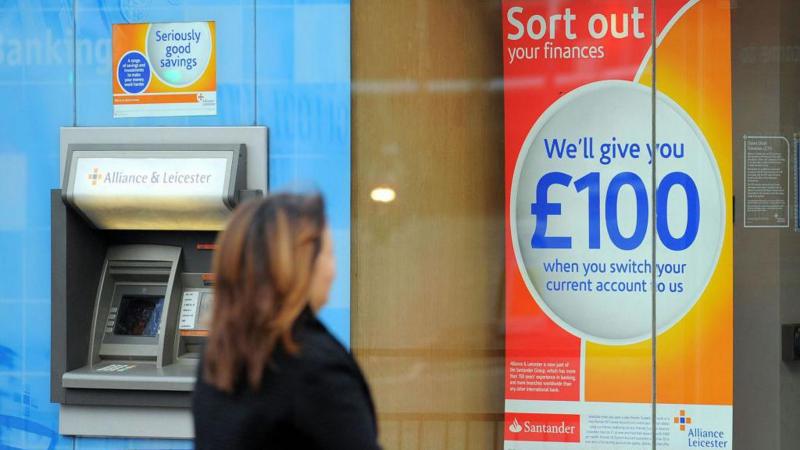
Many UK banks offer bonuses up to £220 to encourage people to switch accounts. Keeping money in the same bank for years can cost savers billions in missed interest, but switching is made easier by a free service that moves payments and closes old accounts.
Key Facts
More than five UK banks offer incentives to switch, with the top bonus being £220.
Nearly two-thirds of British savers have been with the same bank for over 10 years.
Staying with the same bank costs British savers an estimated £12 billion a year in missed interest.
A survey found 34% of British adults moved their money in the last 12 months, mainly for better interest rates.
Switching banks may affect your credit report, so it’s best to time it carefully if planning to borrow money soon.
The free Current Account Switch Service helps transfer payments, move balances, and close old accounts within seven working days.
Customers must manually update recurring card payments like subscriptions after switching.
It’s advised to download old bank statements before switching, as past records won’t be accessible afterward.
Read the Original
Want the full story? Tap a source to open the original
article.
Some states are starting to regulate home listings that use artificial intelligence (AI) to digitally improve photos of houses. These improvements include adding furniture, changing wall colors, and enhancing landscaping. Officials want to prevent these AI-made changes from misleading buyers or becoming fraudulent.
Key Facts
Real estate listings increasingly use AI to digitally alter home photos.
AI edits can add furniture, repaint walls, and improve outdoor areas.
Some changes also include adding windows that don’t exist.
States are beginning to create rules to stop misleading or fraudulent listings.
The goal is to protect buyers from false impressions of properties.
Virtual staging is the process of digitally furnishing or decorating homes in photos.
There is concern over where virtual staging becomes deceptive advertising.
CBS News reported on this trend and state responses.
Read the Original
Want the full story? Tap a source to open the original
article.
Reform UK plans to cut £50 billion from benefits, including £20 billion from disability benefits and £21 billion by restricting foreign nationals from claiming many welfare payments. The party aims to reduce the welfare budget by a quarter, while critics say the cuts could harm vulnerable people and damage agreements with the EU.
Key Facts
Reform UK proposes a £50 billion cut to welfare benefits.
£20 billion of cuts target disability benefits.
They plan to replace Personal Independence Payments (PIP) with a stricter benefit for only the most seriously ill.
£21 billion would be saved by stopping foreign nationals, including EU citizens with settled status, from claiming most benefits.
Some benefits like child benefit and free school meals would still apply to foreign-born parents with British-born children.
Critics argue these cuts could hurt disabled people and violate the UK’s EU withdrawal agreement.
Reform UK says paying benefits to non-British people is unfair despite many having paid taxes.
Campaigners warn that cutting disability benefits can lead to higher costs later, like increased hospital stays.
Read the Original
Want the full story? Tap a source to open the original
article.
Many workers are choosing to stay in their current jobs instead of moving to new ones because the economy feels uncertain. The article explores who is staying put at work and the reasons behind their cautious choices.
Key Facts
Economic uncertainty is making workers more careful about changing jobs.
Some people prefer the safety of their current job rather than risking a new one.
The article looks at different groups of workers who decide not to move.
Job security is a key reason many workers stay in place.
The report shares insights into how these decisions affect the job market.
It was produced by Vishala Sri-Pathma for the Business Daily program.
The article is part of a series available on BBC World Service.
Read the Original
Want the full story? Tap a source to open the original
article.