Anguilla, a small island in the Caribbean, is earning significant income by selling .ai website addresses. With the rise of artificial intelligence, these domain names have become highly valuable, helping Anguilla diversify its economy beyond tourism.
Key Facts
Anguilla uses the .ai web domain, which has become popular with the growth of AI.
In 2024, Anguilla earned about $39 million from selling .ai domain names.
This income from domain sales made up 23% of Anguilla's government revenue last year.
Over 850,000 .ai domains are now registered, up from fewer than 50,000 in 2020.
Anguilla relies on tourism, which makes up about 37% of its revenue, but is vulnerable to hurricanes.
In 2024, Anguilla signed a deal with Identity Digital to manage its domain name income.
Domain name hosting was moved to a global server network to reduce hurricane disruption risks.
Anguilla is a British Overseas Territory with internal self-governance and UK defense support.
Read the Original
Want the full story? Tap a source to open the original
article.
A federal appellate court ruled that President Trump's global tariffs under the International Emergency Economic Powers Act (IEEPA) were illegal. The decision may lead to a Supreme Court appeal. The ruling does not affect other tariffs, such as those on steel, aluminum, or Chinese goods.
Key Facts
President Trump's global tariffs were ruled illegal by a federal appellate court.
The ruling can be appealed to the Supreme Court.
The IEEPA tariffs will stay in place until at least October 14th.
Other tariffs, like those on steel and aluminum, are not affected by this ruling.
Tariffs brought in around $31 billion for the U.S. Treasury in August.
If the ruling holds, it could significantly reduce federal revenue from tariffs.
The Supreme Court's next term may address issues of presidential economic authority.
Read the Original
Want the full story? Tap a source to open the original
article.
The article discusses the legal trade in human body parts in the United States, highlighting concerns about exploitation and mishandling by private companies known as body brokers. These companies obtain bodies, dissect them, and sell the parts for profit, often to medical research centers and universities.
Key Facts
Body brokers are companies that obtain, dissect, and sell human body parts for profit.
This trade is legal in the United States but has raised concerns about exploitation and respect for donated bodies.
Harold Dillard's body was dismembered after being donated, leading to legal and ethical concerns.
Critics compare the industry to grave-robbing, while supporters say it fills a need in medical research.
The University of California has a non-profit body donation program with strict handling guidelines.
Financial issues, such as the cost of funerals, can motivate people to donate bodies.
For-profit companies, called non-transplant tissue banks, often act as middlemen in this trade.
Read the Original
Want the full story? Tap a source to open the original
article.
Spirit Airlines has filed for bankruptcy protection again, just months after exiting a previous Chapter 11 reorganization. The airline plans to continue flights and operations while restructuring, even though it faces financial difficulties. Spirit struggles with high debt and competition from larger airlines offering low-cost choices.
Key Facts
Spirit Airlines filed for bankruptcy for the second time within a year.
It plans to continue offering flights and maintaining regular operations during the restructuring.
Spirit previously emerged from a Chapter 11 reorganization in March but still faces financial challenges.
The airline carries $2.4 billion in long-term debt and reported a $1 billion negative cash flow recently.
Spirit's financial troubles began during the COVID-19 pandemic and continue with rising operation costs.
The company is considering selling aircraft and real estate to raise funds.
Bigger airlines increasing low-cost options have pressured Spirit's market position.
Spirit has furlough plans affecting 270 pilots and downgrades for 140 captains.
Read the Original
Want the full story? Tap a source to open the original
article.
The article discusses how major food brands in the U.S. are trying to remove chemical dyes from their products. They are facing challenges in finding natural alternatives while many consumers still prefer brightly colored foods.
Key Facts
Major food brands in the U.S. plan to stop using chemical dyes.
These brands are looking for natural color alternatives for their products.
Consumers often prefer foods with bright colors.
Natural color replacements can be difficult to find.
The trend is part of a larger move towards more natural food ingredients.
Read the Original
Want the full story? Tap a source to open the original
article.
Nvidia, a major player in artificial intelligence, has been an important part of the economy and stock market. Although the company recently reported strong financial results, its stock price fell due to investor concerns about the broader AI market and economic pressures. Many companies investing in AI have not yet seen revenue from these technologies.
Key Facts
Nvidia is a key company in the AI industry and has a significant presence in stock markets.
The company recently posted financial results that exceeded expectations, yet its stock price dipped by 4% shortly after.
Nvidia accounts for about 8% of the S&P 500, a major stock market index in the U.S.
There's growing uncertainty in the economy, partly due to political pressures and AI investment doubts.
Despite a booming stock market, most companies investing in AI, around 95%, haven't made revenue from it yet.
Nvidia is involved in a notable deal where it reportedly agreed to pay the U.S. government from certain sales in China, which the company has disputed.
The situation with Nvidia highlights broader economic and political challenges faced by U.S. businesses.
Read the Original
Want the full story? Tap a source to open the original
article.
A federal appellate court ruled that most of the tariffs imposed by former President Trump were not legally authorized under the International Emergency Economic Powers Act. The court's decision means that many of these tariffs may no longer be valid, but they are still in place as the decision can be appealed. Trump has promised to take the issue to the Supreme Court.
Key Facts
A federal appellate court found Trump's global tariffs lacked legal backing.
The tariffs were said to exceed the authority given under the International Emergency Economic Powers Act.
The ruling did not determine if the President could impose tariffs in emergencies but said Trump's reasons did not count as emergencies.
The court ruling is on hold until October 14 to allow for a possible Supreme Court appeal.
Current tariffs remain, including those on Chinese goods and new tariffs on India, Canada, and Brazil.
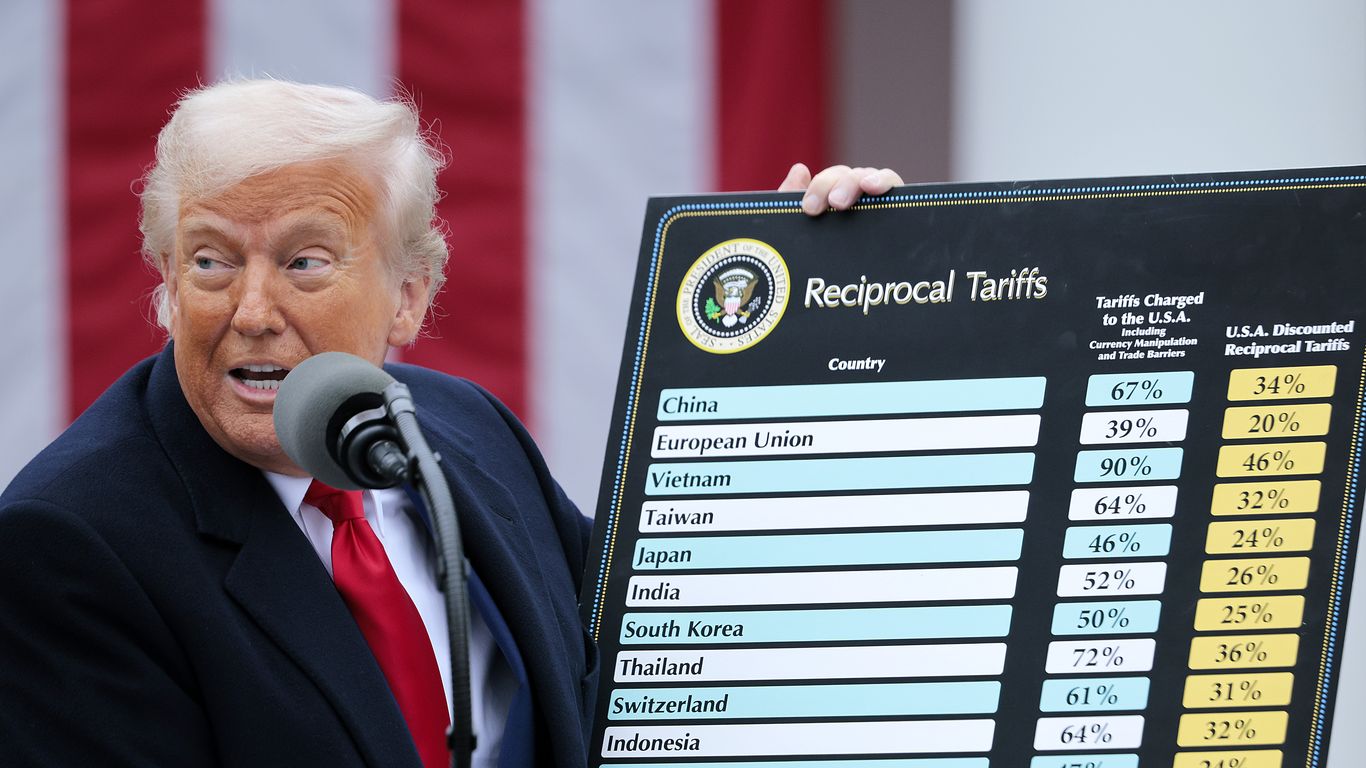
Trump's tariffs varied widely, ranging from 10% to 50%.
The U.S. and China have agreed to reduce some tariffs temporarily.
The White House claims the tariffs were a lawful response to foreign threats.
Read the Original
Want the full story? Tap a source to open the original
article.
Coffee chains like Costa are facing challenges as younger people show a growing interest in matcha tea instead of traditional coffee. Chains such as Blank Street Coffee are attracting these customers with trendy drinks and social media appeal, while Costa is not offering matcha options. This shift in preferences and rising costs are impacting large coffee chains.
Key Facts
Coffee and tea preferences are changing, especially among younger people, who are leaning towards matcha tea.
Costa Coffee's owner, Coca-Cola, might sell the chain for a lower price than what it paid initially.
Blank Street Coffee, a newer chain, is expanding rapidly and gaining popularity for its matcha drinks.
Social media platforms like TikTok play a role in promoting Blank Street Coffee's unique drinks.
Other chains like Starbucks and Pret are capitalizing on the matcha trend by offering new drinks.
Rising costs and the popularity of home coffee machines pose additional challenges for established chains like Costa.
Matcha is gaining attention for being perceived as a healthier option compared to regular coffee.
Read the Original
Want the full story? Tap a source to open the original
article.
Former President Trump expressed concern over a court decision that could cancel most of his tariffs. He claimed that if this decision is not overturned, it could significantly harm the United States. Trump hinted that the matter might go to the Supreme Court.
Key Facts
A court ruling has challenged most of Trump's tariffs.
Trump claims the ruling could harm the U.S. economy.
He made these comments on a social media platform called Truth Social.
Trump indicated that an appeal to the Supreme Court might happen.
The tariffs in question were part of a trade program that generated significant revenue for the U.S.
Read the Original
Want the full story? Tap a source to open the original
article.
A federal appellate court confirmed that President Trump's global tariffs were invalid under the International Emergency Economic Powers Act. This decision could significantly impact global trade and reduce government revenue.
Key Facts
A federal appellate court upheld a previous decision that ruled against President Trump's tariffs.
The Court of International Trade initially found Trump lacked authority to impose these tariffs.
These tariffs generated about $30 billion a month for the U.S. government.
President Trump criticized the ruling, warning of economic consequences.
The decision may affect businesses that relied on current tariff conditions.
Read the Original
Want the full story? Tap a source to open the original
article.
California energy regulators have delayed a plan to fine oil companies if their profits become too high, with implementation now set for 2030. This decision comes as two major oil refineries in California, accounting for 18% of the state's refining capacity, are set to close. The plan was part of Governor Gavin Newsom's efforts to address climate change and manage fuel prices, while also maintaining stable and affordable gas supplies.
Key Facts
California regulators postponed a plan to penalize oil companies for high profits until 2030.
The plan was part of Governor Newsom's effort to combat climate change.
Two oil refineries, making up 18% of California's capacity, are closing soon.
High gas prices in California are partly due to taxes and regulations.
Newsom's administration aims to balance climate goals with maintaining fuel supplies.
The penalty for excessive oil company profits was authorized in 2023 but not implemented yet.
California officials are focusing on fuel affordability and avoiding price spikes.
Read the Original
Want the full story? Tap a source to open the original
article.
As of now, Americans cannot import low-cost foreign goods without paying import taxes. This change happened because the U.S. government stopped allowing packages under $800 to come in without tariffs.
Key Facts
The U.S. government ended a rule that allowed importing cheap goods without tariffs.
This change affects packages valued under $800.
Previously, nearly four million packages entered the U.S. each day without import taxes.
The policy change was put in place by the Trump administration.
Clark Packard, a trade expert, discussed this change with Amna Nawaz.
The de minimis exemption is the policy that used to allow these tariff-free imports.
Read the Original
Want the full story? Tap a source to open the original
article.
A federal appeals court decided that President Trump did not have the legal authority to impose broad tariffs, but they have not removed the tariffs yet to give time for an appeal. The ruling impacts Trump's approach to U.S. trade policy, which has included imposing tariffs on various countries.
Key Facts
A federal appeals court ruled Trump couldn't legally impose certain tariffs.
The court allowed the tariffs to stay in place temporarily for a potential Supreme Court appeal.
The tariffs were based on national emergencies declared under the International Emergency Economic Powers Act.
Trump used tariffs to try to influence trade deals and generate federal revenue.
The tariffs have affected global markets and U.S. trading relationships.
Revoking the tariffs could require the government to refund collected taxes.
The U.S. Treasury collected $142 billion from these tariffs by July.
Trump claims that removing the tariffs could financially harm the U.S. economy.
Read the Original
Want the full story? Tap a source to open the original
article.
Canadian luxury fashion retailer SSENSE plans to file for bankruptcy protection. The company faces financial challenges due to recent U.S. tariff changes, including the removal of a rule that allowed duty-free shipping on low-value parcels.
Key Facts
SSENSE is a Canadian luxury fashion retailer based in Montreal.
The company plans to file for creditor protection under Canada's Companies' Creditors Arrangement Act (CCAA).
SSENSE blames U.S. tariffs and the end of a rule allowing duty-free shipping on packages worth $800 or less for its financial troubles.
The U.S. decision to drop the de minimis exemption has increased shipping costs for companies like SSENSE.
President Donald Trump issued an order to remove this shipping exemption last month.
SSENSE employs about 1,200 people globally and continues to operate normally, including paying employee salaries.
The company was valued at $4 billion in 2021 by Sequoia Capital.
SSENSE's primary lender has moved to sell the company without its agreement, prompting the bankruptcy protection action.
Read the Original
Want the full story? Tap a source to open the original
article.
A Democratic member of Congress expressed concern that a decision by former President Trump to fire members of the Surface Transportation Board could affect the board's ability to fairly decide on a pending railway merger. The Surface Transportation Board handles matters related to railroads, including mergers.
Key Facts
A Democratic congressman raised concerns about the Surface Transportation Board's (STB) integrity.
The congressman pointed out a past decision by former President Trump to remove STB members.
The STB is considering approving a significant railway merger.
The integrity of the board's decision-making process is in question due to these past firings.
The STB deals with issues related to railroads, such as mergers and regulations.
Read the Original
Want the full story? Tap a source to open the original
article.
A U.S. court ruled that most of the tariffs set by former President Trump are illegal. The court's decision is not being enforced immediately because it is likely to be appealed to the Supreme Court.
Key Facts
The U.S. Court of Appeals for the Federal Circuit made the ruling.
The decision focuses on tariffs that were announced by Trump in April and others on China, Canada, and Mexico.
The court used emergency powers as part of the basis for its ruling.
Tariffs on steel and aluminum are not affected by this ruling.
The court expects the case may go to the Supreme Court, so enforcement is on hold for now.
Read the Original
Want the full story? Tap a source to open the original
article.
Buying goods from other countries has become more complicated because a special rule that allowed small shipments to enter the U.S. without extra charges has ended. This change affects consumers purchasing items from overseas.
Key Facts
Previously, the de minimis exemption allowed small shipments into the U.S. without tariffs (extra charges).
This exemption has now ended, meaning more items will face tariffs.
Consumers buying goods from overseas might see increased costs.
The rule change affects small shipments, usually those valued under $800.
The conversation involved New York Times reporter Peter Eavis discussing these changes.
NPR's Juana Summers explored consumer impacts with Eavis.
Changes apply to everyday goods, affecting how international buying works.
Read the Original
Want the full story? Tap a source to open the original
article.
The U.S. government has bought a stake in Intel to boost local production and rely less on China. This is the biggest government move in private business since 2008, and it has sparked debate over government involvement in business.
Key Facts
The U.S. government purchased a stake in Intel, a large chipmaker.
This move aims to increase domestic production of computer chips.
The government wants to reduce dependence on Chinese manufacturing.
It is the most significant U.S. intervention in business since the 2008 financial crisis.
Some people believe this action will protect jobs and national security.
Others are concerned about increased government control over private companies.
Read the Original
Want the full story? Tap a source to open the original
article.
Darth Vader's red lightsaber from the "Star Wars" movies "The Empire Strikes Back" and "Return of the Jedi" is going to be auctioned for the first time. The auction will start on September 4, with the item expected to sell for between $1 million and $3 million.
Key Facts
The lightsaber was used in famous scenes from "The Empire Strikes Back" and "Return of the Jedi."
The auction will be hosted by Propstore, an auction house known for selling movie props.
The lightsaber is expected to fetch between $1 million and $3 million at the auction.
Before the auction, the lightsaber was displayed in London, New York, and Beverly Hills.
The item is made from a camera flash attachment transformed into a movie prop.
Other movie items, like the bullwhip from "Indiana Jones," are also part of the Propstore auction.
Bidding for the lightsaber begins on September 4 in Los Angeles.
Read the Original
Want the full story? Tap a source to open the original
article.
Bank share prices in the UK fell after a proposal for a new tax on their profits. The Institute for Public Policy Research (IPPR) suggested this tax could raise significant revenue for the government. Investors reacted negatively, resulting in the drop of share prices for major banks like NatWest, Lloyds, and Barclays.
Key Facts
UK bank share prices dropped after a proposed tax on banking profits was announced.
The IPPR think tank proposed a windfall tax to raise up to £8bn a year for the government.
The suggested tax aims to offset taxpayer losses from the Bank of England's quantitative easing (QE) efforts.
NatWest, Lloyds, and Barclays saw their share prices fall significantly in early trading.
Lloyds suggests such tax increases do not align with goals to strengthen the UK financial sector.
The Bank of England's QE program involves buying and selling government bonds to influence interest rates.
IPPR claims these QE-related losses are benefiting commercial banks through increased profits.
The Treasury did not comment on the proposed tax policy.
Read the Original
Want the full story? Tap a source to open the original
article.