A report from the Commerce Department shows that the inflation measure preferred by the Federal Reserve stayed mostly steady in July, while core inflation, which excludes food and energy prices, slightly increased. Consumer spending also went up significantly, which could help boost economic growth. Despite these changes, the Federal Reserve is cautious about interest rate cuts.
Key Facts
The Federal Reserve's preferred inflation measure rose 2.6% in July compared to the previous year, unchanged from June.
Core inflation, which excludes food and energy, increased by 2.9% from a year earlier.
Consumer prices rose 0.2% from June to July.
Consumer spending increased by 0.5% in July, the largest rise since March.
Income went up by 0.4% from June to July, driven by higher wages and salaries.
Fed Chair Jerome Powell mentioned a possible interest rate cut in the upcoming meeting.
President Trump has been pushing for lower interest rates and tried to fire a Fed board member.
Read the Original
Want the full story? Tap a source to open the original
article.
Peter Hebblethwaite, the chief executive of P&O Ferries, has resigned after being involved in a widely criticized event where the company laid off 800 workers in 2022. He admitted to breaking UK employment laws during the layoffs, which led to public protests and government action. Hebblethwaite cited family reasons for his resignation, as P&O Ferries acknowledged his efforts during his time with the company.
Key Facts
Peter Hebblethwaite was the chief executive of P&O Ferries.
In March 2022, P&O Ferries replaced 800 employees with cheaper agency workers.
This action caused public outrage and led to protests in various cities.
Hebblethwaite admitted the layoffs violated UK employment laws.
He resigned to focus more on family, according to a company statement.
Government introduced new laws to prevent similar mass layoffs.
Under his leadership, P&O launched hybrid ferries and managed challenges like COVID-19.
Hebblethwaite was previously an executive at J Sainsbury, Greene King, and Alliance Unichem.
Read the Original
Want the full story? Tap a source to open the original
article.
Nvidia's earnings report showed no sales of its H20 chips to China due to export controls. These controls were lifted only after the company agreed to give the U.S. government a portion of its China chip sales. This situation highlights the impact of U.S. government actions on private businesses.
Key Facts
Nvidia had no H20 chip sales to China this quarter because of export controls.
The company agreed to give 15% of its China chip sales revenue to the U.S. government.
CEO Jensen Huang sees China as a $50 billion market opportunity.
Nvidia could earn an additional $5 billion next quarter if sales restrictions are lifted.
The revenue-sharing requirement could lead to legal issues and higher costs for Nvidia.
U.S. government actions are affecting Nvidia's ability to compete.
Other companies like Intel and Apple also faced demands from Trump’s administration.
Businesses face uncertainty due to changing policies, affecting their planning.
Read the Original
Want the full story? Tap a source to open the original
article.
Electricity prices in the U.S. are rising due to several factors, including old power grids, increased demand from AI data centers, and weather concerns. These rising costs are affecting household budgets as other expenses also grow. Efforts to modernize and expand the power infrastructure face challenges like red tape and shifts in energy policy.
Key Facts
Electricity prices have risen by about 7% from last year and 32% over the past five years.
Aging infrastructure and overloaded power grids increase costs because they can't handle high demand efficiently.
AI data centers, which use a lot of electricity, are contributing to higher electricity prices.
Power generation capacity is limited, raising prices for necessary equipment and resulting in higher customer electric bills.
Bureaucratic delays often slow down energy projects, affecting both fossil fuel and renewable projects.
Weather-related threats like hurricanes and wildfires require expensive upgrades to power infrastructure.
Investment in renewable energy has decreased significantly, with major renewable projects halted or delayed.
Read the Original
Want the full story? Tap a source to open the original
article.
One of Australia's largest banks, ANZ, apologized to employees who learned they were fired through an unexpected email. The bank explained that the emails were sent by mistake before intended, and the affected staff have since been personally informed.
Key Facts
ANZ bank accidentally sent out emails informing staff about job cuts.
The emails were supposed to be sent later but went out early by mistake.
ANZ stopped sending these emails and spoke to staff face-to-face afterward.
The Financial Sector Union criticized the bank for causing stress with this error.
The union was not informed about the bank's changes beforehand.
ANZ's retail banking executive expressed regret for how the staff received the news.
Read the Original
Want the full story? Tap a source to open the original
article.
Microsoft fired four employees who protested against the company's relationship with Israel. The protests involved a sit-in at a Microsoft office, and the company cited policy breaches and safety concerns for the firings. The protest revolves around the use of Microsoft’s technology by Israel for surveillance purposes.
Key Facts
Four Microsoft employees were dismissed after participating in protests against the firm's connections with Israel.
Two of the fired employees, Anna Hattle and Riki Fameli, were part of a sit-in at the office of Microsoft's president.
The protest group involved is called "No Azure for Apartheid," referencing Microsoft's Azure cloud technology.
Microsoft justified the firings by citing serious breaches of company policies and safety concerns from the protests.
The protests highlight concerns about Microsoft's Azure being used by Israel for surveillance of Palestinians.
An investigation reported that Israeli military uses Microsoft’s Azure software for surveillance.
Other employees have protested Microsoft’s ties to Israel, leading to further employee dismissals.
The broader protests connect to global criticism of Israel’s military actions in Gaza.
Read the Original
Want the full story? Tap a source to open the original
article.
Many companies are trying to reduce the impact of tariffs imposed by the Trump administration. These tariffs affect global trade, and businesses are looking for creative solutions to cope with the added costs.
Key Facts
The Trump administration implemented tariffs that impact global trade.
Tariffs are taxes on goods imported from other countries.
Companies face higher costs due to these tariffs.
Businesses are searching for legal ways to lower these additional costs.
The NPR Planet Money team is investigating the strategies companies use.
Some companies may use tricks or loopholes to manage tariff expenses.
Read the Original
Want the full story? Tap a source to open the original
article.
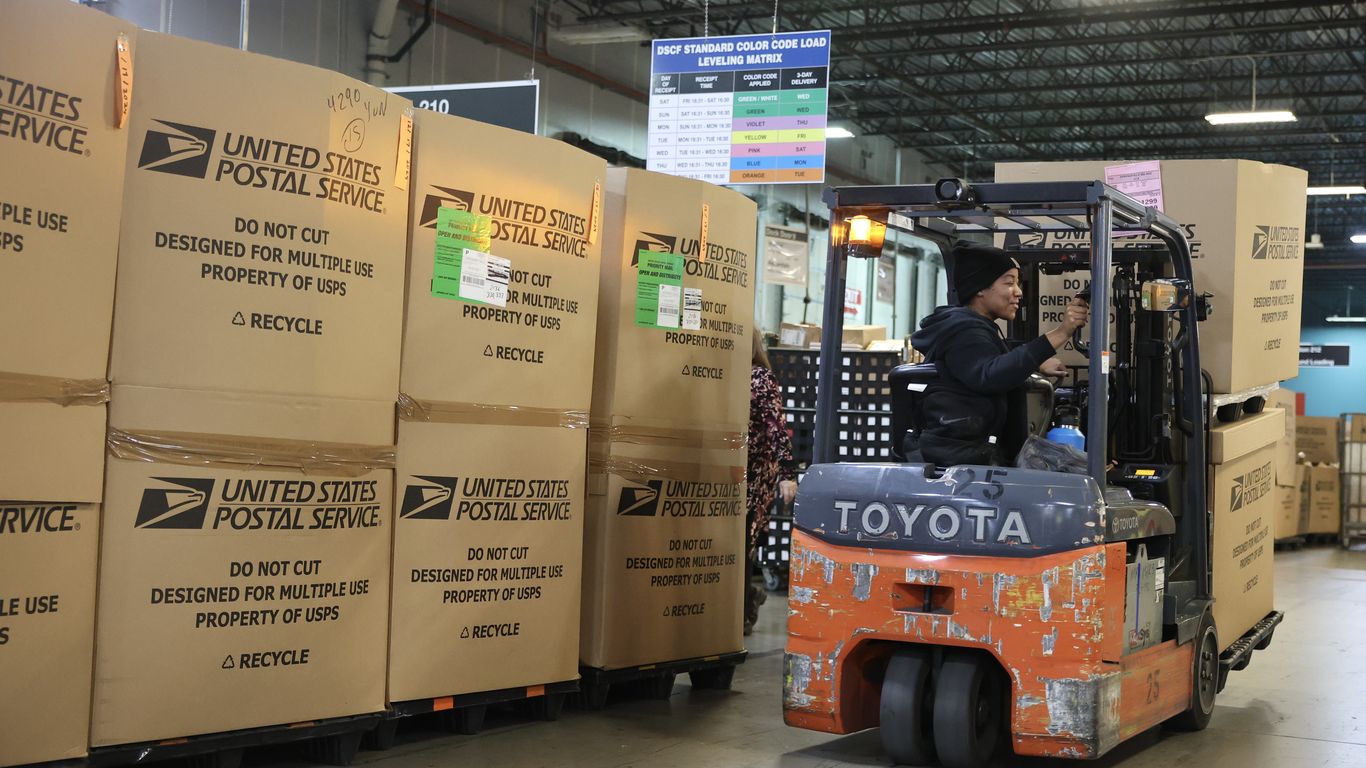
The U.S. has ended the "de minimis" exemption, which previously allowed packages valued under $800 from international sellers to enter the country without tariffs. This change has prompted many foreign postal services to suspend shipments to the U.S., citing difficulties in adapting to the new trade rules. The U.S. government expects increased tariff revenue and reduced entrance of illegal goods.
Key Facts
The "de minimis" exemption ended for packages valued under $800, meaning tariffs now apply.
Many international postal services have stopped shipping to the U.S. due to the complexity of the new rules.
The change started under President Trump, initially targeting packages from China.
The U.S. government predicts $10 billion a year in new tariff revenue.
29 European postal services and others in Asia and Latin America have halted or warned about shipping to the U.S.
The exemption helped Chinese merchants like Shein and Temu in sales to the U.S.
The decision aims to curb illegal goods, including counterfeit products, entering the country.
Criticism comes from some U.S. officials who say the change will hurt small businesses.
Read the Original
Want the full story? Tap a source to open the original
article.
New taxes on low-value parcels sent from the UK to the US are causing problems for small UK businesses. Changes to US tax rules now mean parcels valued under $800 will face taxes, affecting costs and sales for these companies. Small businesses are adjusting by stopping shipments to the US or finding other markets.
Key Facts
The US has ended the tax exemption for parcels valued under $800, starting Friday.
This change means packages from the UK will face a 10% tariff rate.
Small UK businesses say these taxes create uncertainty and could lead to higher prices.
Helen Hickman, who runs a wool company, has stopped US shipments over cost uncertainties.
The Royal Mail is adjusting its services to meet the new US tax rules.
The Federation of Small Businesses says these changes are hitting UK small firms hard.
Around 28,000 small UK businesses export goods to the US according to 2023 data.
Some businesses report stopping shipments to the US entirely due to the new fees.
Read the Original
Want the full story? Tap a source to open the original
article.
The United States has ended a tariff exemption rule that allowed goods worth $800 or less to enter the country without import duties. This change will affect many shipments, leading to possible higher prices and fewer product options for shoppers. The policy aims to prevent illegal smuggling and increase customs revenue.
Key Facts
The U.S. removed a tariff exemption for imports valued at $800 or less.
This exemption, known as the de minimis rule, allowed about 1.4 billion packages to enter the U.S. duty-free last year.
The change is expected to lead to higher prices and fewer goods available for consumers.
Small businesses may face significant challenges as a result.
The rule was originally set to expire in 2027, but it was fast-tracked for repeal by an executive order from President Donald Trump.
The U.S. government claims this change will help reduce drug smuggling and increase revenue by $10 billion annually.
Packages without necessary documentation will face either country-specific duties or a fixed fee of $80 to $200 per package.
Letters and personal gifts under $100 will remain duty-free.
Read the Original
Want the full story? Tap a source to open the original
article.
The US government has ended the tariff exemption for small delivery packages worth $800 or less. This means packages will now have tariffs, and many countries have paused shipments to the US until they understand the new rules. The change aims to reduce the trade deficit and control the flow of goods like narcotics.
Key Facts
The tariff exemption for packages valued at $800 or less is ending on Friday in the US.
More than one billion packages entered the US last year without paying tariffs due to this exemption.
Over 30 countries have paused shipping packages to the US until the new tariff details are clear.
DHL, a major delivery company, will not ship standard business parcels to the US because of unresolved questions about new tariffs.
Starting August 29, tariffs will be calculated either by a flat rate or based on the package's value and its country of origin.
After six months, all small packages will have tariffs ranging from 10% to 40%.
The US aims to reduce the trade deficit and slow the movement of illegal substances across borders.
This exemption previously aided the growth of international e-commerce, benefiting companies like Shein and Temu.
Read the Original
Want the full story? Tap a source to open the original
article.
The U.S. government, under President Donald Trump, invested $5.7 billion in Intel, obtaining a 10% stake in the company. This investment is part of a plan to support domestic semiconductor production and was funded through the CHIPS Act. The deal is still being finalized and includes terms for possible additional stake acquisition.
Key Facts
The U.S. government bought a 10% stake in Intel for $5.7 billion.
The funds were reallocated from the CHIPS Act, initially signed into law by Joe Biden.
A five-year warrant allows the U.S. to buy an additional 5% of shares if Intel's ownership of its operations drops below 51%.
The deal is under negotiation and involves the Department of Commerce.
Intel is separating its manufacturing unit (foundry) from its design business and may seek outside investments.
The future of Intel’s foundry business could change based on securing key customers or funding.
Intel faces competition from companies like NVIDIA, which excels in AI chip technology.
Read the Original
Want the full story? Tap a source to open the original
article.
Tesla's car sales in Europe fell by 40% in July compared to the previous year, despite an overall increase in electric vehicle sales in the region. CEO Elon Musk's political statements have upset some Europeans, which may have contributed to the decline. The company also faces issues like delayed approval for certain car features and previous factory shutdowns.
Key Facts
Tesla sales dropped 40% in July in the European Union compared to the previous year.
Chinese competitor BYD's market share increased to 1.1% in the same month.
Elon Musk has made political comments that upset some Europeans, including criticism of European leaders and support for a far-right party.
Tesla stock declined by 1.5% after these sales figures were released.
Tesla is waiting for European approval of its Full-Self Driving software, a feature already available in the U.S.
Earlier this year, Tesla temporarily shut down factories to update its Model Y, affecting production.
Tesla sold 6,600 cars in the EU in July, down from 11,465 cars the previous year.
From January to July, Tesla's overall European sales fell by 44%.
Read the Original
Want the full story? Tap a source to open the original
article.
The price of the weight loss drug Mounjaro in UK pharmacies is expected to increase, but Eli Lilly has made a deal to discount its price for suppliers. This means that the price rise for patients may not be as large as initially thought when buying it from private services or pharmacies. The NHS has a separate agreement, so their cost will not change.
Key Facts
Eli Lilly plans to increase the list price of Mounjaro by 170%, affecting the highest dose.
The highest dose was initially set to rise from £122 to £330 per month.
With the new discount, suppliers will pay £247.50 for the highest dose.
Patients buying the drug privately may see less than a 50% price increase.
The NHS has an independent discounted rate, unaffected by this change.
About 1.5 million people in the UK use weight loss drugs like Mounjaro.
Majority of these users pay for the drug privately through pharmacies or online services.
Eli Lilly is working with private providers to keep the drug affordable from September 1.
Read the Original
Want the full story? Tap a source to open the original
article.
Lotus, a sportscar manufacturer, is cutting 550 jobs at its UK headquarters in Norfolk. The company says these changes are needed to adapt to the current market conditions and maintain its business in the evolving automotive industry. Despite the job cuts, Lotus states it remains committed to its UK operations.
Key Facts
Lotus is cutting 550 jobs at its headquarters in Hethel, Norfolk, UK.
The company had denied plans to close its UK factory or open a new one in the USA.
The decision to cut jobs comes after a review of its business objectives.
Lotus cites rapid changes in global policies and tariffs as reasons for job cuts.
The company remains committed to keeping its UK sports car and engineering operations.
Lotus is exploring growth opportunities, including partnering with third parties for manufacturing.
South Norfolk Council plans to support the affected employees and work with the government.
Lotus was founded in the 1950s and moved to its current location in the 1960s.
Read the Original
Want the full story? Tap a source to open the original
article.
Federal Reserve Governor Lisa Cook is suing former President Trump after he ordered her removal from the Board of Governors. Cook argues that the reasons for her dismissal are based on unproven claims about her financial dealings, which she says violate her legal rights. The case highlights concerns over political pressure on the Federal Reserve's independence.
Key Facts
Lisa Cook is the first Black woman on the Federal Reserve's Board of Governors.
Cook filed a lawsuit against former President Trump for attempting to remove her from the Fed.
Trump cited allegations of false statements on Cook's mortgage applications as the reason for her dismissal.
Cook claims these accusations are unsubstantiated and violate the Federal Reserve Act.
Federal law states that Fed governors can only be removed for specific reasons, called "for cause."
A close Trump ally accused Cook of mortgage fraud related to loans before she joined the Fed.
Cook's lawsuit aims to affirm her position and protect the Fed's independence from political influence.
The lawsuit names Trump, the board of governors, and Jerome Powell in their capacity to act on the matter.
Read the Original
Want the full story? Tap a source to open the original
article.
The UK government announced a discount on some electric cars to encourage people to switch from petrol and diesel vehicles. Ford's Puma Gen-E and e-Tourneo Courier are the first to qualify for a £3,750 discount. The government plans to ban new petrol and diesel cars by 2030 and aims to make electric cars more affordable.
Key Facts
The UK has introduced a £3,750 discount on certain electric vehicles (EVs).
Ford's Puma Gen-E and e-Tourneo Courier qualify for this discount.
Vehicles costing up to £37,000 can get discounts, with the most eco-friendly getting the largest reductions.
Another 26 EV models qualify for a £1,500 discount.
The government wants to ban new petrol and diesel car sales by 2030.
The discount scheme has £650 million in funding and will run for three years.
The UK has about 1.3 million electric cars, but only around 82,000 public charging points.
Read the Original
Want the full story? Tap a source to open the original
article.
Mexico will stop sending packages to the United States because a special rule that lets small packages enter the U.S. without paying tariffs is ending. Other countries in Europe have already made similar decisions. The change may impact companies like Shein and Temu that have been using this rule to send items to U.S. customers without paying tariffs.
Key Facts
Mexico announced a halt to package shipments to the U.S. because a tariff exemption will expire.
The rule allowed packages worth less than $800 to enter the U.S. tariff-free and has been in place since 2016.
This change affects not only Mexico but also countries like Germany, Denmark, Sweden, Italy, and the UK.
Chinese e-commerce companies like Shein and Temu may face challenges as the rule changes.
Mexico is in talks with the U.S. about future shipping rules and tariffs.
DHL noted that key questions about new customs duties and data requirements remain unanswered.
The U.S. plans to end the tariff exemption are part of a broader trade strategy introduced under President Trump.
The tariff exemption change was previously applied to China, Hong Kong, Mexico, and Canada over drug-related border concerns.
Read the Original
Want the full story? Tap a source to open the original
article.
Nvidia, the largest company by market capitalization, is facing challenges from U.S. export controls on chips to China. These controls are affecting Nvidia's data center revenue and could impact its earnings and the broader stock market. The company is working to overcome these restrictions to tap into the growing Chinese market.
Key Facts
Nvidia reported strong financial results but noted reduced data center revenue due to export controls to China.
The U.S. barred exports of Nvidia's H20 chips to China in April, reversing the decision in July, allowing some sales under certain conditions.
Nvidia CEO sees China as a significant market opportunity, estimating it could grow by 50% annually.
Nvidia is currently unable to sell its most powerful chips to China and is seeking U.S. government approval.
The export controls contributed to a $4 billion decrease in H20 chip sales.
Nvidia expects to deliver between $2 billion and $5 billion of H20 chips in the current quarter.
The company gets half of its data center revenue from major cloud service providers.
Nvidia's performance is significant for the stock market, as it constitutes 8% of the S&P 500 index.
Read the Original
Want the full story? Tap a source to open the original
article.
The Welsh government is proposing changes to tax rules for self-catering holiday accommodations in Wales. Currently, properties must be available for rent for 252 days and occupied for 182 days annually to qualify for a lower tax rate. The new proposal suggests allowing a 182-day letting average over several years and counting charity donations towards the target.
Key Facts
Current rules require holiday properties in Wales to be available for 252 days and let for 182 days to pay lower non-domestic rates.
The proposed change allows for an average of 182 days rented over several years.
Up to 14 days of charity-donated holiday time could count towards the 182-day requirement.
A consultation on these changes is open until 20 November.
If approved, changes could take effect on 1 April 2026.
Some groups criticize the proposals, wanting more focus on broader housing issues.
Around 60% of holiday property owners already meet the current letting requirements.
Critics argue the policy has negatively impacted tourism in Wales.
Read the Original
Want the full story? Tap a source to open the original
article.