CBS Mornings Deals offers special discounts on products that can improve daily life. Viewers can visit cbsdeals.com to find these exclusive deals and make purchases.
Key Facts
CBS Mornings Deals promotes items to help with everyday living.
The deals are exclusive and can be found on cbsdeals.com.
CBS receives commissions when people buy products through their website.
The promotion was featured on CBS Mornings, a news and lifestyle program.
The announcement encourages viewers to shop online using the provided link.
The deals aim to provide value and convenience to customers.
The CBS News app also offers access to these deals and other news content.
Read the Original
Want the full story? Tap a source to open the original
article.
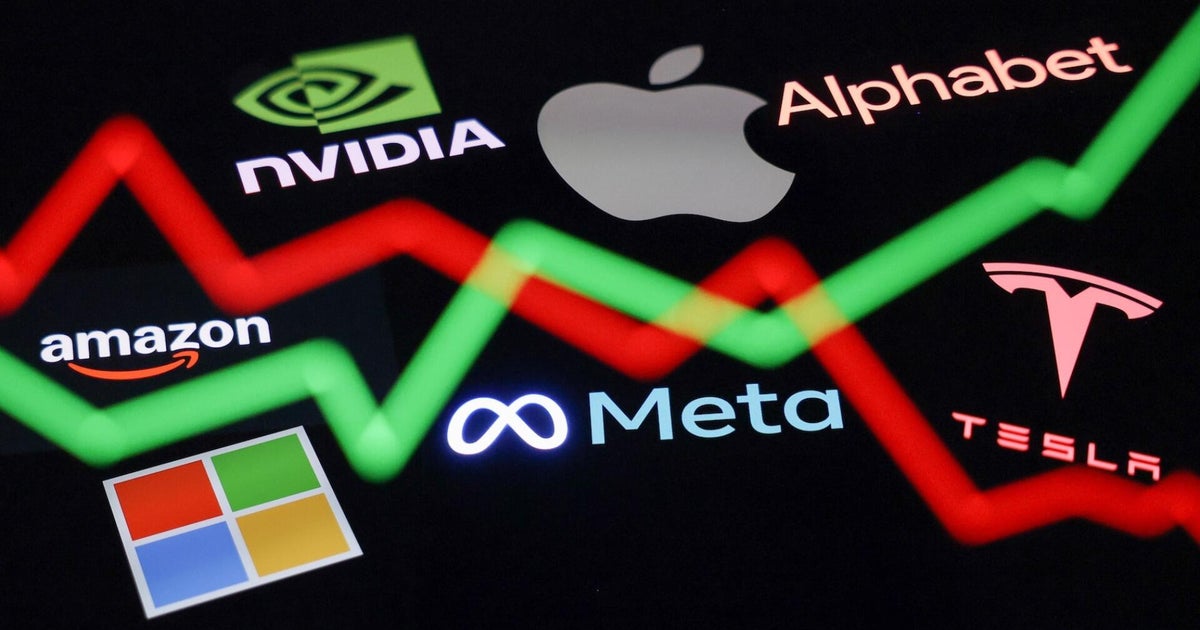
A recent drop in technology company stocks has caused some instability in the stock market. Experts explain how this could affect individual investments, including retirement savings.
Key Facts
Technology stocks have recently lost value, causing a market sell-off.
This sell-off creates ups and downs in the overall stock market.
The change can impact people’s investment portfolios and retirement accounts.
Investors might see lower returns in tech-related investments for a time.
Market experts suggest keeping a long-term view during times of volatility.
Retirement accounts often include technology stocks, so fluctuations may affect their value.
Such sell-offs are common and part of the normal market cycle.
Understanding these trends helps investors make informed decisions about their money.
Read the Original
Want the full story? Tap a source to open the original
article.
Louis Vuitton held a men's fashion show in Paris featuring a beach and surf theme, designed by Pharrell Williams. The show took place in university gardens that sparked protests due to restricted access for residents. The luxury brand continues to combine fashion with high-profile celebrity appearances and cultural sponsorships.
Key Facts
Louis Vuitton’s menswear show was set on sand with an artificial wave backdrop in Paris.
The collection by Pharrell Williams showcased surf-inspired clothing and accessories.
The fashion event was held in university gardens, a location that some residents opposed due to limited access.
Celebrities like Missy Elliott, Jeremy Allen White, and Victor Wembanyama attended the show.
Actor Callum Turner wore two Louis Vuitton suits designed by Williams at his wedding to Dua Lipa.
Louis Vuitton was valued at $40.7 billion in 2025, making it the most valuable fashion brand.
The show included a live orchestra and choir to enhance the experience.
Louis Vuitton agreed to sponsor the Frick museum in New York for three years, linking the brand to art and culture.
Read the Original
Want the full story? Tap a source to open the original
article.
Luma Energy, a private company in charge of transmitting and distributing electricity in Puerto Rico, filed a countersuit against the Puerto Rican government. The company claims the government has acted unfairly and harmed the public’s interest.
Key Facts
Luma Energy manages power transmission and distribution in Puerto Rico.
The company filed a countersuit against the Puerto Rican government.
Luma Energy accuses the government of bad faith and intentional harm.
The legal conflict involves power services on the island.
This lawsuit adds to ongoing legal troubles between Luma Energy and the government.
The dispute affects Puerto Rico’s public electricity services.
Read the Original
Want the full story? Tap a source to open the original
article.
US consumers are facing higher prices and poor service because many companies have grown very large and have fewer competitors. This situation limits customer choices, which leads to frustration and increased complaints, even though consumers often stay with these companies due to lack of alternatives.
Key Facts
A traveler chose a long bus trip instead of paying $1,200 to change a flight with Delta Airlines.
US consumers spend about $21 trillion each year, historically driving the economy.
Many US companies have merged over time, reducing competition and consumer options.
Customer complaints in the US rose 16% in early 2026, reaching record levels.
Consumer satisfaction in the US has dropped to its lowest point in over 60 years.
Despite dissatisfaction, more consumers continue using the same companies because they see no better choices.
Other countries, like the UK, often have more alternatives for services such as broadband and energy.
Experts say that the power imbalance between companies and customers has allowed high prices and poor service to persist.
Read the Original
Want the full story? Tap a source to open the original
article.
The United States depends on Canada to secure important minerals needed for technology and clean energy. Cooperation between the two countries is key to accessing these minerals and strengthening supply chains.
Key Facts
The US requires critical minerals for technology and green energy projects.
Canada has large reserves of these essential minerals.
America’s mineral strategy relies on partnerships with Canada.
Strong US-Canada cooperation helps secure reliable mineral supplies.
Access to these minerals supports economic growth and advanced industries.
Critical minerals include metals used in batteries, electronics, and electric vehicles.
Both countries aim to reduce dependence on other global suppliers.
Read the Original
Want the full story? Tap a source to open the original
article.
Alibaba has sued the U.S. Defense Department in federal court, challenging its designation as a company linked to the Chinese military. The lawsuit argues the Pentagon's decision is without factual or legal basis and harms Alibaba’s business and legal rights.
Key Facts
Alibaba was added to a Pentagon list labeling companies with alleged ties to the Chinese military.
The company says this labeling is unfair, calling it "arbitrary and capricious."
Alibaba is suing to be taken off the list, stating it is not involved with the Chinese military.
Being on the list means the Pentagon cannot make new contracts with Alibaba or its subsidiaries starting June 30.
The designation also limits Alibaba's ability to hire U.S. lobbying firms, potentially violating free speech rights.
Alibaba said its shareholders include major U.S. financial firms like J.P. Morgan, Citigroup, and BlackRock.
Other companies on the Pentagon’s list include Baidu and BYD.
China responded by placing export controls on ten U.S. companies, escalating trade tensions.
Read the Original
Want the full story? Tap a source to open the original
article.
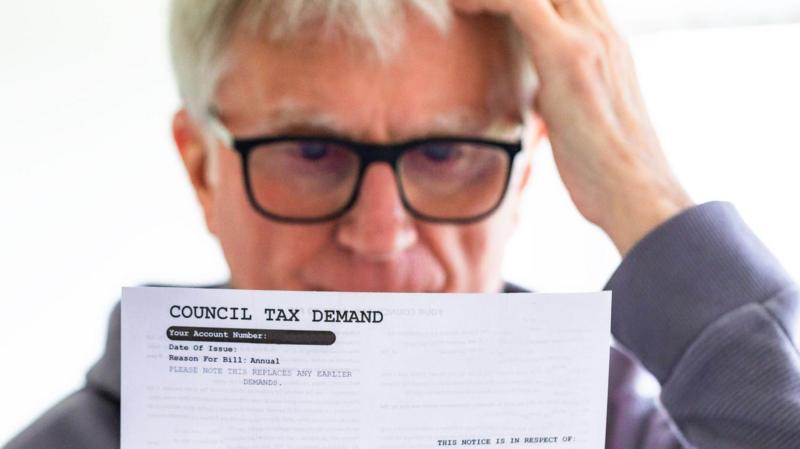
People in the UK owe more than £9 billion in unpaid council tax as many struggle with money problems. There are discounts and support programs available, but many people do not know about them or do not apply for help.
Key Facts
Over £9 billion is owed in unpaid council tax across the UK.
In England alone, £7.4 billion was uncollected by the end of March.
Council tax collection rate in England was 95.6% during the last financial year.
Non-payment of council tax can lead to serious consequences, including prison in extreme cases.
Discounts include 25% off for people living alone and exemptions for full-time students.
People with disabilities may apply to pay less by changing their council tax band.
Council Tax Support offers help for low-income households but requires application.
The government plans to improve council tax payment options next year, including longer time to pay and flexible repayment plans.
Read the Original
Want the full story? Tap a source to open the original
article.
Elon Musk’s net worth has dropped after the share price of SpaceX fell by 16% this week. SpaceX’s value fell from nearly $3 trillion to around $2 trillion, causing Musk’s wealth to decline from over $1 trillion to about $1.1 trillion. Meanwhile, oil prices hit their lowest point since the start of the Iran war, partly due to increased oil shipments through the Strait of Hormuz following a US-Iran peace deal.
Key Facts
SpaceX’s shares fell 16% in one day, lowering Musk’s worth by over $150 billion.
SpaceX’s stock price peaked at $225 but closed at $156 recently.
SpaceX’s total market value dropped from about $2.99 trillion to around $2 trillion.
Musk’s total fortune decreased from over $1 trillion to approximately $1.1 trillion.
Tesla shares also fell by 5.8% amid a broader tech selloff.
Three large oil tankers carrying 5 million barrels of crude left the Strait of Hormuz, signaling increased oil supply.
Oil prices hit their lowest levels since the Iran war began.
The euro currency fell to its lowest value in over a year against the US dollar, influenced by falling oil prices and easing inflation concerns.
Read the Original
Want the full story? Tap a source to open the original
article.
UK warehouse landlord Segro rejected a £12.6 billion takeover offer from US company Prologis. Prologis offered 24.6% more than Segro’s share price but Segro’s board said the offer undervalued the company and its future prospects.
Key Facts
Prologis publicly offered to buy Segro, a FTSE 100 company, for £12.6 billion.
The offer proposed exchanging each Segro share for 0.084 Prologis shares, valuing Segro shares at 925p each.
This offer was 24.6% higher than Segro’s closing share price on the day of the offer.
Segro’s board unanimously rejected the offer, saying it did not match their view of the company’s value.
Segro builds and rents warehouses, serving customers like Amazon and Netflix.
The company grew quickly during the Covid pandemic but its share price has fallen about 40% since early 2022.
Segro said market problems in the UK and Europe have affected its share price compared to US companies.
Prologis may try to improve its offer, but experts say the deal could lead to more foreign takeovers in the UK property sector.
Read the Original
Want the full story? Tap a source to open the original
article.
Tech stocks fell worldwide on Tuesday, with the Nasdaq index dropping 2.2%. The decline happened partly because investors worry about big planned spending on artificial intelligence (AI) and the possibility that interest rates will rise.
Key Facts
The Nasdaq stock market index closed 2.2% lower on Tuesday.
Investors are concerned about companies spending a lot of money on AI technology.
Higher interest rates are expected, which can make borrowing more expensive.
These factors caused many investors to sell tech company shares.
The article also mentions Spain's unique climate leave policy, but this was not the main focus.
The news aims to explain recent changes in tech stock prices.
Other topics like Nvidia's upcoming results and AI's environmental impact were also noted.
Read the Original
Want the full story? Tap a source to open the original
article.
Investors are becoming cautious about investing more in artificial intelligence (AI) companies after a long period of rising stock prices, especially for chip makers. While AI technology demand continues to grow, companies are realizing the high and sometimes unclear costs associated with running AI models.
Key Facts
Chip company stocks, which are important for AI computing, had big growth last year but have recently dropped.
The Nasdaq 100 index fell 3.3% and the S&P 500 dropped 1.4% after worries from a selloff in South Korea.
Google’s parent company, Alphabet, led the recent stock decline partly due to losing key AI employees.
Only 26% of surveyed U.S. executives fully understand their AI operating costs.
Some companies, like Uber, spent their AI budgets much faster than planned and have started limiting expenses.
The cost of basic AI computing power is going down, but running advanced AI models from companies like OpenAI and Anthropic remains expensive.
Demand for AI computing power is still much higher than supply, by about 5 to 10 times.
Lower computing costs might help big tech companies that use a lot of AI power, but investors remain cautious about chip stock valuations.
Read the Original
Want the full story? Tap a source to open the original
article.
Great Britain’s energy operator Neso has issued a warning asking power plants to supply extra electricity due to a heatwave causing high demand and low renewable energy output. The heatwave, with record temperatures expected, is putting pressure on the electricity system, but no blackouts are currently expected.
Key Facts
Neso manages the electricity systems in England, Scotland, and Wales.
A heatwave is causing increased electricity use as people turn on fans and air conditioners.
Low wind speeds and high temperatures have reduced renewable and nuclear power supply.
Neso requested an extra 1,900 megawatts from power plants to meet demand safely.
Electricity prices across Europe have risen sharply due to higher demand and power plant outages.
Record June temperatures up to 39°C are expected in south-east England.
The heatwave is causing disruptions to transport, schools, and hospitals.
Several unions have called for strikes during the hottest days, highlighting concerns about working conditions.
Read the Original
Want the full story? Tap a source to open the original
article.
New South Wales (NSW) expects its tax income from gambling, especially poker machines in pubs and hotels, to rise significantly in the next years. Despite promises to reduce gambling harm, government revenue from these machines is forecast to grow, while reforms like cashless gaming and machine reductions have not been fully implemented.
Key Facts
NSW gambling tax revenue is expected to grow from $3.8 billion in 2025-26 to $4.7 billion in 2029-30.
Revenue from poker machines in pubs and hotels is projected to increase by 7.5% annually, faster than inflation.
The government expects to receive $2.2 billion from poker machines in 2029-30, up from $1.6 billion currently.
NSW Treasurer Daniel Mookhey said budget forecasts reflect current policies, but future reforms may still occur.
The Minns government promised before the 2023 election to reduce poker machines and trial cashless gaming, but progress has stalled.
A 2024 trial of cashless gaming has not yet led to permanent changes.
The government has not responded to 30 reform recommendations from an independent panel made in late 2024.
About 90,000 poker machines operate in NSW, roughly half of all in Australia, and debate continues about cutting machines to reduce harm.
Read the Original
Want the full story? Tap a source to open the original
article.
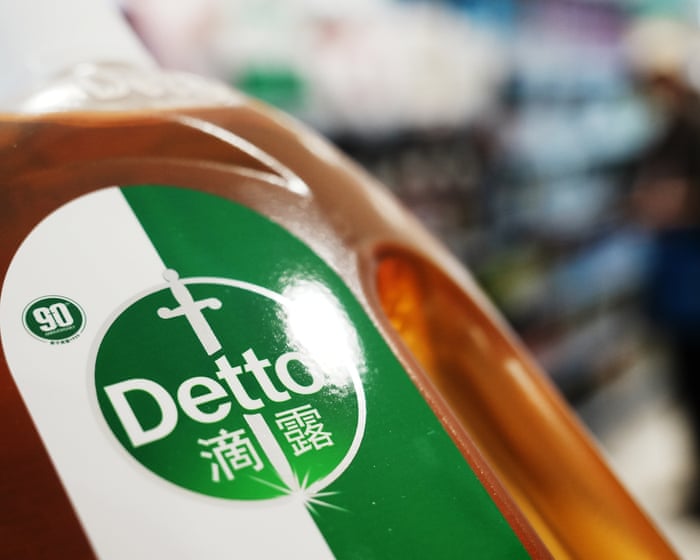
Dettol, a British hygiene brand, apologized after a Chinese advertisement intended to criticize "toxic men" was seen as offensive to women. The ad was removed following widespread criticism and calls for a boycott on Chinese social media.
Key Facts
The ad showed a man comparing his new girlfriend to a "clean and untouched" woman, implying she should have no past relationships.
The new girlfriend in the ad rejects the man's attitude and ends their relationship.
The ad ended with a message that toxic men are like germs that Dettol can eliminate.
Dettol said the ad aimed to challenge unfair gender attitudes and promote healthy views on relationships.
The company blamed a third-party agency for the ad but accepted responsibility for its content.
The ad was withdrawn after strong backlash on Chinese social media, with over 80 million views on Weibo.
Many users expressed anger and vowed to stop using Dettol products.
Dettol reaffirmed its commitment to respecting individual dignity and equality.
Read the Original
Want the full story? Tap a source to open the original
article.
Northern Ireland's economy has experienced mixed effects since Brexit, benefiting from a special trade deal that keeps its border with the Republic of Ireland open and allows it to trade freely with the EU. However, new trade barriers have appeared for goods coming from the rest of the UK, causing extra costs and paperwork for businesses.
Key Facts
Northern Ireland stays in the EU's single market for goods, preventing border checks with the Republic of Ireland.
This arrangement gives Northern Ireland businesses access to both the UK and EU markets, called "dual market access."
Goods entering Northern Ireland from Great Britain face new checks, paperwork, and fees.
Small businesses relying on supplies from Great Britain often face delays and extra costs.
The trade border inside the UK was set up in January 2021 and later adjusted by the Windsor Framework in 2023.
Northern Ireland's economy has outperformed the UK average on some measures since Brexit.
Political issues caused devolution (local government) to be suspended in Northern Ireland between 2022 and 2024.
Some businesses have adapted by sourcing more products from the Republic of Ireland or picking up goods themselves in Great Britain to avoid delays.
Read the Original
Want the full story? Tap a source to open the original
article.
Asian stock markets showed mixed results after a large sell-off in technology stocks affected markets from Asia to the U.S. On Wednesday, some indexes recovered slightly while others continued to fall following sharp declines the day before. Investors are watching markets closely amid recent changes tied to the global interest in artificial intelligence (AI) and overall market volatility.
Key Facts
Asian stocks had varied results: South Korea’s Kospi rose 0.5%, Tokyo’s Nikkei dropped 1.1%, Taiwan’s Taiex fell 2.5%, Hong Kong’s Hang Seng rose slightly, and China’s Shanghai Composite fell 0.3%.
South Korea’s SK Hynix shares fell 3.6%, while Samsung Electronics rose 3.7% after a big drop the day before.
The U.S. S&P 500 index dropped 1.4% on Tuesday, with Nasdaq down 2.2% and Dow Jones slightly lower.
Major U.S. tech companies Micron Technology and Nvidia saw significant losses, with Micron down 13.2% and Nvidia down over 4%.
The recent volatility in tech stocks is partly driven by domestic retail investors in Korea increasing their market activity.
Oil prices fell slightly as more ships crossed the Strait of Hormuz amid progress in U.S.-Iran talks aimed at ending the Iran conflict.
Brent crude oil price slipped to $76.30 per barrel, lower than recent days but higher than late 2025 levels around $70.
Investors are monitoring global market trends, including the impact of AI popularity and geopolitical developments.
Read the Original
Want the full story? Tap a source to open the original
article.
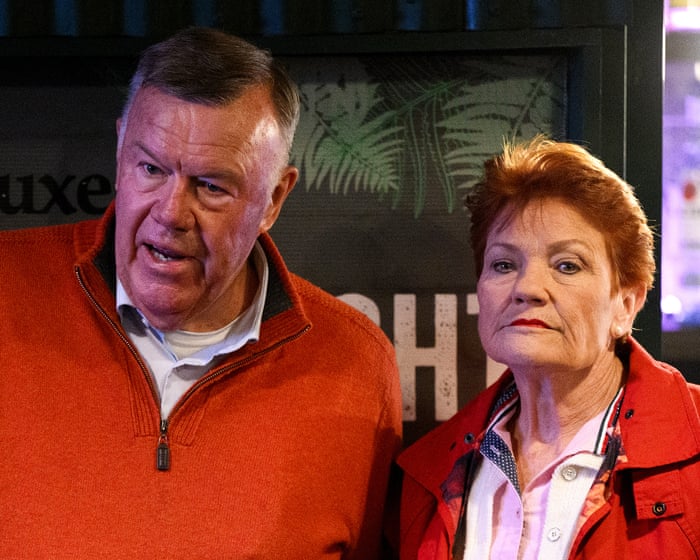
One Nation MP David Farley voted with the Greens and independents to limit fuel tax rebates that benefit miners, farmers, and other heavy machinery users. This vote upset mining and farming groups who support the rebate and put pressure on One Nation to clarify its stance.
Key Facts
David Farley, a new One Nation MP, voted to reduce fuel tax credits that refund excise on petrol and diesel.
The vote aimed to cap a rebate scheme used by miners, farmers, and heavy machinery operators.
The amendment was proposed by MP Nicolette Boele but was eventually rejected by Labor and Coalition parties.
Mining and farming groups, including the Minerals Council of Australia and National Farmers Federation, criticized Farley’s vote.
These groups say the rebate helps their industries and supports regional Australia.
Farley voted alongside Greens, teal independents, unions, and some Labor members who want to limit the rebate to help reduce carbon emissions.
It is unclear if Farley meant to vote this way or made a mistake during the fast vote.
One Nation leader Pauline Hanson has spoken to Farley about his position, highlighting internal party tensions.
Read the Original
Want the full story? Tap a source to open the original
article.
Australia's inflation rate fell slightly in May to 4%, helped by a big drop in fuel prices. However, underlying inflation, which excludes temporary price changes, rose, suggesting that the Reserve Bank of Australia (RBA) may still raise interest rates to control inflation.
Key Facts
Annual inflation fell from 4.2% in April to 4% in May, due mainly to a nearly 12% drop in fuel prices.
Underlying inflation, measured by the RBA’s preferred trimmed mean, rose from 3.4% to 3.6% in May.
Home building costs increased by 0.9% in May, the biggest monthly rise since late 2022, lifting yearly growth to 5.6%.
Food and drink prices accelerated to 3.3% annually, including a 4% rise in restaurant and takeaway meals.
Financial markets see about a 32% chance of an interest rate hike in August and a 56% chance by the end of the year.
Some experts think inflation is peaking lower than earlier expected and expect a less aggressive RBA approach.
Other economists believe the RBA will raise rates again in August to prevent inflation expectations from rising.
Rising costs like higher fertilizer prices may push food prices higher and influence the RBA’s decisions.
Read the Original
Want the full story? Tap a source to open the original
article.
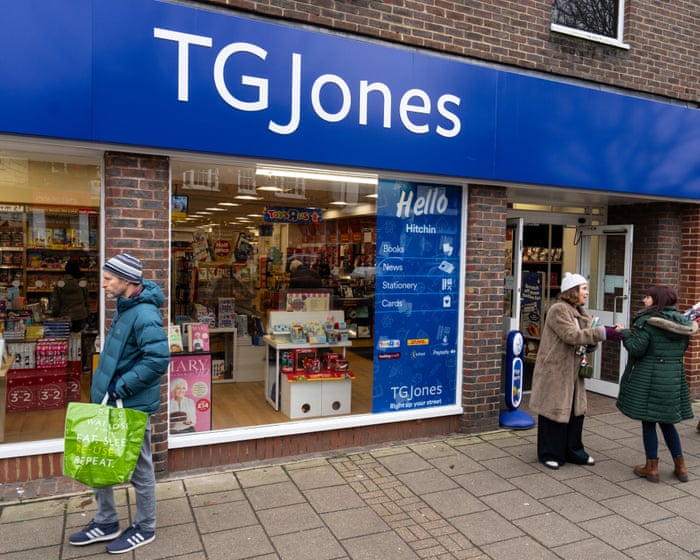
Small suppliers, including the charity Help for Heroes, face losing at least half the money owed to them by the former WH Smith chain, now called TG Jones, if a restructuring plan is approved. TG Jones was bought by private equity firm Modella Capital last year and needs the plan to reduce costs and avoid going into administration.
Key Facts
TG Jones, formerly WH Smith, has 450 stores and is currently losing money.
Modella Capital bought the retailer last year for £76 million and is leading the restructuring.
The plan proposes cutting costs by reducing debts owed to suppliers, with some losing half or more of the money they are owed.
“Exit contract” suppliers, such as toy and greeting card makers, may lose all their debts but could get some future profits if the company recovers.
Help for Heroes and other “non-core” suppliers will receive less than half their owed money, with delayed payments over three and a half years.
Large suppliers like Condé Nast and Ferrero will have delayed repayments and monthly installments starting six months after the plan’s approval.
The restructuring may close up to 150 stores and seeks rent cuts on many others.
Modella plans to invest £35 million to make the business stronger and more sustainable.
Some landlords opposed the plan but British Land recently accepted improved terms, including better profit-sharing.
Read the Original
Want the full story? Tap a source to open the original
article.