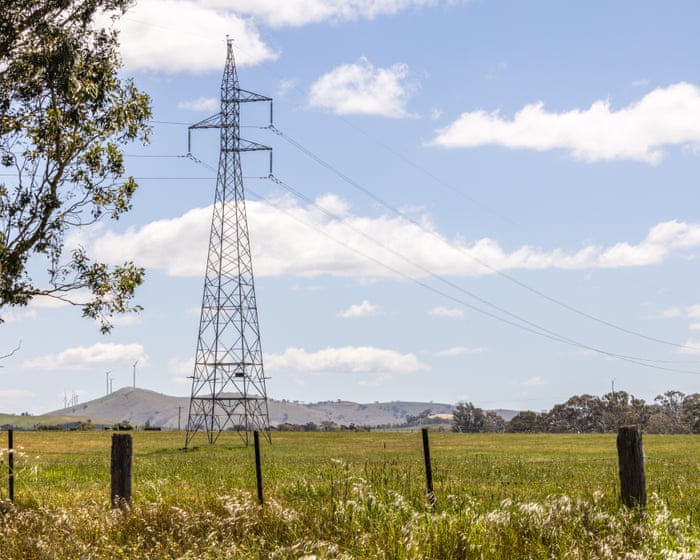
A recent increase in home batteries connected to Australia’s national power grid means the country will need fewer new power transmission lines, saving money. This is important as electricity use in Australia is expected to nearly double in the next ten years.
Key Facts
More homes in Australia are installing batteries to store electricity.
These home batteries are linked to the national power grid.
The rise in battery use reduces the need to build many new transmission lines.
Transmission lines carry electricity over long distances from power plants to homes.
Electricity demand in Australia is expected to almost double within about 10 years.
Saving on transmission lines helps reduce overall costs in the power system.
The news comes amid ongoing debates about tax changes and housing prices in Australia.
The article is part of wider coverage on Australian politics and the economy.
Read the Original
Want the full story? Tap a source to open the original
article.
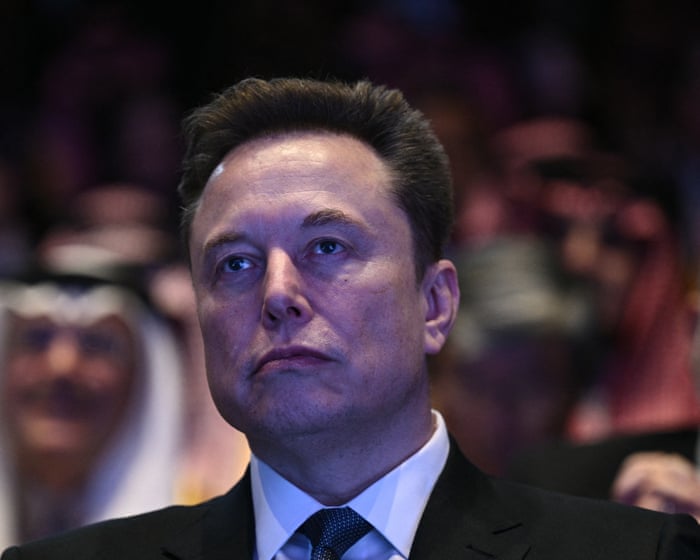
Elon Musk’s net worth fell below one trillion dollars due to drops in Tesla and SpaceX stock prices. After SpaceX’s record-setting initial public offering (IPO), Musk had briefly become the world’s first trillionaire, but recent market declines caused by concerns about interest rates and AI have reduced his wealth.
Key Facts
Elon Musk’s net worth fell to about $970 billion after Tesla and SpaceX shares dropped.
Musk became the first person to be worth over $1 trillion on June 12 following SpaceX’s IPO.
SpaceX’s IPO raised $75 billion, marking the largest IPO in history.
SpaceX stock rose 19% on its first day, from $135 to around $154 per share.
A global stock market selloff hit tech stocks hard, including companies linked to AI.
Most of Musk’s wealth is in company shares, not cash he can spend quickly.
Musk remains the richest person in the world, with a net worth far above the second-richest, Larry Page.
Musk’s net worth grew by $338 billion since January despite recent losses.
Read the Original
Want the full story? Tap a source to open the original
article.
A $45,000 certificate of deposit (CD) account can earn hundreds to thousands of dollars in interest depending on the term length. CD accounts offer higher fixed interest rates than regular savings accounts, helping savers grow their money securely over a set time.
Key Facts
Traditional savings accounts currently have very low average interest rates around 0.38%.
CDs pay higher, fixed interest rates that stay the same until the account reaches maturity.
CD terms vary from 3 months up to 10 years, allowing flexibility to match saver goals.
Current CD rates hover around 4% or higher at many banks.
A $45,000 CD at 3.95% for 3 months can earn about $438 interest.
The same amount at 4.16% for 2 years can earn about $3,822 interest.
Interest is guaranteed if the CD is kept until maturity without early withdrawal.
Early withdrawal usually causes fees that can reduce or eliminate interest earned.
Read the Original
Want the full story? Tap a source to open the original
article.
The Walt Disney Company agreed to pay $50 million to settle a class-action lawsuit that accused it of raising streaming prices by forcing services like YouTube TV and DirecTV Stream to include costly channels in their basic packages. Current and former subscribers between April 2019 and March 2026 may claim a share of the settlement by submitting a form before September 8, 2026.
Key Facts
Disney settled a $50 million federal antitrust lawsuit related to streaming service pricing.
The lawsuit claims Disney bundled expensive channels, like ESPN, into base packages, leading to higher costs.
YouTube TV and DirecTV Stream subscribers from April 1, 2019, to March 31, 2026, are eligible to apply for payment.
Subscribers do not need to be currently active; canceled accounts may also qualify.
Payments depend on subscription length, location, and total claims filed.
Claimants must submit a claim form online or by mail by September 8, 2026.
A judge will hold a final approval hearing on January 14, 2027, before payments are distributed.
Claimants typically self-certify their subscription history without needing proof.
Read the Original
Want the full story? Tap a source to open the original
article.
Mortgage interest rates increased from under 6% in April to around 6.5% in June, partly due to inflation and Federal Reserve policies. Rates may drop slightly in July if inflation decreases or geopolitical tensions ease, but predicting exact changes is difficult.
Key Facts
Inflation reached over 4% in May, the highest in more than three years.
The Federal Reserve paused interest rate changes in June but may increase rates later this year.
Mortgage rates rose from below 6% in April to about 6.5% in June despite the Fed’s pause.
Geopolitical tensions can indirectly raise mortgage rates by pushing inflation higher.
The next inflation report is due July 14, and the Federal Reserve will meet on July 29.
Lenders may adjust mortgage rates before official Fed actions based on economic signals.
Other factors like unemployment reports and the 10-year Treasury yield also affect rates.
Personal credit scores and debt levels influence the mortgage rate a borrower can get.
Read the Original
Want the full story? Tap a source to open the original
article.
Senior aides at Downing Street plan to ask Andy Burnham, expected to become UK prime minister, to increase defence spending beyond the current £13.5 billion plan. They may also revive the idea of “war bonds” to help pay for higher military costs by borrowing more money.
Key Facts
Downing Street officials want to borrow more for military spending than the current £13.5 billion Defence Investment Plan (Dip).
Defence aides visited Burnham’s team during a byelection to update them on the UK’s reduced defence capabilities.
Keir Starmer will announce the Dip before the NATO summit on 7-8 July, even though he will step down soon after.
Some Labour MPs want Burnham to increase defence spending beyond the current plan.
Burnham’s team may reopen discussions on the Dip if military concerns are not fully addressed.
The head of the UK armed forces, Air Chief Marshal Sir Richard Knighton, emphasized the need for strong defence funding to deter threats like Russia.
The idea of “war bonds” would allow the government to borrow money specifically for defence, with tax benefits for buyers, but the Treasury has resisted this due to borrowing risks.
Plans for war bonds were proposed but blocked by the Treasury, despite support from senior advisers.
Read the Original
Want the full story? Tap a source to open the original
article.
Shevaun Haviland, director of the British Chambers of Commerce, urged Andy Burnham to use the UK’s remaining North Sea oil and gas resources to prevent large job losses in Scotland and the north-east. She also highlighted that high business costs are hurting investment and called for action to reduce these costs and support local industries, especially as the transition to clean energy is not creating enough new jobs quickly enough.
Key Facts
The UK is currently importing liquefied natural gas, which is more expensive and less eco-friendly than North Sea gas.
The decision on whether to develop the Jackdaw and Rosebank oil and gas fields may soon be made by Andy Burnham’s administration.
The business community supports clean energy but says offshore wind projects are not creating enough local jobs to replace those lost in oil and gas.
Many local suppliers in the north-east are closing because they are not involved in new energy industries, with much equipment still imported from overseas.
There is concern that job losses in oil and gas could be large, similar to the decline of coal mining in the past.
Business costs in the UK have increased by 70% over the last ten years, including taxes, regulations, wages, and trade issues after Brexit.
High costs make businesses hesitant to invest, which slows economic growth and reduces tax income.
The Business Industrial Competitiveness scheme aims to reduce energy bills for some companies, but its reach is currently too limited.
Read the Original
Want the full story? Tap a source to open the original
article.
A 3-year certificate of deposit (CD) for $10,000 can earn between $1,265 and $1,297 in interest by the end of the term. CDs offer a fixed interest rate and protect the original money, making them a safe choice in today’s uncertain economy, especially if you don’t need to withdraw the money early.
Key Facts
A 3-year CD locks in a fixed interest rate, providing guaranteed earnings over the period.
Interest earned on a $10,000 CD ranges roughly from $1,265 to $1,297 after three years.
This translates to a little over $420 in interest per year on the $10,000.
CDs protect the original deposit, which is important during volatile market conditions.
The Federal Deposit Insurance Corporation (FDIC) insures deposits up to $250,000 per account.
Early withdrawal from a CD may result in penalties that can reduce or eliminate earned interest.
Savings accounts and money market accounts have variable interest rates that can change over time.
CDs can be a better option than short-term savings accounts in a high-interest-rate environment if you don’t plan to use the money soon.
Read the Original
Want the full story? Tap a source to open the original
article.
The UK government released a new plan warning that climate change may cause food price increases and shortages. Farmers acknowledge the risks but say the plan does not provide enough long-term funding to address these challenges and support sustainable farming.
Key Facts
The government plan highlights risks to UK food security from climate change, geopolitical problems, environmental damage, and supply chain issues.
Climate change has already raised food prices, such as a 22% rise in UK potato prices in early 2024 after heavy rain.
The plan promotes more nature-friendly farming that uses fewer fertilizers and pesticides to improve resilience and protect the environment.
The National Farmers’ Union president agrees climate change is a serious threat but says the plan lacks sufficient long-term funding.
The government aims to increase environmental land management (ELM) scheme funding to £2 billion annually by 2029, continuing past plans.
ELM schemes pay farmers to care for nature and soil instead of just farming area, replacing EU agricultural subsidies after Brexit.
The government recently added £53 million for farming innovation projects and launched a £30 million fund to help farmer collaborations.
New, simpler sustainable farming incentive (SFI) scheme applications will open soon to support smaller farms and others currently without access.
Read the Original
Want the full story? Tap a source to open the original
article.
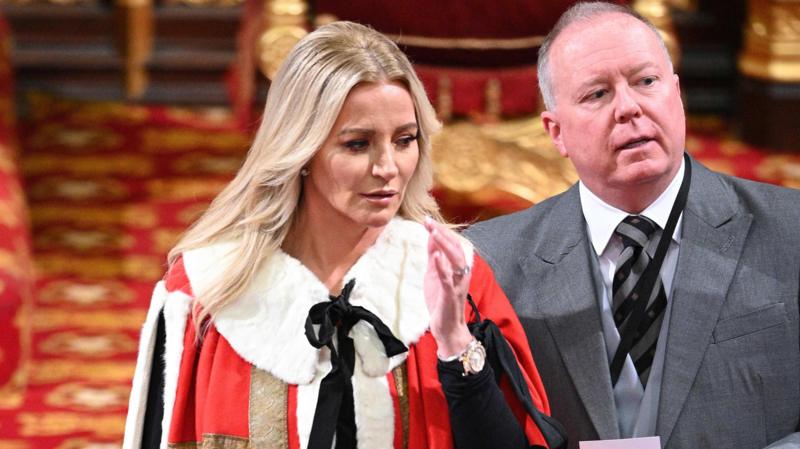
Baroness Michelle Mone and her husband, Doug Barrowman, are being sued to help recover money owed to the UK government by the failed company PPE Medpro. PPE Medpro lost a court case for supplying substandard medical gowns during the pandemic and was ordered to pay £122 million, but it went into liquidation with little money left.
Key Facts
PPE Medpro was set up in 2020 to supply protective equipment to the UK government during Covid-19.
The company won contracts through a special 'VIP lane' after a recommendation by Baroness Mone.
The government sued PPE Medpro because the supplied surgical gowns failed healthcare safety standards.
The High Court ruled in favor of the government in 2024, ordering PPE Medpro to pay £122 million plus interest.
PPE Medpro had less than £1 million in assets when it went into liquidation in December 2025.
Baroness Mone and Doug Barrowman were not directors but both have financial connections to PPE Medpro.
Six individuals and five companies linked to PPE Medpro are now being sued to recover government money.
The National Crime Agency is investigating PPE Medpro separately for potential criminal issues.
Read the Original
Want the full story? Tap a source to open the original
article.
A Texas family sued Tesla after a crash killed a grandmother, claiming the car’s automated driving system caused the accident. Tesla and its CEO Elon Musk denied the system was responsible, while authorities continue to investigate the crash.
Key Facts
The crash involved a Tesla Model 3 hitting a house and killing 76-year-old Martha Avila.
The family sued Tesla for over $1 million, saying the automated driving system was defective.
The driver, Michael Butler, reported that Tesla’s automated assist feature was engaged during the crash.
Police said Butler was not drunk and is cooperating with the investigation.
Tesla’s CEO Elon Musk said the crash happened at high speed, which is unusual for their Full Self Driving (FSD) system in neighborhoods.
Tesla’s AI VP said the driver pressed the accelerator fully, implying driver error, but did not show proof.
The family’s lawsuit suggests two possible defects: sudden unintended acceleration caused by electrical issues, and the car missing obstacle detection because of removed hardware during a chip shortage.
The National Highway Traffic Safety Administration (NHTSA) is also investigating the crash.
Read the Original
Want the full story? Tap a source to open the original
article.
Ben & Jerry’s Israel launched a new ice cream flavor called "Milk and Honey," which uses ingredients from areas affected by recent attacks. The product caused confusion because the Israeli version of Ben & Jerry’s is owned locally by a company separate from the main brand, leading to disputes over branding and politics related to Israel and Gaza.
Key Facts
Ben & Jerry’s Israel introduced a new flavor named "Milk and Honey," linked to local resilience after October 7 attacks.
The product uses Hebrew branding and is owned by Blue & White Ice-Cream Ltd., not by Ben & Jerry’s U.S. or Unilever directly.
Ben & Jerry’s U.S. clarified it does not operate the Israeli business; the local company controls product decisions there.
In 2022, Unilever sold its Ben & Jerry’s Israel business to the local licensee, allowing sales in Israel and the West Bank.
Ben & Jerry’s stopped sales in the "Occupied Palestinian Territory" in 2021, sparking legal and political controversy.
In 2024, Ben & Jerry’s sued Unilever, claiming it blocked the brand’s support for Palestinians, but Unilever denied these claims.
The conflict reflects tension between Ben & Jerry’s social mission board and the corporate parent over political stances.
Unilever spun off its ice cream brands, including Ben & Jerry’s, into the separate Magnum Ice Cream Company in 2025, complicating control issues.
Read the Original
Want the full story? Tap a source to open the original
article.
Slate Auto has started accepting $300 preorders for its new electric pickup truck priced at $24,950, which is much cheaper than most electric vehicles today. The company plans to deliver the trucks by late 2026 and hopes the low price will attract buyers who are hesitant about electric trucks.
Key Facts
Slate Auto’s electric pickup truck costs $24,950, less than half the average price of electric vehicles.
Preorders began on Wednesday with a $300 deposit.
Deliveries are expected in late 2026.
The truck’s driving range is 205 miles, which is shorter than other electric cars.
It can tow up to 1,000 pounds, less than many other pickup trucks.
Ford stopped making its electric F-150 in December due to low profitability.
Slate Auto is backed by Jeff Bezos, the Amazon founder.
The truck aims to appeal to buyers by offering affordability despite some limitations.
Read the Original
Want the full story? Tap a source to open the original
article.
The $5,000 rule is a simple way for homeowners to decide whether to repair or replace their HVAC (heating, ventilation, and air conditioning) system. The rule multiplies the system’s age by the repair cost; if the result is over $5,000, replacement is usually better, but if it's less, repair may be more cost-effective.
Key Facts
HVAC systems have become more expensive to repair and replace due to higher equipment and labor costs.
The $5,000 rule formula is: system age (in years) × repair cost = decision number.
If the number is over $5,000, experts often suggest replacing the system.
If the number is under $5,000, repairing the system might be the smarter choice.
HVAC systems typically last 15 to 20 years, but some last longer with good care.
The type of repair matters—minor fixes are different from major parts replacement.
New HVAC systems may be more energy-efficient, potentially saving money on energy bills in the long run.
The rule is a guideline and should not replace professional advice or consider individual circumstances fully.
Read the Original
Want the full story? Tap a source to open the original
article.
During London Climate Action Week 2026, Newsweek held a summit on sustainable wellness, focusing on the wellness industry's need for transparency, science, and accountability in fighting climate change. Speakers stressed that supply chains and environmental impact are central to wellness products, and upcoming regulations like the EU Green Transition Directive will challenge businesses to prove their eco-friendly claims.
Key Facts
The sustainable wellness industry is growing quickly and faces higher demands from consumers, investors, and governments for transparency and action on climate change.
Wellness products depend on healthy soil, biodiversity, and stable climate conditions, which are threatened by environmental damage.
Her Excellency Samira Bawumia emphasized that poor environmental practices harm supply chains and product quality.
The European Union Green Transition Directive will require businesses to audit and verify their green claims starting in September.
Many businesses, especially small hospitality firms in the UK, may struggle financially to meet these new auditing requirements.
The directive aims to stop false eco-friendly marketing, known as greenwashing, but it may lead to companies remaining silent about actual good practices, called green hushing.
Industry experts agree on the need for global standards to make climate-related business rules fair and accessible for all companies.
The summit included six panel discussions, keynote speeches, and a CEO interview, highlighting linked issues in sustainability and wellness.
Read the Original
Want the full story? Tap a source to open the original
article.
Geoff Wilson, a well-known fund manager and critic of government tax changes, deleted an AI-generated video he shared that showed misleading and inflammatory content about migrants and Australian politicians. He said he had not fully checked the video before posting and removed it after being contacted by the media.
Key Facts
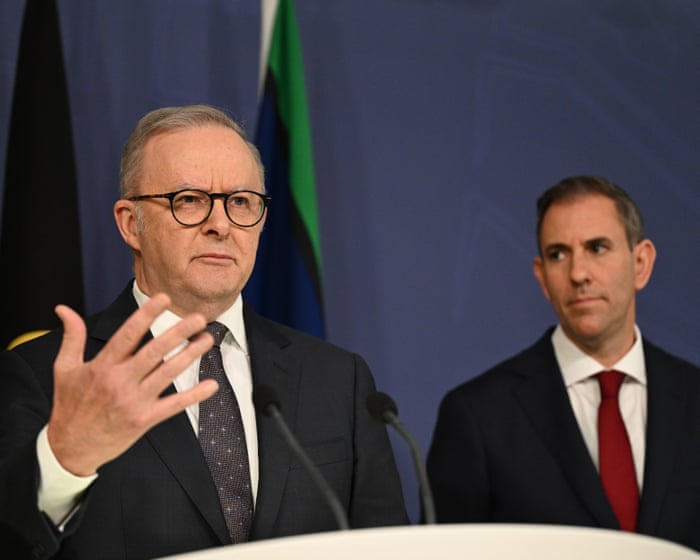
Geoff Wilson reposted an AI-created video showing politicians Anthony Albanese and Jim Chalmers giving money from white Australians to migrants in Islamic-style face coverings.
The video included images of protests with signs saying “diversity is not our strength” and “treason,” and showed a white family losing their home to a South Asian family.
Wilson did not watch the full video or check all sources before sharing and deleted the posts after being contacted.
The original video came from a social media account labeled as “Nationalist” and “White Lives Matter” that has shared antisemitic content in the past.
Wilson also reposted content connected to the QAnon conspiracy theory on his social media.
He is a public critic of the Labor government’s recent tax changes, especially those affecting capital gains tax and negative gearing.
Wilson has been quoted frequently in media and supported by some senior Coalition politicians on tax issues.
He explained his goal was to highlight opposition to tax changes he views as harmful to Australian businesses.
Read the Original
Want the full story? Tap a source to open the original
article.
The article explains why reducing the amount of oil stored in the Strategic Petroleum Reserve (SPR) is a good financial choice. It discusses how the global oil market has changed since the 1970s and why holding large reserves may no longer be as necessary or cost-effective.
Key Facts
The Strategic Petroleum Reserve holds large amounts of oil for emergencies.
The oil market has changed a lot since the 1973-1974 oil embargo.
Keeping big oil reserves costs money and may not always make sense.
Using or selling some oil from the reserve can help save money.
Changing the size of the reserve responds to current oil supply and demand.
The decision aims to balance emergency preparedness and economic efficiency.
Read the Original
Want the full story? Tap a source to open the original
article.
Many retailers offer big discounts during Amazon’s Prime Day event to attract shoppers who do not have Amazon Prime or prefer other stores. This article lists 23 top sales from stores like Best Buy, REI, Cozy Earth, and Walmart on kitchen, tech, home, and travel products.
Key Facts
Amazon holds an annual sales event called Prime Day with steep discounts.
Competitors like Best Buy, REI, Walmart, Cozy Earth, and Caraway offer their own big sales at the same time.
Deals cover many categories including kitchen items, mattresses, tech gadgets, clothing, and coolers.
Examples include Apple AirPods Pro 3 at $179.99 (original $249.99) at Best Buy and Cozy Earth Waffle Bath Towels at $86.40 (original $108).
Some discounts require special codes, like PRIME10 or FIELD20.
Popular products recommended by experts and tested by the Filter staff are included.
The sales aim to attract customers away from Amazon and offer savings even without a Prime membership.
Read the Original
Want the full story? Tap a source to open the original
article.
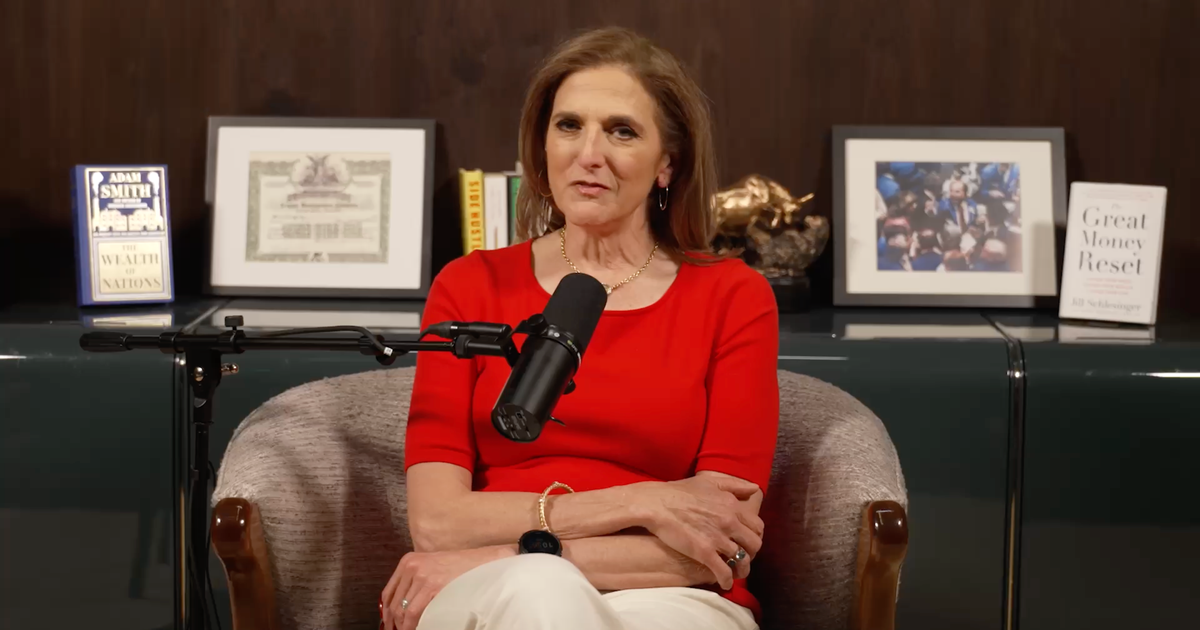
Jill Schlesinger, a financial planner and CBS News correspondent, is launching a new podcast called "Money Moves" on June 30. The podcast will provide clear and practical financial advice twice a week, helping listeners with saving, investing, home buying, career management, and spending decisions.
Key Facts
The podcast "Money Moves" starts on Tuesday, June 30.
It is hosted by Jill Schlesinger and executive producer Mark Talercio, both financial planners.
New episodes will be released every Tuesday and Thursday.
The show aims to give simple, easy-to-understand advice without using confusing financial terms.
Topics include saving money, investing, buying a home, managing careers, and spending smartly.
The hosts will answer listener questions and explain important financial news.
The podcast is available on YouTube and other podcast platforms.
The focus is on providing helpful, stress-free guidance about money management.
Read the Original
Want the full story? Tap a source to open the original
article.
Dior moved its menswear fashion show to early morning to avoid extreme heat in Paris. Designer Jonathan Anderson presented a collection mixing casual "indie sleaze" styles with elegant luxury, reflecting young people's renewed interest in rave culture and nightlife.
Key Facts
Paris experienced high temperatures reaching 40°C during fashion week.
Dior rescheduled its show to 9 a.m. and provided fans, umbrellas, and cool towels to guests.
The show took place in the Musée Nissim de Camondo gardens, which is undergoing renovation.
The collection included ripped jeans, hologram sequins, deconstructed suits, and elegant mixed styles.
DJ and producer Fred Again provided the soundtrack for the event.
Jonathan Anderson is Dior’s creative director for both menswear and womenswear since 2025.
Anderson highlighted a revival of rave culture among young people in cities and suburbs.
Dior’s recent strategy includes hosting shows in key global locations and opening a restaurant to attract wealthy customers.
Read the Original
Want the full story? Tap a source to open the original
article.