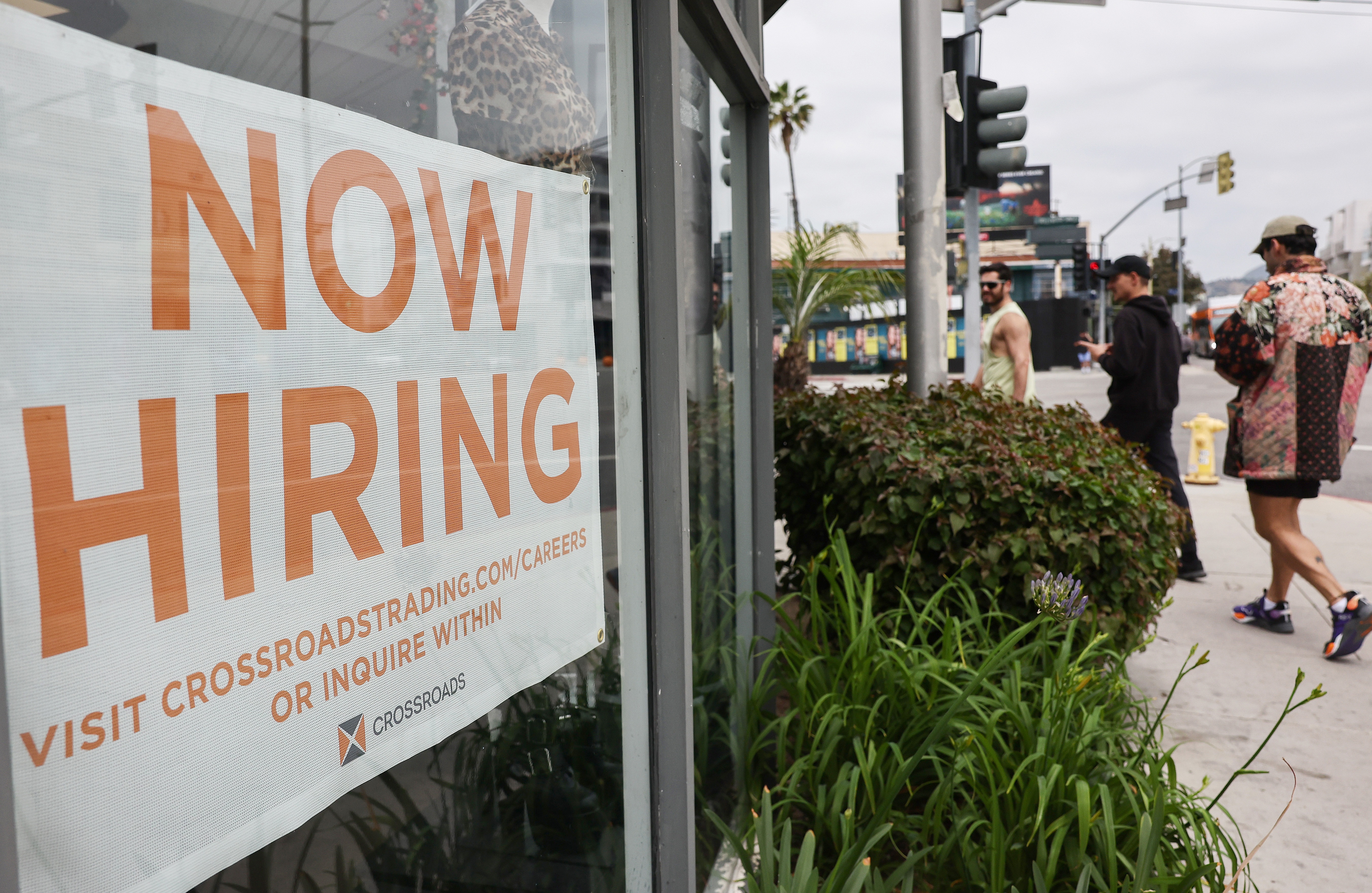
The United States announced new tariffs on more than 90 countries due to the end of a negotiation deadline set by President Donald Trump. Tariffs on Canadian goods will increase, although many items are exempt, while tariffs on Mexico are paused for 90 days as a new trade agreement is temporarily reached.
Key Facts
The US introduced new tariffs on over 90 countries.
President Trump's deadline for trade deals led to these tariffs.
Canada's tariffs will rise from 25% to 35%.
Many goods from Canada remain exempt from these tariffs.
Mexico's tariffs are paused for another 90 days due to a temporary deal.
The changes are part of a broader trade policy effort by the US.
Read the Original
Want the full story? Tap a source to open the original
article.
The UK's Supreme Court ruled against claims that hidden commission payments to car dealers were unlawful, impacting many motorists' ability to claim compensation for motor finance mis-selling. However, the court left room for claims where large, unfair commissions were involved. This decision reduces potential claims significantly, but still allows for some legal actions.
Key Facts
The UK Supreme Court made a decision affecting car finance compensation claims.
Hidden commissions paid to car dealers were claimed to be unlawful, but the court disagreed.
The possibility for compensation claims remains for cases involving large, unfair commissions.
The potential compensation claims could have been around £30 billion, but might now be between £5 billion and £13 billion according to BDO.
Discretionary commission arrangements, which allowed dealers to get more commission for higher loans, were banned in 2021.
Marcus Johnson, one of the claimants, received compensation due to an unfair relationship with his lender.
Andrew Wrench, another claimant, highlighted the importance of accountability and honesty in finance practices.
Some claimants still plan to pursue their compensation claims despite the court's mixed ruling.
Read the Original
Want the full story? Tap a source to open the original
article.
President Trump's tariffs on Asian tech manufacturing aim to bring jobs back to the U.S. but have affected economies in Asia. The tariffs increase costs for U.S. companies that rely on components made in Asian countries like China, Vietnam, and India. This creates uncertainty for businesses and impacts global supply chains.
Key Facts
President Trump started a trade war to move jobs to the U.S. and reduce trade deficits.
Tariffs have been imposed on Asian countries like China, Vietnam, and India, affecting U.S. tech firms.
Asian countries are vital for producing electronics and components like chips and smartphones.
Companies like Apple and Nvidia will face higher costs due to the tariffs.
Apple stated that tariffs cost it $800 million last quarter and could cost another $1.1 billion next quarter.
Trump has also placed a 25% tariff on imports from India, despite Apple's shift to produce iPhones there.
Trans-shipping, or re-routing goods through different countries, is now also targeted by tariffs.
Taiwan, a major chip producer, faces a 20% tariff on its exports to the U.S.
Read the Original
Want the full story? Tap a source to open the original
article.
The article discusses the declining trust in economists and other experts. It highlights an incident where President Trump fired an economist from the Bureau of Labor Statistics, alleging that she falsified a jobs report. The piece features discussions with economists on how this distrust affects their work and their efforts to rebuild trust.
Key Facts
Trust in experts, including economists, is decreasing.
President Trump fired a Bureau of Labor Statistics economist over alleged report tampering without evidence.
The episode aims to explore how distrust affects economists' work.
Economists used to have more influence on political leaders.
The podcast episode includes interviews with economists about trust issues.
The content is produced by NPR’s Planet Money team.
Read the Original
Want the full story? Tap a source to open the original
article.
The UK Supreme Court has limited the potential compensation payouts for car finance agreements but has not removed all responsibilities from lenders. While the ruling reduces the possibility of massive compensation claims, the Financial Conduct Authority might still seek redress where lenders incentivized dealers to increase loan interest rates unfairly.
Key Facts
The Supreme Court decision reduces possible compensation payouts from £30bn-£40bn.
The Financial Conduct Authority may still create a redress scheme for unfair interest rate incentives.
A consumer claim was upheld, providing a potential model for similar cases.
The case followed an Appeal Court ruling about undisclosed commission payments to car dealers.
The court ruled that car dealers have no "single minded duty of loyalty" to customers.
The court sided with Marcus Johnson, awarding him compensation due to unfair loan terms.
Discretionary Commission Agreements allowing dealers to set interest rates were banned in 2021.
The Supreme Court ruling does not address how future cases with such agreements will be handled.
Read the Original
Want the full story? Tap a source to open the original
article.
Canada and the United States missed a self-imposed deadline to reach a new trade agreement. The two countries continue to face high tariffs, and while negotiations have been described as intense, no agreement has been reached. Both sides are seeking to resolve the situation while considering long-term impacts on businesses.
Key Facts
Canada and the US have been in a tariff conflict for six months.
There was a recent deadline set by leaders to reach a trade agreement, which was missed.
Current tariffs include a 35% rate imposed by the US on Canadian goods, with some exceptions.
Canada has responded with C$60 billion in tariffs against American goods.
The US justified tariffs partly due to concerns about drug flow, particularly fentanyl, from Canada.
Most Canadian exports to the US can avoid tariffs if they meet specific trade deal conditions under the CUSMA/USMCA agreement.
Canada collected C$1.5 billion more in import duties during the same period than the previous year due to counter tariffs.
Businesses are affected by uncertainty and are seeking stable trade conditions.
Read the Original
Want the full story? Tap a source to open the original
article.
President Trump has announced new tariffs on over 60 countries. These tariffs, which will begin next week, range from 10 to 41 percent. Economist Oren Cass discussed how these tariffs aim to change the global trade system.
Key Facts
President Trump introduced new tariffs affecting more than 60 countries.
The tariff rates vary from 10 percent to 41 percent.
The tariffs will start next week.
The move is seen as a major change in the global trade system.
The latest jobs report showed an addition of 73,000 jobs, which was less than expected.
Oren Cass, an economist from American Compass, commented on the new tariffs.
Read the Original
Want the full story? Tap a source to open the original
article.
The crypto industry has donated over $26 million to a political committee supporting President Trump, as revealed by recent finance reports. This situation highlights the growing relationship between Trump and the crypto sector. Trump has introduced several policies to help the industry, such as laws on stablecoins and a report on growing the industry.
Key Facts
The crypto industry donated more than $26 million to Trump's super PAC in 2025.
President Trump signed the first federal law about stablecoins called the GENIUS Act.
Trump asked Congress to pass the CLARITY Act to create clear rules for the crypto industry.
A Strategic Bitcoin Reserve was announced by Trump early in his presidency.
Recent financial disclosures list significant donations, including $5 million from Blockchain.com.
Investors Marc Andreesen and Ben Horowitz each gave $3 million to the super PAC.
Crypto bank Gemini Trust and its founders the Winklevoss twins, also donated significant sums.
Trump released a 160-page report outlining steps to support and protect the crypto industry.
Read the Original
Want the full story? Tap a source to open the original
article.
The UK Supreme Court decided that lenders do not need to pay compensation to millions of motorists. The case involved car finance deals and allegations of unfair practices.
Key Facts
The UK Supreme Court issued a ruling about car finance compensation.
Lenders will not have to pay compensation to millions of car owners.
The case involved claims about unfair practices in car finance agreements.
The decision impacts many people who took car loans.
The ruling ends a legal process concerning these financial agreements.
Read the Original
Want the full story? Tap a source to open the original
article.
A recent jobs report suggests the U.S. labor market is weakening. Two Federal Reserve governors, Christopher Waller and Michelle Bowman, believe this supports the need to cut interest rates soon. The report has increased the chance of a rate cut at the next Federal Reserve meeting.
Key Facts
The Federal Reserve decided not to change interest rates at its recent meeting.
Governors Christopher Waller and Michelle Bowman disagreed, saying a rate cut was needed.
New jobs data shows signs of a weakening labor market.
Waller mentioned that private-sector job growth is slowing down.
Bowman noted that the labor market shows signs of becoming less stable.
After the jobs report, the expectation of a rate cut at the September Fed meeting increased from 38% to 80%.
The two-year Treasury yield decreased by 0.19 percentage points following the report.
Read the Original
Want the full story? Tap a source to open the original
article.
The recent jobs data shows a much slower job growth than previously thought, with large revisions to earlier estimates. The economy only added an average of 35,000 jobs per month from May to July. The unemployment rate increased slightly to 4.2%, while hiring has almost stopped.
Key Facts
The Labor Department provides three estimates of monthly job gains.
Initial job growth figures for May and June were significantly revised downwards.
From May to July, the U.S. economy added an average of 35,000 jobs per month.
July's job number was softer than analysts expected, with only 73,000 jobs added.
Revised data shows only 19,000 jobs were added in May and 14,000 in June.
The unemployment rate increased to 4.2% from 4.1%.
Changes in immigration policies may have affected employment numbers.
The labor force participation rate in July was 62.2%, lower than the previous year.
Read the Original
Want the full story? Tap a source to open the original
article.
President Trump has introduced new tariffs on over 90 countries that do not have updated trade deals with the United States. Mexico received a temporary 90-day delay, while other countries like Thailand and Italy negotiated lower tariffs than initially expected. Business leaders are concerned about the impact of these tariffs on trade and are seeking solutions to adapt.
Key Facts
President Trump enacted new tariffs on countries without new trade agreements with the US.
Over 90 countries are affected by these tariffs.
Mexico has a 90-day reprieve before any new tariffs are applied.
Thailand negotiated its tariff rate down from a potential 36% to 19%.
Italy's trade agreement held tariffs at 15%, up from a previous average of 4.8%.
Italian farmers and other industries are concerned about the impact on their economy.
Business leaders are trying to find ways to adapt to these new trading terms.
Read the Original
Want the full story? Tap a source to open the original
article.
Millions of car buyers in the UK will not receive compensation related to extra payments on car loans. The Supreme Court decided in favor of finance companies, stopping potential claims for compensation similar to the past PPI mis-selling cases.
Key Facts
The Supreme Court made a ruling affecting car loan compensation claims.
The court sided with finance companies in two out of three cases.
Motorists hoped for compensation due to extra commission payments on car loans.
Earlier, the Court of Appeal had allowed for such compensation claims.
This decision is compared to the Payment Protection Insurance (PPI) mis-selling issue.
Car dealers made extra money from these commission payments.
The Supreme Court ruling means many will not get compensation.
Read the Original
Want the full story? Tap a source to open the original
article.
An ad campaign featuring Sydney Sweeney and created by American Eagle has sparked public debate. The ad, which plays on the word "genes," received backlash for alleged connections to eugenics and its perceived sexualization of women. Despite criticisms, the campaign aims to raise awareness about domestic violence, with all proceeds from the jeans being donated to charity.
Key Facts
Sydney Sweeney appeared in an American Eagle ad campaign.
The ad uses a wordplay on "genes" and "jeans."
Viewers criticized the ad for perceived links to eugenics.
Some found the ad overly sexualized, especially since it relates to domestic violence awareness.
100% of the jean sales are donated to the Crisis Text Line.
The ad was removed from American Eagle's social media following backlash.
The campaign caused discussions similar to a controversial ad from the 1980s involving Brooke Shields.
Read the Original
Want the full story? Tap a source to open the original
article.
The U.S. administration released a list of new tariffs affecting about 70 countries, which will take effect next Thursday. Investors are trying to figure out which industries will benefit or suffer from these tariffs. Financials and Big Tech are among those expected to benefit, while consumer staples and energy may be negatively impacted.
Key Facts
New tariffs will start next Thursday and impact around 70 countries.
The stock market is performing well, but the tariffs are expected to affect certain industries differently.
Financials, Big Tech, utilities, and communications sectors are likely to benefit from the changes.
Consumer staples, energy, real estate, and health care sectors might face challenges.
Consumer discretionary and industrial sectors show mixed responses; luxury brands are doing well, while discount retailers might struggle.
Big Tech companies are investing more in AI, which could continue to drive their growth.
Copper tariffs were less severe than expected, causing copper prices to drop significantly.
Investors need to understand the broader goals of the trade policies to make informed decisions.
Read the Original
Want the full story? Tap a source to open the original
article.
Stocks in the United States fell, and bond yields dropped due to lower-than-expected job growth and news about upcoming tariffs. The U.S. government reported that fewer new jobs were created in July, leading investors to believe that interest rates might be cut to support the economy. President Trump announced new tariffs, now set to begin on August 7, affecting countries without trade deals with the U.S.
Key Facts
The U.S. reported only 73,000 new jobs in July, which is less than expected.
The Labor Department reduced previous job estimates for May and June by 258,000.
The decline in job growth led to a sharp fall in bond yields; the 10-year Treasury yield dropped to 4.24%.
Investors are anticipating an interest rate cut by the Federal Reserve in September.
There is now an 80% chance of a quarter-point rate cut by the Fed, according to market predictions.
New tariffs on imports will start on August 7 for countries without a trade agreement with the U.S.
The S&P 500 index fell by 1.5%, the Dow Jones dropped 599 points, and the Nasdaq composite decreased by 2%.
Apple’s stock rose by 0.3% after a positive earnings report.
Read the Original
Want the full story? Tap a source to open the original
article.
Stock markets fell sharply after President Trump announced new global tariffs on many countries. Meanwhile, the U.S. reported fewer new jobs than expected for July.
Key Facts
President Trump announced new tariffs on various countries.
Stock markets opened lower due to the tariff announcement.
The Dow Jones Industrial Average dropped over 400 points, about 1%.
Both the S&P 500 and Nasdaq fell more than 1%.
U.S. jobs report showed only 73,000 jobs added in July, below expectations.
Stock market and job data were key reasons for investors' concerns.
Read the Original
Want the full story? Tap a source to open the original
article.
President Trump adjusted his tariff strategy by removing many of the previously planned highest tariffs. New tariffs range from 10% to 15% depending on the trade relationship of each country with the U.S. Some countries experience higher rates, while others benefit from reduced rates.
Key Facts
Trump revised his tariff plans, reducing many of the highest tariffs.
New tariffs are set at 10% for countries with a trade surplus and 15% for those with a trade deal or modest deficit.
Countries not on the tariff list will receive a baseline rate.
Canada saw its tariff rate increase to 35%, but goods under the USMCA deal are exempt.
Mexico received a 90-day extension to renegotiate terms.
A legal case is questioning the President's authority to impose such tariffs.
Markets reacted calmly, but there are concerns about long-term economic impacts.
Read the Original
Want the full story? Tap a source to open the original
article.
The U.S. job market weakened in late spring and early summer, partly due to tariffs introduced by President Trump. Employers added fewer jobs than expected, with manufacturing and federal government jobs declining.
Key Facts
The U.S. added 73,000 jobs in July, less than anticipated.
Previous job gains for May and June were downgraded significantly.
The unemployment rate increased to 4.2%.
Health care was one of the few sectors with strong job growth in July.
The federal government lost 12,000 jobs in July and about 84,000 since the start of the year.
Manufacturing jobs decreased by 11,000 in July, affected by tariff-related uncertainty.
Average wages in July were up 3.9% compared to the previous year, outpacing inflation.
The Federal Reserve kept interest rates steady, concerned about the economic impact of tariffs.
Read the Original
Want the full story? Tap a source to open the original
article.
The United States, under President Trump, introduced new tariffs of up to 41% on imports from various countries. Some countries managed to negotiate better terms, but others, like Canada and Switzerland, faced increased rates. The financial markets reacted with falls in some stock benchmarks, and the U.S. dollar weakened against the yen.
Key Facts
The U.S. set new tariff rates up to 41% on imports from many countries, with changes taking effect on August 7.
Some countries negotiated lower tariffs, while others struggled with increased rates due to missed negotiation deadlines.
Canada's tariff on goods exported to the U.S. rose to 35%, partly due to drug trafficking issues and trade deficits.
Switzerland faced a 39% tariff, up from the initially proposed 31%.
New Zealand and Australia tried to negotiate reduced tariffs, with New Zealand exports facing a 15% rate.
Financial markets showed a subdued reaction; Asian stocks fell, and the U.S. dollar weakened against the yen.
Read the Original
Want the full story? Tap a source to open the original
article.