A court in the United States has blocked President Donald Trump's plan to impose wide-ranging tariffs, stating they were illegal. The ruling questions the future of Trump's tariff policy and whether these tariffs will become effective.
Key Facts
A court ruled President Trump's tariffs illegal, affecting his trade policy.
The case was brought by a dozen states and some small businesses.
Typically, trade policy decisions come from the US Congress, not the president.
Trump's use of national emergency powers for tariffs was challenged as overreach.
The tariffs against Mexico, Canada, and China did not meet stated objectives.
The ruling may influence ongoing and future trade negotiations with countries like Japan and the EU.
The US Supreme Court will eventually address this case.
Retailers warned that the tariffs could lead to inflation and product shortages.
Read the Original
Want the full story? Tap a source to open the original
article.
Some farmers, like Aidan Stanley, are continuing sustainable farming practices despite the removal of government grants intended to support these efforts. Aidan's farm raises cattle on natural grass pastures, which lowers carbon emissions, and he profits by selling directly to consumers through a restaurant.
Key Facts
The UK government ended the Sustainable Farming Incentive, which provided financial support for eco-friendly farming practices.
Aidan Stanley raises beef cattle on untouched grass pastures near Bath to reduce carbon emissions.
The cattle at Lilliput Farm eat only grass and hay, avoiding grain, which lowers their environmental impact.
The slower growth of the cattle and the need for more space makes this type of beef more expensive.
To remain profitable, the Stanleys sell their beef directly to the public through their own restaurant.
The restaurant serves their farm's beef and has attracted 22,000 customers in its first year.
Jimmy Woodrow from Pasture for Life certifies farms like Lilliput as raising cattle entirely on grass and claims that it can be cost-effective for farmers.
Read the Original
Want the full story? Tap a source to open the original
article.
The Community Yoga Project in north Devon offers free yoga sessions every Sunday in four different parks. The project, started by Hannah Shackleton, aims to remove barriers to participation, attract a diverse range of people, and promote physical and mental well-being.
Key Facts
Free yoga sessions are held every Sunday in north Devon parks.
The Community Yoga Project has 250 members and started earlier this year.
Sessions are available in Barnstaple, Bideford, Ilfracombe, and South Molton.
The group is funded by donations to keep the classes free.
Hannah Shackleton founded the project to make yoga accessible to everyone and to improve mental health.
Participants include people of all ages and abilities, including those with babies or older adults using wheelchairs.
Aimee Hill, an instructor, emphasizes community and reducing loneliness through the sessions.
The group hopes to expand to more locations like Torrington and Holsworthy.
Read the Original
Want the full story? Tap a source to open the original
article.
A blogger named Natalie Smith, who runs the Frugal Mum website, has shared a list of budget-friendly places to visit in Kent, UK. Her recommendations include spots that are free or inexpensive, such as Brockhill Country Park and Mote Park, where families can enjoy outdoor activities without spending much money.
Key Facts
Natalie Smith runs the Frugal Mum website.
She lives near Hythe in Kent, UK.
Her list includes 15 budget-friendly locations for family outings.
Brockhill Country Park in Hythe is one of her recommended spots for free activities.
Mote Park in Maidstone, which has a large lake and woodland, is also on the list.
Kearsney Abbey Gardens in Dover offers big open spaces and a lake.
The list aims to provide families with affordable outing options.
Other listed places include Dymchurch Beach, Viking Bay Beach, and Bedgebury National Pinetum and Forest.
Read the Original
Want the full story? Tap a source to open the original
article.
The UK government has removed a planning restriction that required heat pumps to be installed at least one meter from a neighbor's property. This change aims to make it easier for more homes in England to install heat pumps as part of a plan to reduce carbon emissions and household energy bills. However, high upfront costs and additional complications for renters and older homes remain challenges.
Key Facts
The planning rule requiring heat pumps to be at least one meter from a neighbor's property has been lifted.
This change is part of the government's Warm Homes Plan to reduce energy costs and carbon emissions.
Heat pumps use electricity, which can create fewer emissions compared to gas boilers, especially as the UK increases renewable energy use.
Most UK homes currently use gas boilers, which contribute to 14% of the country's greenhouse gases.
Installing heat pumps is challenging due to high costs, especially in older homes needing extra upgrades.
Some homes, like those in terraced housing or conservation areas, might still need planning permission.
Newer heat pumps are less noisy, reducing previous concerns about noise levels.
The planning changes are aimed at speeding up heat pump installations in England.
Read the Original
Want the full story? Tap a source to open the original
article.
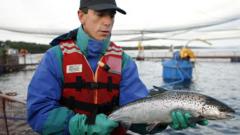
Chile is the second-biggest exporter of farmed salmon, mainly supplying the US. However, the country faces disputes over the location of its many salmon farms, some of which are in protected areas. These farms have brought economic growth to the region but also raised environmental concerns.
Key Facts
Chile is the world's second-largest exporter of farmed salmon.
The US is the biggest buyer of Chilean salmon.
There are 1,343 salmon farms in southern Chile.
Some farms are in protected areas, raising environmental issues.
Salmon farming contributed $6.4 billion to Chile's economy last year.
About 86,000 people work in the salmon industry in Chile.
Global demand for farmed salmon is expected to grow by 40% by 2033.
There is conflict over farming locations and environmental regulations.
Read the Original
Want the full story? Tap a source to open the original
article.
The UK government has proposed changes to the pension system, introducing £25 billion "megafunds" to encourage local investments and economic growth. The plan includes merging pension schemes for both local authority and private sector workers, aiming for better investment returns and more funds for infrastructure and businesses. Voluntary agreements have already been made with pension firms, and new laws might ensure these reforms are implemented.
Key Facts
The UK government plans to create £25 billion pension "megafunds" for local investments.
Reforms aim to increase pension returns and support clean energy and high-growth businesses.
Seventeen major pension firms have agreed to a voluntary reform plan.
The government can enforce reforms if progress is slow by the end of the decade.
Local authority pension schemes with £392 billion will be merged into six asset pools by next year.
Defined contribution schemes, currently valued at £800 billion, will also consolidate.
The reforms could result in over £50 billion more investment in UK infrastructure and businesses.
The Pension Schemes Bill is set to be presented to Parliament to support these changes.
Read the Original
Want the full story? Tap a source to open the original
article.
UK car production dropped sharply in April, hitting the lowest level for this month since 1952, not including April 2020 during the pandemic. Factors contributing to this decline include tariffs, the shift from petrol to electric vehicles, and fewer working days due to Easter.
Key Facts
In April, the UK produced 59,203 vehicles, the lowest April output since 1952 outside the pandemic.
This output was 16% lower than the previous April and 25% lower than March.
The decline was partly due to companies shipping more cars to the US before new tariffs, and because Easter resulted in fewer working days.
Export production fell by 10.1%, mainly due to less demand from the US and EU.
The first four months of the year had the lowest total vehicle production since 2009 in the UK.
The global trend shows similar declines in countries like Germany, Italy, France, and Japan.
New trade deals with the US, EU, and India may boost future production.
UK government's changes in electric vehicle policy have created uncertainty for carmakers.
Read the Original
Want the full story? Tap a source to open the original
article.
Hailey Bieber is selling her makeup brand Rhode to e.l.f. Beauty in a deal worth up to $1 billion. The brand, known for its skincare products, started in 2022 and has been popular online, generating significant sales. Bieber will stay involved with the brand as chief creative officer after the sale, which is set to be completed later this year.
Key Facts
Hailey Bieber’s brand is named Rhode, after her middle name.
Rhode was co-founded in 2022 and sells products like blush and lip tints.
e.l.f. Beauty is buying Rhode for $800 million in cash and stock, with potential for an extra $200 million based on future sales.
The deal will finalize later this year, with Bieber continuing as chief creative officer.
Rhode made more than $200 million in sales in the past year and plans to sell in Sephora in the US and UK.
The brand gained popularity on social media, particularly through TikTok.
Hailey Bieber is married to singer Justin Bieber and is related to actor Stephen Baldwin.
Read the Original
Want the full story? Tap a source to open the original
article.
On March 21, a fire at an electrical substation near Heathrow Airport caused a power outage, leading to the suspension of airport operations. An inquiry found that Heathrow's CEO, Thomas Woldbye, was not reachable during the incident because his phone was on silent. The review concluded that the airport handled the situation appropriately under challenging circumstances.
Key Facts
A fire at a nearby electrical substation caused a power outage at Heathrow Airport on March 21.
The power cut led to the suspension of flights and affected 270,000 passenger journeys.
Heathrow's CEO, Thomas Woldbye, was not reachable during the incident as his phone was on silent.
The airport's chief operating officer made the decision to suspend operations early on March 21.
An inquiry led by Ruth Kelly found the airport's response was efficient and appropriate.
The review suggested Heathrow improve contact methods for key personnel during emergencies.
The airport deemed its electricity supply resilient but acknowledged the incident's low likelihood.
Read the Original
Want the full story? Tap a source to open the original
article.
Thames Water has been fined a record £122.7 million by the UK water regulator Ofwat for failing to protect the environment and for improper payments to shareholders. The company is facing difficulties due to its substantial debts and challenges with leaks and sewage spills. Despite these issues, customer services like water supply remain unaffected.
Key Facts
Thames Water serves about a quarter of the UK's population, mainly in London and southern England.
Ofwat fined Thames Water £104.5 million for issues related to improper sewage operations.
An additional £18.2 million fine was issued due to shareholder payments deemed "undeserved" by the regulator.
Thames Water's total debt is £22.8 billion, partly accumulated during earlier ownership by Macquarie.
Customers' water service will not be disrupted, but bills are expected to rise by almost a third in 2024.
Thames Water is privately owned by pension funds and investment firms from several countries.
Earlier in 2023, the company secured £3 billion in emergency funding to manage its financial issues.
Read the Original
Want the full story? Tap a source to open the original
article.
Thames Water has been fined £122.7 million for breaking rules about how it handles sewage and pays its shareholders. The penalty, announced by the water regulator Ofwat, is the largest it has ever issued. The money for the fines will come from the company and its investors, not from customers.
Key Facts
Ofwat fined Thames Water £122.7 million for rule violations concerning sewage and shareholder payments.
Ofwat conducted its largest investigation to reach this decision.
The £104.5 million fine was for issues with sewage operations.
An additional £18.2 million fine was for inappropriate shareholder payouts.
Thames Water has a large debt of £20 billion and secured a £3 billion emergency loan in March.
Thames Water is in "cash lock up," meaning it cannot pay dividends without approval.
Water bills for customers in England and Wales rose by an average of £10 per month recently.
Despite the financial troubles, water and waste services will continue as usual for Thames Water customers.
Read the Original
Want the full story? Tap a source to open the original
article.
Brazilian authorities are taking legal action against Chinese electric vehicle manufacturer BYD and two contractors, accusing them of human trafficking and poor working conditions at a construction site in Bahia. Investigators found 220 Chinese workers living in unsanitary and overcrowded conditions, leading to halted construction and demands for compensation.
Key Facts
Brazil's Public Labour Prosecutor's Office (MPT) is suing BYD and two contractors for alleged human trafficking and poor working conditions.
Investigators rescued 220 Chinese workers from a factory site in Bahia, Brazil.
The MPT seeks 257 million Brazilian reais ($45.5 million) in damages.
Construction was stopped after finding cramped living conditions and hygiene issues.
Workers were reportedly forced to sleep on beds without mattresses and share one toilet among 31 people.
Passports were allegedly confiscated, and workers had illegal contracts with long hours and no rest days.
Some workers had up to 70% of their salaries withheld and faced high costs to leave their jobs.
The factory in Camacari was to be BYD's first electric vehicle plant outside Asia, expected to open by March 2025.
Read the Original
Want the full story? Tap a source to open the original
article.
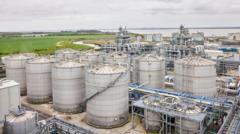
The UK's largest bioethanol plant, Vivergo, may close if the government does not intervene. The removal of a tariff on US ethanol imports as part of a trade deal has impacted the plant's viability, leading to calls for government action to protect the industry and jobs.
Key Facts
Vivergo is the UK's largest bioethanol plant, located near Hull.
The plant produces bioethanol used in E10 petrol, which helps reduce carbon emissions.
The UK removed a 19% tariff on US ethanol imports in a recent trade deal with the US.
The removal of this tariff is affecting the plant's ability to compete, according to Vivergo.
Vivergo employs over 160 people and also produces animal feed from the bioethanol process.
The company is seeking government intervention to continue operations.
Business Secretary Jonathan Reynolds met with bioethanol producers to discuss urgent actions for the industry.
The government is in talks to understand the trade deal's impact and consider possible support.
Read the Original
Want the full story? Tap a source to open the original
article.
Many farmers in Somerset are now earning more money from weddings and other non-farming activities than from traditional farming. Due to challenging weather and new government taxes, about three-quarters of farmers rely on these extra services to support their income.
Key Facts
Farmers faced a tough year with unusually bad weather: a very wet winter and a very dry spring.
The government introduced new inheritance taxes on farms, leading to protests.
Many farms have lost grants for sustainable farming, causing financial challenges.
About 75% of farmers now depend on extra services to supplement their income.
Non-farming activities include weddings, helicopter rides, and beauty salons.
Mike Churches, a farmer in Somerset, now earns 70% of his income from non-farming activities like weddings.
Some farms have unique offerings, like Godney Farm, which has its own church for weddings.
Research shows 26% of UK farms earn more than half their income from diversified businesses.
Read the Original
Want the full story? Tap a source to open the original
article.
Tesco has introduced cameras at self-checkout lanes to help reduce shoplifting by showing a video of items not scanned properly. This move comes after shoplifting has increased in the UK. The technology aims to make checkout faster and easier for customers.
Key Facts
Tesco added cameras to self-checkout lanes to detect when items are not scanned.
The video system shows customers if an item failed to scan, asking them to try again.
Shoplifting in the UK reached a record high, with over 516,000 incidents reported last year.
The British Retail Consortium reported 20.4 million thefts in a year, costing retailers £2 billion.
Some customers joke the cameras resemble football's Video Assistant Referee (VAR) technology.
Other retailers, like Sainsbury's, are also using similar technology at checkouts.
Some shoppers are concerned about increased surveillance and have expressed a reluctance to use self-checkouts.
Read the Original
Want the full story? Tap a source to open the original
article.
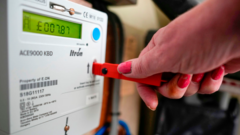
Tens of thousands of energy customers in the UK will receive compensation of up to £1,000 due to improper installations of prepayment meters. The regulator, Ofgem, conducted a review that led to energy companies providing more than £70 million in compensation and support for affected customers.
Key Facts
Customers will receive compensation ranging from £40 to £1,000, depending on their situation.
The payout is a response to energy companies switching customers to prepayment meters without their consent.
This issue came to light during the peak of living cost problems two years ago.
Ofgem found that energy firms did not meet required standards in treating their customers.
Eight suppliers, including Scottish Power and EDF, are responsible for the payouts.
Over £13 million of the funds will be used to write off debts for customers affected by forced meter installations.
British Gas, Utilita, and Ovo are under further investigation for similar practices.
A new rule requires stricter conditions for companies wanting to install prepayment meters without customer agreement.
Read the Original
Want the full story? Tap a source to open the original
article.
A charity called Purple Shoots is helping people with low credit scores get loans to start businesses. The founder, Karen Davies, believes banks miss out on talented people by not giving loans to those with poor credit histories. Purple Shoots has provided nearly 1,000 business loans, creating new jobs in communities.
Key Facts
Karen Davies started Purple Shoots to help people denied loans by regular banks.
The organization offers loans up to £5,000 to start new businesses.
Since starting 12 years ago, Purple Shoots has supported about 1,000 businesses.
Tiffany Bramley received a £3,000 loan from Purple Shoots to restart her cleaning business after her bank denied her a loan.
Purple Shoots often helps create jobs in poorer areas.
Over half of borrowers from Purple Shoots face challenges in repaying loans but receive support to succeed.
The charity claims that only about 20% of its loans result in failure to repay.
A charity, Finance Innovation Lab, is calling for new laws to make loans more accessible for people with low credit scores.
Read the Original
Want the full story? Tap a source to open the original
article.
The Horizon Compensation Advisory Board has rejected claims by Sir Alan Bates that the compensation process for sub-postmasters was unfair. The board stated that the process, which Sir Alan helped to set up, was being followed correctly to resolve outstanding cases, including final decisions by a respected judge.
Key Facts
Sir Alan Bates claims the compensation process for sub-postmasters is unfair and described it as a "kangaroo court."
The Horizon Compensation Advisory Board says the process is fair and designed with Sir Alan's involvement.
A "kangaroo court" is a term used to describe a court that ignores recognized standards of law or justice.
The board emphasized that the final compensation decisions involve a respected judge.
Between 1999 and 2015, over 900 sub-postmasters were wrongly prosecuted due to a faulty IT system.
Sir Alan led a group of 555 sub-postmasters in a legal action against the Post Office.
The government set up a compensation fund for affected sub-postmasters, but the process has been slow.
Under the compensation scheme, sub-postmasters can receive £75,000 or negotiate their own settlements.
Read the Original
Want the full story? Tap a source to open the original
article.
In the UK, the price of beef and fresh produce has driven food inflation to its highest level in a year. This increase is mainly due to high demand and low supply, which is pushing up costs for restaurants and consumers.
Key Facts
UK food prices increased by 2.8% in the year to May.
Beef prices rose by about 20% in the last 12 months.
Industry experts say high demand and low supply are major reasons for rising beef costs.
Increased production costs and higher national minimum wages are also contributing to higher overall costs.
The price of beef has reached record levels, according to industry leaders.
There is a reported 5% shortage of cattle and a 1% rise in consumer demand.
The Agriculture and Horticulture Development Board noted unprecedented increases in cattle prices since early 2025.
Read the Original
Want the full story? Tap a source to open the original
article.