Fact-first summaries of the news — stay informed, stay grounded.
Your favorite news sources, one calm feed — fact-first summaries that always link to the
original story. No outrage bait, and we tell you when you're caught up. How it works
Business News
Business news, market updates, and economic developments
A company in Florida called PriorityEvac offers yearly memberships for private plane evacuations during hurricanes. For $1,250 per person, members and their pets can fly out of the state ahead of storms to avoid crowded roads and airports.
Key Facts
PriorityEvac is based in West Palm Beach, Florida.
Membership costs $1,250 per person each year, with family and couple packages available.
The service includes up to two hurricane evacuations per season with no extra activation fees.
Pet accommodations are offered for an additional fee starting at $125 per pet.
Members receive early notifications when hurricanes approach, allowing better planning.
Flights take members to Atlanta on contracted Airbus A320 planes.
The company expects to support around 5,000 members in its first year.
The service aims to provide a faster, less crowded alternative to typical hurricane evacuations.
Read the Original
Want the full story? Tap a source to open the original
article.
AI technology is helping U.S.-based company Provalus improve how workers handle tasks like fraud detection and customer service. AI increases productivity and helps decide which work stays overseas and which returns to the U.S., especially tasks needing human judgment, empathy, or security.
Key Facts
Provalus is a U.S.-based outsourcing and technology company operating in rural American communities.
AI sorts fraud alerts for analysts, increasing their productivity by over 50% and speeding up investigations.
Humans review cases to catch errors AI might repeat across many transactions.
Routine tasks are increasingly automated overseas, while sensitive or complex work returns to U.S. teams.
AI assists in customer service by taking notes and enabling workers to focus on the caller, improving empathy and security.
Provalus hires employees from small towns, often through community outreach rather than traditional job sites like LinkedIn.
AI is also used to train workers for emotionally difficult interactions, making training faster and more effective.
Company leaders emphasize maintaining enough human judgment in work processes despite AI automation.
Read the Original
Want the full story? Tap a source to open the original
article.
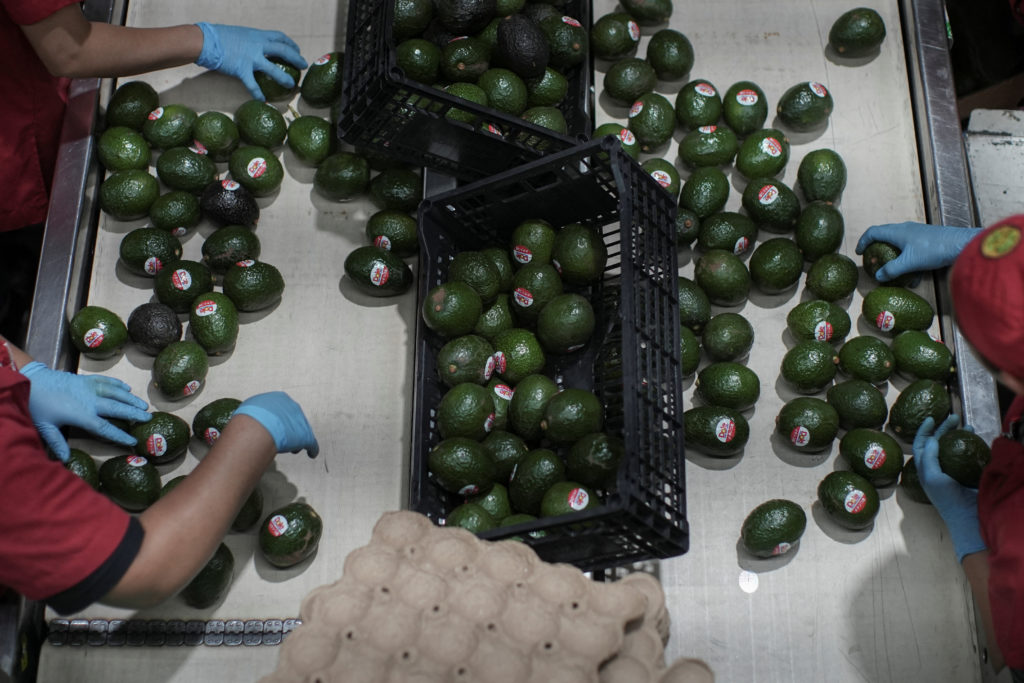
Mexico sent 1,500 more troops to Michoacan to increase security after the U.S. paused government work in the area due to a threat. The suspension included stopping avocado inspections needed for exporting to the U.S., which buys most of Mexico’s avocados.
Key Facts
Mexico deployed 1,500 additional troops to Michoacan state to improve security.
The U.S. stopped government activities in Michoacan because of a vague threat to its interests.
Avocado inspections required for exports to the U.S. were halted during the suspension.
Over 80% of avocados eaten in the U.S. come from Mexico.
Mexican avocado sales to the U.S. are worth $3.7 billion in 2025.
Mexican President Claudia Sheinbaum said the increased security aims to restart exports quickly.
The move seeks to protect Mexico’s economy and the U.S. avocado supply.
Read the Original
Want the full story? Tap a source to open the original
article.
The European Union rejected Supermac's request to register its name as a trademark because it is too similar to McDonald's Big Mac trademark. The EU said people might confuse Supermac's with McDonald's Big Mac in some EU countries, but this ruling does not affect Supermac's business in Ireland.
Key Facts
Supermac's is an Irish fast food chain founded in 1978 in Galway.
Supermac's applied for a trademark in the EU in May 2016.
McDonald's has held the Big Mac trademark in the EU for meat sandwiches since 1998.
The EU Intellectual Property Office ruled in June that Supermac's trademark is too close to Big Mac and could confuse English and German speakers.
The court said the strong recognition of Big Mac means there is a higher chance of confusion.
Supermac's argued both brands have coexisted in Ireland for 40 years without confusion.
McDonald's argued the issue is whether there is a conflict across the entire EU, not just in Ireland.
The ruling does not stop Supermac's from operating in Ireland.
Read the Original
Want the full story? Tap a source to open the original
article.
Credit card companies can raise your interest rate if you miss payments for more than 60 days, using a rule called a penalty APR. This higher rate can apply to your existing balance and stays until you make six on-time payments in a row. Card issuers must tell you about any rate increases before they happen.
Key Facts
Missing a credit card payment by more than 60 days can lead to a higher interest rate called a penalty APR.
The penalty APR can increase your interest rate by several points above the original rate.
Credit card companies must tell you about the penalty APR in the card’s terms before you open the account.
They must also send a notice at least 45 days before raising your rate.
The penalty APR can apply to your current balance, not just new charges.
The higher interest rate is not permanent; it must be reviewed and can be removed after six consecutive on-time payments.
A late payment under 60 days usually leads to late fees, not an increased interest rate.
If you struggle to pay, contacting your card issuer early may help, as they sometimes offer programs to reduce rates or fees temporarily.
Read the Original
Want the full story? Tap a source to open the original
article.
A 1-year certificate of deposit (CD) account can offer a safe way to earn interest on savings, especially for amounts like $75,000. Current CD rates range from about 4.15% to 4.40%, which can earn savers over $3,100 in interest after one year without market risk.
Key Facts
A CD is a savings account with a fixed interest rate for a set term, often safer than stock market investments.
Interest rates on CDs are currently higher than usual, making them attractive for savers.
For a $75,000 deposit, at rates between 4.15% and 4.40%, the interest earned after one year ranges from $3,112.50 to $3,300.
Online banks generally offer better CD rates than banks with physical branches.
Savers must keep their money in the CD for the full term (one year) to avoid early withdrawal penalties.
Those unsure about locking funds for a year might consider CDs with shorter terms.
Comparing rates and terms through online marketplaces can help find the best CD offers.
CDs provide a predictable return without exposure to stock market ups and downs.
Read the Original
Want the full story? Tap a source to open the original
article.
A recent study by Bankrate shows most U.S. homebuyers pay about $3,300 more per year on their mortgages than they need to. This happens because they do not compare offers from different lenders, missing out on better rates.
Key Facts
About 87% of homebuyers do not get the lowest mortgage rate available.
On average, borrowers overpay $3,300 per year on their mortgage.
Since 2022, U.S. homebuyers have collectively overpaid about $65 billion annually.
The extra costs add up to around $78,186 over a typical 30-year mortgage.
Overpayment varies by state, with Pennsylvania and Oregon having the highest rates.
Borrowers miss better rates by about 0.8% on average in some regions.
Overpaying happens because many people do not shop around or negotiate mortgage rates.
Checking multiple mortgage offers and negotiating can save a significant amount.
Read the Original
Want the full story? Tap a source to open the original
article.
Goodwin, a British engineering company, is thinking about selling a large part of its mechanical engineering business, which supplies parts for defence and nuclear projects. The company is reviewing its options with help from advisors but has not decided to sell yet.
Key Facts
Goodwin is based in Stoke-on-Trent and works in mechanical engineering.
The business supplies parts to major UK and US defence projects, like the Royal Navy's Type 26 frigates and Dreadnought-class submarines.
Goodwin’s mechanical engineering division includes Goodwin Steel Castings, Goodwin International, Noreva, Easat, and Pumps.
The company started a review to consider selling a “substantial part” of this division to increase value for shareholders.
Rothschild & Co is advising Goodwin during this strategic review.
Goodwin’s shares rose about 10% after news of the potential sale.
The company has been helped by increased defence spending but previously lost some contracts causing challenges.
Goodwin was founded in 1883 and is mainly owned by the Goodwin family; it is listed on the London Stock Exchange.
Read the Original
Want the full story? Tap a source to open the original
article.
The article says the United States needs to invest more in processing light crude oil. It suggests doing this will help the country avoid problems if key supply points are blocked.
Key Facts
The article focuses on the importance of refining light crude oil in the U.S.
Light crude oil is a type of oil that is easier and cheaper to process into fuels.
Investing in refining can protect the U.S. from disruptions at important supply locations (called chokepoints).
Chokepoints are narrow routes that oil shipments pass through, which can sometimes be blocked.
Strengthening refining capacity helps the U.S. have more stable fuel supplies.
The article gives three main reasons for why investing in light crude refining is urgent.
Read the Original
Want the full story? Tap a source to open the original
article.
Credit card companies start trying to collect missed payments quickly, using fees and calls. If payments are not made for about six months, banks may mark the debt as unlikely to be paid and pass it to collection agencies, which can try to collect for years. Legal time limits exist for suing over debts, but collection efforts can continue even after those limits expire.
Key Facts
Americans owe record amounts in household debt, with credit cards being a large part.
Average credit card interest rates are about 22%, making debts expensive.
Missing payments leads to late fees, extra charges, and collection efforts.
Creditors usually begin collection activities soon after a missed payment.
After about 180 days without payment, a credit card company charges off the debt but may still try to collect.
Charged-off debts can be sold to collection agencies, which may contact borrowers for years.
Different agencies can own the same debt over time and try to collect separately.
States have laws limiting how long creditors can sue for unpaid debts, but collectors may still ask for payment after that.
Read the Original
Want the full story? Tap a source to open the original
article.
Homeowners insurance prices in the U.S. have risen significantly from 2018 to 2024, with insurers also cutting back coverage in many areas. The West saw the highest premium increases and the most policy cancellations, while the Southeast had the highest average premiums overall.
Key Facts
Homeowners insurance premiums rose faster than inflation in all U.S. regions between 2018 and 2024.
Premiums increased by 18.3% in the Northeast, 24.7% in the Midwest, 26.5% in the Southeast, and 43.3% in the West.
The Southeast had the highest average premium in 2024 at $1,818 per year; the Northeast had the lowest at $1,396.
Insurers canceled or did not renew many policies, especially in the West where nonrenewals rose by 216%.
Overall, one-third of all homeowners insurance policies in 2024 were in the West.
Coastal regions face the largest premium increases and insurer pullbacks due to higher risk from natural disasters.
Rising costs are linked to more frequent severe weather, expensive building materials, and higher reinsurance costs.
Lawmakers and regulators are trying to address the shrinking insurance market in disaster-prone states like California and Florida.
Read the Original
Want the full story? Tap a source to open the original
article.
Since 2019, the typical full-time American worker’s pay rose significantly, by about 38%, but most of this increase was offset by rising prices. After accounting for inflation, workers have about $70 more per week to spend, a modest gain over seven years.
Key Facts
The typical American worker earned $1,250 per week in early 2026, up $342 from before the pandemic.
Consumer prices increased by 30% from 2019 to 2026, eroding about 80% of wage gains.
After inflation, the typical worker’s real pay increased about 6% over seven years, less than 1% per year.
Pay increases were uneven: half of workers outpaced inflation, one quarter matched it, and one quarter lagged behind.
Lower-paid jobs like nursing aides and waiters saw pay rises above inflation, while teachers and postal workers lost purchasing power.
Police officers’ real pay grew nearly 10%, but registered nurses’ pay stayed flat after inflation.
Postal workers rejected a contract offering about 1.3% annual wage increases, marking their first such rejection since 1978.
Overall, the wage growth after inflation since 2019 is better than most seven-year periods since 1979.
Read the Original
Want the full story? Tap a source to open the original
article.
A $10,000 certificate of deposit (CD) with a 3-year term can earn between $1,330 and $1,412 in interest at current rates of about 4.25% to 4.50%. CDs protect your initial money and offer a fixed interest rate, making them a safe choice for those who want steady growth without market risk.
Key Facts
Current top 3-year CD interest rates range from 4.25% to 4.50%.
A $10,000 CD opened now will earn roughly $1,330 to $1,412 in interest over three years.
CDs guarantee your principal and interest, unlike investments that can lose value.
High-yield savings accounts offer similar interest rates (about 4.10%) but rates can change and are not guaranteed.
CDs charge fees if you withdraw money early, so accessibility is limited.
Inflation and possible Federal Reserve rate hikes make fixed rates of about 4% attractive now.
Ordinary savings accounts have much lower rates (average 0.38%), meaning they earn less interest.
Online marketplaces can help compare CD rates from different banks quickly.
Read the Original
Want the full story? Tap a source to open the original
article.
US domestic airfares are much higher than last year, rising around 26.5%, partly due to higher jet fuel prices caused by the US-Iran conflict and limited oil refining capacity. Even if a ceasefire lowers oil prices, experts say airfares are likely to stay high because of ongoing airline costs, reduced flight capacity, and strong travel demand.
Key Facts
US domestic airfares increased 26.5% compared to the previous year.
Global airfares are up about 25-30% compared with 2025.
Jet fuel prices rose sharply due to the Iran war, reaching about $149 per barrel in August from $90 at the start of 2026.
Only about 10% of refined oil becomes jet fuel, making its supply more sensitive to disruptions.
Several oil refineries have closed, reducing jet fuel supply and driving prices higher.
Airlines spend 30-35% of their operating costs on jet fuel.
Flight capacity is limited by delays in aircraft deliveries and staffing issues at the FAA, keeping fares high.
Even with potential easing of conflict, it may take about a year for jet fuel and airfare prices to return to normal levels.
Read the Original
Want the full story? Tap a source to open the original
article.
A recent Gallup survey shows that about 20% of U.S. adults who sought financial advice in the past year used artificial intelligence (AI) tools, but only a small number trust AI strongly for managing money. Most Americans trust financial advisers more, though many rely on their own internet research or family and friends for financial guidance.
Key Facts
About 1 in 5 Americans who sought financial advice recently used AI tools.
Only around 30% of U.S. adults have some or great confidence in AI’s financial expertise, with just 3% trusting it a great deal.
Roughly 80% of adults have some confidence in professional financial advisers.
Despite this trust, only about one-third of those seeking advice actually used a professional adviser.
About 73% relied on their own internet searches for financial guidance.
Younger adults (Gen Z and millennials) are more likely to use AI for financial advice than older adults.
Cost may prevent younger adults from hiring financial advisers, so they turn to lower-cost options like AI and internet research.
Financial experts recommend using AI mainly to learn about financial concepts, combined with advice from trusted sources.
Read the Original
Want the full story? Tap a source to open the original
article.
A recent study shows that many working parents want job security, mental health support, and good pay more than extra workplace perks. Even though some companies offer flexible work options, many parents still find it hard to balance family needs with job demands, especially as COVID-19 era policies are reduced. Experts say having family-friendly workplace rules is not enough if employees don’t feel safe using them.
Key Facts
85% of working parents say job security and stability are very important for work satisfaction.
83% value mental well-being support, and 82% prioritize compensation and benefits.
Only 63% of parents feel they have enough opportunities to work from home, which is below the national average of 65%.
Just 69% of working parents are comfortable talking about mental health with their direct manager, compared to 72% overall.
Employers often make the mistake of creating family-friendly policies without ensuring employees feel safe using them without career risk.
Challenges for working parents include childcare timing not matching work schedules and the difficulty of starting work early with children’s needs.
Some companies, like Cisco, offer extended paid parental leave and family support benefits.
Workplace culture, like allowing employees to easily take time off for family reasons, also helps parents balance work and home life.
Read the Original
Want the full story? Tap a source to open the original
article.
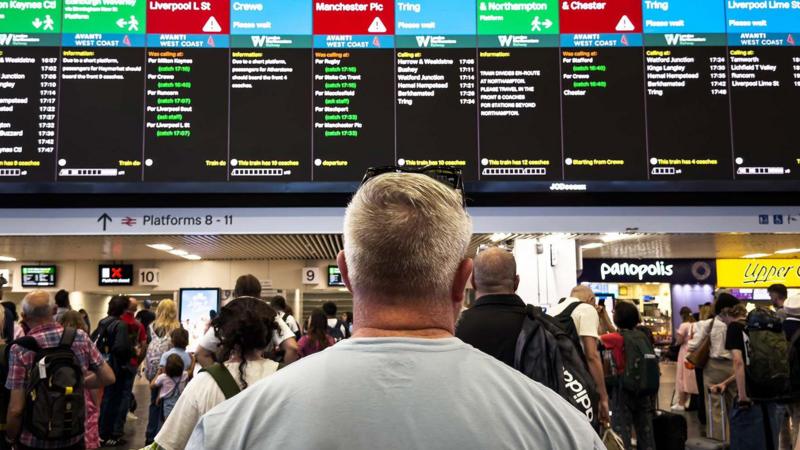
A brief power outage at Network Rail’s control centre in Manchester caused major disruptions to train services across the North West of England. The backup power did not activate quickly enough, impacting signalling systems and causing delays while repairs were made.
Key Facts
The power cut lasted about 90 seconds at Network Rail’s Manchester operating centre.
Backup power failed to start as quickly as expected, causing signalling systems to stop working.
Signalling systems control train traffic, so trains had to be stopped during the outage.
Some signal system parts were damaged and needed replacement, causing longer delays.
The Manchester operating centre manages a large part of the railway network in the North West.
Network Rail is investigating the incident and working on improving system resilience.
Network Rail has moved from many old signal boxes to 12 centralised Rail Operating Centres across Great Britain.
Experts warn that centralising controls makes the network more vulnerable if one centre fails.
Network Rail receives government funding every five years; the latest budget started in 2024 with £44.1 billion allocated.
Read the Original
Want the full story? Tap a source to open the original
article.
Section 301 tariffs were created by Congress to be precise tools in economic policy, aiming to address specific trade issues without causing widespread harm. These tariffs are meant to target particular problems rather than apply broad, heavy-handed trade restrictions.
Key Facts
Section 301 is a law passed by Congress related to trade policy.
It allows the U.S. government to impose tariffs as a form of economic diplomacy.
The goal is to use these tariffs carefully to solve trade disputes.
Tariffs under Section 301 are designed to be targeted, not broad or excessive.
This approach aims to fix problems without damaging the overall economy.
The law reflects a preference for precise actions rather than large-scale trade wars.
Section 301 has been used in recent years for trade negotiations with other countries.
Read the Original
Want the full story? Tap a source to open the original
article.
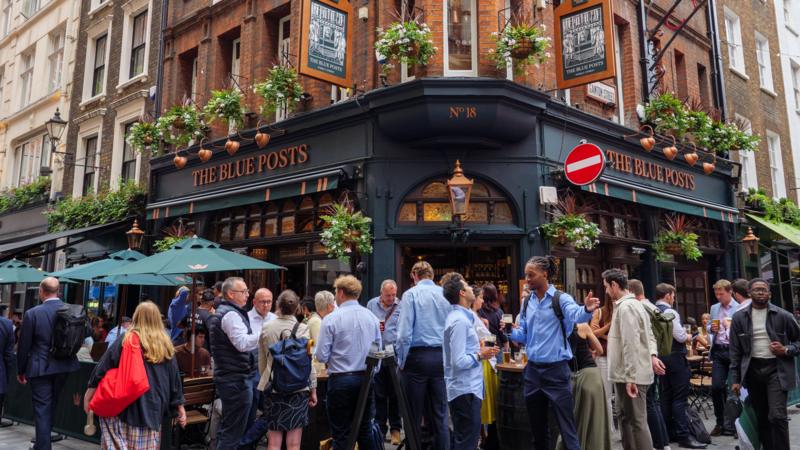
Westminster City Council in London is proposing new rules to reduce standing drinking ("vertical drinking") in pubs and bars in central areas like Soho to manage noise and overcrowding. The council says it wants more seating and table service to create a better environment, but some business groups and politicians disagree with these plans.
Key Facts
Vertical drinking means standing up to drink, often outside pubs or bars.
Westminster has about 500 pubs, bars, and wine bars, and nearly 1,750 cafes and restaurants.
The council's draft policy aims to discourage excessive drunkenness and encourage seated drinking with table service.
The plan includes refusing new licenses for places in a busy part of London called the West End cumulative impact zone.
Westminster City Council denies plans to ban standing drinking outright.
Some local business groups say the council is trying to reduce venue capacities and change Soho’s character.
London’s Mayor Sadiq Khan said nightlife areas need a supportive approach, not restrictive rules.
A Labour spokesperson highlighted the importance of busy pubs for jobs and local culture.
Read the Original
Want the full story? Tap a source to open the original
article.