Investigators solved a 30-year-old murder case using advanced DNA technology and artificial intelligence (AI). A company called Othram used DNA from relatives in consumer databases to identify the killer, and AI helped police organize thousands of pages of case information to focus their efforts.
Key Facts
Randy Gail Sperino was murdered in 1993, and her killer was unknown for decades.
Traditional DNA tests could not find a match in law enforcement databases.
Detectives sent DNA evidence to Othram, a company specializing in investigative genetic genealogy.
This technique uses DNA from distant relatives in commercial ancestry databases to help identify suspects.
The DNA clues led police to Albert "Buddy" Zigler, who confessed and was charged in 2024.
AI software called Centerline AI helped analyze over 2,000 pages of case files to find important evidence.
Investigative genetic genealogy combines DNA data with public records to build family trees.
This approach is seen as a new tool to solve cold cases and identify unidentified remains.
Read the Original
Want the full story? Tap a source to open the original
article.
A new poll shows that many Americans now think tech company leaders are mainly Republicans. This is a big change because Silicon Valley, where many tech firms are based, was once seen as mostly liberal.
Key Facts
The poll was published by Politico on a Monday.
Americans were asked about the political views of eight current or former tech company leaders.
Many respondents believed these tech CEOs are members of the Republican Party (GOP).
This contrasts with the past view that Silicon Valley tech leaders lean liberal.
The change shows a shift in how people see tech executives’ political opinions.
The poll included questions about both real and made-up tech CEOs.
Even fake names were often linked to the Republican Party by respondents.
Read the Original
Want the full story? Tap a source to open the original
article.
Elon Musk said he thinks merging his two companies, Tesla and SpaceX, would be a good idea. Both companies have special committees looking into the possibility, but no final decision has been made yet.
Key Facts
Elon Musk is considering merging Tesla and SpaceX.
He described the merger as a good idea during a call with financial analysts.
Both companies have formed special committees to review the idea.
The committees have not yet agreed on any terms for a merger.
Any merger would require approval from the companies’ shareholders.
Musk emphasized that a merger is possible but not certain.
The discussion happened during an update on SpaceX’s quarterly business results.
More details about the merger consideration will be shared as they become available.
Read the Original
Want the full story? Tap a source to open the original
article.
Microsoft is planning new gaming hardware called Project Helix, with a handheld device expected by the end of next year and a console set for release in 2028. The console could cost between $1,200 and $1,800, reflecting higher costs for advanced gaming technology.
Key Facts
Project Helix will include a next-generation handheld device planned for late 2025.
Microsoft aims to release a new gaming console during the 2028 holiday season.
The projected price for the 2028 console ranges from $1,200 to $1,800.
Microsoft may lower the price by subsidizing the cost, as some other console makers do.
Higher prices reflect challenges like slower improvements in chip technology and shortages of AI components.
Internal disagreements exist over whether the handheld will use a simplified Windows or a custom Xbox operating system.
Microsoft has pushed to speed up the Project Helix development timeline by several months using AI tools.
Xbox Game Pass could shift to a new system where players select and pay for specific features like cloud gaming or multiplayer separately.
Read the Original
Want the full story? Tap a source to open the original
article.
Polymarket removed a betting contract that let people wager on whether seven men accused of raping a Cornell student would face felony charges. The company took down the market after public criticism and because U.S. rules prohibit trading on illegal activities.
Key Facts
Polymarket offered a contract to bet on felony charges against seven men accused of rape at Cornell University in 2024.
The market opened on Sept. 30 and closed early after reaching over $450,000 in betting volume.
U.S. rules ban trading on events related to illegal actions, which affected Polymarket as its U.S. platform is regulated.
Polymarket said it removed the market after hearing public feedback, despite its goal to provide data-driven insights.
The betting platform has celebrity endorsements including LeBron James and partnerships with major sports leagues.
The accused men deny the allegations, saying interactions were either consensual or they were not involved.
Critics online called the betting contract offensive and questioned celebrity involvement with Polymarket.
Polymarket has had other controversial markets, including bets on political and military events.
Read the Original
Want the full story? Tap a source to open the original
article.
JustWatch, a company known for helping people find movies across streaming services, has started its own streaming service called JustWatch TV. It offers a mix of free movies with ads, rental options, and a subscription without ads for $4 per month or $50 for a limited-time lifetime pass.
Key Facts
JustWatch has been a streaming guide since 2015, helping users find where to watch movies online.
JustWatch TV launched with some movies free to watch with ads, such as Green Room (2015) and Locke (2013).
Users can rent movies or pay for a subscription to watch without ads.
Subscription options are $4 per month or $50 for a lifetime subscription, available for a limited time.
JustWatch TV’s library has a few hundred titles and includes some older or less common movies.
The service partners with 30 content providers, including Paramount and New Regency.
JustWatch TV expects to help its advertising business by providing deeper audience data for digital ad campaigns.
The JustWatch streaming guide has 50 million users and aims for 100 million monthly users for JustWatch TV in the future.
Read the Original
Want the full story? Tap a source to open the original
article.
Meta removed the word "train" from its commercial terms of service after experts raised concerns about the company using business page content for AI training without permission. Meta says the updated terms only allow limited data use for advertising and business products and that website owners can still use robots.txt files to limit data scraping.
Key Facts
Meta changed its commercial terms of service, removing the word "train" related to AI use.
The terms allow Meta to periodically collect data from business users' websites to improve ads and business products.
Experts worry Meta’s language is still broad and could allow extensive data use, including AI training.
Meta says their updates do not change current web crawling practices and don’t give new rights over content owners’ preferences.
Website owners can use a file called robots.txt to signal if they want to block data scraping.
Complying with robots.txt is voluntary, and experts want Meta to explicitly respect these settings in their terms.
Meta did not notify users about the change in terms before announcing them.
Some legal experts believe the updated terms do not fully protect business page users from unwanted data scraping.
Read the Original
Want the full story? Tap a source to open the original
article.
Google is adding a feature called Personal Intelligence to cars using Android Auto and Google Built-in systems. This feature allows the car’s AI to use personal data from apps like Gmail and Calendar to give better and more helpful responses, such as guiding you to appointments without needing detailed commands.
Key Facts
Personal Intelligence is part of Google’s Gemini AI and uses personal data to improve answers.
It was first a paid feature but later became available to all Gemini users.
The feature is now rolling out to cars with Android Auto and Google Built-in systems.
Google Built-in means the car’s infotainment system uses Google software directly, not just a phone projection.
Personal Intelligence helps drivers by using calendar info and photos for easier navigation commands.
The feature is off by default and must be enabled in settings.
Users can control what data apps (like Gmail, Calendar, Photos) the AI can access.
Google states it doesn’t use personal data to train the AI but collects input and output data during use.
Read the Original
Want the full story? Tap a source to open the original
article.
OpenBSD 8.0, the latest version of the security-focused operating system, has been released as the project’s 61st update. This version adds support for new Intel graphics cards, increases memory mapping capability, and includes improvements for ARM64 and RISC-V systems.
Key Facts
OpenBSD 8.0 is the 61st release since the project started in 1996.
The system has had only two security holes that could be accessed remotely in over 30 years on default installs.
New support is added for Intel Arc A-Series graphics cards.
The virtual address space for AMD64 systems increased from 4 GB to 512 GB, allowing more video memory use.
ARM64 systems now have hibernation support (a low-power sleep mode).
The operating system improves virtualization, allowing up to 64 virtual CPUs per virtual machine.
Various wireless drivers were updated for better performance and compatibility.
Support for Loongson architecture has been dropped due to compiler issues.
Read the Original
Want the full story? Tap a source to open the original
article.
Security experts found eight internet security certificates with extremely weak private keys that could let hackers create fake trusted certificates for any website or app. Major browsers and some software have already blocked these certificates, but fixing the problem everywhere will take a long time because many devices and systems need updates.
Key Facts
Eight TLS (Transport Layer Security) certificates from Indian company eMudhra have very weak private keys.
These weak keys could allow someone to create fake trusted certificates that browsers and apps accept as real.
Browsers and some programming languages stopped trusting these impacted certificates to protect users.
No evidence yet shows the keys were used for attacks or to create fake certificates.
The problem is compared to the 2014 Heartbleed security bug, which took years to fix fully.
The size of these private keys was much smaller than normal, making them dangerously insecure.
Fixing things will be slow because many devices like IoT (Internet of Things), Linux systems, and apps must be updated.
VPN users might face the most immediate security risks from this issue.
Read the Original
Want the full story? Tap a source to open the original
article.
This episode of Tech Life explores advances in semiconductor technology, including the production of very thin and flexible computer chips. It also features a discussion with Canada’s AI Minister and shows how drones are used to monitor areas affected by fires.
Key Facts
The episode visits a plant that makes flexible and super-thin semiconductor chips.
Semiconductors are materials used to make computer chips that power electronic devices.
Canada’s AI Minister talks about artificial intelligence and related policies.
Drones equipped with thermal sensors help check fire-damaged landscapes.
Thermal drones capture heat patterns to assess damage from wildfires.
The program aims to show how new technologies are developed and used in real life.
Shiona McCallum is the presenter of the episode.
The episode is part of the BBC World Service “Tech Life” series.
Read the Original
Want the full story? Tap a source to open the original
article.
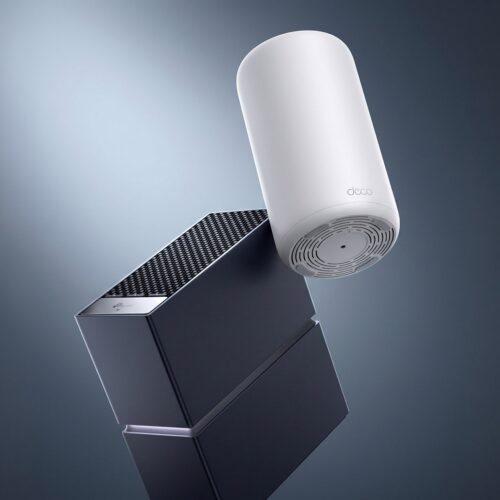
TP-Link plans to start assembling its new Wi-Fi 8 routers in the United States, hoping to gain approval from the Trump administration to sell these devices to American consumers. The company aims to begin US assembly as early as 2027 but still needs government permissions because of current bans on foreign-made routers.
Key Facts
TP-Link announced it wants to assemble Wi-Fi routers in the US to meet Trump administration rules.
The company expects US assembly to start as early as 2027, possibly delaying to 2028.
TP-Link signed an agreement with Keytronic, a US company, to assemble routers in Mississippi.
The Federal Communications Commission (FCC) currently bans selling routers made wholly or partly outside the US.
TP-Link was founded in China but moved its headquarters to California in October 2024 and says it is now an independent US company.
Most router parts come from China, even though assembly occurs in Vietnam now.
The FCC has not given clear rules on how much US manufacturing is needed to lift the ban.
TP-Link offers to invest nearly $1 billion in American factories and create hundreds of jobs if allowed to sell its devices in the US.
Read the Original
Want the full story? Tap a source to open the original
article.
Many Americans are worried about the rise of big tech companies, especially the impact of artificial intelligence (AI) and datacenters on communities and society. Activist groups across the U.S. are working to stop datacenter expansion, expressing concerns about climate, democracy, mental health, and control over technology.
Key Facts
Sam Altman, head of OpenAI, said some negative effects of AI should be accepted for its benefits.
Most Americans want to pause AI development, as shown in surveys.
Opposition to AI datacenters influenced several races in the recent midterm elections.
At least 142 activist groups in 24 states are organized to block datacenter construction.
Local concerns include effects on land, water, electricity costs, and noise, with few local jobs created by datacenters.
Critics worry tech companies override public opinion and push harmful technology.
A sense of united opposition to big tech exists across political groups.
The pope recently warned that algorithms lack humanity and urged protection of human values.
Read the Original
Want the full story? Tap a source to open the original
article.
The United States has not introduced a new medium-lift rocket in 13 years since the Antares rocket debuted. Several new medium-lift rockets are being developed with modern designs and U.S.-built engines, aiming to replace the soon-to-be unavailable SpaceX Falcon 9 for satellite launches between 2027 and 2030.
Key Facts
The Antares rocket was the last new medium-lift rocket in the U.S., first launched 13 years ago.
Antares used old Soviet-era engines and a Ukrainian core stage, and suffered a notable explosion in 2014.
Medium-lift rockets can carry between 2 and 20 metric tons to space.
New rockets under development have engines made in the U.S. by their own manufacturers.
SpaceX will stop selling Falcon 9 launches after 2028, creating uncertainty in the launch market.
Larger rockets like Vulcan and New Glenn are expensive and booked up for small to medium satellites.
Stoke Space is developing the Nova rocket, targeting a launch around mid-2027 with a fully reusable design.
Launch customers are uncertain about booking flights for 2027-2030 due to unclear availability of new rockets.
Read the Original
Want the full story? Tap a source to open the original
article.
Quantum computers need groups of linked qubits called logical qubits to detect and fix errors during calculations. Quantinuum has shown their new hardware can improve error correction significantly as the logical qubit size grows, making progress beyond the important breakeven point.
Key Facts
Quantum computers use logical qubits, which are groups of hardware qubits linked to find and correct errors.
Adding more hardware qubits can help catch errors better, but it also raises the chance of errors because hardware qubits are imperfect.
The breakeven point is when adding more qubits actually improves error rates rather than making them worse.
Quantinuum’s latest hardware can scale logical qubits well beyond breakeven, improving error correction by about 10 times with each increase in size.
Previous systems showed smaller improvements, often about twice better per increase in logical qubit size.
Error correction codes organize how qubits are linked and measured to find errors, with "distance" showing how many errors can be handled at once.
Better scaling means fewer increases in logical qubit size are needed to achieve very low error rates suitable for complex quantum algorithms.
Quantinuum uses trapped ion technology for its quantum computers, which involves trapping charged atoms as qubits.
Read the Original
Want the full story? Tap a source to open the original
article.
The Axios Media Trends Live summit on October 20 will feature discussions with top leaders from media, technology, entertainment, and sports. They will talk about current changes in media and the future of publishing, entertainment, advertising, and technology.
Key Facts
The event is on October 20 at 2:55 p.m. Eastern Time.
Participants include CEOs and top executives from iHeartMedia, Anonymous Content, Trump Media & Technology Group, Versant, United Wholesale Mortgage, Range Media Partners, Hearst, and Dow Jones.
The summit also includes the Wall Street Journal’s editor-in-chief and the FCC Commissioner Anna Gomez.
Actor and comedian Kenan Thompson and writer-producer Lena Waithe will also take part.
Topics include trends transforming the media industry and the future of various fields like publishing and advertising.
There will be special segments called "View from the Top" sponsored by BBC Studios and CIVIC Entertainment Group.
The event aims to present insights into how media and technology businesses are changing and evolving.
Read the Original
Want the full story? Tap a source to open the original
article.
OpenAI has bought Orchestra Bio, a company that builds AI tools to help drug companies manage their work. OpenAI will combine Orchestra Bio’s technology with its own AI tools to help scientists in life sciences research.
Key Facts
Orchestra Bio makes AI agents that help track drug development and spot potential delays.
OpenAI will add Orchestra Bio’s team and tech to its Rosalind AI tools for biology and medicine.
The money paid for the acquisition was not shared publicly.
AI companies like OpenAI and Anthropic are both trying to use AI for science and medicine.
Anthropic recently bought Coefficient Bio, another AI biotech company, for about $400 million.
OpenAI works with big drug companies like Novo Nordisk and Moderna to improve drug research.
Developing new medicines usually takes 10 to 15 years; AI aims to make this faster.
The AI field is moving from just building AI models to using them in real industries like health care and drug discovery.
Read the Original
Want the full story? Tap a source to open the original
article.
Meta is involved in lawsuits over using pirated books for AI training. A judge ordered the company to reveal which executives approved downloading these illegal book collections. Authors and publishers claim Meta knowingly downloaded and shared copyrighted works.
Key Facts
Meta downloaded large amounts of books from pirate sites like Anna’s Archive and LibGen to build AI data.
The company tried to blame lower-level staff for downloading the pirated books, claiming no executives made decisions.
A judge ruled Meta must name executives who authorized or approved the use of pirated book collections.
Authors and publishers accuse Meta of deliberately encouraging copyright infringement.
Internal messages show some staff were uncomfortable with the piracy but received approvals from higher-ups.
Evidence suggests Mark Zuckerberg may have been involved or informed about the piracy.
Meta is required to produce server logs and records showing who managed the downloads.
This discovery could provide stronger proof that Meta illegally copied and shared copyrighted works.
Read the Original
Want the full story? Tap a source to open the original
article.
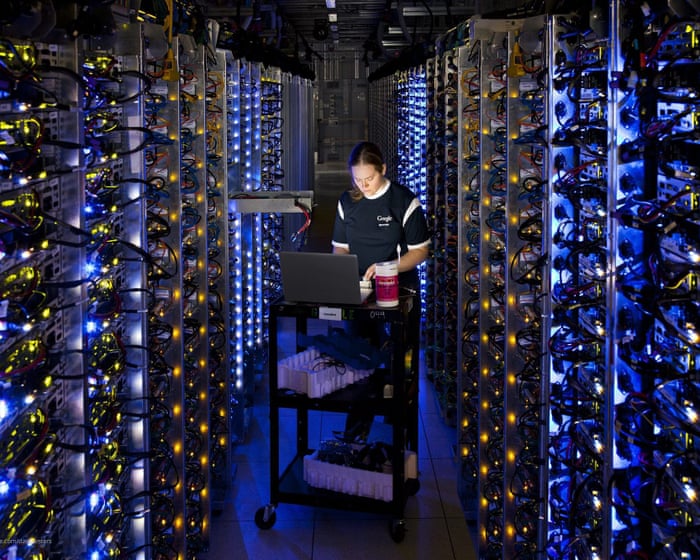
A power outage at a Google datacentre in London caused disruptions to multiple UK services, including banks, the NHS app, and court video hearings. The issue peaked around 9 a.m. but improved by mid-afternoon, highlighting how many important services rely on a few major cloud providers.
Key Facts
The outage occurred in Google’s europe-west2-b datacentre zone in London.
Services affected included Royal Mail, Revolut, HSBC, Lloyds bank, NHS app, and UK courts’ remote hearings.
Revolut confirmed service disruptions but said customers’ money and data are safe.
The peak of disruptions was around 9 a.m., with improvements by mid-afternoon.
This outage was smaller than last year’s Amazon Web Services (AWS) outage, which lasted about 15 hours.
Experts warn that the internet and many important services depend heavily on a few large cloud companies called “hyperscalers.”
UK government infrastructure heavily relies on cloud services from Google, Amazon, and Microsoft.
Last year’s AWS outage was linked to a software bug and AI tools, raising questions about the reliability of AI-generated code in cloud services.
Read the Original
Want the full story? Tap a source to open the original
article.
Scientists found that when cancer cells are squeezed tightly for a long time, they can trigger a process that leads to their self-destruction. This discovery helps explain how physical stress inside tumors may stop some cancer cells from spreading.
Key Facts
Researchers from several Chinese universities studied how cancer cells react to being confined in tight spaces.
They used 3D models to simulate the physical pressure cancer cells face while moving through tissues.
Cancer cells enter a fast-moving state called mesenchymal-to-amoeboid transition (MAT) to squeeze through narrow spaces.
Prolonged confinement caused the cancer cells to stop moving and activate a built-in death program triggered by a protein called MLKL.
Before dying, cancer cells lose their shape and ability to invade other tissues.
Cancer cells with low MLKL can resist death and become more aggressive, which may make tumors harder to treat.
This mechanism was seen in multiple types of cancer cells, suggesting it could be common.
MLKL could potentially be used as a marker to predict how likely a tumor is to grow and spread.
Read the Original
Want the full story? Tap a source to open the original
article.