Scientists found that when cancer cells are squeezed tightly for a long time, they can trigger a process that leads to their self-destruction. This discovery helps explain how physical stress inside tumors may stop some cancer cells from spreading.
Key Facts
Researchers from several Chinese universities studied how cancer cells react to being confined in tight spaces.
They used 3D models to simulate the physical pressure cancer cells face while moving through tissues.
Cancer cells enter a fast-moving state called mesenchymal-to-amoeboid transition (MAT) to squeeze through narrow spaces.
Prolonged confinement caused the cancer cells to stop moving and activate a built-in death program triggered by a protein called MLKL.
Before dying, cancer cells lose their shape and ability to invade other tissues.
Cancer cells with low MLKL can resist death and become more aggressive, which may make tumors harder to treat.
This mechanism was seen in multiple types of cancer cells, suggesting it could be common.
MLKL could potentially be used as a marker to predict how likely a tumor is to grow and spread.
Read the Original
Want the full story? Tap a source to open the original
article.
China responded to a U.S. government ban on AI products from the Chinese company DeepSeek. The U.S. Department of Homeland Security said DeepSeek’s AI could pose security risks and ordered its removal from government systems, while China warned it might take retaliatory actions.
Key Facts
The U.S. Department of Homeland Security (DHS) ordered the removal of DeepSeek AI products from U.S. government systems.
The ban was issued in July but officially published recently.
DHS stated that DeepSeek's AI models present “multiple threat vectors,” meaning possible security dangers.
DeepSeek is a Chinese artificial intelligence startup company.
China criticized the U.S. ban and hinted at possible retaliation.
The issue involves concerns about technology security and government use of AI.
This action is part of broader tensions between the U.S. and China over technology and security.
Read the Original
Want the full story? Tap a source to open the original
article.
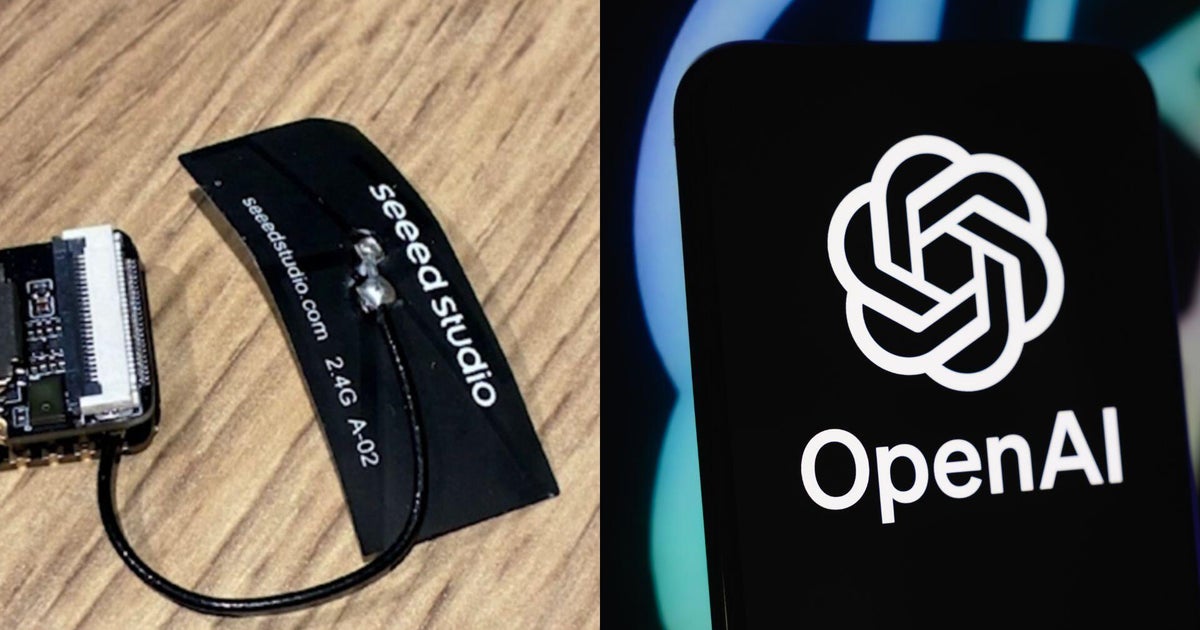
A former OpenAI engineer has been accused by federal investigators of secretly placing a surveillance device, or bug, inside an OpenAI office. The engineer is also reported to have had close communication with a member of the Saudi royal family.
Key Facts
The engineer once worked for OpenAI, a company known for artificial intelligence research.
Federal investigators accuse this person of planting a listening device in OpenAI offices.
The engineer allegedly communicated closely with a Saudi royal family member.
This case involves concerns about spying and security within a major tech company.
The investigation is ongoing and detailed information is still emerging.
The news highlights the risks of insider threats in tech companies.
No official statement from OpenAI or the accused engineer is included yet.
The connection to Saudi royals could indicate international implications.
Read the Original
Want the full story? Tap a source to open the original
article.
A former OpenAI engineer, Abdulrahman Alfozan, was arrested in early October for allegedly placing a hidden recording device in the company’s offices. Prosecutors said he was planning to travel to Saudi Arabia when the arrest happened.
Key Facts
Abdulrahman Alfozan worked as an engineer at OpenAI.
He is 35 years old and a Saudi national.
He was accused of secretly placing a bugging device in a conference room at OpenAI.
Federal prosecutors arrested him in early October.
At the time of arrest, he was preparing to leave the United States and travel to Saudi Arabia.
The recording device was hidden to capture conversations without consent.
The case is being handled by U.S. federal law enforcement authorities.
Read the Original
Want the full story? Tap a source to open the original
article.
A new computer program called Darmok has solved the final puzzle of the Times’s annual cryptic crossword competition faster than the youngest human winner. Darmok, built using advanced AI models, demonstrates significant progress in understanding and solving complex word puzzles that involve puns, wordplay, and visual clues.
Key Facts
Darmok solved the Times’s cryptic crossword final puzzle about three minutes faster than Liam Hughes, the youngest human winner.
Cryptic crosswords are hard because they use wordplay, puns, and tricky clues that are different from regular crosswords.
The AI earlier struggled but improved thanks to combining several advanced models, including Gemini 3.1 Pro, Claude Fable 5, GPT-5, and GPT-6 Astra.
Darmok’s creator is Dr. Sid Chatterjee, a computer scientist at the University of Texas in Austin.
Darmok solves clues by interpreting both the language and visual hints, such as changing letters by removing parts of them.
Prior AI programs like WebCrow and Dr Fill succeeded with standard American crosswords but not cryptic crosswords until now.
The next challenge is for AI to create cryptic crosswords, which is a much tougher task than solving them.
Dr. Chatterjee compares beating cryptic crosswords to climbing Mount Everest, while creating them is like the even larger Olympus Mons challenge (the biggest volcano in the solar system).
Read the Original
Want the full story? Tap a source to open the original
article.
Polestar and researchers at the University of Oxford studied how driving a performance electric car affects the driver’s experience, not just the car’s speed. They tested two versions of the Polestar 4 on a track, measuring drivers’ physical reactions and feelings while driving.
Key Facts
Polestar worked with Oxford to study the human experience of driving performance electric cars.
12 drivers tested rear-wheel drive and all-wheel drive versions of the Polestar 4 crossover on a Swedish track.
Drivers wore heart rate monitors and electrode caps that tracked brain signals while driving.
The all-wheel drive Polestar 4 had 536 hp, much more power than the rear-wheel drive version.
The more powerful car accelerated 32% faster and needed 15% less steering effort.
Drivers rated the all-wheel drive car higher for overall experience and performance.
Drivers felt more trust, control, and focus with the all-wheel drive version, describing it like a “controlled roller coaster.”
The study shows people prefer cars that handle well, even if they don’t consciously think about handling.
Read the Original
Want the full story? Tap a source to open the original
article.
Many people are frustrated with smart TVs because of frequent software updates, slow performance, and privacy concerns. Some users prefer "dumb" TVs or disconnect their smart TVs from the internet to avoid being tracked and seeing unwanted ads.
Key Facts
Smart TVs often receive frequent updates that users find annoying and unhelpful.
Cheaper smart TVs can become slow over time due to heavy software and processing demands.
Some users only want to use their TVs for simple functions like watching broadcast TV or DVDs.
Privacy concerns arise because smart TVs can collect data and show targeted ads.
Some people choose to keep their TVs offline or use external devices like Apple TV for streaming.
Finding non-smart (dumb) TVs is becoming harder as most new models come with smart features.
Users with technical knowledge sometimes disable or remove smart functions to protect privacy.
The trend towards mandatory internet-connected TVs worries consumers who want to control their data.
Read the Original
Want the full story? Tap a source to open the original
article.
Wirecutter, a product review site by The New York Times, has shared its favorite technology products after 15 years of testing. Jason Chen from Wirecutter presented the most popular products chosen by readers.
Key Facts
Wirecutter is a part of The New York Times.
They have been testing and reviewing products for 15 years.
Jason Chen is a representative from Wirecutter who shared the top picks.
The focus is on technology products.
These products are selected based on reader preferences.
The list highlights items considered the best by extensive testing.
Read the Original
Want the full story? Tap a source to open the original
article.
Meta's new AI assistant, Muse, allows users to share conversations through special web links. Security researchers found that these links can be easily found online, exposing sensitive personal and business information that users did not intend to share publicly.
Key Facts
Muse is a general-purpose AI assistant created by Meta, which users can share conversations with via clickable web links.
These links usually have long, hard-to-guess text to protect privacy, but Muse’s design includes the conversation title in the web address.
Researchers from security company Claroc found 6,800 Muse links by searching public DNS records, then accessed hundreds revealing private information.
Exposed data included job search notes, company revenue reports, loan applications, bank fraud alerts, real estate performance details, and staff vacation calendars.
The URLs use the domain cf.metaaiusercontent.com, making it easier to locate them through public internet records.
The researchers called these easily discoverable shared pages “GhostShares” because people who were not given the links could still find them.
Muse quickly became popular on Apple’s App Store and requires access to many user accounts to perform tasks like booking appointments and making purchases.
Meta CEO Mark Zuckerberg described Muse as built with privacy and security in mind, but this design choice contradicts that claim.
Read the Original
Want the full story? Tap a source to open the original
article.
AI systems today can do some very complex tasks well but often struggle with simple, common-sense problems. Because AI can be very good at certain things but still make mistakes, human judgment is still needed to guide and check AI work, especially in jobs that do not have clear right or wrong answers.
Key Facts
Autonomous cars like Waymo crash less often than humans but make simple errors like parking violations.
Many people in rich countries expect AI to cause job losses in the next 20 years, but the kinds of jobs will also change.
AI is "jagged," meaning it is superhuman at some tasks but weak at others, often missing when it is wrong.
AI improves where results can be automatically checked but struggles where human judgment is needed to decide what is right.
New jobs are emerging where people check AI outputs, set limits on AI actions, and manage AI systems like a control tower.
Setting limits on AI is important and difficult, as AI can take harmful actions if not properly controlled.
Human experts most familiar with the real work will be needed to correct AI mistakes and guide AI projects.
Ford re-hired experienced engineers to oversee quality control after relying too much on automation, improving its quality ranking.
Read the Original
Want the full story? Tap a source to open the original
article.
The UK competition watchdog, the CMA, is asking Apple to allow more companies to use its contactless payment technology on iPhones and Apple Watches. The CMA wants Apple to lower the fees it charges and open access to boost innovation and competition in payment, travel, and ticket apps.
Key Facts
The CMA says Apple’s current fees and rules block other companies from creating new contactless payment services.
Apple charges firms for using its contactless payment system, which the CMA wants reduced.
Nearly 40% of payments in the UK are contactless, and Apple’s digital wallet is the most used.
The CMA proposes that Apple should allow apps to use Host Card Emulation (HCE), a common contactless payment technology Apple currently restricts in the UK.
Opening access could lead to new products like account payments, digital IDs, travel passes, and digital keys.
Since the EU forced Apple to open its tech, new payment apps like PayPal and Klarna have launched there.
Apple says its current system supports secure contactless payments and expanding access could reduce security and privacy.
The CMA believes more competition would help British tech companies innovate and grow.
Read the Original
Want the full story? Tap a source to open the original
article.
Slate has opened its first showroom in Chicago for its electric pickup truck called the Slate Truck. The truck, priced at about $25,000, has a simple design, manual window controls, and a projected driving range of 205 miles.
Key Facts
The Slate Truck is an electric pickup aimed at American buyers.
It costs $24,950, making it more affordable than many other electric trucks.
The truck has plastic panels and a minimalist interior with manual window winders.
It offers a driving range of about 205 miles on a full charge.
The showroom is located in Chicago’s Fulton Market District in a former Tesla store.
Customers can customize the interior colors of the truck and pre-order with a $300 deposit.
Only one prototype truck is currently on display, not a final production model.
The truck’s size is roughly similar to a Hyundai Santa Cruz with a 5-foot bed.
Read the Original
Want the full story? Tap a source to open the original
article.
SpaceX is set to launch its Bandwagon-5 mission from Cape Canaveral, Florida, carrying 32 satellites on a Falcon 9 rocket. The launch, planned for early morning on October 20, may create a bright visual effect in the sky called a "space jellyfish," caused by sunlight lighting up the rocket's exhaust at high altitude.
Key Facts
The Bandwagon-5 mission will launch from Cape Canaveral Space Force Station on October 20, starting around 6:30 a.m. Eastern Time.
The Falcon 9 rocket will carry 32 satellites from companies like ICEYE, Tomorrow.io, and PlanetiQ.
The rocket’s reusable first stage booster will attempt its 19th flight and is expected to land on the droneship "A Shortfall of Gravitas" in the Atlantic Ocean.
The launch was delayed from October 19 because of strong winds that made recovery unsafe.
A "space jellyfish" is a bright, jellyfish-shaped light caused by sunlight reflecting off rocket exhaust at high altitude during sunrise or sunset.
The effect is visible when the ground is still dark but the rocket is high enough to catch sunlight.
Previous SpaceX launches, like CRS-35 on October 13, have produced this visual phenomenon.
People in Florida with a clear view toward Cape Canaveral are best positioned to see the effect during the launch window.
Read the Original
Want the full story? Tap a source to open the original
article.
Google Cloud services in London experienced technical problems causing errors and network failures. This disruption affected several online services, including fintech companies such as Revolut and Emma, leading to outages and interruptions.
Key Facts
Google Cloud's europe-west2 region, located in London, faced service disruption starting around 7 am UK time.
Multiple Google Cloud services, including BigQuery, Cloud Storage, and Kubernetes Engine, were impacted.
Fintech companies like Revolut and Emma experienced outages due to the Google Cloud issues.
Other UK financial services firms, such as HSBC and Lloyds Banking Group, showed reports of problems during the outage.
Hertfordshire football club Hitchin Town’s ticketing system was also affected because it relies on Google Cloud.
Google apologized for the disruption and suggested affected customers might move their workload to other regions.
The problem did not affect other Google Cloud regions like Paris or Frankfurt.
Google planned to provide an update about the issue around 10:30 am UK time.
Read the Original
Want the full story? Tap a source to open the original
article.
Leading AI companies like Anthropic, OpenAI, and others are setting up their own ways to manage their technology and share their wealth since the U.S. government is not heavily involved. These firms are voluntarily creating plans to regulate themselves and direct some of their large fortunes to benefit the public.
Key Facts
AI companies are building a self-governing system to oversee AI technology and its social effects.
The federal government, under President Trump, prefers these companies to regulate themselves without new rules.
Anthropic, OpenAI, Google, Elon Musk’s XSI, Meta, and Nvidia are developing different approaches to self-regulation.
Anthropic plans to give 5% of its shares to a public benefit fund, which could be worth $100 billion at a $2 trillion valuation.
Elon Musk promised to give every American child a share of SpaceX, worth about $10.5 billion.
OpenAI’s CEO Sam Altman suggested the U.S. government could receive a 5% stake through a fund to benefit Americans.
These wealth-sharing plans depend on future company growth, billionaire commitments, and public trust.
There is no agreement yet on how AI companies should share their wealth or define the public good.
Read the Original
Want the full story? Tap a source to open the original
article.
The rapid growth of artificial intelligence (AI) is running into problems because the electric power system in the U.S. is slow to expand. Goldman Sachs warns that the energy needed for data centers and AI technology could be a major delay in the development and use of AI.
Key Facts
Global power demand for data centers is expected to rise 170% between 2025 and 2030, with the U.S. responsible for over 60% of this increase.
Around $7.6 trillion is planned to be spent worldwide from 2026 to 2031 on computing, data centers, and power infrastructure.
The U.S. has about 2,600 gigawatts of power projects waiting to connect to the grid, which is more than twice the current grid capacity.
It typically takes about five years for power projects to get approved and be ready to operate.
Many power projects face delays or cancellations, often due to local opposition.
A large part of AI infrastructure funding depends on debt, increasing financial risks if projects take longer than expected.
Tech companies may start funding power generation and electrical infrastructure directly to support their data centers.
Utility companies are expected to spend $1.3 trillion from 2026 to 2030, benefiting from AI-driven investment.
Read the Original
Want the full story? Tap a source to open the original
article.
The article tested two AI assistants, OpenAI's Dots and Meta's Muse, by asking them to plan a trip to the WNBA Finals and organize related activities. Both AIs showed strong abilities in planning and creativity but could not fully replace human judgment or handle all tasks automatically.
Key Facts
The AI assistants tested were OpenAI's Dots and Meta's Muse.
The test involved planning a trip to Atlanta for the WNBA Finals and organizing a purple-themed brunch watch party.
Both AIs noticed that Game 3 was moved up a day and that tickets were only available for resale at inflated prices.
Muse offered a colorful recipe booklet, while Dots created a more practical cooking packet for the brunch.
Both assistants produced souvenir programs for the WNBA Finals but had errors in statistics and needed human editing.
Muse tried to complete an online purchase but got stuck at the sign-in page, while Dots directed the user to an app for payment.
Both AI assistants require user approval for purchases and cannot fully complete tasks autonomously yet.
Muse offers free use with optional paid subscriptions, and Dots requires a ChatGPT Pro subscription or business access.
Read the Original
Want the full story? Tap a source to open the original
article.
Revolut, a British digital bank, experienced a service outage affecting several of its services on Tuesday morning. Thousands of users reported problems with payments, accessing funds, and customer support, but the company confirmed that customer money and data remained safe.
Key Facts
Revolut faced a service disruption affecting multiple services on Tuesday morning.
Over 1,500 user issues were reported shortly after 8:00 AM BST on Downdetector.
Services impacted included card payments, transfers, ATM withdrawals, and customer support.
Revolut assured that all customer money and data were secure during the outage.
The company apologized and said it was working to fix the problem as soon as it was identified.
Some users complained on social media about being unable to access funds or make payments.
Revolut is a "neobank" that operates mainly through digital services rather than physical branches.
The bank has over 80 million customers worldwide.
Read the Original
Want the full story? Tap a source to open the original
article.
Researchers in the US have developed an AI tool that can analyze a single photo of a person's face to estimate how ill they are and predict how long cancer patients might live. The tool looks closely at areas around the eyes and nose and is designed to help doctors, not replace their judgment.
Key Facts
The AI, called FaceSurvival, uses photos of 35,000 cancer patients and millions of healthy faces to learn how to estimate illness severity and survival chances.
Key facial features used include the skin under the eyes and around the nose bridge.
The cancer patients studied were mostly between their 50s and 60s, but also included children and older adults.
The AI tool is still in early testing and not yet suitable for hospital use.
Another tool, FaceAge, predicts biological age by analyzing facial wrinkles and lines.
Lifestyle factors like smoking and drinking can influence how the AI estimates biological age.
The AI works consistently across different lighting, facial expressions, and some cosmetic surgery effects.
Researchers need more data, especially from diverse ethnic groups, to improve the tools.
The public is invited to upload photos to receive a personalized biological age estimate.
Read the Original
Want the full story? Tap a source to open the original
article.
New films are using artificial intelligence (AI) to create digital actors that look like real people, including a younger version of Val Kilmer approved by his family. These AI actors are improving but still lack the emotional depth of human performers, and the technology is causing debate about its impact on real actors.
Key Facts
A new western film features an AI-created version of a young Val Kilmer, approved by his family.
People reacted negatively to the AI star "Tilly Norwood," with some finding her appearance unsettling.
Experts say AI actors currently copy only surface appearances and cannot yet show real emotion like human actors.
The "uncanny valley" effect is a creepy feeling people get from near-realistic digital humans, but one company claims to have eliminated it.
Higgsfield AI has made two full-length AI-generated movies that took weeks instead of months to produce.
These AI films are partly advertisements for Higgsfield’s AI tools.
Some actors worry AI could replace human performers, but AI creators believe the technology will change the industry like cars replaced horses.
AI-generated characters today show limited emotions and sometimes awkward speech but are improving quickly.
Read the Original
Want the full story? Tap a source to open the original
article.