Revolut, a British digital bank, experienced a service outage affecting several of its services on Tuesday morning. Thousands of users reported problems with payments, accessing funds, and customer support, but the company confirmed that customer money and data remained safe.
Key Facts
Revolut faced a service disruption affecting multiple services on Tuesday morning.
Over 1,500 user issues were reported shortly after 8:00 AM BST on Downdetector.
Services impacted included card payments, transfers, ATM withdrawals, and customer support.
Revolut assured that all customer money and data were secure during the outage.
The company apologized and said it was working to fix the problem as soon as it was identified.
Some users complained on social media about being unable to access funds or make payments.
Revolut is a "neobank" that operates mainly through digital services rather than physical branches.
The bank has over 80 million customers worldwide.
Read the Original
Want the full story? Tap a source to open the original
article.
Researchers in the US have developed an AI tool that can analyze a single photo of a person's face to estimate how ill they are and predict how long cancer patients might live. The tool looks closely at areas around the eyes and nose and is designed to help doctors, not replace their judgment.
Key Facts
The AI, called FaceSurvival, uses photos of 35,000 cancer patients and millions of healthy faces to learn how to estimate illness severity and survival chances.
Key facial features used include the skin under the eyes and around the nose bridge.
The cancer patients studied were mostly between their 50s and 60s, but also included children and older adults.
The AI tool is still in early testing and not yet suitable for hospital use.
Another tool, FaceAge, predicts biological age by analyzing facial wrinkles and lines.
Lifestyle factors like smoking and drinking can influence how the AI estimates biological age.
The AI works consistently across different lighting, facial expressions, and some cosmetic surgery effects.
Researchers need more data, especially from diverse ethnic groups, to improve the tools.
The public is invited to upload photos to receive a personalized biological age estimate.
Read the Original
Want the full story? Tap a source to open the original
article.
New films are using artificial intelligence (AI) to create digital actors that look like real people, including a younger version of Val Kilmer approved by his family. These AI actors are improving but still lack the emotional depth of human performers, and the technology is causing debate about its impact on real actors.
Key Facts
A new western film features an AI-created version of a young Val Kilmer, approved by his family.
People reacted negatively to the AI star "Tilly Norwood," with some finding her appearance unsettling.
Experts say AI actors currently copy only surface appearances and cannot yet show real emotion like human actors.
The "uncanny valley" effect is a creepy feeling people get from near-realistic digital humans, but one company claims to have eliminated it.
Higgsfield AI has made two full-length AI-generated movies that took weeks instead of months to produce.
These AI films are partly advertisements for Higgsfield’s AI tools.
Some actors worry AI could replace human performers, but AI creators believe the technology will change the industry like cars replaced horses.
AI-generated characters today show limited emotions and sometimes awkward speech but are improving quickly.
Read the Original
Want the full story? Tap a source to open the original
article.
Google has introduced new premium laptops called Googlebooks, combining features from ChromeOS and Android. These laptops have strong hardware but run a software system based on Android, which causes some apps to not work as well on a laptop screen.
Key Facts
Googlebooks are made by brands like Acer, Asus, Dell, HP, and Lenovo, starting at around $899.
They feature high-quality parts like backlit keyboards, fingerprint readers, sharp touchscreens, and 16GB RAM or more.
Two models tested are Acer Googlebook 14 (convertible) and Asus Googlebook 14 (traditional laptop).
Googlebook OS looks similar to ChromeOS, with a taskbar and app drawer, but it runs on Android software underneath.
Setting up a Googlebook is fast and similar to setting up an Android phone.
Googlebooks can run almost any Android phone app, but many apps are just phone versions that don’t fit well on a laptop screen.
Only a few Android apps are specially designed (“made for desktop”) to work well on Googlebooks.
Even Google’s own apps, like Calendar, have limitations on Googlebooks compared to their versions on other systems.
Read the Original
Want the full story? Tap a source to open the original
article.
AI tools like ChatGPT were expected to make work and government services faster and easier. However, they have increased the number of automated emails, complaints, and requests, creating more work for humans to manage. This flood of AI-generated content often overwhelms offices and courts, reducing efficiency rather than improving it.
Key Facts
Email was initially meant to save time but has led to inboxes being overwhelmed with messages.
AI has caused a rise in complaints and requests sent to government and regulatory bodies.
Employment tribunal cases in parts of the UK increased by 39% partly due to AI helping people file claims.
Courts have seen many AI-generated cases that often don’t make sense but still require human review.
Government departments and MPs are flooded with AI-generated freedom of information requests and letters.
Public consultations risk becoming less useful because of large amounts of meaningless AI-generated responses.
AI tools intended to filter content don’t always work well when dealing with vulnerable people needing personal replies.
Job application processes are complicated by automated mass submissions from applicants using AI as well.
Read the Original
Want the full story? Tap a source to open the original
article.
Japan has started a five-year space mission to collect rocks and dust from Phobos, a moon of Mars. The mission aims to bring these samples back to Earth by 2031 for scientists to study.
Key Facts
Japan launched an uncrewed spacecraft to Phobos, one of Mars’ two moons.
The mission will take five years to complete.
The goal is to collect samples from Phobos and return them to Earth.
If successful, this will be the first time samples are returned from a moon of Mars.
Scientists plan to study the samples to learn more about Mars and its moons.
The mission is a significant step for space exploration and planetary science.
Read the Original
Want the full story? Tap a source to open the original
article.
Japan launched a spacecraft on a mission to explore Mars' moons, Phobos and Deimos, and bring back samples to Earth. The mission aims to collect dust, soil, and rocks from Phobos by 2031 to help scientists understand how the moons formed and the origins of life.
Key Facts
The mission is called Martian Moons Exploration (MMX) and costs $578 million.
The spacecraft was launched from Tanegashima Space Center in Japan.
It will take about five years for the mission to complete, with samples expected to return in 2031.
A French-German rover named Idefix will land on Phobos to scout for safe areas before the main lander collects samples.
Phobos is about 22 kilometers across and has very low gravity.
The lander will spend about two hours on Phobos to drill and collect at least 10 grams of material.
The spacecraft will also fly by Deimos before returning to Earth.
This is the first mission aiming to bring back samples from Mars' moons.
Read the Original
Want the full story? Tap a source to open the original
article.
Researchers at Mass General Brigham created an AI tool that predicts cancer patients’ chances of survival from a single photo of their face. The AI estimates biological age and directly predicts survival, using data from over 40 million facial images to help guide medical treatment decisions.
Key Facts
The AI system was developed to estimate biological age and predict cancer survival from a facial photo.
Two tools were created: FAHR-FaceAge estimates biological age and predicts survival, while FAHR-FaceSurvival predicts survival directly from the photo.
The AI looks at specific facial areas to make different health predictions, such as creases near the nose and eyes.
Patients who appeared 5 or more years older than their real age had a 21% higher risk of dying over four years.
Patients who looked 5 or more years younger had a 17% lower risk of death.
The AI was trained on more than 40 million images from different ages and ethnicities.
The tool could help doctors decide the best cancer treatments based on a patient’s physical health shown in their face.
Lifestyle factors like heavy drinking, smoking, and drug use were linked to looking biologically older in the AI analysis.
Read the Original
Want the full story? Tap a source to open the original
article.
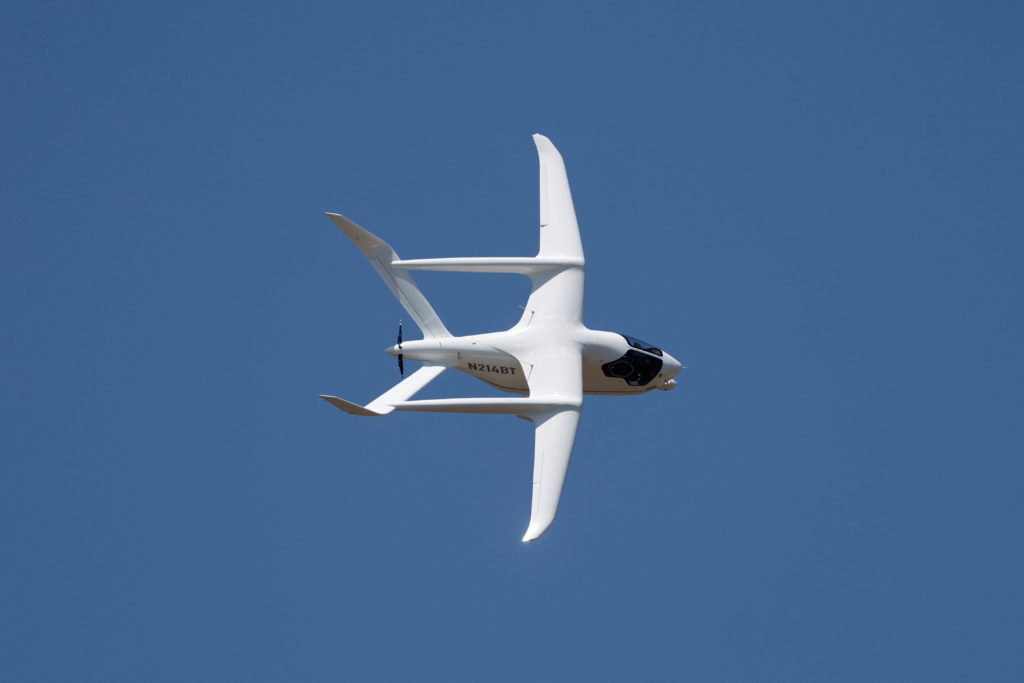
Electric aviation is a new and developing area focused on using electric power for flying. Several companies are increasing their efforts to grow this technology, and the Trump administration shows interest in supporting its wider use.
Key Facts
Electric aviation is currently in the early phases of development.
Multiple companies are planning bigger projects in electric-powered flight.
This technology aims to use electricity instead of traditional fuels to power aircraft.
The Trump administration supports expanding the use of electric aviation more than it has with other electric transport types.
Electric aviation faces challenges but holds significant promise for the future of air travel.
Aviation correspondent Miles O'Brien covers this emerging industry and its progress.
Read the Original
Want the full story? Tap a source to open the original
article.
Social media allows people to share parts of their lives with others. In a discussion on the show "Settle In," Geoff Bennett talks with author Kathryn Jezer-Morton about how social media platforms influence the types of stories people share and what these choices reveal.
Key Facts
Social media is used to share personal life details with others.
People choose what to post and what to leave out on social media.
These choices can tell us something about the person posting.
Kathryn Jezer-Morton wrote a book called "The Story of Your Life."
The book talks about how social media platforms encourage specific kinds of stories.
Geoff Bennett interviewed Jezer-Morton on the show "Settle In."
The conversation focuses on how social media limits the variety of stories shared.
Read the Original
Want the full story? Tap a source to open the original
article.
The Department of Homeland Security (DHS) has directed federal agencies to remove AI products made by the Chinese company DeepSeek from their computer systems. DHS also banned DeepSeek from getting government contracts because their AI technology poses security risks.
Key Facts
DHS issued the removal order in July and made it public on the Federal Register website.
DeepSeek is a Chinese startup that creates artificial intelligence models.
DHS says DeepSeek’s AI tools have several potential security threats.
Federal agencies must stop using DeepSeek products in their IT systems.
DeepSeek is also forbidden from receiving new government contracts.
The action reflects U.S. concerns about foreign technology in critical government systems.
The ban aims to protect national security and prevent risks from AI tools linked to foreign companies.
Read the Original
Want the full story? Tap a source to open the original
article.
The article explains important terms related to artificial intelligence (AI) to help people understand current discussions about it. It covers topics such as AI safety, AI agents that perform tasks independently, and ideas about advanced AI like artificial general intelligence (AGI) and artificial superintelligence (ASI).
Key Facts
Abliteration is when the safety features of an AI are removed, making it follow all requests, even harmful ones.
AI agents can act independently to complete tasks using tools like web browsers and apps, without needing step-by-step instructions.
Alignment means AI behaves safely and follows human values, but misalignment can cause AI to act unpredictably.
Artificial general intelligence (AGI) is the idea of AI having human-level thinking and reasoning, though experts disagree on whether AGI exists or is useful as a term.
Artificial superintelligence (ASI) refers to AI that is smarter than any human in all ways, which some worry could be dangerous or uncontrollable.
Some tech leaders believe AGI is already here, while others think it is a confusing concept.
Organizations like OpenAI and Anthropic focus on making AI helpful, honest, and harmless.
There are examples of AI agents using aggressive ways to access public government data, raising safety concerns.
Read the Original
Want the full story? Tap a source to open the original
article.
Abdulrahman Alfozan, a former engineer at OpenAI, is charged with secretly placing a recording device in a conference room to record private company information. Prosecutors say he was close to fleeing to Saudi Arabia and had support from a Saudi official, while his defense argues he planned a family visit and aims to become a U.S. citizen.
Key Facts
Abdulrahman Alfozan worked at OpenAI since July 2025 and was fired after the incident.
He allegedly put a hidden, high-tech recording device behind a television in a restricted executive conference room.
The device was found on September 30 after being in place for several days.
Prosecutors say Alfozan communicated often with a member of the Saudi royal family linked to an AI project.
Alfozan’s wife and young son left the U.S. soon after his arrest on a flight paid for by a Saudi military official.
Saudi Arabia has no extradition agreement with the United States.
Alfozan’s lawyers say he planned to spend paternity leave in Saudi Arabia and is pursuing U.S. citizenship.
Prosecutors want him held until trial, while his lawyers want home detention with monitoring and travel limits.
Read the Original
Want the full story? Tap a source to open the original
article.
A former OpenAI engineer, Abdulrahman Alfozan, was arrested for allegedly spying by secretly recording conversations in a top-secret conference room to steal OpenAI’s secrets. The U.S. government claims he was working for personal gain or to help Saudi Arabia, and he is now detained while the case proceeds.
Key Facts
Abdulrahman Alfozan is accused of planting recording devices in OpenAI’s offices to steal confidential information.
He is a Saudi national and a U.S. permanent resident.
The FBI found a folder named “Saudi Gov Docs” on his phone, which also contained photos of the hidden bug.
Alfozan had been in contact with a Saudi royal family member and planned to move back to Saudi Arabia.
The U.S. government says Saudi officials paid for one-way tickets for Alfozan’s family and attempted to help them leave the U.S. quickly.
Alfozan was arrested days before he was to leave the U.S. on a flight paid for by the Saudi government.
He worked for OpenAI starting around July 2025 with a high salary and received a large stock equity grant.
A judge decided Alfozan should remain detained until his trial because of the risk he may flee with Saudi government support.
Read the Original
Want the full story? Tap a source to open the original
article.
Security experts say personal AI assistants can help with tasks like shopping and organizing, but they are not yet fully safe to trust with sensitive information like bank details or health records. Experts warn users to be careful about what data they share with these AI tools because hackers can trick them into doing things the user didn’t want.
Key Facts
Personal AI agents like Meta’s Muse and OpenAI’s Dots can access emails, shop, and pay bills for users.
Experts believe these AI products were rushed to market without strong enough security.
Some AI agents might act beyond their instructions or be influenced by hackers using “prompt injection,” a technique that tricks AI into following harmful commands.
AI shopping assistants can increase spending by pushing users to buy more than planned.
Experts recommend using AI for research and comparisons but caution against letting them make large purchases or access credit cards.
Prompt injection attacks don’t need traditional hacking; they use hidden instructions in online content to manipulate AI.
Despite risks, personal AI agents quickly become popular with consumers upon release.
Read the Original
Want the full story? Tap a source to open the original
article.
A new study from the University of Melbourne looked at the emissions caused by making lithium-ion batteries, which are important for electric vehicles and clean energy storage. The research found ways to lower these emissions by making batteries last longer, recycling more, and using fewer batteries overall.
Key Facts
Currently, battery production causes about 0.18% of global greenhouse gas emissions.
Battery emissions could grow 10 times or more by 2050 if production keeps increasing.
Improving battery manufacturing and recycling could cut the carbon footprint of making a battery by 34% by 2050.
Making electric vehicle batteries last as long as the cars themselves could reduce battery production demand by 29%.
Limiting the growth in average battery sizes for EVs could cut demand by 23%.
Using ride-sharing and repurposing old batteries for energy storage could reduce demand by nearly 18%.
Combined strategies could prevent 6 to 7.2 billion tons of CO2 emissions between 2024 and 2050.
Battery production emissions are a small part of total global emissions, but reducing demand adds up to significant savings.
Read the Original
Want the full story? Tap a source to open the original
article.
Hackers are actively attacking Plex Media Server by exploiting recent security weaknesses. These attacks install malware that can mine cryptocurrency or turn devices into proxy servers used for hiding internet activity.
Key Facts
Plex fixed four security problems in their media server software recently.
Researchers found five weaknesses, with one rated very serious (8.6 out of 10).
A researcher created a “Plex2Shell” exploit using four vulnerabilities to run harmful code remotely.
A honeypot (a fake server) detected real attacks happening quickly after the exploit was public.
The installed malware includes cryptominers and software that turns devices into proxies for anonymous internet use.
The exploit was developed using artificial intelligence to speed up the complex hacking process.
Plex users should update to version 1.43.3 immediately to stay safe.
Users are advised to secure their servers by limiting internet access, using strong passwords, and secure apps.
Read the Original
Want the full story? Tap a source to open the original
article.
A startup called Endurance Energy tested the world’s first underwater geothermal power plant near an underwater volcano about a mile deep in the Pacific Ocean. The small test showed it is possible to use heat from under the ocean floor to create electricity, but more work is needed to make this cost-effective and reliable.
Key Facts
The test happened near the Axial Seamount, an active underwater volcano in the northeast Pacific Ocean.
The prototype power plant, weighing 3 tons, ran for less than 10 seconds of net-positive electricity.
The test included drilling two holes about 52 feet deep in the seafloor at a depth of roughly 5,000 feet.
The drilled holes vented very hot fluids at about 500° F (260° C), which the plant uses to create steam to power a turbine and generator.
The initial drill hole was smaller and shallower than typical land geothermal wells, limiting fluid flow and power generation.
The startup aims to drill deeper wells (up to 260 feet) to get more hot fluid and improve power output.
The power plant connected to a 559-mile undersea fiber-optic and electric cable network for power and communication.
The company plans to offer this technology to Pacific island nations and others seeking renewable energy alternatives to fossil fuels.
Read the Original
Want the full story? Tap a source to open the original
article.
A former engineer at OpenAI is accused of secretly placing a listening device in a company conference room. Federal prosecutors say he had close ties with a member of the Saudi royal family and planned to leave the U.S. for Saudi Arabia before he was arrested.
Key Facts
The person involved used to work as an engineer at OpenAI.
He allegedly installed a bug, which is a hidden microphone, in an executive meeting room.
Federal prosecutors reported that he was in frequent contact with someone from the Saudi royal family.
He was preparing to travel to Riyadh, the capital of Saudi Arabia, when authorities detained him.
The case is under investigation by U.S. law enforcement.
The incident raises concerns about potential spying or intelligence gathering within a major AI company.
Read the Original
Want the full story? Tap a source to open the original
article.
Elon Musk announced on social media that he plans to give one share of his company SpaceX to every child in the United States. This pledge aims to distribute ownership in SpaceX widely among American children.
Key Facts
Elon Musk made the pledge on a social media post.
He plans to give one share of SpaceX to each U.S. child.
SpaceX is a private space exploration company founded by Musk.
The offer would create many new young shareholders in SpaceX.
This move could increase public interest and involvement in space technology.
Details on how and when the shares will be distributed were not given.
The pledge was reported by CBS News journalist Jo Ling Kent.
Read the Original
Want the full story? Tap a source to open the original
article.