A short story that won a literary prize is under scrutiny because some experts believe it was written by artificial intelligence (AI). The prize foundation and the magazine that published the story say they have reviewed the claims but cannot confirm if AI was used.
Key Facts
The story, "The Serpent in the Grove," won the Commonwealth prize for the Caribbean region and was published by Granta magazine.
Suspicions arose based on AI detection software and the story’s writing style.
The author, Jamir Nazir, is reportedly a 61-year-old from Trinidad and Tobago with few prior publications.
AI detectors like Pangram identified the story as possibly AI-generated but such tools are not always reliable.
Similar controversies include other works suspected of being written partly or fully by AI.
The prize foundation does not use AI detection tools on unpublished entries due to ethical and consent concerns.
All entrants must declare their work as original and free from AI assistance.
The foundation is currently relying on trust until better detection methods are available.
Read the Original
Want the full story? Tap a source to open the original
article.
Several college graduation ceremonies faced boos when speakers mentioned artificial intelligence (AI). Many young people are worried about AI hurting their job chances, even though some leaders say AI will bring change and new opportunities.
Key Facts
Speakers mentioning AI at commencements in Arizona, Florida, and Tennessee were booed by graduates.
AI was called "the next industrial revolution" and described as changing industries and production.
Some graduates see AI as a threat to jobs, with 42% of Gen Z fearing AI will harm their job and wage prospects.
Younger people aged 15-34 are less optimistic about job opportunities than older generations.
CEOs of major tech companies have announced layoffs partly due to AI automating tasks.
Eric Schmidt said AI is uncertain but urged graduates to embrace it as a big opportunity.
Research shows AI is currently creating more jobs than it eliminates.
Many young people use AI tools for homework, learning, and entertainment, showing they value its usefulness despite fears.
Read the Original
Want the full story? Tap a source to open the original
article.
Two new AI systems were developed to help scientists find and test ideas faster by analyzing large amounts of scientific data. Google’s Co-Scientist and FutureHouse’s AI assist researchers by identifying connections in biology and suggesting potential drugs for diseases.
Key Facts
Nature published two studies about AI tools that support scientific research.
Google’s Co-Scientist uses a large language model to help researchers form and improve hypotheses.
FutureHouse’s AI evaluates biological experiment data and suggests drug targets.
Both systems work with scientists guiding the process, not replacing them.
These AIs process vast scientific literature to find links humans might miss.
The tools focus on practical problems like drug repurposing for diseases such as leukemia and macular degeneration.
Google’s system includes checks for plausibility, novelty, safety, and testability.
The goal is to help scientists keep up with growing research and discover new insights more efficiently.
Read the Original
Want the full story? Tap a source to open the original
article.
Google developed SynthID, a technology that adds hidden digital watermarks to AI-generated images, videos, and audio to identify them. Now, Google is working with other companies like OpenAI and Nvidia to use SynthID, making it easier to recognize AI-created content across different platforms.
Key Facts
SynthID was first shown by Google three years ago and has labeled 100 billion images and videos and 60,000 years of audio so far.
SynthID embeds a digital watermark directly into the pixels of images and videos or the waveform of audio, making it hard to remove even after editing.
Google uses another system called C2PA, which adds metadata describing how content was made, and it is used in Pixel 10 phones and soon in Pixel 8 and 9 phones for videos.
Google’s Gemini chatbot and apps can scan content to detect SynthID watermarks and confirm if the content is AI-generated.
Several companies, including Nvidia, OpenAI, Kakao, and ElevenLabs, will start adding SynthID watermarks to their AI content.
Many AI models still produce content without watermarks, especially public and open-source ones, so not all AI content will be identifiable.
Google plans to integrate SynthID detection into tools like Search, Chrome, Lens, and AI Mode to make checking easier.
There is no public SynthID API yet, but Google will soon offer an API for trusted partners to help flag AI content and improve detection.
Read the Original
Want the full story? Tap a source to open the original
article.
The U.S. Cybersecurity and Infrastructure Security Agency (CISA) had private passwords and security keys publicly exposed on a GitHub repository since at least November 2025. Security experts confirmed these credentials were real and could be used to access sensitive government cloud accounts.
Key Facts
A public GitHub repository named "Private-CISA" contained CISA’s plaintext passwords, private keys, tokens, and other sensitive data.
The repository was exposed publicly for at least seven months, from November 2025 until recently taken offline.
GitGuardian alerted security researcher Brian Krebs about the repository after scanning public code for secrets.
The repo’s administrator disabled GitHub’s usual protections that prevent accidentally publishing secret information.
Tests showed the leaked credentials granted high-level access to Amazon Web Services GovCloud accounts.
The repository appears to have been managed by Nightwing, a CISA contractor based in Virginia.
CISA has not publicly responded, and Nightwing referred questions back to CISA.
Earlier in 2026, CISA’s acting director was removed after sharing sensitive info on ChatGPT against agency rules.
Read the Original
Want the full story? Tap a source to open the original
article.
Google announced Gemini 3.5 Flash, a new version of its AI model that is faster and smarter than earlier versions. This model is designed to handle complex tasks more efficiently and is already being used inside Google products. Google also introduced a versatile AI model called Omni.
Key Facts
Gemini 3.5 Flash is the latest AI model from Google, improving on the previous Gemini 3.1 Pro.
It can generate almost 300 tokens per second, much faster than older models. Tokens are pieces of text that AI processes.
The model is better at coding and completing complex tasks, making it useful for AI agents that work autonomously.
Gemini 3.5 Flash performs similarly well as OpenAI’s GPT 5.5, a larger and more expensive AI model.
Google improved the model using feedback from users and better pre-training techniques.
Google uses internal metrics to measure the model’s performance on coding inside its own codebases, showing big gains.
The Antigravity IDE, a coding tool from Google, will be updated to support Gemini 3.5 Flash.
The Omni model is introduced as a flexible AI that can do many different tasks, though details are less clear in this article.
Read the Original
Want the full story? Tap a source to open the original
article.
Meta is reorganizing more than 7,000 employees to focus on artificial intelligence (AI), moving many to new teams working on AI cloud infrastructure and an internal AI project called Hatch. The company is also changing managerial roles and introducing a monitoring tool to collect user data for AI training, which has caused concerns among workers.
Key Facts
Meta is shifting over 7,000 workers to new AI-focused teams, including ones for AI cloud infrastructure and a project named Hatch.
Employees were informed that transfers to these teams are mandatory, not optional.
Earlier, Meta reassigned about 1,000 engineers to a data labeling team called Applied AI, with a similar no-volunteer policy.
Managers are being moved from overseeing others to doing individual work, reflecting a trend in tech companies to reduce middle management.
Meta plans to lay off around 10% of its workforce soon, despite strong earnings in early 2026.
A new monitoring tool, Model Capability Initiative (MCI), tracks employee computer use (mouse movements, keystrokes, app navigation) to train AI models.
Meta says this data collection has safeguards and is only used to improve AI tools.
Workers are unhappy with the loss of perks, increased surveillance, and job uncertainty, leading to low morale.
Read the Original
Want the full story? Tap a source to open the original
article.
Many young people, especially recent college graduates, are worried that artificial intelligence (AI) could make it harder to get good jobs. While some business leaders see AI as a way to improve productivity and create breakthroughs, public opinion is becoming more negative as people fear AI might replace human workers.
Key Facts
University students at several schools showed negative reactions when speakers mentioned AI during graduation ceremonies.
A Gallup poll found that only 43% of people aged 15 to 34 believe it is a good time to find a job, down sharply from 75% in 2022, partly due to fears about AI replacing jobs.
The unemployment rate for 20- to 24-year-olds was 7.6% in April 2025, higher than the overall rate of 4.3%.
Many recent graduates report difficulties finding work, often sending out many applications without success.
A CBS News Poll found some people like using AI for simple tasks like proofreading, but many worry about its impact on jobs and the economy.
Pew Research data shows Americans have become more cautious about AI since 2021, with 42% fearing AI will cut jobs in their field.
AI experts are more optimistic: 73% believe AI will positively affect work, while only 23% of the general public feel this way.
Research shows job openings for roles vulnerable to AI, like legal assistants and proofreaders, are below pre-pandemic levels, while AI-related jobs are growing fast.
Read the Original
Want the full story? Tap a source to open the original
article.
LG announced a 24.5-inch gaming monitor called the UltraGear 25G590B that supports a native 1000 Hz refresh rate at Full HD (1080p) resolution. This means the screen updates 1000 times every second, which can reduce motion blur and flickering, particularly benefiting fast-paced games like first-person shooters.
Key Facts
LG’s UltraGear 25G590B is the first Full HD monitor with a native 1000 Hz refresh rate.
The monitor has a 24.5-inch screen size and targets gamers, especially in esports and fast-reaction games.
Other brands offer 1000 Hz monitors but usually lower the resolution to 720p to achieve that speed.
Higher refresh rates can reduce motion blur and flicker, improving the clarity of fast-moving images.
Research shows there are diminishing returns beyond very high refresh rates, and perfect motion blur elimination would need an extremely high refresh rate (like 40,000 Hz).
1000 Hz monitors are more expensive than models with refresh rates between 240 and 360 Hz, which are already considered fast.
Technologies like Nvidia’s GSync Pulsar can reduce motion blur using special backlight techniques even on slower monitors.
LG has not yet shared pricing or availability for its new monitor, which will launch in select markets later this year.
Read the Original
Want the full story? Tap a source to open the original
article.
Civilization VII, a strategy game, initially did not let players keep playing as the same civilization through the whole game, which upset some fans. A recent big update called "Test of Time" changed this by allowing players to build one civilization from start to finish while keeping new features from Civ 7. The update also added more choices for civilizations and changed how the game balances different eras.
Key Facts
Civilization VII is the latest in a 35-year-long game series.
The game is divided into three ages: Antiquity, Exploration, and Modern, each with unique technologies and cultures.
Originally, players had to switch civilizations during the game, which caused criticism.
The "Test of Time" update lets players stick to one civilization through all three ages.
The update increased the number of civilizations available in the early game from 14 to over 40.
Players can control whether computer opponents switch civilizations or not.
The game uses a system called "apex age" to limit civilization bonuses depending on the current age.
A new feature called syncretism lets players borrow bonuses from civilizations strong in the current age to improve gameplay balance.
Read the Original
Want the full story? Tap a source to open the original
article.
Andrej Karpathy, a well-known AI researcher and one of OpenAI's founders, is joining Anthropic, a competing AI company. He will work on teams that train and improve Anthropic's AI system called Claude.
Key Facts
Andrej Karpathy helped start OpenAI and was Tesla’s AI director for the Autopilot computer vision team.
He joined Anthropic to work on pre-training, which is the process of teaching AI using large amounts of data.
Karpathy will also help create a new team that uses Claude itself to speed up AI training research.
He is respected in research, industry, and education in the AI field.
Since leaving Tesla in 2022, Karpathy has focused on educating the public about AI through videos and social media.
Karpathy plans to continue his education work in the future.
Anthropic is becoming a leading company by attracting top AI experts.
The AI race depends not only on money and computing power but also on talented researchers like Karpathy.
Read the Original
Want the full story? Tap a source to open the original
article.
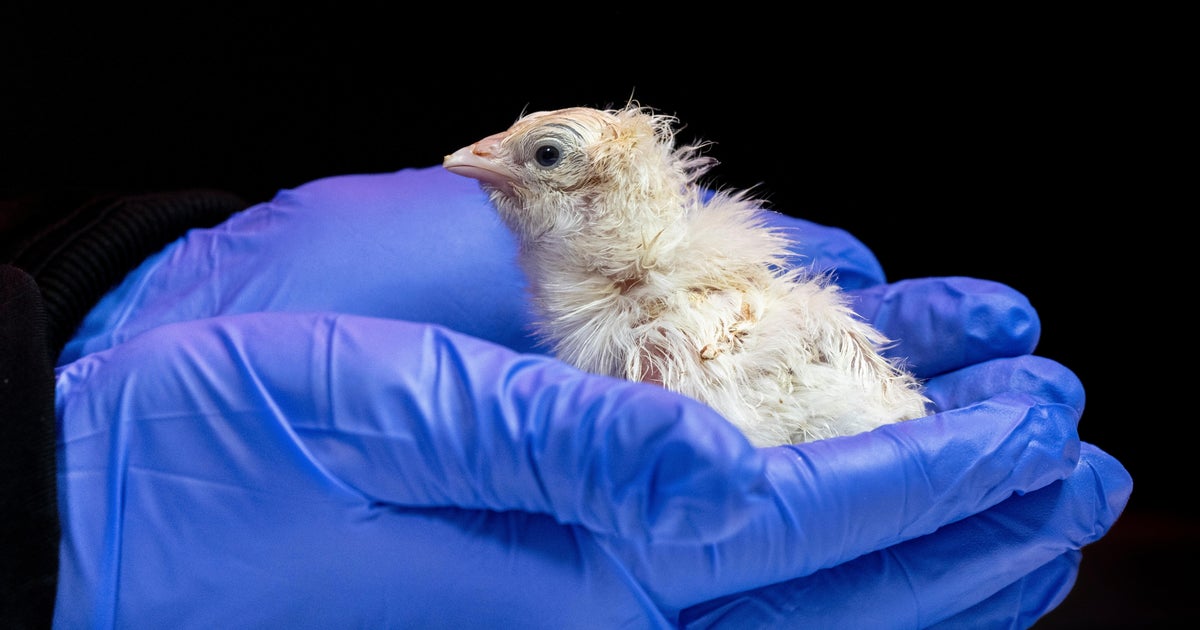
A biotech company named Colossal Biosciences announced it hatched live chicks using an artificial eggshell made with 3D printing. The company aims to develop this technology to help bring back extinct species like the giant moa bird from New Zealand.
Key Facts
Colossal Biosciences hatched 26 baby chickens from a 3D-printed eggshell structure.
The artificial eggshell allows oxygen to pass through, similar to a real egg.
Scientists still add other egg components, like calcium and nutrients, to support the chick's growth.
Colossal wants to use this technology to recreate extinct animals, such as the large moa bird.
Experts say this technology is impressive but not a complete artificial egg, since it lacks natural egg parts like waste removal organs.
Previous research has used transparent eggshells to study chick development.
Challenges remain, including comparing ancient DNA and creating larger eggshells for bigger birds.
Some experts worry about how resurrected animals would survive in today’s environment.
Read the Original
Want the full story? Tap a source to open the original
article.
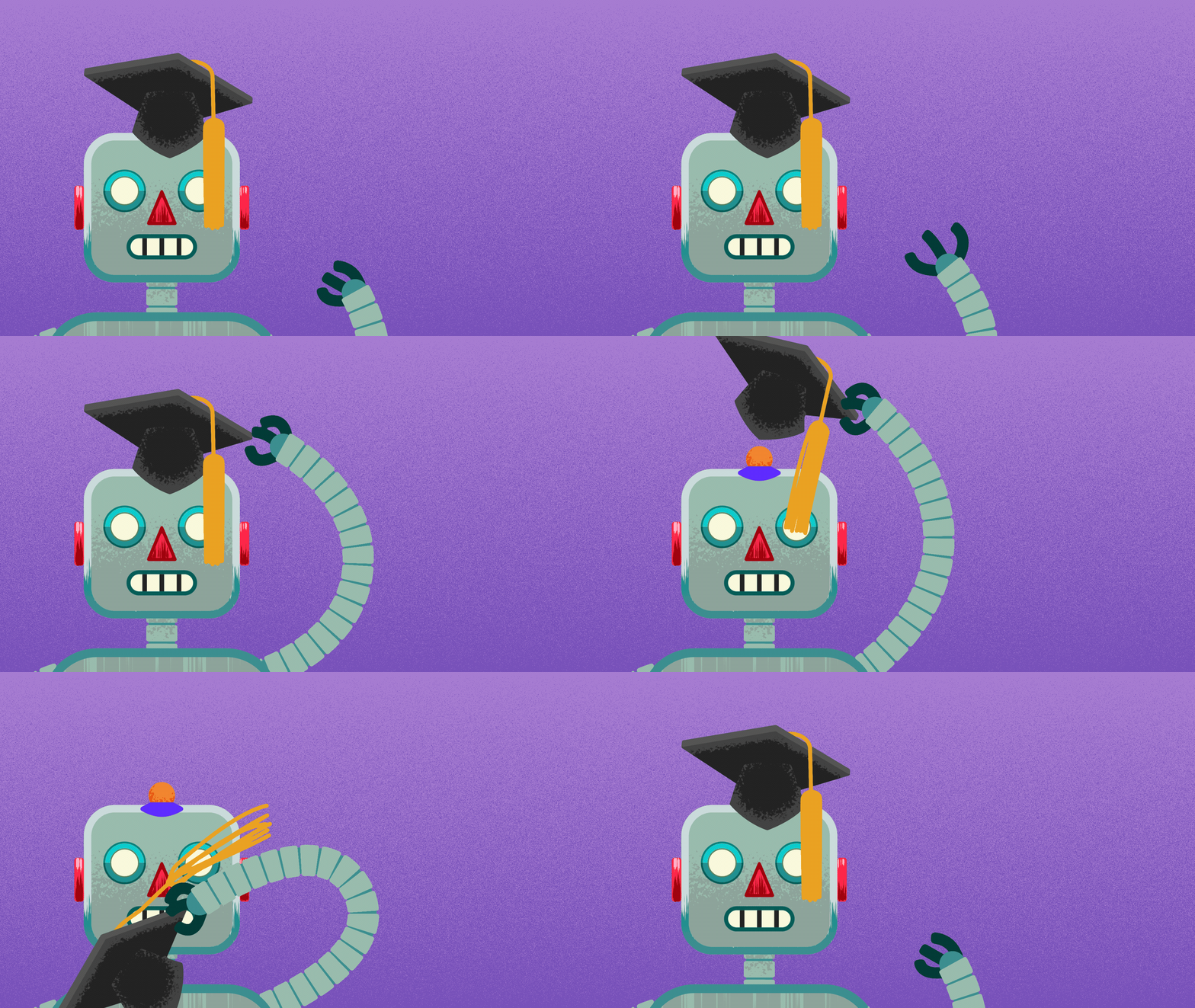
At several college graduations this year, speakers promoting artificial intelligence (AI) were met with boos and jeers from students. Many young people feel worried and unhappy about AI taking over jobs and changing their futures without their consent.
Key Facts
At University of Central Florida, a speaker calling AI the "next Industrial Revolution" was loudly heckled.
Scott Borchetta, a music industry CEO, was booed at Middle Tennessee State when discussing AI's impact on production.
Eric Schmidt, former Google CEO, almost got booed at University of Arizona while talking about AI's influence on graduates' lives.
Glendale Community College faced backlash when their new AI system malfunctioned during the graduation ceremony.
A poll found 47% of people aged 18-29 believe "AI is mostly bad," compared to 24% of those 65 and older.
Many tech leaders promote AI as a way to replace large parts of the workforce to cut costs.
Young people feel upset that AI may take away their jobs and that leaders don’t show enough concern for the human impact.
The article includes a draft commencement speech apologizing to graduates for being misled about career prospects in an AI-driven future.
Read the Original
Want the full story? Tap a source to open the original
article.
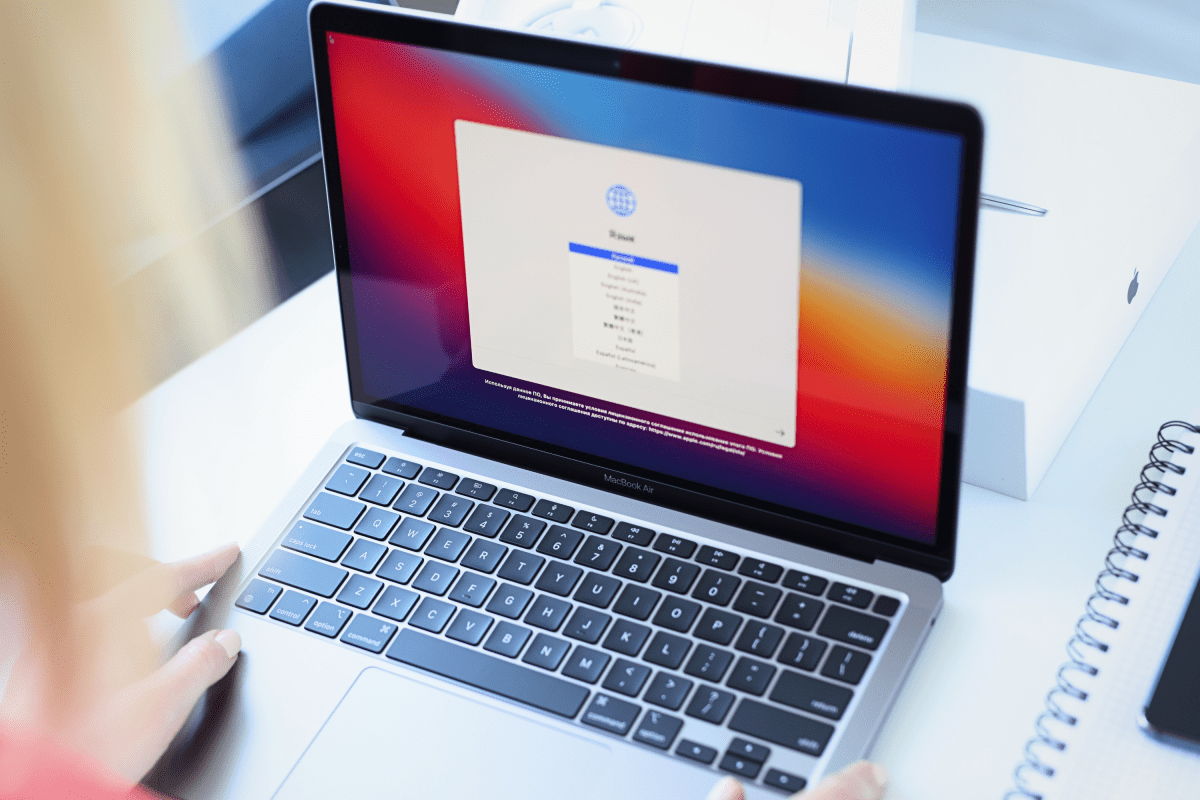
A new type of harmful software called "SHub Reaper" is targeting Mac computers by pretending to be trusted apps or updates from well-known companies like Apple, Google, and Microsoft. This malware tricks users into downloading it and entering their passwords, allowing hackers to steal personal information such as passwords and financial data.
Key Facts
The new malware is called "SHub Reaper" and affects Mac computers.
It disguises itself as trusted app downloads or software updates.
The malware tricks users into running it and entering passwords.
It can steal passwords, financial details, and personal files.
Attackers use multiple layers of impersonation, mimicking Apple, Google, and Microsoft.
The malware hides its activity in folders that look like legitimate software.
It can remain hidden on the device to keep stealing data or add more harmful tools.
This scam targets normal user actions like downloading apps or clicking update prompts outside official sources.
Read the Original
Want the full story? Tap a source to open the original
article.
A new AI system used to read names at Glendale Community College’s graduation in Arizona failed, causing many students’ names to be skipped. The college acknowledged the problem, later calling students back to walk again with a human announcer, and highlighted prior warnings about AI’s potential to produce mistakes.
Key Facts
Glendale Community College used an AI-powered name-reading system at its May 15 graduation ceremony.
Many students’ names were missed during the name reading.
College President Tiffany Hernandez said the error was due to the AI system and called it "a lesson learned."
Initially, students were not allowed to walk again, but the decision was changed after complaints.
The college’s earlier guidance warned that AI systems can give inaccurate or false information.
The school’s materials say users should always check AI-generated information carefully.
Other colleges, like Columbia University, face protests over AI use in ceremonies.
A 2026 Pew Research Center survey showed many Americans feel concerned about the increasing use of AI.
Read the Original
Want the full story? Tap a source to open the original
article.
Vast Space successfully launched a test spacecraft for its planned Haven-1 private space station and will now build high-power satellite buses. These satellites will support demanding missions in low-Earth to lunar orbit and serve customers like telecommunications and data services.
Key Facts
Vast Space launched a small test spacecraft in early November and completed many tests before de-orbiting successfully three months later.
The mission tested technologies for the company’s upcoming Haven-1 private space station, launching next year.
Vast announced plans to sell 15 kW-class satellite buses that provide power, propulsion, and navigation for various mission payloads.
Each satellite bus measures about 3 meters by 4 meters, weighs 700 kg, and can carry at least 350 kg of payload.
The satellites will have a design life of five years and operate from low-Earth orbit to lunar orbit.
Vast has signed a customer for four satellites, with an option for up to 200 more, and targets launching 10 satellites by late 2027.
The satellite design is based on technologies from Haven-1, with new electric propulsion and deployable solar arrays in development.
Vast has invested $1 billion in spacecraft manufacturing facilities, including clean rooms for building satellites and space stations.
Read the Original
Want the full story? Tap a source to open the original
article.
A new study finds that many workers from Generation Z rely heavily on artificial intelligence (AI) tools for their work and feel they cannot function without them. However, many also worry that depending too much on AI might weaken their skills and harm their future job opportunities.
Key Facts
93% of Gen Z workers say AI has helped them in their jobs.
40% feel they cannot work without using AI.
62% say they rely too much on AI tools.
46% believe heavy AI use is reducing their skills and making them less intelligent.
50% worry that depending on AI could hurt their careers in the long run.
Gen Z is the first generation to start working when AI tools were already common at work.
Experts say overusing AI may harm critical thinking and decision-making skills.
Employers may need to set clear rules and training on how to use AI responsibly at work.
Read the Original
Want the full story? Tap a source to open the original
article.
A biotech company called Colossal Biosciences has hatched 26 baby chickens using a 3D printed structure that acts like an eggshell. The company hopes to use this technology to help bring back extinct animals, but some scientists say reviving extinct species is unlikely and the artificial eggshell is not a complete replacement for a natural egg.
Key Facts
Colossal Biosciences hatched 26 chicks using a 3D printed lattice that mimics an eggshell.
The company aims to use this technology to create birds that resemble extinct species like the South Island giant moa from New Zealand.
The artificial eggshell allows oxygen in but does not include other parts of a natural egg, such as temporary organs for nourishment and waste removal.
Scientists describe the technology as an artificial eggshell, not a fully artificial egg.
The fertilized eggs were placed inside the artificial shells and kept in incubators during development.
Some scientists say reviving extinct animals using genetic engineering is likely impossible.
Similar technologies have been used in the past to study bird development through transparent eggshells.
Independent experts recognize the technology as impressive but remain cautious about its potential for de-extinction.
Read the Original
Want the full story? Tap a source to open the original
article.
Tech billionaires like Elon Musk and Sam Altman say Artificial Intelligence (AI) will bring big economic benefits and create new jobs, urging people not to worry about job loss. However, some experts warn AI could eliminate many entry-level jobs and increase unemployment, while others call for urgent action to manage AI’s impact on workers and the economy.
Key Facts
Elon Musk says AI will create great wealth and make saving for retirement unnecessary due to massive productivity gains.
OpenAI predicts AI will speed up medical and scientific progress and make goods cheaper.
Peter Thiel says AI will not completely transform society but stopping AI development would cause stagnation.
Some experts warn AI could cut half of entry-level white-collar jobs in 1 to 5 years, possibly raising unemployment to 20%.
AI might also be used to monitor and pressure workers to be more productive.
About one-third of Americans fear losing their jobs to AI within five years.
The Trump administration supports fast AI development and data center construction, downplaying job loss concerns.
Senator Bernie Sanders urges immediate action to protect workers from AI-related job losses and inequality risks.
Read the Original
Want the full story? Tap a source to open the original
article.
A data scientist in Denmark named Tommy Carstensen has created a large, detailed online archive of files related to Jeffrey Epstein’s case, including documents, images, and financial records. This effort came after the US Department of Justice missed a deadline to release these files, and other journalists and researchers are also using tools like facial recognition to organize and analyze the materials.
Key Facts
The US Department of Justice missed a December 2025 deadline to release Epstein-related unclassified files.
Tommy Carstensen runs an extensive archive of Epstein case materials, spending up to 50 hours a week on it.
The archive includes interactive graphics, court records, audio/video transcripts, and facial recognition tools.
A new searchable facial recognition database was created by Decoherence Media to identify people in Epstein’s images.
The facial recognition uses Amazon’s Rekognition software and follows strict accuracy rules to avoid mistakes.
The technology is less reliable for non-white faces, so matches were carefully double-checked manually and with other models.
The Epstein network features many notable individuals and clear social circles, making facial recognition more effective.
Appearing in the Epstein files does not mean a person did anything wrong.
Read the Original
Want the full story? Tap a source to open the original
article.