Adobe is a building method that uses mud bricks made from earth. It is becoming popular again, with museums and home builders using this ancient technique combined with new 3-D printing technology.
Key Facts
Adobe involves making bricks out of mud or earth.
People have used adobe for thousands of years worldwide.
Adobe is now popular again in modern construction.
Museums around the world are using adobe in their buildings.
Some people build their own homes using adobe from local soil.
New technology, like 3-D printing, is being combined with adobe methods.
This mix of old and new techniques is creating a new interest in adobe building.
Read the Original
Want the full story? Tap a source to open the original
article.
Google is talking with SpaceX about launching data centers into space. These space data centers would use solar power and free up land on Earth but face big challenges like high launch costs, heat management, repairs, and space traffic.
Key Facts
Google is planning a project called Suncatcher to put data centers in low Earth orbit by 2027.
Space-based data centers get constant sunlight for solar power.
Current rocket launches are very expensive, costing tens of millions of dollars per mission.
Space has no air, so these data centers must use special ways to remove heat from computers.
Repairs in space would be difficult because no crew can quickly fix problems.
Low Earth orbit is already crowded, raising the chance of collisions.
Elon Musk and SpaceX support the idea, saying space is the future for AI data needs.
To be affordable, launch costs need to drop to less than $1,000 per kilogram.
Read the Original
Want the full story? Tap a source to open the original
article.
Many people are worried about artificial intelligence (AI) because they fear it might take jobs, raise electricity costs, and harm the environment. This negative feeling about AI is slowing down the building of data centers that AI companies need, which could hurt the industry’s growth.
Key Facts
Only 18% of young people aged 14 to 29 feel hopeful about AI, according to a Gallup survey.
Over 70% of Americans think AI is advancing too quickly, based on an Economist/YouGov poll.
Negative views of AI in the U.S. have increased from 34% three years ago to just over 50% now.
Some AI leaders seem unaware of or unconcerned about the growing public backlash.
The backlash is causing cancellations of new data centers, which are essential for running AI systems.
Investment banks warn that public opposition to data centers could harm AI company investments.
Worldwide, more people expect AI to do good than harm, with positive views rising from 55% in 2024 to 59% in 2025.
Experts say AI will be part of the future, but how it is used and controlled is still uncertain.
Read the Original
Want the full story? Tap a source to open the original
article.
Comedian Charlie Berens from Wisconsin has raised concerns about a large artificial intelligence datacenter project planned for his state. The project, led by Vantage Data Centers, involves huge investment, tax breaks, and promises of jobs but has caused worries about environmental impact and local resources. Berens used his popular videos to highlight these issues and has become a leading voice in the local resistance.
Key Facts
Vantage Data Centers plans an $8 billion AI datacenter campus in Port Washington, Wisconsin.
The project promises over 1,000 permanent jobs and uses mostly zero-emission energy like solar and wind.
Residents worry about environmental damage, energy and water strain, noise pollution, and lack of local tax revenue during 20 years of tax breaks.
The project expanded to a $15 billion joint venture with OpenAI and Oracle, part of President Trump’s “Stargate” initiative.
Local officials approved the project despite opposition from many residents.
Charlie Berens, a Wisconsin comedian, created videos combining humor with facts to criticize the datacenter expansion.
His video criticizing the project went viral, receiving over 2.5 million views and widespread public support.
Berens has since become a key figure in the growing movement opposing hyperscale datacenters in Wisconsin.
Read the Original
Want the full story? Tap a source to open the original
article.
CAR T cell therapy is a new treatment originally created to fight cancer by changing a patient’s immune cells. Researchers are now testing it for autoimmune diseases like multiple sclerosis, aiming to reset the immune system to stop it from attacking the body.
Key Facts
CAR T therapy modifies T cells to find and destroy harmful cells.
It was first approved in 2017 to treat certain blood cancers.
The treatment has helped many cancer patients achieve long-term remission.
Scientists are now running clinical trials to test CAR T for autoimmune diseases such as multiple sclerosis and lupus.
Autoimmune diseases often involve B cells that wrongly attack healthy tissue.
CAR T targets B cells by programming T cells to recognize and kill them.
The therapy carries risks like severe inflammation and uncertain long-term effects.
Patient Jan Janisch-Hanzlik received this experimental treatment to manage her multiple sclerosis and hopes it will protect her grandchildren from similar issues.
Read the Original
Want the full story? Tap a source to open the original
article.
Director Steven Soderbergh made a documentary called "John Lennon: The Last Interview" using a real 1980 interview with John Lennon and Yoko Ono. For about 10% of the film, he used artificial intelligence (AI) from Meta to create visuals for some philosophical parts of the conversation.
Key Facts
The documentary is based on a two-hour interview given by John Lennon and Yoko Ono on the day Lennon was shot in 1980.
The interview covers many topics, including their relationship, creativity, and life after The Beatles.
Steven Soderbergh directed the film, which premiered at the Cannes Film Festival in 2026.
He had audio from the interview but needed visuals, especially for deeper, philosophical moments.
Soderbergh used AI technology from Meta to create surreal images that represent these parts.
The AI-generated visuals make up about 10% of the total film.
Using AI in the documentary sparked debate and criticism from some viewers and critics.
The AI effects do not include deepfake images of John Lennon, but are more like special effects.
Read the Original
Want the full story? Tap a source to open the original
article.
Artificial intelligence (AI) is making many goods and services easier and cheaper to produce. However, education needs to adapt to help workers gain the skills required to work in this new environment.
Key Facts
AI is increasing productivity and creating more available goods and services.
The rise of AI changes the skills workers need to have.
Education systems must adjust to teach these new skills.
Lowering the "price of entry" means making it easier and cheaper to gain the necessary skills.
Preparing workers through education helps them participate successfully in an AI-driven economy.
Read the Original
Want the full story? Tap a source to open the original
article.
The education platform Canvas, run by the US firm Instructure, suffered a ransomware attack that stole data from millions of students and staff worldwide. Instructure said it reached an agreement with the hackers, likely involving a ransom payment, to recover and destroy the stolen data.
Key Facts
Canvas, used by schools globally, experienced a ransomware attack causing outages and data theft.
Hackers called ShinyHunters claimed they stole 3.6 terabytes of data including student IDs, emails, and messages from 275 million people.
The attack exploited a weakness in Instructure’s Free for Teacher software, allowing hackers to deface login pages.
Instructure reported they “returned” the data and received proof it was destroyed after an agreement with the hackers.
Experts believe Instructure probably paid a ransom, possibly up to $10 million, though the company has not confirmed this.
Many governments advise against paying ransoms because it can fund criminals and does not guarantee data safety.
In Australia, paying designated cybercriminal groups may be illegal, and such payments are reviewed individually for prosecution.
Since May 2023, at least 75 Australian companies with revenue over $3 million have paid ransoms under mandatory reporting rules.
Read the Original
Want the full story? Tap a source to open the original
article.
Steven Soderbergh made a documentary about John Lennon’s last interview, recorded hours before Lennon’s death in 1980. The film uses AI-generated images that many find uninteresting and low quality, showing Lennon talking about peace, music, and culture.
Key Facts
The documentary focuses on John Lennon and Yoko Ono’s final interview on December 8, 1980, in New York.
Interviewers were from San Francisco’s KFRC radio station: Dave Sholin, Laurie Kaye, and Ron Hummel.
Shortly after the interview, Lennon was killed by a stalker who had asked Lennon to sign a copy of the "Double Fantasy" album.
The film includes AI-created visuals to accompany Lennon’s words on peace and culture.
These AI images have been described as generic and low quality, reducing the film’s appeal.
The documentary does not add much new analysis or commentary beyond Lennon and Ono’s words and some remarks from the interviewers.
The film avoids focusing on the dark tragedy of Lennon’s murder, instead keeping a hopeful tone.
Multiple recent documentaries about John Lennon and Yoko Ono exist, but this one is centered specifically on the last interview.
Read the Original
Want the full story? Tap a source to open the original
article.
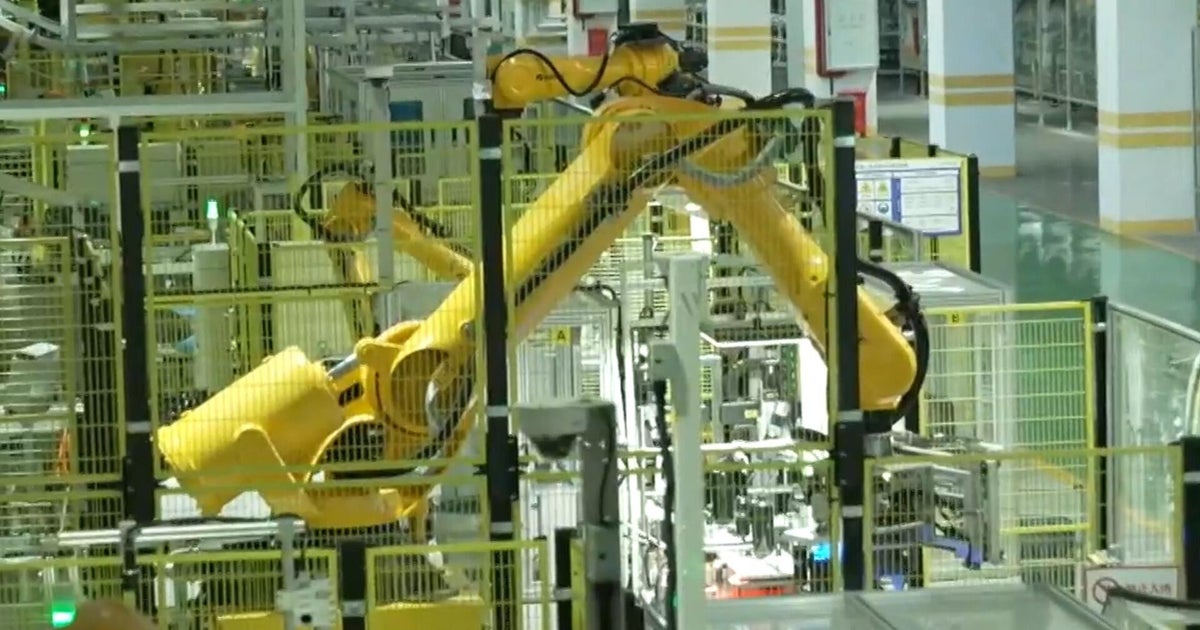
China is developing fully automated manufacturing plants called "dark factories" that can operate without human workers. These factories use robots and advanced technology to run production with minimal human involvement.
Key Facts
"Dark factories" are fully automated and do not require humans to work inside them.
They use robots and machines to handle all manufacturing tasks.
These factories can operate without lights, hence the name "dark."
The technology aims to make production faster and less costly.
China is investing in these factories to change how goods are made.
This approach could reduce the need for factory workers.
Automation in manufacturing is becoming more common worldwide.
The move may reshape the global manufacturing industry.
Read the Original
Want the full story? Tap a source to open the original
article.
Residents in Atlanta report traffic jams caused by self-driving cars made by Waymo. The cars seem confused by neighborhood road signs, which slows down traffic.
Key Facts
The traffic jams happen in Atlanta neighborhoods.
The cars involved are self-driving vehicles from Waymo.
Residents say the cars get confused by street signs.
The confusion leads to slow-moving traffic or jams.
Waymo uses advanced computer systems to drive the cars automatically.
The problem shows challenges self-driving cars face in real-world settings.
Local drivers and residents notice these disruptions during their daily routines.
Read the Original
Want the full story? Tap a source to open the original
article.
A jury is set to decide if Elon Musk’s claims that OpenAI co-founder Sam Altman and others broke rules by turning the company from a charity into a for-profit entity are true. The trial revealed many private messages and included testimony from top tech leaders, highlighting a long-running dispute about control and profit in the AI industry.
Key Facts
The trial is about Musk’s claim that Altman and OpenAI “stole a charity” by restructuring OpenAI from a nonprofit to a for-profit company.
Musk says he was tricked into funding OpenAI, which later prioritized profit over its original mission.
OpenAI denies all claims, saying Musk knew about the change and left to start a rival company, xAI.
Musk wants Altman and Brockman removed, OpenAI’s restructuring reversed, and $134 billion returned to the nonprofit.
The case includes private emails, text messages, and diary entries used as evidence.
High-profile tech figures like Microsoft CEO Satya Nadella have testified in the trial.
The outcome could affect OpenAI’s planned public stock offering, valued at $1 trillion.
Musk testified for three days, describing his view that Altman broke the company’s charitable goals.
Read the Original
Want the full story? Tap a source to open the original
article.
A new gene therapy that targets the GLP-1 hormone is about to be tested in humans for the first time. This therapy aims to treat obesity and Type 2 diabetes by using the body’s own mechanisms to control weight and blood sugar.
Key Facts
GLP-1 is a hormone involved in regulating appetite and blood sugar.
Medicines based on GLP-1 have helped many people with obesity and Type 2 diabetes.
The new therapy uses gene therapy, which involves changing genes to treat diseases.
This will be the first time the GLP-1 gene therapy is tested in human trials.
The goal is to create a long-lasting treatment for obesity and diabetes by making the body produce GLP-1 on its own.
Read the Original
Want the full story? Tap a source to open the original
article.
Since the introduction of AI tools like ChatGPT in 2022, many college students are earning higher grades, especially in subjects where AI can help with homework. A study found that students who might have earned C grades before are now getting A's, which raises concerns about the true understanding of the material.
Key Facts
A study from a large Texas university showed a 30% rise in excellent grades in courses where AI can assist, such as English and coding.
Grade increases did not happen in courses where AI is less helpful, like sculpture or lab-based classes.
The university studied has over 50,000 students and offers many different academic programs.
Classes that focus more on homework than exams are seeing more grade inflation, likely because homework can be done with AI help.
Some professors may grade more leniently due to pressure from student evaluations, which can affect their career advancements.
AI has made existing grade inflation trends worse, but it is not the only cause of rising GPAs.
Professors are using new rules to reduce AI cheating, such as handwritten or oral exams.
Experts suggest creating assignments that allow AI use when properly documented, to adapt to the new technology.
Read the Original
Want the full story? Tap a source to open the original
article.
The article discusses the growing impact of AI data centers, which are physical places that store and process data for AI and the internet. These centers use a lot of electricity and resources, which is causing higher power costs, environmental concerns, and local opposition in communities.
Key Facts
Data centers are buildings with computers that support the internet and AI operations.
AI requires a lot of computing power, causing data centers to expand rapidly.
Data centers contributed to a 76% increase in electricity prices on the largest US grid in early 2025.
By 2030, data centers might use over 14% of the total US electricity supply, up from 6% today.
They can cause pollution, noise, and use large amounts of water, as seen in Fayetteville, Georgia.
Most Americans oppose building AI data centers near their homes, some even prefer living near nuclear plants.
Tech leaders acknowledge the increasing size of data centers but have no clear solutions.
Some industry figures accuse protesters of being paid agitators, and there are early talks about giving AI or data centers legal rights.
Read the Original
Want the full story? Tap a source to open the original
article.
The article describes a TV program called "Tech Now" that features different episodes about new technology in various fields. Topics include 3D imaging for heart surgery, AI solving art mysteries, underwater technology, and innovations in phones and space exploration. The show aims to explain how technology is used to solve problems and improve lives.
Key Facts
"Tech Now" is a TV program highlighting new technology stories.
One episode covers 3D imaging technology for heart operations.
Other episodes explore AI in art history and underwater technology.
The show features the latest phone and gadget trends from a technology event.
Episodes include topics on climate science, space exploration, and agriculture.
The program visits places like Esrange Spaceport in Sweden and the Rubin Observatory in Chile.
It also discusses AI startups, brain cell biocomputing, and wildfire detection tech.
The show is available with features like audio description and sign language.
Read the Original
Want the full story? Tap a source to open the original
article.
Driverless Waymo cars caused a traffic jam on a quiet street in Atlanta on Friday. These self-driving vehicles temporarily blocked part of a residential area as they operated without drivers.
Key Facts
The incident happened in Atlanta on a quiet residential street.
Waymo’s driverless cars were involved in the traffic jam.
The cars were operating without human drivers behind the wheel.
This event took place on a Friday morning.
The traffic jam disrupted local residents’ daily routines.
Waymo is a company that develops self-driving car technology.
The situation attracted media attention, including from CBS News.
Read the Original
Want the full story? Tap a source to open the original
article.
SpaceX launched a Cargo Dragon spaceship carrying over 6,500 pounds of supplies and research gear to the International Space Station. The Falcon 9 rocket's first stage successfully landed back on Earth after the launch, marking SpaceX's 611th booster recovery.
Key Facts
The Cargo Dragon carried supplies for about 50 science investigations and over 6,000 pounds of hardware and essentials for the station crew.
The Falcon 9 rocket launched from Cape Canaveral Space Force Station and flew in line with the station’s orbit.
The rocket’s first stage completed its sixth flight and landed safely at Landing Zone 40 near the launch site.
This is the first Cargo Dragon spaceship to visit the station for the sixth time.
The dragon is scheduled to dock with the station’s forward Harmony module two days after launch.
The current Expedition 74 crew on the ISS includes astronauts from NASA, the European Space Agency, and Russia.
The ISS has hosted more than 4,000 science experiments from over 5,000 researchers in 110 countries over 25 years.
Future space missions include launching new crew members in July and September using Soyuz and SpaceX vehicles.
Read the Original
Want the full story? Tap a source to open the original
article.
Scammers are using artificial intelligence (AI) to create fake voices that sound very real. This makes it harder to spot scams, especially for older people, but there are ways to protect yourself.
Key Facts
Scammers use AI voice cloning to imitate real voices.
These fake voices can sound very convincing.
Older adults are often targeted by these scams.
The use of AI makes scams harder to recognize.
Experts suggest methods people can use to stay safe from these scams.
Read the Original
Want the full story? Tap a source to open the original
article.