NASA’s Mars rover took a selfie as it approaches 1,800 days on Mars. The rover continues to send images and data back to Earth during its long mission.
Key Facts
NASA’s Mars rover captured a selfie photo on Mars.
The rover is nearing 1,800 days (about 5 years) of operation on Mars.
The mission aims to explore the Martian surface and send information to scientists on Earth.
The selfie was taken to mark a milestone in the rover’s ongoing mission.
NASA regularly shares rover images to update the public on progress.
Read the Original
Want the full story? Tap a source to open the original
article.
A US-based internet forum linked to more than 160 UK suicides has been fined £950,000 by the UK online regulator Ofcom. Despite repeated warnings and efforts to block the site, it remains accessible in the UK, posing serious risks to vulnerable people.
Key Facts
The forum is based in the US and has been linked to over 160 deaths in the UK.
Ofcom fined the site £950,000 under the UK Online Safety Act for encouraging suicide.
The site stayed accessible in the UK even after more than a year of warnings.
Campaign groups, including the Molly Rose Foundation, have urged Ofcom to act faster.
Ofcom has blocked mirror sites and may seek a court order to fully block UK access.
The forum operator claims it defends access to "lawful information" and opposes censorship.
Coroners warned the UK government 65 times about the risks linked to the forum and the suicide method it promotes.
Families of victims say Ofcom’s slow response has contributed to more deaths.
Read the Original
Want the full story? Tap a source to open the original
article.
A pro-suicide online forum linked to at least 50 deaths was fined £950,000 by the UK media regulator Ofcom for failing to block UK users and protect them from harmful content. Ofcom said the forum did not fully follow the Online Safety Act and made weak, inconsistent attempts to stop UK access.
Key Facts
The online forum is linked to at least 50 deaths.
Ofcom fined the forum £950,000 for not protecting UK users from illegal content.
The forum tried but failed to effectively block UK users from accessing the site.
It is a criminal offense in the UK to encourage or assist suicide.
The investigation by Ofcom lasted from March 2025 to April 2026 and was the first under the Online Safety Act.
The site was accessible in the UK without a VPN, meaning users could visit it directly.
Families of victims called for stronger action and criminal penalties against those running such sites.
The forum created a "mirror" site under a new name, which Ofcom blocked after being informed.
Read the Original
Want the full story? Tap a source to open the original
article.
AI is changing how software companies develop and improve products by making real-time customer use a key part of the process. Instead of treating product launch as the finish line, companies now continuously update their AI-based software based on how it performs in actual customer workflows.
Key Facts
Traditional software development focused on building and releasing products, then improving them over time based on feedback.
AI products rely heavily on context and behave differently depending on customer use and business settings.
Deployment is now seen as the start of an ongoing process where products are continuously updated and optimized.
AI systems learn from real-world use, making monitoring and human oversight part of the product lifecycle.
Feedback is gathered continuously through customer interactions rather than slow traditional methods like surveys.
Companies must decide which feedback is useful and act quickly while avoiding irrelevant data.
Understanding user workflows, support requests, and usage patterns helps companies improve AI products.
Software companies need to stay close to how products are used to keep improving them effectively.
Read the Original
Want the full story? Tap a source to open the original
article.
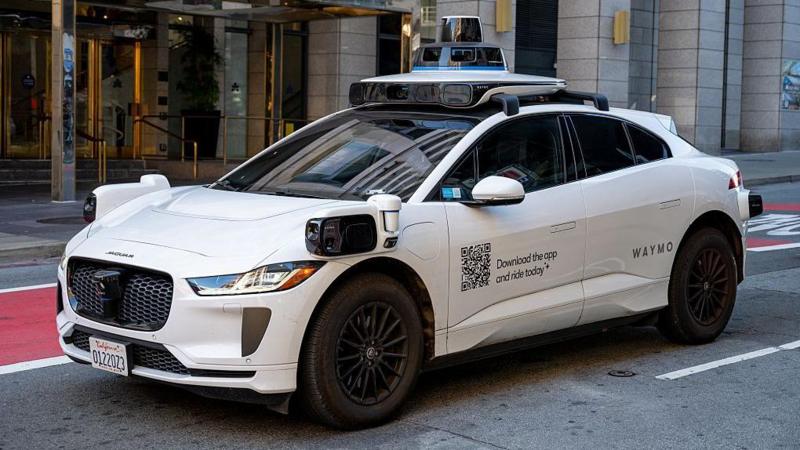
Waymo is recalling nearly 3,800 self-driving taxis in the US due to a software problem that might let them drive into flooded roads. The recall follows an incident where a Waymo car in Texas entered a flooded area and was swept into a creek.
Key Facts
The recall affects Waymo’s fifth and sixth-generation automated driving systems.
The incident happened on April 20 in San Antonio, Texas, with an empty vehicle.
Waymo is working on software fixes and has temporarily limited where affected cars can drive in extreme weather.
Waymo’s San Antonio service is paused but will restart after updates are installed.
The company offers over 500,000 robotaxi trips per week in US cities like San Francisco, Austin, and Miami.
Waymo plans to start a robotaxi service in London by September.
Other driverless car systems have shown safety limits during real situations.
Recent issues include power outages and service disruptions affecting self-driving taxis in the US and China.
Read the Original
Want the full story? Tap a source to open the original
article.
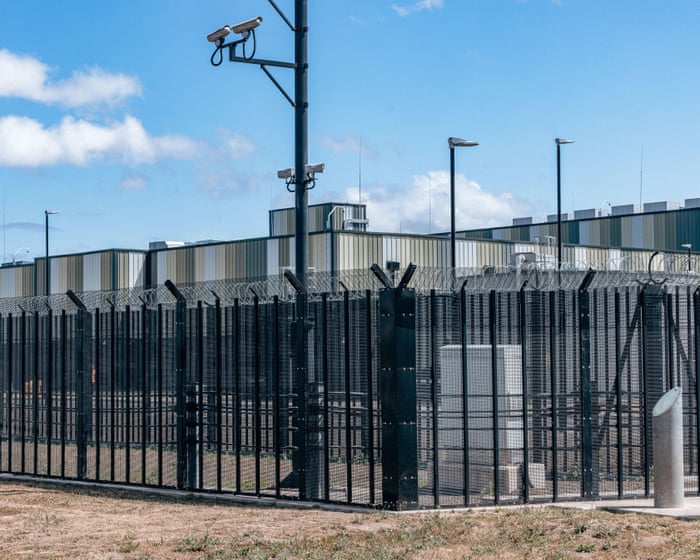
Datacentres in the UK and US use about 6% of the countries’ electricity, with global use rising due to AI growth. This has led to community concerns and calls for better transparency on energy use and environmental impact.
Key Facts
Datacentres consume 6% of electricity in the UK and US, higher than the global average of 2%.
Worldwide investment in datacentres is nearly $1 trillion, about 1% of the global economy.
UK datacentres used 2.5% of electricity in early 2025 but could quadruple by 2030.
Datacentres in Singapore and Lithuania use even more electricity, 19% and 11% respectively.
Around 13% of US datacentre energy is wasted on unused “zombie” services.
Greenpeace warned that unchecked AI growth may increase energy costs and environmental harm.
There are about 10,000 datacentres worldwide; Microsoft’s Mount Pleasant is among the largest and most powerful.
Datacentres face new security threats, including physical attacks and cybersecurity risks.
Read the Original
Want the full story? Tap a source to open the original
article.
A private company named Varda Space Industries is using small, uncrewed spacecraft to make medicines in space, where the lack of gravity helps create better drug crystals. Varda recently partnered with United Therapeutics, a big drug maker, to develop new treatments for a rare lung disease using this space-based method.
Key Facts
NASA has studied how zero gravity affects drug development for many years, starting with the Space Shuttle.
The International Space Station (ISS) allowed continuous research on how space conditions change medicine properties.
In 2019, scientists grew a more uniform form of the cancer drug Keytruda in space, which could improve how it’s given to patients.
Varda Space Industries launched its first spacecraft equipped with bioreactors in 2023 to make drugs in orbit without humans onboard.
Varda’s spacecraft use reusable rockets, like SpaceX’s missions, which lower costs and increase how often missions happen.
Varda and United Therapeutics will explore how microgravity changes drug crystal formation to improve drug stability and delivery.
Making drugs in space can lead to medicines that dissolve better, last longer, need less cold storage, and may cause fewer side effects.
Varda has a large pharmaceutical lab on Earth that tests many drug ideas before sending the best candidates to space for further development.
Read the Original
Want the full story? Tap a source to open the original
article.
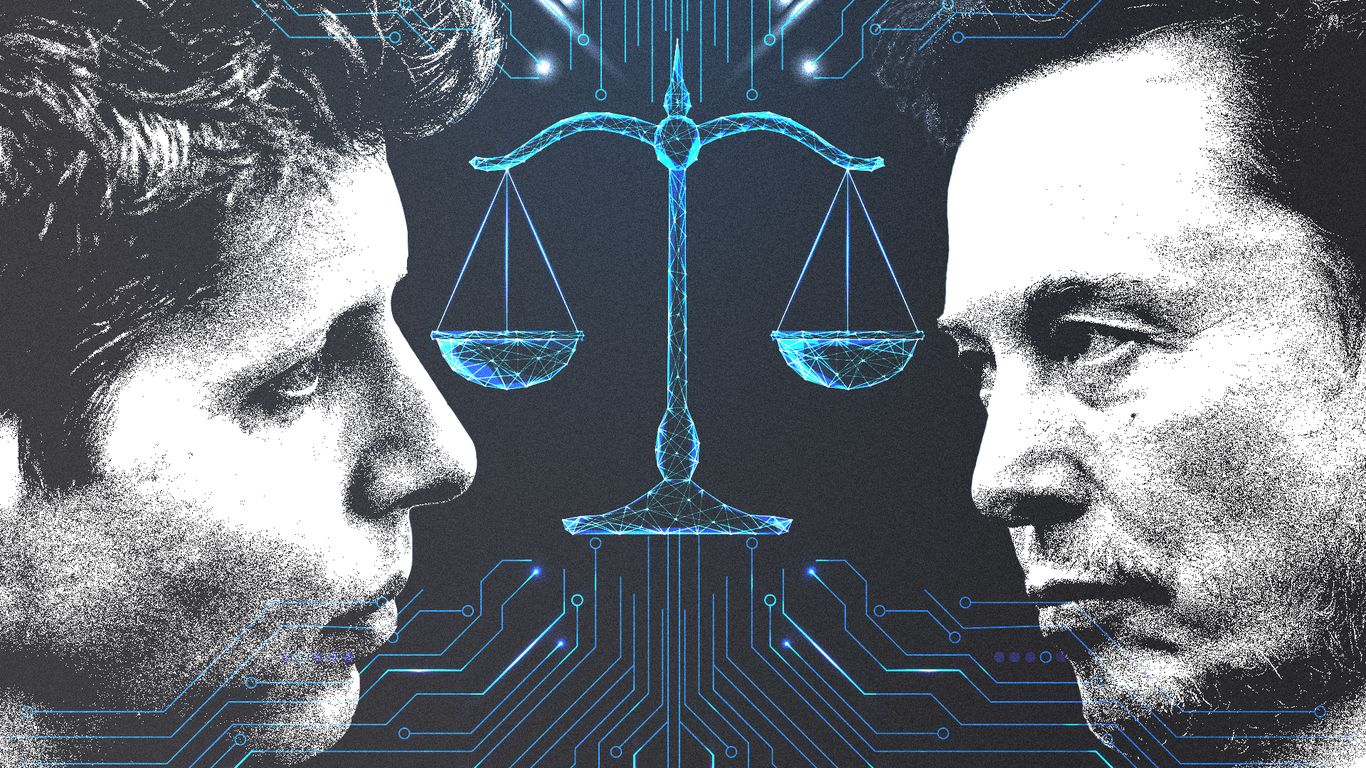
Elon Musk is suing OpenAI co-founders Greg Brockman and Sam Altman over claims they broke an agreement by making OpenAI a for-profit company. Brockman kept a diary with details about the company’s decisions, which is now being used in the court case. The article warns people not to share private information with AI chatbots because these conversations can be used as evidence in legal cases.
Key Facts
Elon Musk, a former OpenAI board member, claims the company broke its founding agreement by becoming for-profit.
Greg Brockman, OpenAI co-founder, kept a detailed diary during the company’s early years.
Brockman’s diary contains entries about money and company decisions that are central to Musk’s lawsuit.
Brockman and Altman say Musk is upset because he lost control of OpenAI and wants to hurt the company.
Experts warn that talking to AI chatbots is not private; conversations can be saved and shown in court.
Using AI chatbots like ChatGPT as a private place to share secrets is risky.
Legal cases have already used AI chatbot conversations as evidence.
People should be careful about what they share with AI because it can be accessed by others.
Read the Original
Want the full story? Tap a source to open the original
article.
Chris Lehane from OpenAI said AI and government are very connected and may need a new organization combining both to manage AI. He also said AI should be like a helpful utility, affordable and available to many people, allowing them to create and benefit from it.
Key Facts
Chris Lehane is OpenAI’s chief global affairs officer.
AI companies and governments rely on each other: companies want light rules and contracts, governments want AI tools.
Lehane suggests creating a new public-private group to manage AI together.
AI companies need to share the money they make to avoid political problems, similar to how Alaska shares oil profits with its people.
People should be involved in conversations about AI, not just told what will happen.
AI is becoming like basic infrastructure, similar to how electricity powers many inventions.
OpenAI wants its technology to be cheap, easy to access, and widely usable by many people.
Lehane spoke about these ideas during a talk at OpenAI’s Washington office.
Read the Original
Want the full story? Tap a source to open the original
article.
The White House is facing internal disagreements and time limits as it works on a federal response to new advances in artificial intelligence (AI). President Trump’s upcoming summit with China has delayed action and coordination on AI safety rules, while government officials debate the best way to regulate and test AI technology.
Key Facts
The Trump administration has not yet introduced new federal rules on AI despite recent advances by AI labs like Anthropic’s Mythos model.
Different officials in the White House have expressed conflicting views on whether AI models should be reviewed like FDA-approved drugs.
President Trump is expected to discuss AI during his trip to Beijing this week.
Some officials want to delay decisions on AI regulation until after the China summit.
There is concern about foreign AI models, especially from China, gaining advanced capabilities that could threaten U.S. cybersecurity.
Democratic Representative Josh Gottheimer supports using executive actions to test AI models while Congress works on laws.
There is a debate over which government department should handle AI testing—the Department of Commerce or national security agencies.
A website linked to the Department of Commerce’s AI testing efforts was taken down without explanation shortly after it was launched.
Read the Original
Want the full story? Tap a source to open the original
article.
Big tech companies like Palantir, Anduril, and Google are now creating and selling advanced weapons systems that use artificial intelligence (AI) to improve accuracy and safety. This shift links the technology industry more closely with the military and global warfare.
Key Facts
Palantir, Anduril, and Google are moving into military technology.
These companies develop AI-powered weapons that guide themselves during use.
The weapons are marketed as "smart," "safe," and "surgical" to highlight precision.
The growth of military technology creates risks such as increased conflict and instability.
The fast-moving tech industry sees large financial opportunities in military contracts.
This topic is part of a new series called "All Hail the Military," exploring global militarism.
The series aims to show how technology and war industries are connected behind the scenes.
Read the Original
Want the full story? Tap a source to open the original
article.
Over the past two years, more than 70 million warnings have been sent to people trying to access illegal child sexual abuse material online through Project Intercept, a collaboration between a child protection charity and major tech companies. The warnings inform users that viewing this content is illegal and offer links to support services to help change behavior.
Key Facts
Project Intercept is run by the Lucy Faithfull Foundation and technology companies like Google, TikTok, and Meta.
More than 70 million warning messages have been sent in 131 countries over two years.
The warnings explain that accessing child sexual abuse material (CSAM) is illegal and suggest support services.
Nearly 700,000 people have accessed the charity’s Stop It Now resources offering confidential advice and help.
About 80% of those who seek support engage with the provided resources.
The project works across encrypted services, where messages are private between sender and receiver.
Tech companies report that recent changes led to more people using support services and fewer searches for illegal content.
Experts say this approach is helpful but should be part of broader efforts to stop the creation and sharing of illegal content.
Read the Original
Want the full story? Tap a source to open the original
article.
Meta’s Ray-Ban smart glasses, which have a small camera and can show information to the wearer, are currently the most popular smart glasses with over seven million sold. While sales grow quickly, there are concerns about privacy as people have been secretly recorded in public without their permission, leading to lawsuits and criticism.
Key Facts
Meta’s smart glasses are made with EssilorLuxottica and look like classic Ray-Ban sunglasses.
The glasses have a hidden camera, small speakers, and lenses that display information.
People can start recording by lightly touching the frames.
Some users record others without their knowledge, sparking privacy worries.
Lawsuits were filed after videos made by the glasses were reviewed by workers in Kenya without consent.
Meta says its terms warn users that videos might be reviewed by humans in some cases.
Over seven million pairs have been sold, making them some of the fastest-selling consumer electronics.
Other companies like Apple, Snap, and Google plan to release smart glasses with AI and augmented reality features.
Read the Original
Want the full story? Tap a source to open the original
article.
At the Chelsea Flower Show in London, gardeners are debating the use of artificial intelligence (AI) in garden design. While some designers are using AI tools to help create garden plans, others worry that AI cannot replace the creativity and personal touch of human designers.
Key Facts
Matt Keightley, a garden designer, is using an AI app called Spacelift to design his garden at the Chelsea Flower Show.
Spacelift can create garden designs from scratch and aims to help people who cannot afford professional garden designers.
Some horticulturalists argue that garden design requires human creativity, experience, and connection with nature, which AI cannot replicate.
The chair of the Society of Garden and Landscape Designers said AI can be a tool but not a replacement for human designers.
The show will include three full-sized gardens designed entirely by the AI platform.
Past uses of AI in gardens involved data tracking (like soil and weather), but not the design process itself.
Spacelift representatives say the app helps more people enjoy garden design and supports professional designers by improving customer knowledge.
Critics worry AI could harm the garden design industry by making human designers less valued.
Read the Original
Want the full story? Tap a source to open the original
article.
Live facial recognition technology is being used by police and stores to help stop crime like shoplifting. However, this technology can make mistakes and may lead to more surveillance in public places.
Key Facts
Live facial recognition scans people’s faces in real time to identify them.
Police and private companies use this technology to prevent crimes.
Retailers, including supermarkets and small shops, want to use it to catch shoplifters.
The technology sometimes makes errors and wrongly accuses people.
People who were wrongly accused have had trouble correcting these mistakes.
More police departments are interested in adopting facial recognition technology.
Expanding this technology means more surveillance in everyday public areas.
Read the Original
Want the full story? Tap a source to open the original
article.
OpenAI CEO Sam Altman denied claims from President Donald Musk that OpenAI and Microsoft tried to take control away from a charity. The dispute focuses on whether the leaders of AI care more about safety or about money and control.
Key Facts
Sam Altman testified in court to reject President Musk's claim that OpenAI and Microsoft tried to "steal a charity."
Altman said OpenAI changed from nonprofit to for-profit to raise enough money to build safe AI.
President Musk says he is protecting OpenAI’s original mission focused on safety.
Altman accused Musk of wanting control and profit from OpenAI, including plans to pass control to his children.
Musk filed the lawsuit in 2024 accusing Altman, OpenAI leaders, and Microsoft of betraying OpenAI’s nonprofit mission.
The trial is happening in federal court in Oakland with many witnesses, including OpenAI board members.
Musk’s lawyers questioned Altman’s honesty and pointed to his ties to companies like Stripe and Helion.
Closing arguments in the trial are expected soon.
Read the Original
Want the full story? Tap a source to open the original
article.
The House Committee on Homeland Security will hold a private meeting with the company Anthropic to learn about its Mythos cybersecurity model. The briefing aims to discuss how the technology works and what it means for national security, especially as concerns about the dangers of artificial intelligence grow in Washington.
Key Facts
Anthropic is scheduled to brief the House Homeland Security Committee this Wednesday.
The meeting will be closed-door, meaning it is not open to the public or press.
The discussion will focus on Anthropic’s Mythos cybersecurity model.
Lawmakers want to understand the capabilities of this AI technology.
The briefing will cover possible risks to national security from AI.
This meeting reflects increasing concern in the U.S. government about AI safety.
The source confirming the meeting spoke to The Hill news outlet.
The goal is to better inform lawmakers about new AI technologies impacting security.
Read the Original
Want the full story? Tap a source to open the original
article.
Netflix will start streaming new NFL content beginning in the 2026 season. This includes exclusive rights to the NFL Honors awards show and three additional games, such as the Week 1 game in Australia and a new Thanksgiving Eve game.
Key Facts
Netflix will exclusively stream the NFL Honors ceremony starting next season.
The package includes three NFL games, including the Week 1 game in Australia and a Thanksgiving Eve matchup.
NFL Honors used to be shown on TV networks during Super Bowl week but will move fully to Netflix.
Netflix aims to treat live sports as special events, not regular weekly broadcasts.
The NFL Honors show mixes football with entertainment elements like red carpets and celebrity appearances.
The NFL is expanding its content for streaming to create more revenue opportunities.
NFL Honors had about 3.7 million viewers across NBC and NFL Network in February.
Netflix hopes to make NFL Honors more appealing as a binge-able entertainment experience rather than a typical sports show.
Read the Original
Want the full story? Tap a source to open the original
article.
Unitree Robotics showed a video of its CEO controlling the GD01, a 2.7-meter tall robot that can change shape and break through walls using mechanical arms. The robot costs about $650,000.
Key Facts
The GD01 is a large robot measuring 2.7 meters tall.
It can transform, meaning it can change its shape or form.
The robot has strong mechanical arms that can break through walls.
Unitree Robotics is the company that made the GD01.
The company’s CEO is shown piloting the robot in the video.
The price of the GD01 starts at $650,000.
The video was released to show the robot in action.
Read the Original
Want the full story? Tap a source to open the original
article.
A new daily pill called orforglipron can help people keep the weight off after stopping obesity injections. Research showed that people who took this pill for a year maintained most of their weight loss better than those who did not take it.
Key Facts
Orforglipron is a pill that works like obesity injections by mimicking a hormone that reduces appetite.
The drug is already available in the US and may soon be introduced in the UK.
A study with 376 participants found those taking orforglipron kept more than 70% of their weight loss off after stopping injections.
People not taking the pill kept only about 38-50% of their weight loss.
Side effects were common but mostly mild, such as nausea, constipation, or diarrhea.
Orforglipron costs around $149 per month in the US, which is less than some injectable weight-loss drugs costing over $1,000 a month.
Experts say obesity often needs long-term treatment, and it is not yet clear how long patients must take the pill.
The pill also helped maintain improvements in blood pressure, blood fats, and blood sugar, lowering risks linked to obesity.
Read the Original
Want the full story? Tap a source to open the original
article.